 StadiumDB
Nuovo Stadio Flaminio
| Capacity | 50 000 |
|---|---|
| Country | Italy |
| City | Rome |
| Clubs | SS Lazio |
| Category | Design awaiting implementation |
| Cost | €480 M ($568.5 M) |
| Construction | 2027–2031 |
Advertisement
Nuovo Stadio Flaminio – design description
What does the Stadio Flaminio expansion project look like in brief?
Since the early 2000s, SS Lazio have been planning to move out of the large Stadio Olimpico and relocate to a stadium of their own, tailored to the club’s needs. After plans to build a completely new stadium failed to materialise, the club turned its attention to the disused Stadio Flaminio, abandoned in 2011.
The deteriorating historic venue is to be renovated and expanded with the addition of a second tier, increasing capacity to 50,000 seats. The redevelopment also includes a new roof covering the entire seating bowl. The design has been prepared in line with the stadium’s existing architectural style.
What is Stadio Flaminio like?
Stadio Flaminio is Rome’s second-largest stadium, after Stadio Olimpico, and unlike it, does not feature an athletics track. The stadium was built ahead of the 1960 Summer Olympics, during which it hosted matches of the football tournament, including the final.
Stadio Flaminio was constructed on the site of the former Stadio Nazionale, which staged the final of the 1934 FIFA World Cup. The venue is located approximately 3 km north of Rome’s city center. Originally, the stadium held over 40,000 spectators; its capacity was later reduced to around 25,000 seats.
The ground hosted football matches and, from the 1970s onwards, also rugby fixtures, which eventually became the dominant sport. It staged matches of the Italian national rugby union team, including games in the Six Nations Championship. In 2011, however, the national team moved to Stadio Olimpico, after which Stadio Flaminio was abandoned and gradually fell into disrepair.
The stadium was designed by architect Pier Luigi Nervi, together with his son Antonio Nervi. It is characterised by gently profiled reinforced-concrete stands supported by distinctive pillars. The roof above the main stand is also of reinforced-concrete construction. Since 2018, the stadium has been protected under heritage conservation regulations.
How did the plans to redevelop Stadio Flaminio emerge?
Who are SS Lazio?
SS Lazio were founded in 1900. Alongside AS Roma, they are one of the two leading football clubs from Rome. The club has won two Italian league titles, in 1974 and 2000. The most successful period in Lazio’s history came at the end of the 20th century, when the team secured several major trophies, including titles in European competitions.
Where do Lazio play their home matches?
Lazio have long been associated with the Stadio Olimpico, where the team moved in 1953 following its expansion. AS Roma also play their home matches at the same venue.
When did plans for Lazio’s departure from Stadio Olimpico emerge?
Since 2004, Lazio’s president has been Claudio Lotito. Shortly after taking office, in 2005 he presented plans for a new stadium intended exclusively for Lazio, to be built in the northern part of Rome. The proposed venue, named Stadio delle Aquile, was to feature, among other elements, a retractable roof.
However, the project was hindered by administrative procedures and other factors, including the location of the site within a flood-prone area.
Why does Lazio intend to leave Stadio Olimpico?
The Stadio Olimpico is one of the leading stadiums in Italy. However, it features an athletics track, which separates the stands from the pitch. On a daily basis, the stadium is also considered too large for Lazio’s needs.
For some time, AS Roma have also been planning to move away from Stadio Olimpico to a new, football-specific stadium. The latest plans envisage the construction of a new arena in the Pietralata district.
When did plans emerge for Lazio to move to Stadio Flaminio?
After the Stadio delle Aquile project failed to materialise, Claudio Lotito proposed in 2021 that Lazio relocate to Stadio Flaminio. In December 2024, the club submitted a preliminary redevelopment proposal for the venue to the city authorities.
Which other entities were interested in Stadio Flaminio?
Since 2011, Stadio Flaminio had stood abandoned, gradually deteriorating and becoming overgrown with vegetation. The condition of the historic venue drew the interest of the Getty Foundation, which awarded a grant for restoration works, while a conservation plan was prepared by Sapienza University of Rome. However, in the following years the stadium was not restored.
When Lazio expressed interest in the venue, other entities also turned their attention to it. Investment proposals were put forward by Cassa Depositi e Prestiti together with Istituto per il Credito Sportivo, as well as by the water sports club Roma Nuoto.
Roma Nuoto presented a rather unconventional alternative to expanding the stadium: under their concept, the pitch would be replaced by a swimming pool, tennis courts and even an ice rink, all located within the existing stands.
However, the city authorities favoured Lazio’s proposal, viewing it as the best opportunity to restore Stadio Flaminio to proper use.
When was the Stadio Flaminio redevelopment concept presented?
Lazio’s preliminary redevelopment design for Stadio Flaminio was officially unveiled at a press conference held on 17 February 2026 at the club’s training center in Formello. In fact, the first visualisations of the project had already leaked to the media in 2024, when the club initially presented it to the city.
What does the Stadio Flaminio redevelopment project involve?
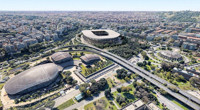
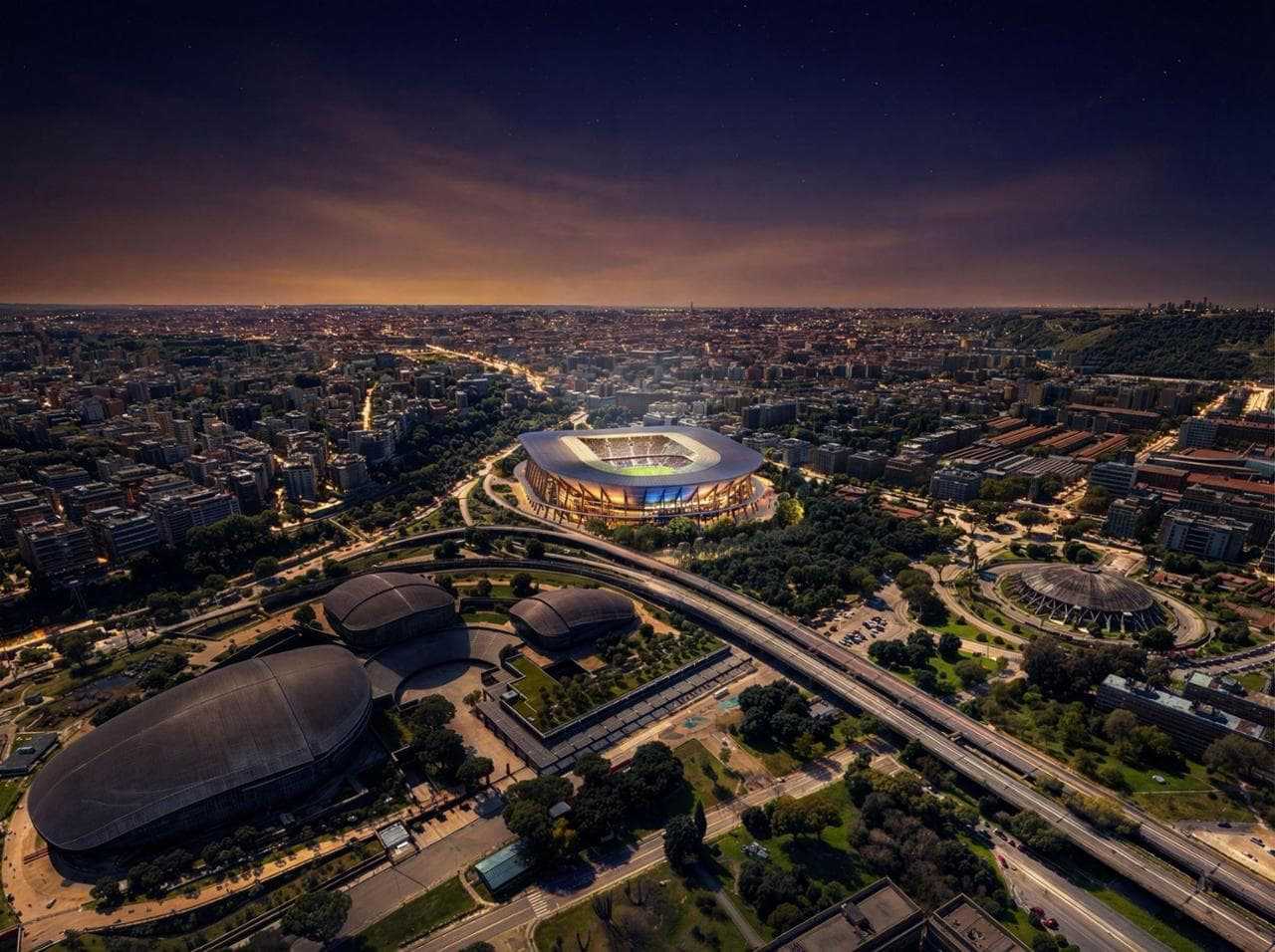
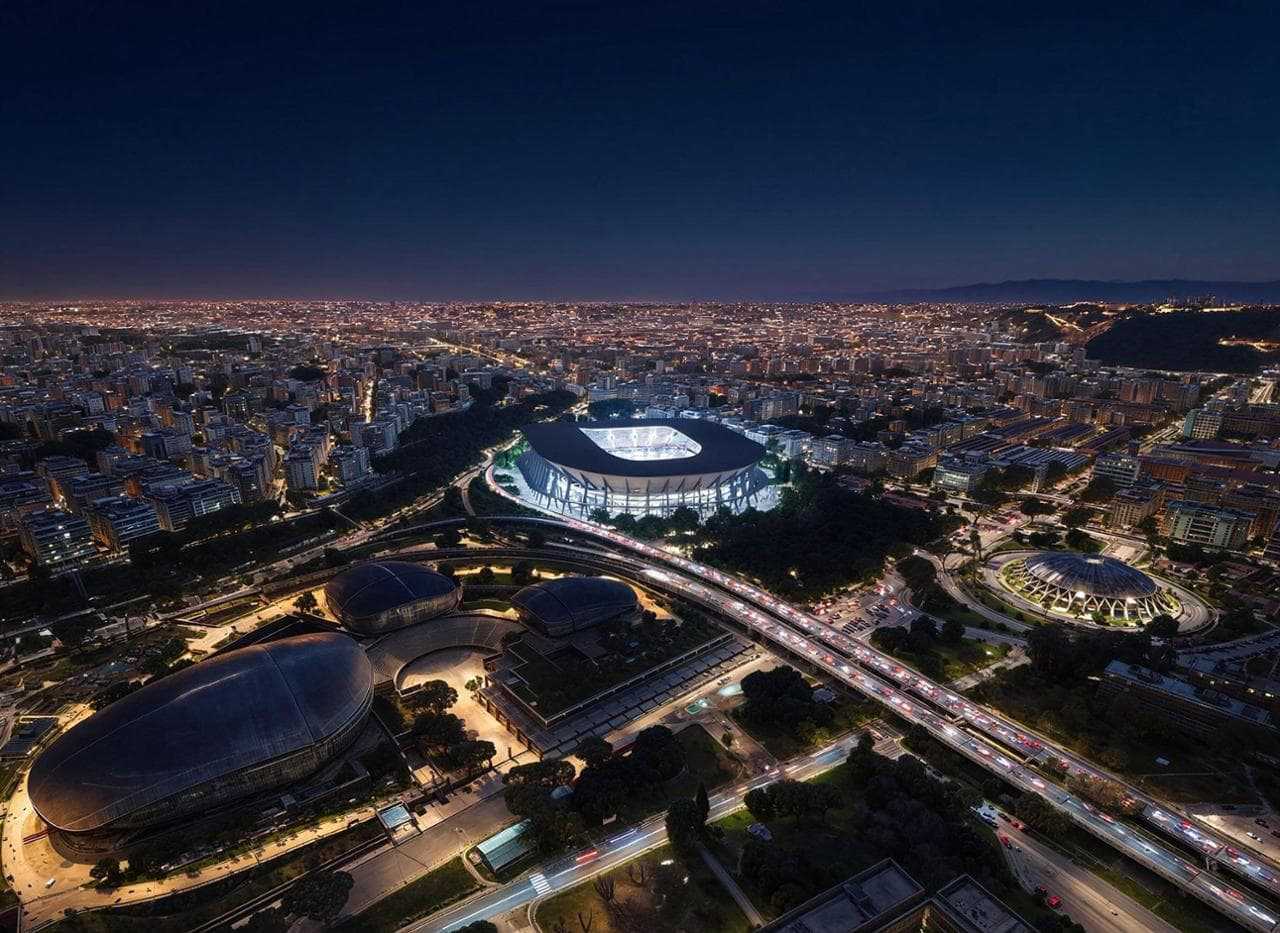
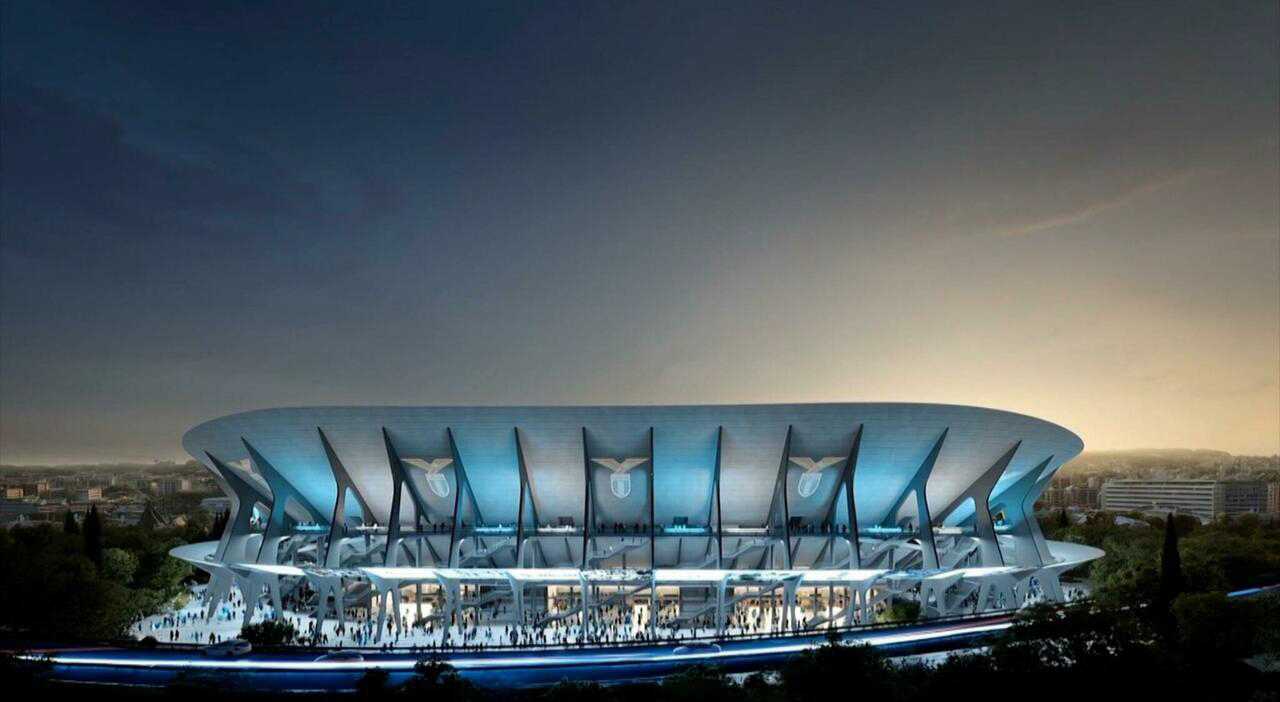
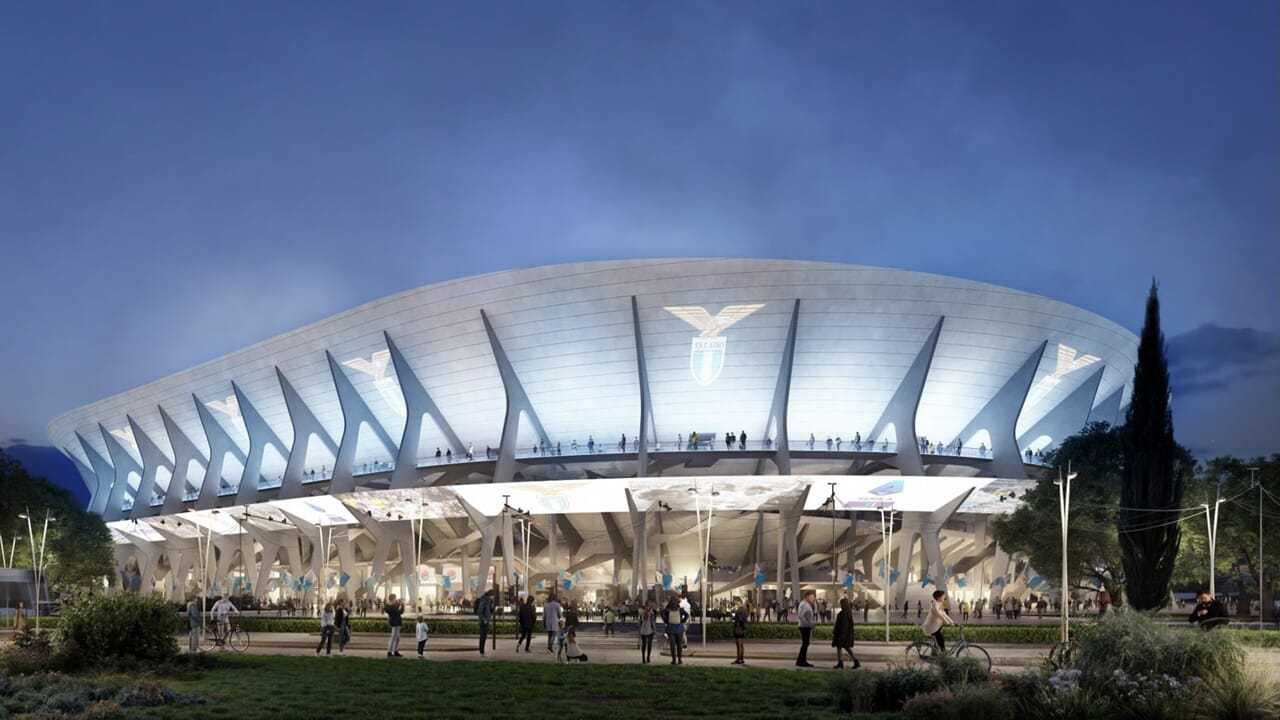
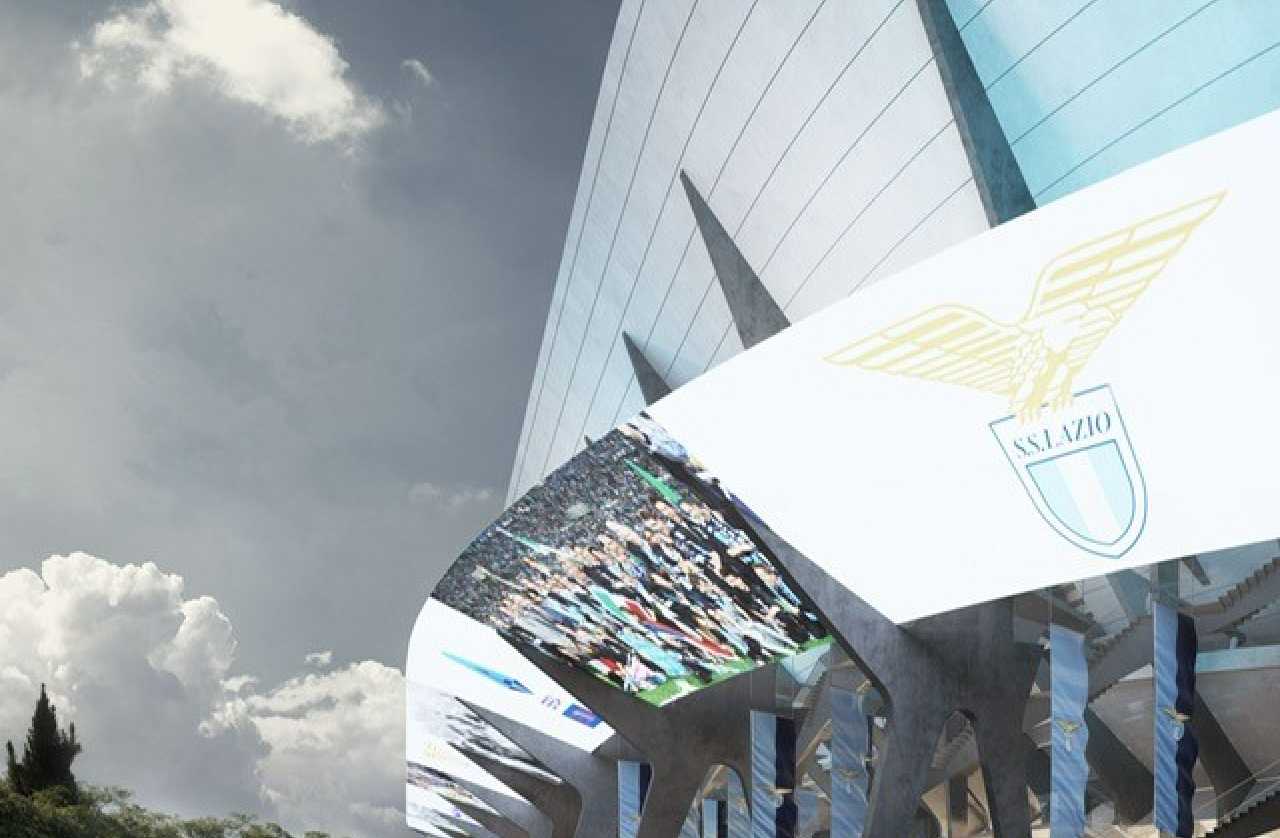
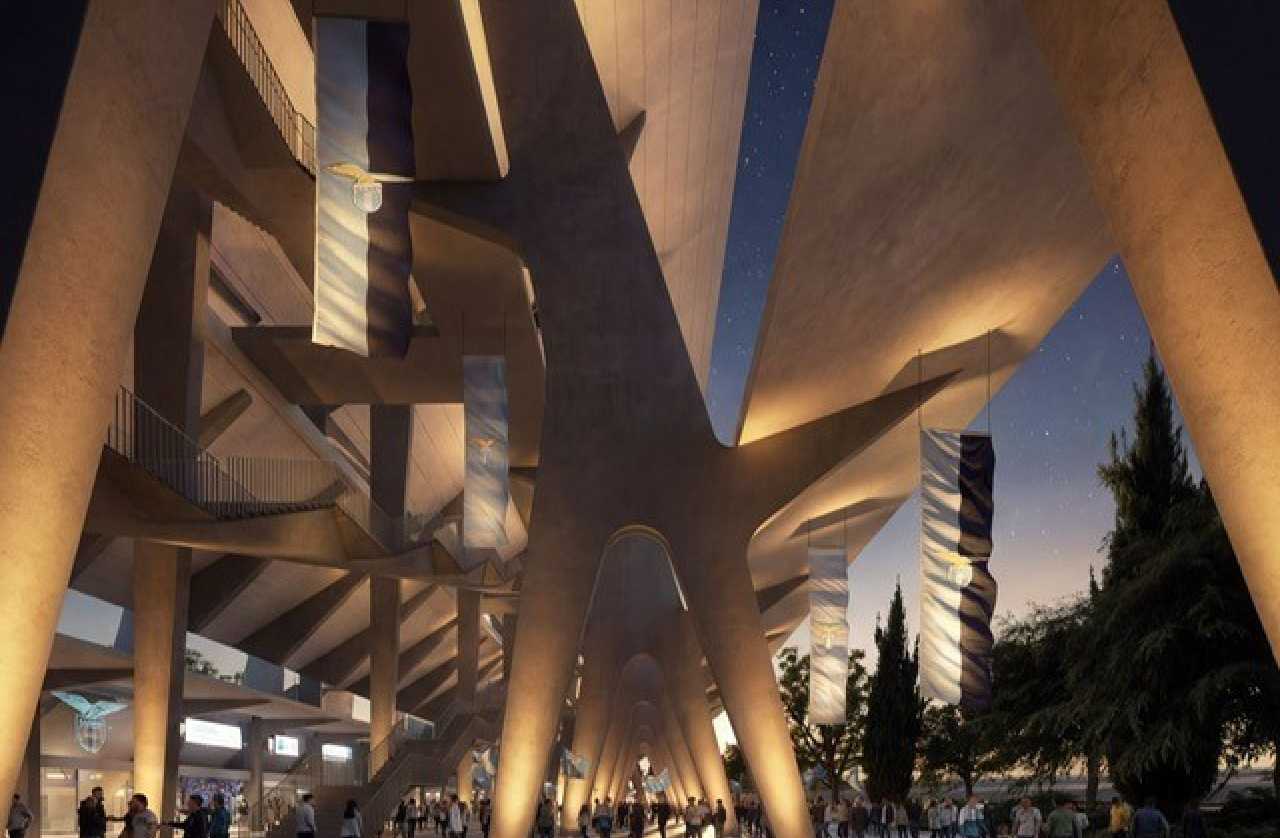
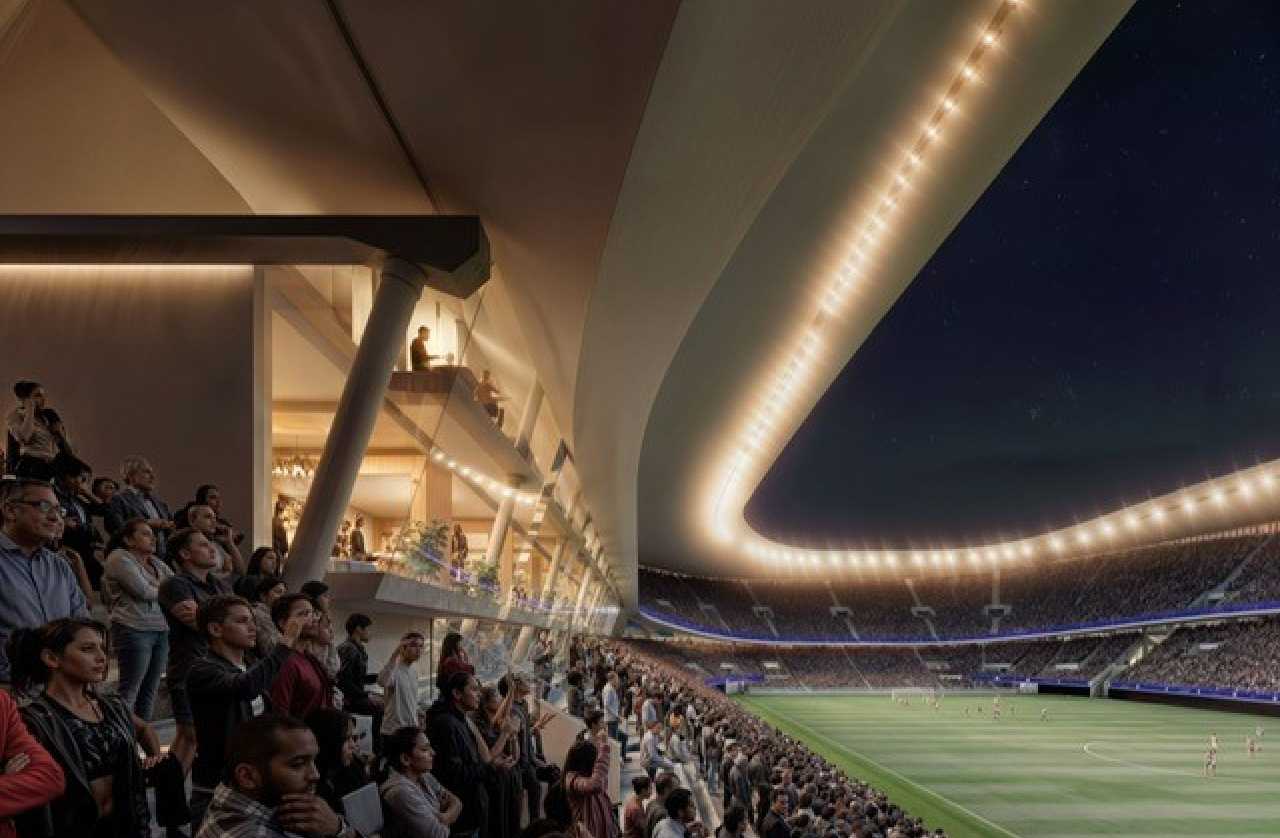
The redevelopment of Stadio Flaminio envisages the preservation of the existing stands and the addition of a second tier, supported by 46 steel pillars designed to correspond visually with the shape of the reinforced-concrete supports of the original structure. The project will be crowned by a new roof covering the entire seating bowl.
Following the expansion, the stadium will accommodate approximately 50,000 spectators — 20,000 in the lower tier and 30,000 in the upper level. The design has been developed to ensure that the stadium retains its existing architectural character, including its distinctive curves and external appearance.
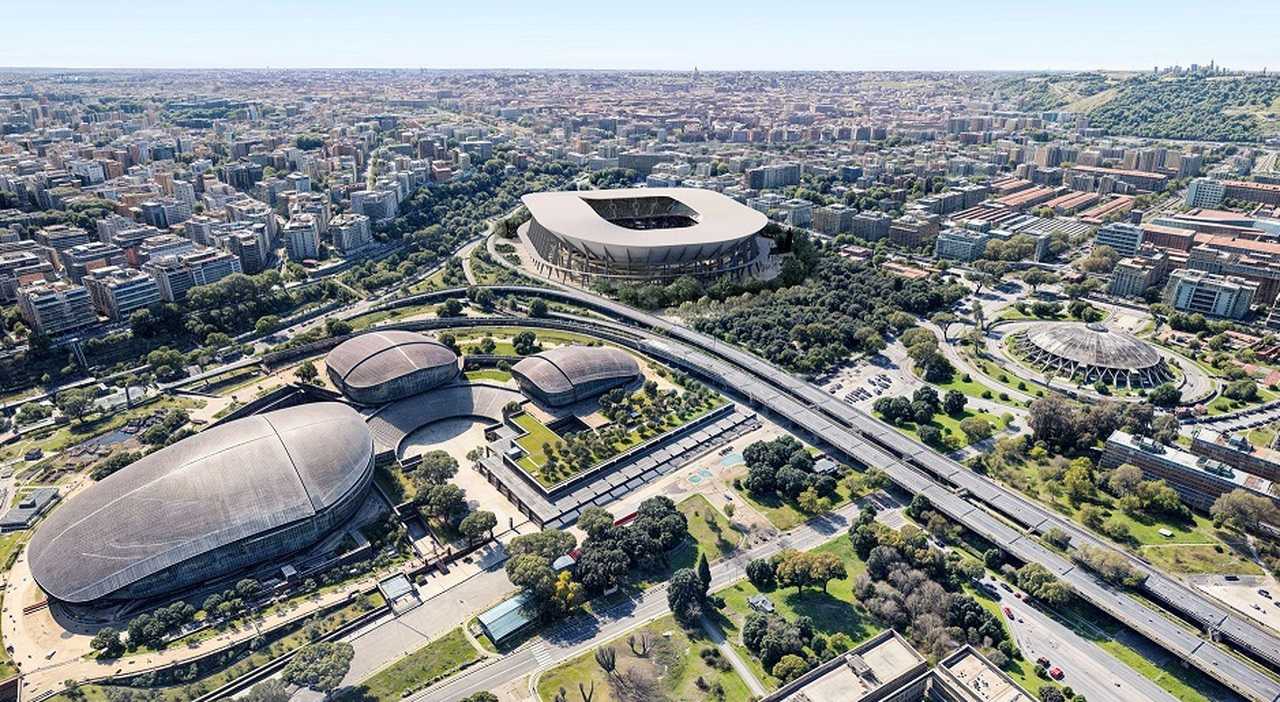
The plan also envisages the removal of part of the parking areas around the arena and the creation of new green spaces. Thanks to photovoltaic panels and an energy storage system using recycled batteries, the stadium is intended to be energy self-sufficient.
When will Stadio Flaminio be expanded?
According to preliminary information, construction works are expected to begin in the first half of 2027 and conclude in the first half of 2031. The project is estimated to cost approximately €480 million. The club is also hoping that the redeveloped venue could be selected to host matches at UEFA Euro 2032.
Advertisement
Renderings
-
2026 © S.S. Lazio 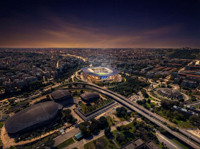
2026 © S.S. Lazio 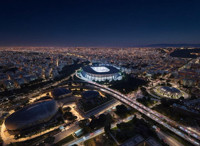
2026 © S.S. Lazio 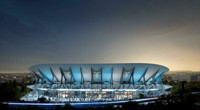
2026 © S.S. Lazio 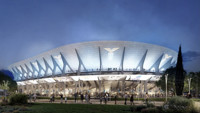
2026 © S.S. Lazio 
2026 © S.S. Lazio 
2026 © S.S. Lazio 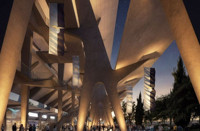
2026 © S.S. Lazio 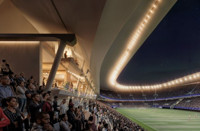
2026 © S.S. Lazio

Related news
2026
-
Italy: Lazio wants a €480 million stadium. Key decision not expected until summer
The €480 million redevelopment of Stadio Flaminio has entered a crucial administrative phase. The future home of SS Lazio now depends largely on heritage authorities, with key decisions not expected before the summer.
-
Italy: Architects fear for the identity of Lazio’s new stadium. Is the project too modern?
S.S. Lazio wants to transform Stadio Flaminio into a modern 50,000-seat stadium, but the project is sparking major controversy. Architects and preservation groups warn that the new structure could destroy the historic identity of one of Italy’s most important post-war stadiums.
-
Italy: Rome battles over stadiums – well-known actor criticizes Roma, Lazio awaits decisions
Rome is once again becoming the stage for stadium debates, with not only authorities and clubs but also public figures joining the discussion. Both Roma and Lazio projects are facing new obstacles. Which one will come out ahead?
-
Italy: SS Lazio reveals a detailed plan for Stadio Flaminio — with fresh renderings
In Rome, the vision of bringing the abandoned Stadio Flaminio back to life is gaining momentum. SS Lazio has unveiled a detailed project with visualizations and a timeline, announcing a new era for both the club and the city. Will Lotito’s “responsible dream” convince officials and fans?