 StadiumDB
Italy: Rome battles over stadiums – well-known actor criticizes Roma, Lazio awaits decisions
source: StadiumDB.com ; author: Paulina Skóra
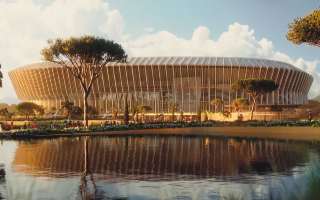 Rome is once again becoming the stage for stadium debates, with not only authorities and clubs but also public figures joining the discussion. Both Roma and Lazio projects are facing new obstacles. Which one will come out ahead?
Advertisement
Famous fan and the choice of AS Roma’s stadium location
Carlo Verdone’s appearance on the program Supernova resonated widely among AS Roma fans, as the actor — known for his strong attachment to the club — did not avoid honest and at times sharp opinions. His comments regarding the construction of the stadium in Pietralata fit into a broader debate about the suitability of this location.
Verdone emphasized that the decision to place the stadium outside the center of Rome raises doubts for him, especially in terms of accessibility and fan convenience. His remark they built the stadium so far away, let’s hope it works
does not sound outright critical, but rather conveys concern and skepticism.
Particularly striking was the part of his statement in which Carlo Verdone compared Roma’s situation with SS Lazio’s plans for Stadio Flaminio. He pointed out that Lazio’s potential stadium is located closer to the city center, which — in his opinion — gives the biancocelesti
an advantage in terms of location.
Roma stadium in Pietralata – a fan’s voice or a broader social concern?
Although Verdone’s statement is personal, it reflects broader sentiments among part of AS Roma’s fanbase. From the beginning, there have been questions about whether the Pietralata location is truly optimal — both in terms of transportation and integration with the urban fabric.
Some point out that modern stadiums are increasingly being built outside city centers, where there is more space and room for infrastructure development. However, in the case of Rome — a city with a unique urban and historical structure — such decisions provoke particularly strong emotions.
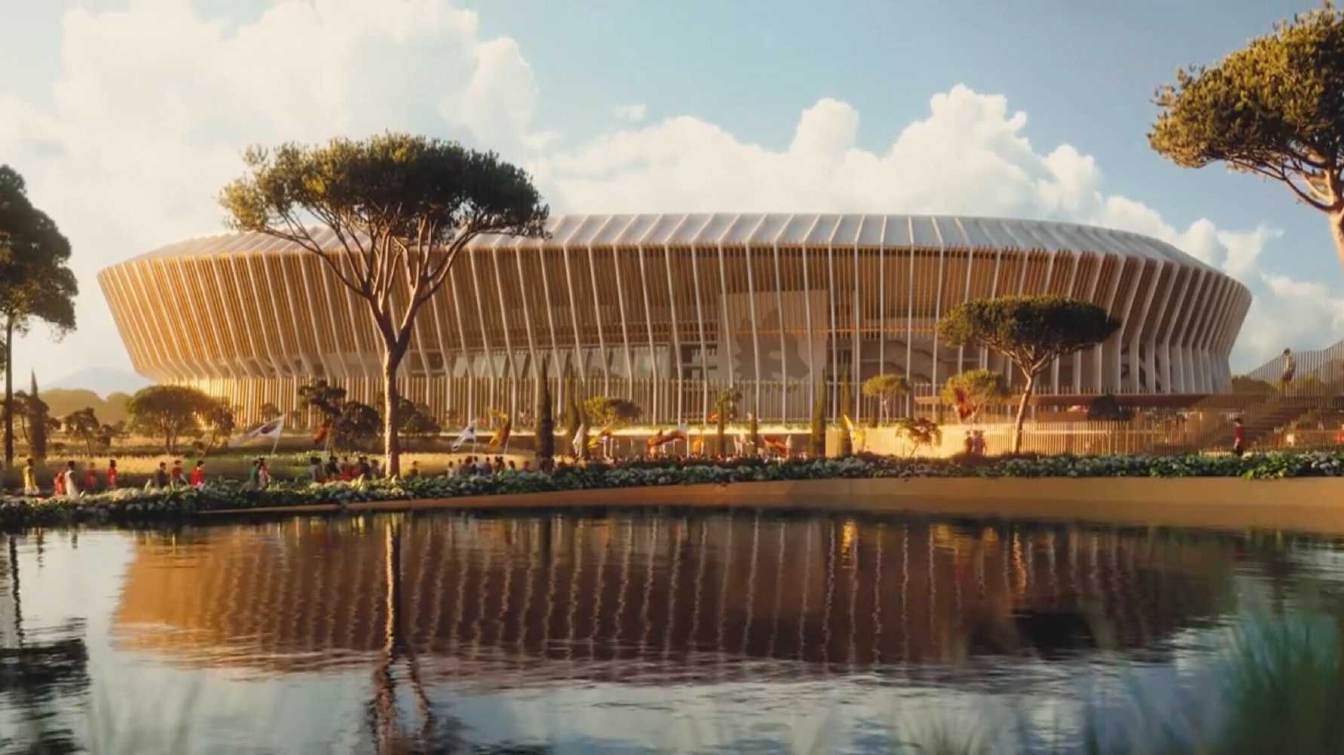 © AS Roma | AS Roma’s stadium project in Pietralata faces environmental issues after soil contamination was discovered, potentially delaying the project and removing it from the Euro 2032 fast-track process.
Investments under scrutiny – AS Roma and Lazio face stadium challenges
One of the most serious challenges for AS Roma’s stadium project in the Pietralata district has been the results of soil studies. During archaeological works, the presence of arsenic and so-called heavy hydrocarbons was detected, immediately raising concerns about the progress of the investment.
Although some of the contamination may have a natural origin, human activity is also considered a possible factor. The area had been neglected for years, which may have encouraged illegal waste dumping. As a result, detailed environmental analyses are required, already causing delays in the construction timeline.
An additional issue is the risk of losing the fast-track administrative path linked to UEFA Euro 2032. Roma’s stadium was being considered as part of the tournament preparations, which could have ensured a fast track
procedure and support from a special commissioner. However, the need for additional environmental studies may result in the project being shifted to a standard administrative process, which is more time-consuming and carries a higher risk of delays. The environmental review process may take several months and involves regional regulatory bodies. Although not a critical scenario for the club, it requires greater caution and preparation for potential formal complications.
At the same time, the modernization project of Stadio Flaminio, which is intended to become the new home of SS Lazio, is also facing challenges. The key issue is the lack of a so-called Conservation Plan — a document required to obtain approval from cultural heritage authorities.
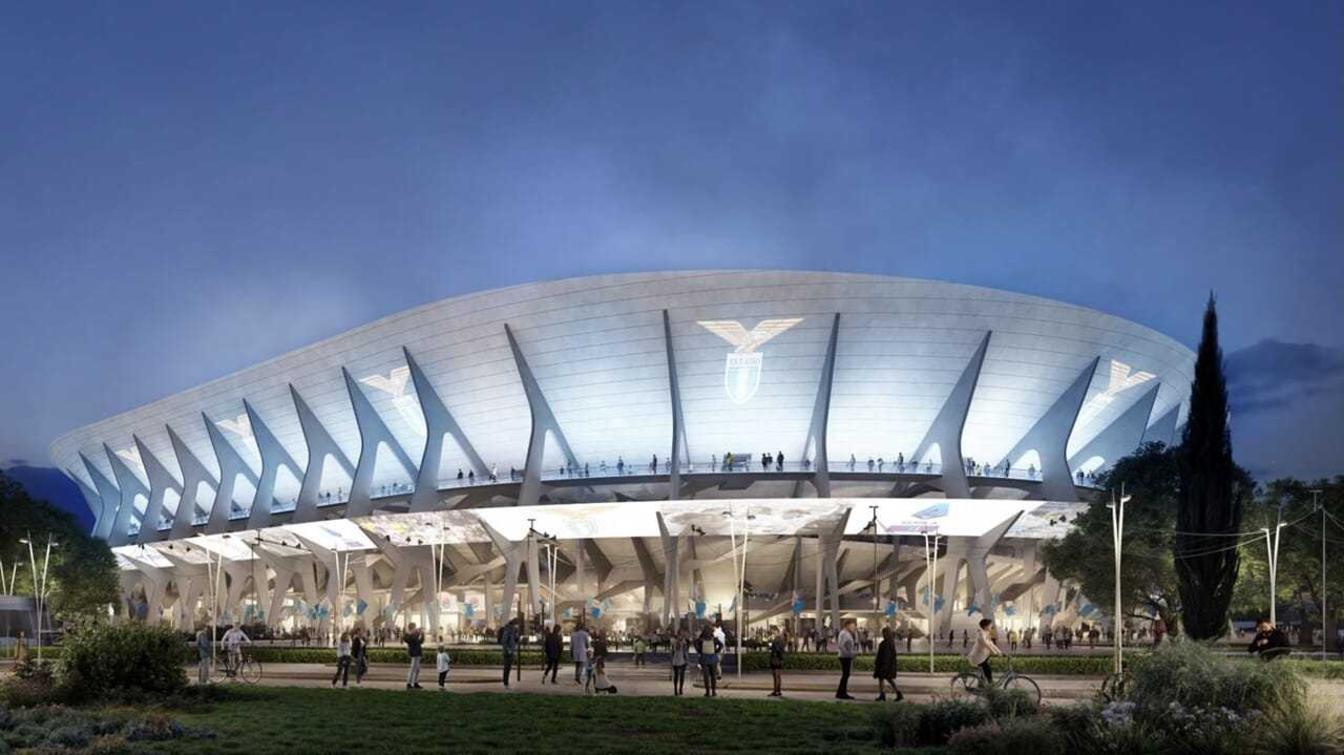 © S.S. Lazio | Lazio’s plan to redevelop Stadio Flaminio is also uncertain due to heritage restrictions and the lack of a required Conservation Plan.
The stadium, designed by Pier Luigi Nervi, is considered one of the most important examples of brutalist architecture and is under strict protection. Additionally, the lack of connection to the Keeping it Modern
program by the Getty Foundation may further complicate obtaining the necessary approvals. The Conservation Plan, previously adopted by city authorities, предусматривает preserving the original structure of the stadium, its underground spaces, and its multifunctional character. This limits the scope of intervention and may force significant changes to the modernization concept.
As a result, both the construction of AS Roma’s new stadium in Pietralata and the modernization of Stadio Flaminio for SS Lazio are currently in a state of significant uncertainty. On one hand, environmental and procedural issues; on the other, conservation constraints and formal barriers mean that the future of both investments remains open, and their realization is still in question.
Advertisement