 StadiumDB
Italy: SS Lazio reveals a detailed plan for Stadio Flaminio — with fresh renderings
source: StadiumDB.com ; author: Paulina Skóra
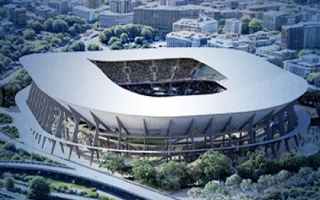 In Rome, the vision of bringing the abandoned Stadio Flaminio back to life is gaining momentum. SS Lazio has unveiled a detailed project with visualizations and a timeline, announcing a new era for both the club and the city. Will Lotito’s “responsible dream” convince officials and fans?
Advertisement
Lazio 2032 project – a “responsible dream” for the club and city
Lazio 2032 – Il Sogno Responsabile
is a strategy that goes far beyond renovating Stadio Flaminio. The plan covers a five-year development for the entire club, based on three pillars: financial balance, asset growth, and long-term sporting competitiveness. The document will be presented during international breaks, in collaboration with Deloitte and Luiss University, signaling that this is a full business plan, not just a stadium concept.
President Claudio Lotito emphasizes that the stadium is just one element of a vision to make Lazio financially stable, able to invest in players, infrastructure, and youth development without endangering finances. At the heart of the narrative is the balance between passion and responsibility — Stadio Flaminio is a tool for growth, not an end in itself.
Lotito’s declaration of responsibility to Lazio fans
Lotito is consciously shaping his message for fans, with whom relations have been tense in recent years, including over an online petition calling for him to sell the club. He states that every fan dreams of a full, modern, identity-rich stadium,
but adds that the dream must go hand in hand with sustainability, compliance with regulations, and financial balance.
The message is clear: Lazio should grow without jeopardizing stability, and Stadio Flaminio should serve future generations and make the club immortal.
The project is meant to unite, not divide — to build something that lasts,
and the club belongs to those who love it,
so every fan should think about Lazio’s future.
Tweet IFTV Official https://x.com/iftvofficial/status/2023811417137439225
— IFTV Official (@IFTVoOfficial) May 12, 2026
Flaminio renovation – two stadiums in one and preserving Nervi’s work
The renovation is based on the concept of two stadiums in one — the historic reinforced concrete base designed by Nervi and a new lightweight structure above it. The lower part will remain the historical 1960s bowl,
restored and secured, while the steel, lightweight canopy meets modern technological and seismic standards without overwhelming the original forms.
Architects describe it as a matryoshka
system — two separate but harmoniously linked layers: Nervi’s work is enveloped and protected, while the new shell provides weather protection and support for new stadium functions. This preserves the elegance and lightness of the original design while avoiding massive superstructures. The entire complex will meet modern safety, evacuation, and spectator comfort standards, a prerequisite for UEFA Category 4 certification.
The plan also includes extensive conservation of historic concrete elements exposed to rain, wind, and temperature fluctuations. The original structure requires urgent interventions due to cracks, reinforcement corrosion, and material loss. The new covered structure acts as an umbrella, protecting the base from further decay and extending the stadium’s lifespan. Nervi’s family has praised the approach, noting it highlights historical features without covering them with intrusive additions.
Stadium capacity – 50,570 seats and a “compact bowl” near the pitch
The renovated stadium will hold approximately 50,570 fully covered seats. Stands will be divided as follows: Tribuna Ovest (~9,895), Tribuna Est (13,120), Tribuna Nord (13,790), Tribuna Sud (9,995), and guest sector (3,770). The stadium will be a compact bowl,
intensifying match atmosphere and acoustic experience. This contrasts with the multi-purpose Stadio Olimpico, where the athletics track separates fans from the pitch. The stand geometry ensures excellent sightlines and meets UEFA Category 4 standards.
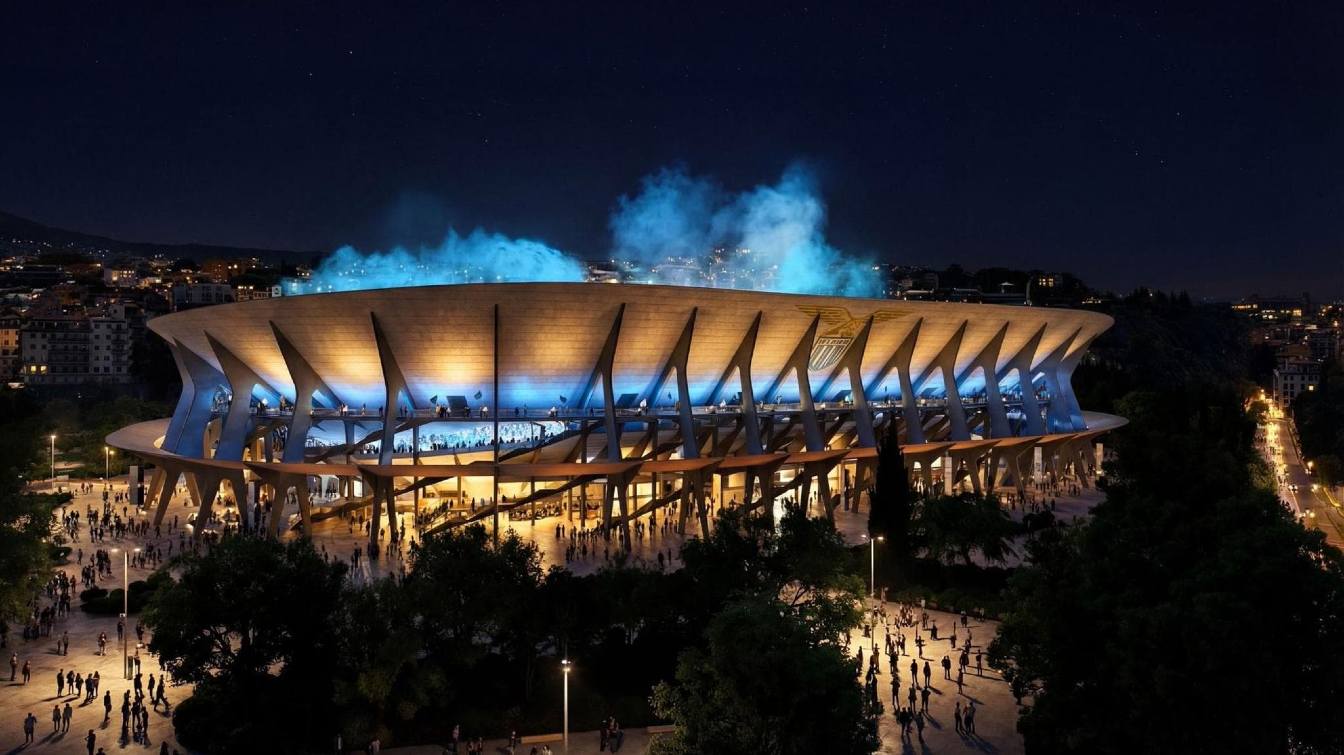 The Lazio stadium will have a capacity of 50,570 fans and will be 100% covered.
Construction and timeline – from Campidoglio documentation to first match in 2030
Lazio submitted documentation to the Rome Sports Department, marking the first step under Legislative Decree 38/2021. The documentation includes technical plans, feasibility studies, and a preliminary economic plan. The next step is a service conference verifying compliance with zoning and heritage protection regulations.
Construction is scheduled to begin in the second half of 2026 with preparatory works, full renovation from early 2027 to September 2029, and the first Lazio match between late 2029 and early 2030.
Construction costs and financing model – €430–480 million investment
The estimated cost of renovating Stadio Flaminio ranges from €430 to €480 million, including the stadium and surrounding infrastructure. An additional €55 million is planned for parking, bike lanes, and mobility improvements in the district.
Lazio submitted a Piano Economico Finanziario (PEF) under a 99-year concession, allowing amortization and full commercial use of the stadium: tickets, VIP boxes, food services, shops, museum, and cultural events. Most funding comes from private sources, minimizing public expenditure.
Flaminio and mobility in Rome – limiting private traffic and promoting public transport
The project relocates main parking outside the district, strengthens public transport, and develops bike and pedestrian routes. On matchdays, a controlled zone will limit car traffic, prioritizing collective transport.
An environmental island
will also be created — a green zone with restricted vehicle access, improving air quality, resident comfort, and integrating the stadium with the urban fabric.
Flaminio and greenery/acoustics – the green heart of the Flaminio district
The plan expands green areas around the stadium, forming a green ring
that filters pollution and acts as a visual buffer. Roofing materials enhance stadium atmosphere while limiting noise for the surroundings. Flaminio will be an acoustic bowl
for fans, remaining neutral for the neighborhood.
The venue will operate year-round, with restaurants, shops, offices, and event spaces. Glass fencing will allow public access outside matchdays, combining safety and urban integration. The Lazio museum will showcase club history with interactive exhibits, and the stadium will host concerts and cultural events.
Advertisement