 StadiumDB
Nuevo Estadio de Vallecas
| Capacity | 18 500 |
|---|---|
| Country | Spain |
| City | Madrid |
| Clubs | Rayo Vallecano |
| Category | Design awaiting implementation |
| Cost | €60 M ($68.3 M) |
| Construction | 2027–2029 |
| Design | Julián Zapata Jiménez, Pablo Moreno Mansilla |
Advertisement
Nuevo Estadio de Vallecas – design description
What does the Estadio de Vallecas redevelopment project look like in brief?
Considered the worst stadium in La Liga, Rayo Vallecano’s ground has been awaiting a comprehensive renovation – or a replacement – for years. In 2024, the initiative was taken up by the Community of Madrid, the stadium’s owner, and in June 2026 a redevelopment plan was officially presented.
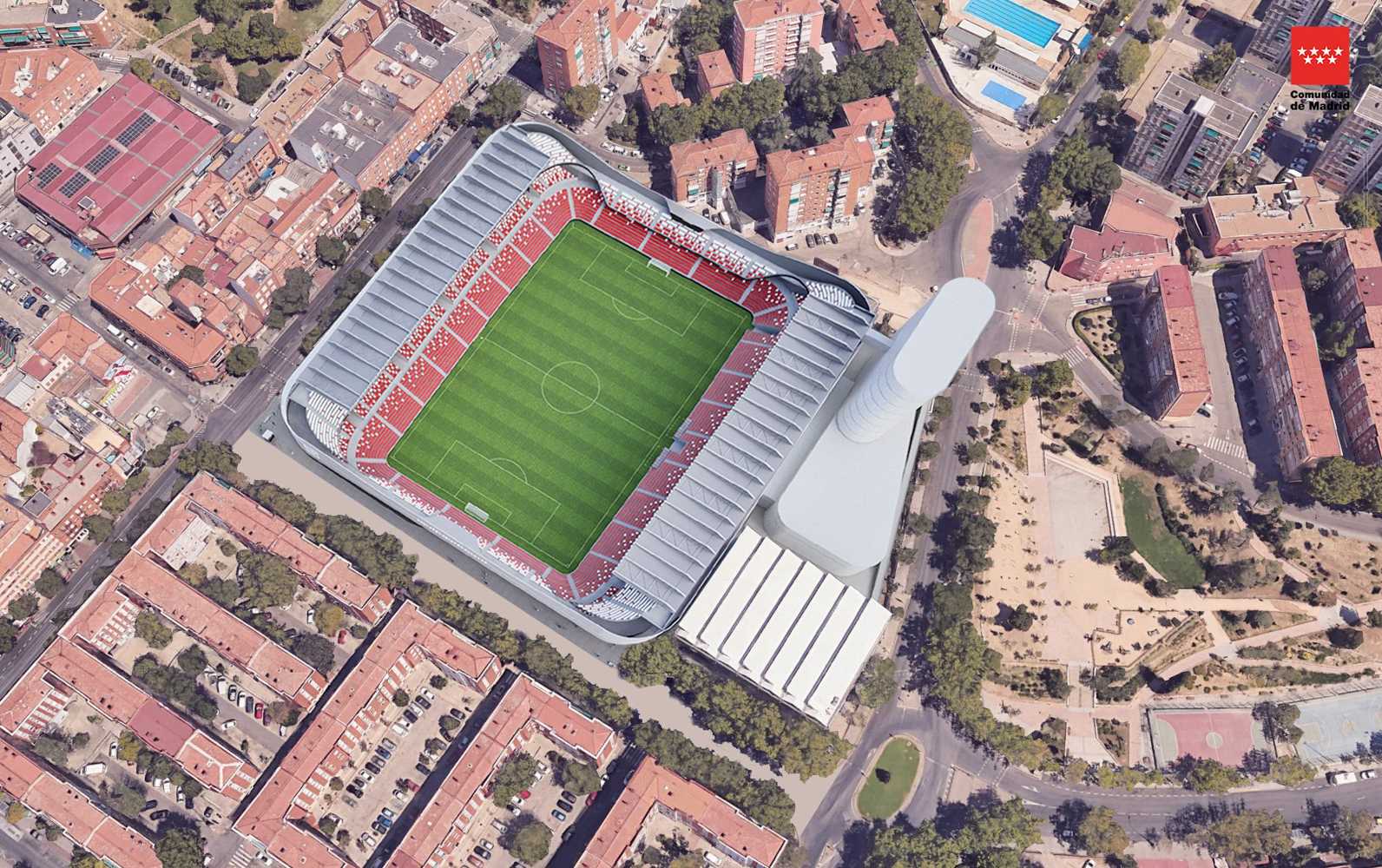
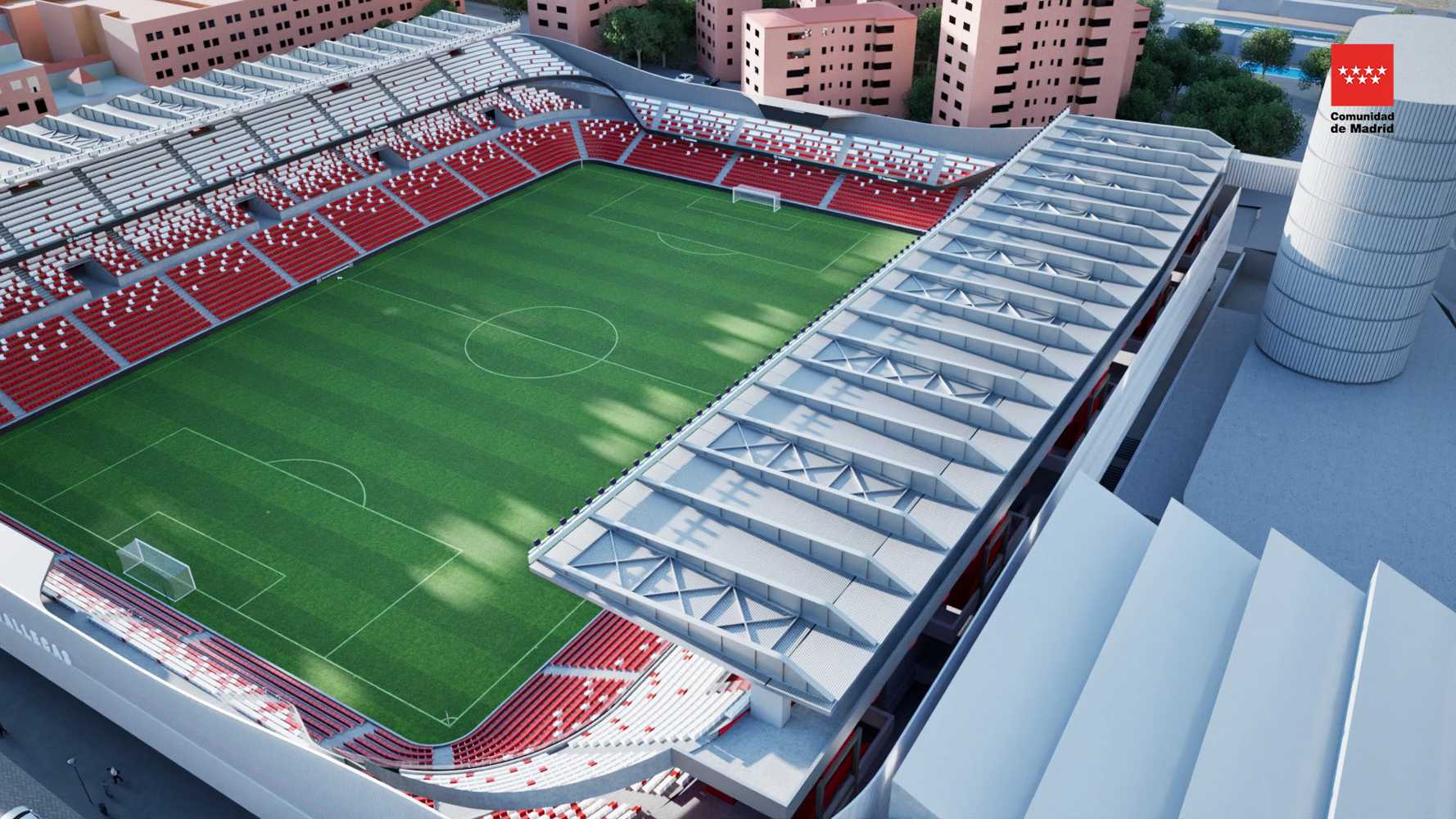
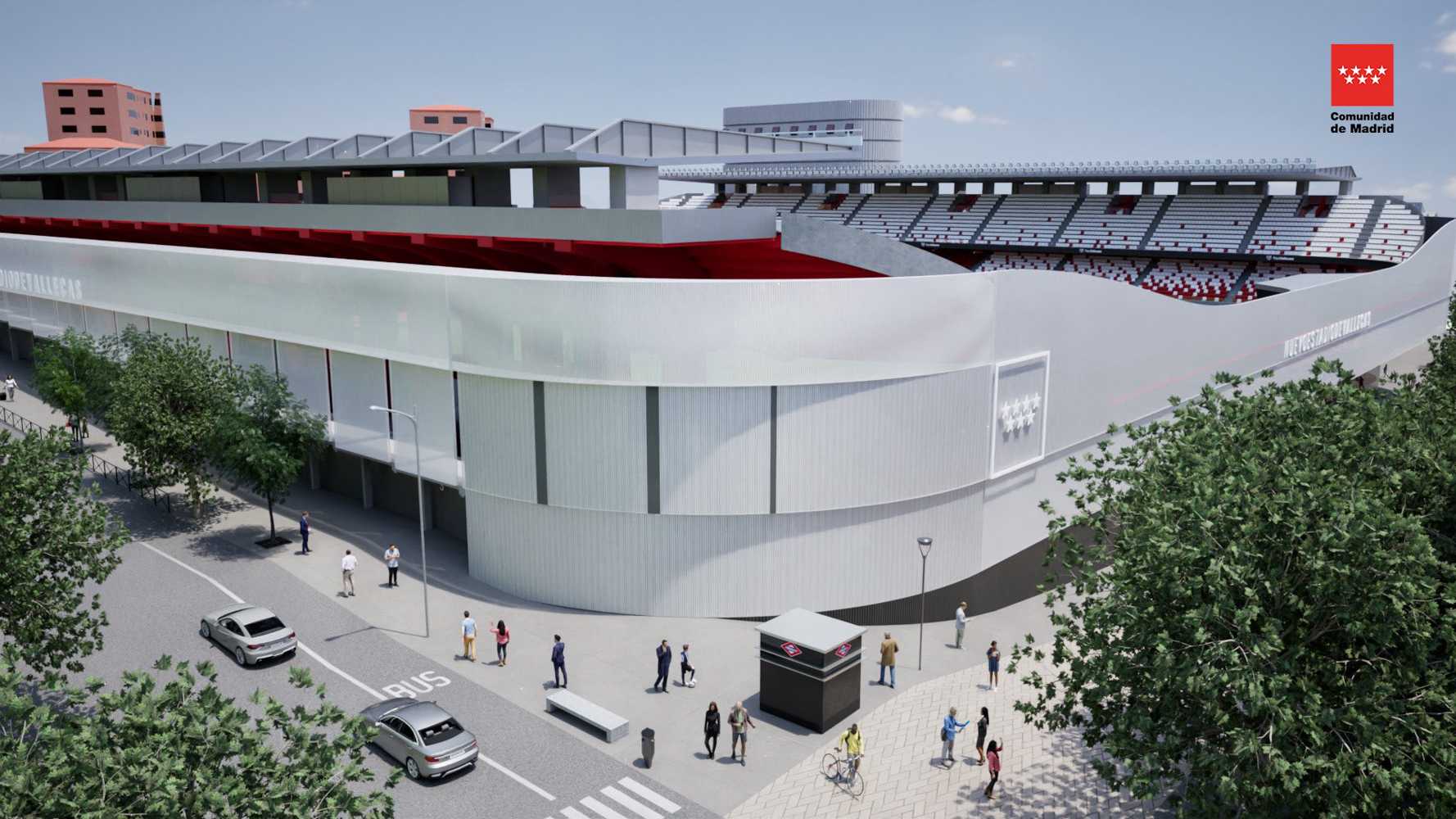
The scheme includes the construction of the “missing” stand behind the eastern goal, as well as the refurbishment of the existing structures. As a result, the stadium will gain a more coherent, symmetrical form, complemented by a continuous facade running around the entire perimeter.
The renovated stadium will meet modern requirements, and its capacity will increase by nearly 4,000 seats to around 18,500 spectators. In addition, a tall building with an underground car park is planned behind the southern stand.
Works are expected to start in the second half of 2027 and last two years, during which matches would still be played at the stadium. This would allow the venue to be ready for the 2030 World Cup as a potential training base.
What does Estadio de Vallecas look like?
Rayo Vallecano’s stadium has stands on three sides of the pitch – due to limited space, only a tall advertising wall stands behind the eastern goal, although a modest stand existed there until 1996.
The stadium’s capacity is approximately 14,700 spectators. The stand behind the western goal is significantly smaller than those along the pitch – two-tiered and partially covered – but it is here that the most passionate supporters, the “Bukaneros”, gather.
The current form of the stadium dates back to 1972–1976, although the first ground on this site was opened as early as 1930. It was originally built by Racing Club de Madrid, which was soon forced to sell it; later it was used by Atlético Madrid, and since 1957 it has been the home of Rayo Vallecano.
The stadium is located in the southeastern part of Madrid, in the district of Puente de Vallecas, on the site of the historic municipality of Vallecas, which existed as an independent town until 1950.
Who are Rayo Vallecano?
Rayo Vallecano was founded in 1924 and celebrated its centenary in 2024. The club is strongly associated with the local culture of its district and the working-class community, and is known for its loyal and committed fan base. In Madrid’s football hierarchy, it ranks third, although it remains far behind Real Madrid and Atlético Madrid in terms of fame and achievements.
The team first reached Primera División in 1977 and has since mostly alternated between the first and second tiers of Spanish football. Since 2021, it has once again been competing in La Liga, and in the 2025/26 season it achieved its greatest success to date by reaching the UEFA Europa Conference League final.
How did the plans for the redevelopment of Estadio de Vallecas come about?
The ageing Rayo Vallecano stadium is widely regarded as the worst in La Liga – in 2018, it even faced significant issues regarding its eligibility to host top-flight matches.
The future of Estadio de Vallecas has been discussed for years. In 2009, the club presented an ambitious project for a new stadium. The venue was planned to accommodate 30,000 spectators and be built at a new location, but the concept already seemed unrealistic at the time and was eventually abandoned following the financial crisis of the club’s then-owners.
In 2011, the indebted club was taken over by businessman Raúl Martín Presa, who also expressed plans to build a new stadium in a different location; however, these plans have yet to materialise.
In 2024, the initiative was taken over by the Community of Madrid (Comunidad de Madrid), which owns Estadio de Vallecas. Their aim was a comprehensive redevelopment of the existing stadium, contrary to the intentions of the Rayo Vallecano president, but in line with the wishes of the fans, who oppose relocation.
The redevelopment is complicated by the fact that the stadium is partially protected, meaning its architectural form must be preserved, which rules out, for example, rotating the stadium by 90°, a solution that could have provided more space for stands.
In 2025, the first phase of modernisation works was carried out, worth nearly €3 million. These mainly involved urgent technical repairs and were intended as a prelude to the stadium’s full renovation.
On 24 June 2026, a press conference was held at which the regional Minister of Culture, Tourism and Sport, Mariano de Paco Serrano, presented the comprehensive redevelopment plan for Estadio de Vallecas.
The architectural concept was developed by Julián Zapata Jiménez and Pablo Moreno Mansilla, and the project was unveiled shortly after the 50th anniversary of the opening of the “new” Estadio de Vallecas (following its 1972–1976 reconstruction).
What does the Estadio de Vallecas redevelopment project include?
One of the key elements of the redevelopment is the construction of the “missing” stand behind the eastern goal. This will give the stadium a symmetrical, rectangular layout, with taller, partially covered stands along the pitch and lower stands behind the goals.
Interestingly, even the lower end stands will be divided into two tiers – due to limited space, the upper tier will significantly overhang the lower level.
The plan also includes the creation of a continuous façade wrapping around the stands. In some areas, the façade will reveal elements of the stadium’s original structure.
A major investment will also be the construction of a new, tall building behind the southern stand. Thanks to an underground car park and a direct connection to the stadium, it will increase the functionality of the entire complex.
As part of the renovation, the stands and interior of the stadium will be refurbished, while the pitch will be adjusted to standard dimensions. The redevelopment will increase the capacity of the venue by nearly 4,000 seats, to around 18,500 spectators.
When will Estadio de Vallecas be modernised?
The redevelopment is expected to take two years (excluding the construction of the new southern building), during which the stadium will remain in operation. Works are expected to begin after the regional elections, in the second half of 2027.
This schedule would allow the stadium to be ready for the 2030 FIFA World Cup, when it could serve, for example, as a training base for one of the national teams.
The estimated cost of the redevelopment is €60 million, with authorities counting on the participation of private investors in its financing.
Advertisement
Renderings
2026 © Comunidad de Madrid 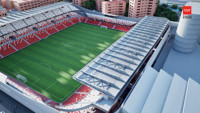
2026 © Comunidad de Madrid 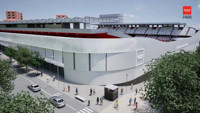
2026 © Comunidad de Madrid