 StadiumDB
David Booth Kansas Memorial Stadium
| Capacity | 47 000 |
|---|---|
| Country | United States of America |
| City | Lawrence |
| Clubs | Kansas Jayhawks |
| Category | Design being implemented |
| Cost | $809 M |
| Construction | 2023–2027 |
| Design | HNTB, Multistudio |
| Contractor | Turner Construction Company (Phase I), Clark Construction Group, JE Dunn Construction (Phase II) |
Advertisement
David Booth Kansas Memorial Stadium – design description
What does the David Booth Kansas Memorial Stadium redevelopment project look like in a nutshell?
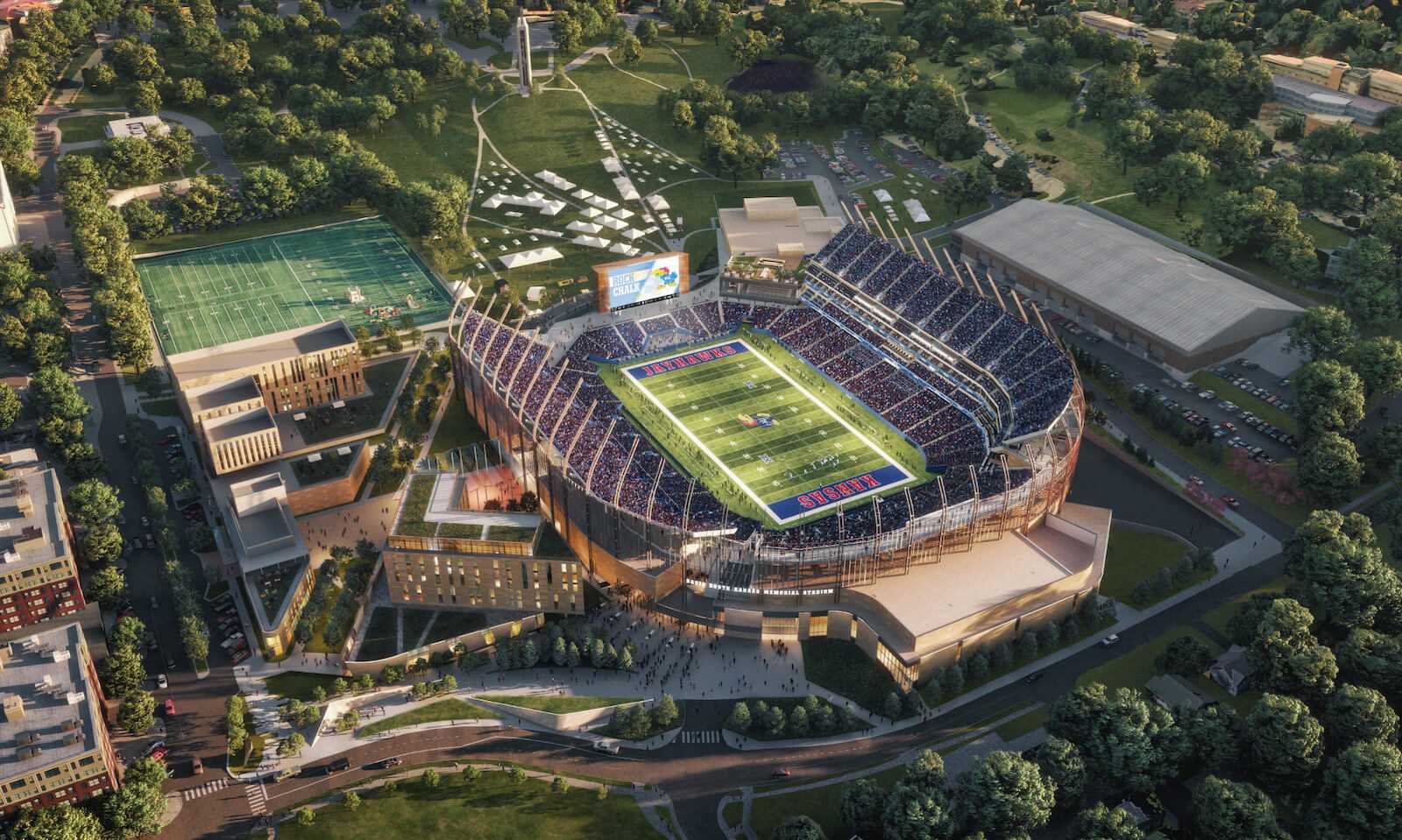
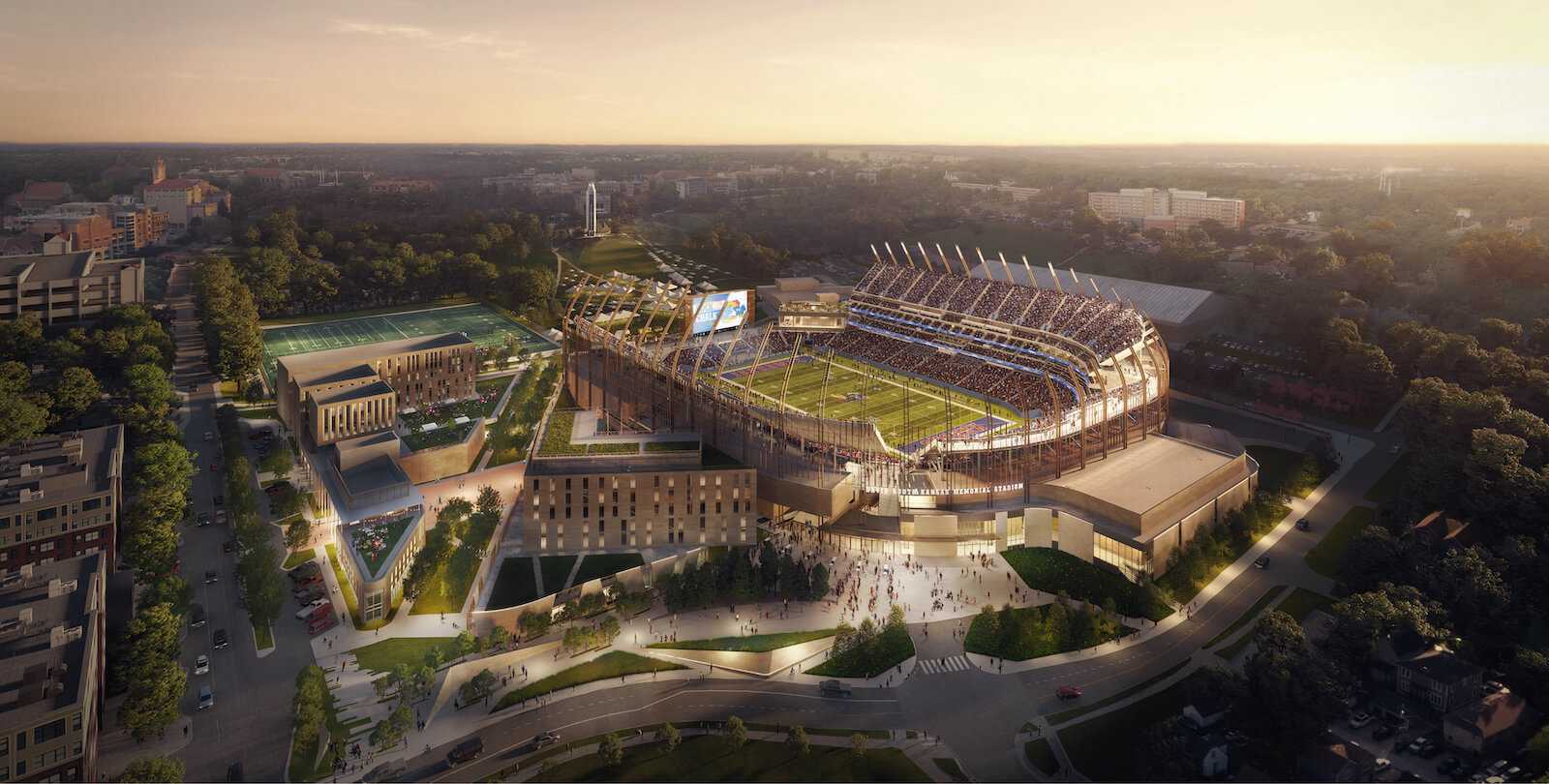
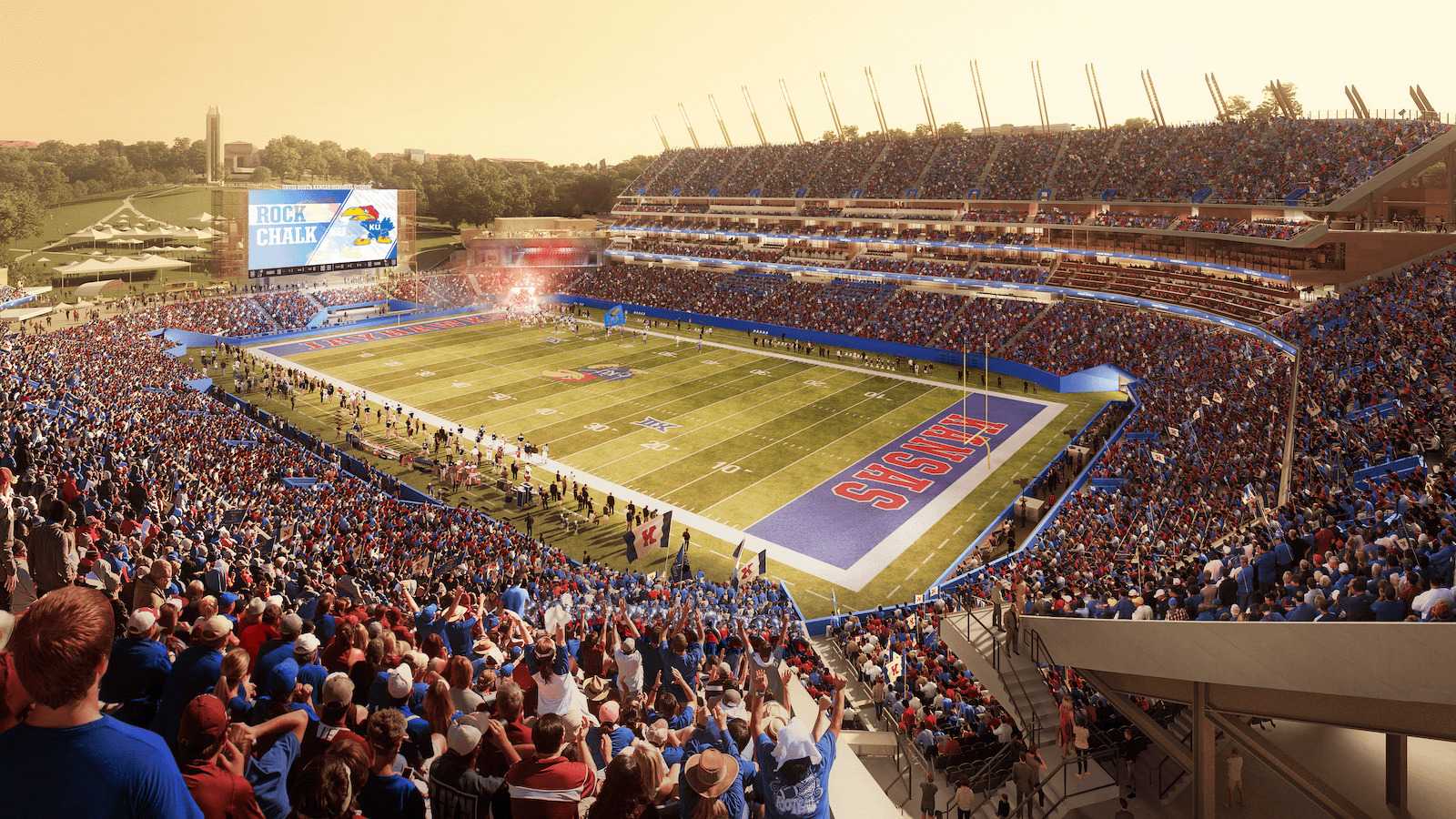
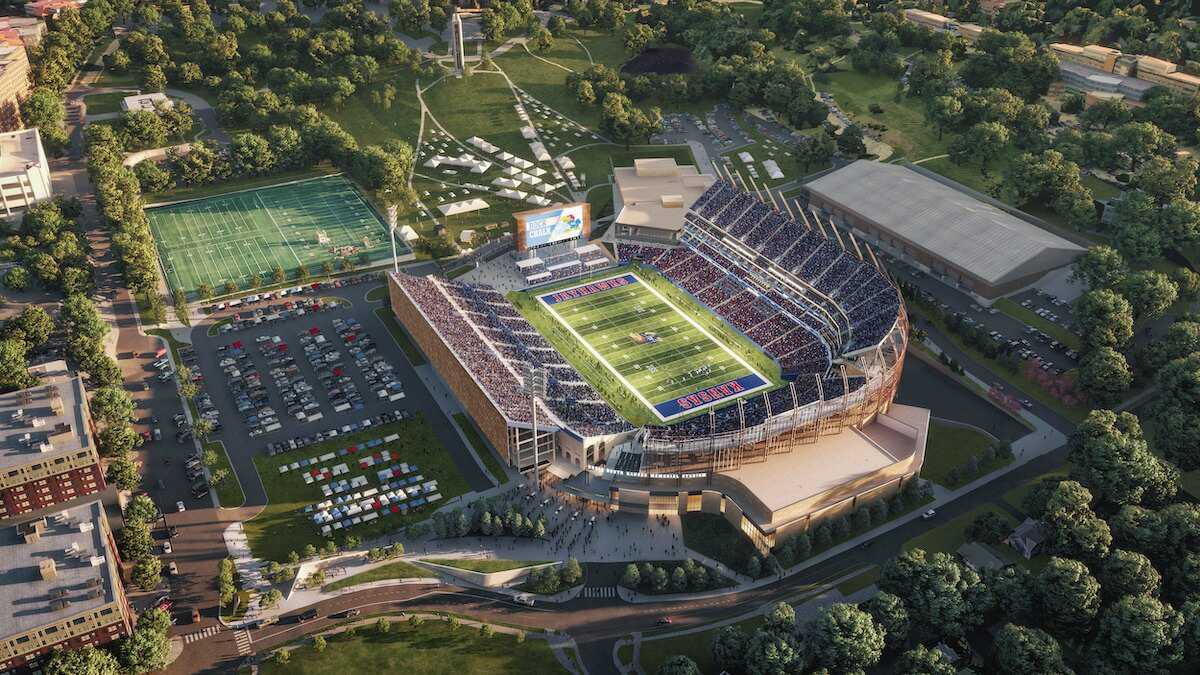
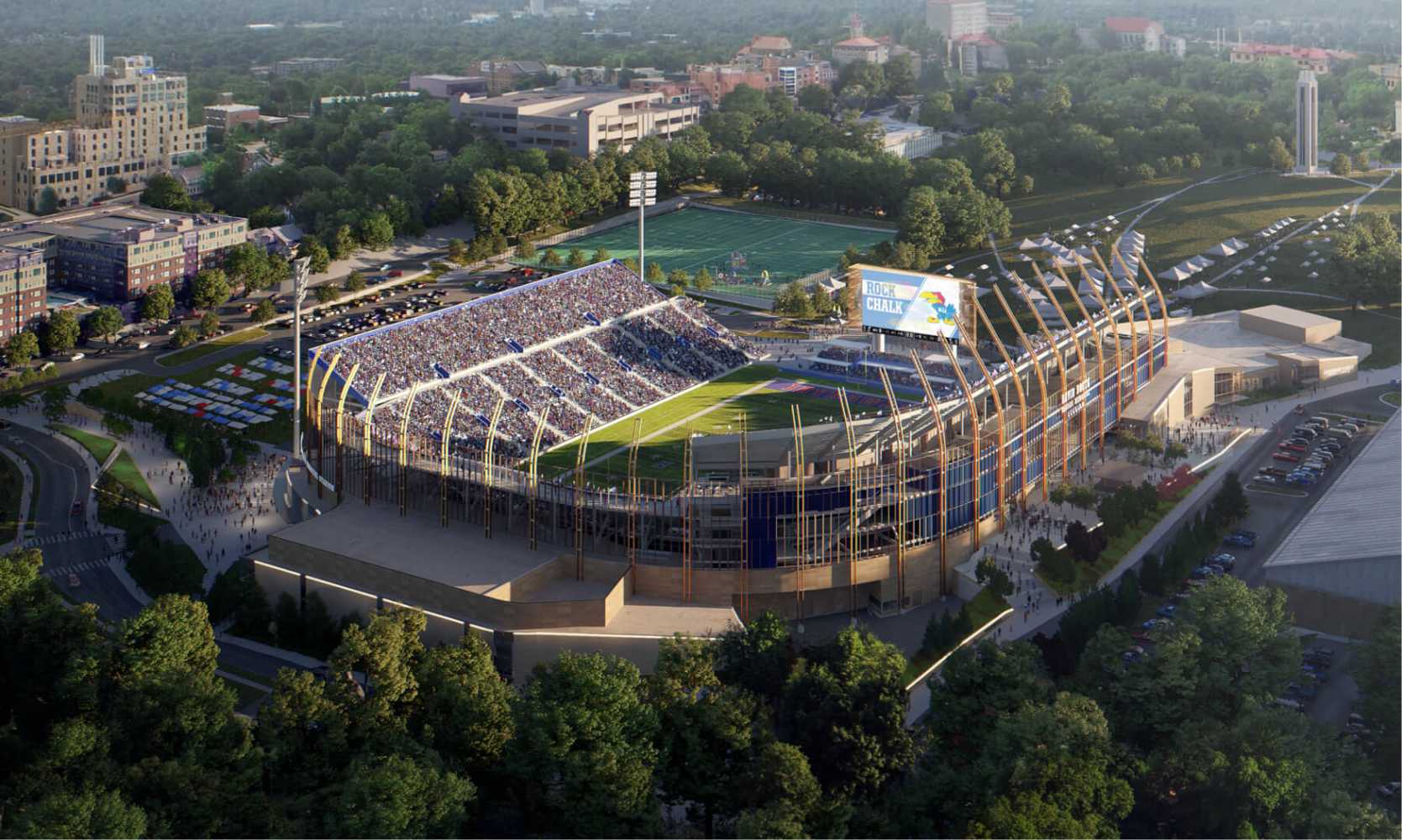
The two-phase transformation project of the University of Kansas stadium in practice amounts to rebuilding the venue from scratch. The new stands will be built closer to the field, and the stadium will lose its characteristic “horseshoe” layout, which once accommodated an athletics track.
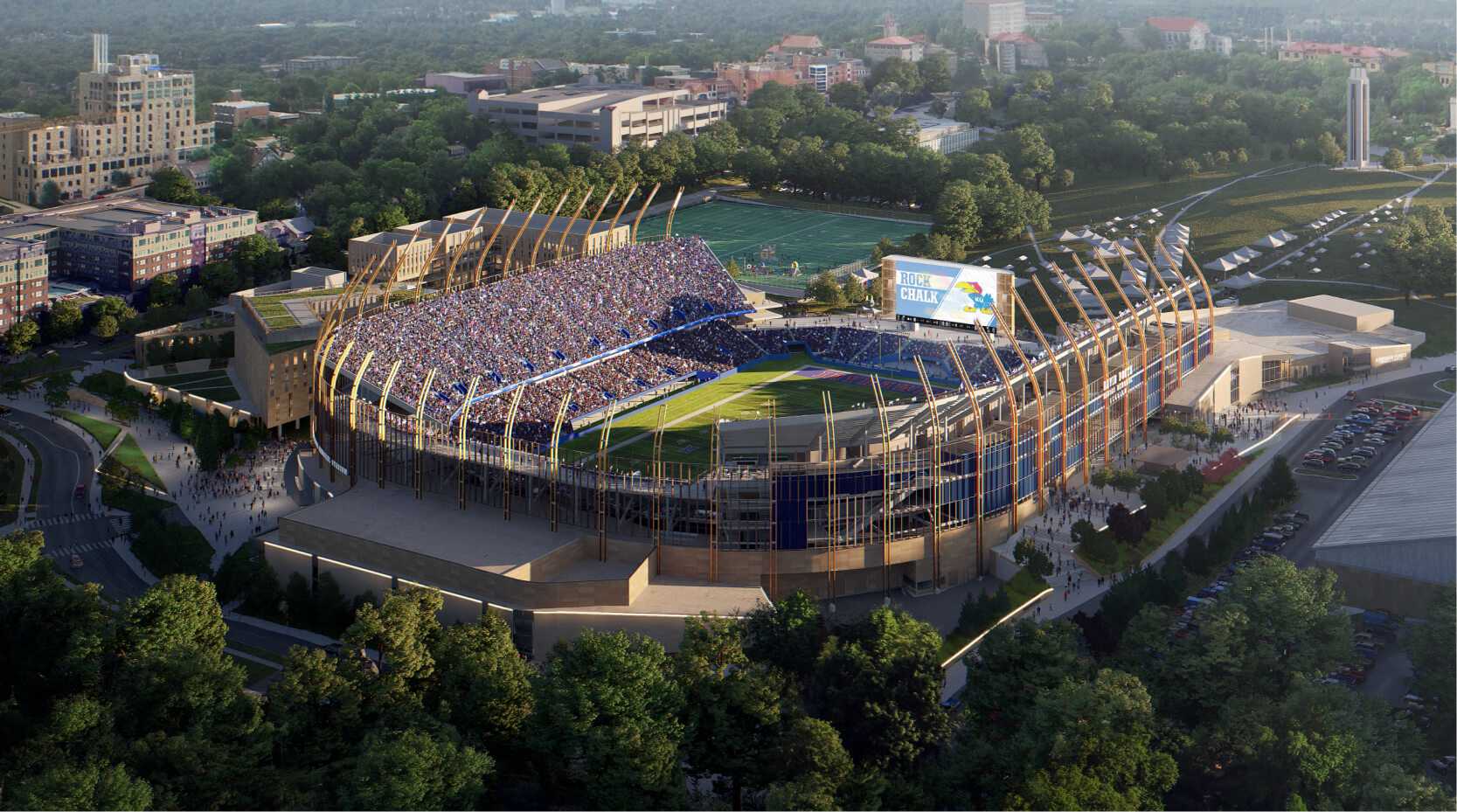
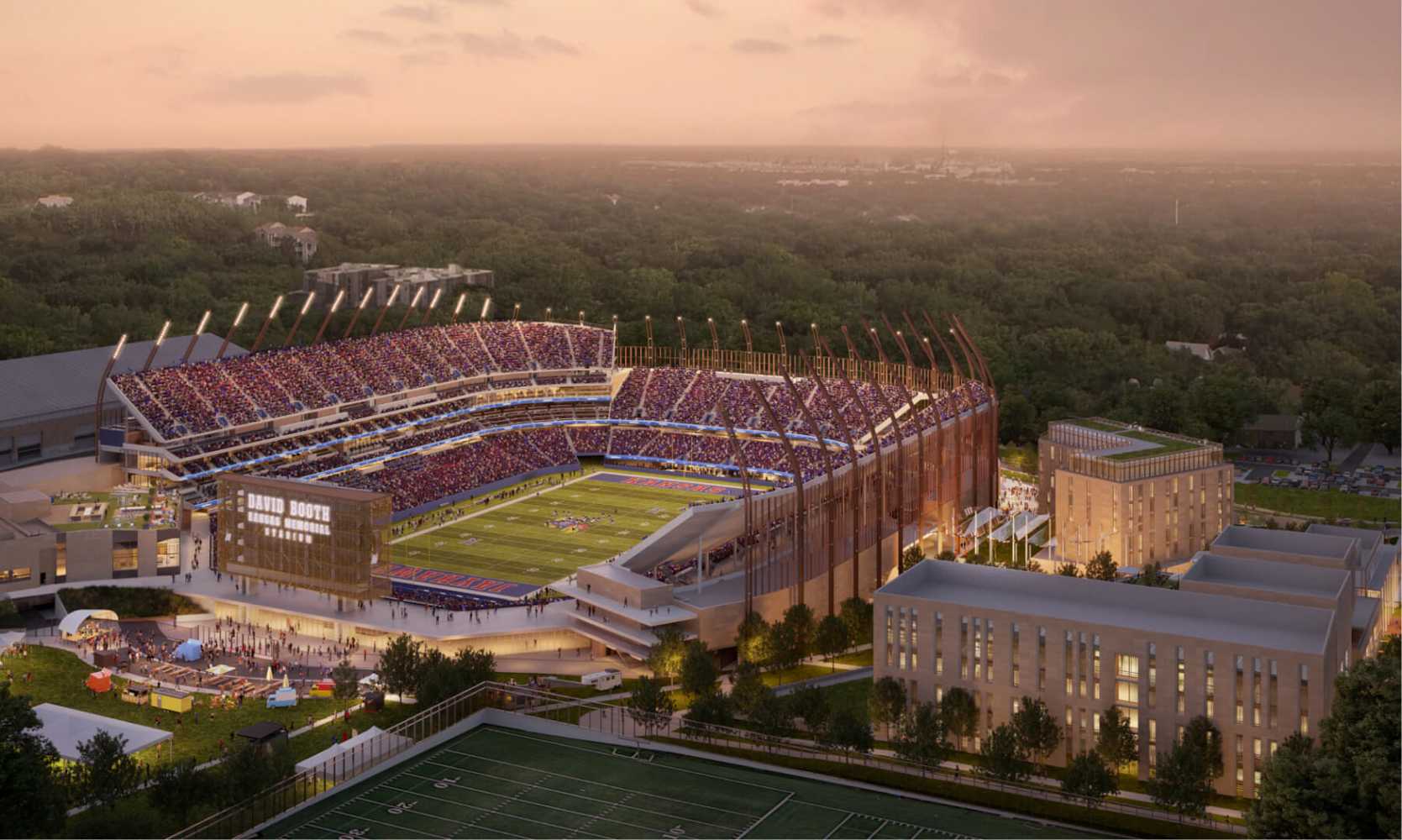
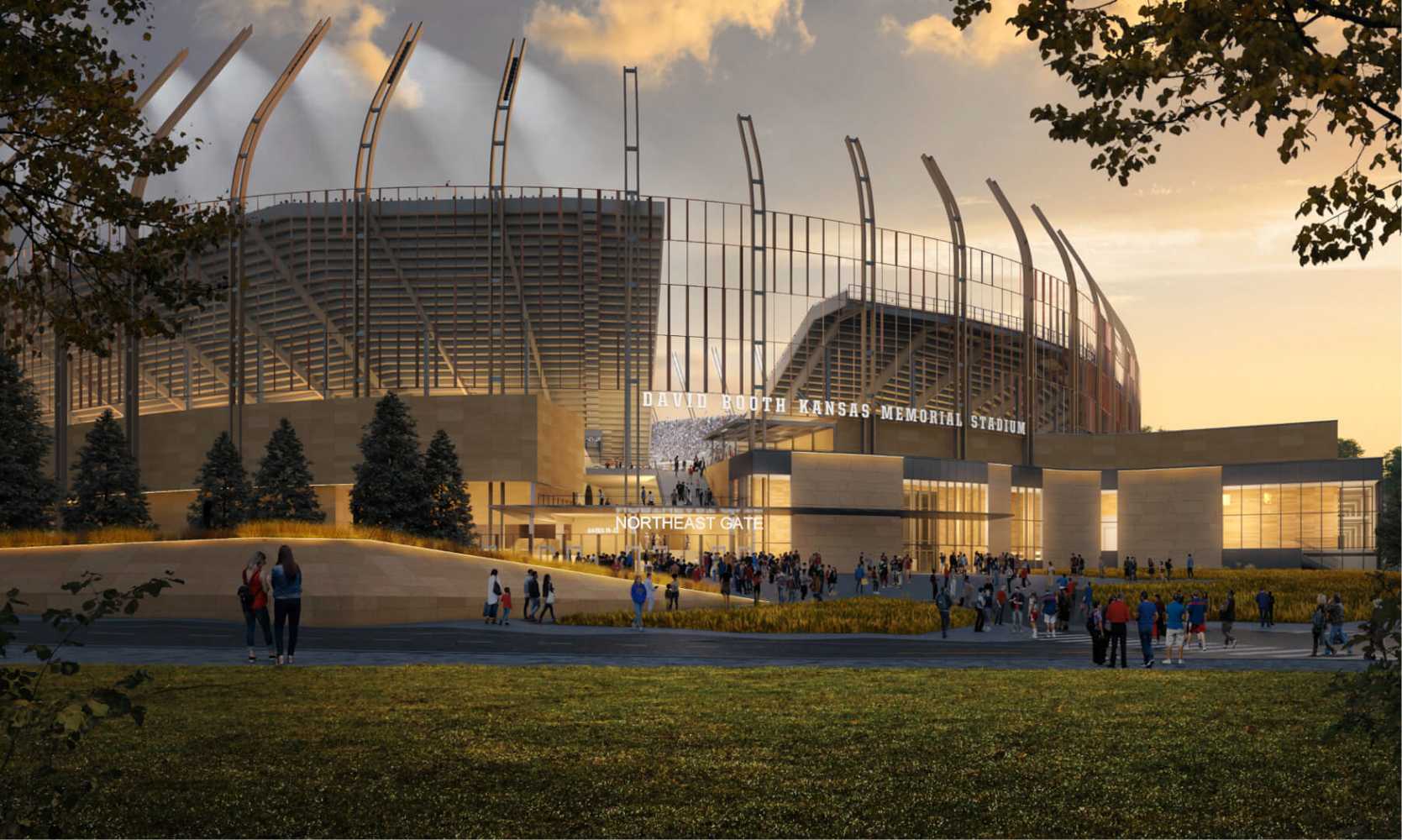
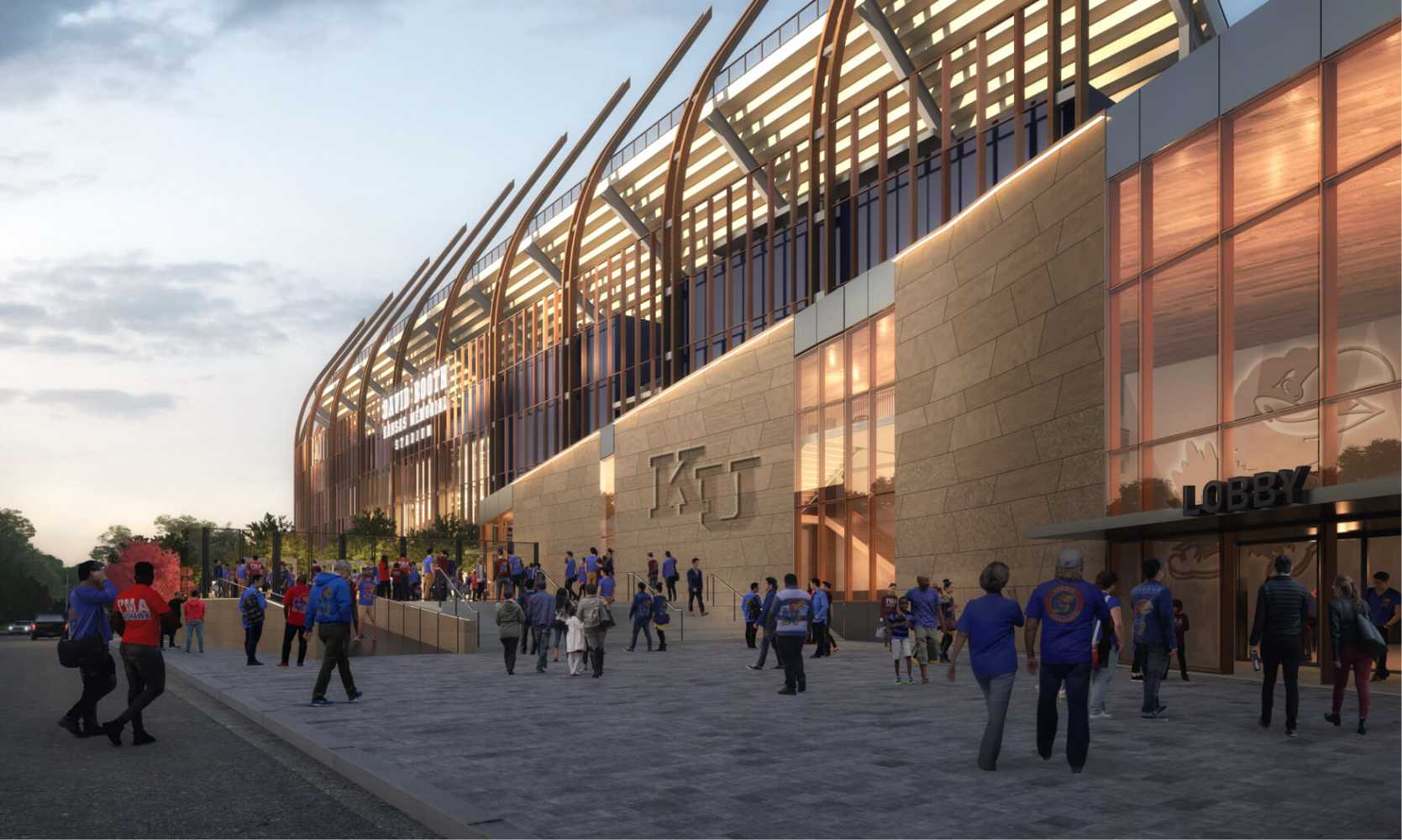
A distinctive feature of the “new” stadium will be tall lighting masts with curved ends, designed to resemble wheat stalks (Kansas is known as the “Wheat State”).
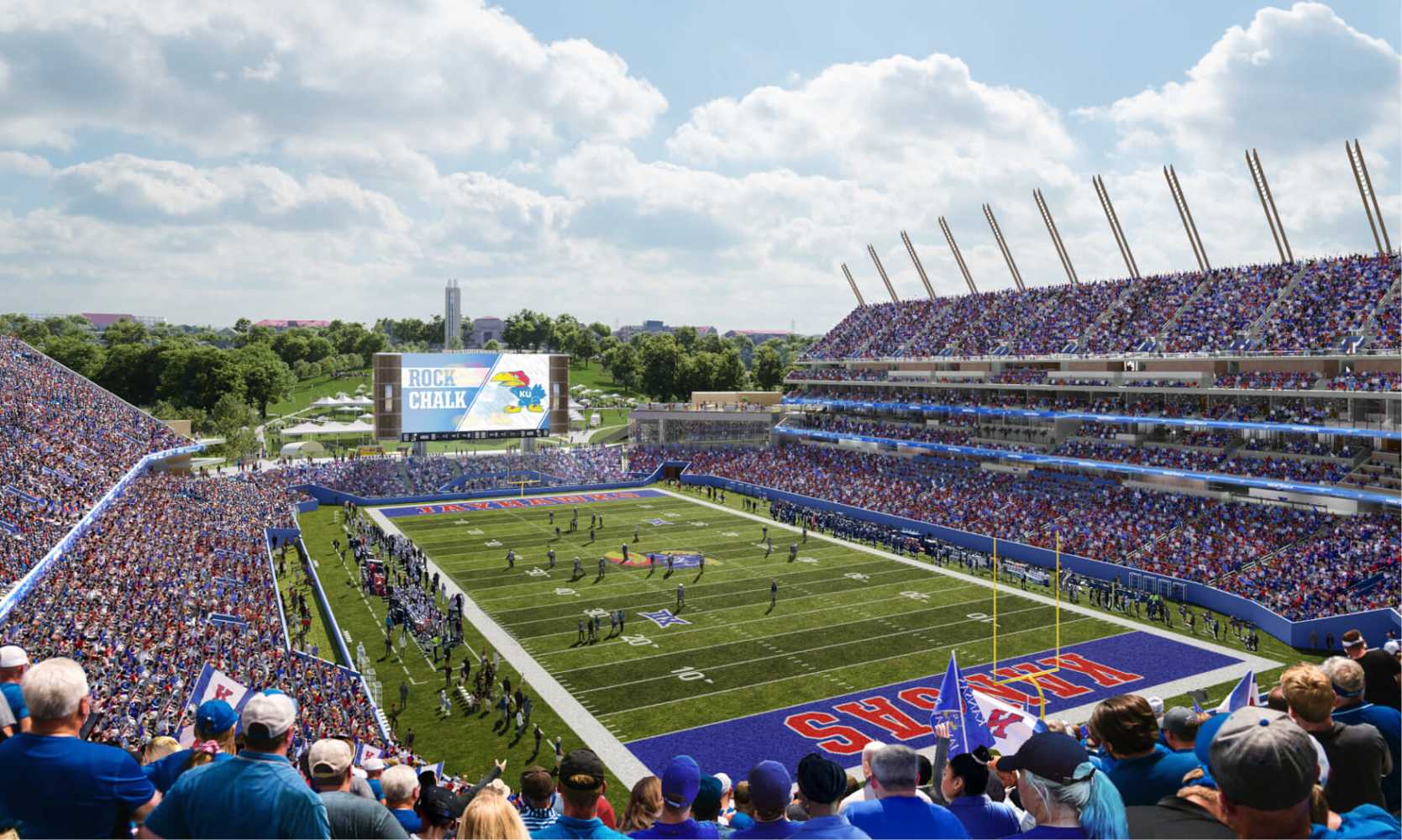
All new stands will be equipped with individual seats with backrests, mainly in shades of blue. An additional, smaller stand will also be built behind the southern end zone, with a new, larger videoboard placed behind it. After redevelopment, the stadium’s capacity is expected to remain close to its original level – around 47,000 seats.
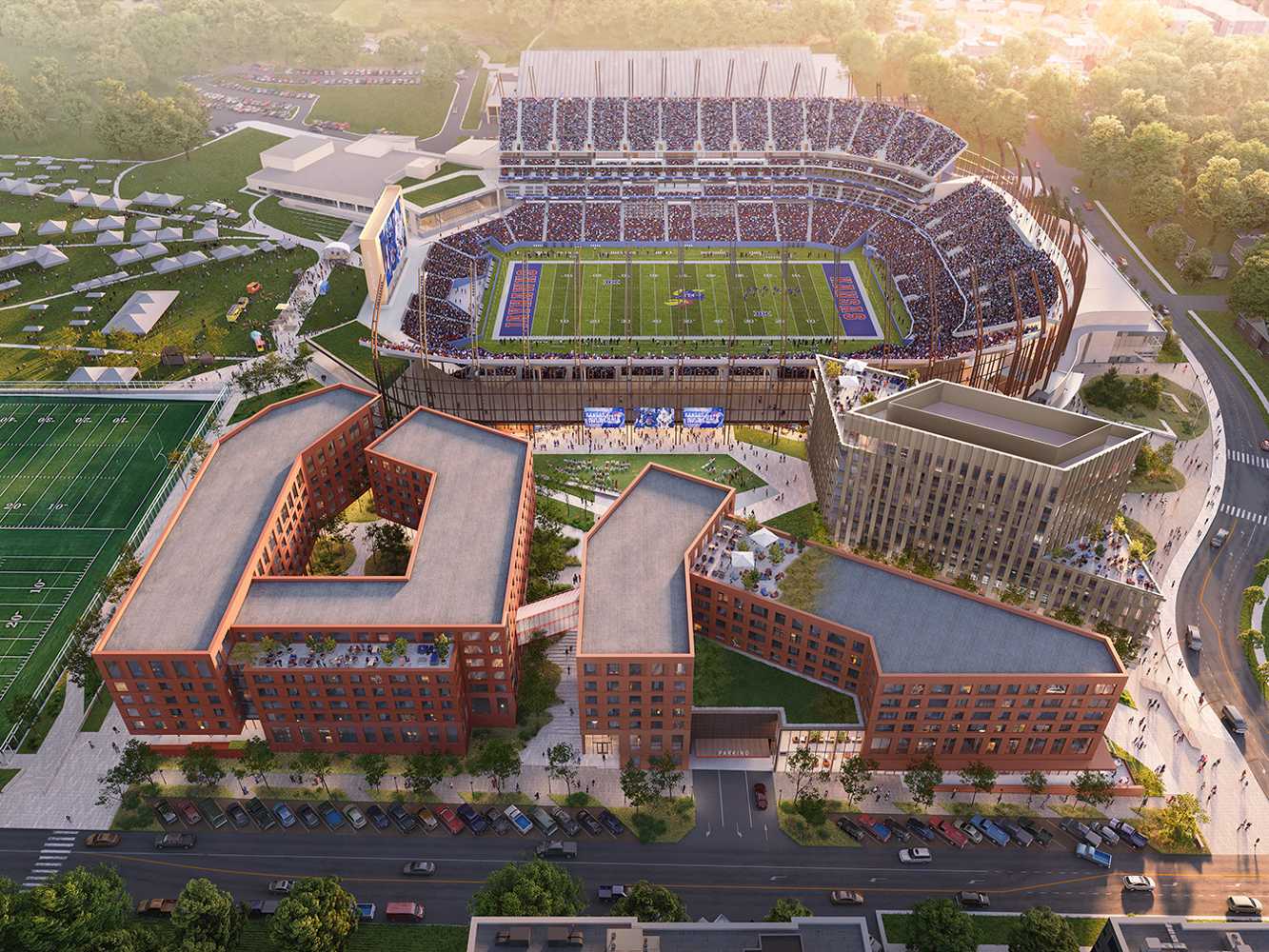
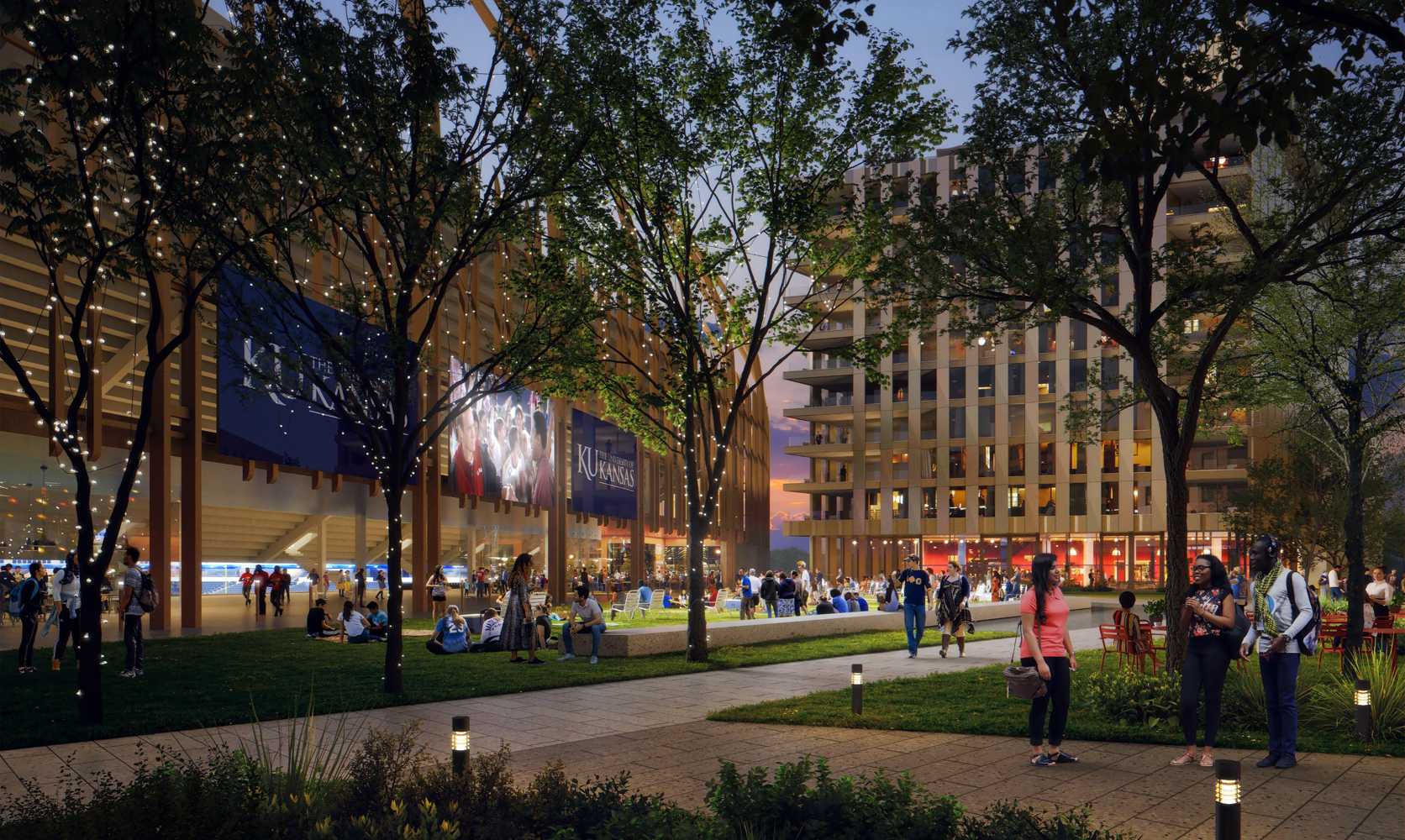
The plan also includes the construction of a conference center behind the north stand, the expansion of the corner Anderson Family Football Complex, and the development of the area behind the east stand, where new buildings with student housing and a hotel are planned, along with a large public plaza.
The first phase, whose key element was the construction of new stands on the west and north sides, was carried out between 2023 and 2025. The second phase began in late 2025 – the new east stand is scheduled to be completed in 2027, while the buildings directly behind it are expected to be finished in 2028.
What does the David Booth Kansas Memorial Stadium look like?
The University of Kansas' representative stadium was built between 1920 and 1921, and was given a distinctive U-shape when a stand was added on the northern curve in 1927. In the 1960s, the stands along the field were expanded, and by 2014 the stadium had an athletic track, a rarity among the facilities of the top college football teams.
The stadium is part of the University of Kansas' main campus, which is located in the city of Lawrence, less than 40 miles (more than 60 km) west of Kansas City. The university's football team, the Kansas Jayhawks, a member of the Big 12 Conference, plays its games at the stadium.
The facility is dedicated to the memory of college students killed in World War I. Since 2017, it is also named after David Booth, who donated $50 million to renovate the stadium. Before the reconstruction, the venue's capacity was more than 47,000 spectators.
When did the plans to rebuild David Booth Kansas Memorial Stadium come about?
The university revealed its intentions for a major remodeling of the stadium in October 2022. The renowned architectural practice HNTB along with Multistudio were engaged to work on the modernization project.
Details of the project and the first renderings were unveiled on August 15, 2023 at the Jayhawk Welcome Center, and the event was attended by Kansas Governor Laura Kelly. It was also announced a little earlier that Turner Construction Company will be the main contractor for the first phase of construction works.
What does the David Booth Kansas Memorial Stadium reconstruction plans include?
The project calls for a complete reconstruction of the stadium's stands, in addition to the construction of a conference center adjacent to the new north stand, an expansion of the Anderson Family Football Complex located at the southwest corner, and a development project on the site directly behind the east stand.
How will the stands of David Booth Kansas Memorial Stadium change after the reconstruction?
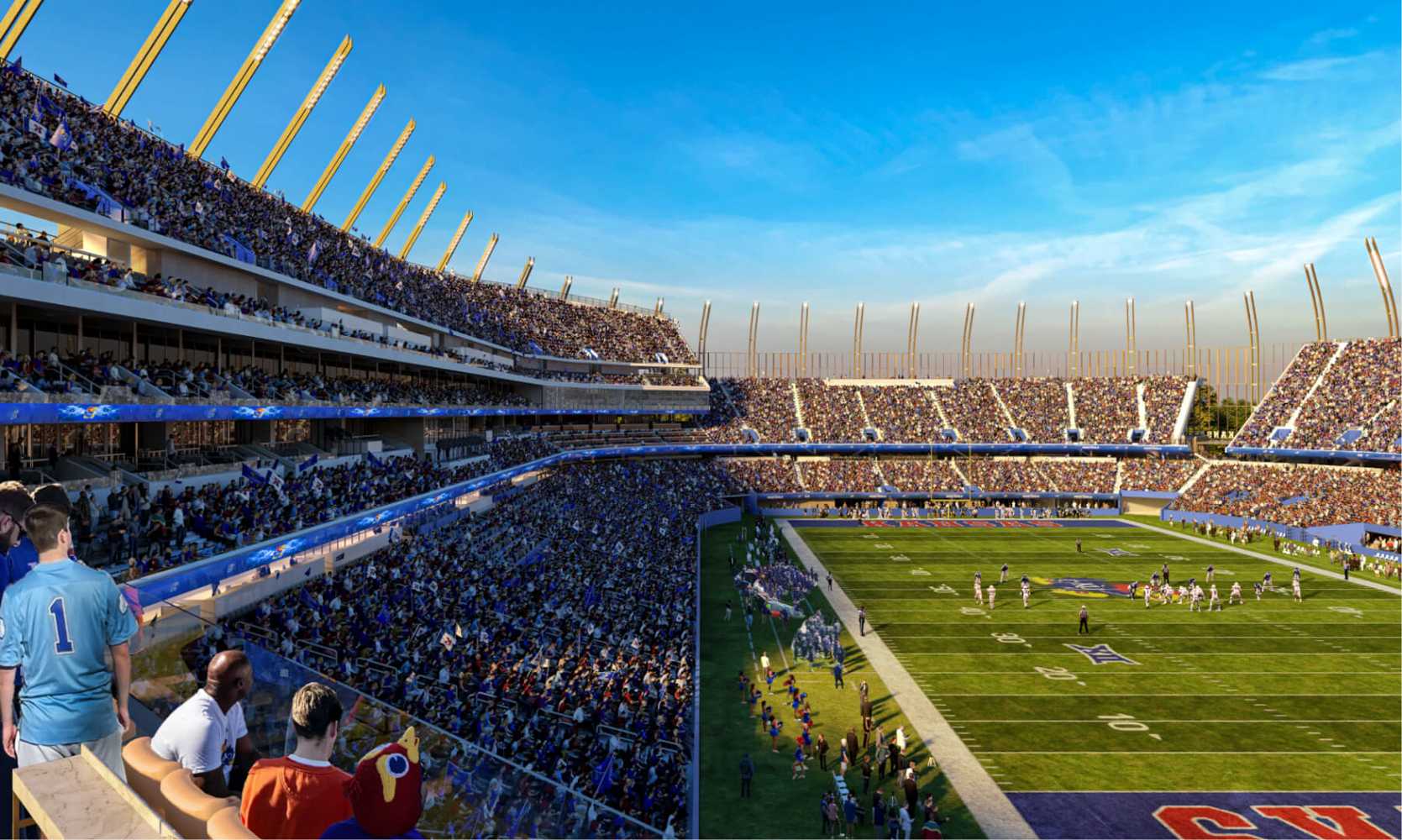
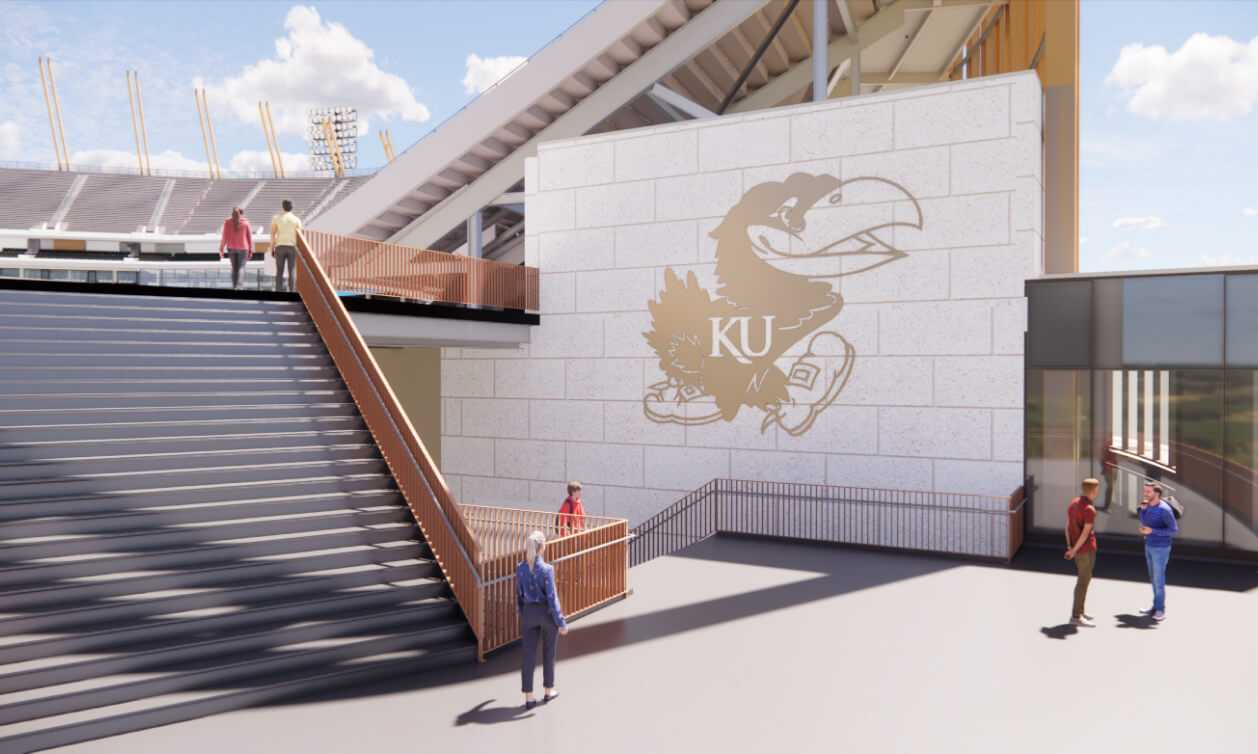
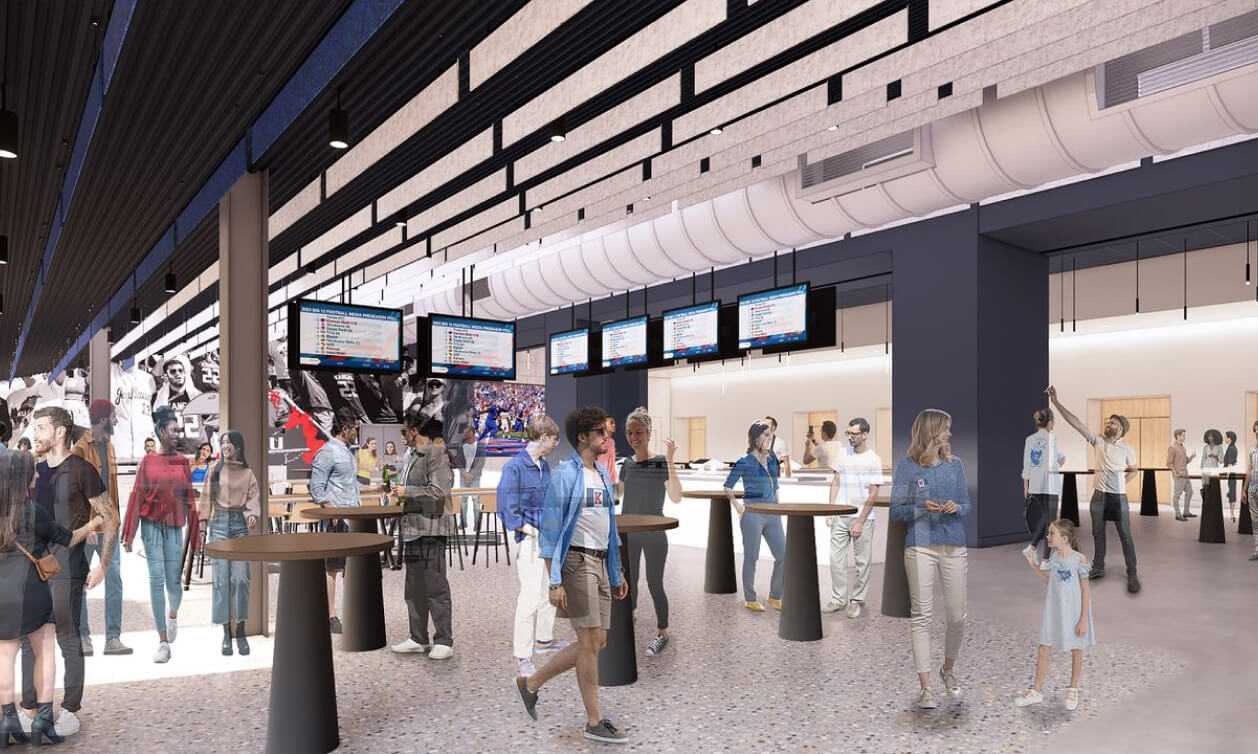
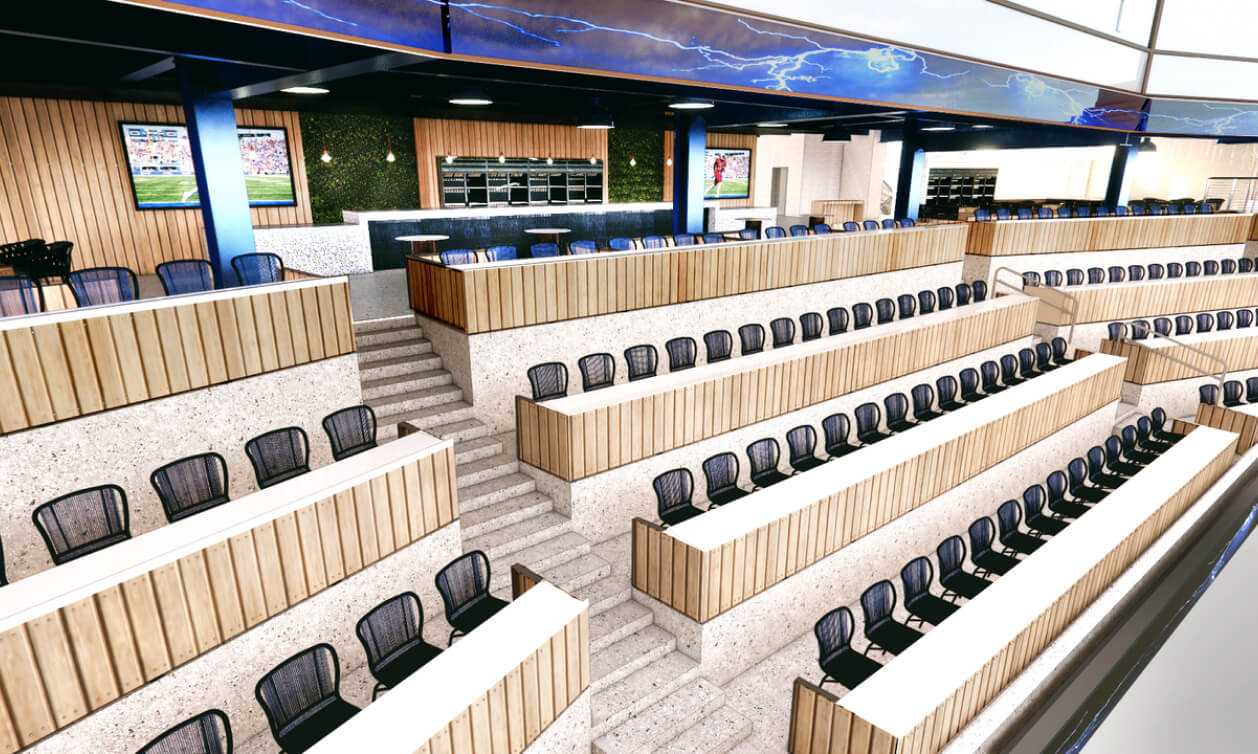
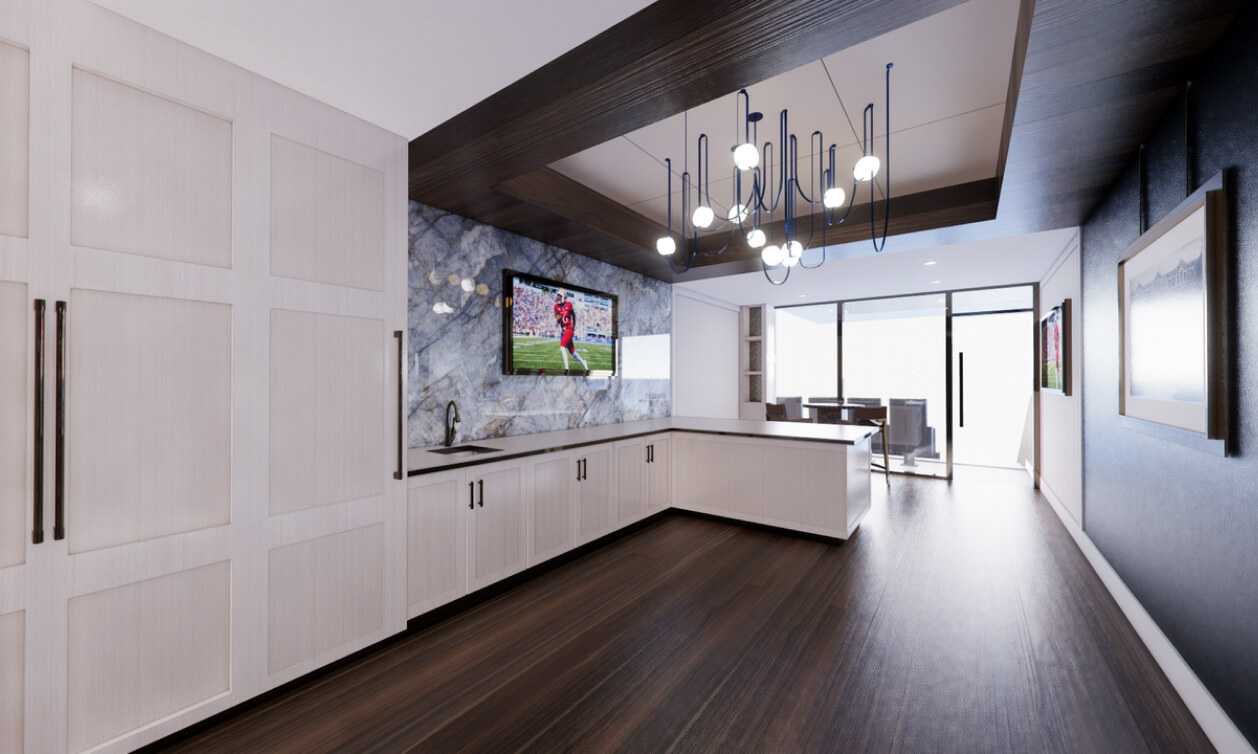
After the reconstruction, the stadium's stands will take on a new form. The west stand will be divided into several tiers and will be equipped with a rich premium offering. The north stand will be built much closer to the field, losing its semicircular shape, and the east stand will receive an expansive upper floor.
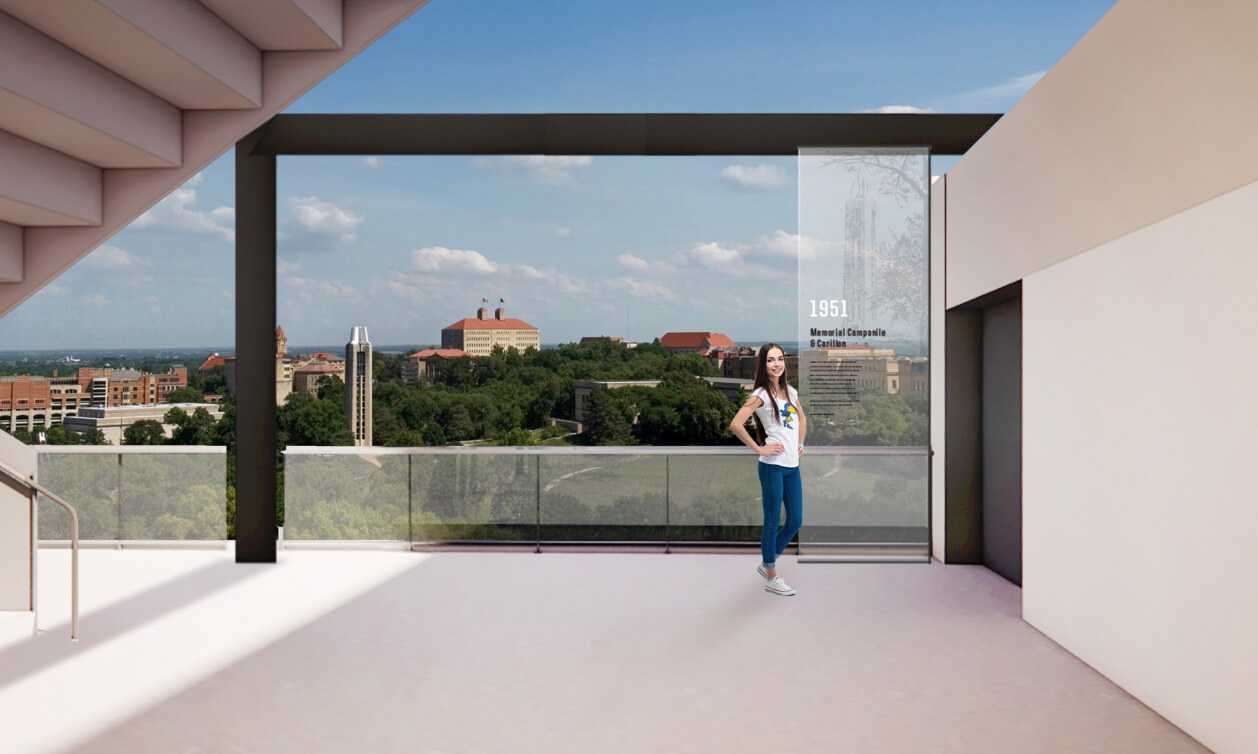
A new stand will also be built on the south, although it will be relatively low and this part of the stadium will still remain somewhat “open”, providing views of the nearby hill and bell tower (Memorial Campanile & Carillon). A new video screen will also be erected on the south side, which will be two and a half times larger than the previous one and will be built closer to the field.
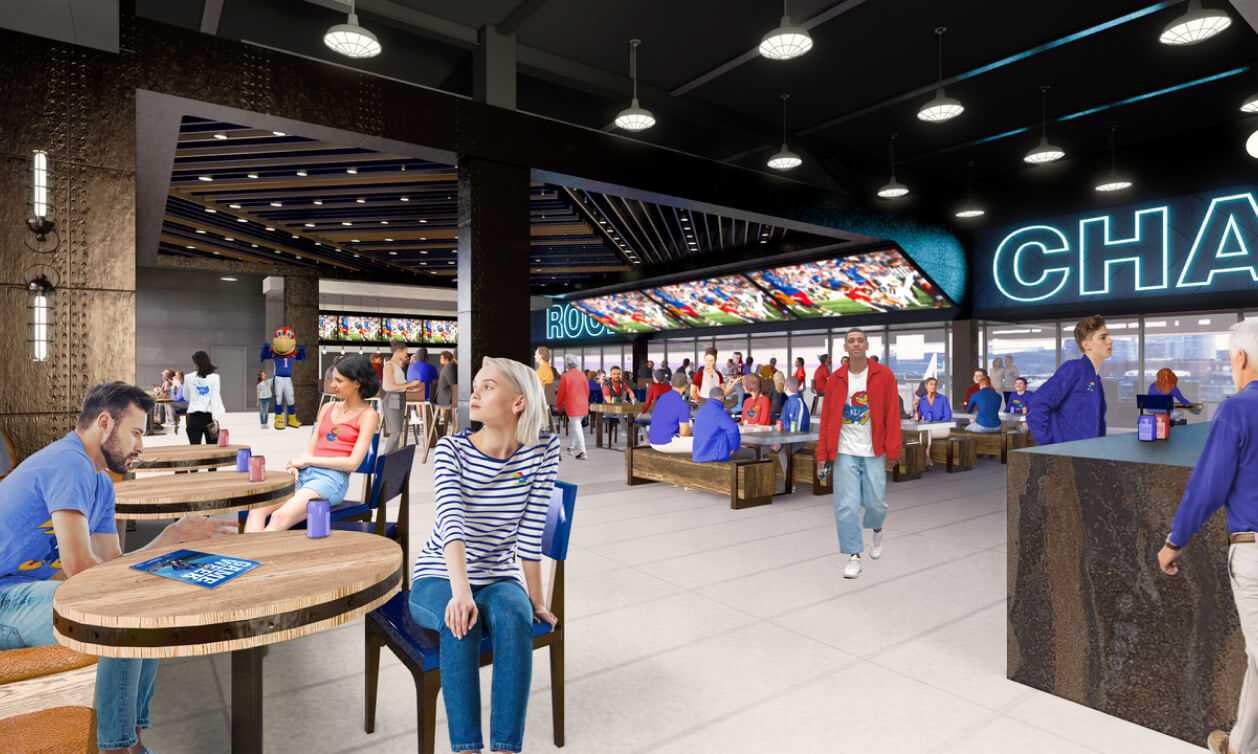
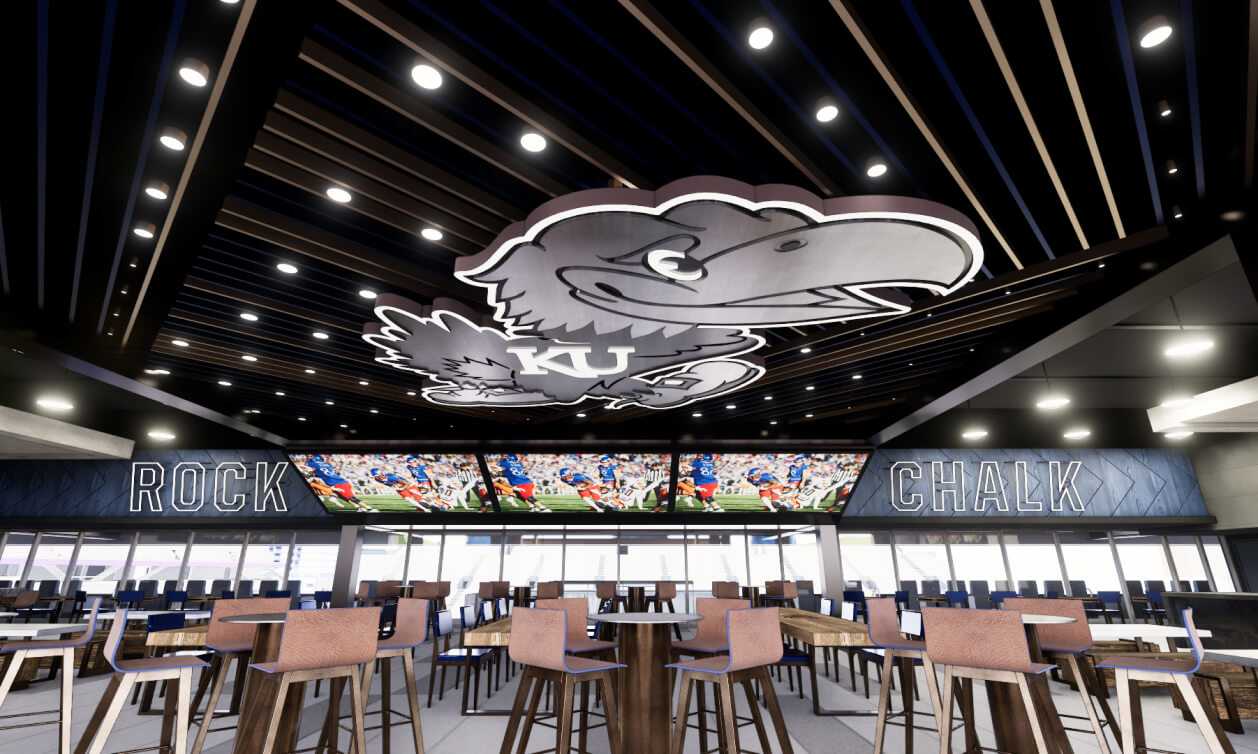
The remodeled stands will receive individual folding seats, most of which will be in blue hues, while the ones on the north stand will be arranged in a large, red letter K. Fans will furthermore gain access to expanded food and beverage offerings and more restrooms.
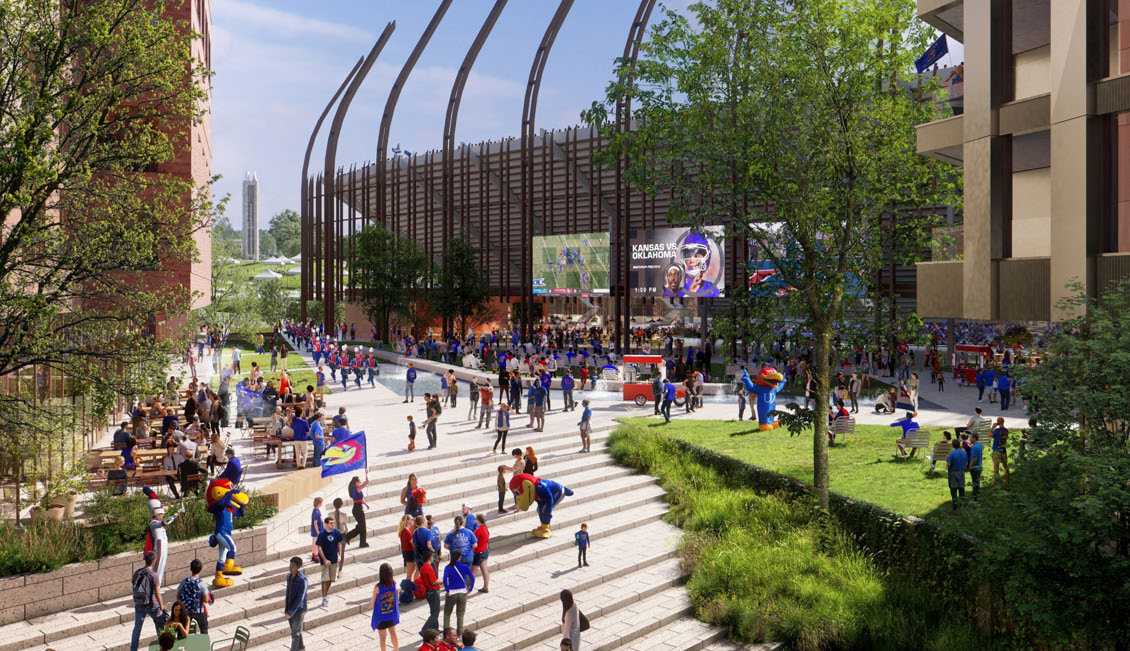
The auditorium will be surrounded by a row of distinctive, slightly curved light poles, which are designed to reference the ears of wheat present in the Kansas landscape (Kansas is known as the Wheat State).
What will the conference center at David Booth Kansas Memorial Stadium be like?
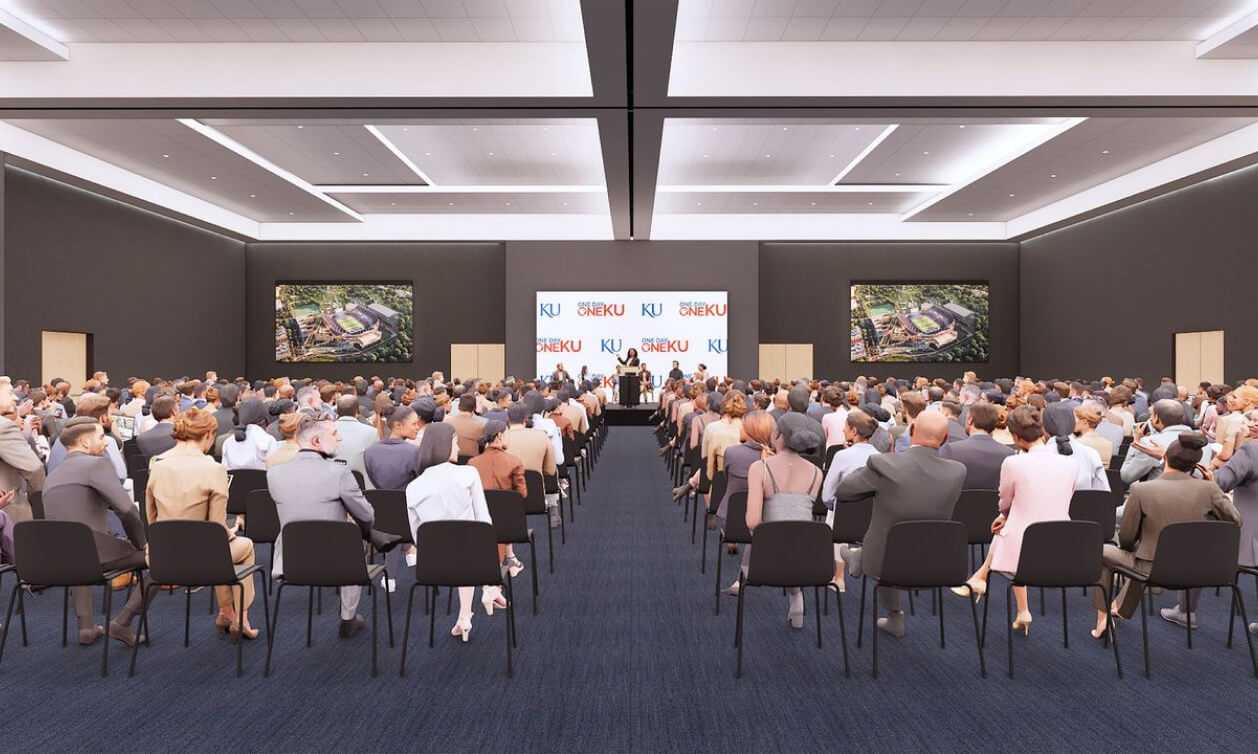
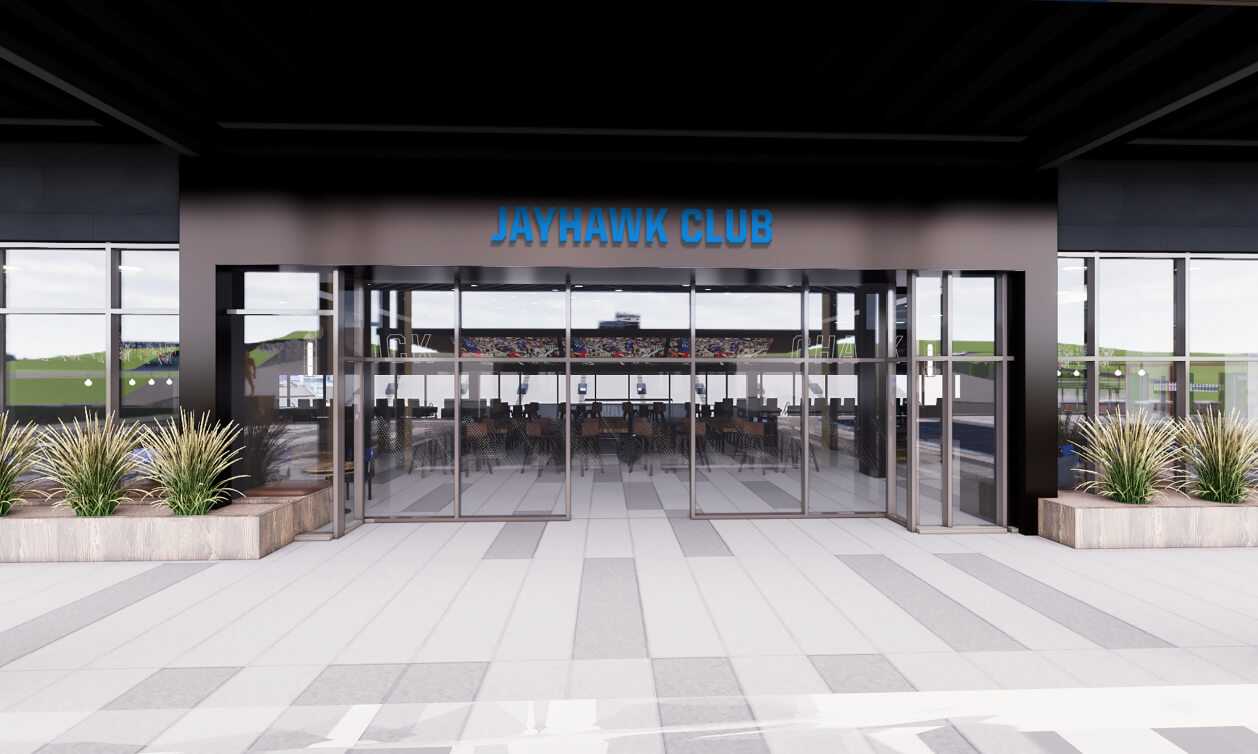
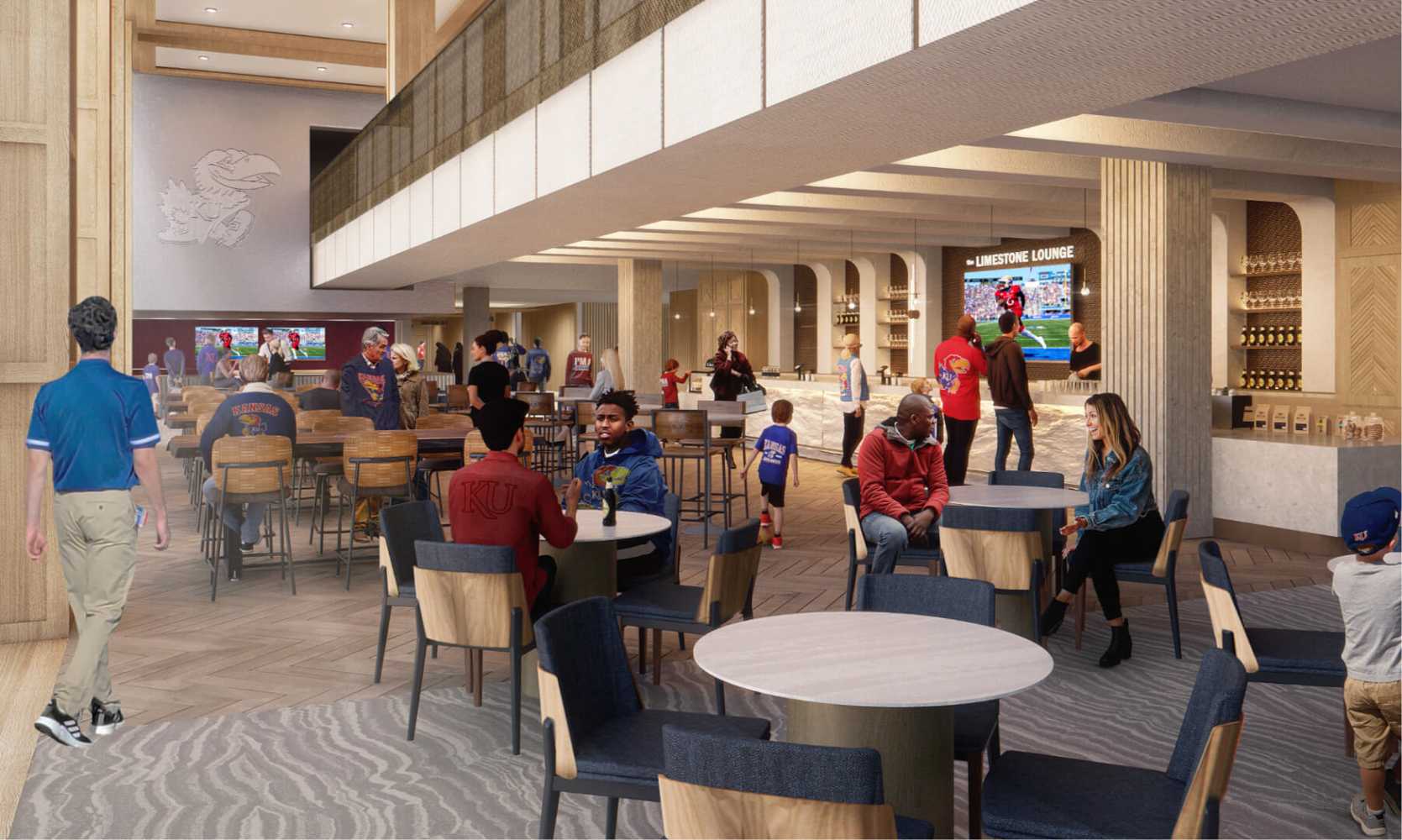
The project includes the construction of a conference center, which will be built behind and connected to the new north stand. The center will cover an area of 55,000 square feet and is expected to serve various events organized by the university, as well as other entities, and will provide additional space for fans during games.
How will the Anderson Family Football Complex be expanded?
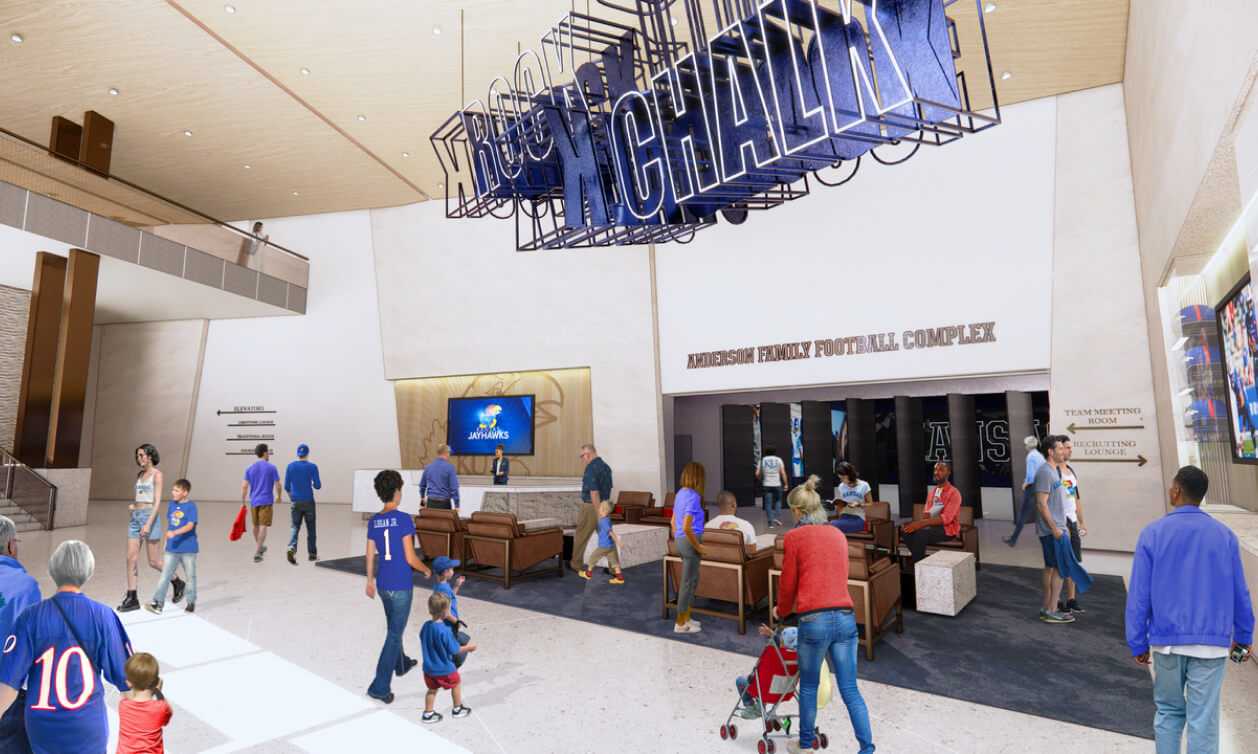
The Anderson Family Football Complex is a building that is located near the southwest corner of the stadium. It was inaugurated in August 2008 and houses various spaces for players, such as locker rooms and a gym, as well as academic areas.
Plans include the renovation of the premises, in addition to the expansion of this building to the north, so that it will connect to the corner stand, above which a glass room will be built overlooking the field – it will house an auditorium for 180 people.
What will be built behind the east stand of David Booth Kansas Memorial Stadium?
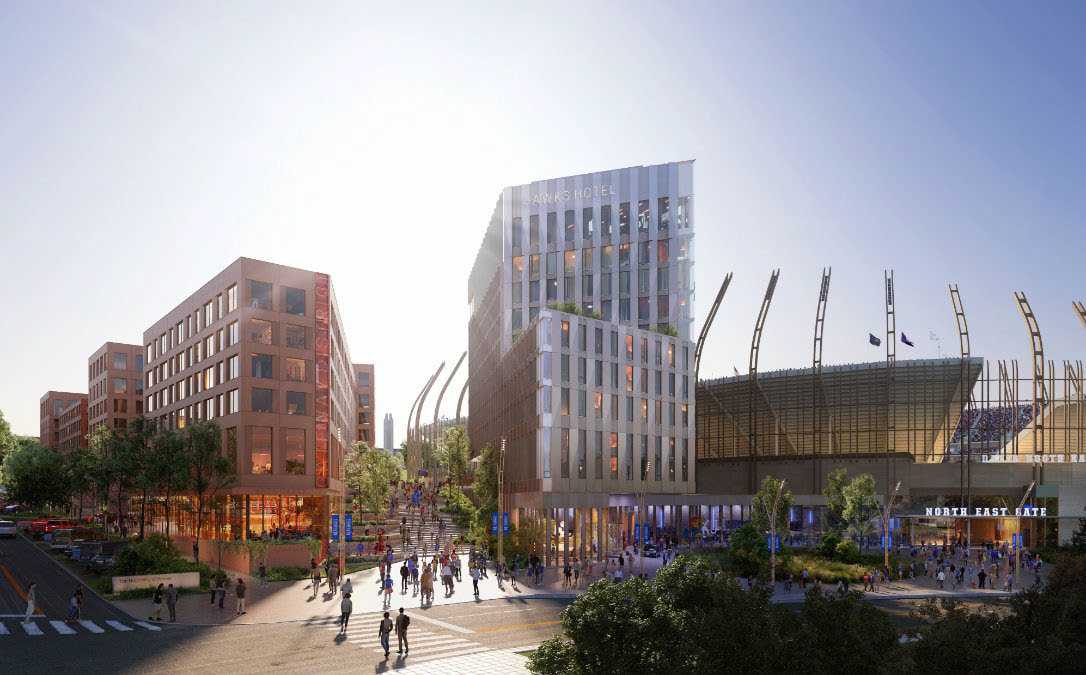
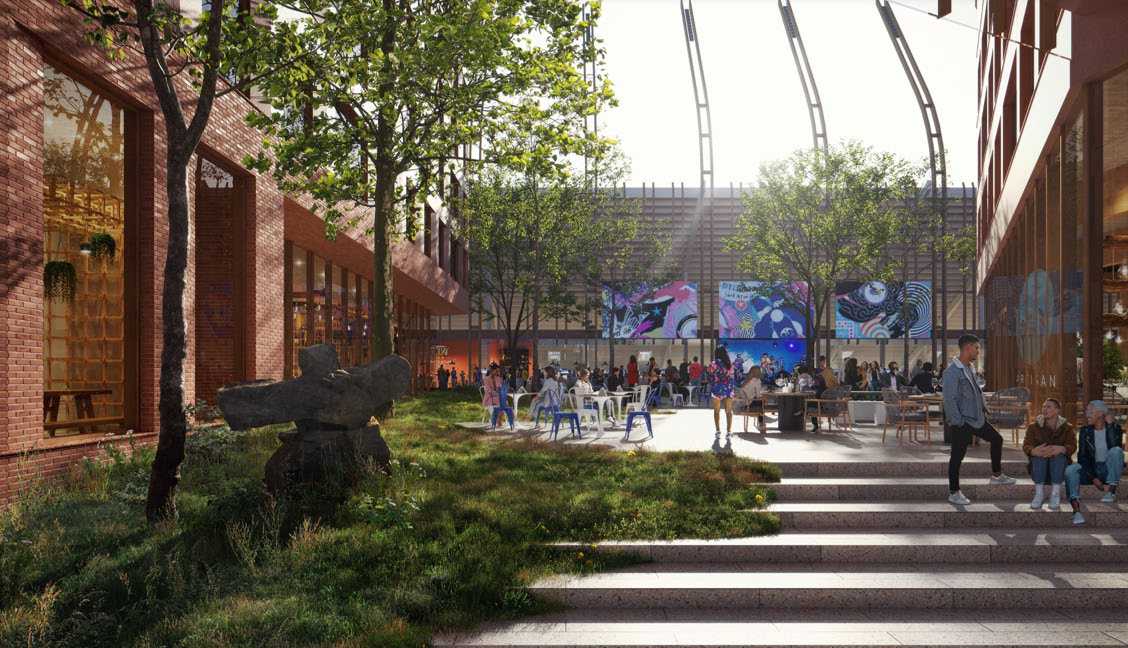
Part of the plan involves the redevelopment of the area located directly behind the east stand, which has so far been largely occupied by parking lots. New buildings are planned there, containing student accommodation, offices, shops, restaurants and a hotel, as well as a public plaza covering 20,000 square feet.
The project is expected to generate additional revenue for the university, while also benefiting the city and creating new jobs. Together with the redeveloped stadium and the new conference center, it will form the so-called Gateway District, serving as a kind of northern gateway to the University of Kansas campus.
How will the redevelopment of David Booth Kansas Memorial Stadium be carried out?
The investment was planned in two phases. The first phase began in 2023 and was completed in the summer of 2025. The second phase started in late 2025 – the stadium redevelopment is expected to be finished in 2027, while the surrounding development project is scheduled for completion in 2028.
What did Phase I of the redevelopment of David Booth Kansas Memorial Stadium include?
The first phase involved the reconstruction of the west and north stands, which were demolished and rebuilt. This stage also included the construction of a conference center behind the north stand, the expansion of the Anderson Family Football Complex, and the installation of a new, larger videoboard on the south side.
Renovation works inside the Anderson Family Football Complex began as early as spring 2023, but the main part of the first phase of the project started in December 2023 (after the Jayhawks’ season had ended) with the demolition of the stands on the west and north sides. The first phase was completed in August 2025, ahead of the start of the new season.
What will Phase II of the David Booth Kansas Memorial Stadium redevelopment include?
As part of the second phase, the east stand will be completely rebuilt. An additional, smaller stand will also be constructed on the south side. Another key element of this phase will be the construction of new buildings (student accommodation and a hotel) and a large public plaza behind the east stand.
Phase II began in December 2025 with the demolition of the old east stand. For the 2026 season, the lower tier of the new stand and the smaller stand behind the south end zone are expected to be ready. The entire east stand is scheduled for completion ahead of the 2027 season, while the development project behind it is expected to continue until 2028.
Clark Construction Group and JE Dunn Construction are responsible for carrying out this second phase of the project.
Where will the Kansas Jayhawks play during the David Booth Kansas Memorial Stadium redevelopment?
Due to extensive work on the stadium, the Jayhawks played their home games in Kansas City during the 2024 season – two at Children’s Mercy Park and four at Arrowhead Stadium. However, for most of the redevelopment period, the team continues to play at their home venue.
How will the capacity of David Booth Kansas Memorial Stadium change as a result of the redevelopment?
After the completion of Phase I, the stadium’s capacity dropped to 41,525 seats for the 2025 season. Once the new east stand is built in Phase II, capacity is expected to return to its pre-redevelopment level – around 47,000 seats.
What will the redevelopment of David Booth Kansas Memorial Stadium cost?
The total cost of the project is estimated at $809 million. A significant portion of the funding has been secured through donations, with the remainder coming from the university’s own funds, public funding, and private investors.
The redevelopment of David Booth Kansas Memorial Stadium can be followed on a separate subpage
Advertisement
Renderings
-
2023 © The University of Kansas 
2023 © The University of Kansas 
2023 © The University of Kansas 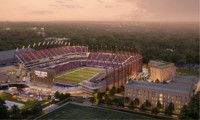
2023 © The University of Kansas 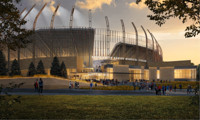
2023 © The University of Kansas 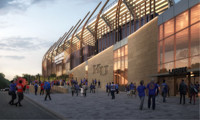
2023 © The University of Kansas 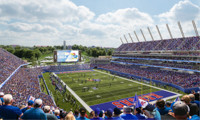
2023 © The University of Kansas 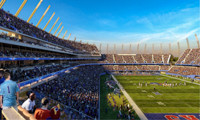
2023 © The University of Kansas 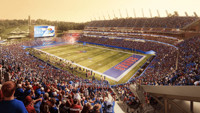
2023 © The University of Kansas 
2023 © The University of Kansas 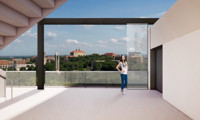
2023 © The University of Kansas 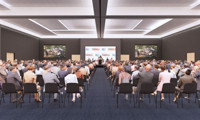
2023 © The University of Kansas 
2023 © The University of Kansas 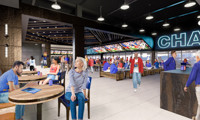
2023 © The University of Kansas 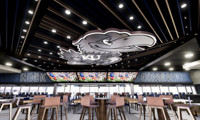
2023 © The University of Kansas 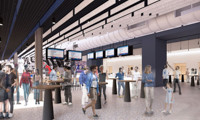
2023 © The University of Kansas 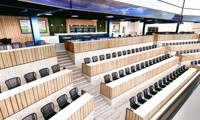
2023 © The University of Kansas 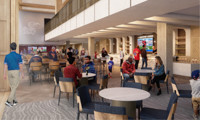
2023 © The University of Kansas 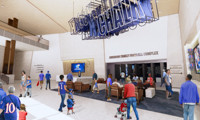
2023 © The University of Kansas 
2023 © The University of Kansas 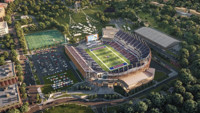
2023 © The University of Kansas 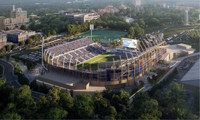
2023 © The University of Kansas 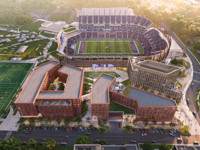
2024 © The University of Kansas 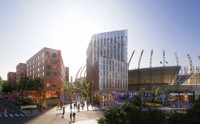
2024 © The University of Kansas 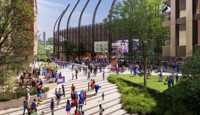
2024 © The University of Kansas 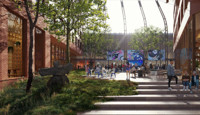
2024 © The University of Kansas 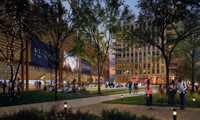
2024 © The University of Kansas
Phase I:
Gateway District: