 StadiumDB
The Palace Project
| Capacity | 73 000 |
|---|---|
| Country | United States of America |
| City | Norman |
| Clubs | Oklahoma Sooners |
| Category | Design awaiting implementation |
| Cost | $450 M |
| Construction | 2028–2029 |
| Design | Populous |
| Contractor | Manhattan Construction Group |
Advertisement
The Palace Project – design description
What is The Palace Project all about?
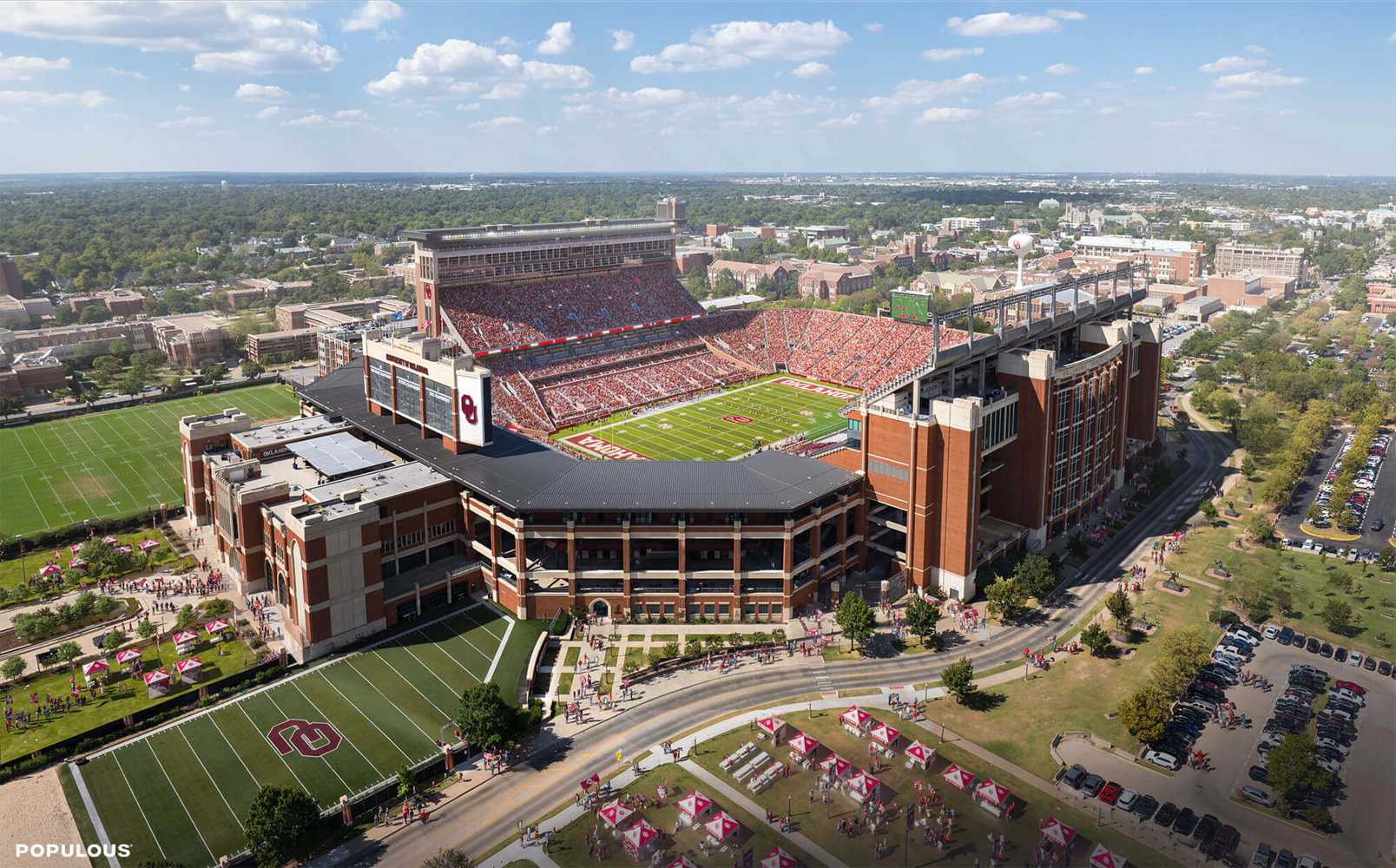
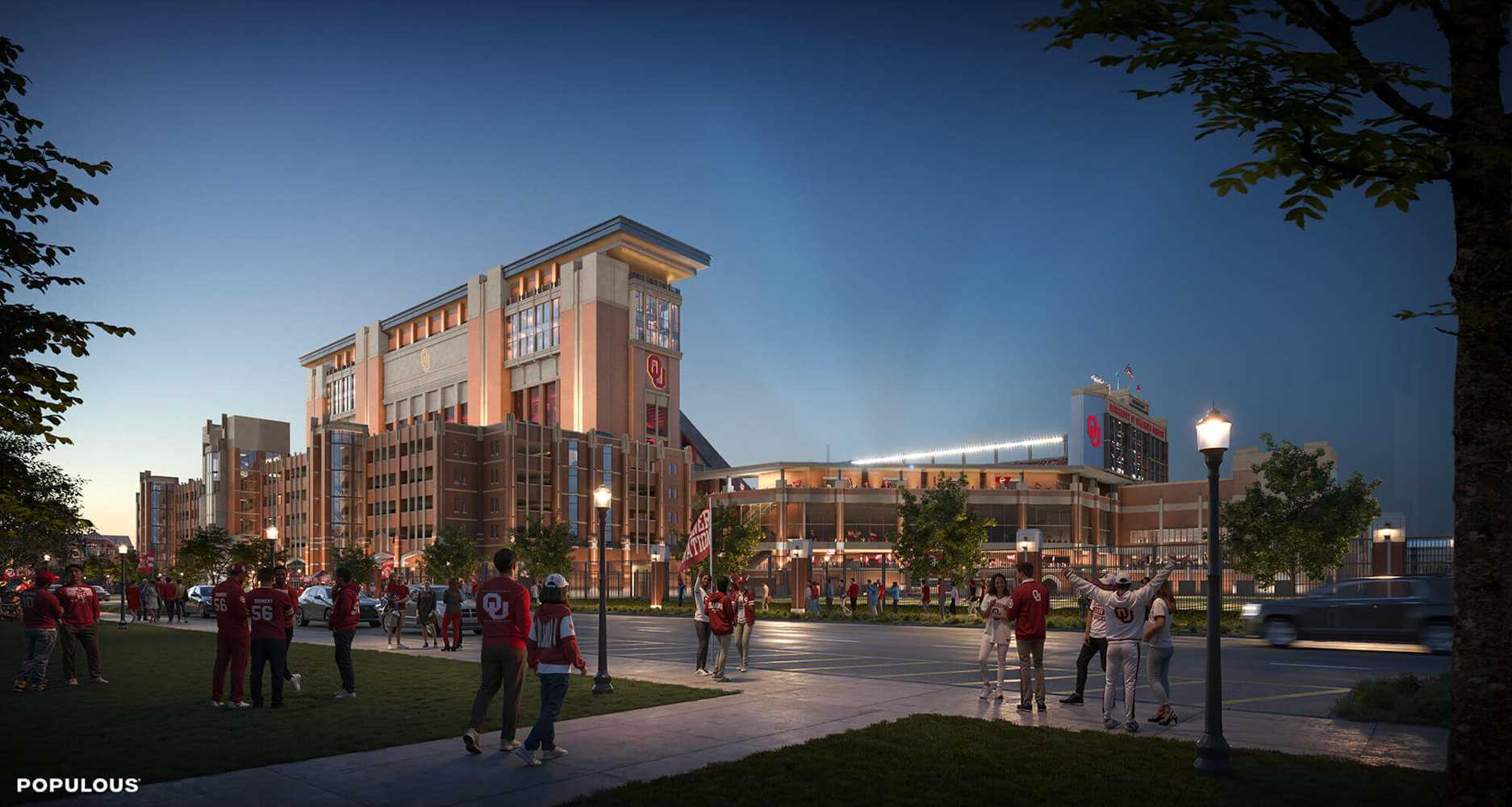
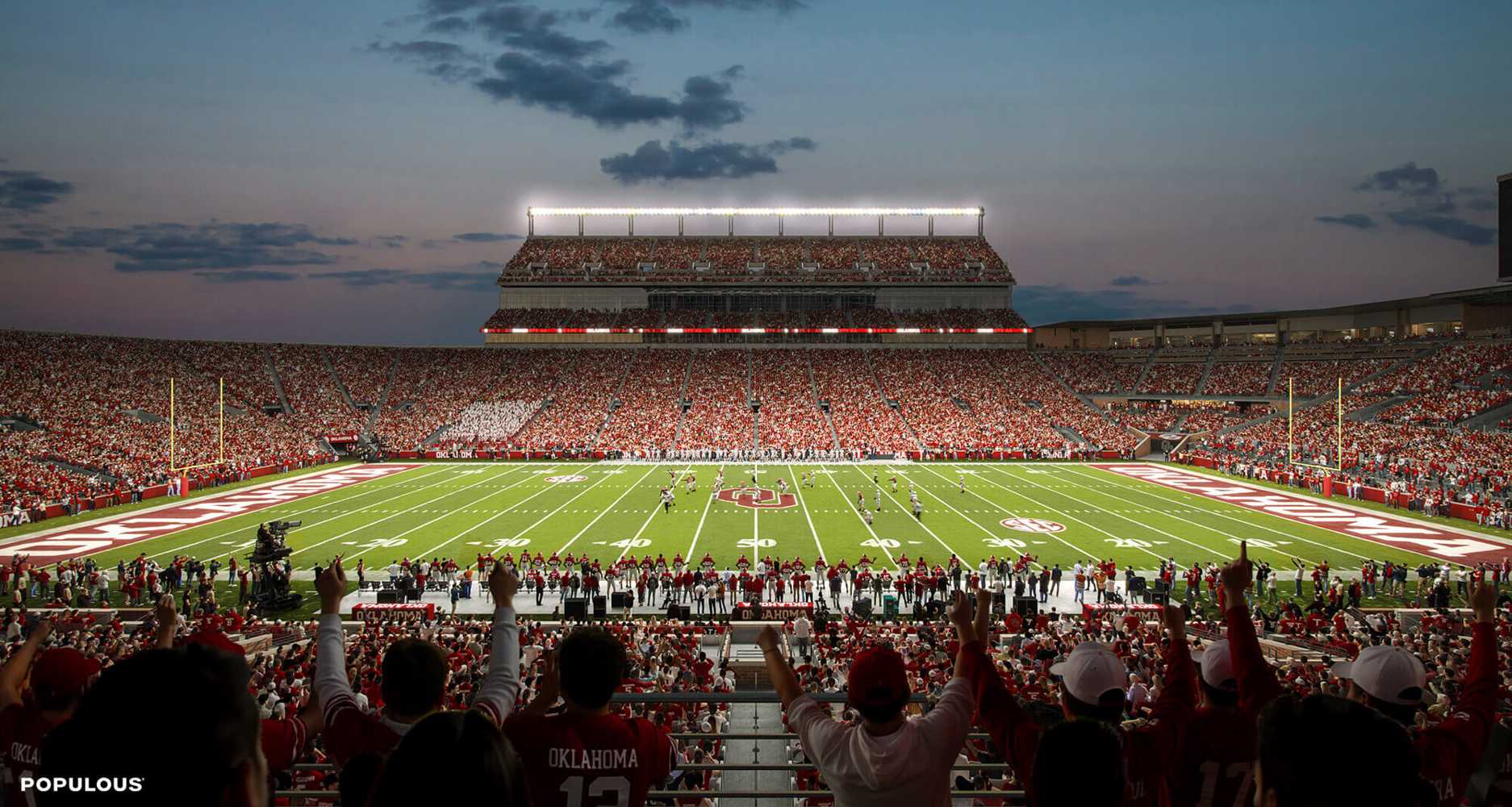
The largest investment in the more than century-long history of Oklahoma Memorial Stadium focuses on the reconstruction of its west grandstand. Despite the scale of the project, the end result may, at first glance, appear similar to its current form.
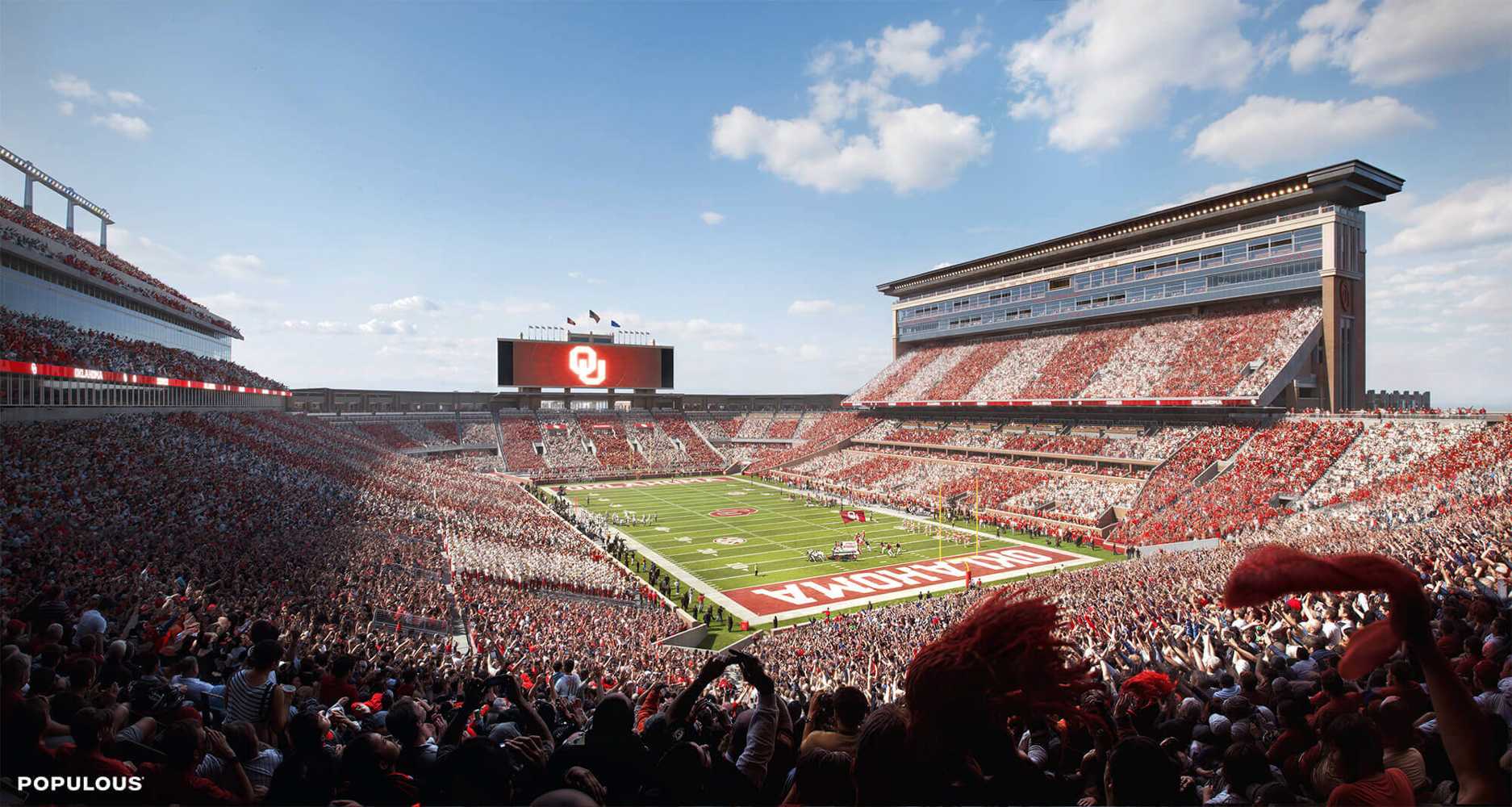
However, the changes to the grandstand’s structure will be significant – the lower level will be completely rebuilt, while a much larger press box will be added on top, stretching the full length of the field.
The project aims to improve the fan experience and expand VIP areas, which should boost revenue, though the stadium’s capacity will decrease by around 7,000 seats.
The vision, known as The Palace Project, was developed by the renowned architecture firm Populous. Construction is scheduled to begin after the 2027 season, with completion planned before the start of the 2029 season. The estimated $450 million cost will be covered through private contributions.
What is Oklahoma Memorial Stadium like?
The first game at Oklahoma Memorial Stadium was played in 1923. At the time, it was little more than a field with modest bleachers seating 500 spectators, and the first true grandstand was built two years later.
Over the following years and decades, the stadium was gradually expanded, and by the early 2000s its capacity exceeded 80,000, making it by far the largest stadium in the state of Oklahoma.
From the very beginning, the stadium has been home to the Oklahoma Sooners football team, representing the University of Oklahoma. The Sooners are one of the most successful programs in college football, and games at Oklahoma Memorial Stadium are regularly sold out.
The stadium is located on the University of Oklahoma campus in Norman, in the southern part of the Oklahoma City metropolitan area. Its full name is Gaylord Family – Oklahoma Memorial Stadium, and the playing field is named Owen Field, after Bennie Owen.
The most recent major expansion took place between 2015 and 2017. This project rebuilt the grandstand behind the south end zone, filling in the missing corners and completing the seating bowl. Since then, the stands have formed a continuous, unified structure surrounding the entire field.
How did plans for the west grandstand renovation come about?
Plans to modernize the west grandstand were already drawn up during the previous expansion (2015–2017). It was intended to be the second phase of the project, which was postponed at the time.
The plans were revived in 2024, and in September of that year the University of Oklahoma Board of Regents approved funding for the design work. On November 11, 2025, the university approved the final concept, and ten days later the project was officially launched, with the first renderings released.
The project was designed by the renowned architecture firm Populous, which had also developed the previous expansion plan (2014) – that plan also included a renovation of the west grandstand, but the new concept differs significantly from the earlier one.
The new plan was named The Palace Project, in reference to the stadium’s nickname, The Palace on the Prairie.
What are the key features of The Palace Project?
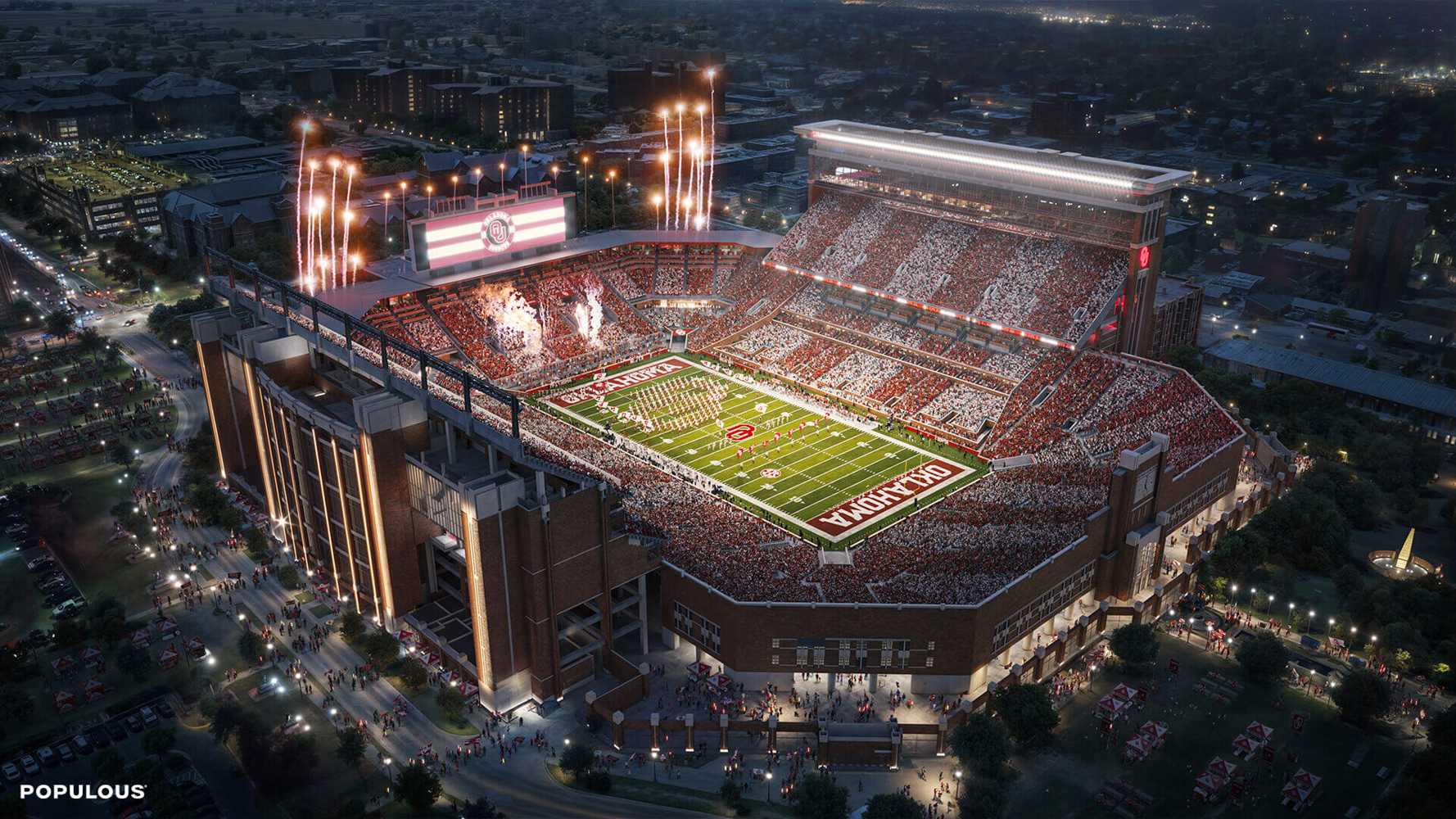
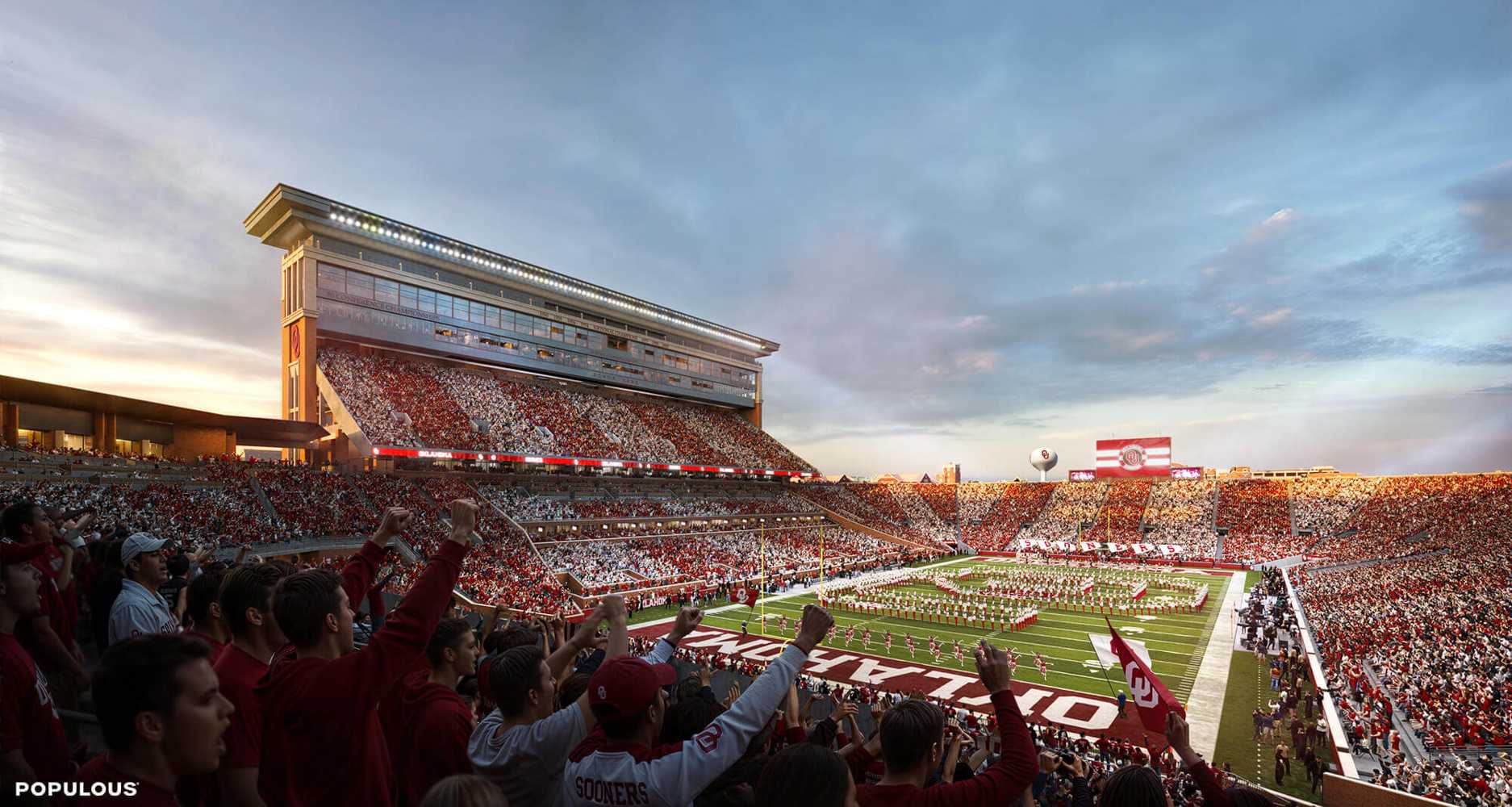
The project focuses on the reconstruction of the west grandstand at Oklahoma Memorial Stadium. While the grandstand will undergo a comprehensive renovation, its overall shape will not change drastically; the existing form, with its two-tiered seating and press box on top, will largely be preserved.
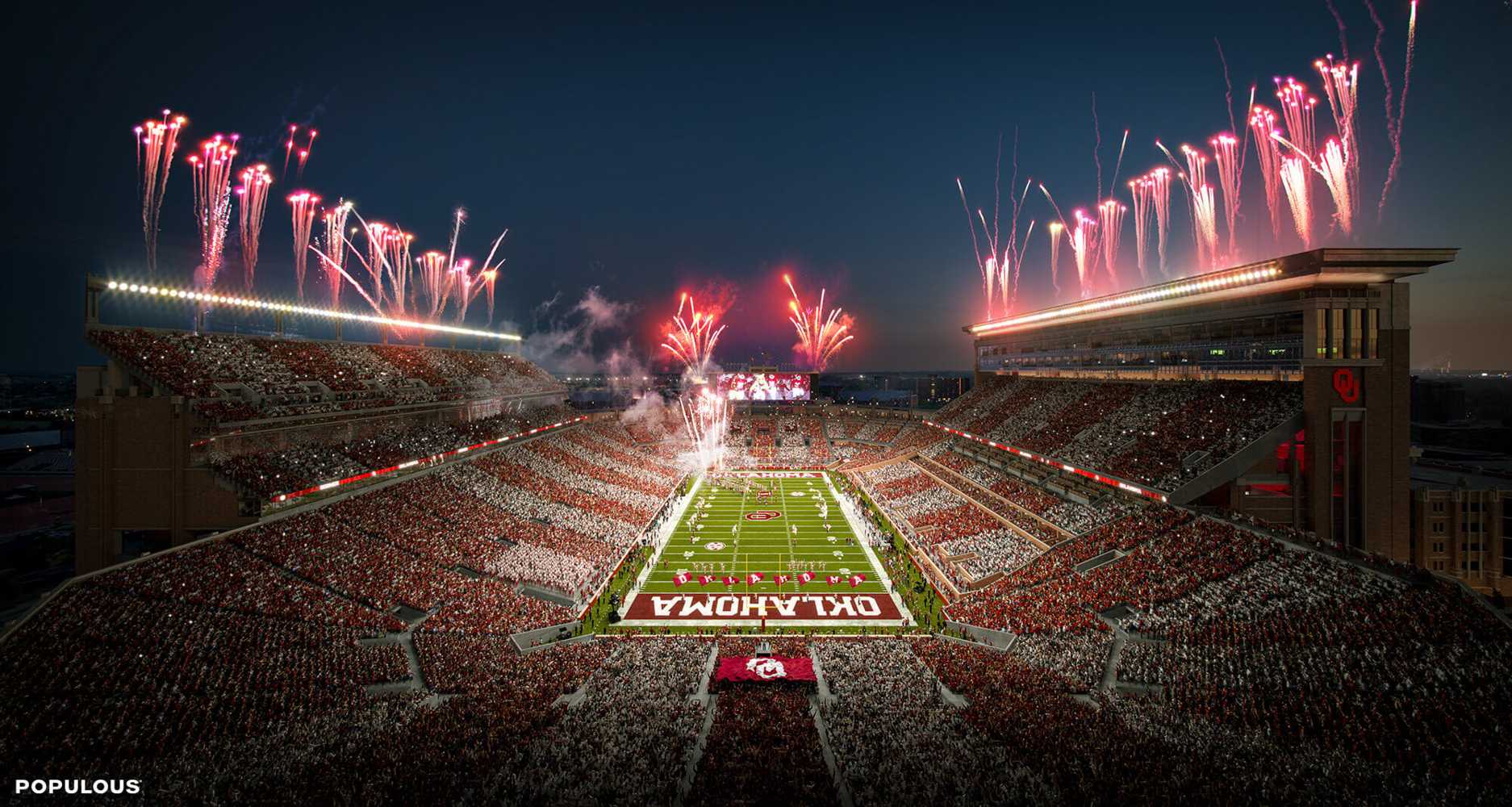
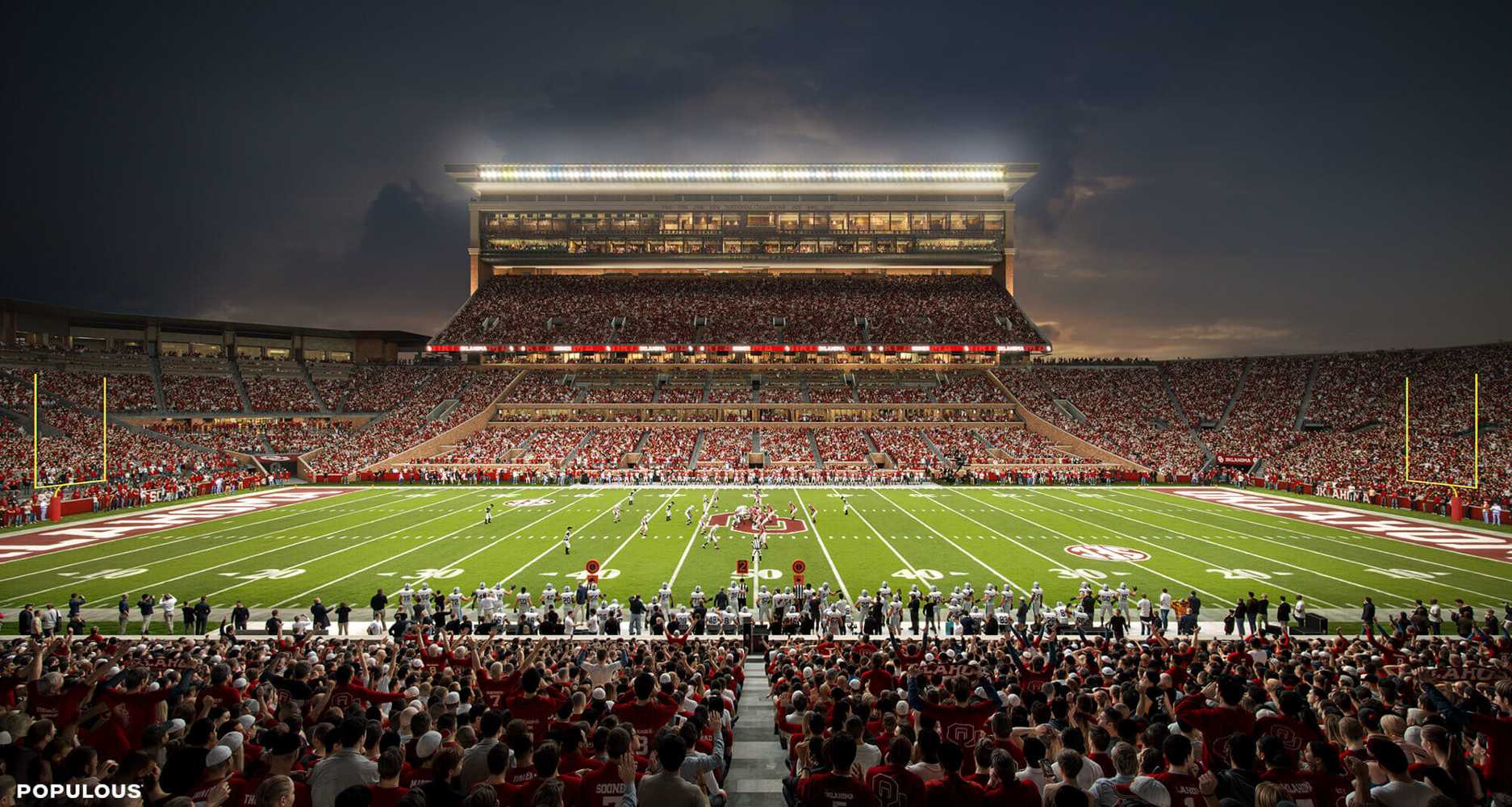
The structural changes will be significant, however – the entire lower level will be demolished and rebuilt, the upper tier will be modernized, and the press box will be replaced with a new, much larger structure stretching the full length of the field.
The grandstand will feature 47 luxury suites, 64 smaller loge boxes accommodating around 280 guests, and approximately 4,000 new club seats. VIP guests will be served in six premium club and lounge areas.
All existing seats will be replaced with new ones, and additional accessible seating will be added. The renovation will give fans more space; however, the improved comfort and expanded premium areas will result in a reduction of approximately 7,000 seats.
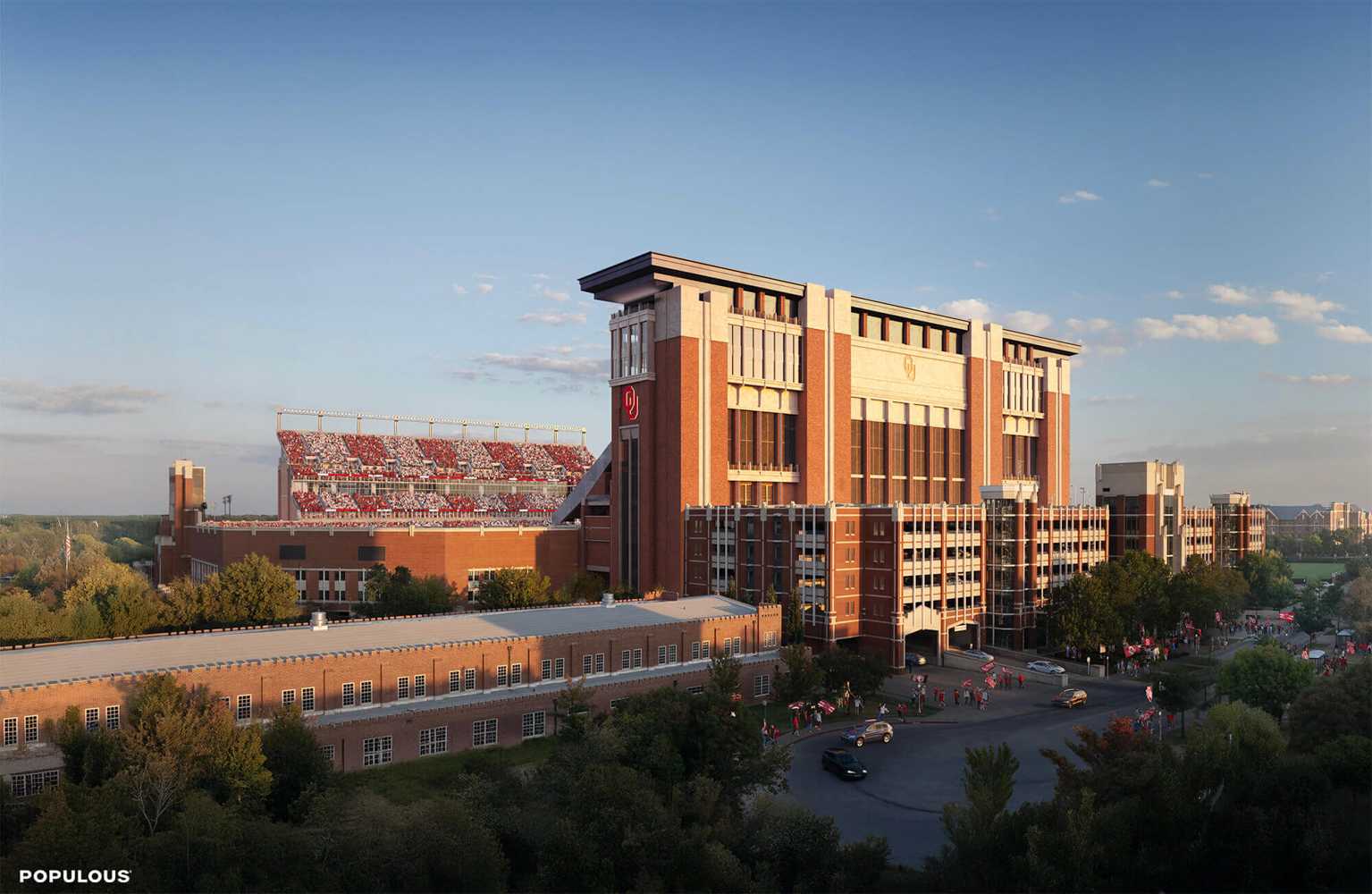
New entry points will be added to the exterior of the grandstand, while interior upgrades will include widened concourses, renovated restrooms, additional elevators, and new concession stands.
Additional changes include the removal of the existing light towers, replaced by new lighting rigs located along the upper sections of the stands running the length of the field. The stadium will also gain an upgraded sound system and enhanced WiFi coverage.
What will the west grandstand renovation at Oklahoma Memorial Stadium bring?
The renovation will raise the standard of the west grandstand and the entire stadium, enhance fan comfort, and enrich the game-day experience. With the addition of numerous new premium seats, the stadium’s offerings will become more diverse, and the revenue-generating VIP areas are expected to boost the Sooners’ income and support team investments.
Since the renovation will reduce the stadium’s capacity by around 7,000 seats, the university has indicated the possibility of a future expansion of the north grandstand, which could help offset the loss of these seats.
When will the west grandstand at Oklahoma Memorial Stadium be renovated?
Construction is scheduled to begin after the 2027 season, with Manhattan Construction Group as the main contractor. During the 2028 season, the west grandstand will operate with a reduced number of seats. Full completion of the renovation is planned before the start of the 2029 season.
How much will The Palace Project cost?
The project’s estimated cost is $450 million, making it the largest investment in the stadium’s history. The funds will come entirely through private contributions, with no need to raise student fees or use public money.
Advertisement