 StadiumDB
Holstein-Stadion
| Capacity | 22 087 |
|---|---|
| Country | Germany |
| City | Kiel |
| Clubs | Holstein Kiel |
| Category | Design being implemented |
| Cost | €75 M ($87.7 M) |
| Construction | 2026–2030 |
| Design | HPP Architekten, AX5 architekten |
| Contractor | Zech Sports GmbH |
Advertisement
Holstein-Stadion – design description
How can the Holstein-Stadion redevelopment project be summarized?
Although three stands at Holstein-Stadion have already been rebuilt since the beginning of the 21st century, these changes were mostly temporary and did not meet the ambitions of the club or the city (though they did allow the minimum licensing requirements to be met).
Following years of effort, and thanks to the cooperation of the state (Land) and city authorities, the club, and private investors, a project has finally been developed that lives up to the ambitions of the state capital and a team aiming for the Bundesliga.
The plan envisages a complete redevelopment of the stadium, carried out in stages between 2026 and 2030. The first phase began after the end of the 2025/26 season and will run until March 2028. It includes the construction of a new main stand on the northern side (opposite the existing one).
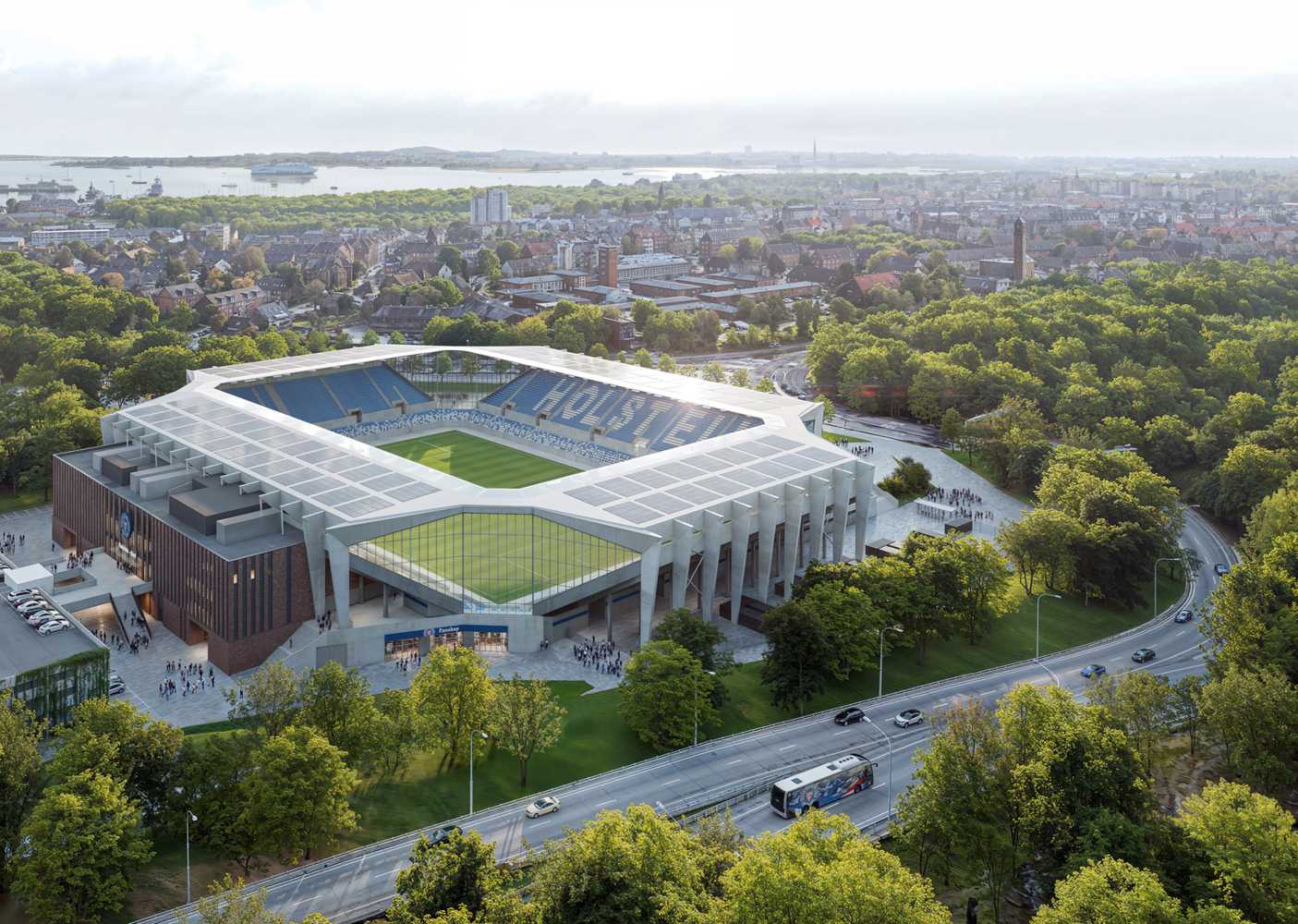
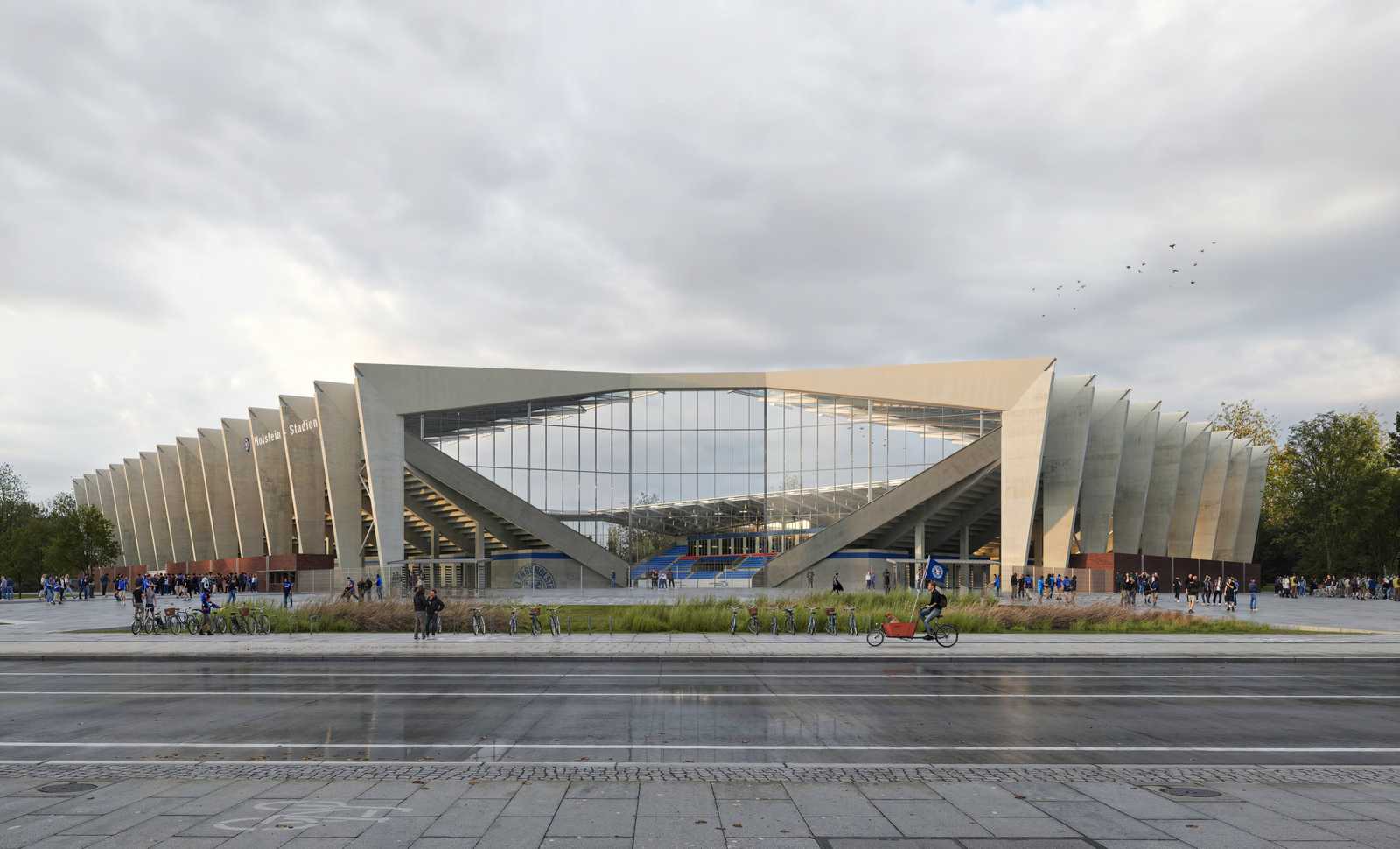
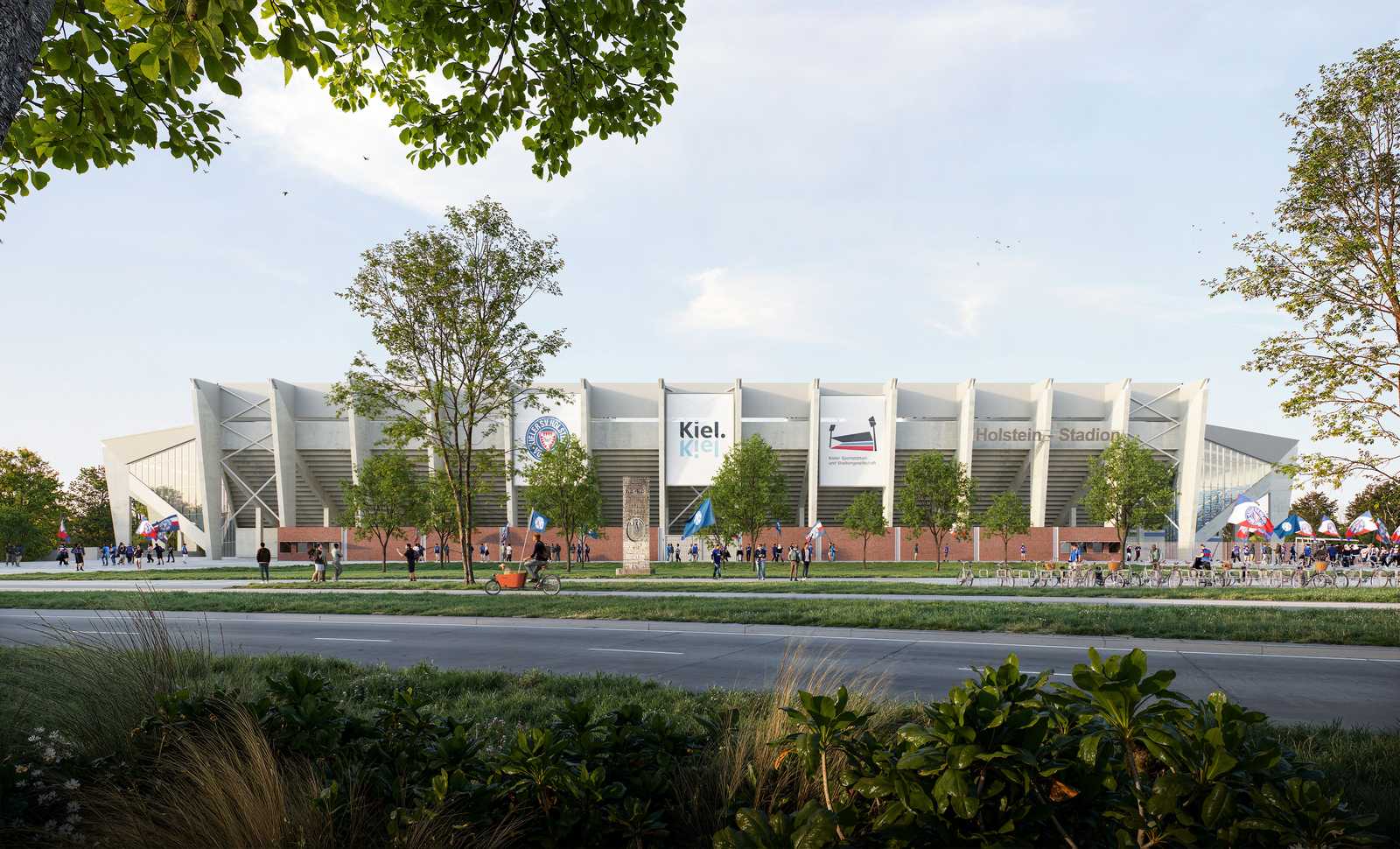
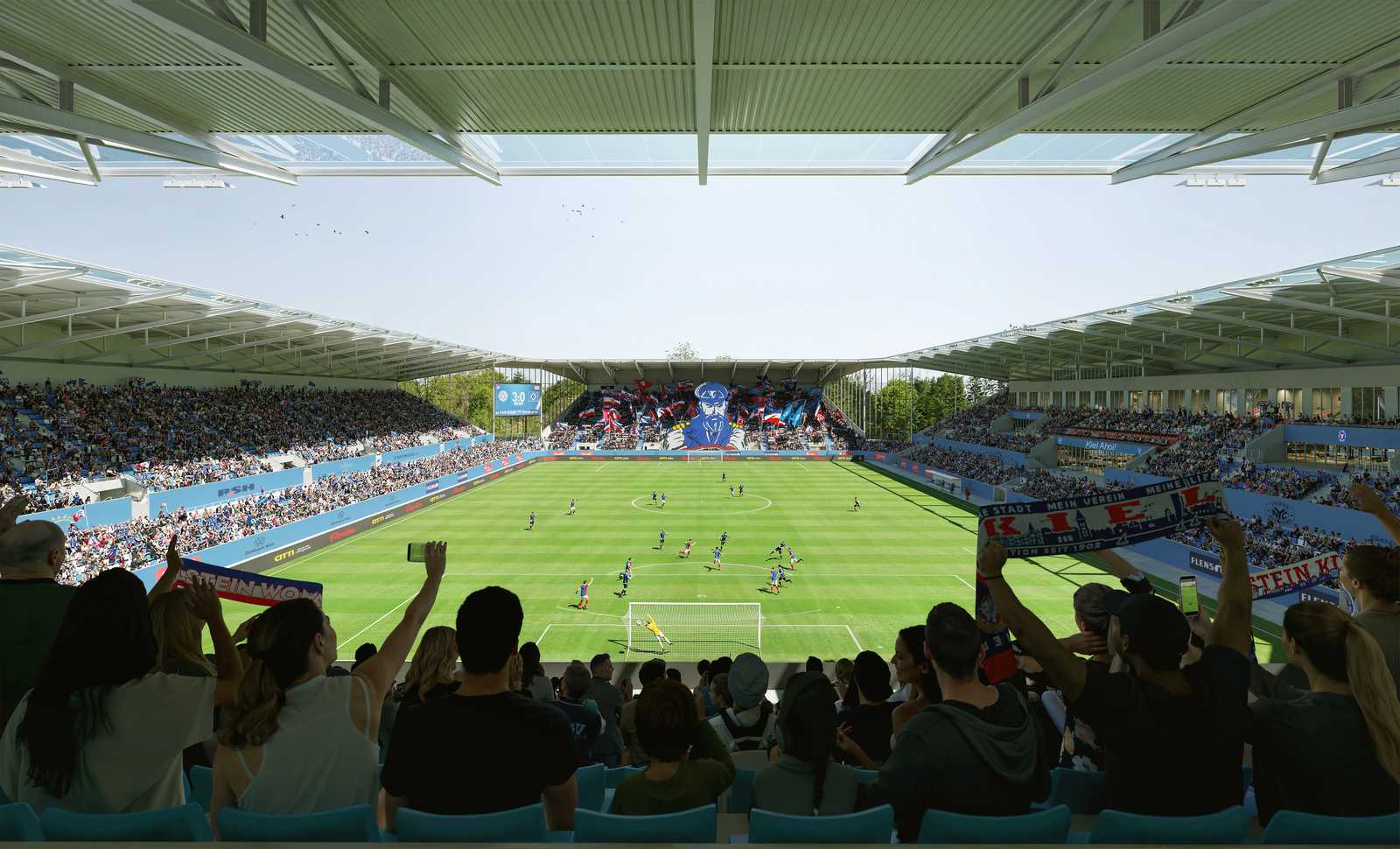
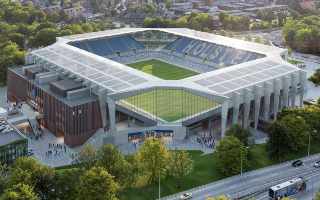
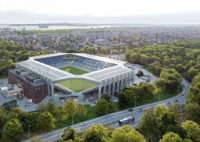
Once completed, the stadium will be a modern football venue with a capacity of over 22,000 spectators, of which 44% will be standing areas. The ribbed roof structure is inspired by shipbuilding, while the distinctive “cut-off” corners will give the stadium a recognizable and unique shape.
What is Holstein-Stadion like?
Holstein-Stadion was built in 1911 and is today one of the oldest stadiums in Germany. The stadium is owned by the city, and its tenant is the football club Holstein Kiel, whose greatest achievement was winning the German championship in 1912 – just a few months after the new stadium opened.
From the 1920s, the stadium featured an athletics track, which meant that for many years it had an oval shape, with most of the stands consisting of earth embankments. The current main stand was opened in 1950 after the stadium was rebuilt following wartime damage.
What changes has Holstein-Stadion undergone in the 21st century?
In the summer of 2006, the embankments on the north and west sides were removed and replaced with simple steel stands with seats and roofing. Another steel stand was built in 2019, replacing the eastern curve.
This gave the stadium a rectangular, typically football-shaped layout, leaving only the main stand from the older structures. The stadium also underwent smaller upgrades, such as the installation of a hybrid pitch in 2020, which was later recognized for its high quality.
The new stands significantly changed the stadium’s appearance, giving it a rectangular shape and a capacity just above the required 15,000 seats. However, the renovations carried out in the 21st century were mostly temporary measures and did not address the stadium’s issues comprehensively.
What were the first redevelopment plans for Holstein-Stadion?
The first serious considerations for a stadium redevelopment appeared as early as 2001, but no major work was carried out at that time. Subsequent renovations primarily aimed to meet the minimum licensing requirements.
Comprehensive redevelopment plans were revisited in 2016. The need for investment became even more pressing after the club from Kiel was promoted to the 2. Bundesliga in 2017.
At that time, a project was developed for a new eastern stand, which was intended to mark the start of a complete stadium reconstruction. Due to difficulties in finding a contractor, only a temporary steel-framed structure was erected in early 2019, designed to last a few years.
In 2020, the club presented a new stadium redevelopment plan. Initial work was scheduled to start at the end of 2021, but implementation was delayed due to formal procedures. Meanwhile, between 2022 and 2024, the city built a new access road on the north side.
How was the new Holstein-Stadion redevelopment project created?
In September 2023, the city established the company Kieler Sportstätten- und Stadiongesellschaft mbH & Co KG to oversee the long-awaited redevelopment. The project gained an additional boost when Holstein Kiel’s players achieved a historic promotion to the Bundesliga in 2024.
On 12 December 2024, an invitation to tender was issued for the design and construction of the stadium redevelopment. The winning bidders and architectural concept were officially announced exactly one year later, on 12 December 2025.
The winning design was prepared by the renowned HPP architecture firm from Düsseldorf, in collaboration with the AX5 studio from Kiel. The construction work will be carried out by Zech Sports GmbH, also from Düsseldorf. The contract with the general contractor was signed on January 7, 2026.
What does the Holstein-Stadion redevelopment plan include?
The plan envisions a complete, staged redevelopment of the stadium, resulting in an almost entirely new venue with a capacity of 22,087 spectators, of which 44% will be standing areas. The pitch will be shifted slightly westward by just under 7.5 meters. The project will also require the demolition of the adjacent Holstein-Halle.
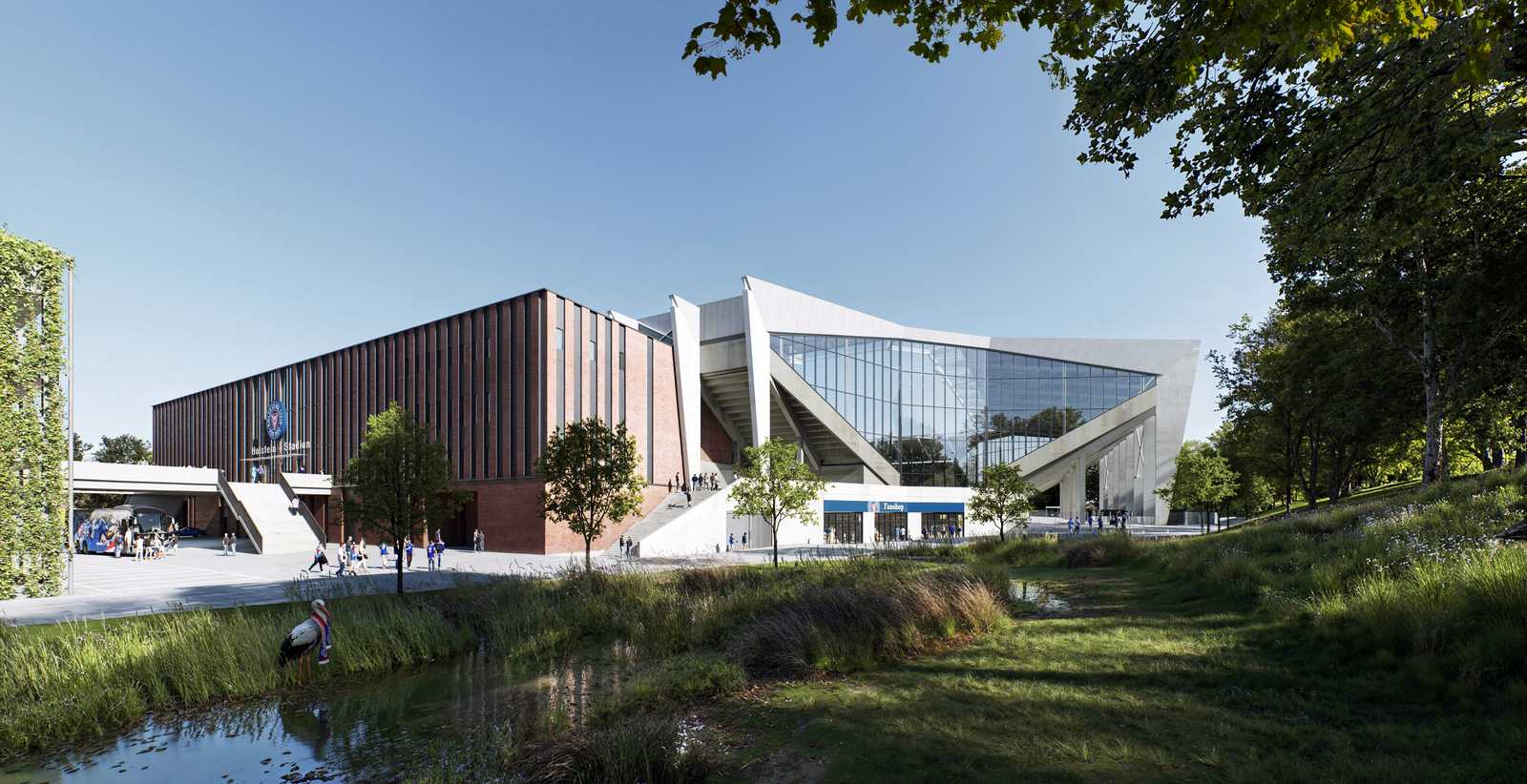
The stands will be arranged in a closed, football-specific layout, with distinctive “cut-off” corners filled with glass walls. The stadium’s overall form resembles the venue that opened in Szeged, Hungary, in 2019.
The new main stand will be built on the north side, opposite the existing one, and will be complemented by a wide support building. It will feature VIP areas, and a multi-level car park is planned behind it.
The west stand will house a large standing section for the home team’s most passionate supporters (the Fanwand). The visitors’ section and a family section will be located on the opposite side, behind the eastern goal.
The stadium will be fully covered, with the roof designed to accommodate photovoltaic panels. If corner stands are added in the future, the capacity could increase to around 25,000 spectators.
The ribbed roof structure is inspired by shipbuilding, highlighting the stadium’s connection to the city’s identity.
When will Holstein-Stadion be redeveloped?
The project is scheduled for implementation in four phases, with the construction timeline as follows:
- Phase I (June 2026 – March 2028): redevelopment of the northern stand, where a new main stand with extensive facilities will be built.
- Phase II (March 2028 – March 2029): construction of a new stand behind the western goal (ultras section) and half of the new southern stand.
- Phase III (March 2029 – March 2030): construction of a new stand behind the eastern goal (including the away supporters’ section).
- Phase IV (March 2030 – September 2030): completion of the remaining half of the new southern stand.
On 9 May 2026, Holstein Kiel played their final home match of the 2025/26 season (a 1–3 defeat to 1. FC Magdeburg). It was also the last game played with the existing northern stand. Preliminary construction works began later in May.
The demolition of the northern stand was symbolically launched on 2 June 2026, with the removal of the first seats carried out by Samet Yilmaz (Mayor of Kiel), Dirk Schrödter (Minister and Head of the State Chancellery), Christopher Kämereit (ZECH Sports), Steffen Schneekloth (President of Holstein Kiel), and Axel Bauerdorf (Director of Kieler Sportstätten- und Stadiongesellschaft).
After the stand’s demolition, the stadium capacity will be reduced to 11,600 seats. The new northern stand, which will serve as the main stand, is scheduled for completion in March 2028. Subsequent phases will then follow, with the full redevelopment of the stadium planned to be completed by September 2030.
A report on the redevelopment of Holstein-Stadion is available on a dedicated subpage
How much will the Holstein-Stadion redevelopment cost?
The cost of the stadium redevelopment is estimated at €75 million. The project is made possible through the cooperation of the regional government, the city, the club, and a private sponsor: the state government will contribute €20 million, the city €10 million, the club €25 million (financed through loans), and a further €20 million will be provided by businessman Gerhard Lütje.
Advertisement
Renderings
-
2025 © HPP Architekten 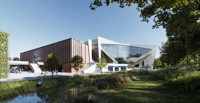
2025 © HPP Architekten 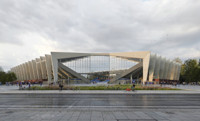
2025 © HPP Architekten 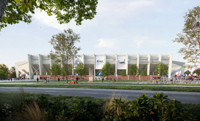
2025 © HPP Architekten 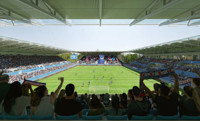
2025 © HPP Architekten