 StadiumDB
Germany: Bundesliga-worthy Holstein-Stadion is coming!
source: StadiumDB.com ; author: Jakub Ducki
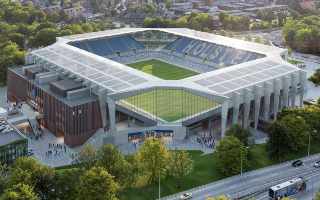 The century-old Holstein-Stadion is approaching a moment set to redefine its role and form. After years of stop-gap upgrades, the club and the city are turning to a project meant to deliver a new stadium while preserving Kiel’s local identity.
Advertisement
New chapter for a 100+ year-old stadium
Holstein-Stadion has been in operation since 1911 and is one of the oldest stadiums in Germany, with Holstein Kiel as its home club. After decades shaped by an oval layout with an athletics track and terraces largely formed by earth embankments, the venue’s character also brought functional limitations. Following wartime damage, the stadium was rebuilt, and the (historic) main stand still in use today opened in 1950.
In 2006–2009, the embankments on the north and west sides were removed and replaced with simple steel stands with seating and a roof - an important step toward a football-specific layout, but not a comprehensive rebuild. In 2019, another steel stand replaced the former east curve, giving the stadium a more rectangular, football-oriented shape. Smaller upgrades were added as well, such as a hybrid pitch in 2020, yet the overall approach remained stopgap: the goal was mainly to meet minimum requirements and keep capacity around 15,000.
Where the new project came from - and what it includes
Serious discussions about a major redevelopment appeared as early as 2001 but did not lead to a breakthrough. The topic returned more strongly in 2016 and gained momentum after Holstein Kiel’s promotion to the 2. Bundesliga in 2017. The plan at the time was for a new east stand to kick-start a full stadium transformation, but contractor issues meant that in early 2019 only a temporary, steel-framed solution was built. In September 2023, the city established Kieler Sportstätten- und Stadiongesellschaft mbH & Co KG to deliver the long-awaited investment, and an additional catalyst came with Holstein Kiel’s historic promotion to the Bundesliga in 2024.
The redevelopment of Holstein-Stadion is expected to result in what is essentially a new stadium with a capacity of 22,087 spectators, around 44% of which will be standing places. A significant technical change will be shifting the pitch by just under 7.5 meters to the west, and the project also requires demolition of the adjacent Holstein-Halle.
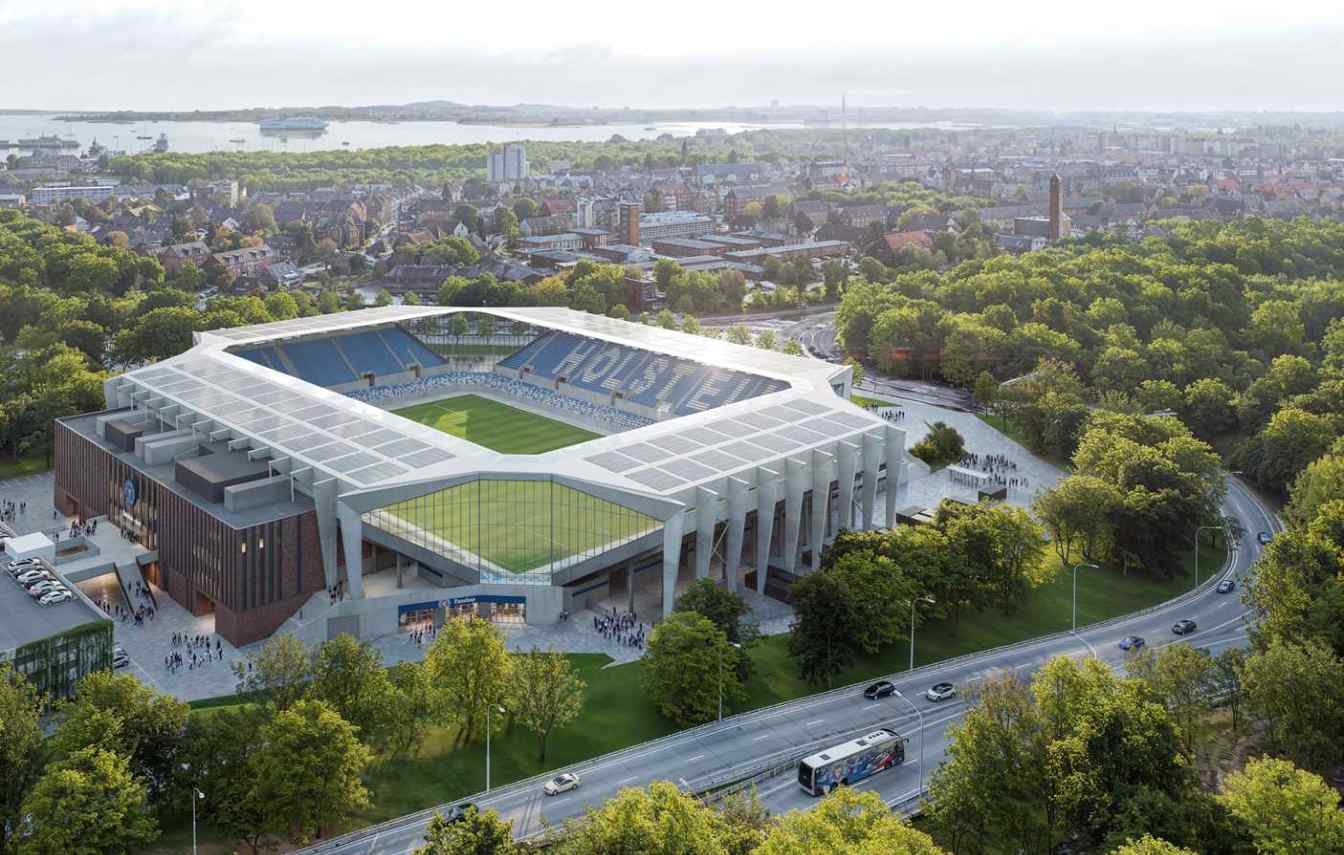 © HPP Architekten | Holstein Kiel plans a return to the Bundesliga, with a new stadium intended to help bring the club closer to achieving that goal.
Architecturally, the stadium is designed to be instantly recognizable thanks to chamfered
corners filled with glass walls and a ribbed roof structure inspired by shipbuilding—highlighting the city’s port identity.
The new main stand will be built on the north side, opposite the existing one, and connected to a broad back-of-house complex including VIP areas; a multi-storey parking structure is also planned. The west stand is intended to become a large home supporters’ wall
(Fanwand) with a standing section, while the away fans’ area and the family section are planned on the opposite side, behind the east goal. The entire seating bowl will be fully roofed, and the roof structure is meant to allow the installation of photovoltaic panels.
The schedule foresees three phases. The first (construction of the new main stand) is set to begin after the 2026/27 season and is expected to last around 18 months. During construction the stadium should remain operational, with capacity not dropping below 12,000, and the full redevelopment is planned to be completed by the end of 2030.
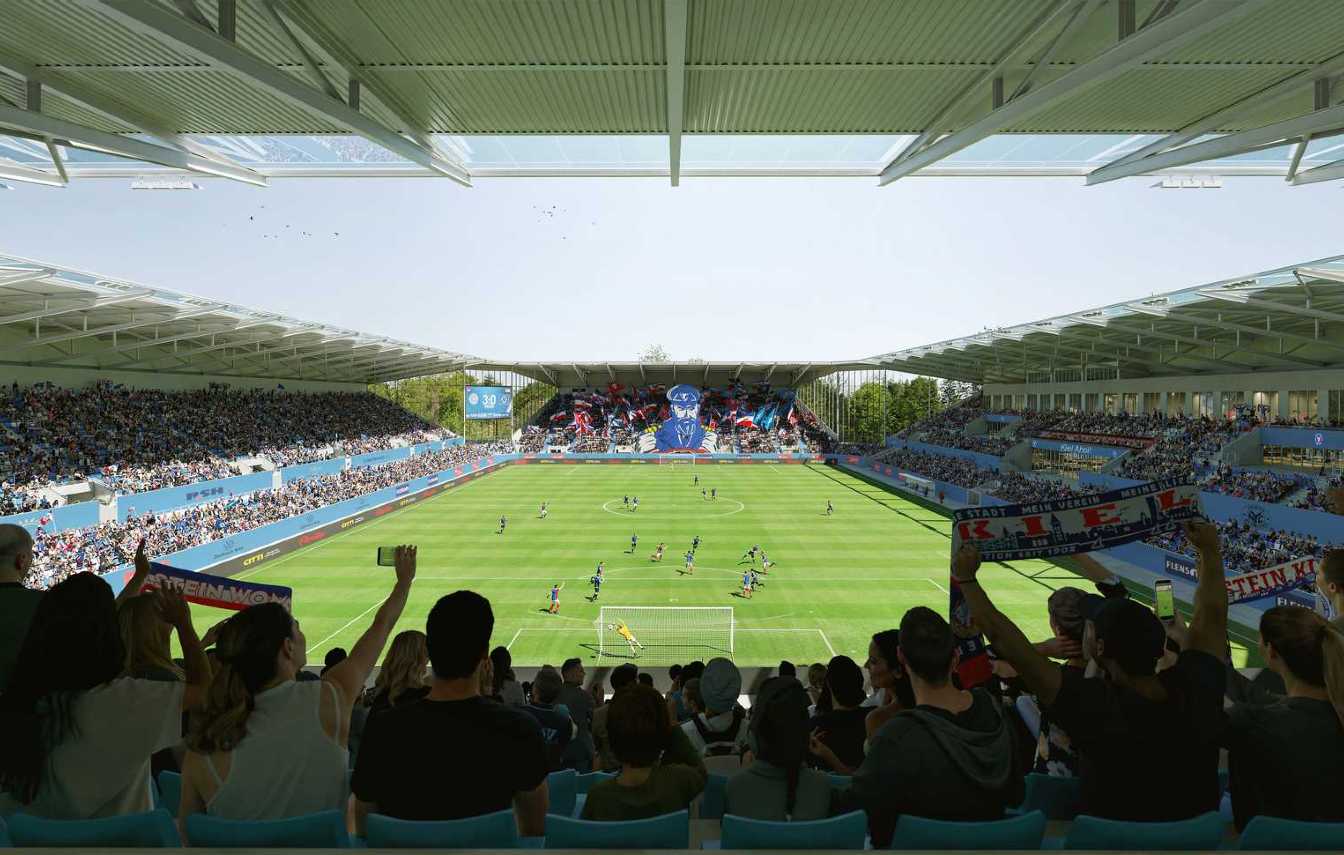 © HPP Architekten | The new stadium will accommodate more than 20,000 spectators and will therefore still rank among the smaller venues in the German league.
Costs and mixed emotions around the project
The redevelopment cost is estimated at €75 million, with the financing package based on cooperation between the state government, the city, the club and a private sponsor. According to the stated assumptions: the state will contribute €20 million, the city €10 million, the club €25 million (financed through loans), and a further €20 million will come from businessman Gerhard Lütje. The architectural concept was prepared by HPP from Düsseldorf in cooperation with AX5 from Kiel, and the construction contractor will be Zech Sports GmbH.
The presentation of the final design sparked a clear wave of online reactions - ranging from genuine enthusiasm to scepticism and harsh criticism. Among the positive voices, many stressed that the project looks modern and impressive, and some fans wrote about goosebumps,
called it a dream,
or said it fits Kiel perfectly. There were even descriptions like a little jewel box,
and the stadium was sometimes labelled a palace,
showing how strongly it captured people’s imagination.
At the same time, criticism surfaced quickly. The most frequent remarks focused on the planned glass corners: commenters asked why the corners would not be “closed” and who would handle cleaning so much glazing in practice. Within this group, blunt aesthetic judgments also appeared, calling the design ugly
or not very creative
- a sign that the new look has not convinced everyone.
Advertisement