 StadiumDB
İmarət Stadionu
| Capacity | 11 700 |
|---|---|
| Country | Azerbaijan |
| City | Aghdam |
| Clubs | – |
| Category | Design being implemented |
| Cost | ? |
| Construction | 2024–? |
| Design | Design Bureau, Archia |
Advertisement
İmarət Stadionu – design description
How does the new İmarət Stadium project look like in brief?
In 1993, the city of Aghdam fell victim to the Nagorno-Karabakh war – it was almost completely destroyed during the fighting, and its population (mostly Azerbaijanis) fled deeper into the country.
The city’s football club, Qarabağ FK, was also forced into “exile.” The team settled permanently in Baku and became a dominant force in Azerbaijani football, gaining recognition internationally, especially after its sensational qualification for the UEFA Champions League group stage in 2017.
In 2020, Azerbaijani forces launched an offensive and recaptured the abandoned city of Aghdam. After regaining control, the government prepared a large-scale plan for the city’s reconstruction, with a new stadium as one of its key elements.
The new stadium will be built in a different location – the old stadium, which adjoined the historic İmarət palace complex (from which it takes its name), is to be converted into an equestrian facility, restoring the historical function of the site.
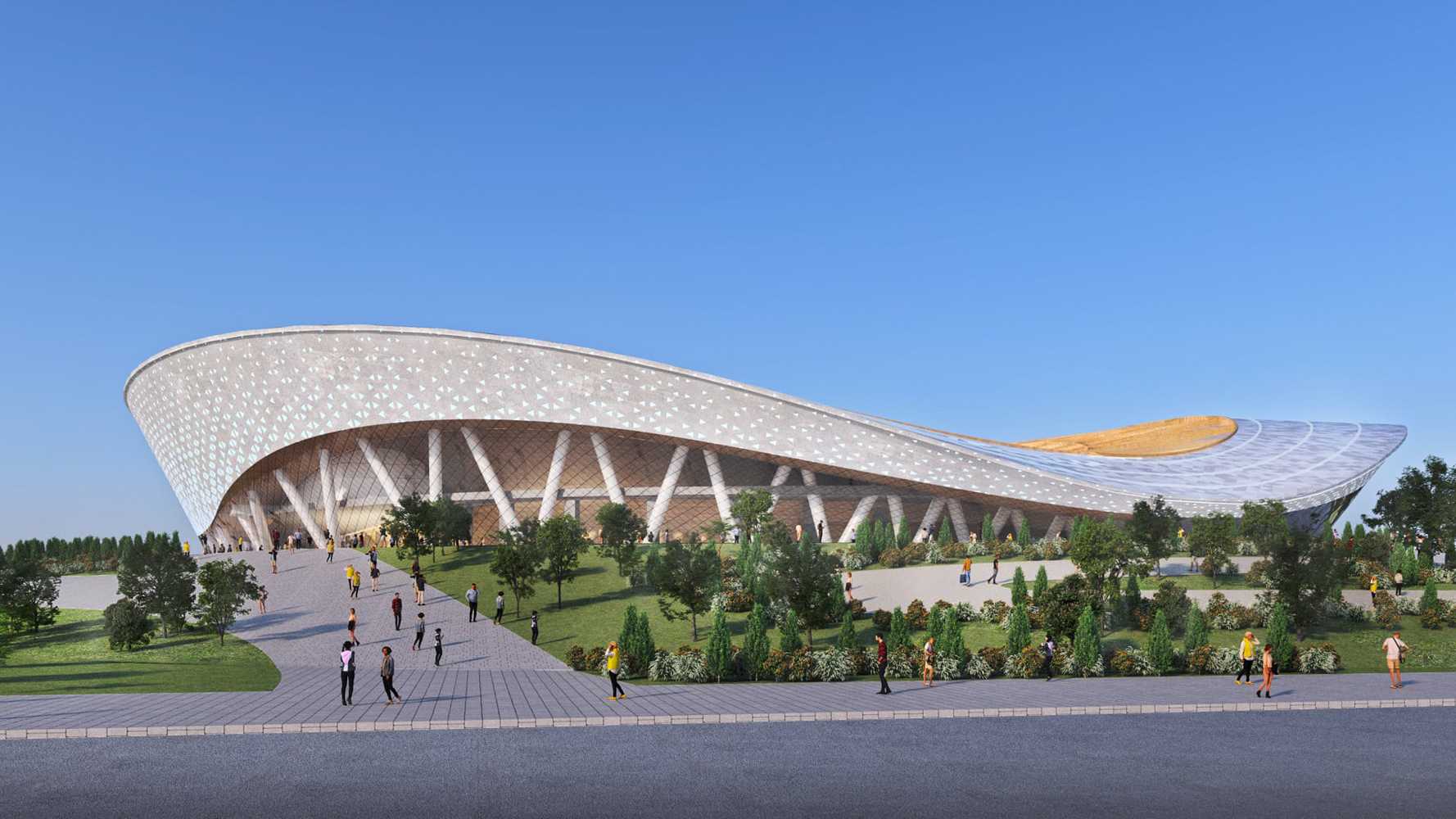
The new İmarət Stadium will have a capacity of 11,700 spectators and will be a modern, football-specific venue meeting UEFA Category 4 requirements. A large park is planned to surround the facility.
Construction was symbolically inaugurated on 19 September 2024 by the President of Azerbaijan, İlham Əliyev. After preliminary work, however, construction was halted, and it remains unclear when the stadium will be completed or whether Qarabağ FK will return to Aghdam.
How was the new İmarət Stadium project developed?
What historical events are connected to the plans for the new stadium in Aghdam?
First Nagorno-Karabakh War
After the collapse of the Soviet Union and the independence of Armenia and Azerbaijan in 1991, the conflict over Nagorno-Karabakh intensified – a region that was assigned to Azerbaijan but was largely inhabited by Armenians.
In 1992, rising tensions escalated into open armed conflict. Aghdam, with a population of around 28,000, was located on the edge of the disputed area and mostly inhabited by Azerbaijanis, yet it found itself at the center of military operations.
Aghdam served as a base for Azerbaijani forces, from which missile attacks were launched on the regional capital, Stepanakert (now Khankendi). Consequently, at the turn of June and July 1993, Armenian forces launched an offensive and captured the city.
As a result of the offensive, Aghdam was almost completely destroyed, and both the military and the civilian population retreated deeper into Azerbaijan. For approximately 27 years, the city remained in a buffer zone under the control of the Nagorno-Karabakh (Artsakh) Republic, existing during that period as an abandoned cluster of ruins.
Qarabağ FK
Before the exodus of the city’s residents, the football club Qarabağ FK was active in Aghdam, playing its matches at İmarət Stadium. During the outbreak of the conflict, some games were even held amid the sounds of warfare. The last match at İmarət Stadium took place on 12 May 1993.
Interestingly, in the 1993 season of the Azerbaijani league (the second in the history of independent Azerbaijan), Qarabağ FK won its first national championship despite the difficulties caused by the armed conflict.
After Aghdam was captured by Armenian forces, the club did not cease its activities and continued to play matches in other cities, eventually settling permanently in the country’s capital, Baku, where a new stadium for the team, the Azərsun Arena, was opened in 2015.
Throughout this period, the club remained among the league’s top teams, winning its second championship title in 2014 and dominating domestic competitions ever since.
The team also became a recognized brand internationally, regularly participating in European competitions. In 2017, Qarabağ FK sensationally qualified for the group stage of the UEFA Champions League, and the club’s story “in exile” reached a wide audience of football fans.
The former İmarət Stadium
İmarət Stadium in Aghdam, where Qarabağ FK played its matches, was built in the early 1950s, around the same time the club was established. It was a rather modest, football-specific venue.
Surrounded by trees, it was located right next to the city’s most historically significant site – the 18th-century İmarət complex (from which the stadium took its name), which included the palace of Panah Ali Khan and the burial grounds of the Karabakh Khanate rulers.
After the war, like other structures in Aghdam, the stadium remained an abandoned ruin, gradually being overtaken by wild vegetation.
Second Nagorno-Karabakh War
The Nagorno-Karabakh conflict, which had been suspended since 1994, resumed in September 2020, when Azerbaijani forces launched an offensive to retake lost territories. In November 2020, a peace agreement was reached, under which Azerbaijan regained control over a significant part of the disputed areas, including the city of Aghdam.
Areas inhabited by Armenians were secured by Russian peacekeeping forces and connected to Armenia via the so-called Lachin Corridor. However, in December 2022, Azerbaijan cut off this corridor, initiating its blockade.
When Azerbaijan launched another offensive in September 2023, almost the entire Armenian population of Nagorno-Karabakh left the region, relocating to Armenia. The Republic of Artsakh ceased to exist, and Azerbaijan regained full control over the entire territory.
Reconstruction of Aghdam
After regaining control over part of Nagorno-Karabakh in 2020, the Azerbaijani authorities began planning large-scale construction projects, with the reconstruction of the destroyed and abandoned city of Aghdam as one of the key undertakings.
When were the plans for the new İmarət Stadium developed?
The first reports about plans to rebuild İmarət Stadium appeared at the end of 2021. The new stadium was to be constructed in a different location to avoid conflicting with the historic palace complex, which was also planned for restoration. The old stadium was intended to be transformed into an equestrian facility, restoring the historical function of the site.
The design of the new stadium was prepared by the London-based architectural firm Archia. The first project, developed in 2022, envisaged the construction of a full sports and recreation complex. In the course of further planning, some elements (including a hotel and a sports hall) were scaled back, leaving the stadium as the only large facility in the complex. The final concept was completed in 2024.
What does the new İmarət Stadium project include?
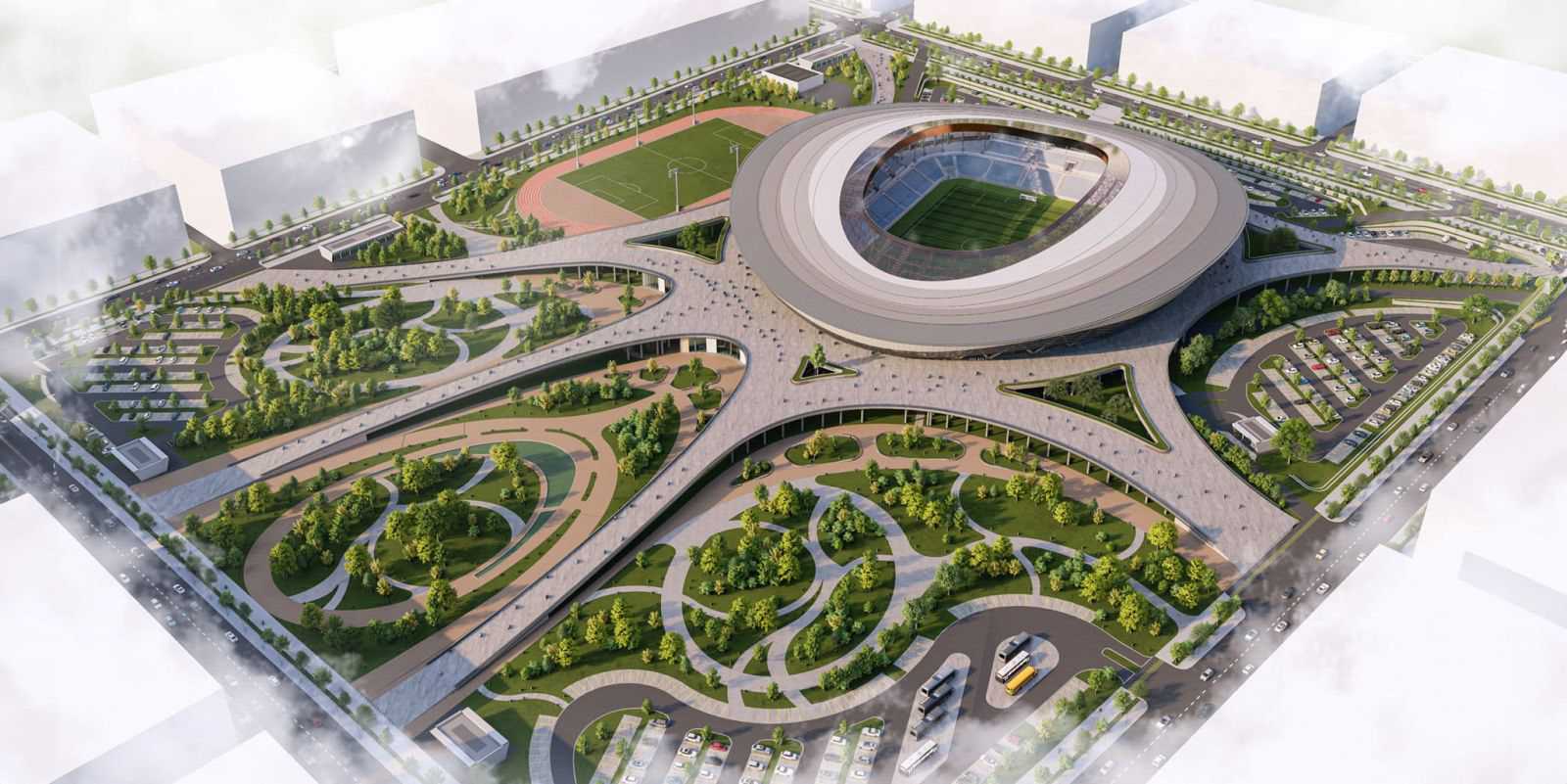
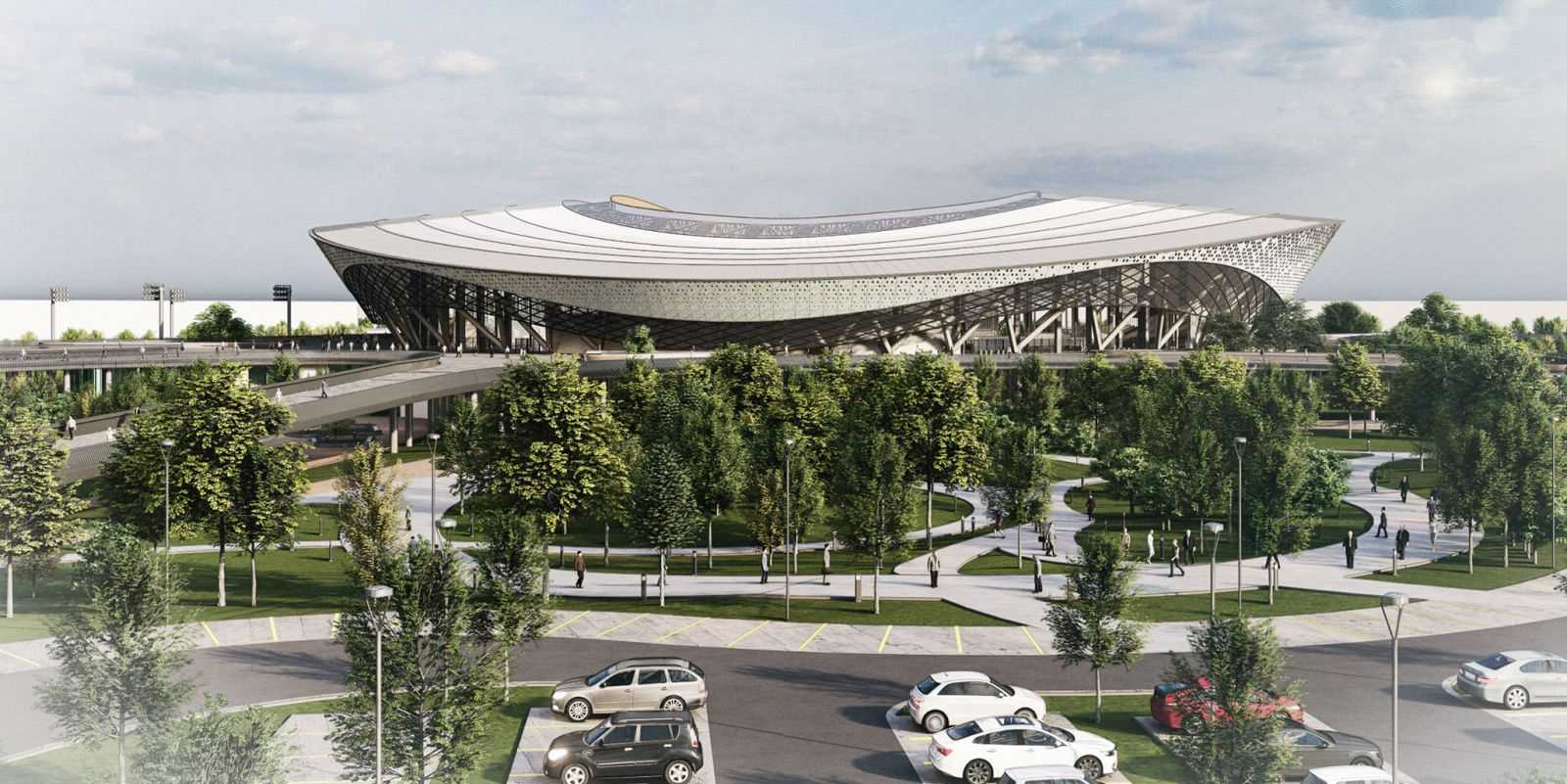
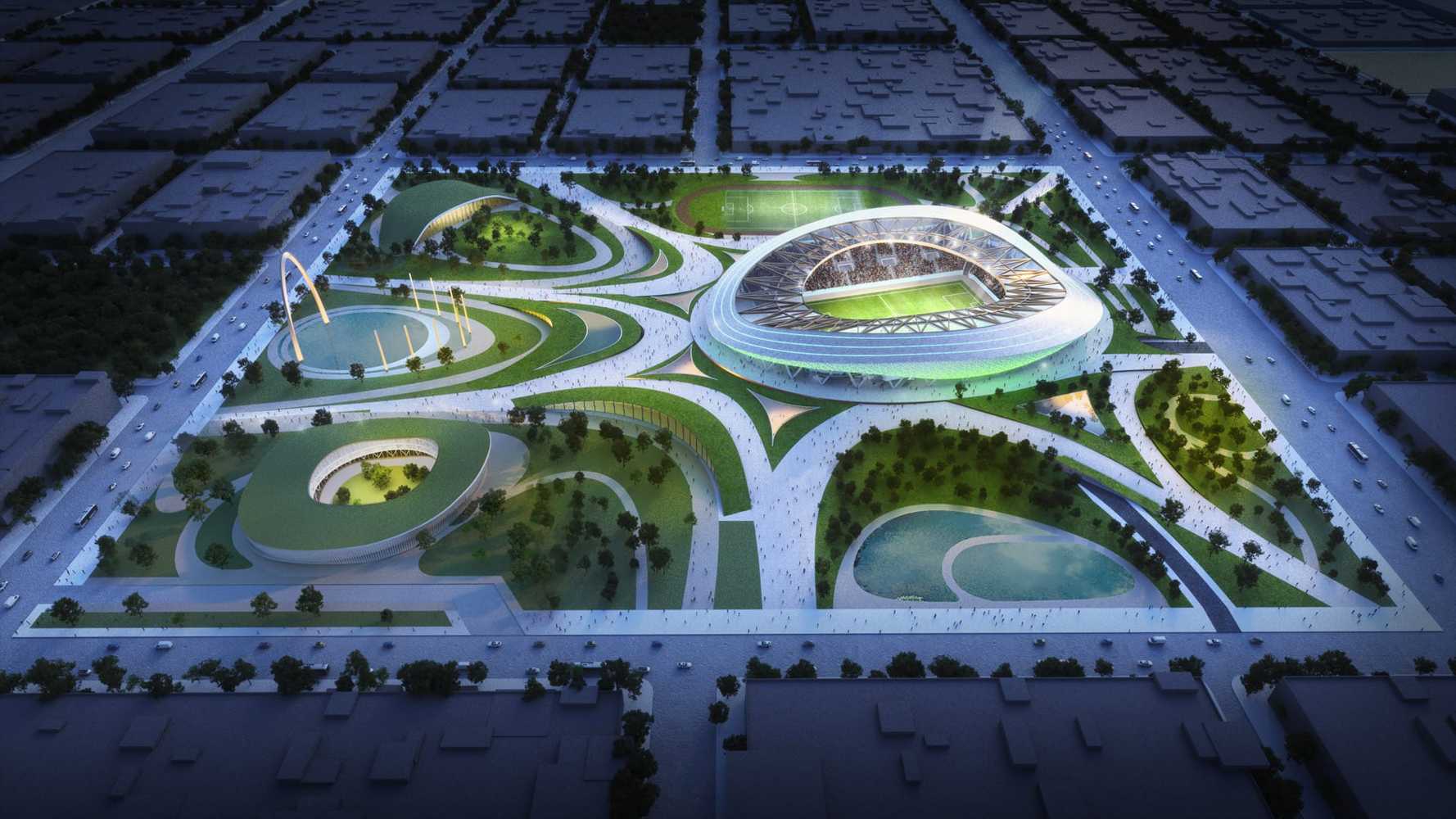
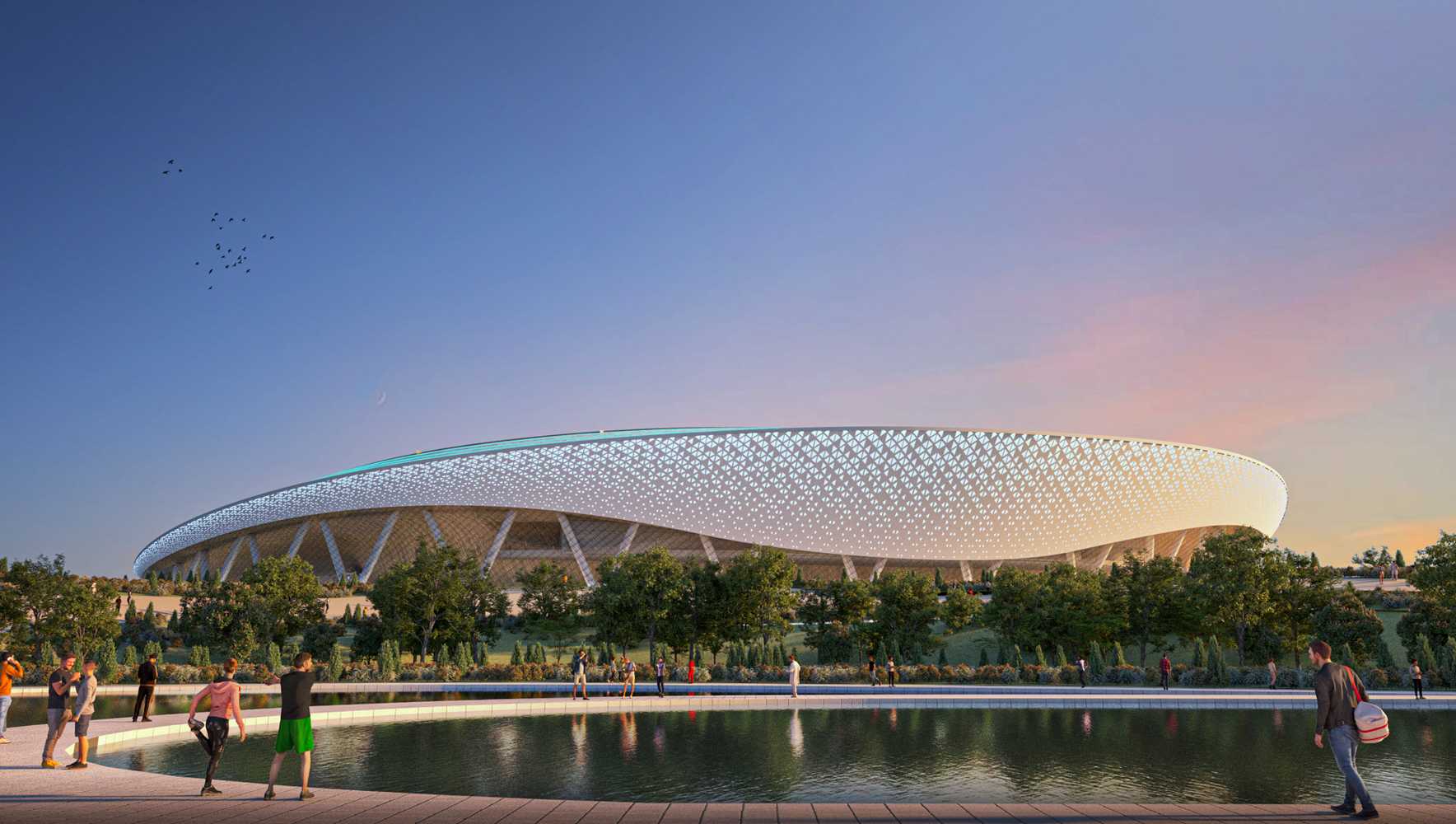
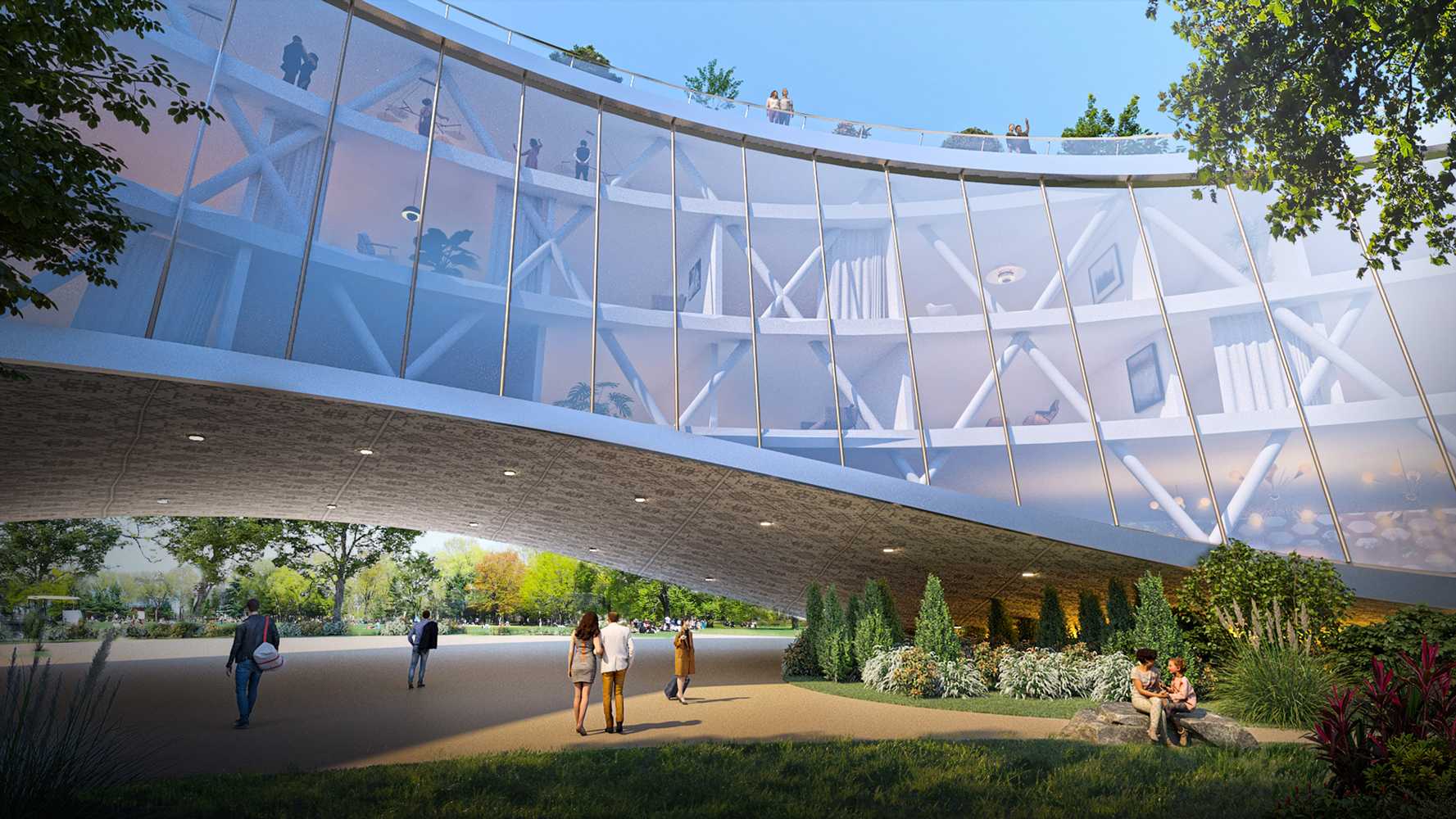
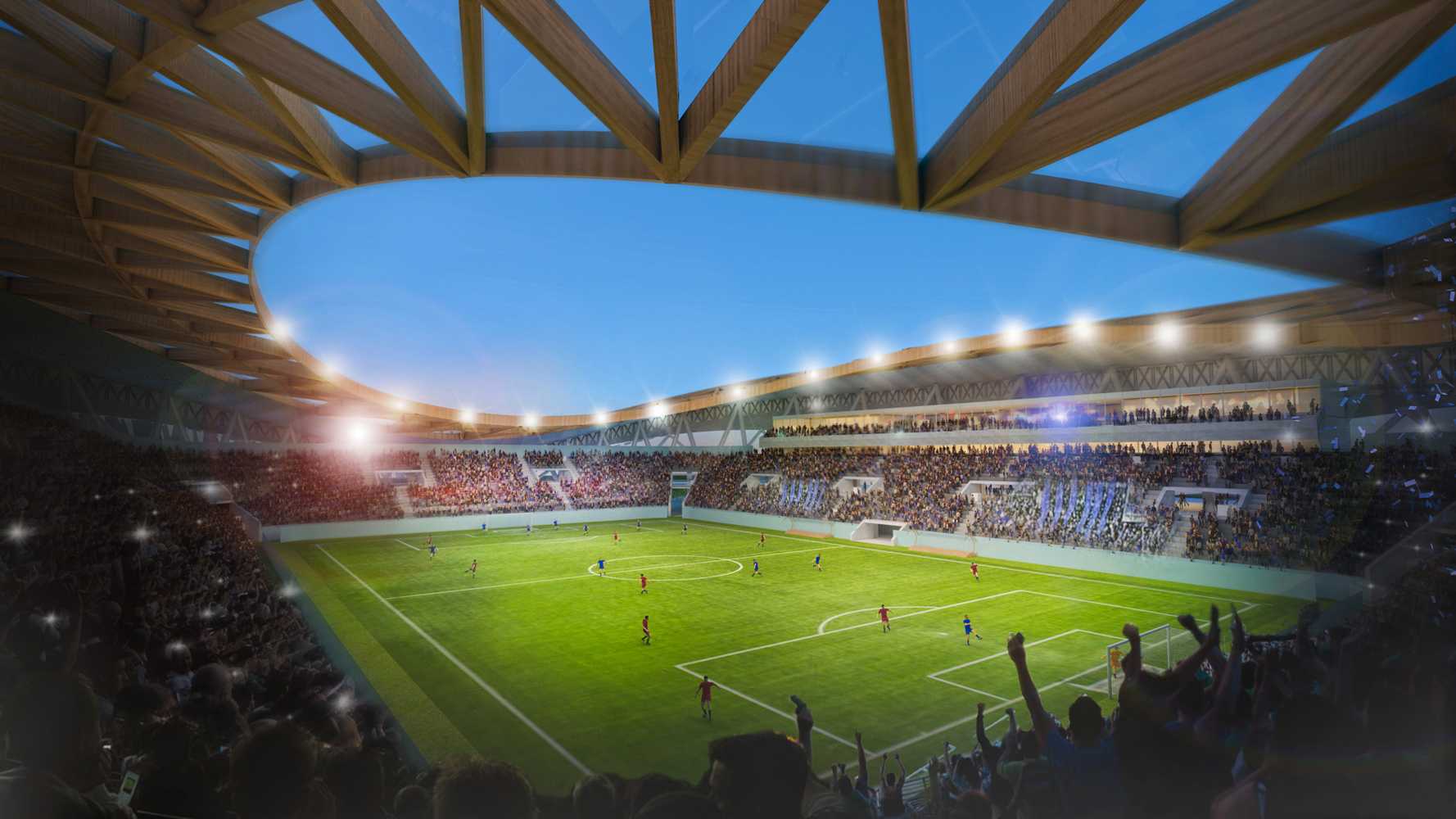
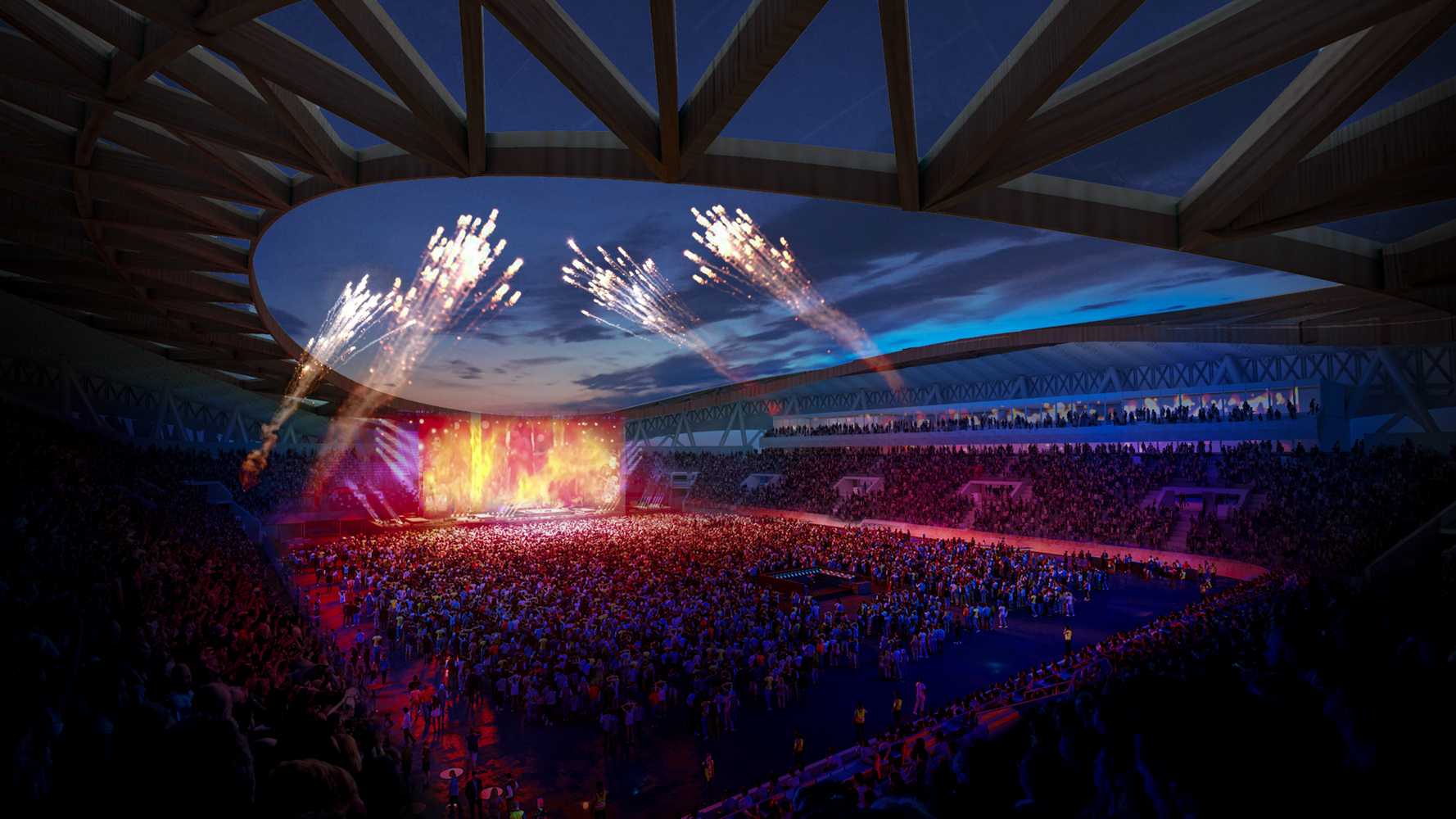
The new stadium will take the form of an oval, dynamic structure, while the interior stands will have a rectangular, football-specific layout. The arena will have a capacity of 11,700 spectators. The facility will feature VIP boxes, all necessary support areas, modern technologies, and will meet UEFA Category 4 requirements.
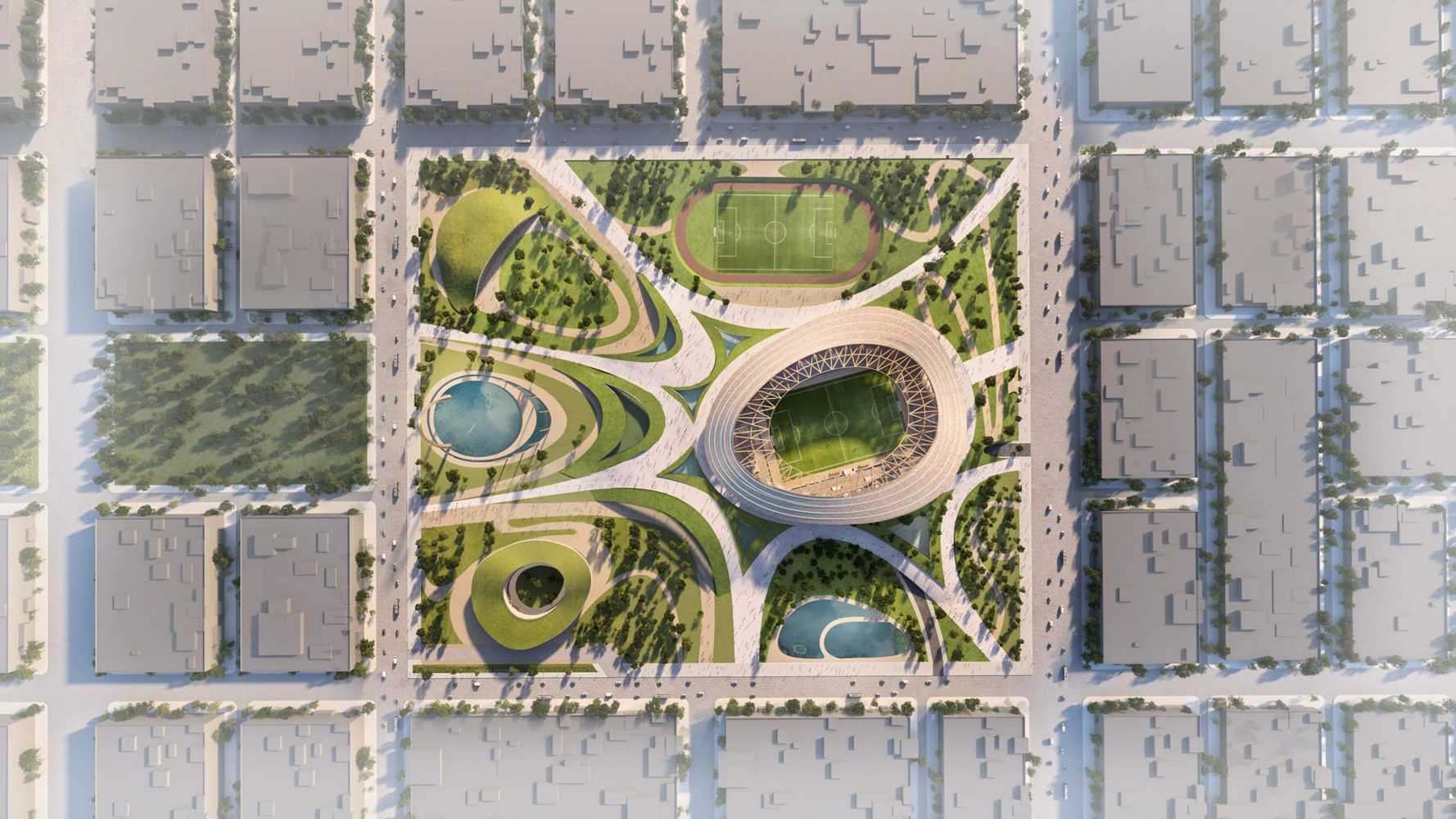
The stadium will be built on a large, rectangular plot covering 19.12 hectares, located in the western part of the reconstructed city of Aghdam. It will serve as the main, dominant element of the complex, with an additional training field and running track planned adjacent to it.
The surroundings of the stadium will include numerous pathways and parking areas, as well as extensive greenery, turning the entire area into a park. Wide, elevated promenades will lead to the stadium from multiple directions.
The idea of creating a large park around the stadium refers to the name Qarabağ, which can be translated as “fertile garden.” The light-colored roof of the facility, in turn, is a reference to the name of the city, Aghdam, meaning “white roof.”
Like the old stadium, the new facility will be named İmarət, taking its name from the historic palace complex.
When will the new İmarət Stadium be completed?
The cornerstone of the new stadium was symbolically laid on 19 September 2024 by the President of Azerbaijan, İlham Əliyev. Despite the official commencement, construction was halted after preliminary work, and the completion date remains unknown.
It is also unclear whether Qarabağ FK will return to Aghdam once the new stadium opens. Although the club continues to strongly identify with its roots, it has long been based in Baku, where a dedicated stadium was even built for the team. It is therefore possible that the new facility could be used by a different, new team.
Advertisement