 StadiumDB
Hùng Vương Stadium
| Capacity | 135 000 |
|---|---|
| Country | Vietnam |
| City | Hanoi |
| Clubs | – |
| Category | Design being implemented |
| Cost | ? |
| Construction | 2025–2027 |
| Other names | Trống Đồng Stadium |
Advertisement
Hùng Vương Stadium – design description
What is the Hùng Vương Stadium project in brief?
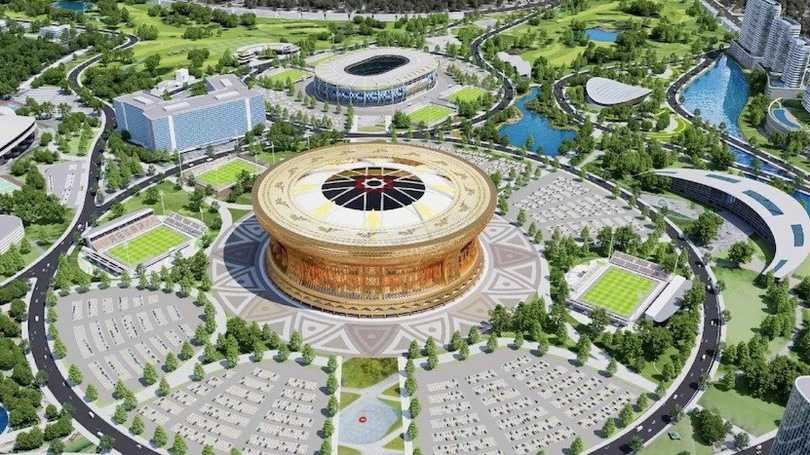
An ambitious project planned for the southern outskirts of Hanoi envisages the construction of the largest stadium in the world, with a capacity of 135,000 spectators. Designed as a football-specific venue, the stadium will feature a retractable roof, a movable pitch, and a wide range of advanced technological solutions.
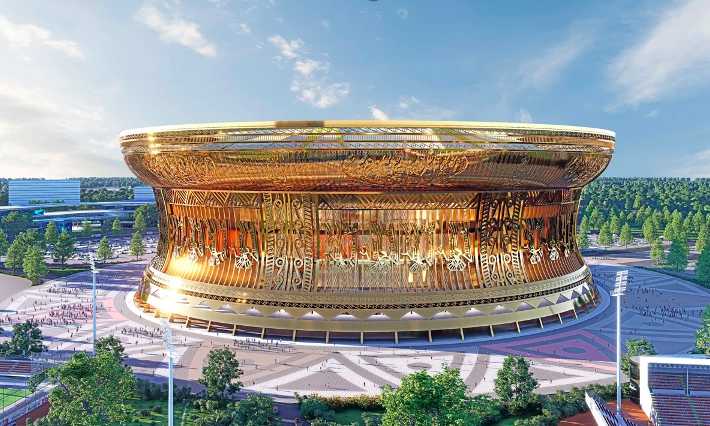
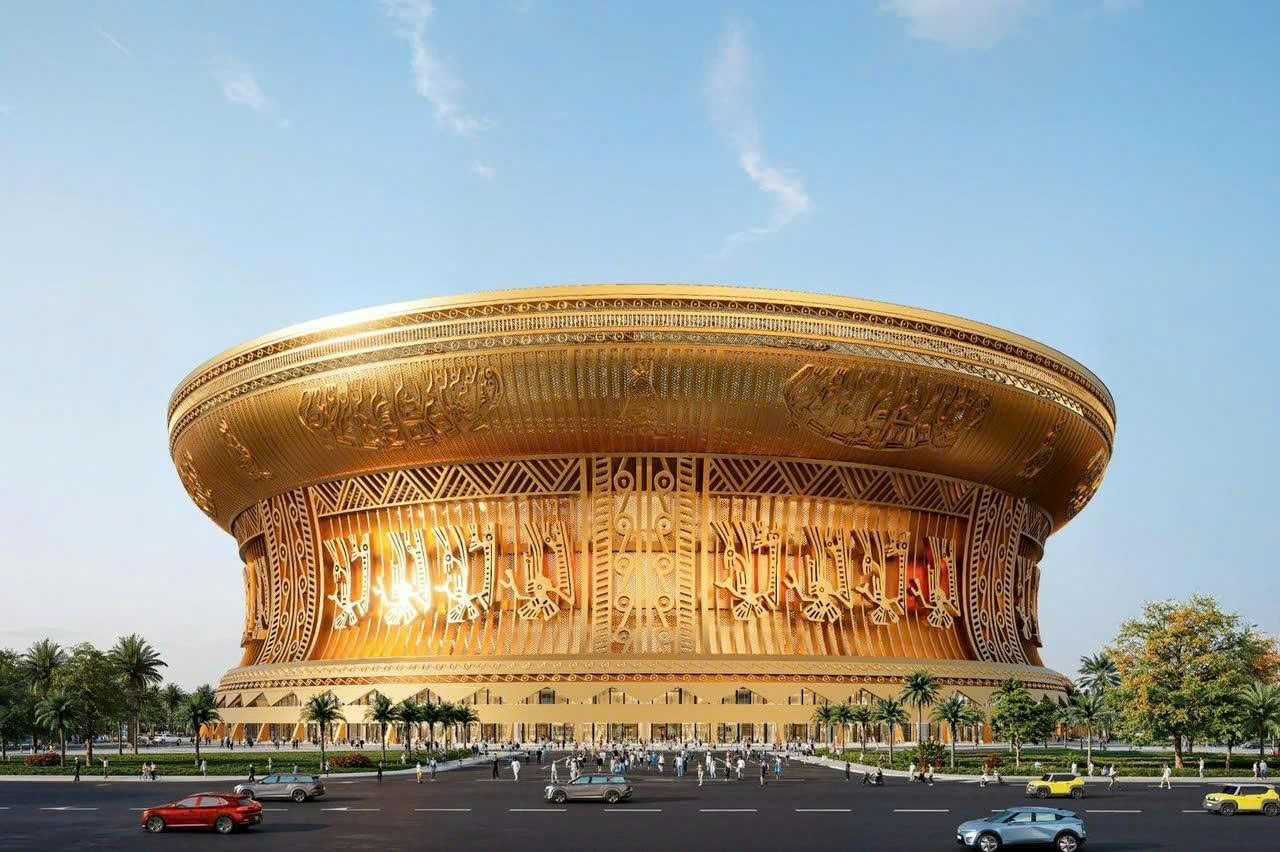
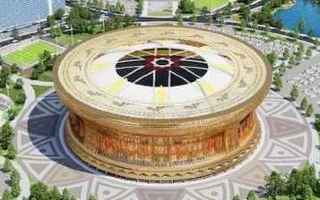
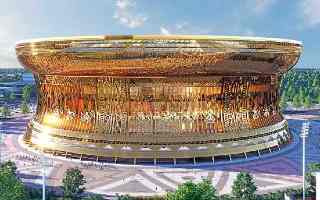
The stadium’s distinctive form will be inspired by ancient bronze Đông Sơn drums, one of the most important historical symbols of Vietnamese culture and identity. The monumental scale of the structure and its characteristic appearance are intended to make the venue one of the new landmarks of the Vietnamese capital.
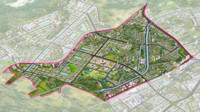
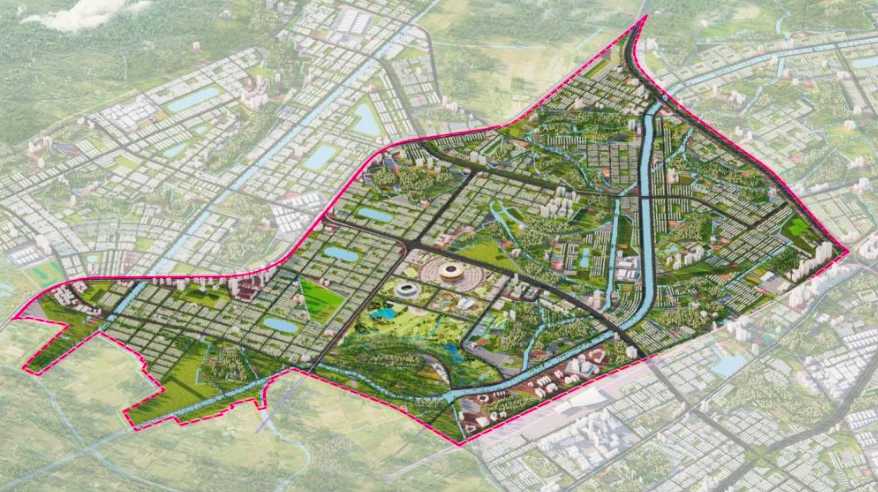
The stadium will be developed as the central element of the Olympic Sports City megaproject, which includes the construction of a new residential and sports district for approximately 750,000 residents. The total cost of the entire undertaking is estimated at over USD 35 billion.
The investment is notable not only for its scale, but also for its pace. The project was announced shortly before the official start of construction, which took place on 19 December 2025. The new stadium is expected to be completed in July 2027, while the entire project is scheduled for completion by 2035.
What will the new Hùng Vương Stadium be like?
The new Hùng Vương Stadium is planned as a modern, football-specific arena which, with a capacity of 135,000 spectators, will surpass Narendra Modi Stadium and Rungrado May Day Stadium to become the largest stadium in the world.
The venue will feature the world’s largest retractable roof, a retractable pitch (with the process expected to take between 6 and 10 hours), advanced telecommunications infrastructure, and systems based on artificial intelligence.
The building’s form will reference ancient bronze Đông Sơn drums, which are a symbol of Vietnam’s national culture and identity, while the façade will be decorated with characteristic Lạc bird motifs.
The stadium is expected to rank among the most advanced venues in Southeast Asia, enabling the hosting of top-tier sporting events as well as major cultural events.
To date, no stadiums in Vietnam have matched the scale and level of advancement planned for the new Hùng Vương Stadium, although at the turn of 2025 and 2026 the development of two other modern stadiums was also announced: PVF Stadium (also planned for the southern outskirts of Hanoi) and Rach Chiec Stadium (in Ho Chi Minh City).
The project initially operated under the name Trống Đồng Stadium, referencing the bronze drums of the Đông Sơn culture, which also served as an inspiration for the stadium’s distinctive form. In April 2026, however, a new name was announced: Hùng Vương Stadium – referring to the legendary Hùng kings from the early history of Vietnam.
Where will the Hùng Vương Stadium be built?
The stadium is planned to be built in the Thượng Phúc commune, on the southern outskirts of Vietnam’s capital, Hanoi, more than 20 km from the city’s urban core. The venue will form a key element of the vast Olympic Sports City urban and sports megaproject.
What investment will accompany the Hùng Vương Stadium?
The Olympic Sports City megaproject envisions the development of a large district covering an area of more than 9,000 hectares, intended to accommodate over 750,000 residents. In addition to housing, the plans include shopping malls, restaurants, hotels, a hospital, recreational areas, as well as major investments in transport infrastructure.
As part of the development, a sports complex will also be created, with several smaller venues alongside the main stadium, including an aquatics centre and a dedicated e-sports facility.
When will the Hùng Vương Stadium be built?
The investment will be carried out by the private developer Vingroup in cooperation with the authorities. The enormous scale of the project is reflected in its estimated cost, expected to exceed VND 925 trillion (over USD 35 billion).
Information about the investment began to appear more widely in the media only towards the end of 2025. Already on 19 December 2025, on Vietnam’s National Resistance Day, a ceremonial event marking the start of the project took place.
The event formed part of nationwide celebrations marking the simultaneous launch or completion of a total of 234 infrastructure projects.
The stadium was originally planned for completion in August 2028, but after construction began the schedule was further accelerated, moving the deadline to July 2027. The entire megaproject is scheduled for completion by 2035.
The report on the construction of Hùng Vương Stadium can be viewed on a separate page
Advertisement
Renderings
-
2025 © Trong Dong Stadium 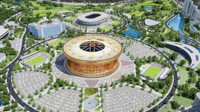
2025 © Trong Dong Stadium 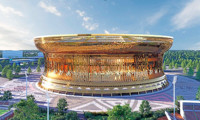
2025 © Trong Dong Stadium 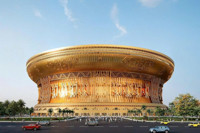
2025 © Trong Dong Stadium
Related news
2026
-
Vietnam: The world's largest stadium may be completed ahead of schedule
Hùng Vương Stadium near Hanoi could be completed a year earlier than originally planned. The 135,000-seat arena is set to become the largest stadium in the world and the centerpiece of a new sports city, although the scale of the project is already raising questions about its long-term use.
-
Vietnam: This will be the world’s largest stadium. A bizarre 135,000-seat project in Vietnam
In the southern part of Hanoi, a project is taking shape that is set to completely redefine the global stadium hierarchy. The new arena, planned as the central element of a vast urban development, signals Vietnam’s sporting and infrastructural ambitions on an unprecedented scale.