 StadiumDB
Crystal Palace National Sports Centre
| Capacity | 15 968 |
|---|---|
| Country | England |
| City | London |
| Clubs | – |
| Category | Design awaiting implementation |
| Cost | £130 M ($172.5 M) |
| Construction | 2026–2028 |
| Design | WOO architects |
| Contractor | Morgan Sindall Construction |
Advertisement
Crystal Palace National Sports Centre – design description
How can the modernization of Crystal Palace National Sports Centre be briefly described?
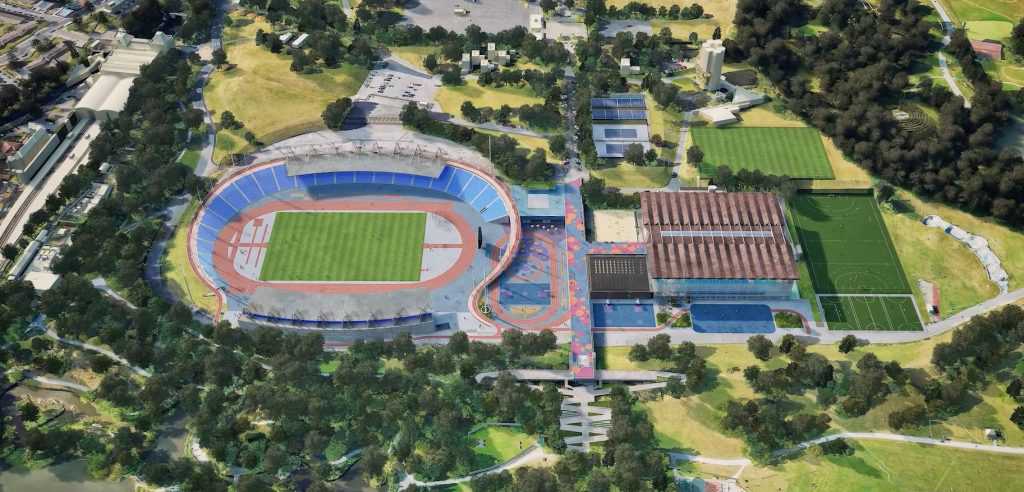
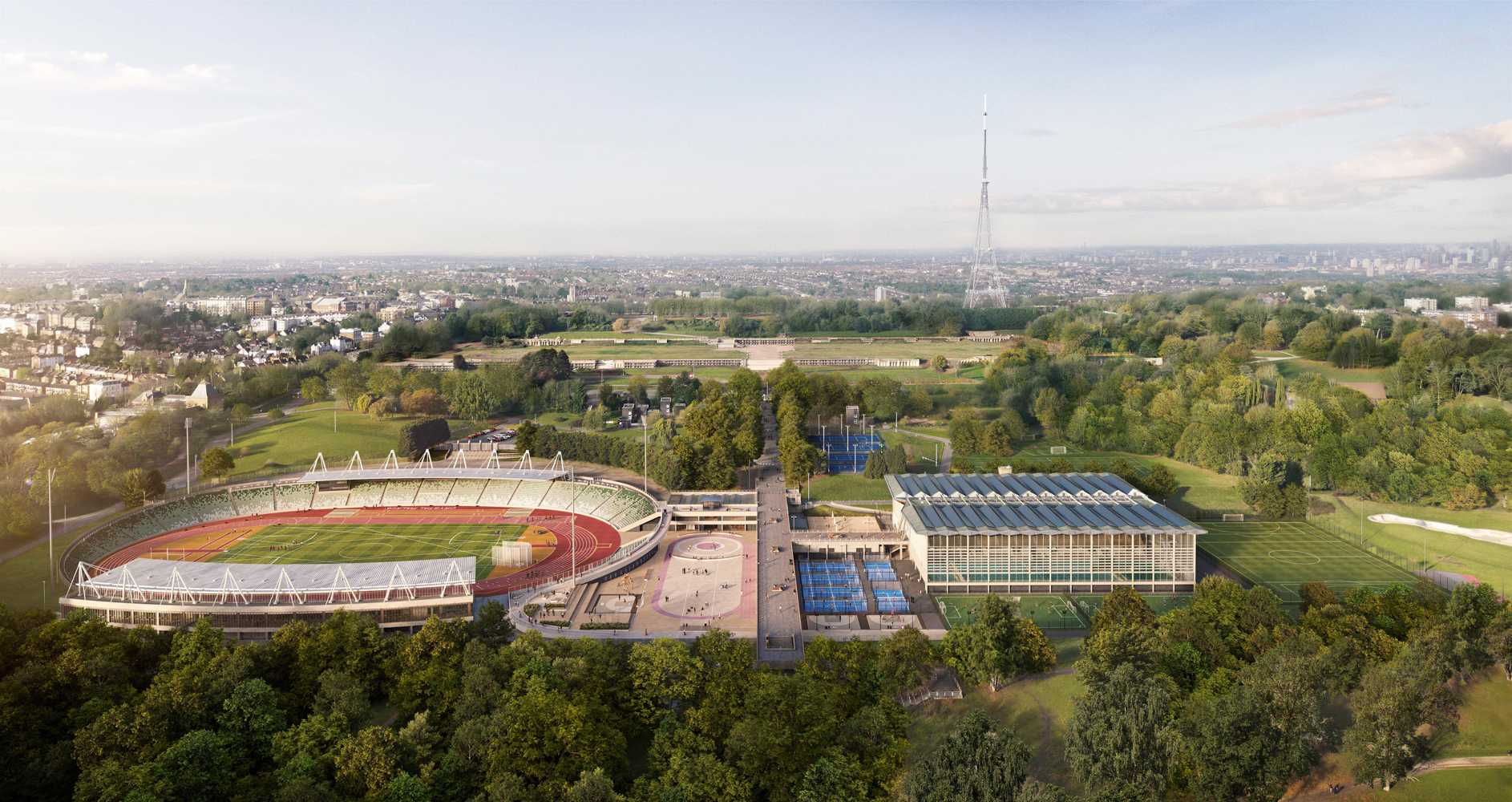
The modernization of Crystal Palace National Sports Centre will cover all components of the complex: the stadium, the pavilion with the sports hall and swimming pools, and the surrounding areas. The project is scheduled to take place between 2026 and 2028.
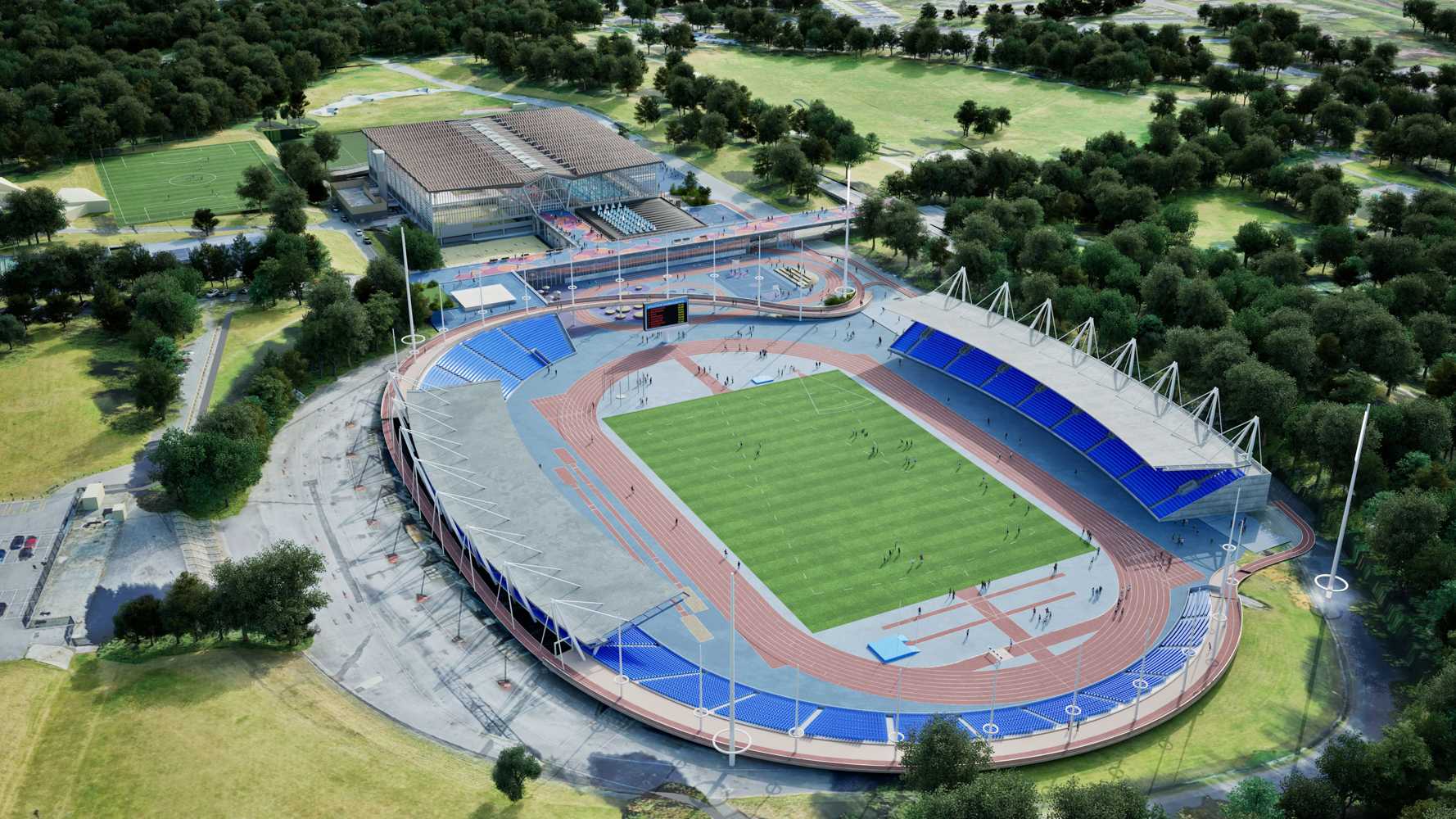
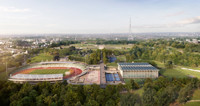
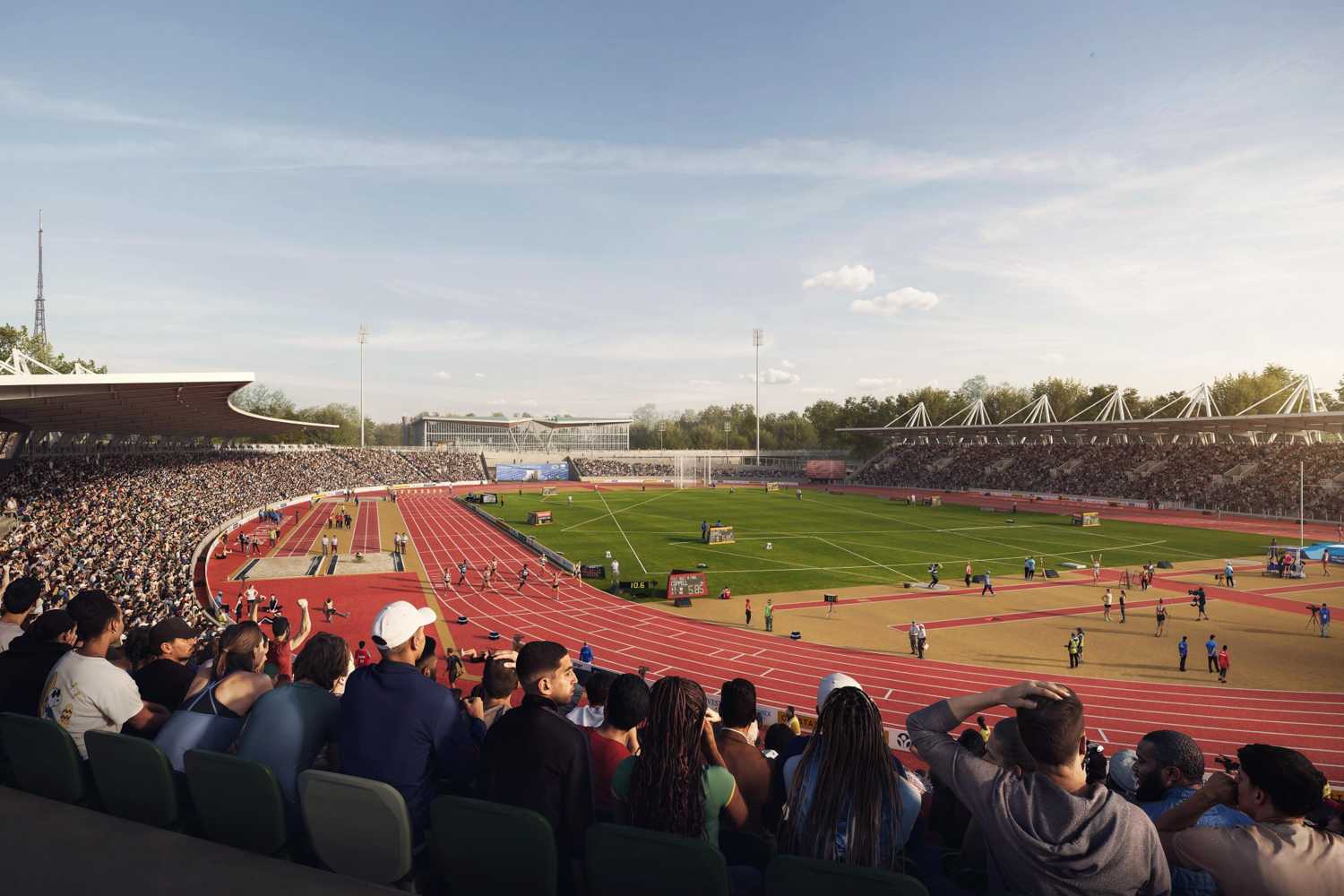
Within the stadium, one of the most visible changes will be filling the “gap” in the stands on the northern curve. This will give the venue a more complete, cohesive form and slightly increase its capacity to around 16,000 seats.
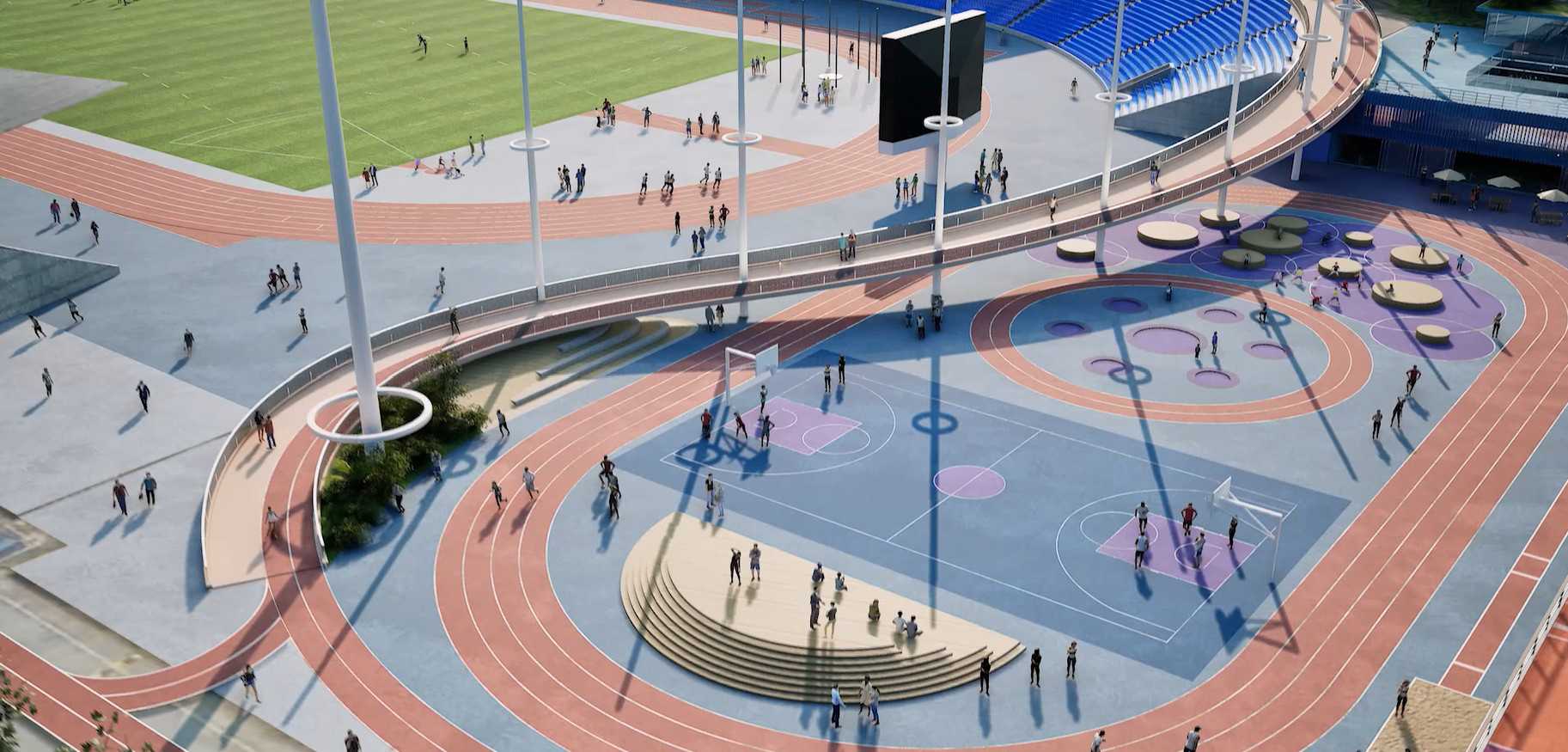
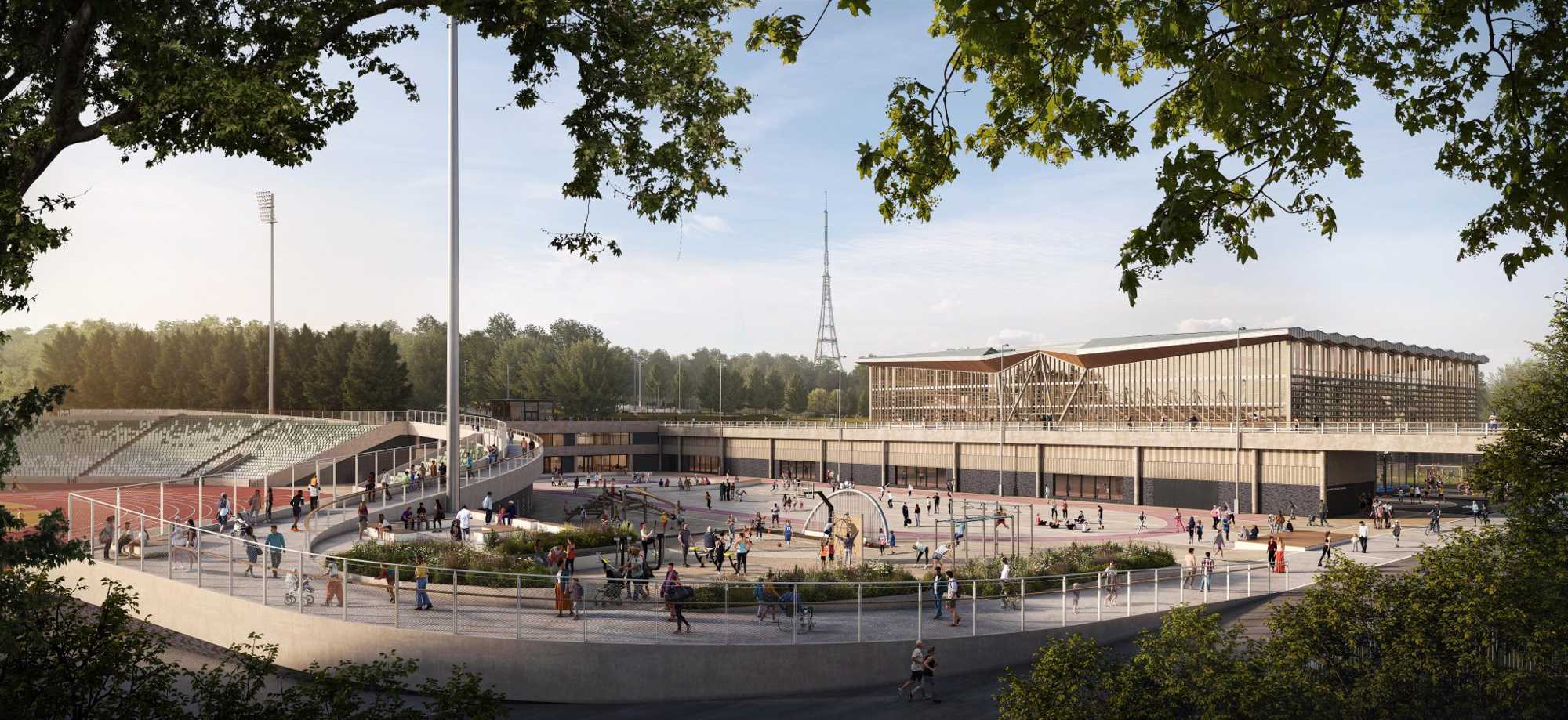
Behind the northern curve, a Sports Plaza will be built, featuring a 200-metre training track, a 3×3 basketball court, and an outdoor gym. The project also includes new floodlight masts, toilets, and improved facilities for spectators with disabilities.
What is Crystal Palace National Sports Centre?
Crystal Palace National Sports Centre is a sports complex located in south London, within Crystal Palace Park. The centre consists of an athletics stadium, a building with a sports hall and swimming pools, as well as smaller facilities and pitches.
The stadium and the surrounding area take their name from the Crystal Palace, which was relocated to this site from Hyde Park after the Great Exhibition of 1851. It was a large, iconic pavilion made primarily of steel and glass. The building no longer exists, having been demolished after a fire in 1936.
The new sports complex opened in 1964. The athletics stadium was built on the site of the previous stadium, which at the turn of the 19th and 20th centuries had hosted 20 FA Cup finals, as well as several matches of the England national team.
The stadium has a capacity of approximately 15,500 spectators, with partially covered stands. The east stand (the so-called Jubilee Stand) is newer, opened in 1977. The venue has witnessed 19 world records and hosted the final of the first edition of the Women’s FA Cup in 1971.
A short distance to the north of the stadium stands a large rectangular building divided into a “dry” section (with the sports hall) and a “wet” section (with the swimming pools). Since 1997, this building has held Grade II listed status.
How were the plans for the modernization of Crystal Palace National Sports Centre developed?
The plans for a comprehensive modernization of Crystal Palace National Sports Centre were announced in May 2023 by the Mayor of London, Sadiq Khan. In May 2025, it was announced that the main contractor for the project, to be delivered under a design and build contract, would be Morgan Sindall Construction.
Morgan Sindall Construction is working in partnership with WOO Architects, Max Fordham, Faulkner Browns, and Alan Baxter Associates on the project.
When will the modernization of Crystal Palace National Sports Centre take place?
In March 2026, Morgan Sindall Construction submitted a planning application to the London Borough of Bromley Council. The project is scheduled to start in the second half of 2026 and be completed by 2028. The estimated total cost of the investment is £130 million.
What do the modernization plans for Crystal Palace National Sports Centre include?
The project covers the revitalization of the entire complex, including renovations at the stadium, in the pavilion with the sports hall and swimming pools, and improvements to the surrounding areas.
One of the most visible changes at the stadium will be the expansion of the northern curve of the stands, which currently appears “cut off.” The extension of the northern curve, along with modernizations to the other stands, will increase the stadium’s capacity by around 500 seats, bringing it to just under 16,000 spectators.
The works will also include upgrades to the interior spaces of the stands, such as the extension of the covered track from 60 to 100 metres. The stadium will also gain new floodlight masts, toilets, and improved facilities for spectators with disabilities.
The expansion of the northern curve will result in the removal of the existing training pitch, which will be replaced by a Sports Plaza featuring a 200-metre training track, a 3×3 basketball court, and an outdoor gym.
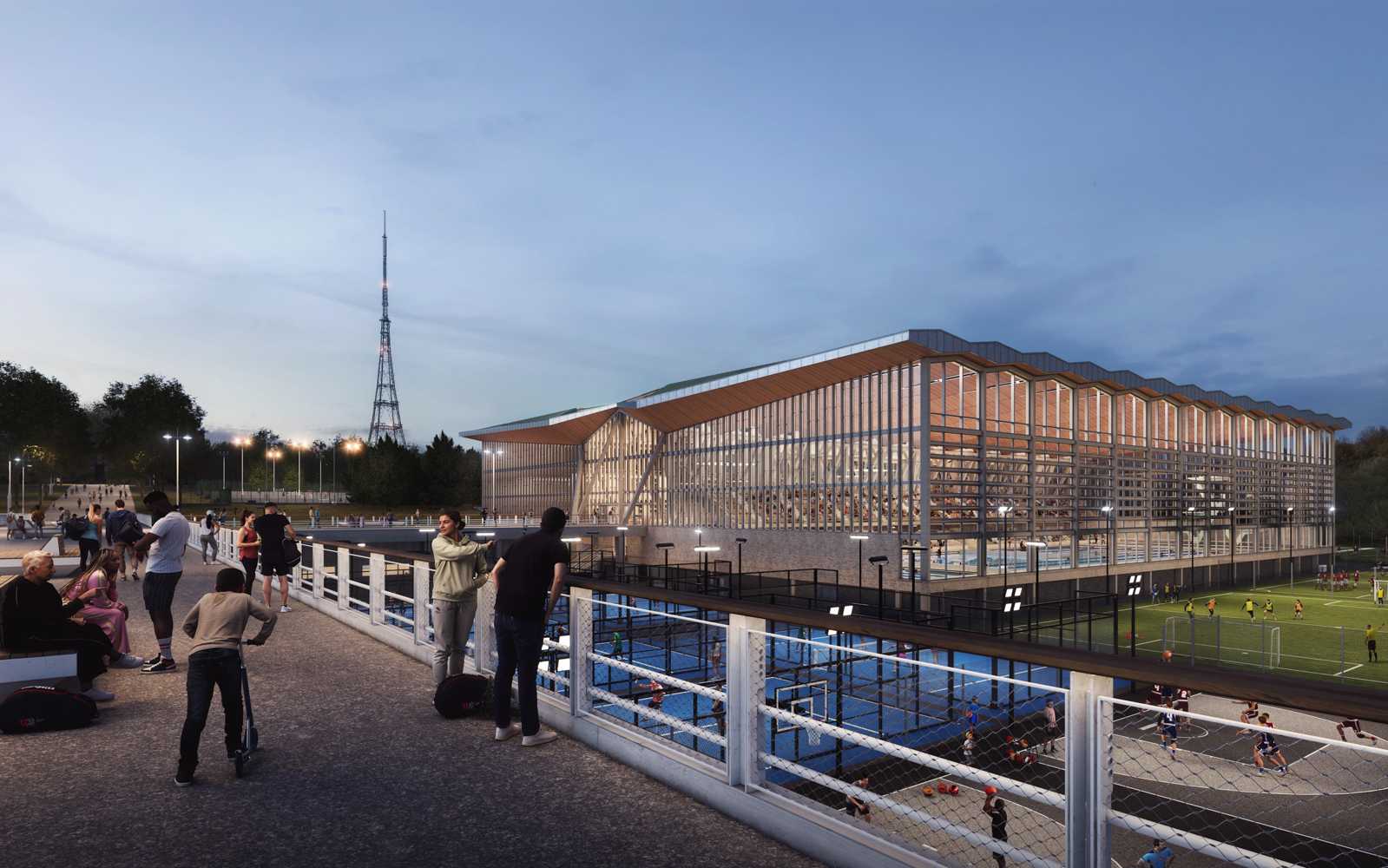
Changes to the pavilion with the sports hall and swimming pools will focus primarily on the pool areas. The adjacent building with a 25-metre pool, added in 1976, will be removed, and the short pool will be relocated into the main hall next to the 50-metre pool. The removal of this annex is intended to restore the historic building to its original form as a freestanding glass pavilion.
Additional courts and pitches are planned for the surrounding areas. The project also includes a number of sustainability measures, such as photovoltaic panels and a heat pump system.
After modernization, the facilities will be suitable both for recreational use and for hosting major sporting events. The project aligns with the broader plans for the revitalization of Crystal Palace Park.
Advertisement
Renderings
-
2026 © WOO architects 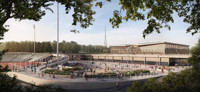
2026 © WOO architects 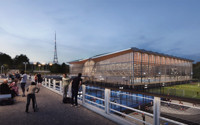
2026 © WOO architects 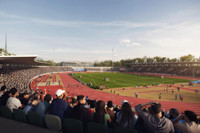
2026 © WOO architects 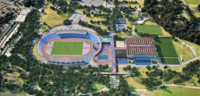
2025 © WOO architects 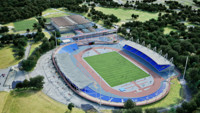
2025 © WOO architects 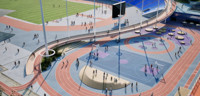
2025 © WOO architects
2025: