 StadiumDB
Big Red Rebuild
| Capacity | 80 000 |
|---|---|
| Country | United States of America |
| City | Lincoln |
| Clubs | Nebraska Cornhuskers |
| Category | Design awaiting implementation |
| Cost | $600 M |
| Construction | 2027–2028 |
Advertisement
Big Red Rebuild – design description
What does the modernization project for Memorial Stadium in Lincoln look like in brief?
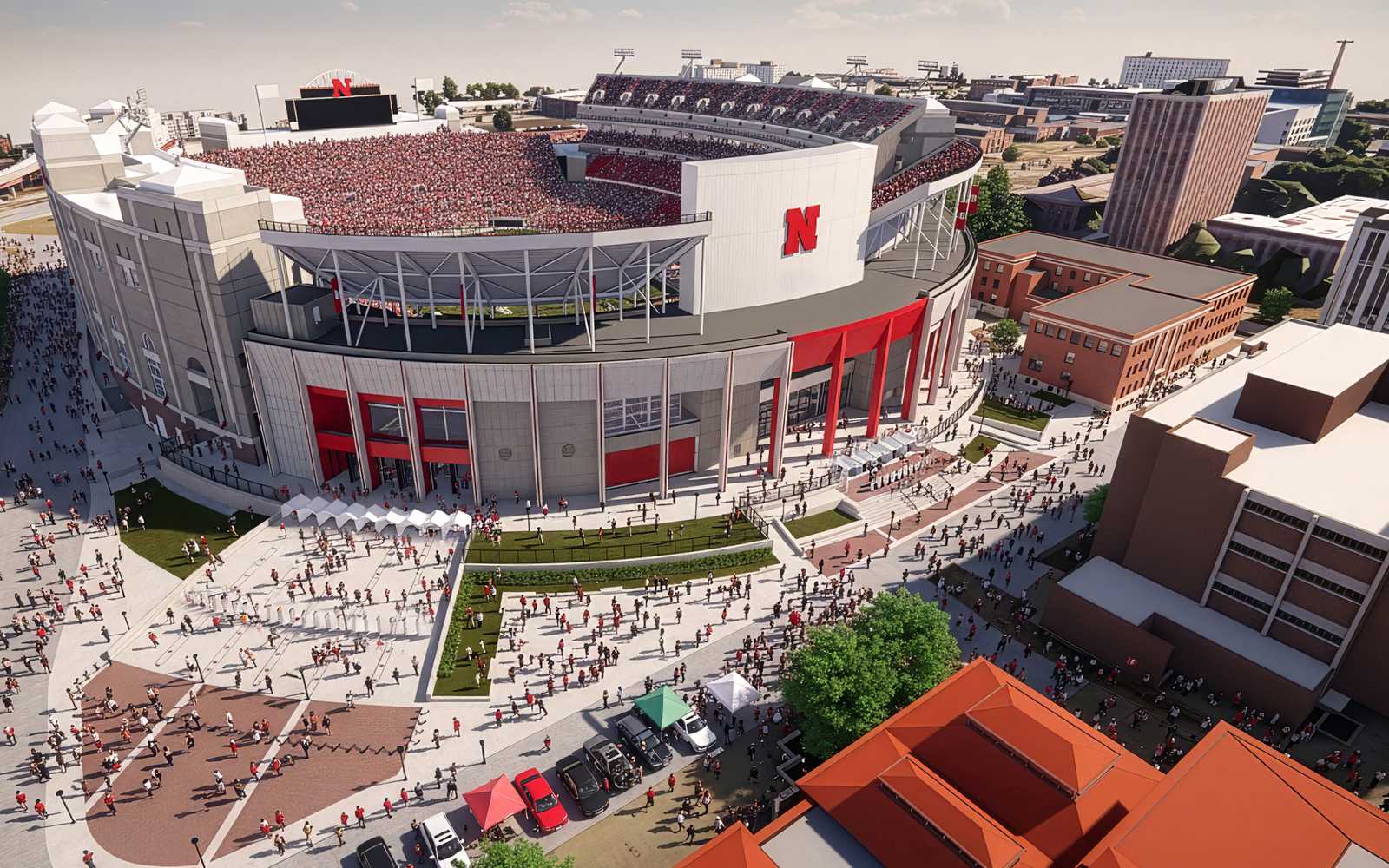
The next renovation in the more than 100-year history of Memorial Stadium includes the construction of entirely new stands on the west and south sides, while retaining the existing structure housing the suites on the west side. To a lesser extent, the works will also affect the east stand.
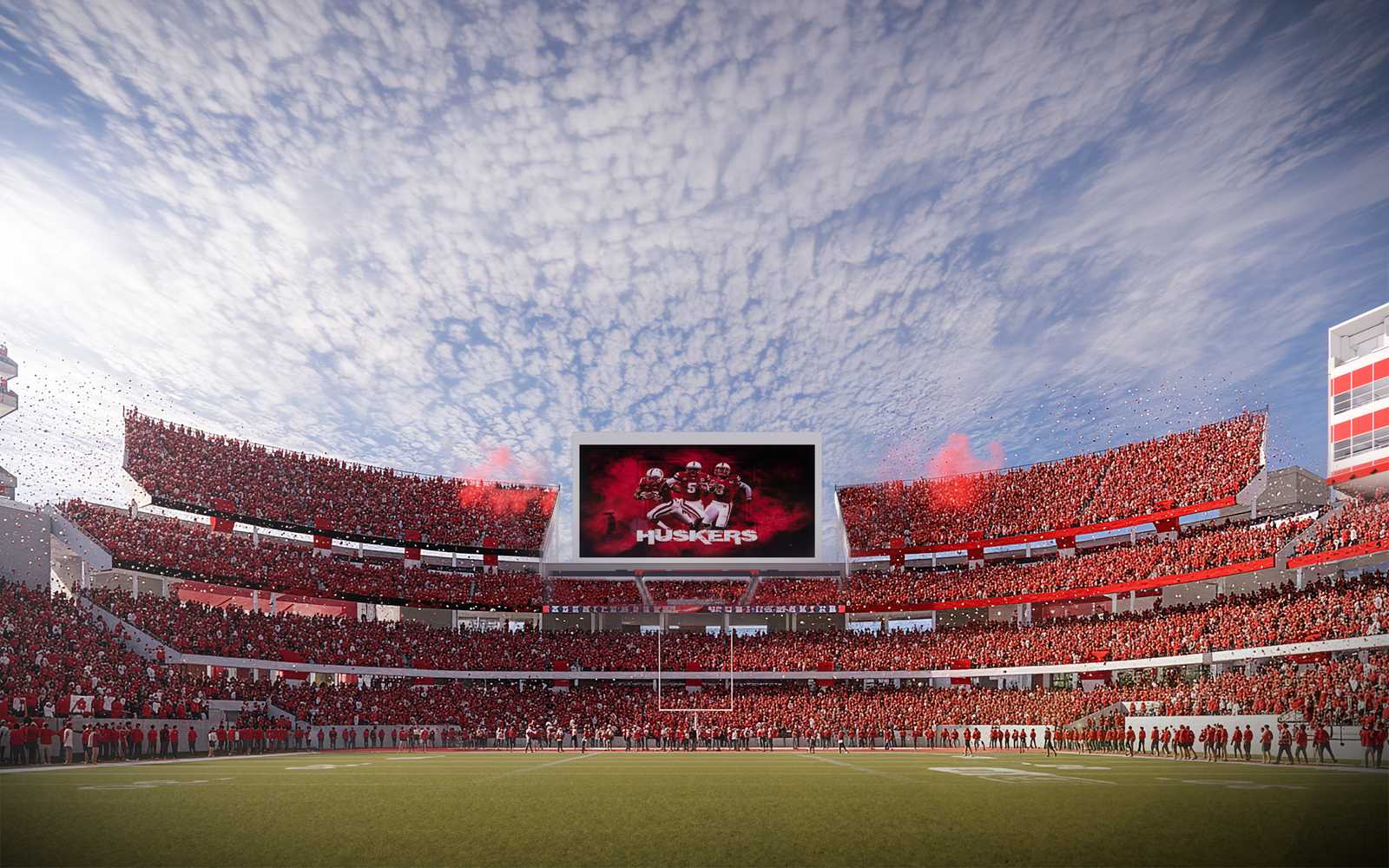
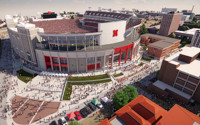
The project, named “Big Red Rebuild,” also includes the installation of a large video board on the south side, the implementation of a heated pitch system, and the creation of a new plaza in front of the south stand (South Plaza).
The aim of the investment is to raise the standard of the facility, improve spectator comfort, and increase revenue generation. The modernization will result in a slight reduction in capacity – from 85,000 to 80,000 seats.
Construction is scheduled to begin after the end of the 2026 season and will be carried out over two off-season phases, with completion planned for 2028. During the 2027 season, stadium capacity will be temporarily reduced to 65,000 spectators.
What does Memorial Stadium look like?
Memorial Stadium in Lincoln was opened in 1923. The facility is located on the campus of the University of Nebraska–Lincoln, close to the city center. It primarily serves the university’s football team, the Nebraska Cornhuskers, which competes in the Big Ten Conference.
Over the years, the stadium has been gradually expanded. The last major renovation was completed in 2013 and included an expansion of the east stand. The stadium currently has a capacity of over 85,000 spectators, making it one of the largest stadiums not only in college football, but also worldwide.
The venue is known as “The Sea of Red,” referring to the fans who fill the stands in large numbers, wearing the red colors of the Nebraska Cornhuskers. The stadium is also famous for its consecutive sellout streak, which has been ongoing since 1962; in 2024, the 400th consecutive sold-out game took place.
How did the plans for the next renovation of Memorial Stadium come about?
At the beginning of 2022, the University of Nebraska–Lincoln conducted a survey among fans regarding potential future changes to Memorial Stadium, which was approaching its centennial anniversary in 2023. In September 2022, the university’s athletics department presented initial assumptions for the next renovation of the stadium.
A year later, the university unveiled the first concrete plans for the proposed modernization. The project included the construction of an entirely new south stand, along with a range of renovations in other parts of the stadium. At the time, the estimated cost of the investment was $450 million.
These plans were later delayed, and in August 2025, University of Nebraska athletic director Troy Dannen announced that the project had been put on hold indefinitely, citing the university’s financial difficulties.
However, on April 17, 2026, the university’s athletics department presented a new modernization plan for the stadium. Visualizations were also published for the first time. The new proposal is more ambitious than the previous one, including a complete reconstruction of the west stand, with the total cost estimated at $600 million.
The project was made public a week before the meeting of the university’s Board of Regents, during which a unanimous vote in favor of its implementation was passed.
What does the Memorial Stadium modernization project include?
The project involves the construction of entirely new stands on the west and south sides, while retaining the existing structure housing the suites on the west side. Renovations will also, to a lesser extent, affect the east stand.
The west stand structure, which is scheduled for demolition, is one of the oldest parts of the stadium, dating back to its opening in 1923.
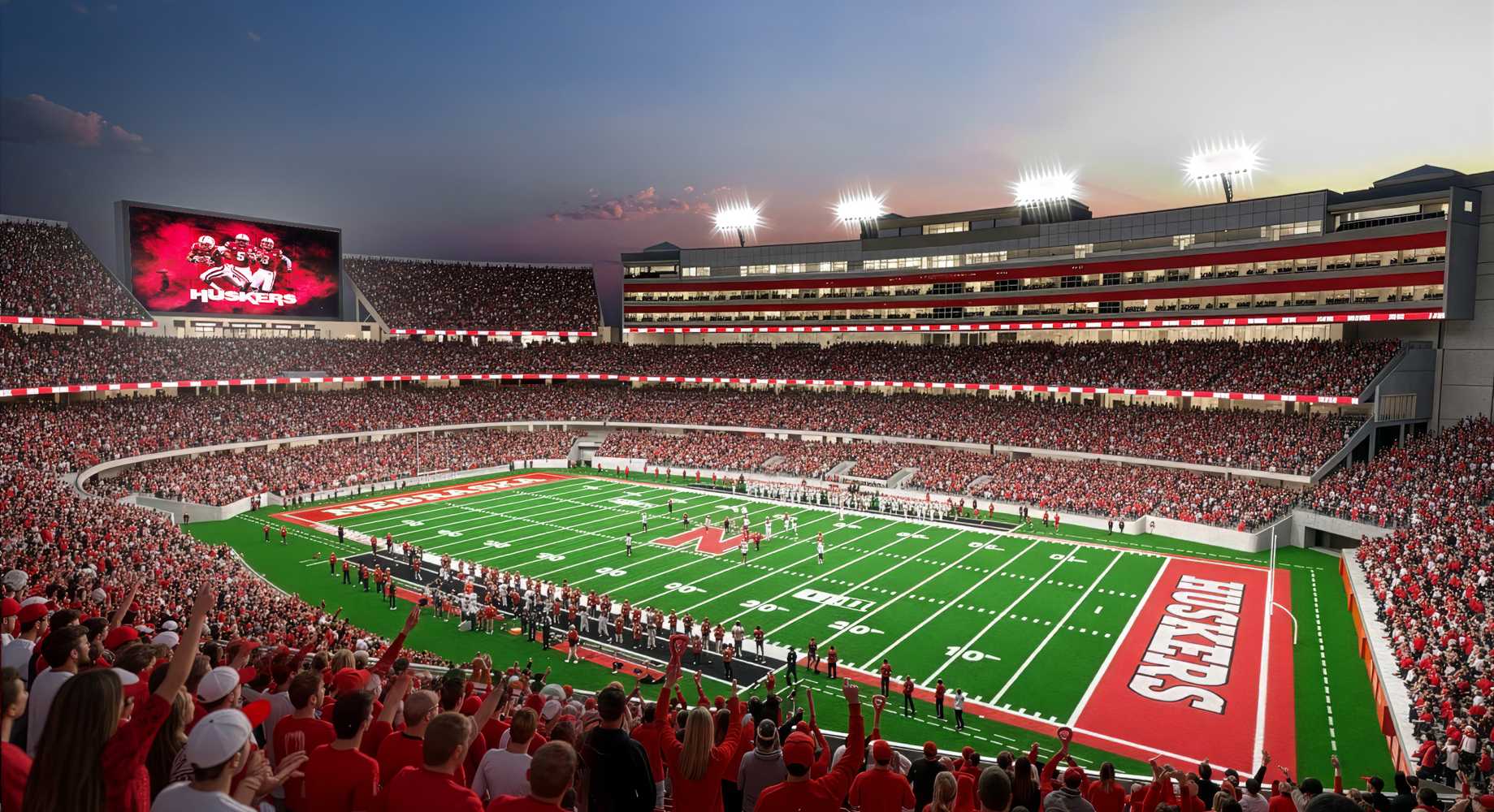
The new west and south stands will be divided into three tiers. The south stand will also feature two sections of a fourth, upper tier, with a large video board positioned between them.
The project includes the creation of two concourses (on the lower and middle levels) encircling the stadium, as well as a third, upper concourse covering 270 degrees. Movement around the facility will also be improved through new vertical circulation systems.
New premium areas, clubs, and VIP suites will be added, along with additional concession stands and restrooms. The number of individual seats will also increase by 20,000. After the renovation, all student seating and the marching band will be relocated to the south stand. The stadium will also receive a heated playing surface.
These changes will reduce the overall stadium capacity by more than 5,000 seats, to approximately 80,000 spectators.
The Schorr Center, an academic facility housing the computer science program previously located beneath the south stand, will be demolished, and all staff and functions will be relocated to Nebraska Hall and Scott Engineering.
The plan also includes the redevelopment of the area in front of the south stand, where parking spaces will be replaced by a new public plaza, the so-called South Plaza.
The entire project has been named the “Big Red Rebuild.” The modernization aims to raise the stadium’s standard, competitiveness, and commercial potential. Once completed, the venue is expected to host more events and operate as a year-round destination.
When is the Memorial Stadium renovation planned?
The modernization of Memorial Stadium is set to begin after the end of the 2026 season. The works will be carried out in two phases – the first will be completed before the start of the 2027 season, and the second before the start of the 2028 season. During the 2027 season, the stadium’s capacity will be temporarily reduced to 65,000 seats.
The project is estimated to cost $600 million. The university plans to raise at least $250 million through donations, with the remainder financed through a private bond issuance.
Advertisement
Renderings
-
2026 © Nebraska Huskers 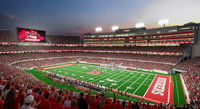
2026 © Nebraska Huskers 
2026 © Nebraska Huskers