 StadiumDB
Lansdowne 2.0
| Capacity | 24 000 |
|---|---|
| Country | Canada |
| City | Ottawa |
| Clubs | Ottawa Redblacks, Atlético Ottawa |
| Category | Design being implemented |
| Cost | C$418.8 M ($298.5 M) |
| Construction | 2025–2030 |
| Design | Hobin Architecture, Brisbin Brook Beynon Architects |
| Contractor | EBC Inc. |
Advertisement
Lansdowne 2.0 – design description
What is the Lansdowne 2.0 project in a nutshell?
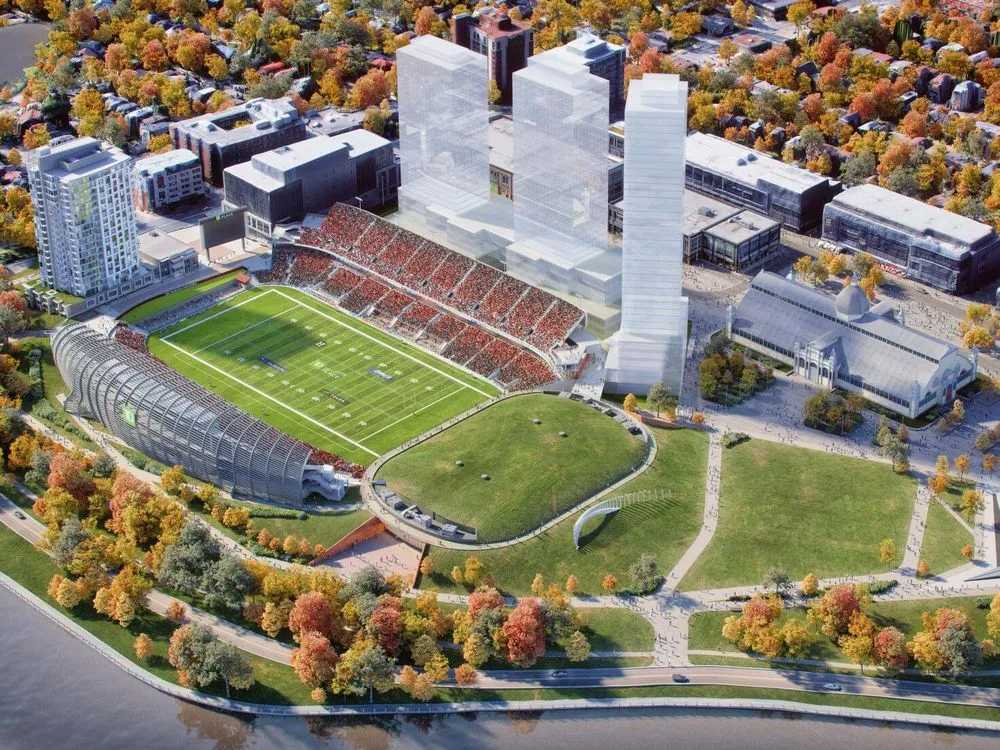
TD Place Stadium already underwent a major redevelopment between 2012 and 2014, when a new south stand was built as part of the wider transformation of the Lansdowne Park. A decade later, the Lansdowne 2.0 vision was unveiled to complete the redevelopment with the construction of a new stand on the opposite, northern side of the stadium.
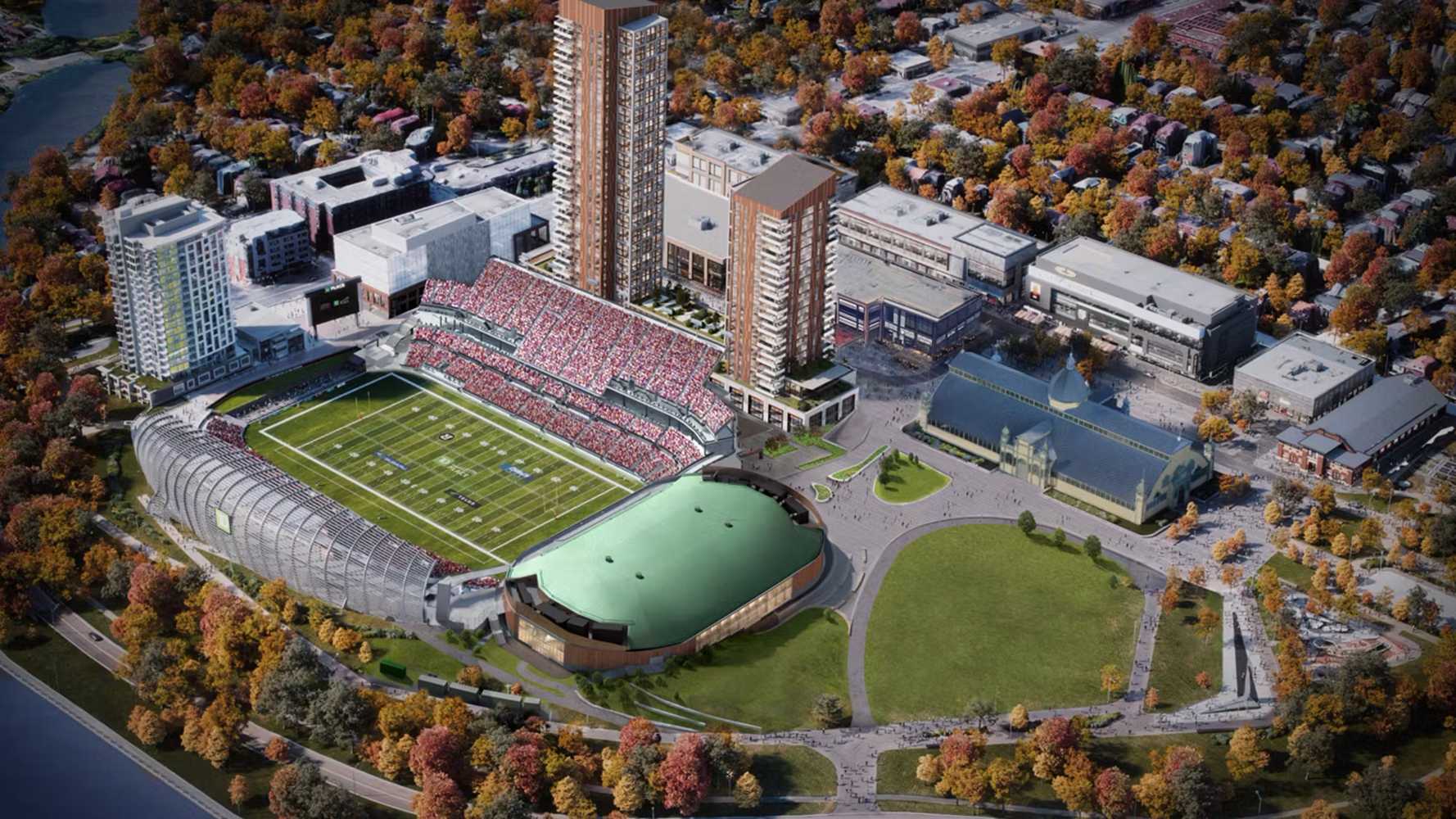
As the existing north stand, opened in 1967, is integrated with the adjacent arena, the project also includes the construction of a new arena to replace it. The new facility will be built in a different location, occupying the open space behind the eastern end of the playing field.
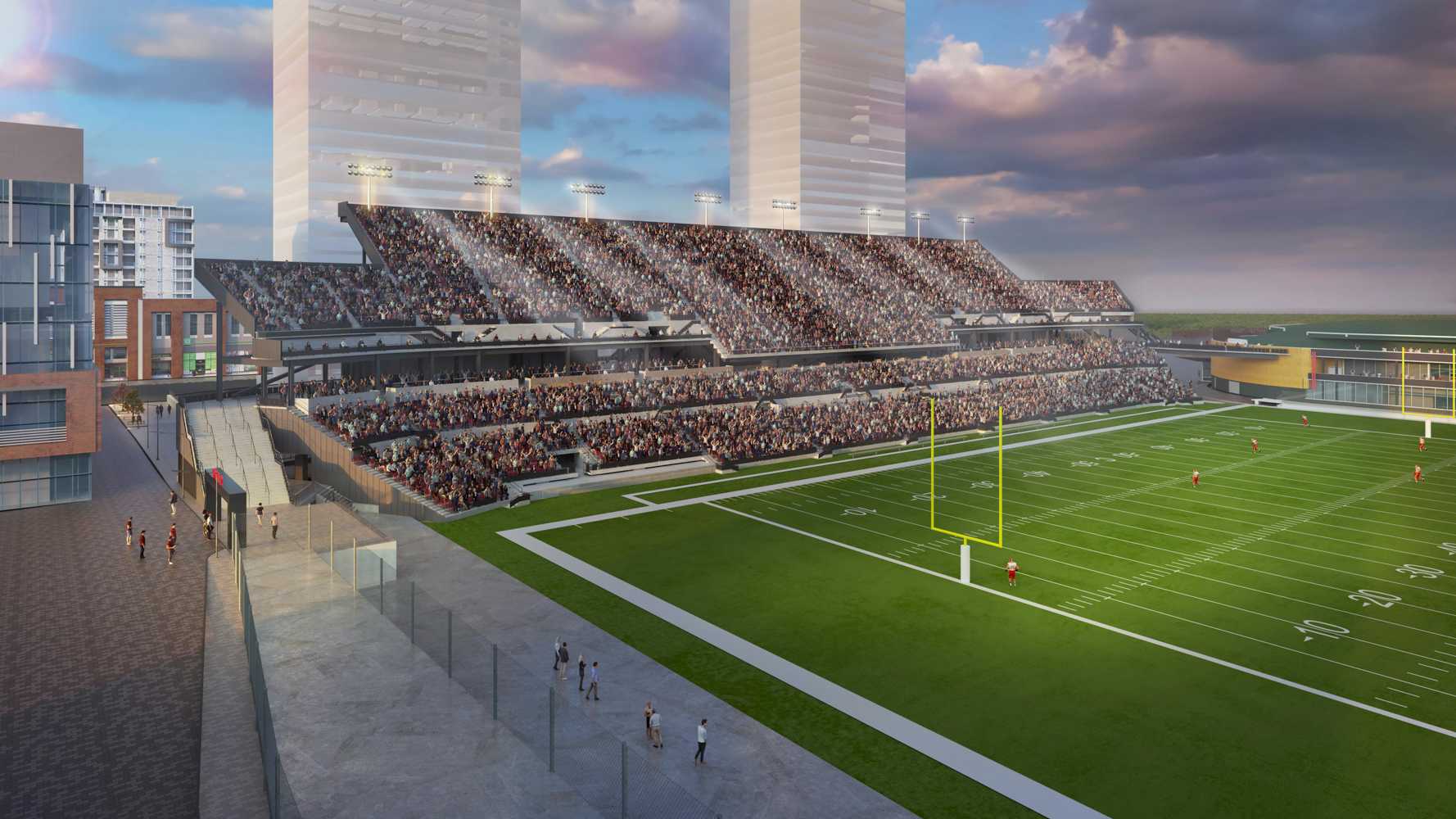
The new north stand will therefore be a standalone structure, no longer connected to the arena. Unlike the existing stand, it will also be built without a roof. Another key element of the project is the construction of two residential towers behind the new stand.
The redevelopment will be carried out in phases. The new arena will be built first (2026–2028), followed by the new north stand (2028–2030), while the two residential towers will be constructed in the final phase (2031–2034).
Preliminary works for the construction of the new arena began in December 2025. During the redevelopment, TD Place Stadium will remain operational, although the number of available seats will be temporarily reduced after the old north stand is taken out of use. Once the new stand opens, capacity is expected to return to around 24,000 seats.
What is TD Place Stadium like?
TD Place Stadium is Ottawa's main stadium, located less than 3 km south of downtown in the Canadian capital. It is a football-specific venue, with two stands running along the north and south sides of the pitch. The stadium has a capacity of 24,000 spectators, while the north stand is integrated with the adjacent TD Place Arena.
The site's history dates back to the second half of the 19th century, when a playing field was laid out on the exhibition grounds and hosted various sporting events. The stadium itself, however, can be said to date from 1908, when the first stand was built.
The current north stand and the adjoining arena opened in 1967. Between 2012 and 2014, the present south stand was constructed as part of the wider redevelopment of the entire Lansdowne Park precinct.
The stadium has hosted a number of major sporting events, including matches at the 1976 Summer Olympics football tournament, games during the 2015 FIFA Women's World Cup and several Grey Cups. Today, its main tenants are the Ottawa Redblacks of the Canadian Football League and Atlético Ottawa of the Canadian Premier League.
How did the latest TD Place Stadium redevelopment project come about?
In 2021, a working group appointed by the City of Ottawa prepared a report on the future of TD Place Stadium. It recommended demolishing the existing north stand, opened in 1967, together with the adjoining arena, and replacing them with new facilities.
The City of Ottawa then worked with the Ottawa Sports and Entertainment Group (OSEG) – its private partner in the management of Lansdowne Park – to draw up plans for the redevelopment of Lansdowne Park. The architectural concept was designed by Hobin Architecture and Brisbin Brook Beynon Architects.
The project was intended to complete the redevelopment that began in 2012–2014 with the construction of the new south stand. The vision became known as Lansdowne 2.0. It was first unveiled in the spring of 2022 and, following further discussions and revisions, was finally approved by the City on November 7, 2025.
What does the Lansdowne 2.0 project include?
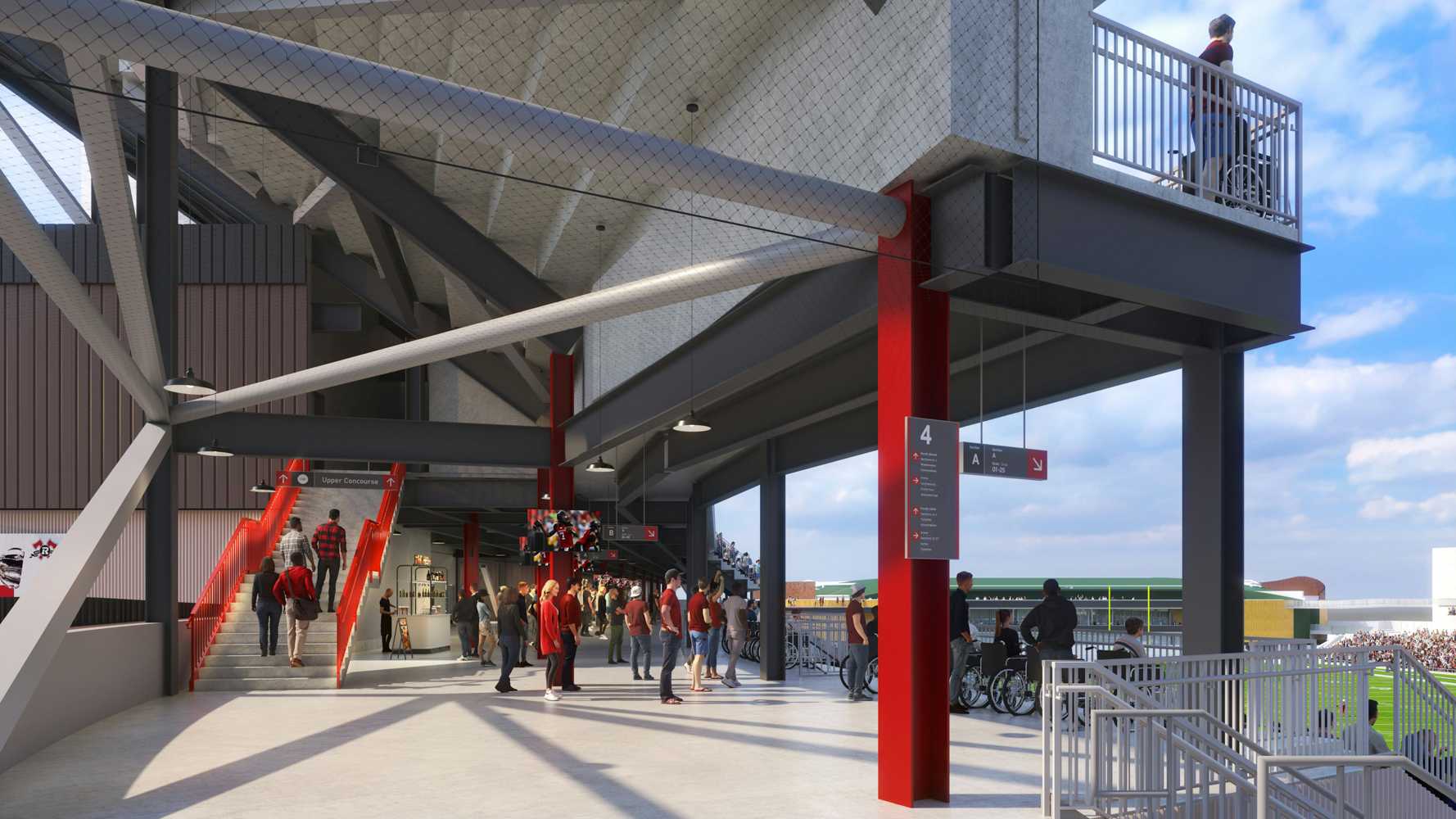
The plan calls for the demolition of the existing north stand together with the adjoining arena. The arena will be replaced by a new Event Centre, which will be built on the eastern side of the stadium, behind the end zone. The north stand will also be replaced with a new structure on the same site.
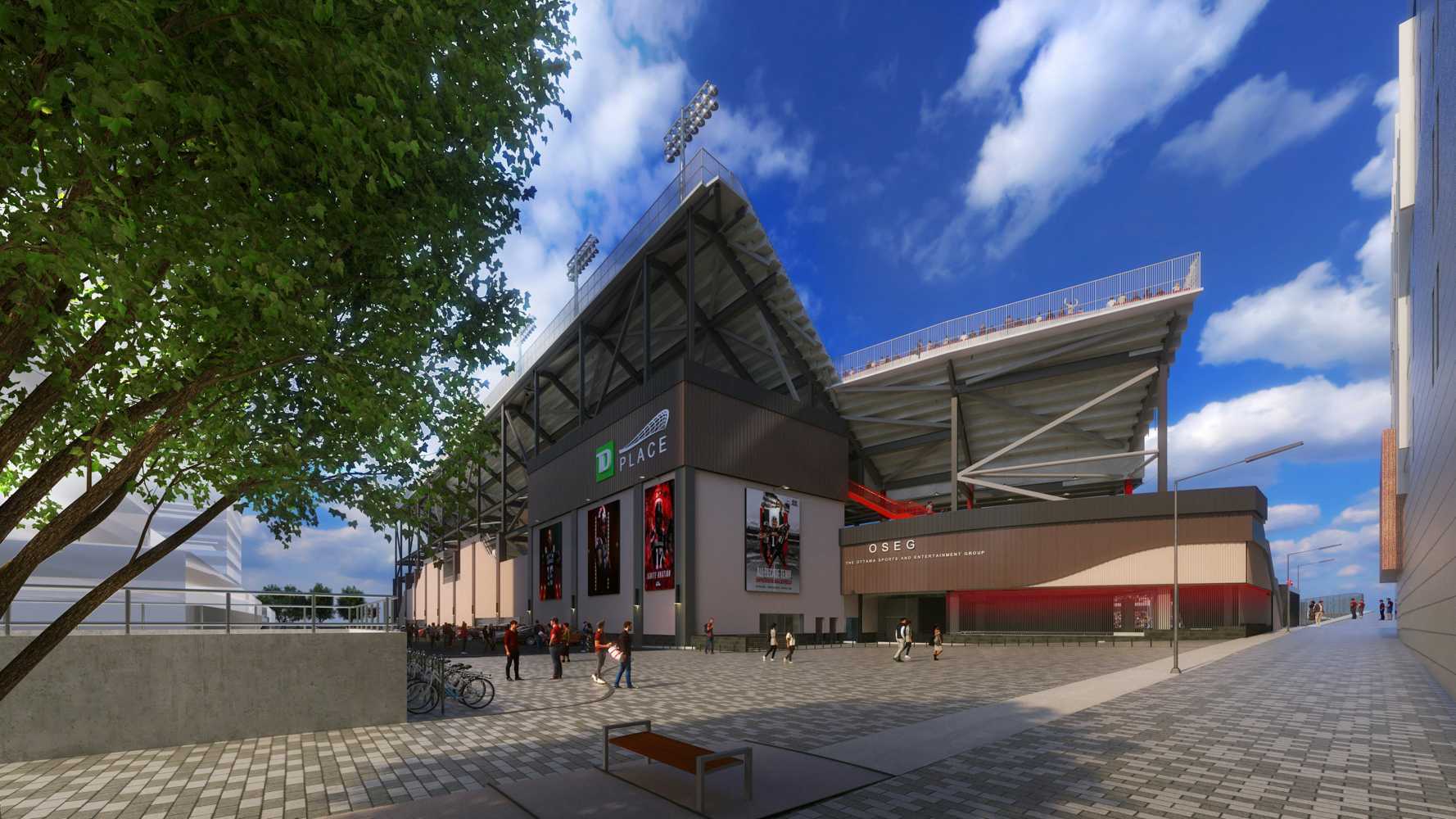
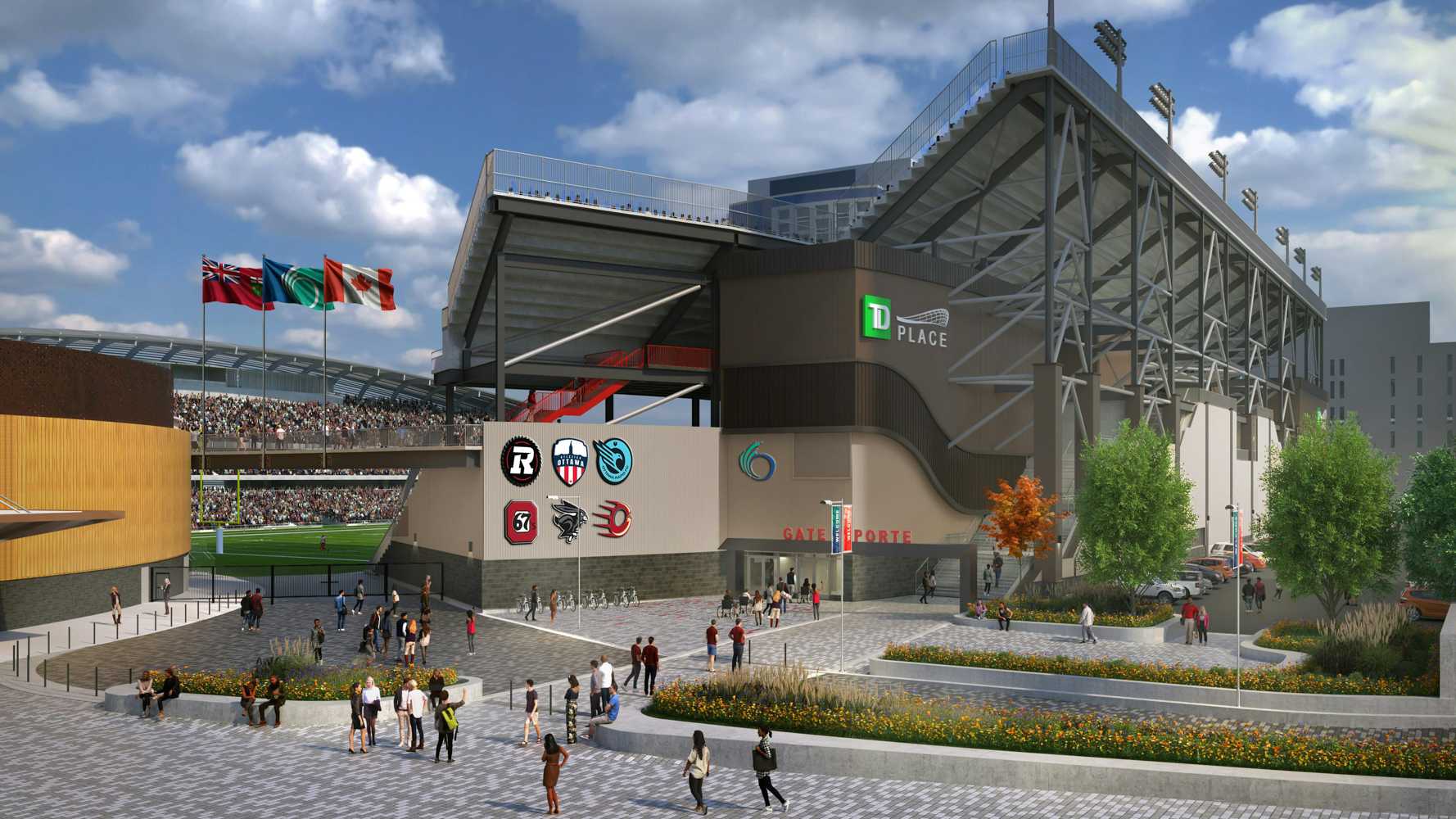
Unlike its predecessor, the new north stand will no longer be integrated with the arena. Although it will feature a more modern design and match the architecture of the new south stand, it will not be roofed. Once completed, the stadium's capacity will return to roughly its pre-redevelopment level of around 24,000 spectators.
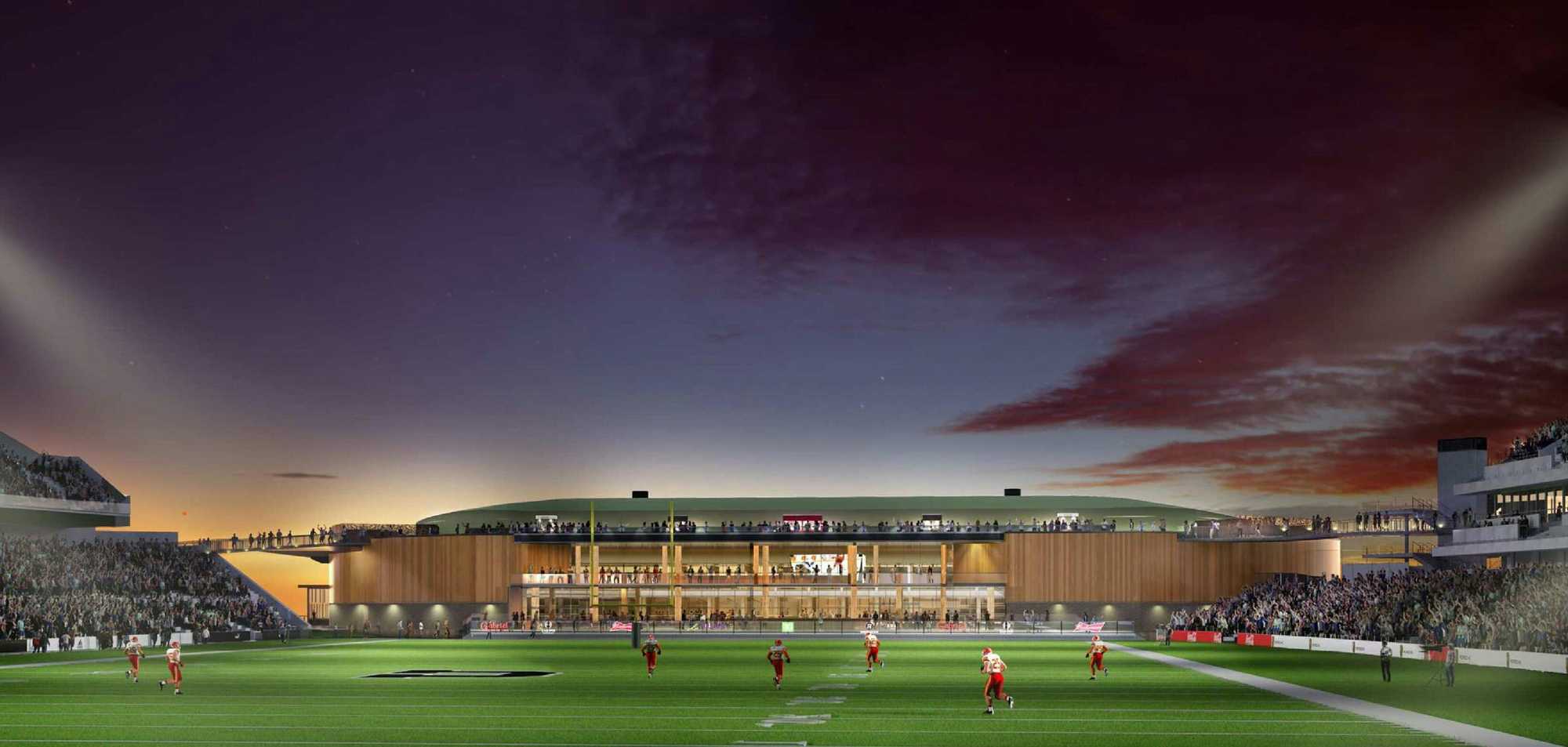
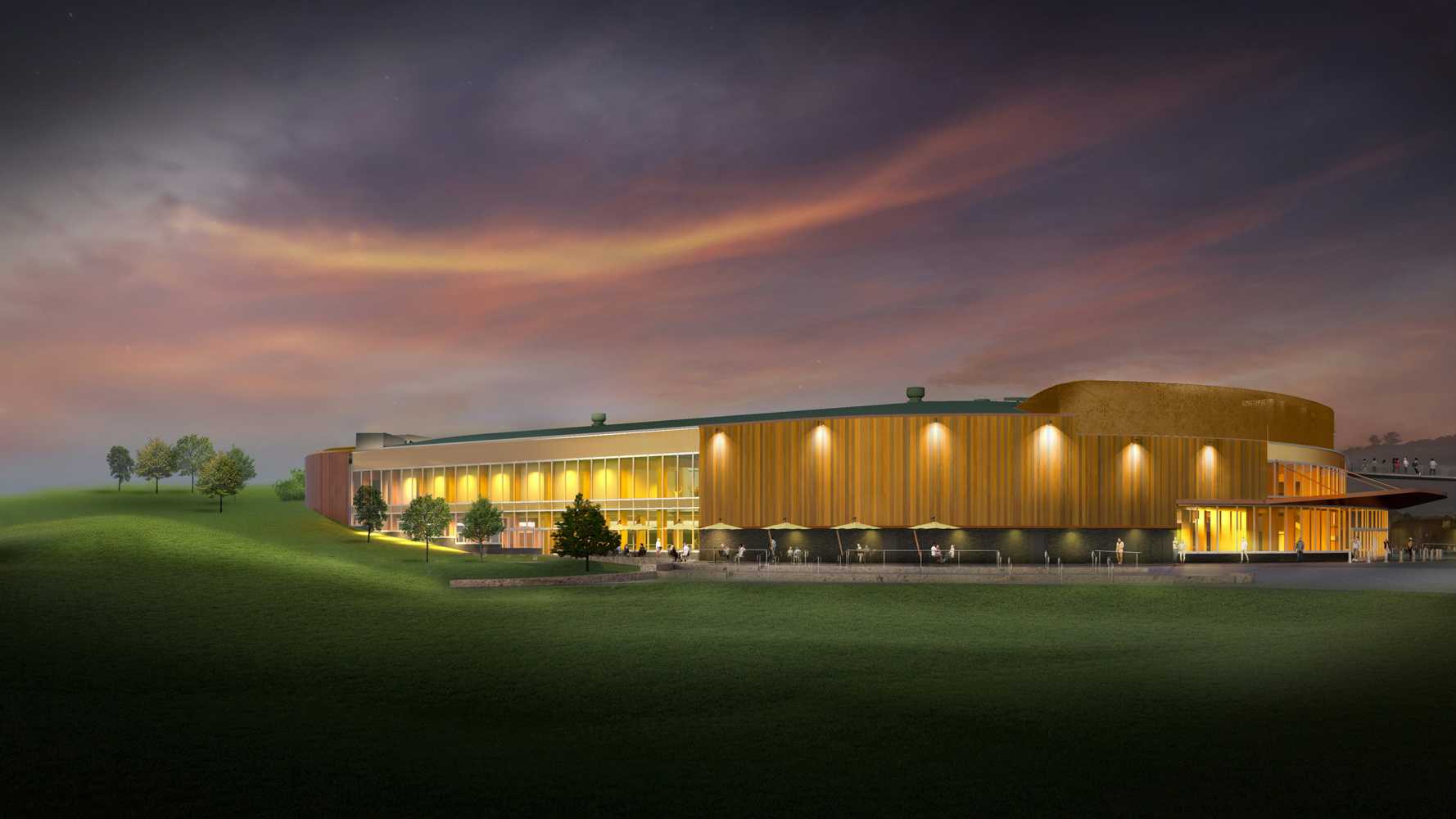
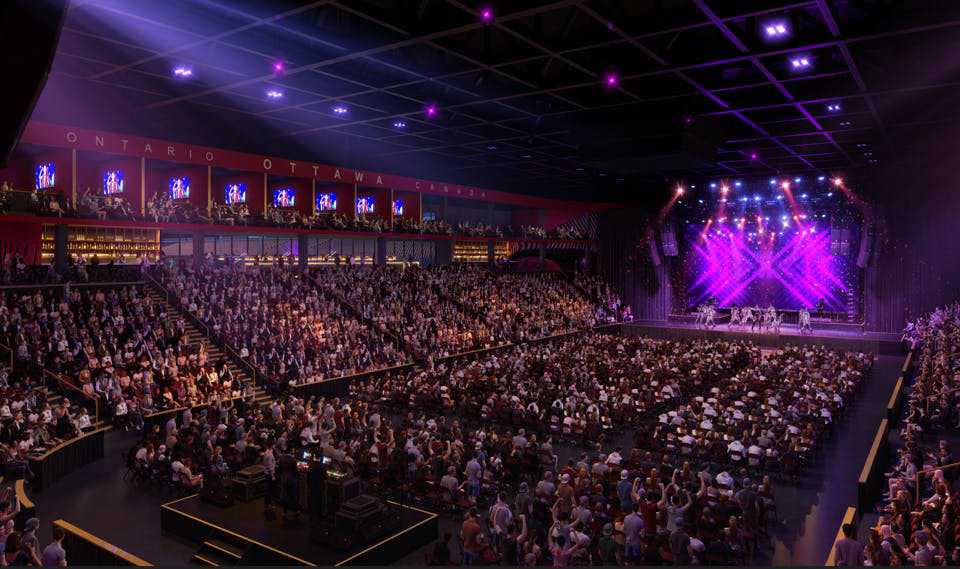
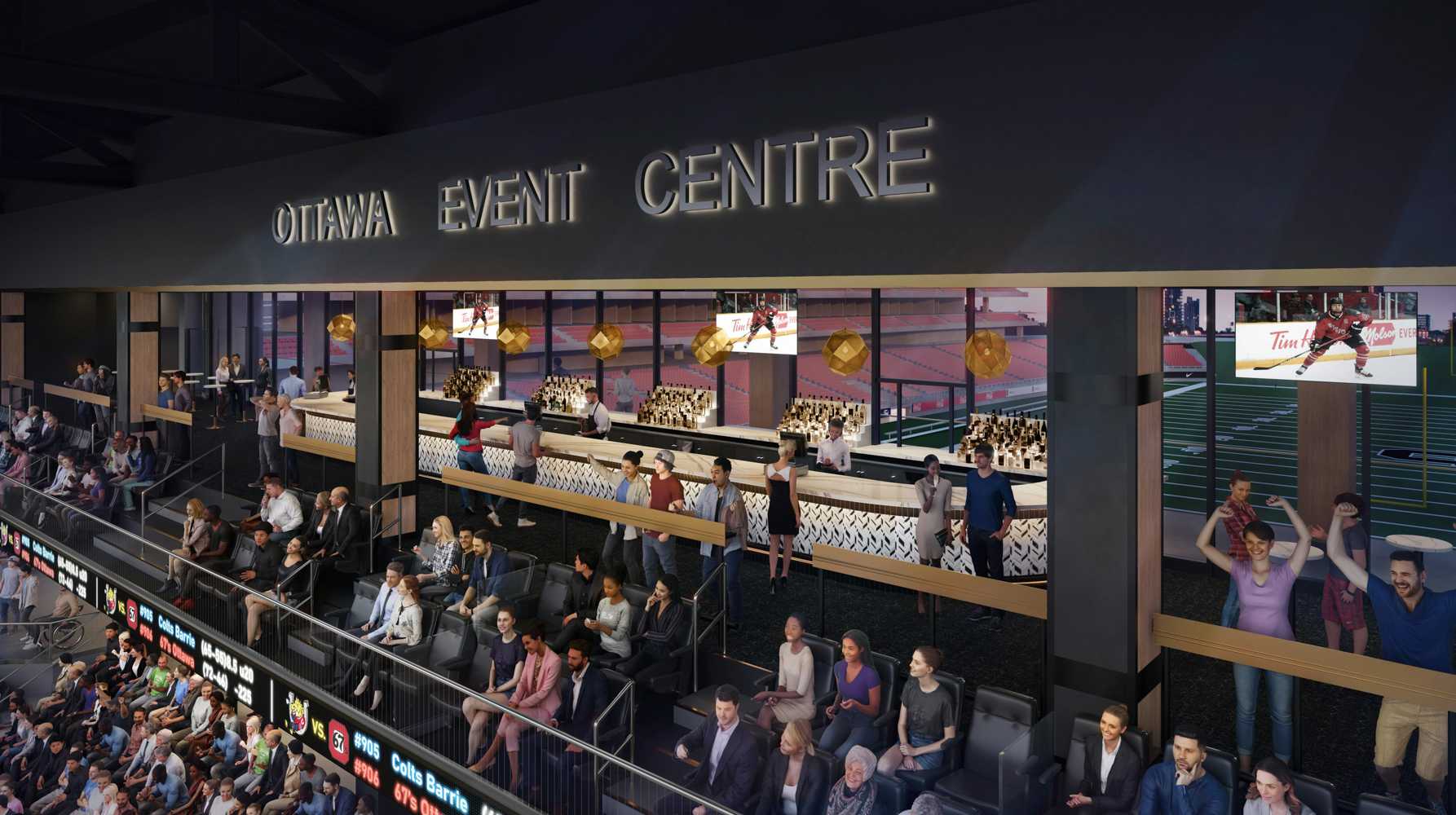
The new Event Centre (arena) will feature premium seating overlooking the pitch, effectively serving as an additional VIP stand. The arena itself will accommodate 6,600 spectators for ice hockey (including 5,850 seats) and 7,000 for concerts.
A key part of the redevelopment is its commercial component, which includes the construction of two residential towers behind the new north stand. The project also includes the revitalisation of the public spaces surrounding the stadium, including new green areas, pedestrian routes and recreational spaces.
When will TD Place Stadium be redeveloped?
The redevelopment will begin with the construction of the new arena (2026–2028), followed by the new north stand (2028–2030). The final phase will involve the construction of the two residential towers (2031–2034).
Preliminary works for the new arena began in December 2025. The facility is expected to open in early 2028, at which point the demolition of the existing north stand and the adjoining arena will begin. The new stand should be completed by early 2030 at the latest. The commercial component of the project is planned for completion between 2031 and 2034.
Throughout the redevelopment, the stadium will remain operational, although once the north stand is taken out of service, its capacity will be reduced to 14,000 spectators (with temporary stands also being installed).
The cost of the stadium redevelopment (excluding the private development component) is estimated at CAD 418.8 million. The main contractor is EBC Inc.
A dedicated page covering the redevelopment of TD Place Stadium is available separately
Advertisement
Renderings
-
2024 © City of Ottawa 
2024 © City of Ottawa 
2024 © City of Ottawa 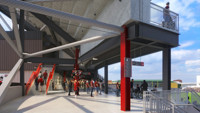
2024 © City of Ottawa 
2024 © City of Ottawa 
2024 © City of Ottawa 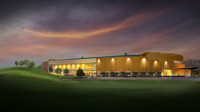
2024 © City of Ottawa 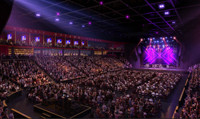
2024 © City of Ottawa 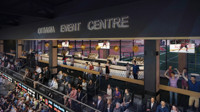
2024 © City of Ottawa 
2022 © Ottawa Sports and Entertainment Group
2022: