 StadiumDB
Highmark Stadium – until 2026
| Capacity | 71 608 |
|---|---|
| Country | United States of America |
| City | Buffalo |
| Clubs | Buffalo Bills |
| Retire year | 2026 |
| Other names | Rich Stadium (1973–1998), Ralph Wilson Stadium (1998–2016), New Era Field (2016–2020), Bills Stadium (2020–2021) |
| Nicknames | The Ralph |
| Inauguration | 17/08/1973 |
| Construction | 04/04/1972 – 1973 |
| Renovations | 1984, 1992–1994, 1998–1999, 2007, 2013–2014 |
| Cost | $22 M |
| Design | HNTB |
| Contractor | Frank Schoenle Construction |
| Address | 1 Bills Dr., Orchard Park, NY 14127-2237 |
Advertisement
Highmark Stadium – historical stadium description
How can the former Buffalo Bills stadium be briefly described?
Plans for the construction of the stadium in Orchard Park (on the southern outskirts of Buffalo) took shape around the time of the AFL–NFL merger, when the outdated War Memorial Stadium no longer met league requirements, and the Buffalo Bills were considering relocation to Seattle or another city.
One of the ideas was the construction of a fully domed stadium – which would have been only the second of its kind in the world after the Astrodome. However, due to high costs, this concept was eventually abandoned and the stadium was built as an open-air venue. Construction took just over 14 months, and the inauguration took place on 17 August 1973.
During their time at the stadium, the Bills made four consecutive Super Bowl appearances (from the 1990 to 1993 seasons, although they failed to win any of them), as well as enduring a run of 17 consecutive seasons without a playoff appearance (2000–2016).
The venue was the scene of one of the most memorable comebacks in NFL history, when the Bills overcame a 32-point deficit against the Houston Oilers, along with many other unforgettable moments. Since the late 1980s, a tradition had also developed of playing a remixed version of Shout by The Isley Brothers after every Bills touchdown.
The stadium’s open design meant it was fully exposed to weather conditions – in Buffalo’s cold climate, games played in heavy snow were not uncommon and became almost part of the Bills’ identity.
The stands, closely tailored to the dimensions of a football field, effectively ruled out the hosting of soccer matches and many other sports. As a result, aside from football games, the venue primarily hosted concerts, although it also occasionally staged hockey games (including the NHL Winter Classic) and the opening ceremony of the 1993 Summer Universiade.
Despite various renovations, the stadium retained its original profile throughout its existence. Its initial capacity was around 80,000 seats, but over time, as comfort improvements were introduced, this gradually decreased to 71,600.
“The Ralph” served Buffalo Bills for more than half a century (53 seasons in total), before being replaced by its successor built on the opposite side of the street between 2023 and 2026. The final game at the old stadium was played on 4 January 2026, and the demolition work began shortly thereafter.
How did the former Buffalo Bills stadium come into existence?
The Buffalo Bills were founded in 1959 as one of the charter members of the American Football League (AFL), which at the time was a rival to the NFL. From their inaugural season in 1960, the team played at War Memorial Stadium, opened in 1937 and located near downtown Buffalo.
In 1970, the AFL–NFL merger took place (with the combined league retaining the NFL name). The NFL required its teams to have stadiums with a minimum capacity of 50,000 spectators. War Memorial Stadium, which seated just over 46,000, did not meet this requirement and was also considered outdated.
The Bills expected local authorities to finance a new stadium, threatening relocation to Seattle or another city if this did not happen.
In response to the need for a new venue, Erie County authorities, together with the Buffalo Chamber of Commerce, formed a joint commission that, as early as 1967, identified three potential sites and four possible stadium concepts. The most ambitious of these was a fully domed stadium.
Could the Buffalo Bills have received a fully domed stadium?
Initially, plans indeed called for a domed stadium to be built in the eastern suburb of Lancaster, with a planned capacity of 50,000 spectators. It would have been only the second facility of its kind in the world, after the pioneering Astrodome in Houston, opened in 1965.
To advance the project in Lancaster, Dome Stadium, Inc. (DSI) was established in 1969. Among those involved in promoting the domed concept was Roy Hofheinz, who had previously played a key role in the development of the Astrodome.
Erie County was prepared to finance the construction; however, when bids from contractors exceeded the projected budget by $20 million, the county legislature withdrew from the investment and instead opted for a significantly cheaper open-air stadium.
When was the Buffalo Bills stadium built?
The open-air stadium was ultimately built at a different site, in the southern suburb of Orchard Park, where land already owned by Erie County could be used. An additional advantage of the location was its well-draining soil.
The groundbreaking ceremony took place on 4 April 1972, with Buffalo Bills owner Ralph Wilson and Erie County Board Chairman Richard J. Keane jointly performing the ceremonial first shovel of soil.
The stadium was designed by the architectural firm HNTB, with construction carried out by Frank Schoenle’s construction company. The project progressed rapidly, taking just over 14 months to complete. The total cost of the investment amounted to $22 million.
When was the Buffalo Bills stadium inaugurated?
The stadium was inaugurated on 17 August 1973 with a preseason game against the Washington Redskins. The match ended in a 37–21 loss for the home team. Fans attending the game received commemorative cards and coins.
On the very first play of the game, Herb Mul-Key of the Washington Redskins returned the opening kickoff more than 100 yards for a touchdown.
The first NFL regular-season game at the new stadium took place on 30 September 1973, when the Buffalo Bills defeated the New York Jets 9–7.
With a capacity of just over 80,000 spectators, the new venue recorded some of the highest attendance figures for sporting events in the history of New York State.
What did the former Buffalo Bills stadium look like?
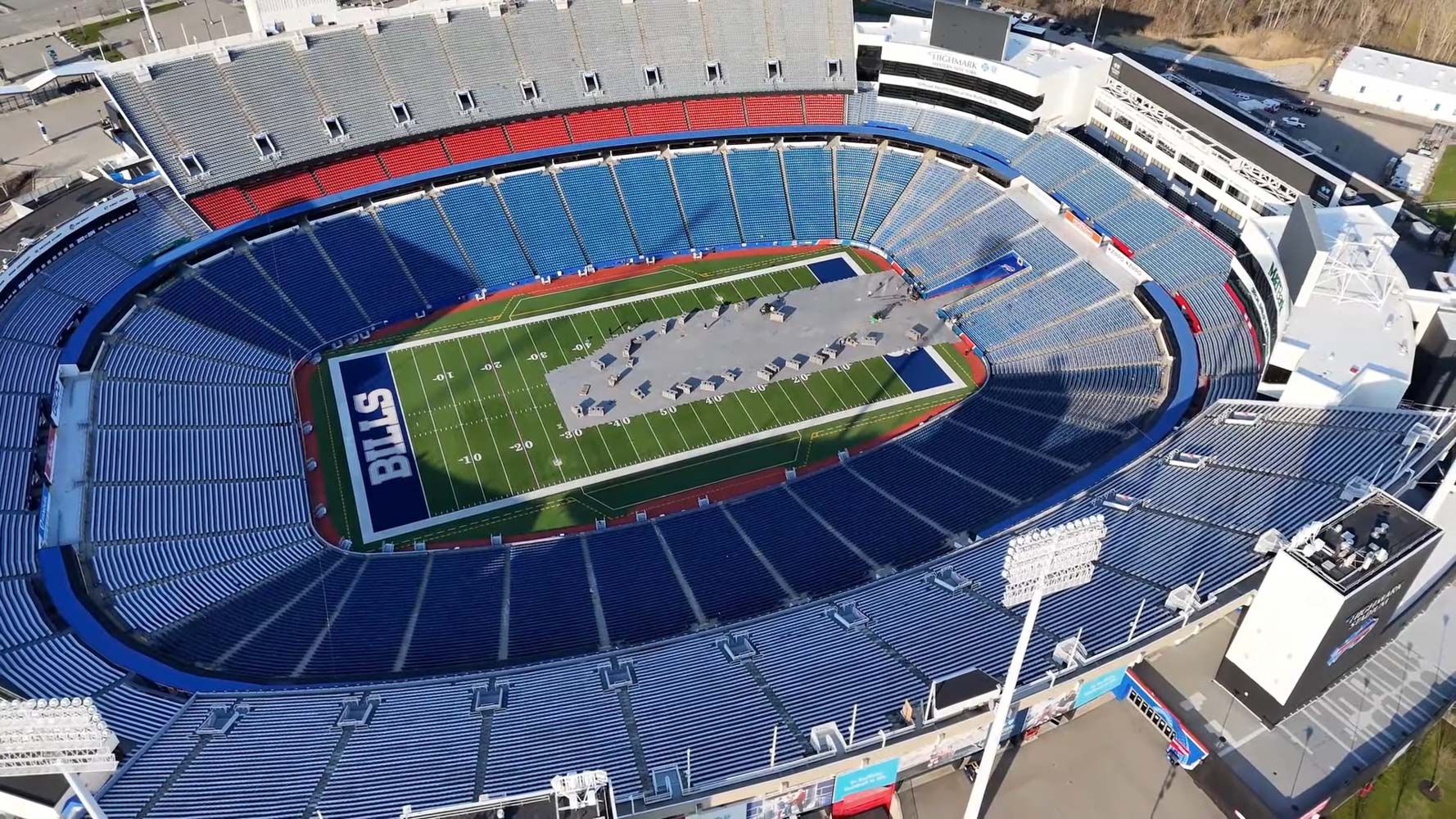
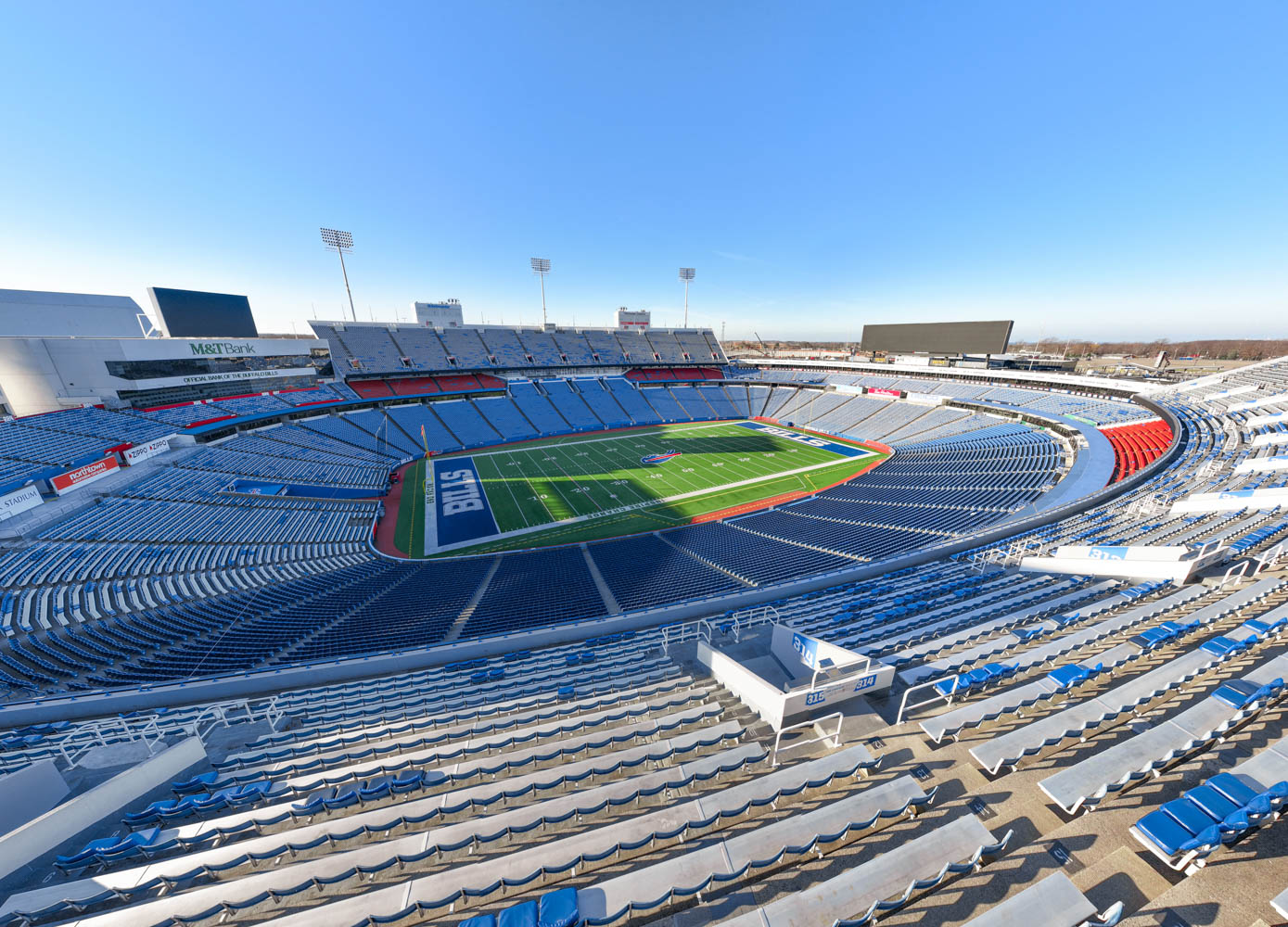
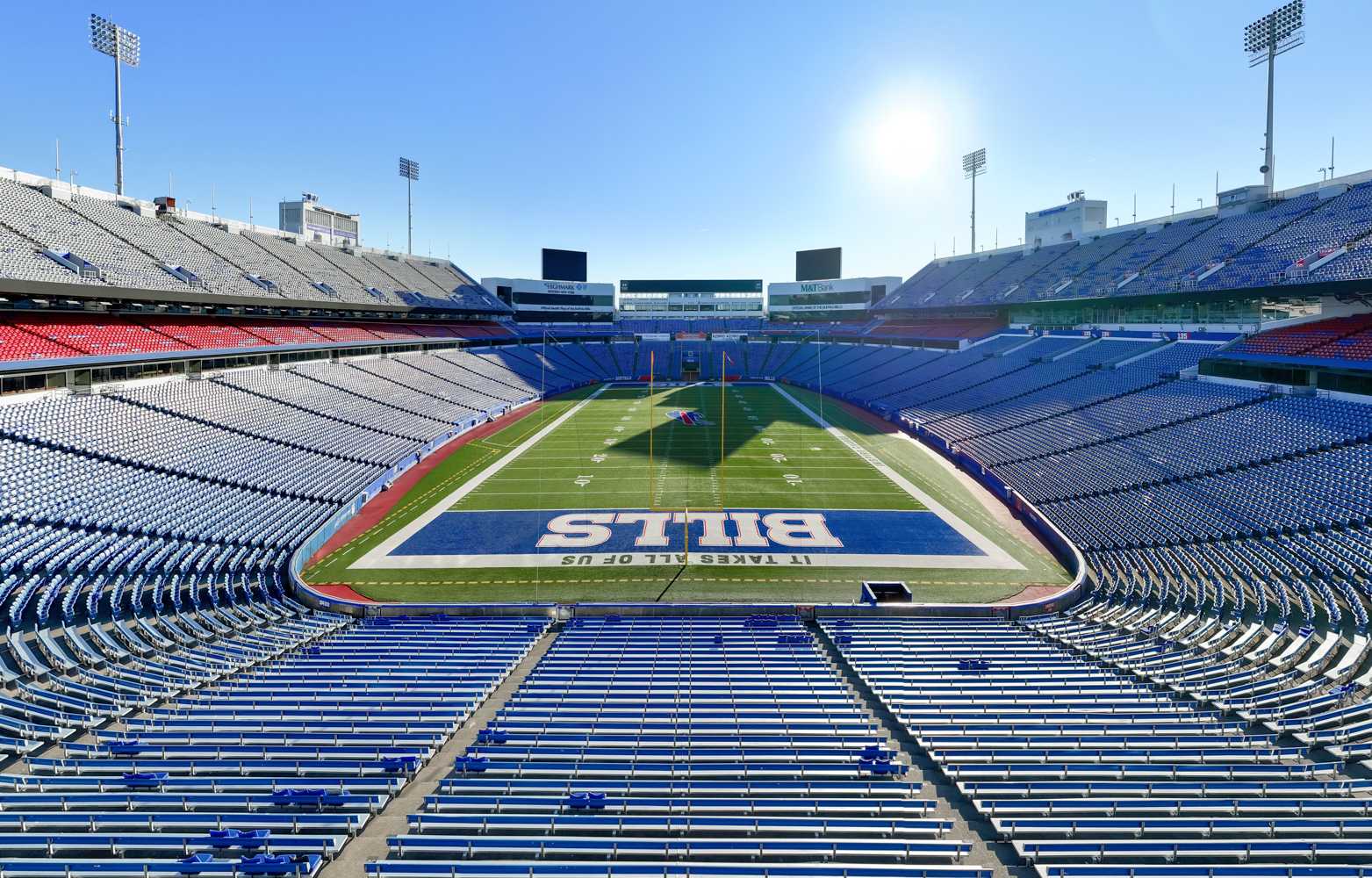
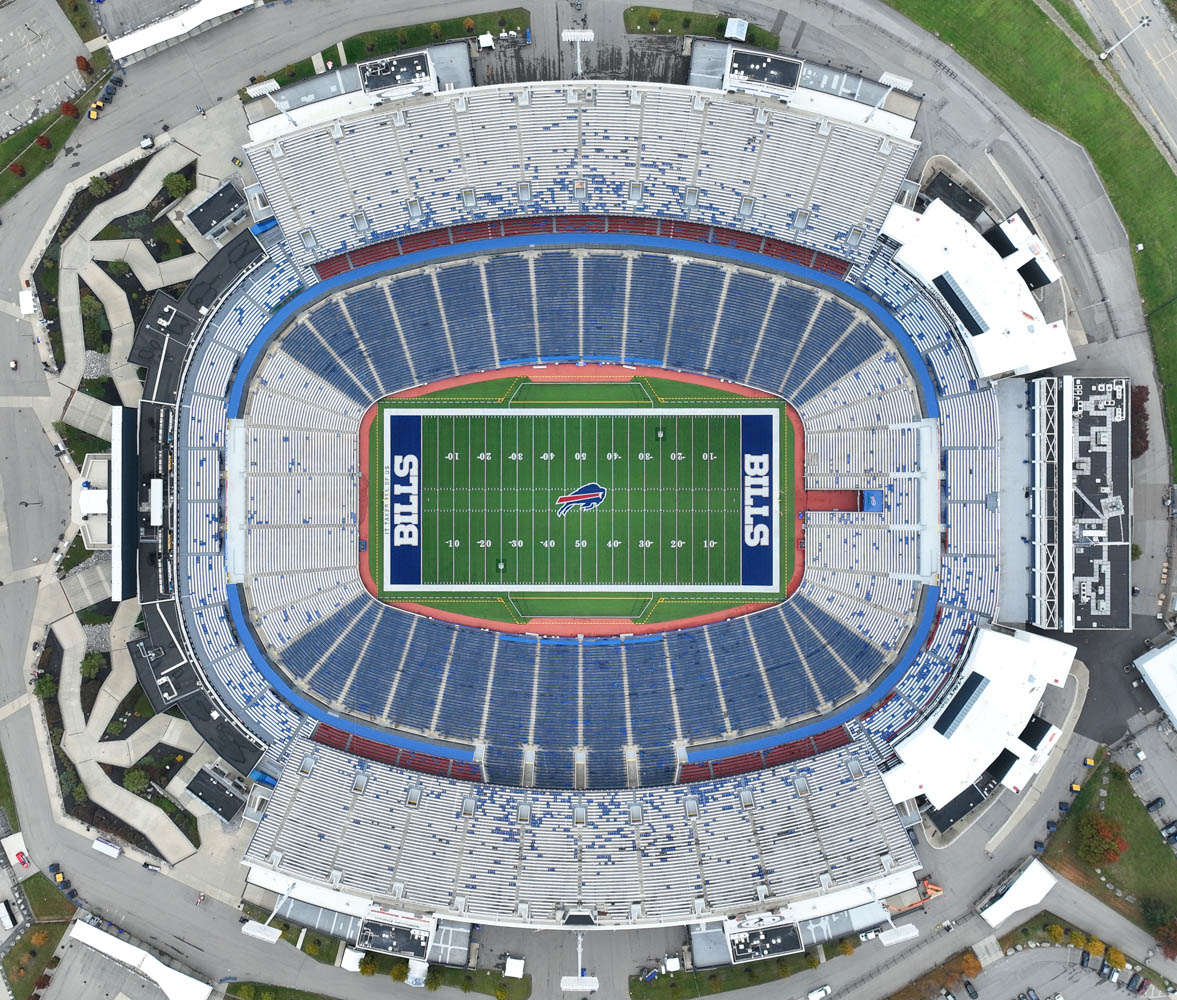
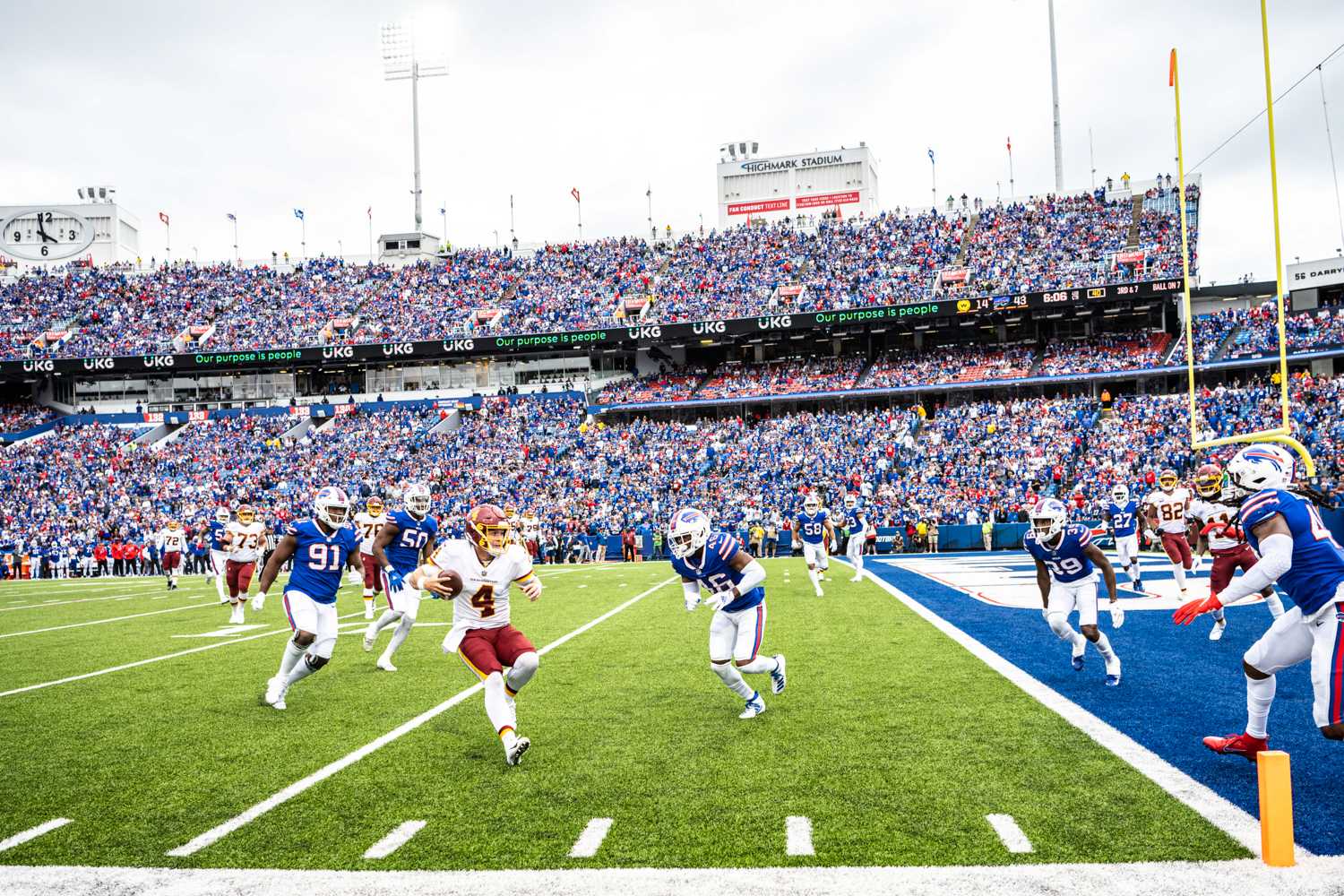
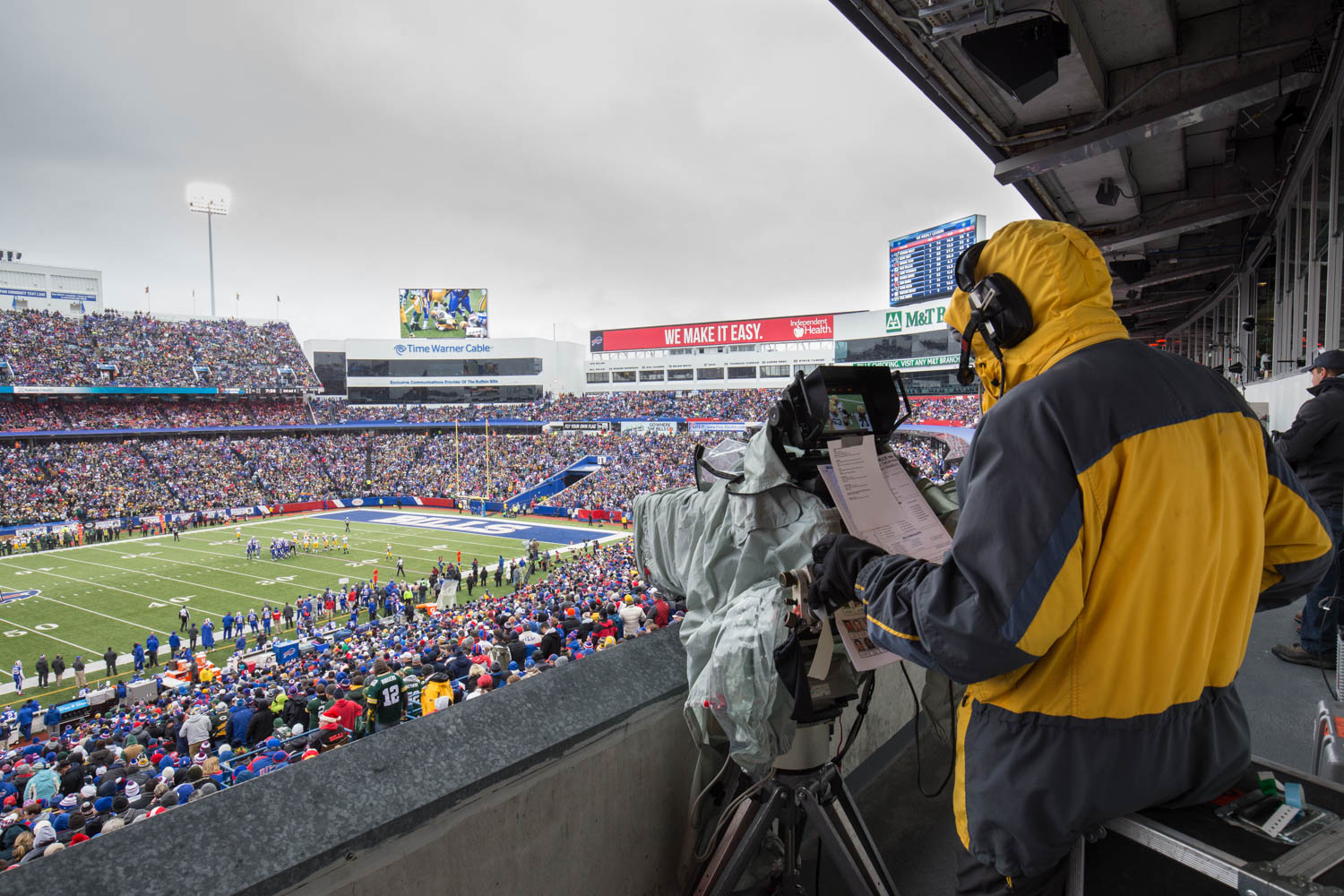
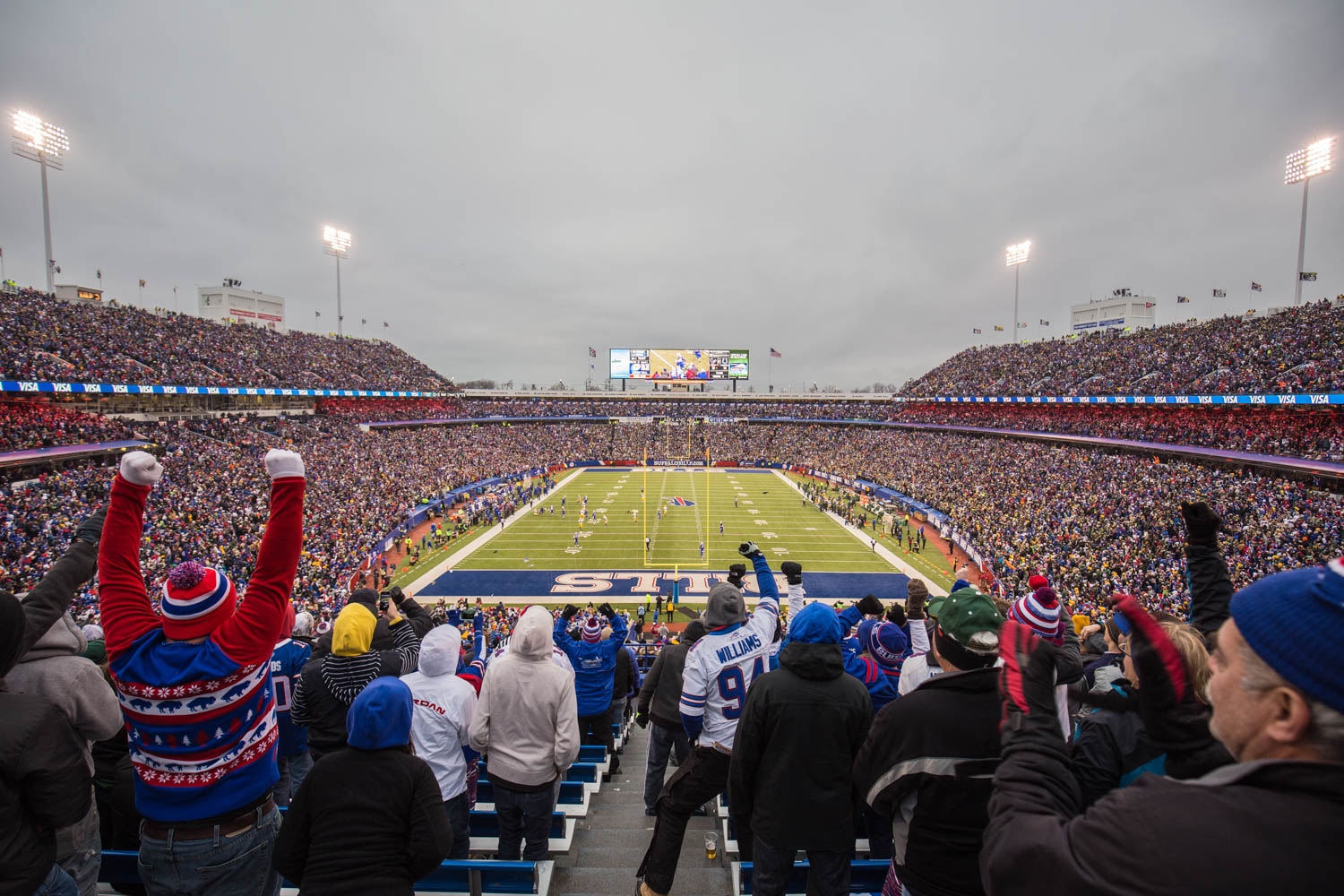
The stadium featured a relatively simple and largely symmetrical design. Set within a purpose-dug bowl, the playing field was located 50 feet (15 m) below ground level and surrounded by a wide lower tier of seating.
A narrow second tier wrapped around the lower deck, while above it rose two tall structures along the sidelines, reaching up to 60 feet (18 m) and forming a third seating level. Floodlight masts were positioned behind them.
The stands were designed strictly for American football, which made it difficult or even impossible to host sports such as soccer or rugby.
A single tunnel led onto the field, located behind the eastern end zone. It was used by stadium staff, officials, and players from both teams.
The seating capacity, initially around 80,000 spectators, was gradually reduced from the late 20th century as comfort improvements were introduced, eventually reaching 71,608 seats.
The lack of a roof meant the stadium was highly exposed to weather conditions, and in Buffalo’s cold climate, games played in heavy snow became almost part of the Bills’ identity.
However, snow was not the only challenge. Strong winds blowing in from Lake Erie also affected gameplay, particularly as the “semi-open” western side of the stadium faced directly toward the lake, allowing gusts to funnel into the bowl.
Where was the former Buffalo Bills stadium located?
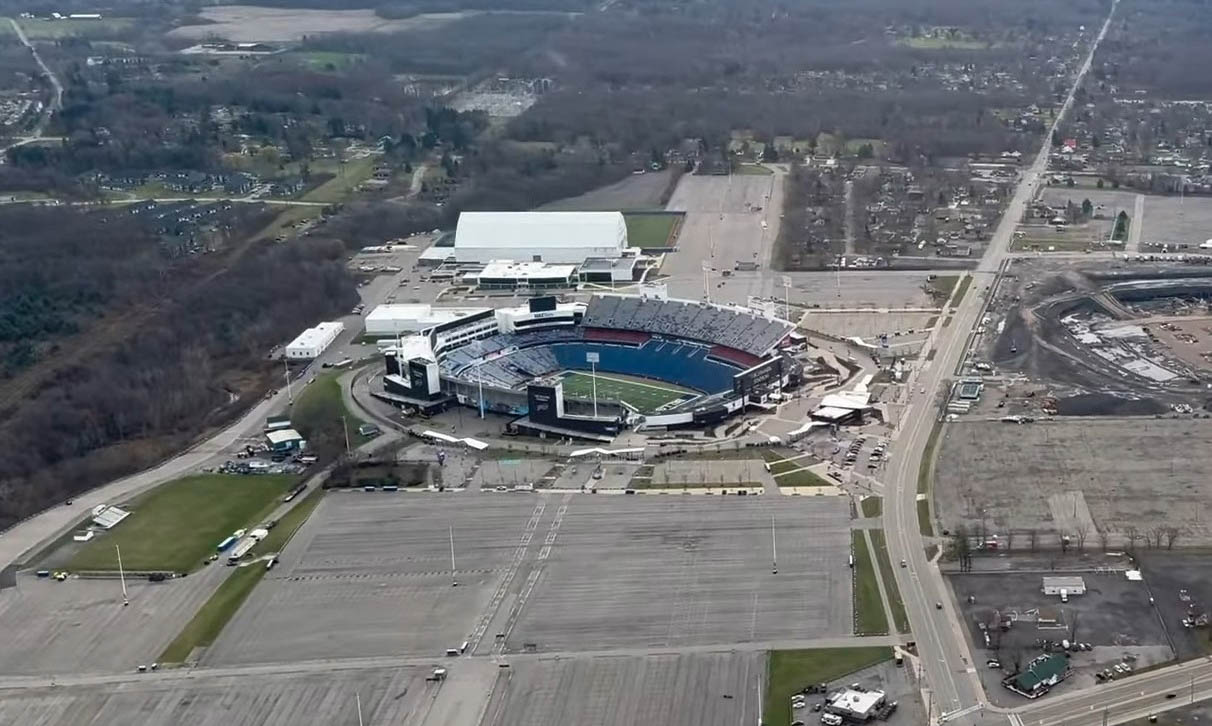
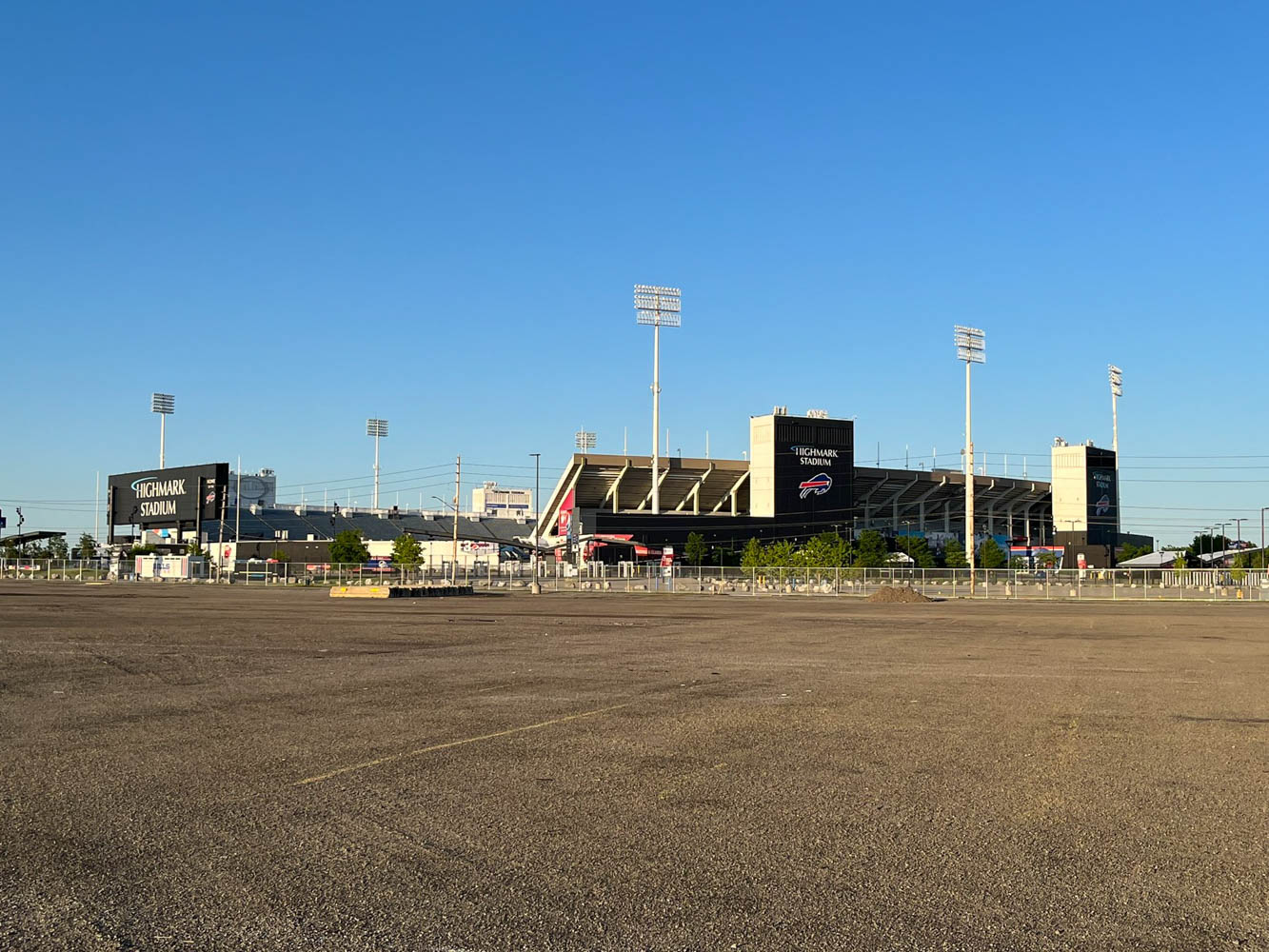
The stadium was located in Orchard Park, a southern suburb of Buffalo, approximately 9 miles (14.5 km) from downtown. It was surrounded by extensive parking areas.
In the vicinity of the stadium was the small Sheldon Family Cemetery, established in 1832. The area also contains evidence of Native American presence, including burial sites dating back several centuries.
How did the former Buffalo Bills stadium change over the years?
Over more than half a century, the former Buffalo Bills stadium never underwent any revolutionary transformations and retained its original appearance until the very end. Nevertheless, it was subject to a number of smaller renovations and upgrades.
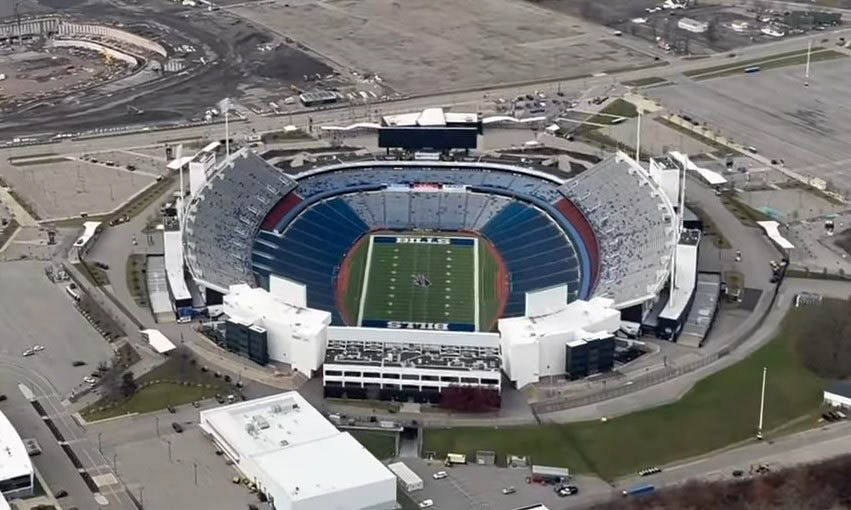
One of the most visible changes was the addition of new luxury suites. During renovations in the 1990s, new buildings with glass-enclosed suites were constructed above the seating behind both end zones. Originally, the only such structure was the administration building, located behind the east end zone.
In 1999, four distinctive restroom towers were built alongside the north and south stands (two on each side), primarily to provide additional restroom facilities for spectators in the upper seating levels.
The stadium's video boards were replaced or upgraded several times. The screen installed behind the western end zone in 1994 was among the largest in the United States at the time. In 2007, LED ribbon boards were also installed along the edges of the seating decks.
The playing surface was also replaced on several occasions, although the stadium retained an artificial turf field throughout its entire existence.
The last major renovation took place in 2013–2014. The $130 million project included, among other improvements, the redevelopment of the area behind the west stand, where a parking lot was transformed into a much more attractive public space known as West Plaza, complemented by a new Bills Store.
On 12 September 2015, a statue of Ralph Wilson, the founder and longtime owner of the Buffalo Bills, was unveiled outside the stadium. Wilson died in March 2014 at the age of 95, having been one of the longest-serving owners in NFL history.
The stadium's capacity remained at around 80,000 spectators until the late 20th century. It was not until 1998 that it dropped to approximately 75,000 following the addition of luxury suites and more comfortable seating. Capacity continued to decline gradually in subsequent years, eventually reaching 71,608 seats.
What names did the former Buffalo Bills stadium have?
Even before the stadium opened, naming rights were acquired by Buffalo-based food company Rich Products. The agreement – one of the few naming-rights deals of its kind at the time – was signed for 25 years and was worth $1.5 million. Under the terms of the deal, the venue was named Rich Stadium.
When the agreement expired in 1998, Rich Products chose not to renew it, and the stadium was renamed Ralph Wilson Stadium in honour of Buffalo Bills founder and owner Ralph Wilson. Fans soon shortened the name to simply "The Ralph", a nickname that remained in common use even after subsequent name changes.
In August 2016, the Buffalo-based sports apparel and headwear manufacturer New Era Cap Company became the new naming rights sponsor, and the venue was renamed New Era Field. Although the agreement was intended to run for seven years, both parties agreed to terminate it early in July 2020, after which the stadium was temporarily renamed Bills Stadium.
In March 2021, a new naming rights agreement was announced with Highmark Blue Cross Blue Shield, a health insurance company. The ten-year deal resulted in the venue being renamed Highmark Stadium.
When the new Buffalo Bills stadium was built, the partnership with Highmark Blue Cross Blue Shield was extended to the new venue, which retained the same name – Highmark Stadium.
Over the course of its history, the Buffalo Bills' former stadium was therefore known by several different names: Rich Stadium (1973–1998), Ralph Wilson Stadium (1998–2016), New Era Field (2016–2020), Bills Stadium (2020–2021) and Highmark Stadium (2021–2026). The last of these was also adopted by the team's new stadium.
What events took place at the former Buffalo Bills stadium?
How did the Buffalo Bills perform at the former Highmark Stadium?
The stadium was built with the Buffalo Bills NFL team in mind and, for more than 50 years, served primarily as the home venue of the franchise.
During their time at the stadium, the Bills experienced a wide range of outcomes. From the 1990 to 1993 seasons, they reached four consecutive Super Bowls—although they lost each time, the run is still regarded as one of the greatest achievements in NFL history.
The team was led at the time by head coach Marv Levy, and the Bills developed a distinctive fast-paced offensive system known as the “K-Gun”. The leader of the team was quarterback Jim Kelly.
In contrast, between 2000 and 2016 the franchise endured a stretch of 17 consecutive seasons without a playoff appearance. In the final seven seasons at the old stadium (2019–2025), however, the team regularly qualified for the playoffs, and from the 2023 season onward this stood as the longest active streak in the NFL.
Since the late 1980s, a tradition at Bills games has been the playing of a remixed version of Shout by The Isley Brothers after every Bills touchdown. The song became an unofficial anthem of the Buffalo Bills and an integral part of the game-day atmosphere.
AFC Championship Game
The stadium hosted the AFC Championship Game three times, with the Buffalo Bills winning on each occasion:
- 20 January 1991: Los Angeles Raiders vs. Buffalo Bills 3–51
- 12 January 1992: Denver Broncos vs. Buffalo Bills 7–10
- 23 January 1994: Kansas City Chiefs vs. Buffalo Bills 13–30
The Comeback
One of the most memorable Bills games at the stadium was a playoff matchup against the Houston Oilers in the 1992 season, played on 4 January 1993. The Bills trailed 35–3 but managed to erase a 32-point deficit and went on to win 41–38 in overtime.
At the time, it was the largest comeback in NFL history, although this record was surpassed on 17 December 2022 when the Minnesota Vikings overcame a 33-point deficit to defeat the Indianapolis Colts. The Bills’ game, however, remains the largest comeback in NFL playoff history.
Snow Bowl
Due to Buffalo’s cold climate, games at the open-air stadium were often played in harsh weather conditions. Snow games in particular became a defining feature of the team’s identity and attracted significant attention.
One of the most memorable such games took place on 10 December 2017 against the Indianapolis Colts. Played amid heavy snowfall, it became known as the “Snow Bowl”. The Bills won 13–7 in overtime, with the victory contributing to their playoff qualification and ending a 17-season playoff drought.
What other events took place at the former Highmark Stadium?
The stadium annually hosted high school football playoff games and occasionally other American football matches. Due to the tight configuration of the stands around the playing field, it was not frequently used for other sports.
In 1984, the venue hosted the Grand National Motor Spectacular as well as an AMA Supercross Championship event. For these occasions, the playing surface was covered with a layer of soil.
The stadium also hosted the finals of the prestigious Drum Corps International World Championships three times (in 1990, 1995, and 2001).
1993 Summer Universiade opening ceremony
On 8 July 1993, the fully packed stadium hosted the spectacular opening ceremony of the XVII Summer Universiade. It was the first edition of the student games held in the United States.
Apart from the opening ceremony, the venue was not used for the event. Competitions were held at other facilities in Buffalo and the surrounding region, including sites in Canada. The athletics events and closing ceremony took place at the newly built University at Buffalo Stadium.
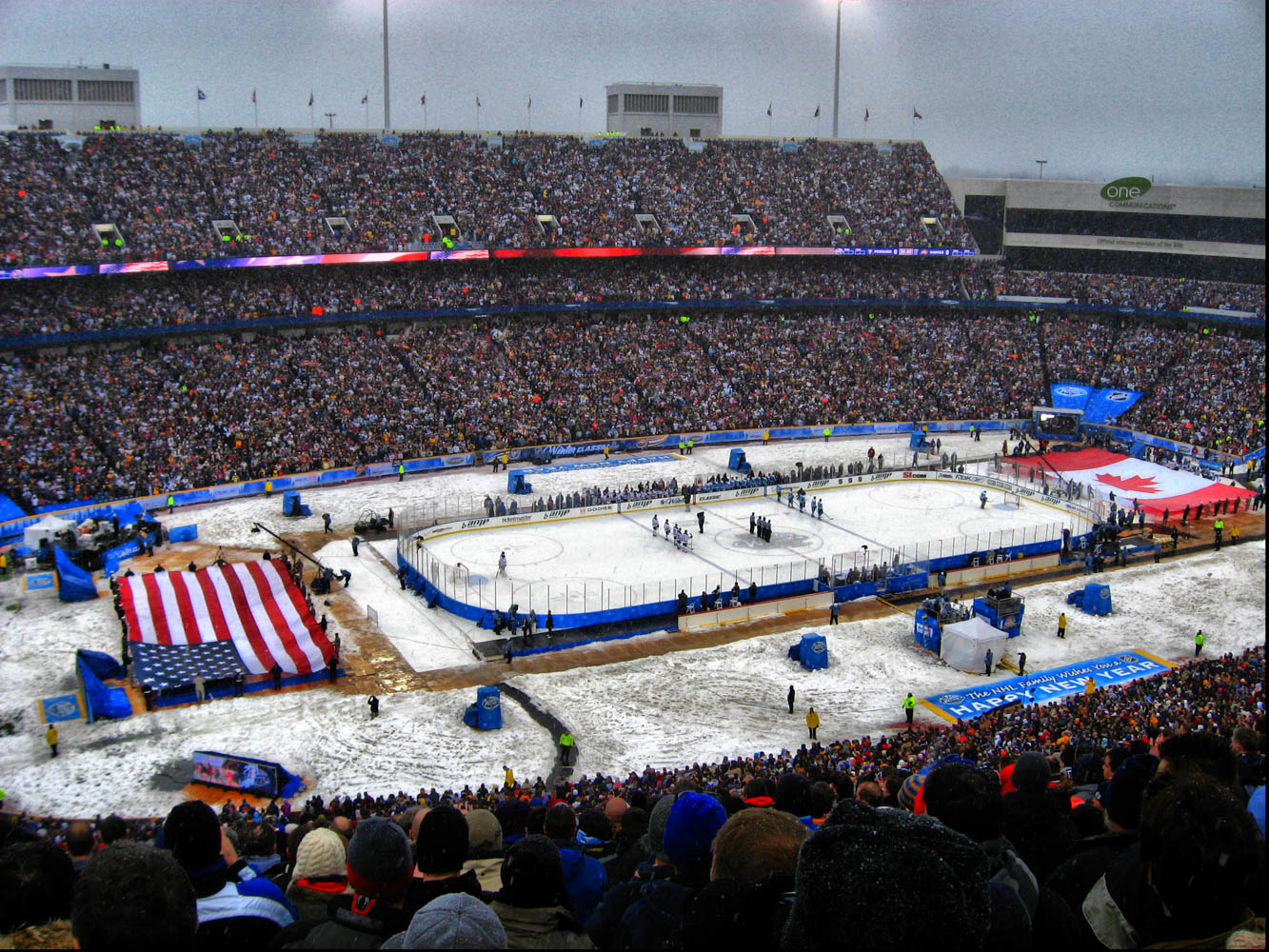
2008 NHL Winter Classic
On 1 January 2008, the stadium hosted the inaugural NHL Winter Classic, a regular-season National Hockey League game played outdoors. A temporary ice rink was installed for the occasion, as the Pittsburgh Penguins faced the Buffalo Sabres; the Penguins won 2–1 after a shootout.
The game was attended by 71,217 spectators, which at the time set a new NHL attendance record, later surpassed during the 2014 Winter Classic at Michigan Stadium. Following the success of the event, the Winter Classic became an annual tradition held at various stadiums.
2018 Ice Hockey World Championships
The stadium also hosted another ice hockey game, staged as part of the group stage of the IIHF World Junior Championship. The match between the United States and Canada took place on 29 December 2017 and ended in a 4–3 victory for the USA after a shootout.
Concerts
The venue hosted numerous major concerts featuring some of the world’s biggest artists, including The Rolling Stones, Elton John, Fleetwood Mac, The Who, The Jacksons, Bob Dylan, Guns N’ Roses, Metallica, NSYNC, One Direction, U2, Beyoncé, Jay-Z, and George Strait.
When was the old Highmark Stadium closed?
Opened in 1973, the stadium gradually gained the status of one of the oldest venues in the NFL. In late 2012, the Bills extended their lease, signing a new 10-year agreement with local authorities.
As part of the deal, New York State and Erie County also allocated $130 million for the last major renovation, carried out between 2013 and 2014.
However, even at that time, discussions were already underway about replacing the aging stadium. In February 2014, a working group consisting of representatives of New York State, Erie County, and the Buffalo Bills was formed to address the future stadium plans for the team.
It took several more years before the project began to take shape. It was not until 2021 that the Bills submitted a concrete proposal to New York State and Erie County for the construction of a new stadium.
The modern venue was planned to be built immediately adjacent to the existing one. The proposed capacity was around 60,000 seats, with costs initially estimated at $1.4 billion (eventually rising to over $2.1 billion), of which more than half was expected to come from public funding. On 28 March 2022, an agreement to proceed with the project was announced.
When was the new Buffalo Bills stadium built?
Preparatory works began in early May 2023, and the official groundbreaking ceremony for the new Buffalo Bills stadium took place on 5 June 2023 – just a few months before the 50th anniversary of the opening of the old venue. The new stadium was built on schedule and was inaugurated on 23 June 2026.
When was the old Buffalo Bills stadium demolished?
The final game took place on 4 January 2026 against the New York Jets (a 35–8 Bills victory) in the last week of the NFL regular season. The occasion served as a farewell to the stadium, although there was a small possibility that the Bills could have played one more home game there in the playoffs.
The first elements of the stadium were dismantled in February 2026. On 1 May 2026, power was disconnected and demolition work began in full force. As the stadium was not demolished by implosion, the deconstruction process is expected to last until March 2027.
Advertisement
Pictures
2024
16.04.2024 © Buffalo Stadium Live
2023
12.12.2023 © Quintin Soloviev 
12.12.2023 © Quintin Soloviev 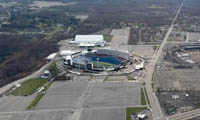
27.11.2023 © Buffalo Stadium Live 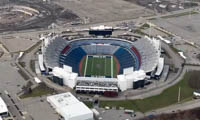
27.11.2023 © Buffalo Stadium Live 
25.05.2023 © Buffalo Bills Stadium Construction Updates
2022
17.10.2022 © Quintin Soloviev 
17.10.2022 © Quintin Soloviev
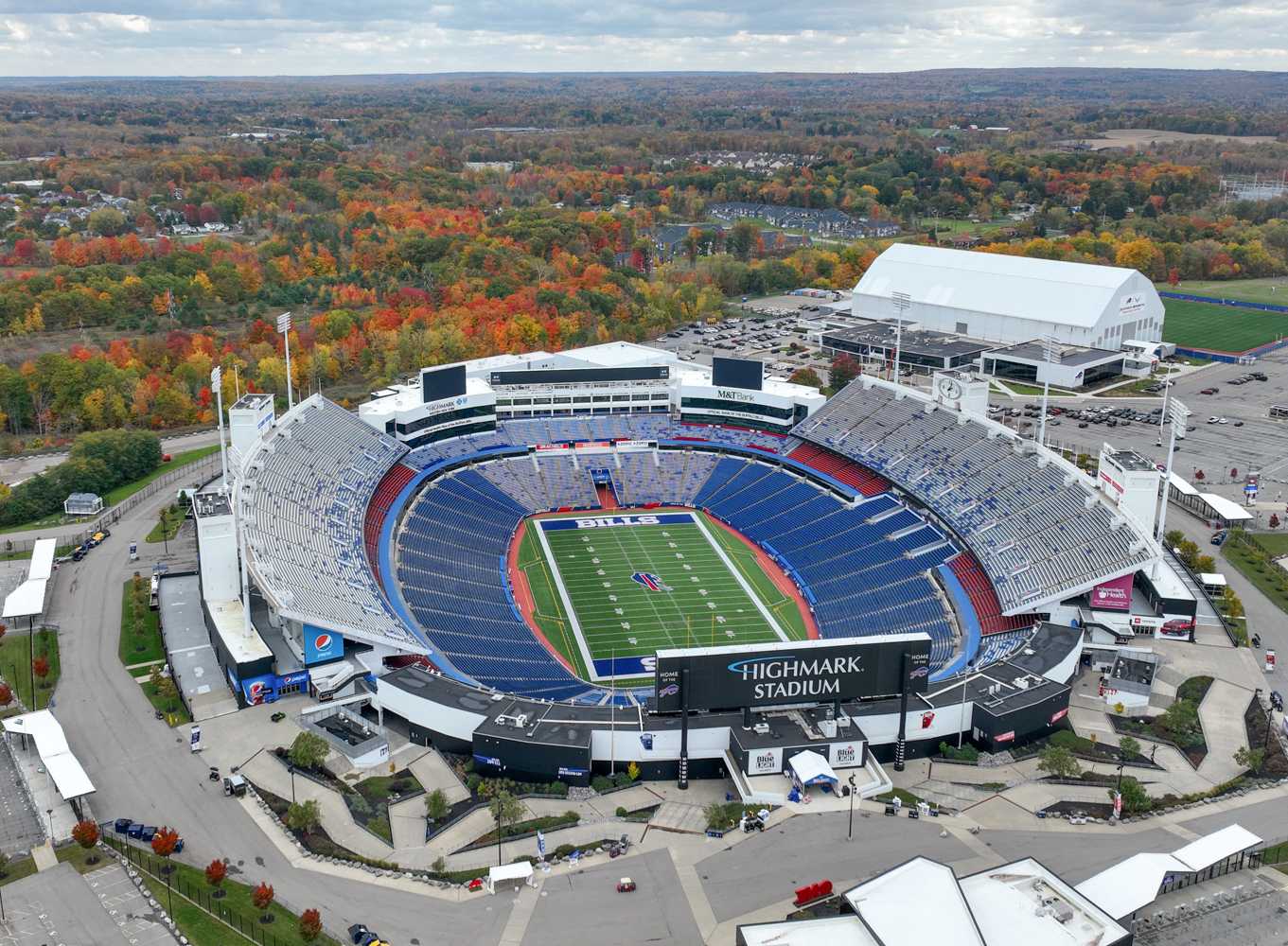
2021
26.09.2021 © All-Pro Reels (CC BY-SA 2.0)
2014
2008
01.01.2008 © Falling Heavens (CC BY-SA 2.0)
Related news
2026
-
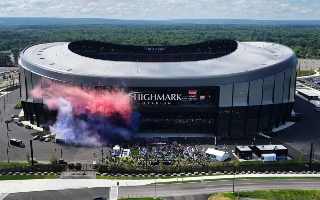
USA: Opening of New Highmark Stadium! $2.1 billion project ready ahead of the 2026 season
New Highmark Stadium has been officially opened, although the final finishing works are still being completed. The new home of the Buffalo Bills cost more than $2.1 billion and, despite having a smaller capacity than the old stadium, is designed to offer greater comfort, better weather protection and one of the most intense atmospheres in the NFL.
-
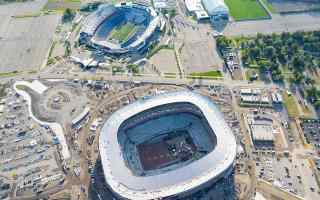
USA: Demolition of the old Highmark and opening of the new one. Buffalo Bills’ plans and challenges
The Buffalo Bills are preparing for one of the most important seasons in their history. In Orchard Park, the demolition of the old Highmark Stadium is taking place at the same time as the final stages of construction on the new stadium, which is scheduled to open during the 2026 NFL season. For the club, this means not only moving into a modern venue, but also closing a more than 50-year chapter connected with its previous home.
-
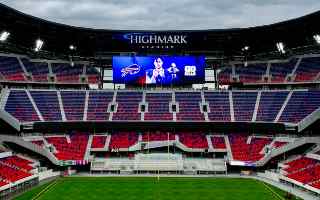
USA: Highmark Stadium demolition begins as Buffalo Bills near new stadium completion
The legendary Highmark Stadium is disappearing from the skyline of Buffalo after more than 50 years, while the Buffalo Bills are finishing construction of their $2.1 billion stadium of the future right next door.
-
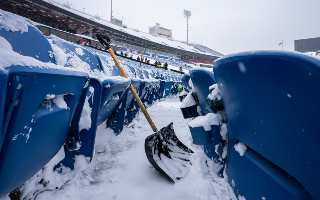
USA: Fans clear snow from Highmark Stadium… for the last time
For the last time in history – unless a crazy scenario materializes – Buffalo Bills fans rush to clear snow from Highmark Stadium before an NFL match. With only one day left until the game, the stadium is completely covered in snow.
2025
-
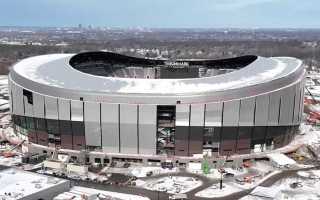
USA: Last snow at Highmark Stadium. Bills gear up for $2.1 billion new home
Construction of the New Highmark Stadium for the Buffalo Bills in Orchard Park enters its decisive phase. According to the latest reports, the investment is already about 75% complete, and the pace of work allows maintaining the planned opening of the facility in summer 2026. This is one of the largest and most modern stadium investments in NFL history – a project that significantly exceeds standard expectations for football arenas.
-
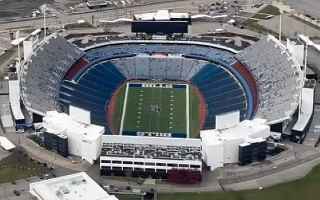
USA: Buffalo Bills’ old home to disappear from the city map
After more than five decades of serving as the home of the Buffalo Bills, Highmark Stadium in Orchard Park is set to become history. Following the team’s move to its new stadium next year, demolition of the current venue will begin — a project to be carried out by ARC Building Partners.
-
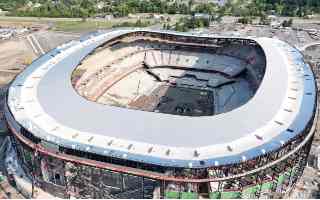
USA: 2 billion dollars, 1,400 workers. One of the smallest NFL stadiums is rising
Walking along Southwestern Boulevard or Abbott Road in Orchard Park, it is easy to notice the progress on the new Buffalo Bills stadium. From the outside, the facade is now almost fully enclosed, but the real pace of construction is visible inside – where work continues practically without interruption.
-
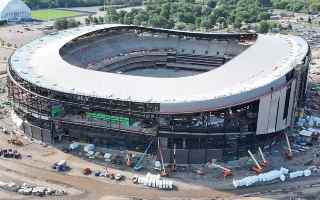
USA: New Highmark Stadium beats the wind with cutting-edge tech at Bills’ new home
The hit HBO series Hard Knocks has returned with a new season, this time offering a behind-the-scenes look at the Buffalo Bills’ preparations for the 2025 NFL season. In the premiere episode, viewers were taken not only inside the locker room and onto the practice field but also got a first glimpse of the New Highmark Stadium under construction in Orchard Park — built using exceptionally advanced engineering.
-
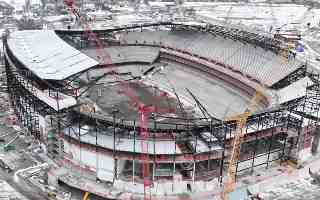
USA: Costs of the new Buffalo Bills stadium keep rising
If the Buffalo Bills had hoped their new stadium would open for the 2026 season, the process may take a bit longer than initially expected.
2024
2023

2022
-

USA: Highmark Stadium with new Premium Club Lounge
With the legalisation of sports gambling in many states since the repeal of PASPA in 2018, more and more stadiums are starting to follow the UK example of having kiosks on the concourse. Highmark Stadium in Buffalo has joined State Farm Stadium in Arizona with its own lounge dedicated to sports betting.
-
USA: Bills to wait longer for stadium decision
September 1, 2022 marked the deadline for finalizing the deal for a new Buffalo Bills stadium. However, Erie County, the State of New York and the club itself have recently postponed it by 45 days. Will the franchise move out of Highmark Stadium after 50 years?
-

USA: It is official, a new stadium will stand in Buffalo
First of all: the Bills will stay in Buffalo. Secondly: the club will move to a new venue. The team owners, NFL as well as state and local authorities have agreed to build a $1.4 billion stadium in Orchard Park.
-

Buffalo: Bills’ new stadium on the horizon?
It appears that a modern arena will be built in Buffalo in the near future. New York State Governor Kathy Hochul expects the deal for the NFL team’s new venue is to be finalized soon.
2021

2020

2019

2013
-

Buffalo: Fan falls onto another one, gets banned and may be prosecuted
Hundreds of people in Buffalo held their breath for a moment on Sunday as they witnessed one man fall 10 meters down onto the head of another one. Both suffered no serious injuries. Now the one falling is banned from Ralph Wilson Stadium and may face charges.
-

USA: Players and coaches with microphones?
In an attempt to bring more fans to NFL games, the league authorities are planning to plant microphones onto players and coaches, allowing everyone to hear what they say. According to Sports Business Journal, it’s a matter of a couple upcoming seasons.