 StadiumDB
Malmö Stadion – until 2025
| Capacity | 26 500 |
|---|---|
| 14 000 (Seats) | |
| Country | Sweden |
| City | Malmö |
| Clubs | Malmö FF, IFK Malmö FK |
| Retire year | 2025 |
| Inauguration | 28/05/1958 |
| Construction | 1956–1958 |
| Renovations | 1988 |
| Cost | SEK 8.5 mln M |
| Record attendance | 31 156 (Argentina – West Germany, World Cup 1958) |
| Design | Jaenecke & Samuelson |
| Contractor | Skånska Cementgjuteriet |
| Address | Kulan, Eric Persson väg, Malmö Stadion |
Advertisement
Malmö Stadion – historical stadium description
How can Malmö Stadion be briefly described?
Malmö Stadion was built for the 1958 FIFA World Cup, in a similar though slightly more modest form to Nya Ullevi in Gothenburg – both venues were designed by the same architects and inaugurated just one day apart.
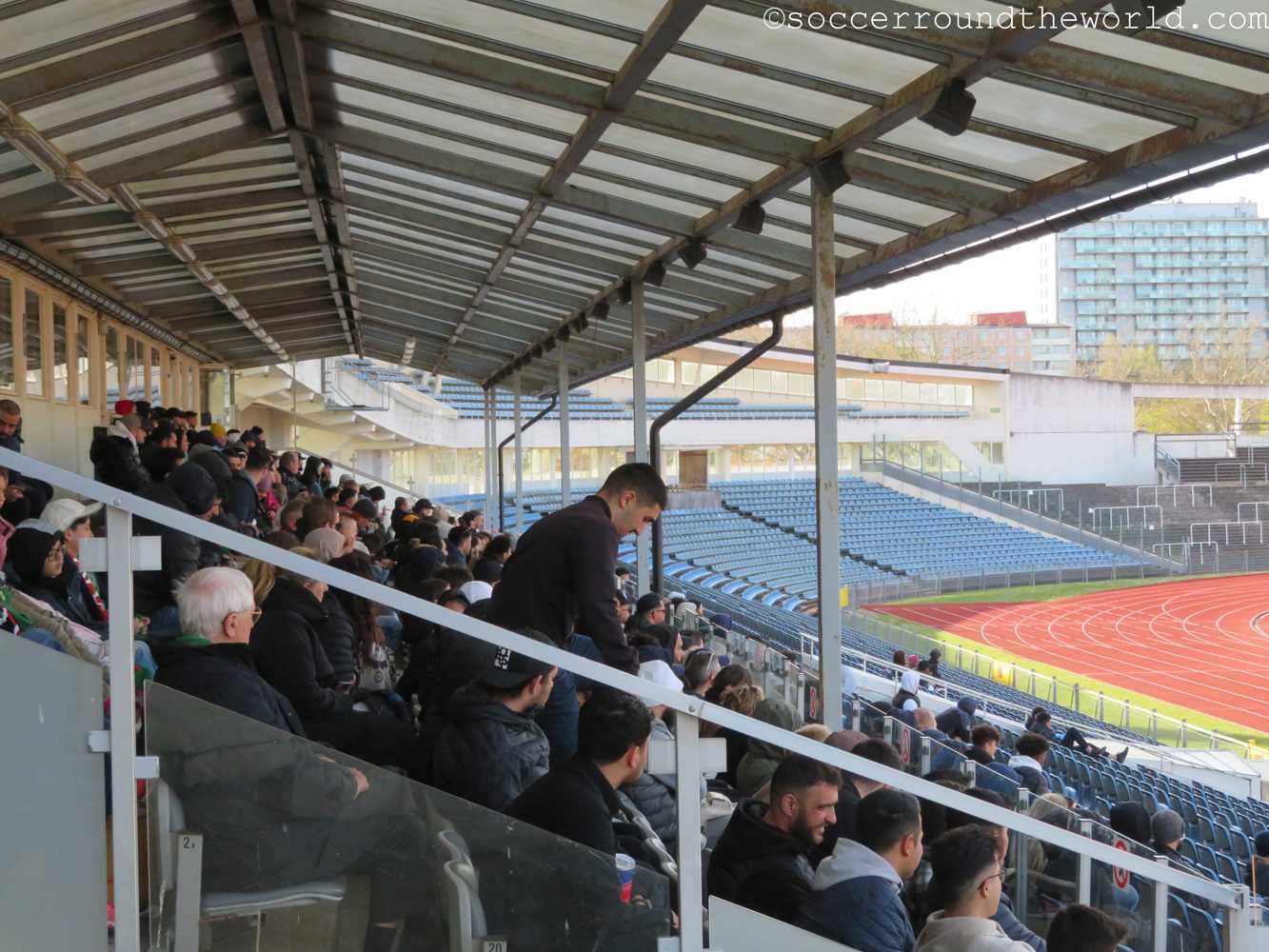
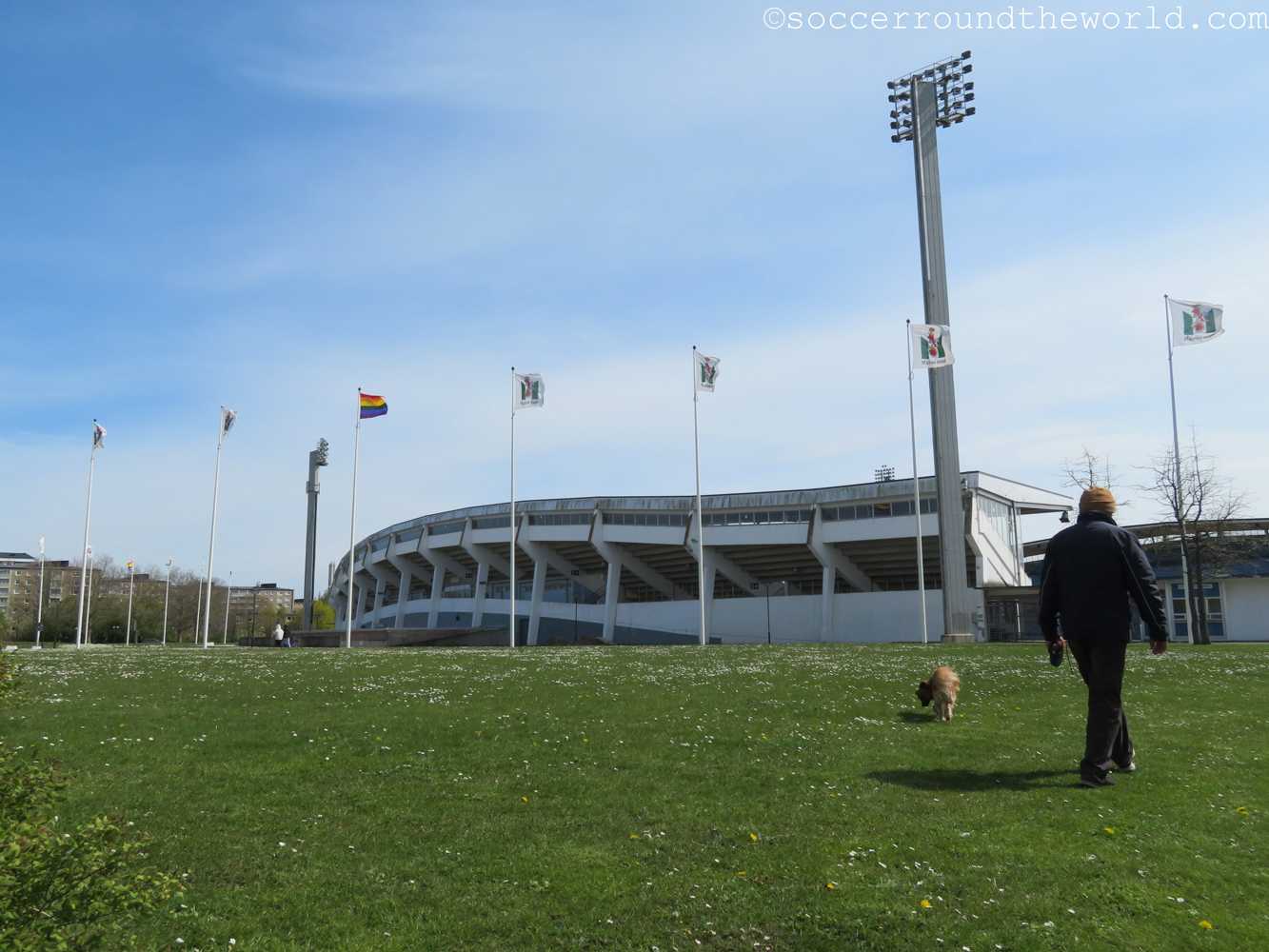
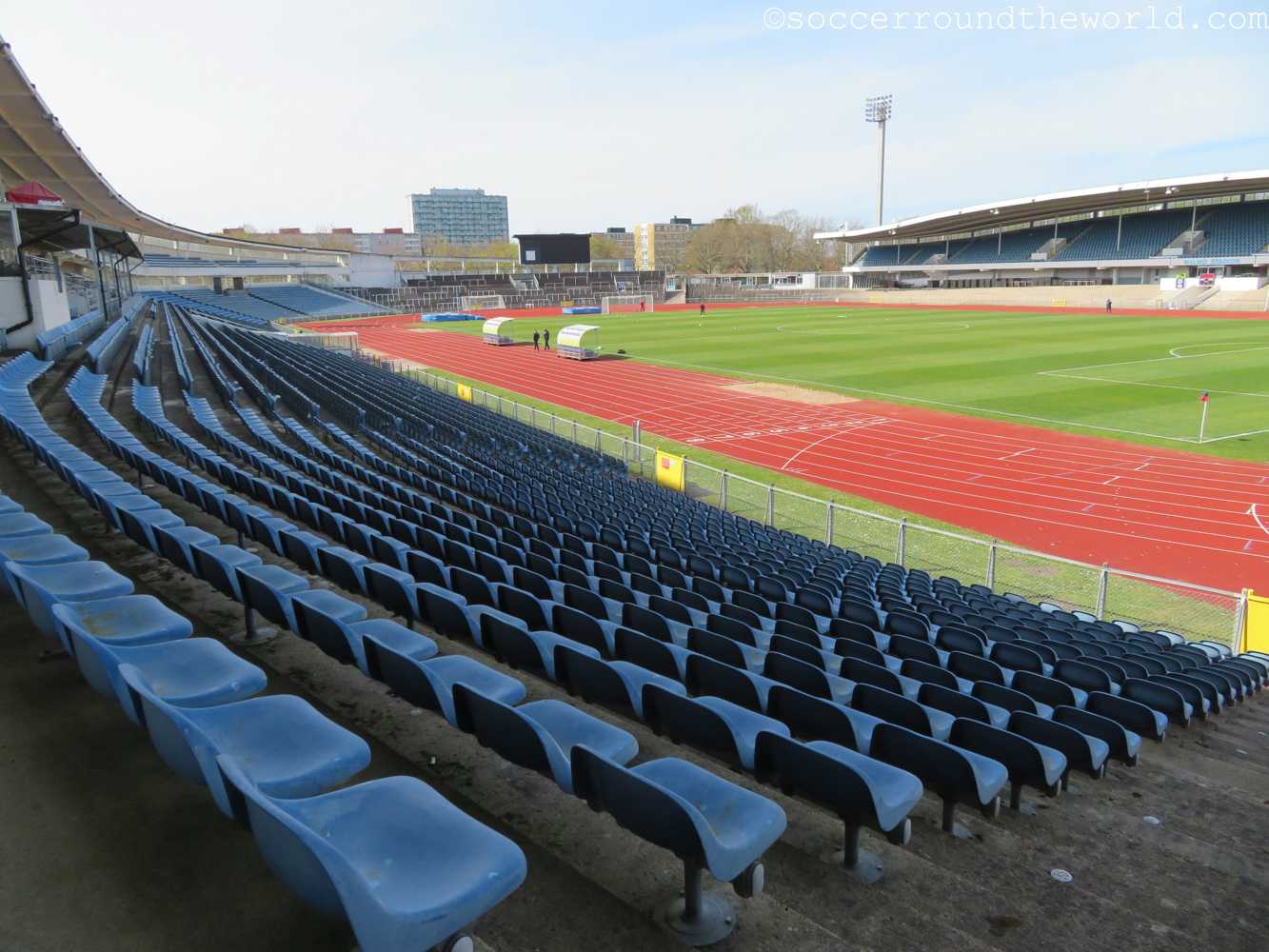
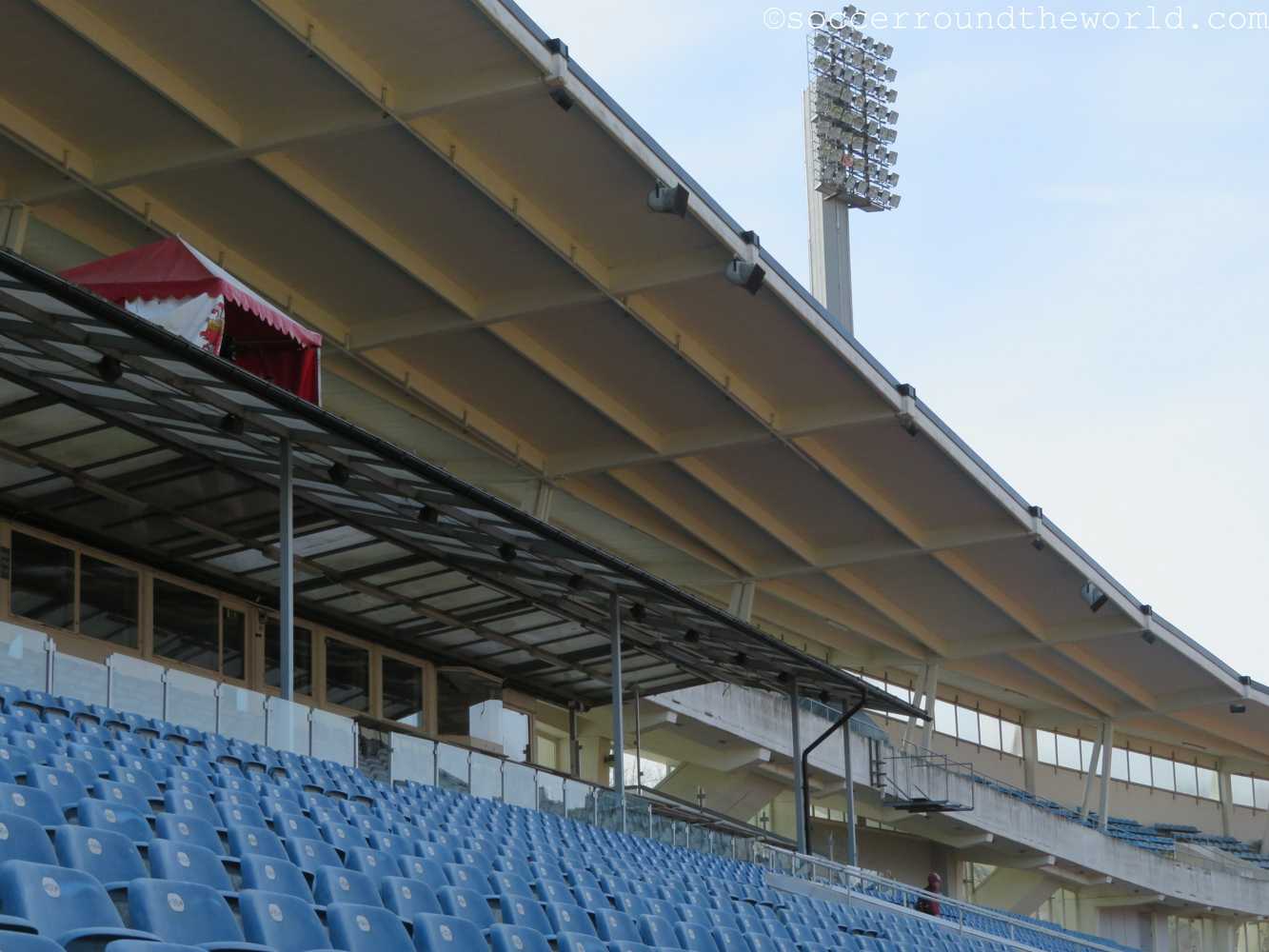
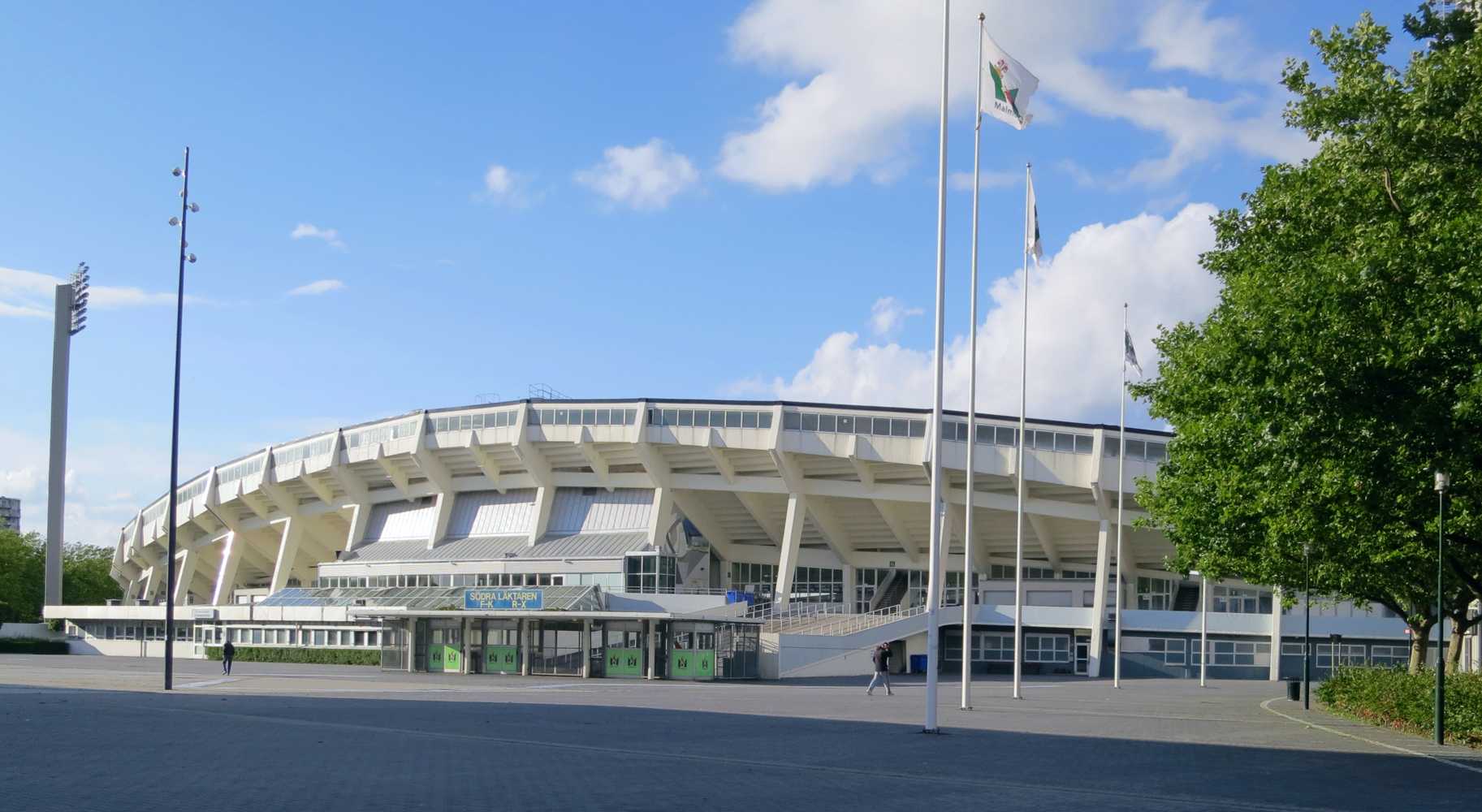
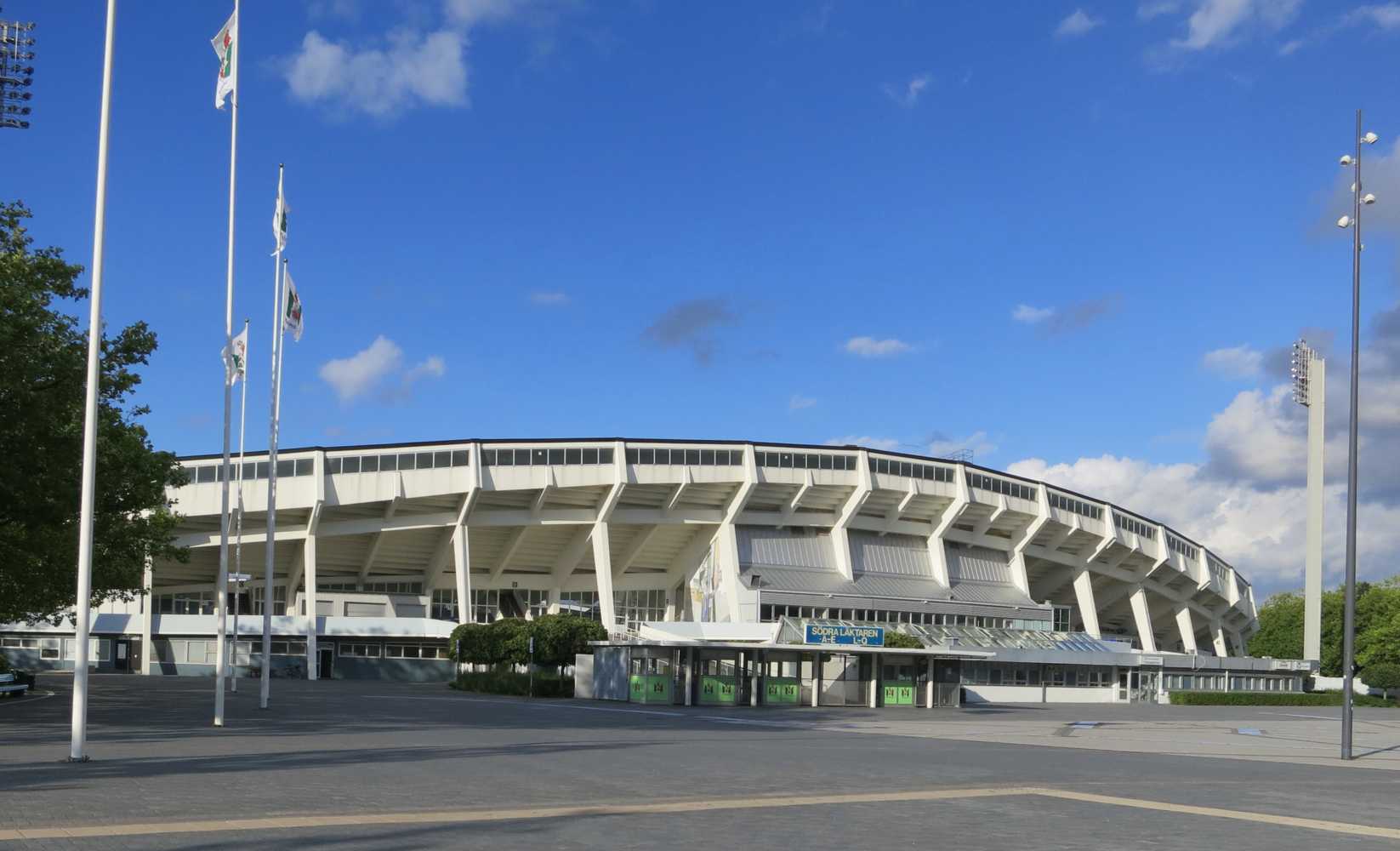
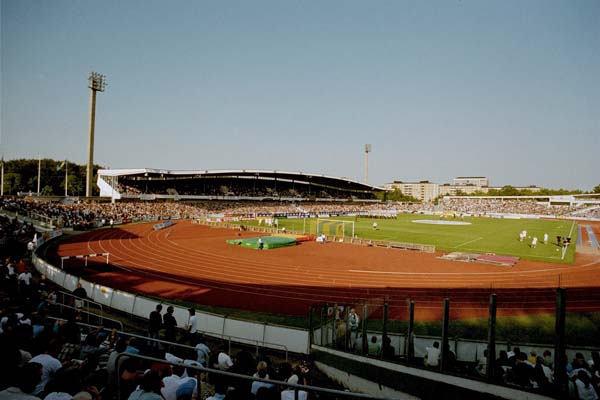
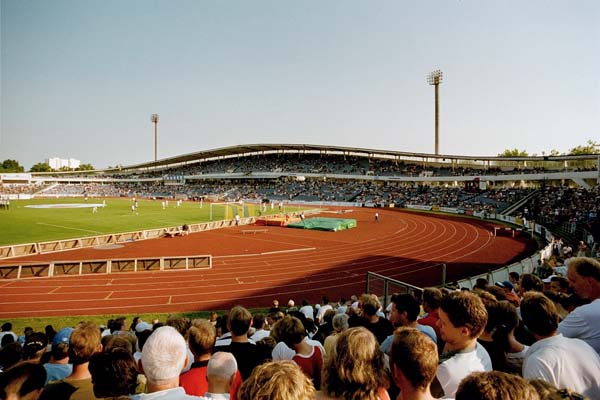
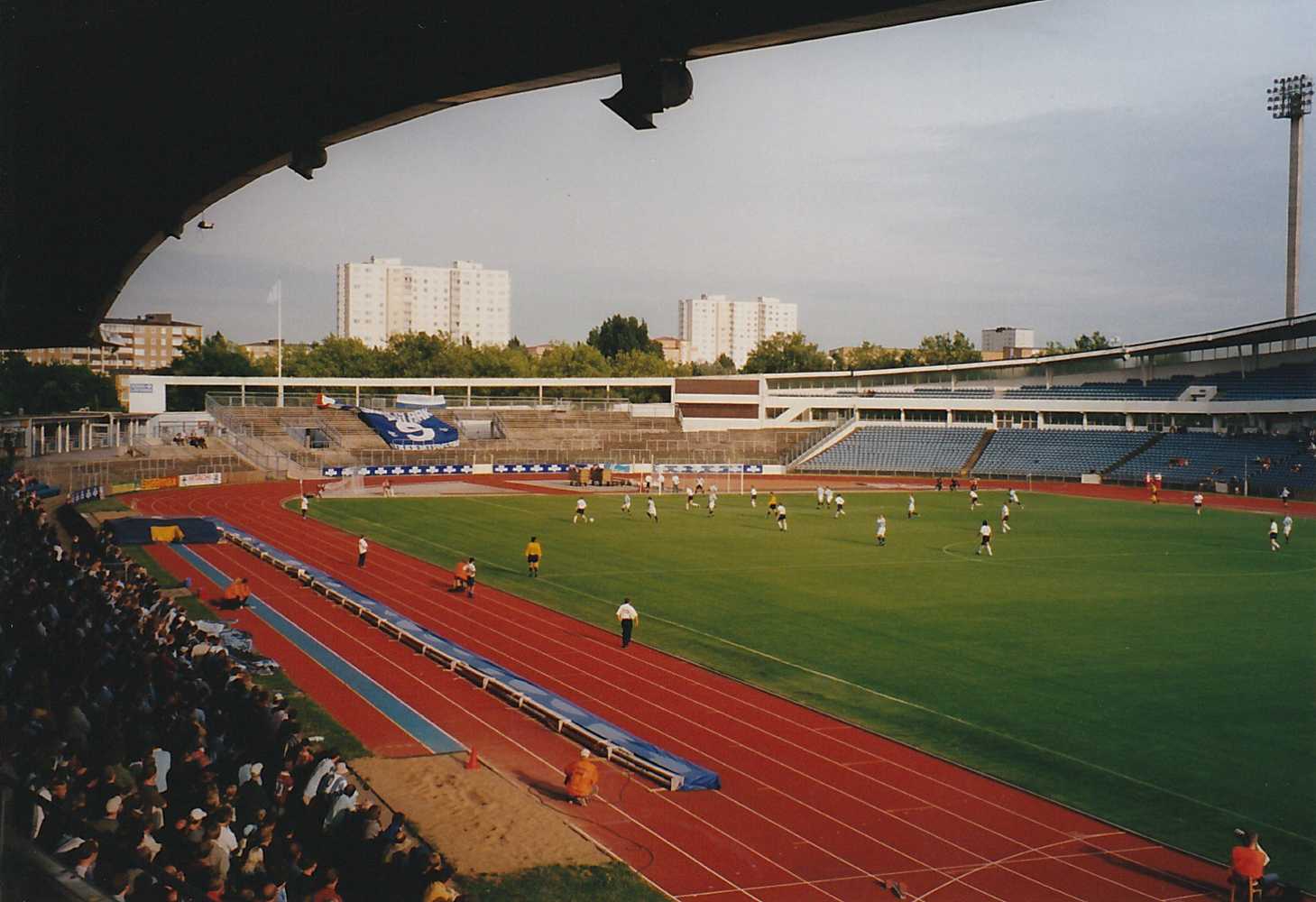
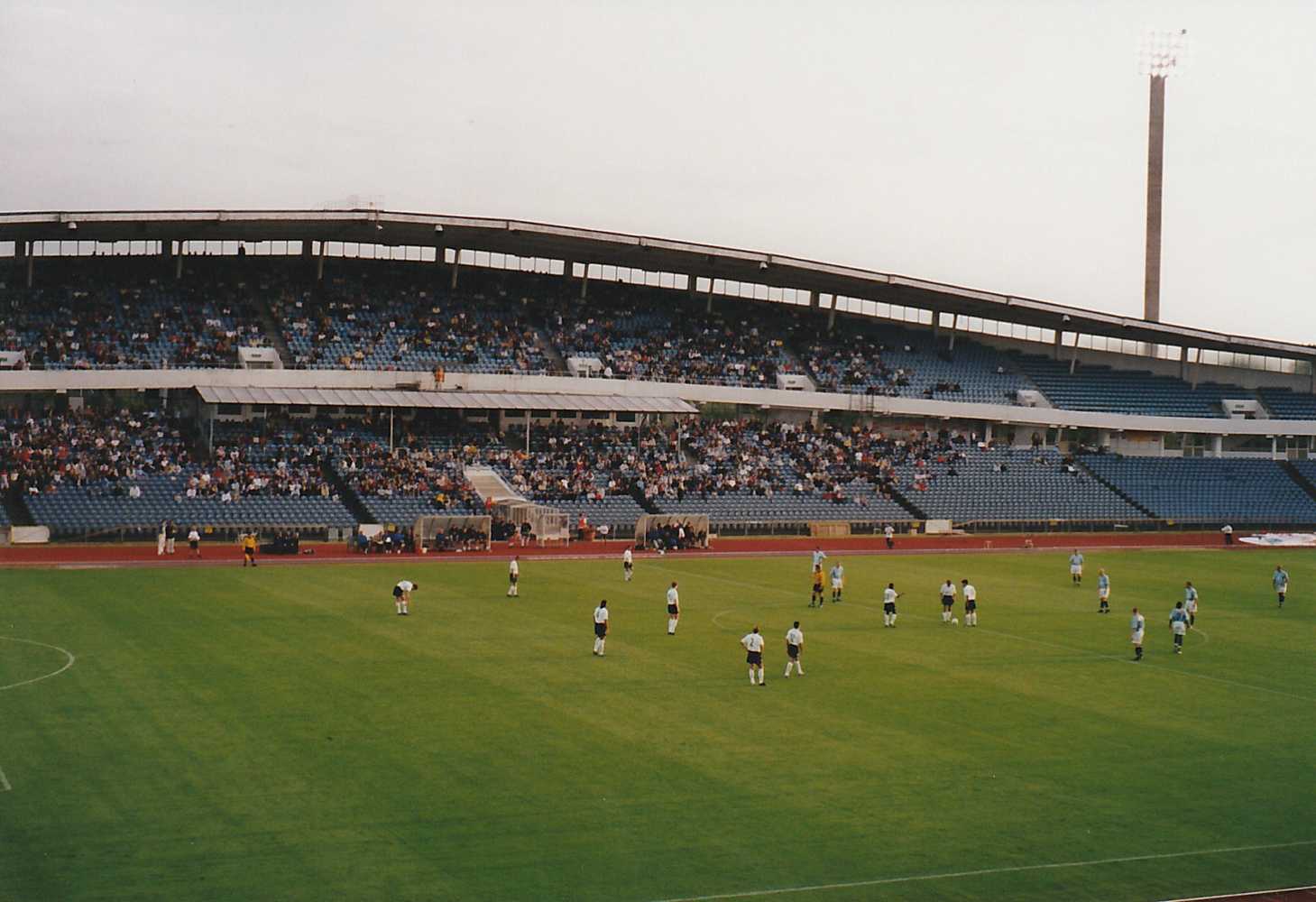
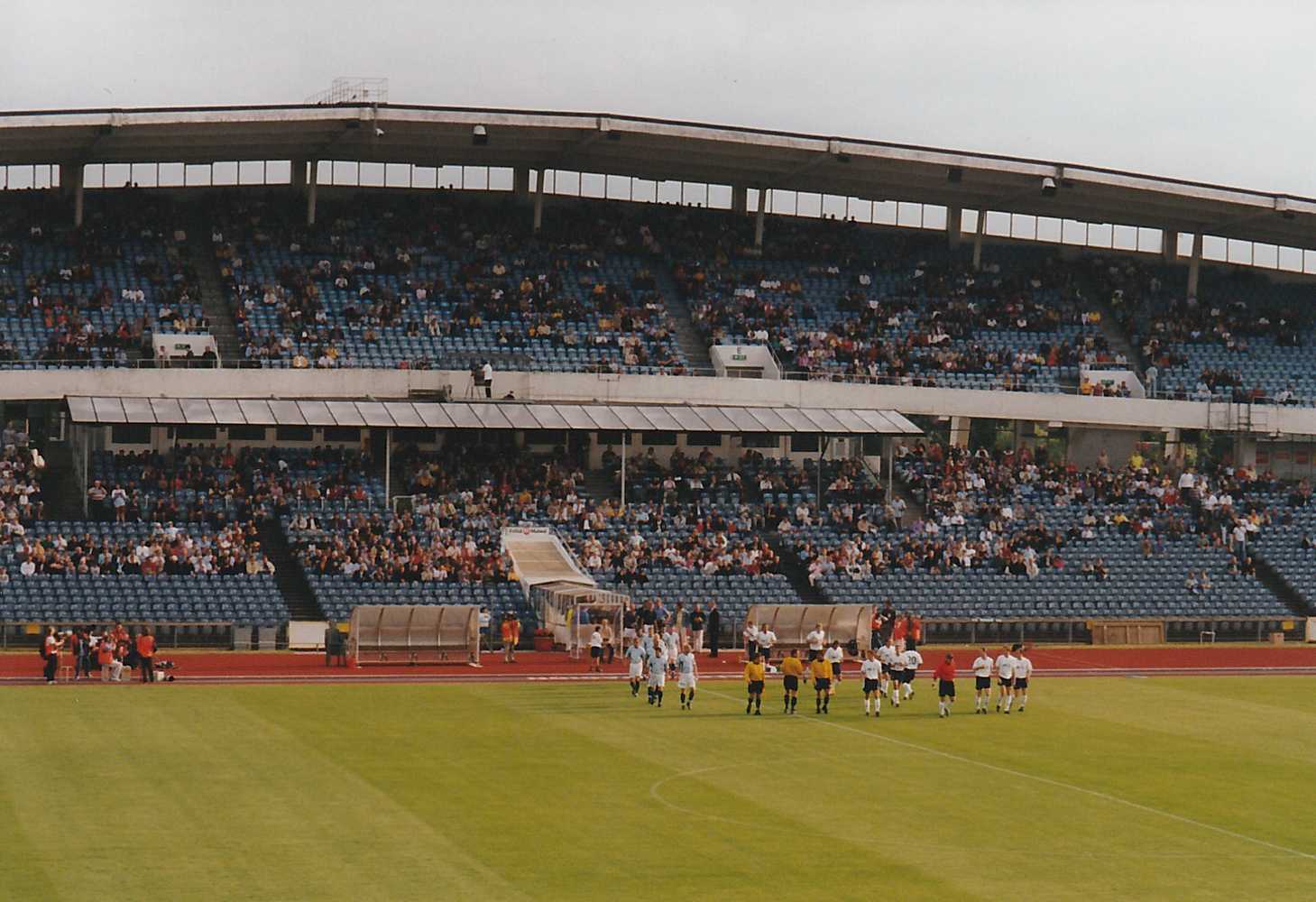
The stadium was created in a modernist style, with its silhouette shaped by gently rising and falling stands. Initially, only the main stand featured a second tier and a roof, while the opposite, northern stand was expanded only in 1988.
After the World Cup, the stadium became the home ground of Malmö FF – the most successful club in the country. It was also used by the Swedish national team and other sides. In 1991, the world record in the pole vault was set here by the legendary Sergey Bubka, while at Euro 1992 the stadium witnessed the breakthrough of the “Danish Dynamite”.
In 2009, a new, football-specific arena – originally named Swedbank Stadion – was built right next to Malmö Stadion. With its opening, the old venue lost its importance and was demolished between 2025 and 2026. A new, smaller stadium with a football and athletics profile is planned to be built in its place.
How was Malmö Stadion created?
The first plans for a new stadium in Malmö date back to 1943, but due to disagreements over its location, they were not implemented. At the time, the city’s main sports venue was Malmö Idrottsplats (Malmö IP), opened in 1896.
A decisive push for a new stadium came only with Sweden’s award of the 1958 FIFA World Cup in 1950.
On 27 April 1956, the city authorities approved the construction of a new stadium along John Ericssons Väg (opposite Pildammsparken), and on 5 June 1956, the city’s sports committee chairman Harald Lindvall symbolically broke ground. The investment cost 8.5 million Swedish kronor, with Skånska Cementgjuteriet acting as the main contractor.
The design was created by the local architectural office Jaenecke & Samuelson, which also designed Gothenburg’s Nya Ullevi for the same World Cup. Both stadiums shared a similar concept, with gently “waving” stands, although the Malmö venue was somewhat more modest.
The official inauguration of Malmö Stadion took place on 28 May 1958, shortly before the start of the World Cup. Notably, Nya Ullevi in Gothenburg was inaugurated the day after Malmö Stadion opened.
How did Malmö Stadion evolve?
The first modernization took place just two years after opening, in 1960, when the stadium was equipped with floodlights. Initially, only the main (southern) stand had a second tier and a roof – this changed in 1988, when the opposite stand was also expanded with an upper tier and roof. Ahead of Euro 1992, the stands behind the goals were also slightly enlarged.
What did Malmö Stadion look like?
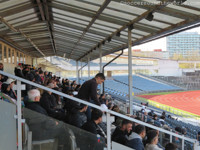
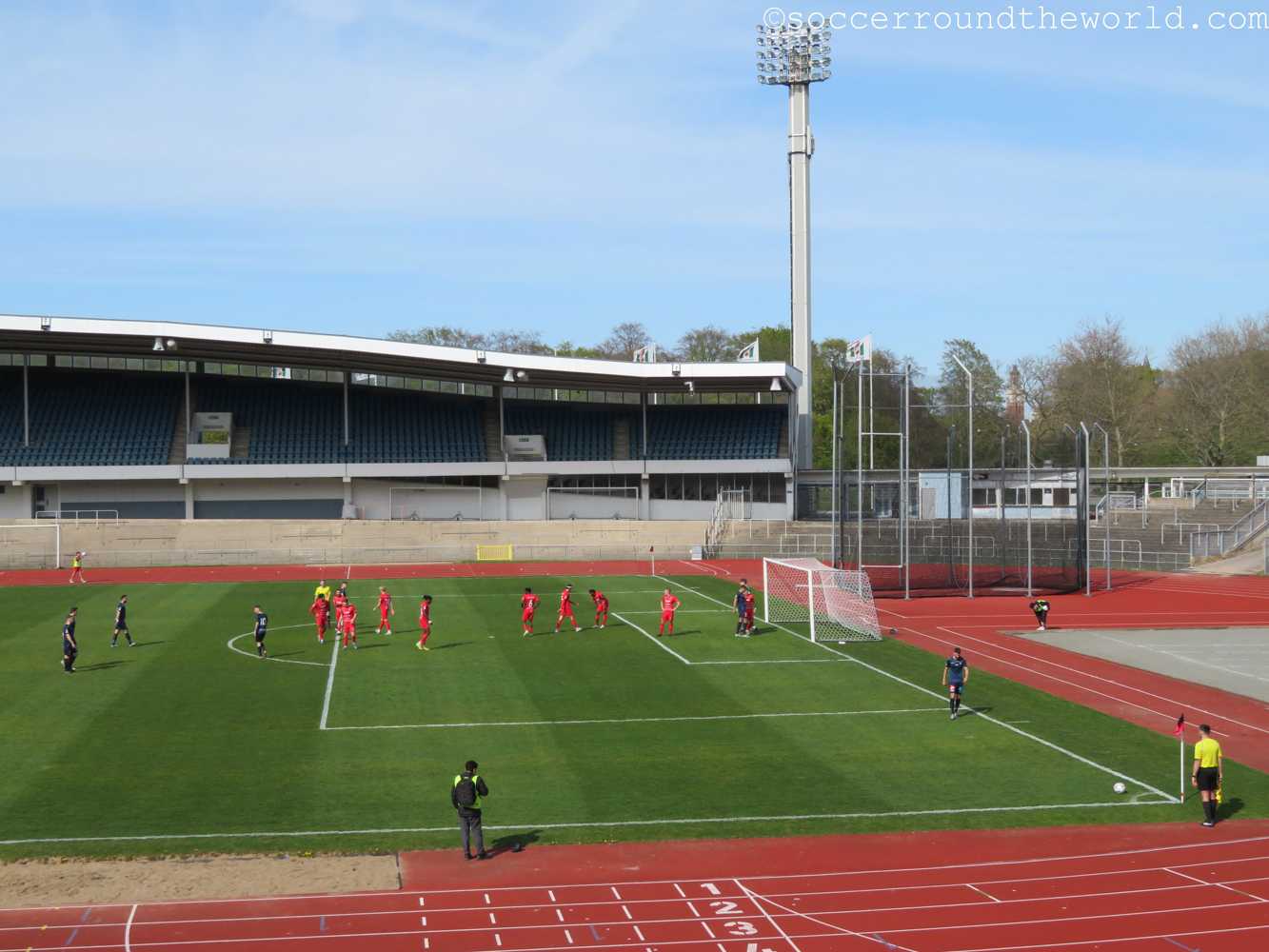
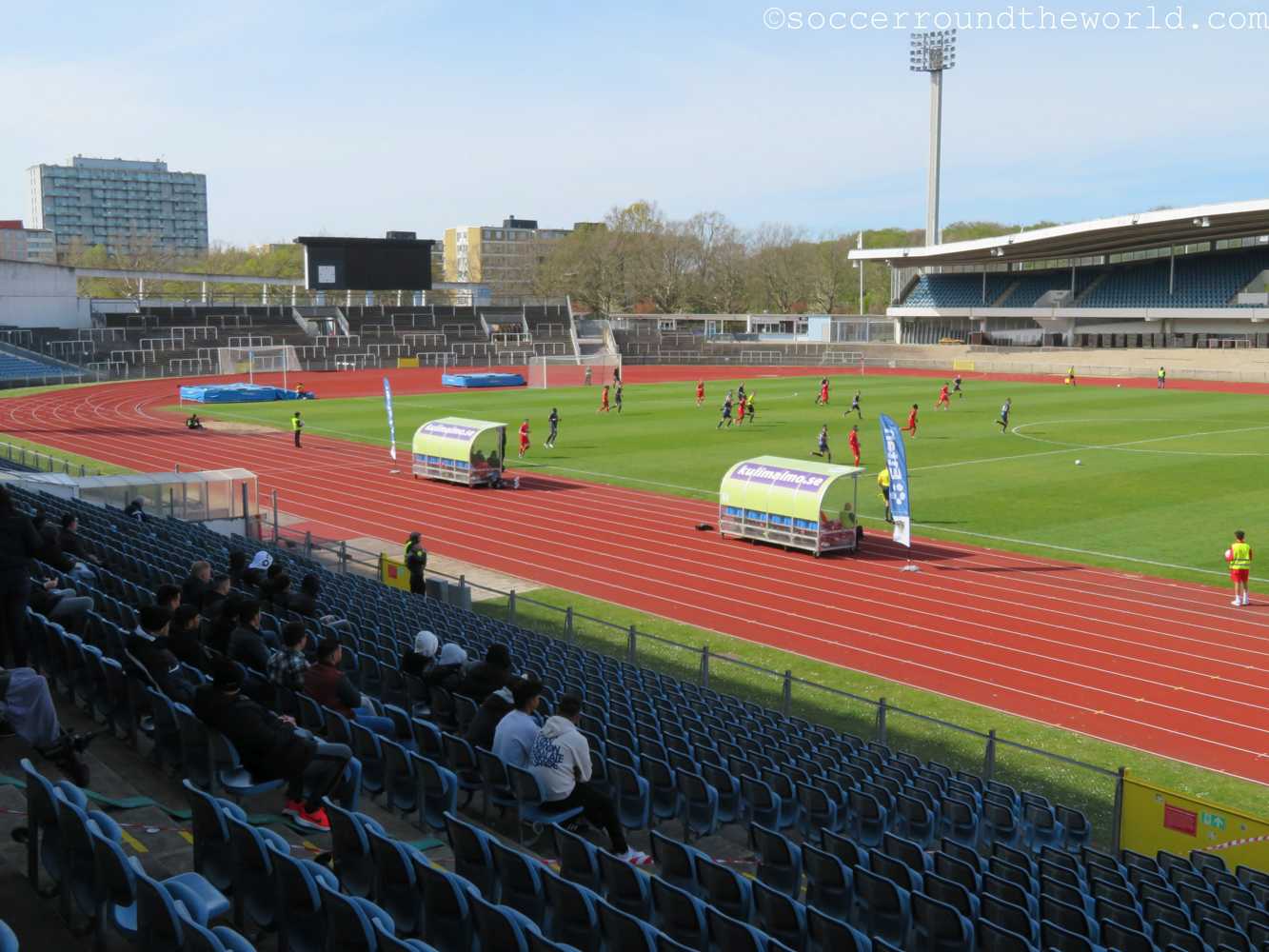
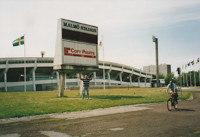
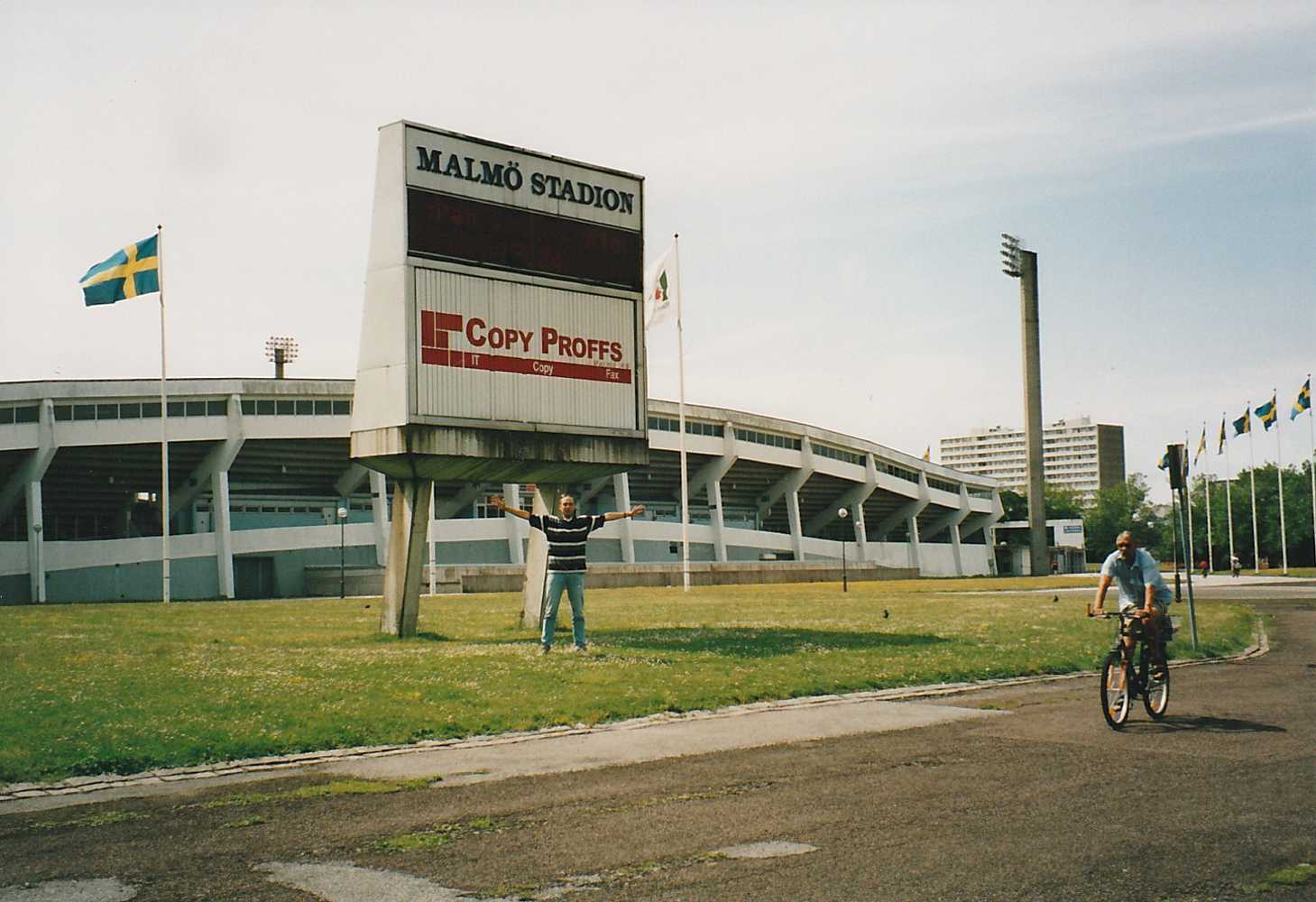
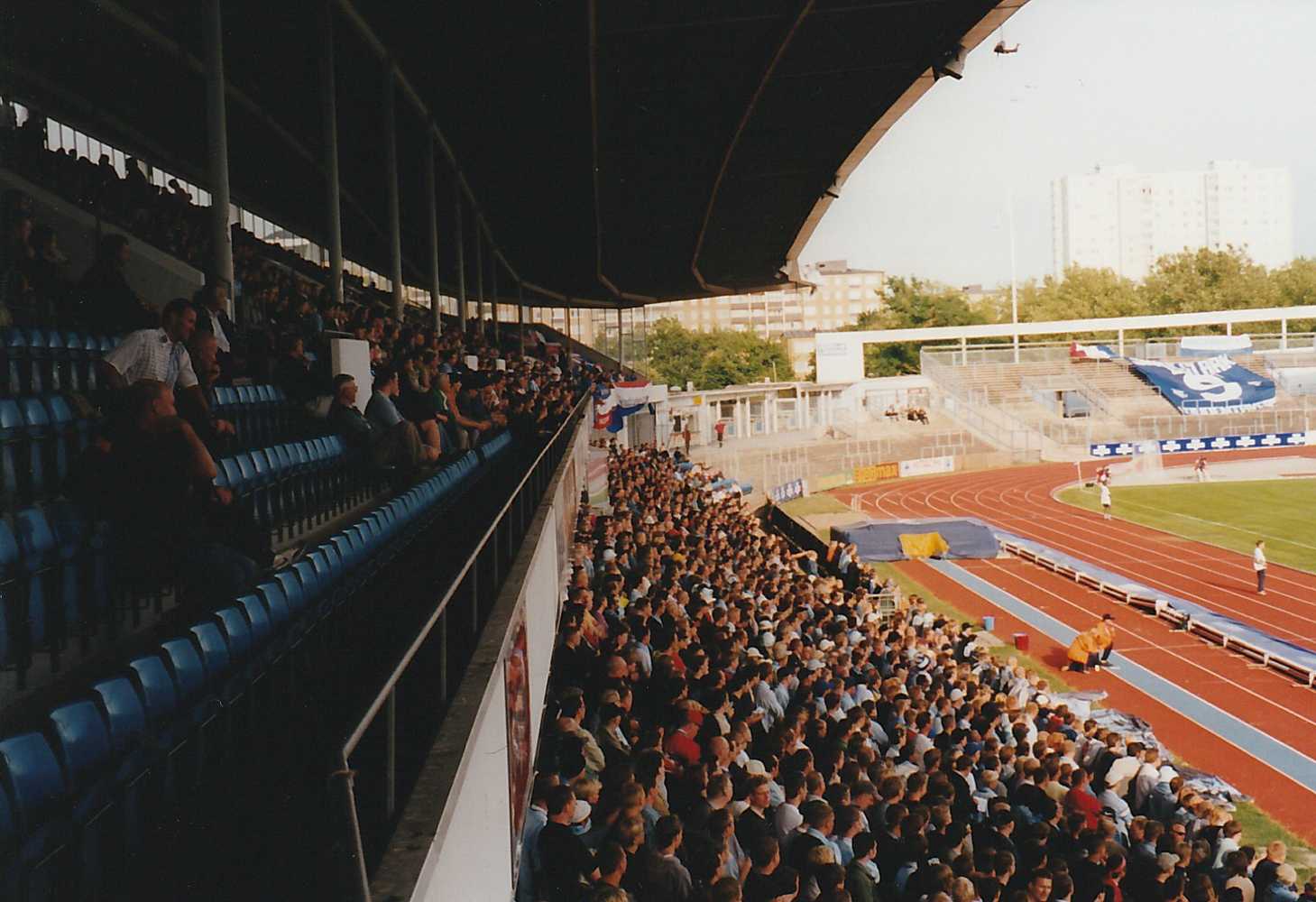
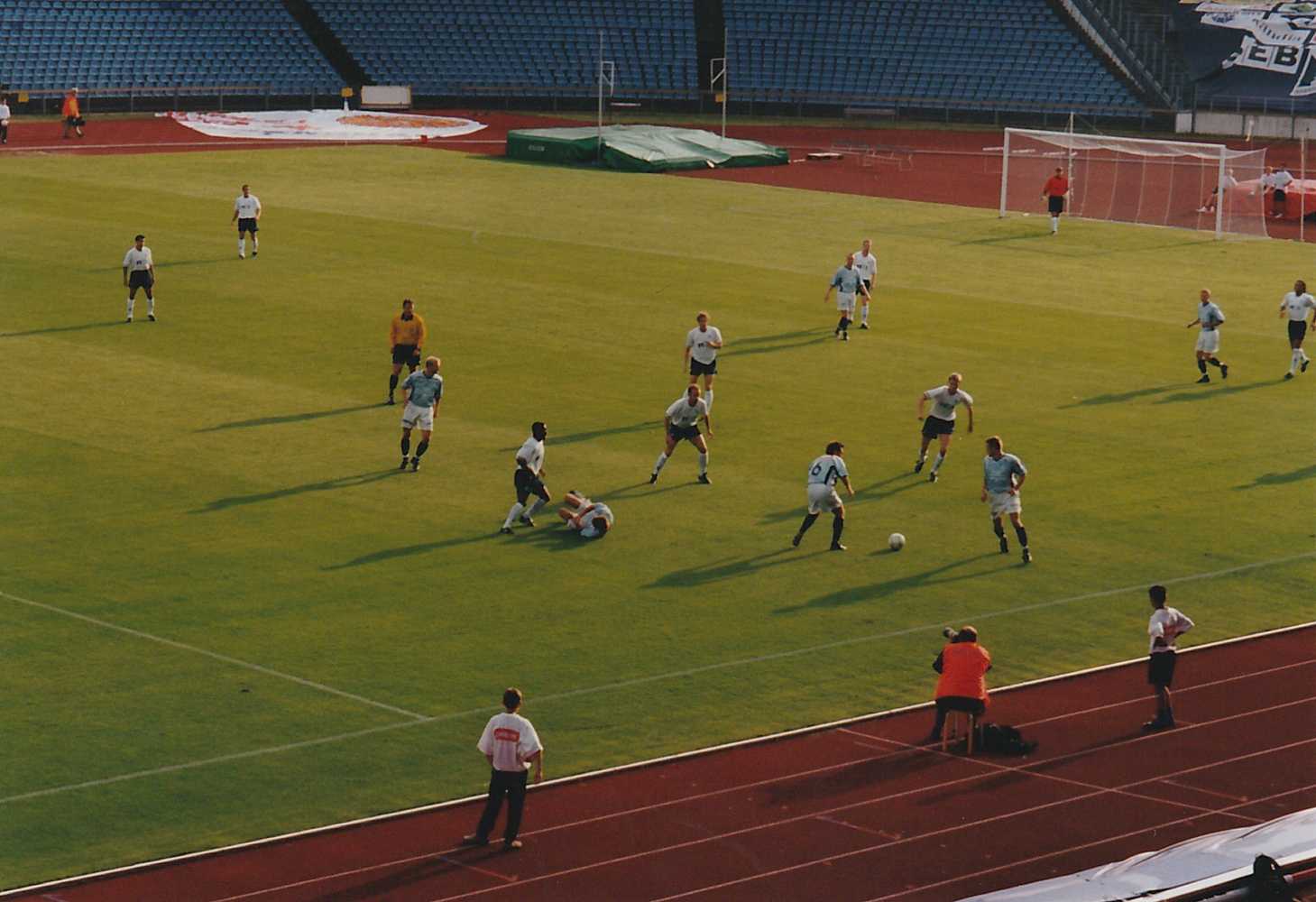
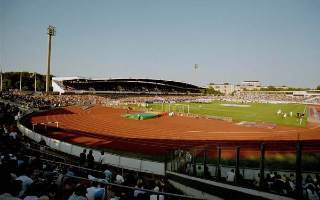
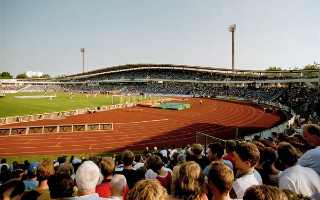
The stadium featured an athletics track surrounded by stands with a distinctive sinusoidal form – gently descending as they approached the curves. Only the stands along the pitch had a second tier and a roof.
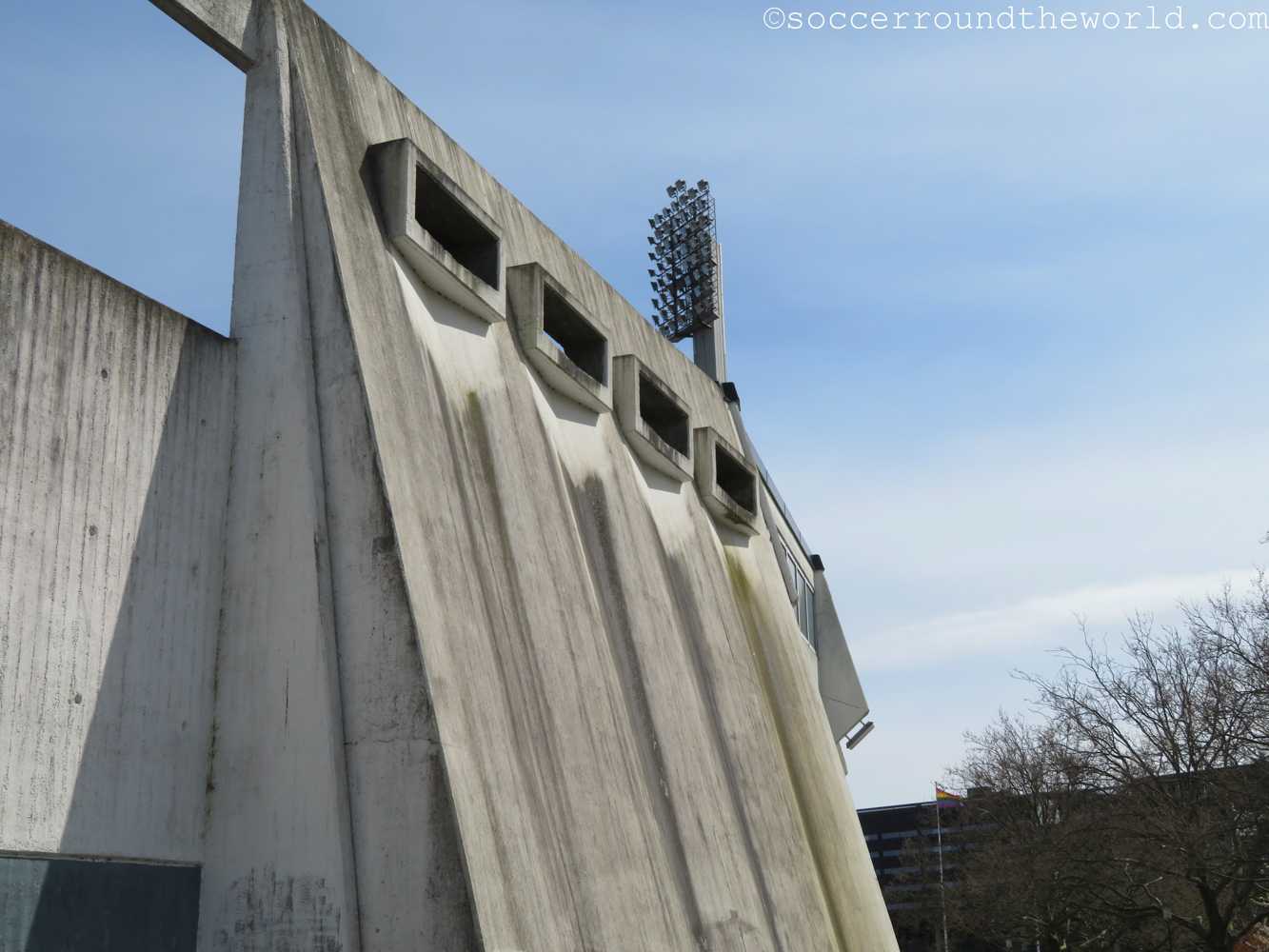
The stadium’s capacity was 26,500 spectators. A large proportion of the seating area consisted of standing places – seats were installed only in the main (southern) stand and on the upper tier of the northern stand. The stands were partly built on embankments, but to a large extent they also consisted of reinforced concrete structures, reflecting the modernist aesthetic.
What was located in the surroundings of Malmö Stadion?
The land on which the stadium was built had previously been occupied by farms and estates. After its opening, however, the area began to transform – alongside the development of adjacent residential districts, further sports facilities were constructed, gradually forming a large complex known as Stadionområdet.
The key facilities forming the sports complex alongside Malmö Stadion included:
- Baltiska Hallen indoor arena (opened in 1964)
- Malmö Isstadion ice rink (1968)
- Kombihallen indoor training facility (1980)
- Atleticum indoor athletics hall with a 200-metre track (1992)
- New football stadium (2009)
The complex was complemented by training pitches. In 2021, a new sports school (Malmö Idrottsgrundskola) was also opened next to the stadium, accompanied by a new training hall.
The stadium and the entire complex were located in the vicinity of Pildammsparken, over 2 km south of central Malmö.
What events were held at Malmö Stadion?
What football competitions did Malmö Stadion host?
1958 FIFA World Cup
The new stadium in Malmö was one of the 12 venues used during the 1958 FIFA World Cup. It hosted two group-stage matches (Group 1) and one quarter-final.
Due to identical points totals achieved by Northern Ireland and Czechoslovakia in Group 1, a play-off match for qualification was required, which was also held at Malmö Stadion. In total, the venue therefore hosted four World Cup matches.
The first match at Malmö Stadion took place on the opening day of the tournament, 8 June 1958. The then-reigning world champions, West Germany, defeated Argentina 3–1. It was the first-ever match at the new stadium and immediately set an attendance record, which remained unbeaten throughout the stadium’s existence – 31,156 spectators.
1958 FIFA World Cup matches played at Malmö Stadion:
- 8 June 1958: Argentina – West Germany 1–3 (Group 1)
- 15 June 1958: West Germany – Northern Ireland 2–2 (Group 1)
- 17 June 1958: Northern Ireland – Czechoslovakia 2–1 a.e.t. (Group 1, play-off)
- 19 June 1958: West Germany – Yugoslavia 1–0 (quarter-final)
Euro 1992
In 1992, Sweden hosted the UEFA European Championship (the last edition featuring eight teams). Matches were played at four venues, including Malmö Stadion, which hosted three Group 1 matches.
The tournament’s sensation was the Denmark national team, which was added to the competition at the last moment following Yugoslavia’s disqualification, and went on to surprisingly win the European Championship. The team, known as “Danish Dynamite” and strongly supported by its fans, played two matches at Malmö Stadion, and the victory over France in the final group game secured progression to the knockout stage, paving the way to the title.
Euro 1992 matches played at Malmö Stadion:
- 11 June 1992: Denmark – England 0–0 (Group 1)
- 14 June 1992: France – England 0–0 (Group 1)
- 17 June 1992: France – Denmark 1–2 (Group 1)
Sweden national team matches
Although Sweden did not play any matches at Malmö Stadion during the 1958 World Cup or UEFA Euro 1992, the “Three Crowns” national team featured there on many other occasions, playing a total of 27 official matches – including friendlies, Nordic Football Championship matches, and European Championship qualifiers.
Other events
Malmö Stadion also hosted the Swedish Cup final twice (1971 and 1975), and in 2014 it staged a Swedish Super Cup match.
Who used Malmö Stadion?
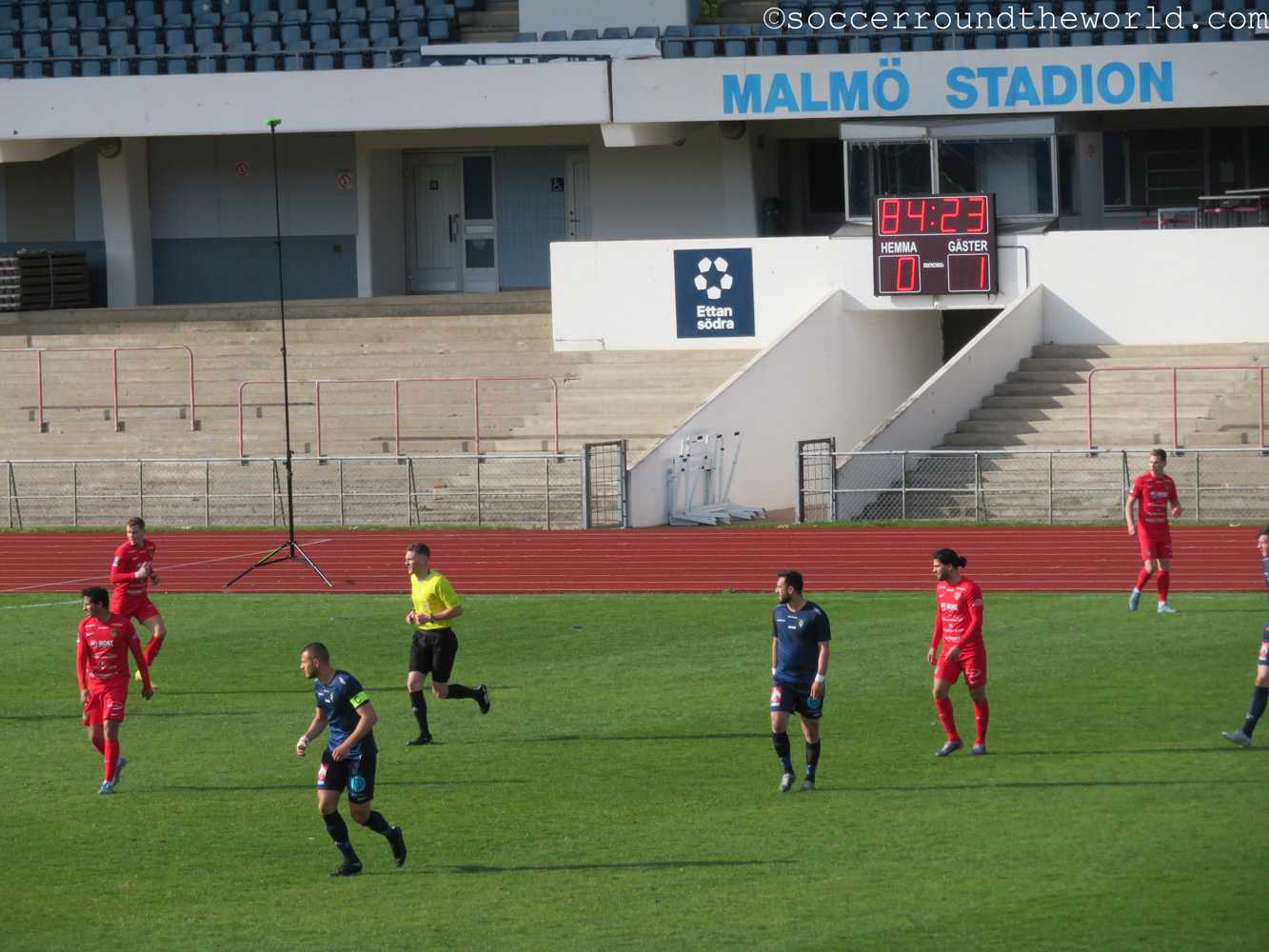
After its opening in 1958, Malmö Stadion became the home ground of the city’s two leading football clubs, Malmö FF and IFK Malmö FK, which moved there from Malmö Idrottsplats – located on the opposite side of Pildammsparken.
The stadium was also used by other tenants, including the women’s team Malmö FF Dam (later FC Rosengård), multiple national champions, as well as the highly successful athletics club Malmö Allmänna Idrottsförening (MAI), which organised meetings at the venue.
Malmö FF
Malmö FF is the most successful football club in Sweden. During its years at Malmö Stadion, the club won 10 national championship titles and lifted the Swedish Cup 9 times. In addition, in the 1978–79 season it reached the final of the European Cup, achieving the greatest success in Swedish club football on the international stage.
Malmö FF moved to the redeveloped Malmö Idrottsplats in 1999, but after just one season returned to Malmö Stadion and played there until the end of 2008. In 2009, the team moved to the newly built Swedbank Stadion.
IFK Malmö FK
At the time of the opening of Malmö Stadion, IFK Malmö FK also competed in Allsvenskan. In the 1960 season, the club achieved its greatest success in the top flight, finishing as league runners-up. In the 1960–61 season, it also reached the quarter-finals of the European Cup.
However, in 1962 IFK Malmö FK were relegated from Allsvenskan and never returned to the top division, spending much of their history in the lower leagues. In 1999 (together with Malmö FF) the club moved to Malmö Idrottsplats, and later, between 2009 and 2022, once again played at Malmö Stadion.
What athletics events took place at Malmö Stadion?
With its athletics track, Malmö Stadion regularly hosted athletics competitions, with one of the most prestigious events being the annual MAI-galan meeting, organised at the stadium until 2008 by the local athletics club MAI.
Sergey Bubka’s world record
One of the most memorable MAI-galan meetings took place on 5 August 1991. The crowd of nearly 25,000 spectators filled the stands to capacity, with the main highlight being the appearance of Ukrainian (then representing the Soviet Union) pole vaulter Sergey Bubka.
In the months leading up to the Malmö meeting, Bubka had been breaking his own world record by one centimetre each month – clearing 6.07 m in May 1991, 6.08 m in June, and 6.09 m in July. Ahead of the MAI-galan, there was therefore anticipation as to whether he would improve the record once again.
The athlete did not disappoint and, at Malmö Stadion, set a new world record by another centimetre – clearing 6.10 m.
Did Malmö Stadion host World Athletics Championships?
The World Athletics Championships were not initially held as a separate event, as their role was effectively fulfilled by the Olympic Games. However, when the 50 km race walk was removed from the Olympic programme in 1976 in Montreal, the International Association of Athletics Federations (IAAF) decided to organise a competition that was called the World Championships.
The event was held on 18 September 1976 in Malmö and consisted of a single discipline – the 50 km race walk. The course ran through the city streets, while both the start and finish were located at Malmö Stadion. The competition featured 42 athletes, and the winner was Veniamin Soldatenko of the Soviet Union (3:54:40).
In 1980, another edition of the championships was held in Sittard, again featuring only events not included in the Olympic programme. Although both events were organised under the auspices of the IAAF, neither is regarded as an official World Athletics Championships edition, due to their unusual and highly limited format.
The first full edition of the World Athletics Championships, covering all disciplines, was held in Helsinki in 1983.
Swedish Athletics Championships
Malmö Stadion hosted the Swedish Athletics Championships on four occasions: in 1964, 1968, 1979, and 2009. The stadium also hosted national relay championships (1959, 1968, 1971, 1982, and 1989) and team championships (1982, 1987, 1992, and 2019).
In May 2024, the stadium also hosted the Nordic Athletics Championships.
What speedway events were held at Malmö Stadion?
On 15 September 1961, the Individual Speedway World Championship final was held at Malmö Stadion. It was the first time the competition took place outside Wembley Stadium. The podium was entirely dominated by Swedish riders, with Ove Fundin taking the title.
The stadium also hosted the Team Speedway World Championship final in 1967 and the World Pairs Championship final in 1970.
Speedway events at the stadium were possible before the installation of a polyurethane athletics track. In 1974, the Malmö Motorstadion was opened in the eastern part of the city, taking over as the main speedway venue.
Did Malmö Stadion host concerts?
The stadium also served as a major concert venue, with a capacity of up to 40,000 spectators. Artists who performed there included Ozzy Osbourne, Elton John, Dolly Parton, Eagles, Kiss, and Rod Stewart.
When was Malmö Stadion closed?
When was the new stadium in Malmö built?
Malmö FF had long been considering leaving Malmö Stadion. The first attempt came at the end of the 20th century, when, on the club’s initiative, the old Malmö Idrottsplats was redeveloped. The team moved there after the renovation was completed in 1999, but returned to Malmö Stadion after just one season.
The topic resurfaced after Malmö FF won the league title again in 2004, following a 15-year drought. The city decided to support the investment, and several options were considered – upgrading the existing Malmö Stadion, building a new stadium on its site, or constructing it in a completely different location.
Ultimately, at the end of 2005, it was decided to build a completely new stadium right next to Malmö Stadion – behind its southern stand, on the site of the existing training pitches.
The modern, football-specific stadium was built between 2007 and 2009, and officially opened on 13 April 2009. The new venue was initially named Swedbank Stadion – in late 2019, it was renamed Eleda Stadion.
When was Malmö Stadion demolished?
After the opening of the new stadium, the old venue lost its importance. As early as 2015, the city made a decision to demolish it, although the stadium remained in use for another decade.
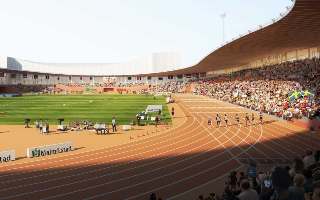
In its place, a smaller football and athletics stadium with covered stands and a capacity of 8,000 spectators is planned. In May 2025, the winning design for the new arena was selected, created by C.F. Møller Architects (in collaboration with Elding Oscarson Architects and DIFK).
On 27 September 2025, a farewell event was held at the stadium, during which it was opened to the public for tours. On 8 October 2025, a similar event was organised for children from the athletics club MAI.
On 15 November 2025, the final match was played at the stadium – a friendly between the Malmö FF U19 team and a selection of players from other local clubs (the Stadslaget), which ended in a 3–2 victory for the latter.
Demolition work on the stadium began later that month, with completion scheduled for summer 2026. Construction of the new venue is then expected to start, with completion planned for 2029.
Before demolition began, it was decided to preserve two large abstract murals located on the concrete walls of the main stand. The murals, created by local artist Karl Otto Helmer Hultén, better known as CO Hultén, are to be relocated elsewhere.
Advertisement
Pictures
2023
06.05.2023 © Soccerroundtheworld 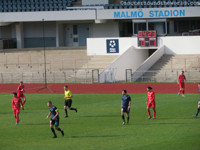
06.05.2023 © Soccerroundtheworld 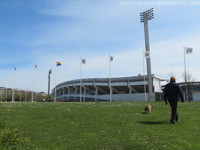
06.05.2023 © Soccerroundtheworld 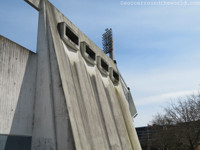
06.05.2023 © Soccerroundtheworld 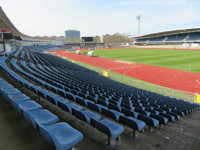
06.05.2023 © Soccerroundtheworld 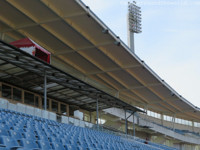
06.05.2023 © Soccerroundtheworld 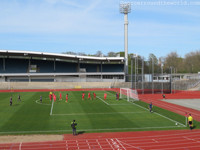
06.05.2023 © Soccerroundtheworld 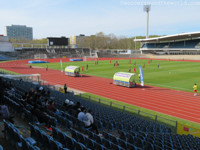
06.05.2023 © Soccerroundtheworld
2014
19.08.2014 © Jorchr (CC BY-SA 3.0) 
19.08.2014 © Jorchr (CC BY-SA 3.0)
2002
29.07.2002 © groundhopping.de 
29.07.2002 © groundhopping.de
2001
17.07.2001 © Stephan Hoogerwaard 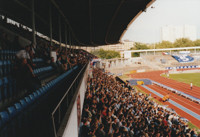
17.07.2001 © Stephan Hoogerwaard 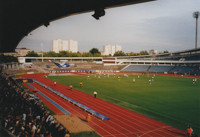
17.07.2001 © Stephan Hoogerwaard 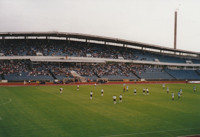
17.07.2001 © Stephan Hoogerwaard 
17.07.2001 © Stephan Hoogerwaard 
17.07.2001 © Stephan Hoogerwaard
Related news
2026
2025
-
Sweden: Will Malmö Stadion be commemorated? Proposal has been made
Malmö FF supports a proposal from the Malmö initiative to establish a memorial site for Malmö Stadion, which is set to be demolished. After nearly 70 years of serving the people of Malmö, the stadium will be torn down and replaced by a new multisport building and a modern arena for football and athletics.
-
Sweden: New stadium design in Malmö announced
The architecture firm C.F. Møller Architects, in collaboration with the Swedish studio Elding Oscarson Arkitekter and the engineering company DIFK, has won the international competition to design the new stadium in Malmö.
2024
2016

2014
-

Pyrotechnics: Sweden for and against legalisation
If you look at the media discourse, pyrotechnics inside stadiums are a major threat. But if you look at how fans and authorities discuss the issue, legalization may be closer than ever, according to Sydsvenskan.
-

Pyrotechnics: How will the Swedish debate end?
It's almost a year since Sweden saw its major conference devoted to pyrotechnics at sports games. The debate goes on and seems to be closing to a final. Would this mean legalisation? It's not ruled out for sure.
2013
-

Pyrotechnics: Swedish police to test flares
As part of building a nationwide strategy for sports events safety, members of the national police are to test various kinds of pyrotechnics at Friends Arena tomorrow. The aim is to establish whether there is a threat for spectators and legalisation of some materials is possible.
-

Sweden: Pyrotechnics may soon be legal?
Under what conditions, which materials? That’s unclear until late March, but national coordinator for sports-related violence says he can see support for a solution to be found. Fotbollskanalen.se report.