 StadiumDB
USA: Last snow at Highmark Stadium. Bills gear up for $2.1 billion new home
source: StadiumDB.com; author: Paulina Skóra
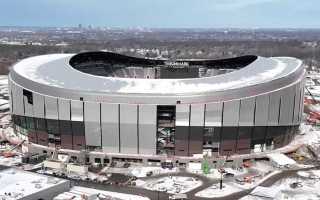 Construction of the New Highmark Stadium for the Buffalo Bills in Orchard Park enters its decisive phase. According to the latest reports, the investment is already about 75% complete, and the pace of work allows maintaining the planned opening of the facility in summer 2026. This is one of the largest and most modern stadium investments in NFL history – a project that significantly exceeds standard expectations for football arenas.
Advertisement
On the construction site: work seven days a week
Daily, 1,500 to 1,600 people work on the construction site. Crews operate practically non-stop, seven days a week, which – as emphasized by Steve Ranalli, president of the Erie County Stadium Corporation – is essential for an investment of this scale. Despite natural shifts typical for such projects, the schedule remains intact.
Before the first serious frosts appear in western New York, the installation of entrance structures and the stadium's steel gates is being finalized. Inside, intensive finishing of spaces continues: electrical, ventilation, water-sewage installations, partition walls, floors, and sanitary equipment installation. In parallel, successive construction and infrastructure stages are being closed.
When the first estimates were presented in 2021, the stadium cost was supposed to be around $1.4 billion. Currently, the project has reached $2.1 billion. Most importantly, the Buffalo Bills have taken on the cost increase resulting from inflation and sharp material price changes, which allowed avoiding restrictions or halting the investment.
Demolition of the current Highmark Stadium will begin shortly after the 2025 season, ending over five decades of the facility's history, which opened in 1973.
Big NFL economics: "jock tax" and revenues for New York State
The stadium construction has not only a sporting dimension – it is also a significant element of the local economy. One of the most important sources of revenue for New York State is the so-called jock tax,
a tax on athletes' salaries. In a 2021 analysis, revenues from this were estimated at about $19.5 million annually, but with the rising NFL salary cap, experts now talk about up to $30 million per year.
Importantly, not only Bills players pay taxes, but also visiting teams' players. Every day spent in Buffalo – training, game, preparations – generates further tax revenues. As CPA Robert Raiola, specializing in athletes' finances, explains: even players living out of state must pay income tax for time worked in New York.

2026 architecture: open stadium, yet protected
The New Highmark Stadium will remain an open facility, in line with the team's tradition of facing snow and winds typical for the region over decades. A key project element is, however, a massive, steel, 360-degree canopy roof covering nearly 65% of seating areas. The stadium will hold about 62,000 spectators, with the possibility of later expansion, and its layout will ensure a cauldron
effect thanks to vertical, tightly arranged stands maximally close to the field.
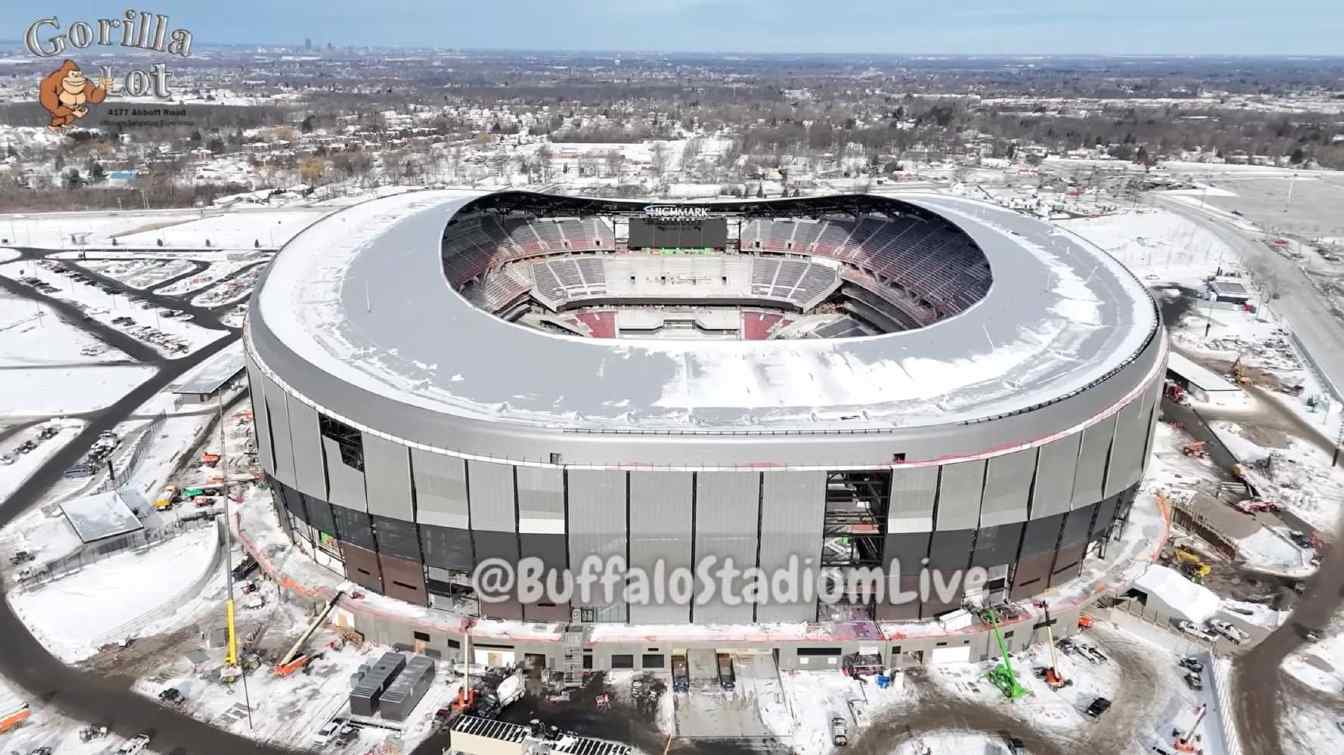
Highmark Stadium is known for its winter snowfalls that blanket the stands in white every year. However, the new venue is set to become famous for a unique solution that will prevent such scenes in the future. According to operations manager Joe Byrne, the New Highmark Stadium will feature the world's largest snow-melting system. Its concave roof will allow snow to accumulate in the central section, where special sensors will automatically activate heating when the weight exceeds safe levels.
The team will step onto the new turf – two acres of Kentucky bluegrass – in the 2026 season. The grass comes from Tuckahoe Turf Farms in New Jersey and is laid on a multi-layer drainage system and advanced underfield heating layout. Beneath the field surface lies an extensive network of heating cables maintaining the soil at a stable temperature of about 16–17°C. The system prevents surface freezing, melts snow before it can accumulate, and supports year-round turf growth. Side turf zones will also be heated, complemented by professional grow lights ensuring turf quality regardless of the season.
In the coming months, the stadium will be equipped with next-generation technologies: giant screens and a modern video system, premium network infrastructure, concert-quality sound system, intelligent crowd flow management systems, and modern interiors including locker rooms, media center, and full technical backend. Drone footage already shows the huge difference between the old and emerging facility – especially in winter, when the new arena's stands remain dry despite harsh conditions.
Farewell to the old stadium: history for sale
Before bulldozers roll onto the site of the current Highmark Stadium, Bills fans can literally take a piece of history with them. Collectible Exchange, led by Brandon Steiner, is selling elements of the facility – from seats, signs, and turf fragments, to bar stools, roof lighting, and even door handles or... urinals. Part of the proceeds will fund the Erie County budget. As Steiner promises, every fan now has a chance to buy their own fragment of stadium legend.
The last season at the old facility also gets a special celebration. Bud Light and the Buffalo Bills have prepared a limited edition Blizzard Brew beer, brewed from purified snow collected from the field during the first snowfall of the season. The brew will hit stores in western New York, with its premiere featuring club legend Andre Reed.
Advertisement