 StadiumDB
Highmark Stadium
| Capacity | 60 108 |
|---|---|
| Country | United States of America |
| City | Buffalo |
| Clubs | Buffalo Bills |
| Inauguration | 23/06/2026 |
| Construction | 2023–2026 |
| Cost | $2.1 B |
| Design | Populous |
| Contractor | Gilbane Building Company, Turner Construction Company |
| Address | 10 Bills Plaza, Orchard Park, NY 14127 |
Advertisement
Highmark Stadium – stadium description
What does Highmark Stadium look like in brief?
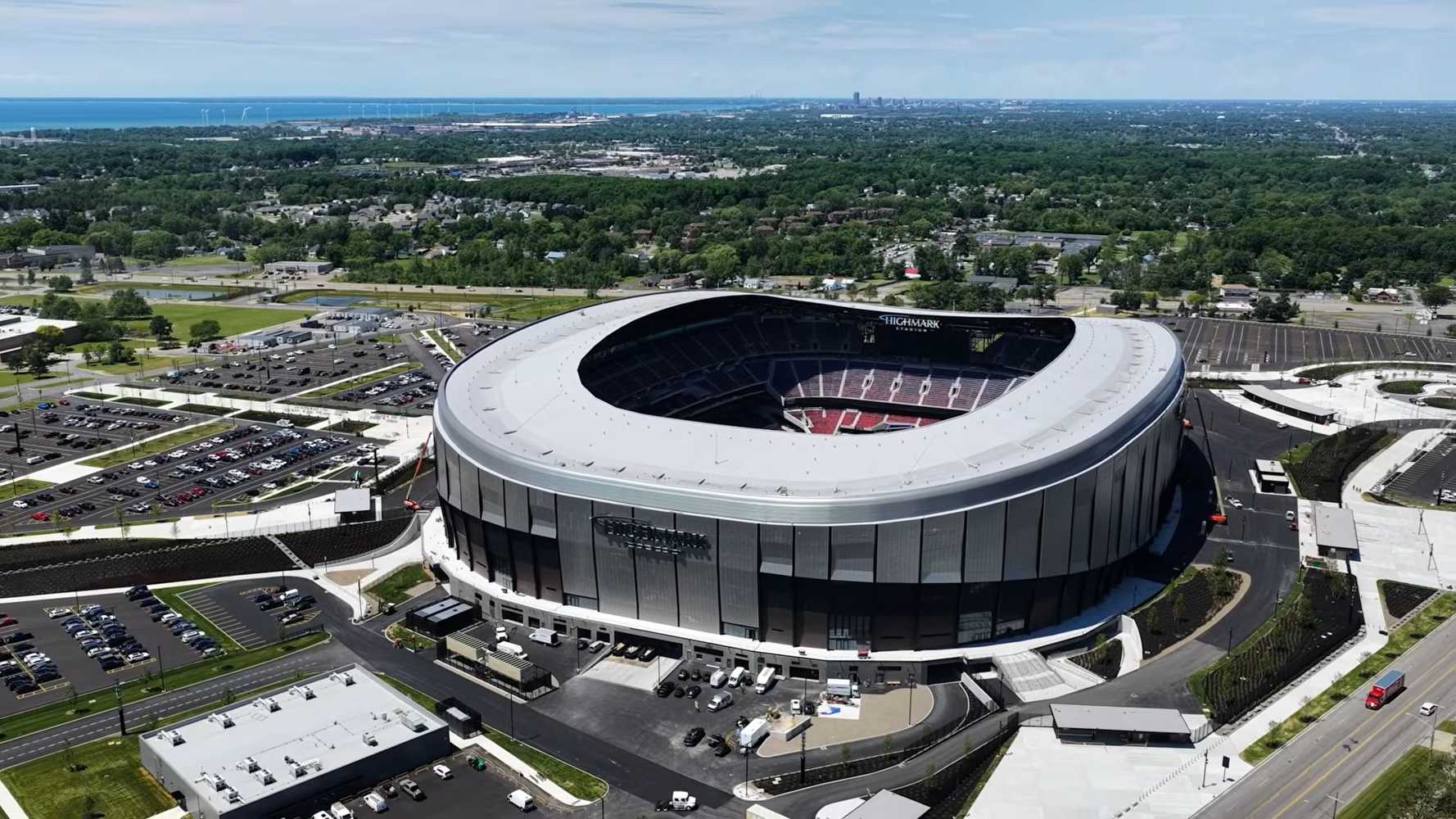
Inspired by the form of the new Tottenham Hotspur Stadium and clad in a silvery facade (a reference to Kleinhans Music Hall), the modern home of the Buffalo Bills is the largest construction project ever completed in Western New York and one of the most expensive stadiums in the world.
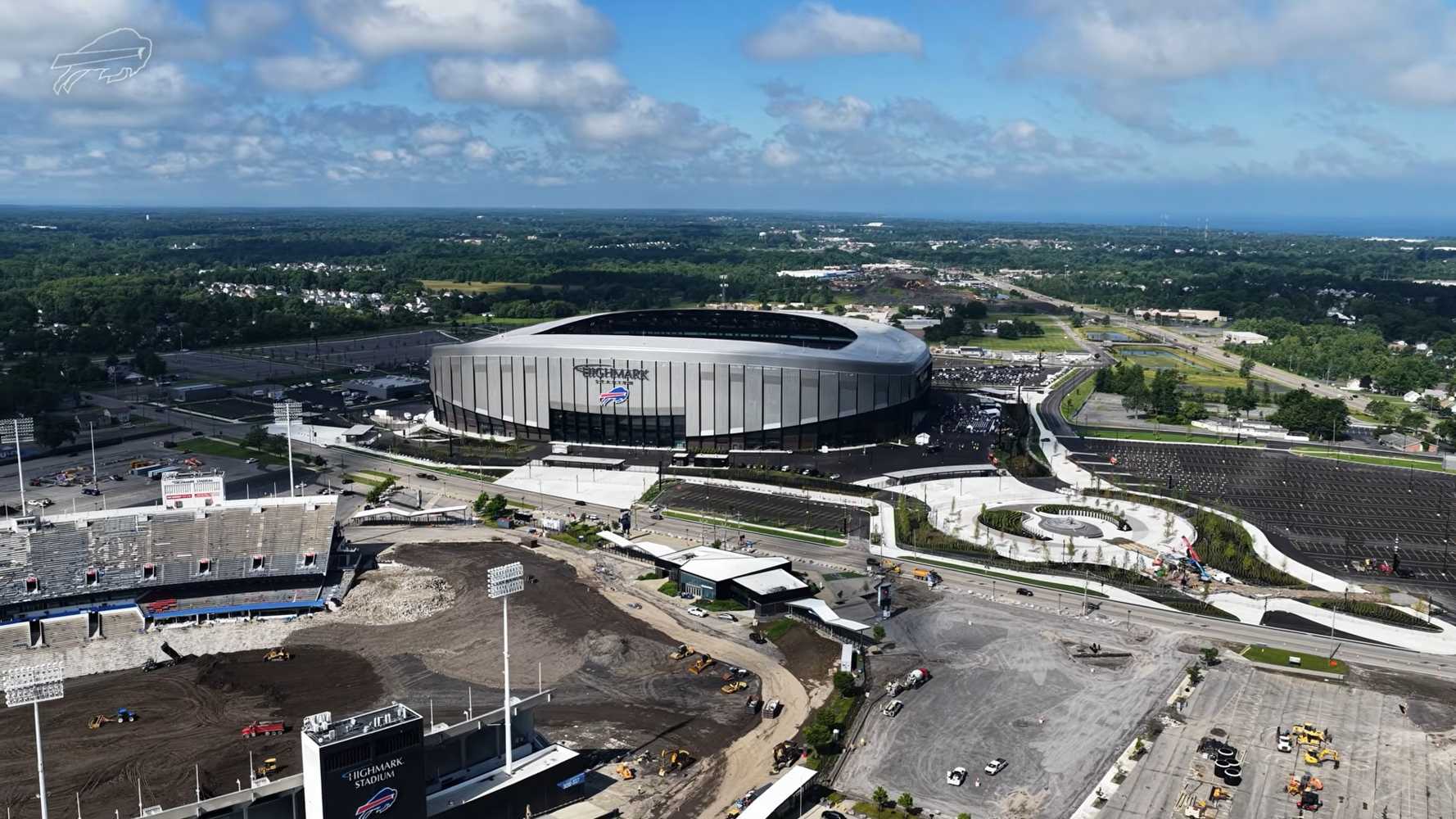
The facility was built between 2023 and 2026 in the southern suburb of Orchard Park, right next to the former Bills stadium, whose demolition began a few months before the opening of the new arena.
Contrary to an increasingly common trend in the NFL, Buffalo opted against a fully enclosed roof. Instead, the roof covers just under two-thirds of the seating bowl. This solution was intended not only to reduce costs, but above all to preserve the “snowy” identity of the Bills.
The lack of full weather protection during cold conditions is offset by partially heated seating areas. A unique heating system was also installed in the roof, which – thanks to integrated sensors – automatically responds to excessive snow accumulation.
The enclosed seating bowl helps reduce wind gusts coming off Lake Erie and enhances the stadium’s acoustics during games. The venue is equipped with new technologies, an extensive premium offering, and strong commercial potential. However, with a capacity slightly exceeding 60,000 seats, it remains the smallest stadium in the NFL.
How did Highmark Stadium come to be?
The previous Buffalo Bills stadium, opened in 1973, gradually became one of the oldest venues in the NFL. In late 2012, the Bills still extended the stadium lease by signing a new 10-year agreement with local authorities.
As part of the deal, the State of New York and Erie County also allocated $130 million for a last major renovation of the existing stadium, carried out between 2013 and 2014.
However, even at that time, discussions were already underway about replacing the aging venue. In October 2012, an ambitious vision emerged for a modern stadium with a retractable roof, which was planned for Buffalo’s Outer Harbor area near downtown.
Although that proposal was never realized, in February 2014 a working group was formed, consisting of representatives of the state government, Erie County, and the Buffalo Bills, to address the club’s future stadium needs.
In March 2014, long-time Bills owner Ralph Wilson passed away at the age of 95. In October 2014, the team was acquired by businessman Terry Pegula and his wife Kim Pegula, who also became actively involved in the plans for a new stadium.
At the end of 2014, AECOM produced a study analyzing potential sites for a new stadium. Four locations were considered most suitable: three in downtown Buffalo and one in Orchard Park, next to the team’s existing stadium. At that stage, a full renovation of the existing venue was also still considered an option.
When was the Buffalo Bills’ new stadium project developed?
Over the following years, the new stadium project saw little tangible progress. It was not until 2018 that CAA ICON was commissioned to prepare a new study, with further analyses continuing in the years that followed.
In August 2021, the Bills submitted a concrete proposal for the construction of a new stadium to the State of New York and Erie County. The facility was planned for Orchard Park, right next to the existing venue. The proposed capacity was approximately 60,000 seats, while the cost was estimated at $1.4 billion, with more than half expected to come from public funding.
On 28 March 2022, an agreement was reached under which the State of New York and Erie County would jointly contribute $850 million toward the project. The remaining portion of the estimated $1.4 billion (as well as any cost overruns) was to be covered by the team’s owners. The lease agreement was set to run for 30 years.
On 27 October 2022, the first renderings of the new stadium, designed by Populous, were released, and on 4 November 2022 it was announced that Gilbane Building Company and Turner Construction Company (in collaboration with 34 Group) would serve as the main contractors.
The Highmark Stadium project is available on a separate subpage
When was Highmark Stadium built?
Site preparation works began in early May 2023, while the official groundbreaking ceremony took place on 5 June 2023. In the initial months, construction focused on extensive excavation work, with major structural activity only beginning in early 2024.
The project has progressed according to schedule. No major incidents occurred during construction; one of the most serious events was a fire that broke out on 14 December 2025, but it was quickly brought under control and caused no injuries or significant damage.
Construction progress of Highmark Stadium can be viewed on a separate subpage
Who became the naming sponsor of the Buffalo Bills’ new stadium?
Already during the groundbreaking ceremony in June 2023, the extension of the partnership with Highmark Blue Cross Blue Shield (a health insurance company) was announced. The company had served as the naming sponsor of the Bills’ previous stadium since 2021.
Under the agreement, the new venue retained the name “Highmark Stadium”. During construction, it was informally referred to as “New Highmark Stadium” to distinguish it from the existing facility.
When was the old Buffalo Bills stadium demolished?
On 4 January 2026, the Buffalo Bills played their final game at the old stadium, defeating the New York Jets 35–8. The match also served as the official farewell to the venue. The first elements of the stadium were dismantled in February 2026, and the demolition work is expected to take around one year.
When was the new Highmark Stadium inaugurated?
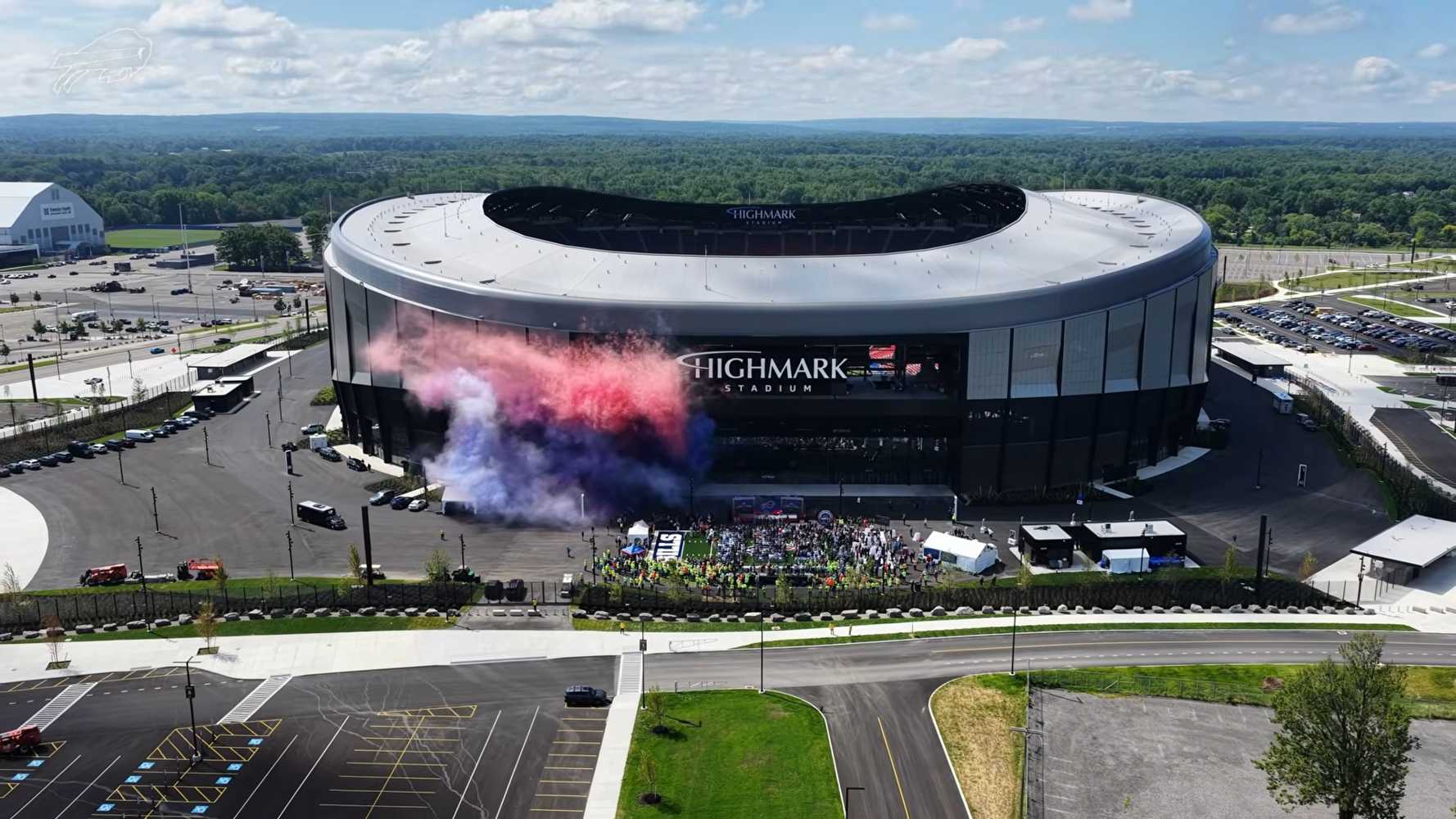
The official opening ceremony of the new stadium took place on 23 June 2026. The symbolic ribbon-cutting was performed by Terry Pegula (Buffalo Bills owner), Kathy Hochul (Governor of New York State), Mark Poloncarz (Erie County Executive), as well as Mary Wilson, Matt Pegula, Pete Guelli, and David Holmberg.
The first public event is scheduled to be the Buffalo Bills’ open training session (Blue & Red Practice), set for 8 August 2026. Two preseason games are scheduled for 15 and 27 August, while the first NFL regular season game will be played on 17 September 2026 against the Detroit Lions.
How much did Highmark Stadium cost to build?
Originally estimated at $1.4 billion, the final construction cost rose to over $2.1 billion, making the Buffalo stadium one of the most expensive venues in the world. The project also represents the largest construction investment in the history of Western New York.
The project was made possible through funding from the State of New York ($600 million) and Erie County ($250 million), totalling $850 million in public support – at the time a record level for such a project, although it was later surpassed by the Tennessee Titans’ new stadium project ($1.26 billion).
The remaining construction costs were covered by the Bills’ owners, who also secured a $200 million loan from the NFL. An important source of funding was the sale of Personal Seat Licenses to fans, which generated $263 million.
The construction of the new Buffalo Bills stadium took place in the post-COVID-19 period, amid rising inflation and global tensions, which significantly increased investment costs. Additional pressure came from other large-scale projects in the region, which drove up demand and costs for skilled labor.
What does Highmark Stadium look like?
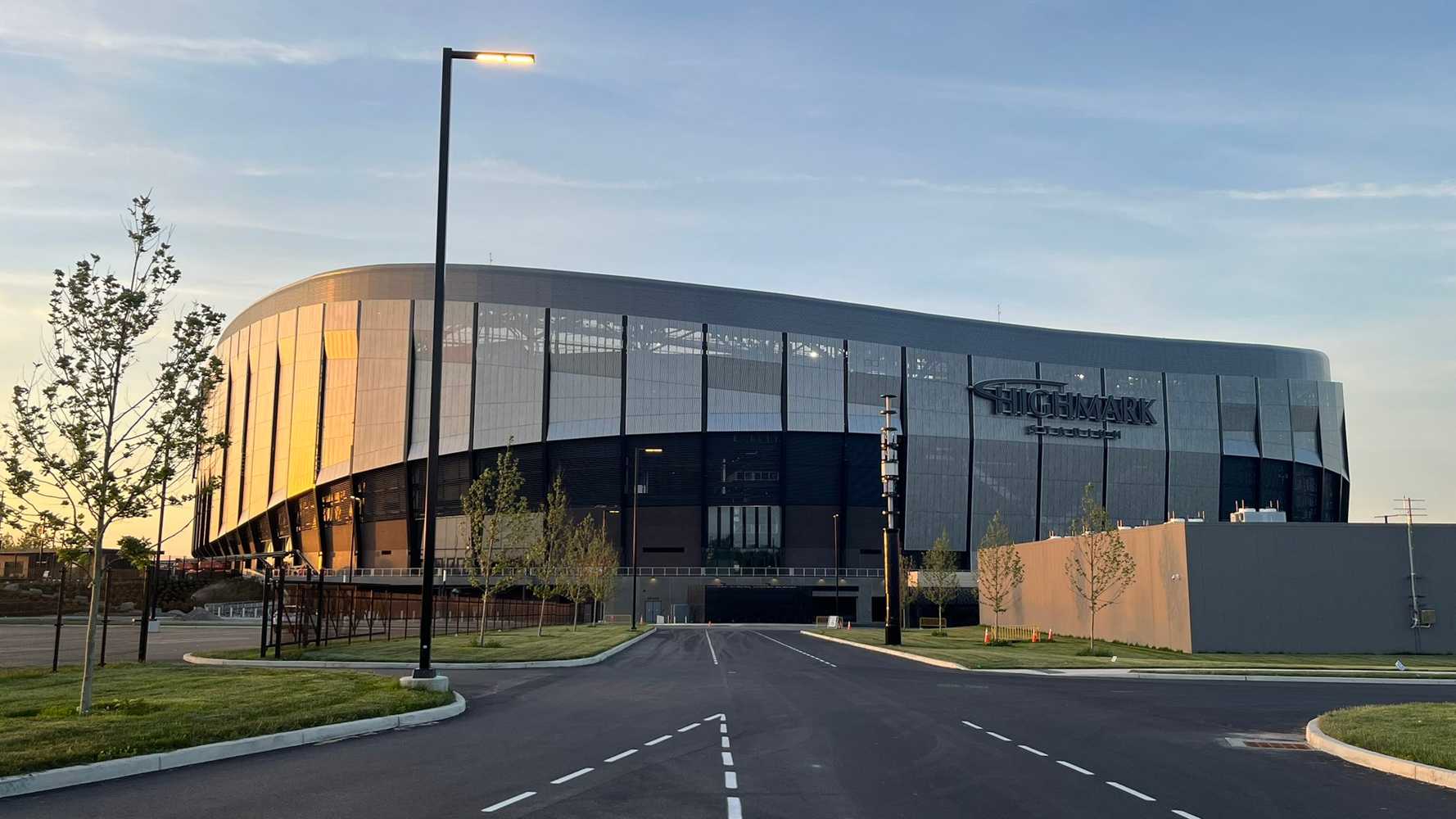
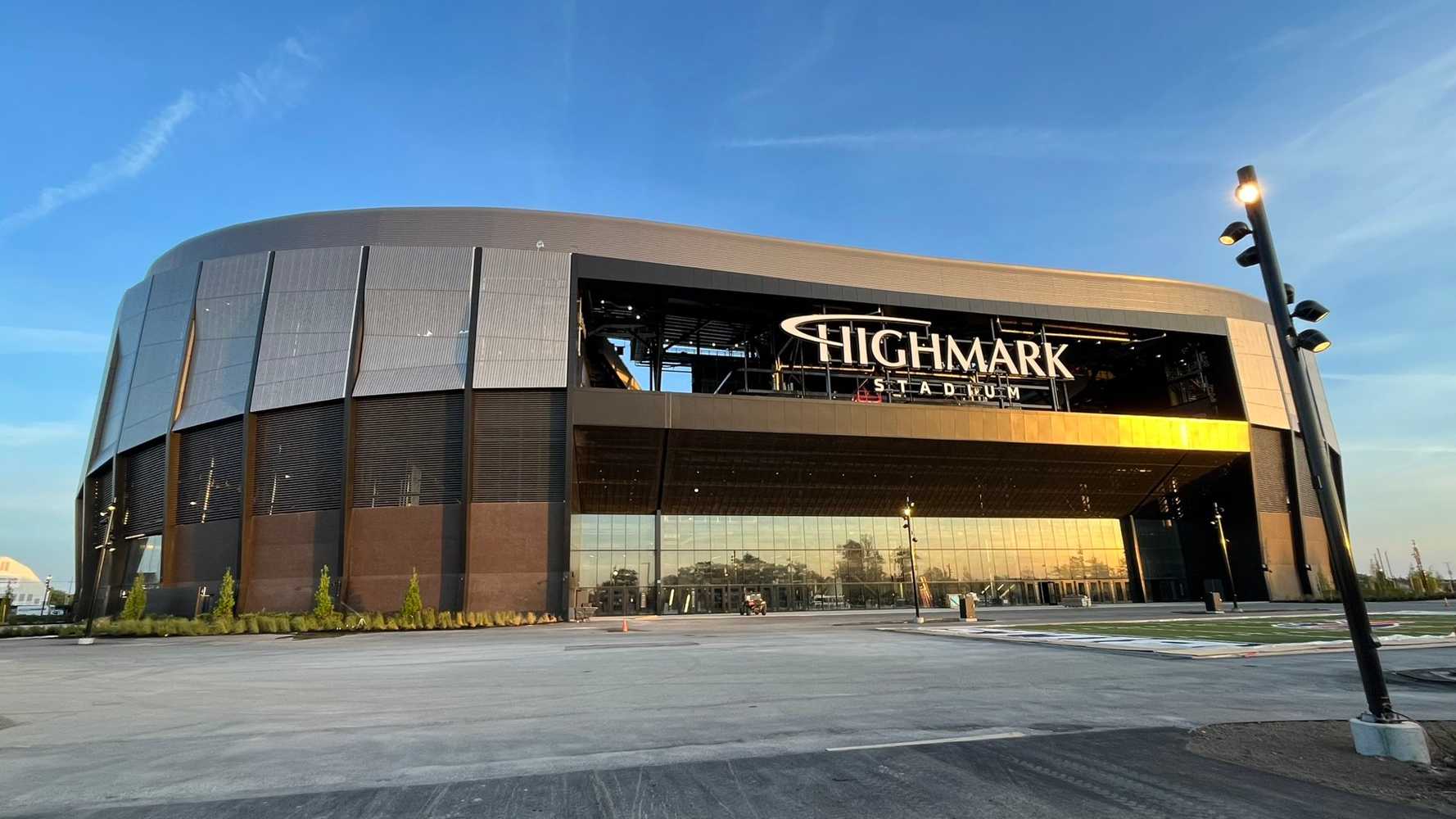
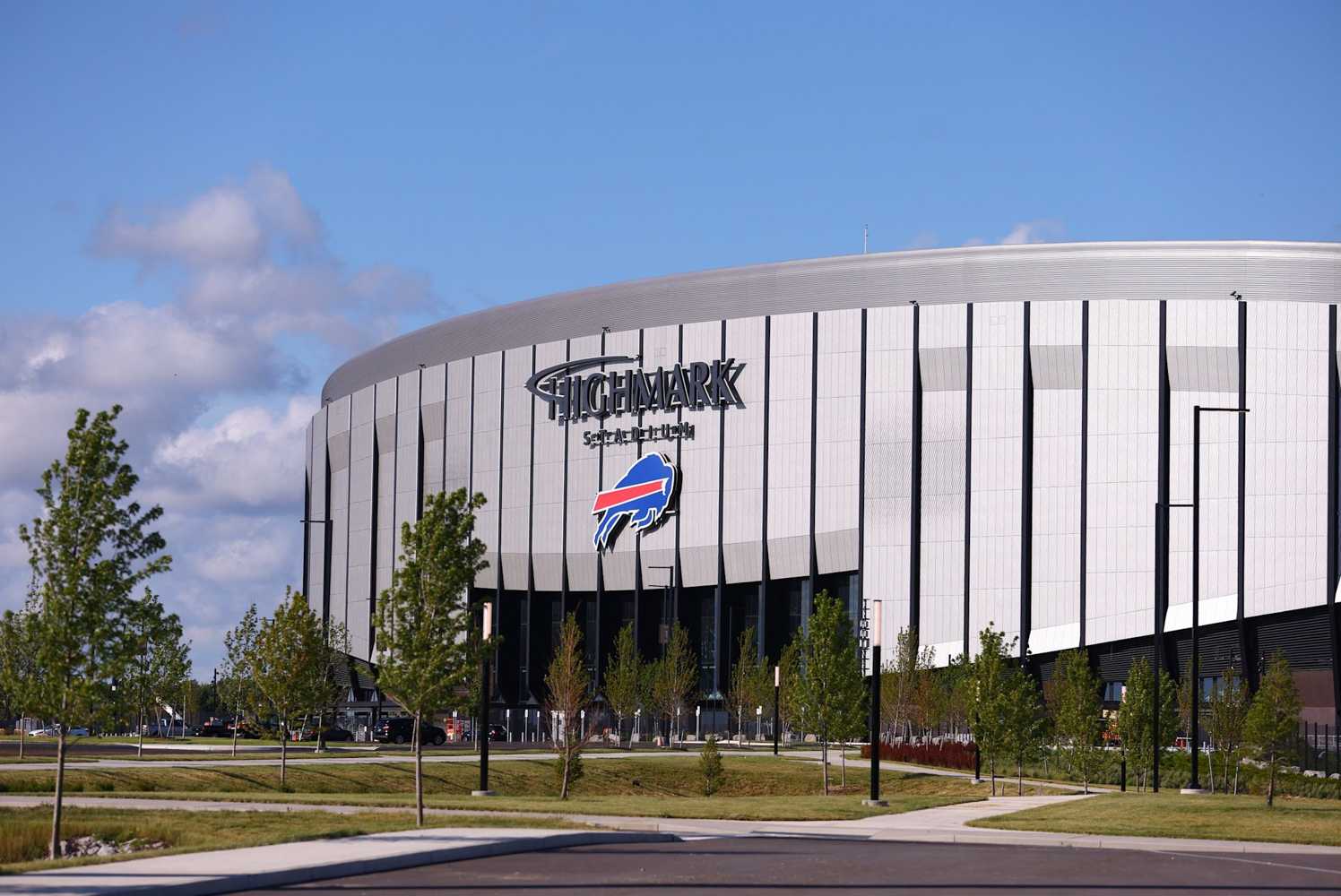
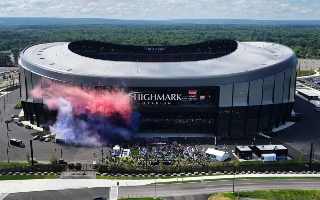
The Buffalo Bills’ stadium features a compact, enclosed seating bowl, while its oval form was inspired by the new Tottenham Hotspur Stadium in London. The exterior is clad in perforated metal panels arranged in distinctive vertical bands, referencing the facade of Kleinhans Music Hall in Buffalo.
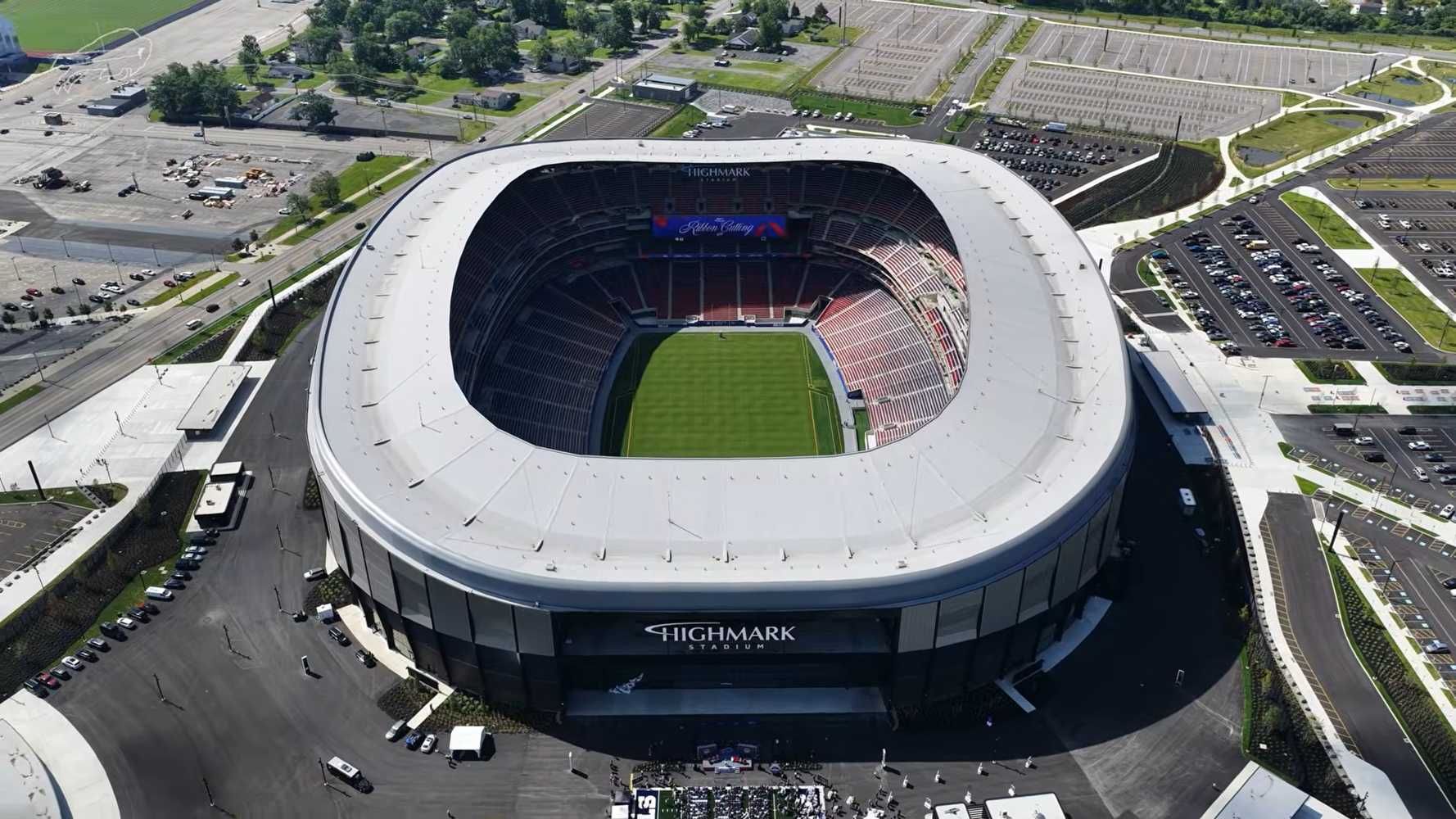
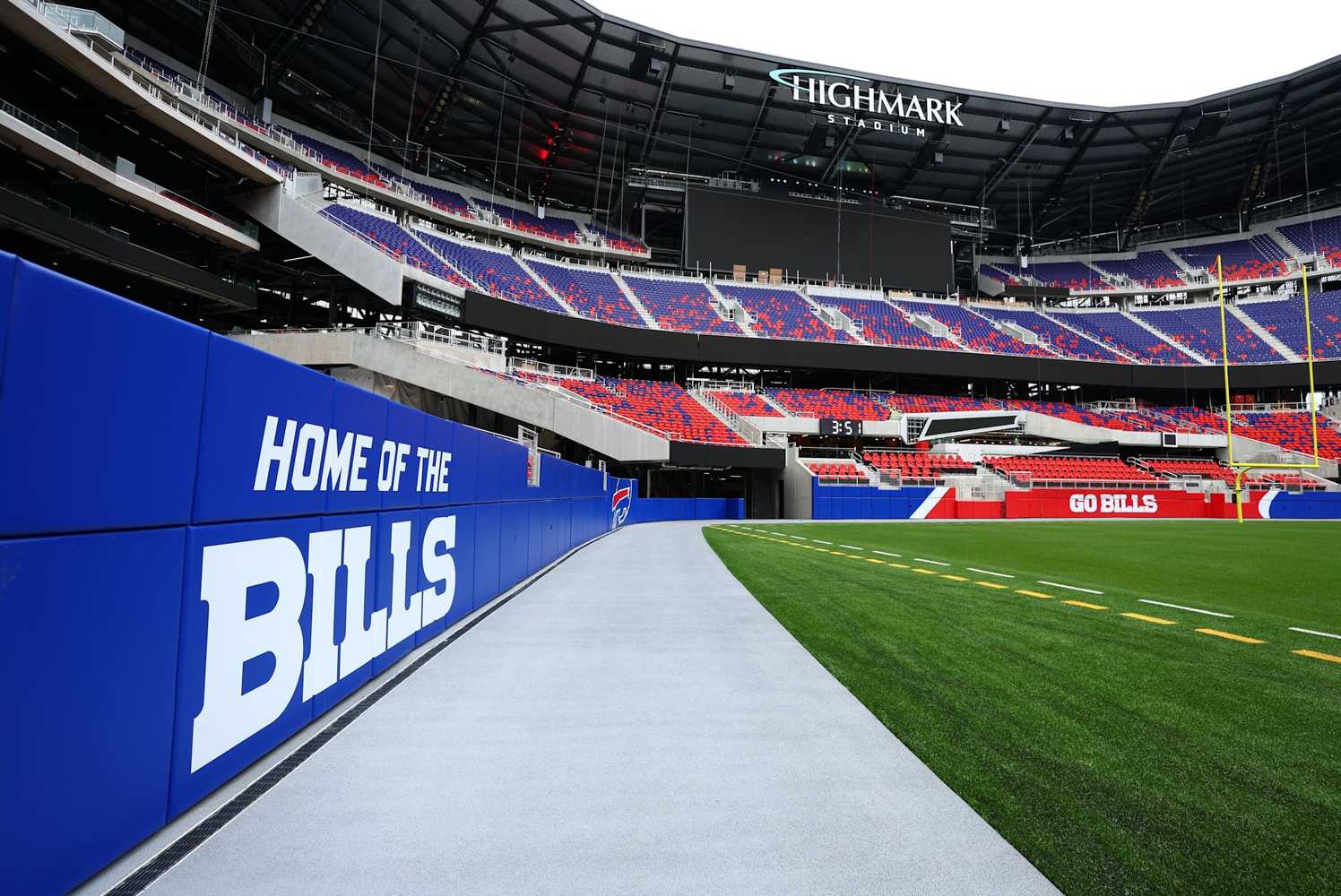
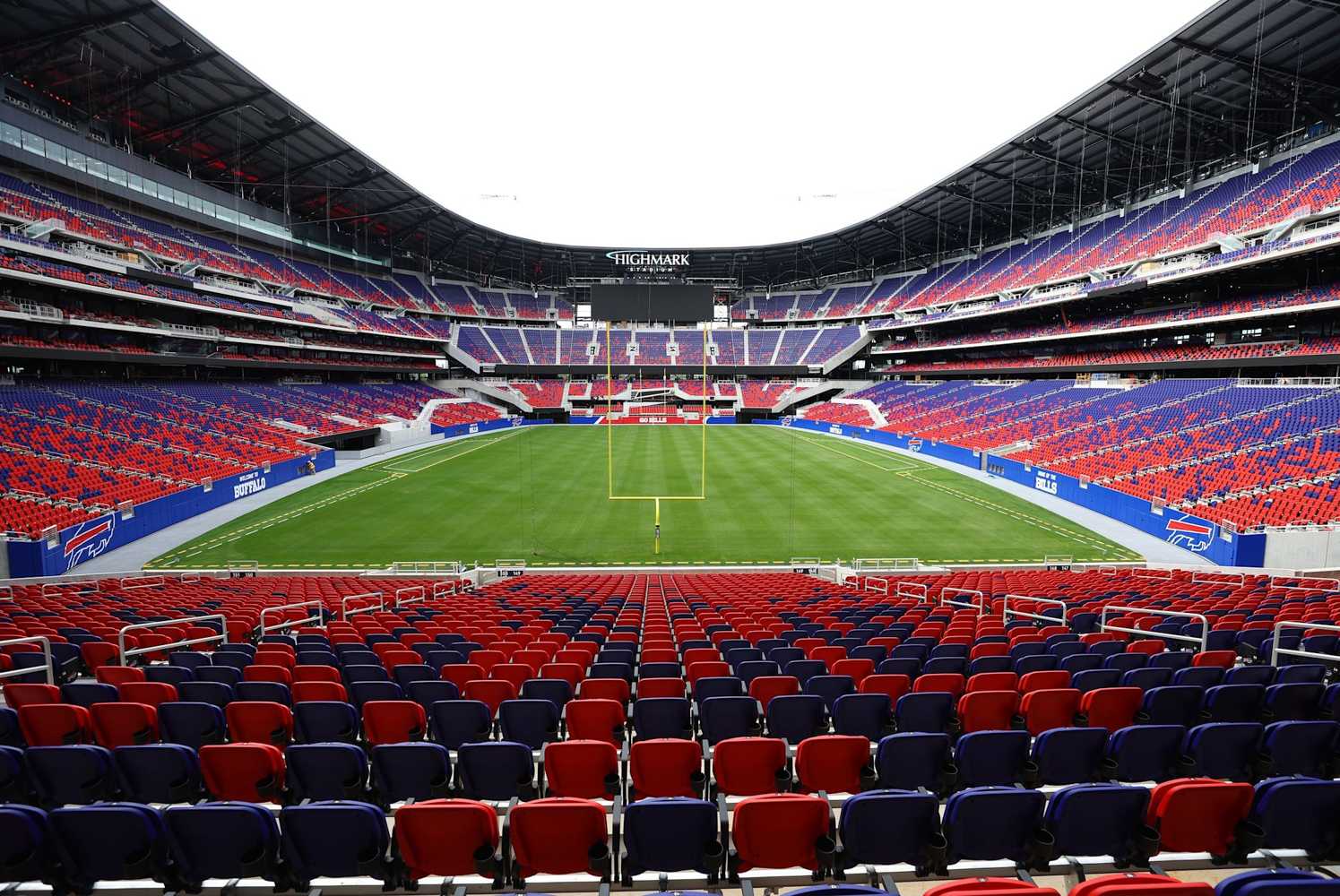
The seating bowl is arranged on multiple levels and fitted with foldable seats forming a blue-and-red mosaic. VIP suites and hospitality areas are located along the sidelines, while two large video boards are positioned behind the end zones.
The stands are steep (the new stadium is twice as tall as its predecessor) and provide good sightlines from every seat. Visitors also have access to a wide range of commercial and catering facilities.
The venue is equipped with Wi-Fi, a high-quality sound system, and other modern technologies. It represents a significantly higher standard than its predecessor, although with a capacity of just over 60,000 seats, it is the smallest stadium in the NFL.
The seating bowl is partially covered by a roof, which extends over 64% of the seats. The decision to forgo a fully enclosed roof – now an increasingly common feature in the NFL – was driven not only by high construction costs, but also by the fact that snowy broadcasts from Buffalo have long attracted attention and become part of the Bills’ identity.
To compensate for the lack of full weather protection in cold conditions, parts of the seating bowl are heated. The playing surface is also heated and features natural grass.
A unique heating system was also integrated into the roof, which – thanks to installed sensors – automatically responds to excessive snow accumulation. This solution is described as the largest snow-melting system in the world.
The enclosed form of the stadium, combined with the partial roof coverage, helps reduce wind gusts coming off Lake Erie and improves the acoustics inside the venue.
What is Highmark Stadium used for?
The venue is primarily used for American football and serves as the home of the Buffalo Bills, but it is also designed to host soccer matches, concerts, and other events.
Although the modern facility is capable of hosting events at the highest level, the lack of a fully enclosed roof, combined with Buffalo’s cold climate and strong competition from other venues, makes its chances of hosting a Super Bowl very limited.
Where is Highmark Stadium located?
The stadium is located in the southern suburb of Orchard Park, approximately 9 miles (14.5 km) from downtown Buffalo, right next to the former Bills stadium (on the opposite side of Abbott Road), whose demolition began a few months before the opening of the new arena.
The surroundings of the stadium are filled with extensive parking areas. In front of the main entrance, on the northeast side, is the Family Circle plaza, where three large-scale stainless-steel sculptures depicting a bison family – a bull, a cow and a calf – create a landmark symbol of the Buffalo Bills’ identity.
Advertisement
Pictures
-
23.06.2026 © Buffalo Bills 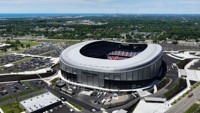
06.2026 © Buffalo Bills 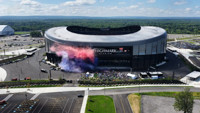
23.06.2026 © Buffalo Bills 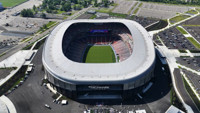
23.06.2026 © Buffalo Bills 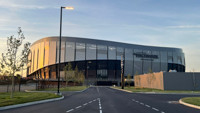
02.06.2026 © Buffalo Bills Stadium Updates 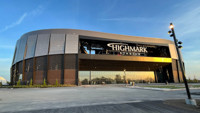
02.06.2026 © Buffalo Bills Stadium Updates 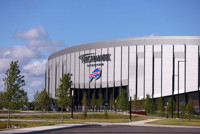
15.06.2026 © Bill Wippert, Buffalo Bills 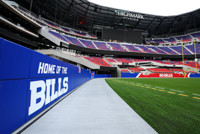
15.06.2026 © Bill Wippert, Buffalo Bills 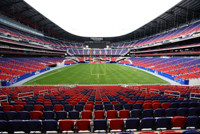
15.06.2026 © Bill Wippert, Buffalo Bills