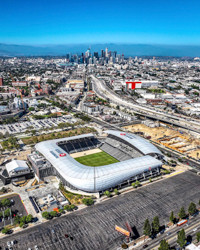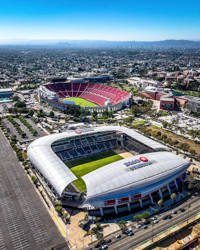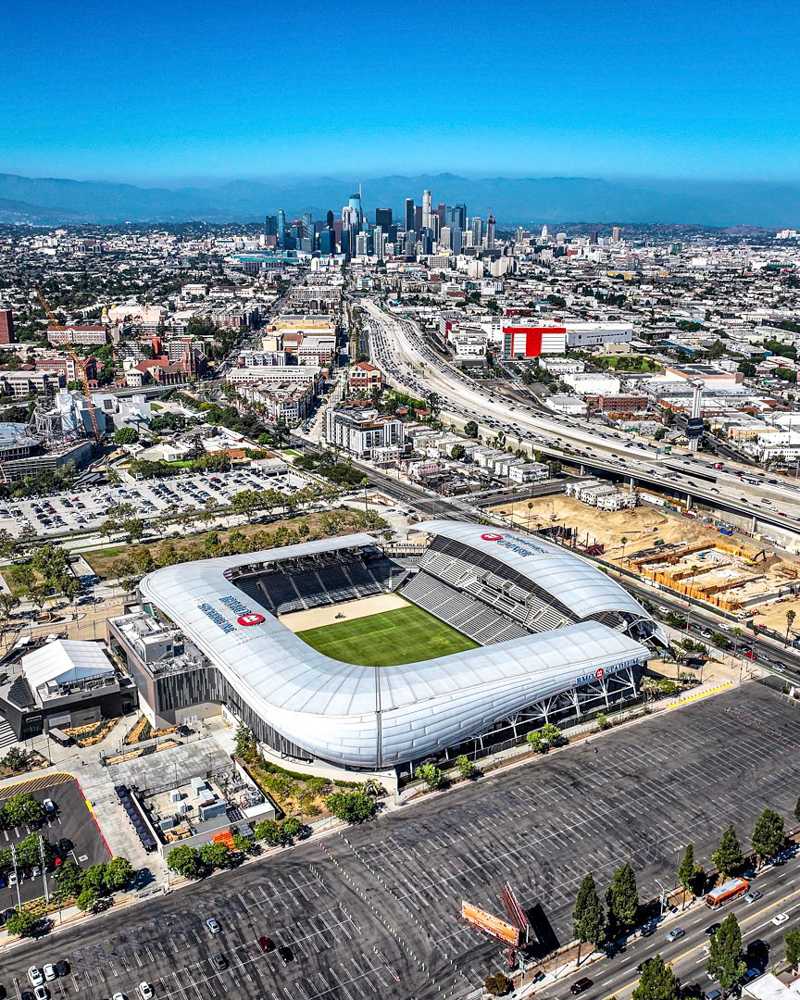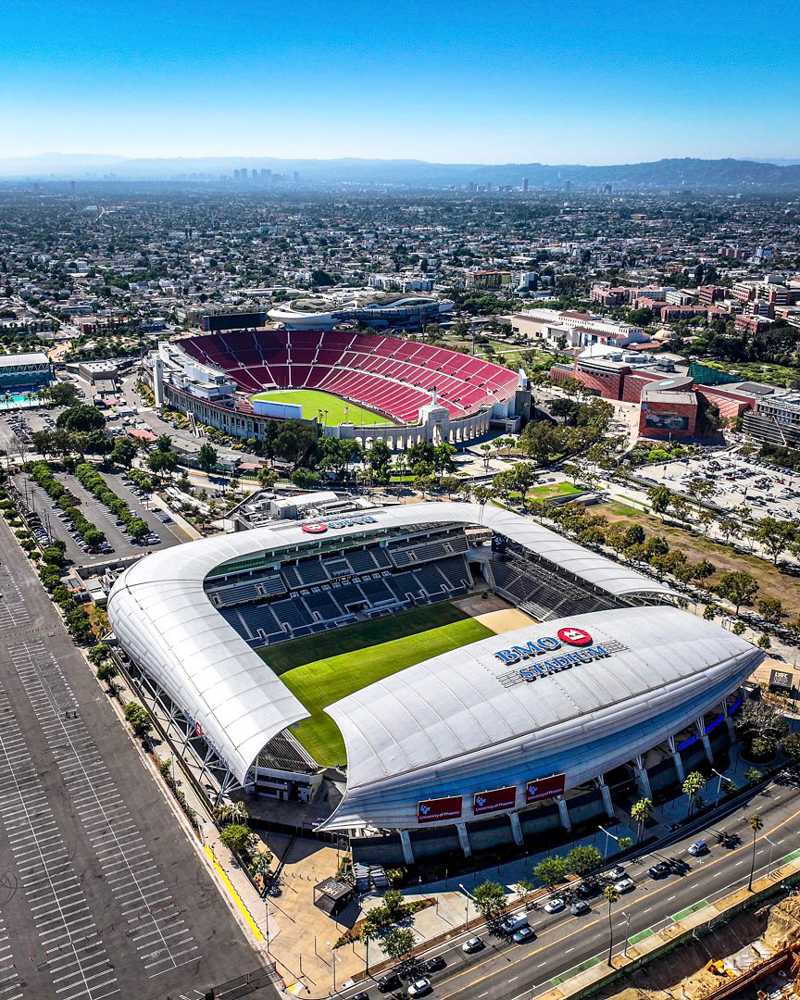
BMO Stadium

Capacity22 000
3,252 seats (North terrace)
Country United States of America
CityLos Angeles
ClubsLos Angeles FC
Other names Banc of California Stadium (2018–2023)
Inauguration 18/04/2018
Opening game 28/04/2018 (LAFC - Seattle Sounders, 1-0)
Construction 23/08/2016 - 21/04/2018
Cost $ 350 million
Design Gensler
Structural Engineer Thornton Tomasetti
Contractor PCL Construction Services
Address 3939 S Figueroa St, Los Angeles, CA 90037, USA

Advertisement

BMO Stadium – stadium description

Where does BMO Stadium get its name?

The name BMO Stadium comes from its title sponsor, the Bank of Montreal (BMO). The stadium was built on the site of Exhibition Place in Toronto, replacing the former Exhibition Stadium, and it officially opened in 2007. The Bank of Montreal purchased the naming rights to the stadium as part of a sponsorship agreement, a common practice for commercializing the names of sports venues.

BMO Field was originally designed as a soccer-specific stadium serving, among others, the Toronto FC club and the Canadian national soccer team. It has hosted matches such as the FIFA U-20 World Cup and other significant sporting and cultural events.

During the 2026 FIFA World Cup, the stadium will use the neutral name Toronto Stadium, in compliance with FIFA regulations that eliminate commercial names during international tournaments to avoid promoting sponsors not affiliated with the event organizers.

Overall, the name BMO Stadium reflects a long-term sponsorship relationship with the Bank of Montreal, linking the venue both financially and in branding, which is important for marketing and operational purposes.

Where is BMO Stadium located?

BMO Stadium, also known as BMO Field, is located in Toronto, Ontario, Canada. It sits within Exhibition Place, near the western shore of Lake Ontario. It is an important sports and cultural venue in Canada's largest city and the capital of Ontario.

The stadium was built on the site of the former Exhibition Stadium and opened in 2007. Its location provides easy access to public transportation, including the GO Exhibition station right next to the stadium, as well as good connections to major highways and Toronto Pearson International Airport.

Thanks to its location, the stadium is well connected and serves as a central venue for Toronto FC and Toronto Argonauts games, as well as important sporting and cultural events in the city.

What is the capacity of BMO Stadium?

The current seating capacity of BMO Stadium, also known as BMO Field, is approximately 30,991 spectators. Originally designed mainly as a soccer venue, its capacity was increased during renovations to meet international event standards, including those of the FIFA World Cup 2026.

Within the recent expansions and modernizations, the stadium gained new features such as upper decks and a roof which improved spectator comfort and increased seating numbers. There are plans for a further temporary expansion to around 45,736 seats, making it one of Canada’s largest soccer stadiums.

In summary, the regular capacity is about 31,000 seats, with the possibility of temporary expansion to more than 45,000 seats for major international events.

When was BMO Stadium opened?

BMO Stadium, also known as BMO Field, officially opened in 2007. The first match took place on April 28, 2007, between Toronto FC and Kansas City Wizards. The grand opening ceremony was held on May 12, 2007. The stadium was constructed on the site of the former Exhibition Stadium at Exhibition Place in Toronto. Since opening, BMO Field has been the main venue for Toronto FC matches and other sporting and cultural events. It has gone through several renovations to increase its capacity and functionality to meet the standards of major international events, including the FIFA World Cup 2026.

Who uses BMO Stadium daily?

BMO Stadium, or BMO Field, is primarily used daily by the Toronto FC soccer club competing in Major League Soccer (MLS). Additionally, it serves as the home stadium for the Toronto Argonauts, a team in the Canadian Football League (CFL).

The stadium is also used by the Canadian national soccer team for international matches and hosts various sports events, concerts, and other cultural activities. This makes BMO Field a multifunctional venue combining sports with broad entertainment. During the season, Toronto FC and Toronto Argonauts are the main regular users of the stadium.

What events have taken place at BMO Stadium?

BMO Stadium has hosted a wide range of sporting and cultural events. The most significant are the regular Toronto FC soccer matches since the stadium’s opening in 2007. It has also been the venue for Canadian national soccer team matches and international tournaments such as the FIFA U-20 World Cup.

Besides soccer, BMO Field is the home stadium for the Toronto Argonauts CFL team, where Canadian football games are held. The stadium has also hosted special events like the NHL Centennial Classic — an outdoor ice hockey game held in 2017.

Furthermore, BMO Stadium serves as a venue for concerts and open-air events, attracting both sports fans and music and culture lovers, making it a multifunctional sports and entertainment facility in Toronto.

What does the architecture of BMO Stadium look like?

The architecture of BMO Stadium is characterized by a modern and functional design primarily aimed at soccer, originally built for the FIFA U-20 World Cup in 2007 and the newly established Toronto FC club. Located at Exhibition Place in Toronto, the stadium is designed as a multifunctional venue also suitable for Canadian football.

Between 2014 and 2016, expansions added features typical of modern soccer and American football stadiums, such as a Premier League-style roof, raised stands, VIP clubs, and comfortable spaces for players. Architects aimed to blend aesthetics with functionality. The pitch uses a hybrid surface combining natural grass and synthetic turf to accommodate various sports.

BMO Stadium

Preparations for the 2026 FIFA World Cup foresee further architectural development, including increasing capacity to about 45,000 seats through expanded stands, adding new VIP suites and terraces, updating display screens and Wi-Fi networks. The expansion project was developed in cooperation with the renowned architecture firm Gensler.

BMO Stadium’s architecture combines modern minimalism with practical functionality, ensuring good visibility, comfort, and accessibility for spectators, while fitting into the urban landscape of Exhibition Place in Toronto as an icon of city modernity and sport.

What amenities and technological solutions does BMO Stadium have?

BMO Stadium offers a wide range of amenities and modern technological solutions that enhance spectator comfort and venue functionality. The stadium is equipped with state-of-the-art sound and LED lighting systems, enabling world-class visual and audio experiences during sports and cultural events.

For fans, there are comfortable seats with good sightlines, VIP lounges, and exclusive clubs for sponsors and partners. The stadium also features extensive Wi-Fi coverage, allowing constant internet access and social media usage during matches.

Modern video screens provide live broadcasts, replays, and additional information, increasing event interactivity. Efficient ticketing systems and mobile apps facilitate quick ticket purchase and scanning.

Additionally, BMO Stadium has developed transport and parking infrastructure to support accessibility. Environmentally friendly solutions like energy-saving systems and water management are implemented, making BMO Field a modern, comfortable, and user-friendly sports and entertainment facility.

How can you get to BMO Stadium and what transport options are available?

BMO Stadium in Toronto is accessible by various modes of transport, ensuring convenient access for spectators and event attendees. It is located in the Exhibition Place district near major roadways, facilitating travel by car and public transit.

Parking lots are available near the stadium, though during major events, alternative transport is recommended due to limited parking. Nearby systems for car-sharing and public bikes promote sustainable transportation.

Public transport is one of the most convenient options: The nearby Exhibition subway station and bus stops serve multiple city and regional lines. During event seasons, special shuttle buses operate from key city points or park-and-ride locations directly to the stadium.

For cyclists, there are bike lanes and bike stations to securely park bicycles, encouraging an eco-friendly and healthy mode of transport. Overall, transportation to BMO Stadium is well-organized, offering several options to reach the venue comfortably.

What sporting events take place at BMO Stadium?

BMO Stadium primarily hosts soccer matches for Toronto FC, competing in Major League Soccer (MLS). The stadium is also home to the Toronto Argonauts, a team in the Canadian Football League (CFL), where Canadian football games are played.

Besides club matches, the stadium hosts Canada’s national soccer team games, including qualifiers for international tournaments and youth competitions like the FIFA U-20 World Cup. BMO Field has also been the venue for major international sporting events such as the NHL Centennial Classic — a special outdoor ice hockey game held in 2017.

Additionally, the stadium is equipped to host other sporting events and exhibitions thanks to its multifunctionality and modern features, allowing it to quickly accommodate different sports and event types.

Are concerts or other cultural events held at BMO Stadium?

BMO Stadium hosts concerts and other cultural events that attract large audiences. Well-known artists and popular bands from various genres have performed or planned performances at the stadium. Its design accommodates large outdoor concerts with modern sound systems, lighting, and spacious areas that enable thousands of fans to enjoy comfortably.

Beyond concerts, BMO Stadium also holds festivals, themed events, and entertainment activities, making it a versatile cultural venue in Toronto. It regularly hosts diverse events, extending its role beyond sports to promote culture and high-level entertainment.

Upcoming events include concerts by well-known bands and artists, mainly organized during the summer and autumn seasons, attracting both residents and tourists. This positions BMO Stadium as an important cultural landmark in Toronto.

What attendance records have been recorded at BMO Stadium?

The highest attendance record at BMO Stadium is approximately 31,000 spectators, nearly filling the stadium’s capacity after its latest expansions and renovations. Full attendance was recorded during significant Toronto FC matches, especially MLS playoffs and international events like Canadian national team qualifiers for major soccer tournaments.

At certain special events, including major matches and concerts, attendance approached the stadium’s maximum capacity. Official data indicate that around 31,000 is the peak attendance historically.

Preparations for the 2026 FIFA World Cup include plans to temporarily increase stadium capacity to over 45,000 seats, potentially setting new attendance records during the biggest soccer events in BMO Stadium’s history.

Has BMO Stadium undergone renovations or expansions?

To date, BMO Stadium has experienced two major phases of renovation and expansion. Between 2014 and 2016, an upper deck was added to the east side, increasing capacity to over 30,000 seats. This phase also included installing a roof over the stands, improving spectator comfort in various weather conditions. The playing field was extended to accommodate Canadian football, making the stadium home to the Toronto Argonauts from the 2016 CFL season.

The upgrades also encompassed facility expansions, including new VIP suites and refurbished player and technical areas. These changes transformed BMO Stadium into a modern soccer venue and a multifunctional sports center for Toronto.

So far, the stadium has not undergone the larger expansions intended for the FIFA 2026 World Cup; such works are planned but not yet completed. All renovations so far focused on improving capacity, comfort, and venue versatility.

What are the future plans for BMO Stadium?

Future plans for BMO Stadium primarily involve expansion and upgrades to meet the requirements of the 2026 FIFA World Cup, which will be hosted by Canada, the United States, and Mexico. The capacity is expected to be increased to over 45,000 seats through the addition of new stands and expansion of existing ones.

Modern amenities such as additional VIP suites, viewing terraces, advanced LED lighting, and sound systems along with enhanced technological infrastructure—including video screens and Wi-Fi—are planned. The goal is to make BMO Stadium an even more modern, comfortable, and versatile facility.

Besides the sports-related developments, the stadium is set to further evolve as an important cultural and entertainment hub, hosting concerts, festivals, and other significant community events. These investments aim to maintain BMO Field’s position as one of Canada’s premier stadiums and a prominent venue on the global stage.

Advertisement

Pictures

Related news

2023

2022

2021

2020

2019

2018