 StadiumDB
Aloha Stadium – until 2025
| Capacity | 50 000 |
|---|---|
| Country | United States of America |
| City | Honolulu |
| Clubs | Hawaii Rainbow Warriors |
| Retire year | 2025 |
| Inauguration | 12/09/1975 |
| Construction | 1972–1975 |
| Cost | $37 M |
| Design | Charles Luckman Associates |
| Contractor | Hawaiian Construction and Dredging |
Advertisement
Aloha Stadium – historical stadium description
What was the Aloha Stadium like in brief?
Located near Pearl Harbor, Aloha Stadium was not only the largest stadium in Hawaii, but also a true rarity on a global scale. It is difficult to find another venue of similar size in which more than half of the seating consisted of movable sections.
The modules were moved using technology developed by NASA for the Apollo program. The system allowed the seating configuration to be changed from football to baseball (and vice versa).
For many years, the stadium hosted the annual Pro Bowl (the NFL all-star game), the Hula Bowl (a college football all-star game), as well as numerous other events. The primary tenant was the Hawaii Rainbow Warriors, the college football team representing the University of Hawaiʻi at Mānoa.
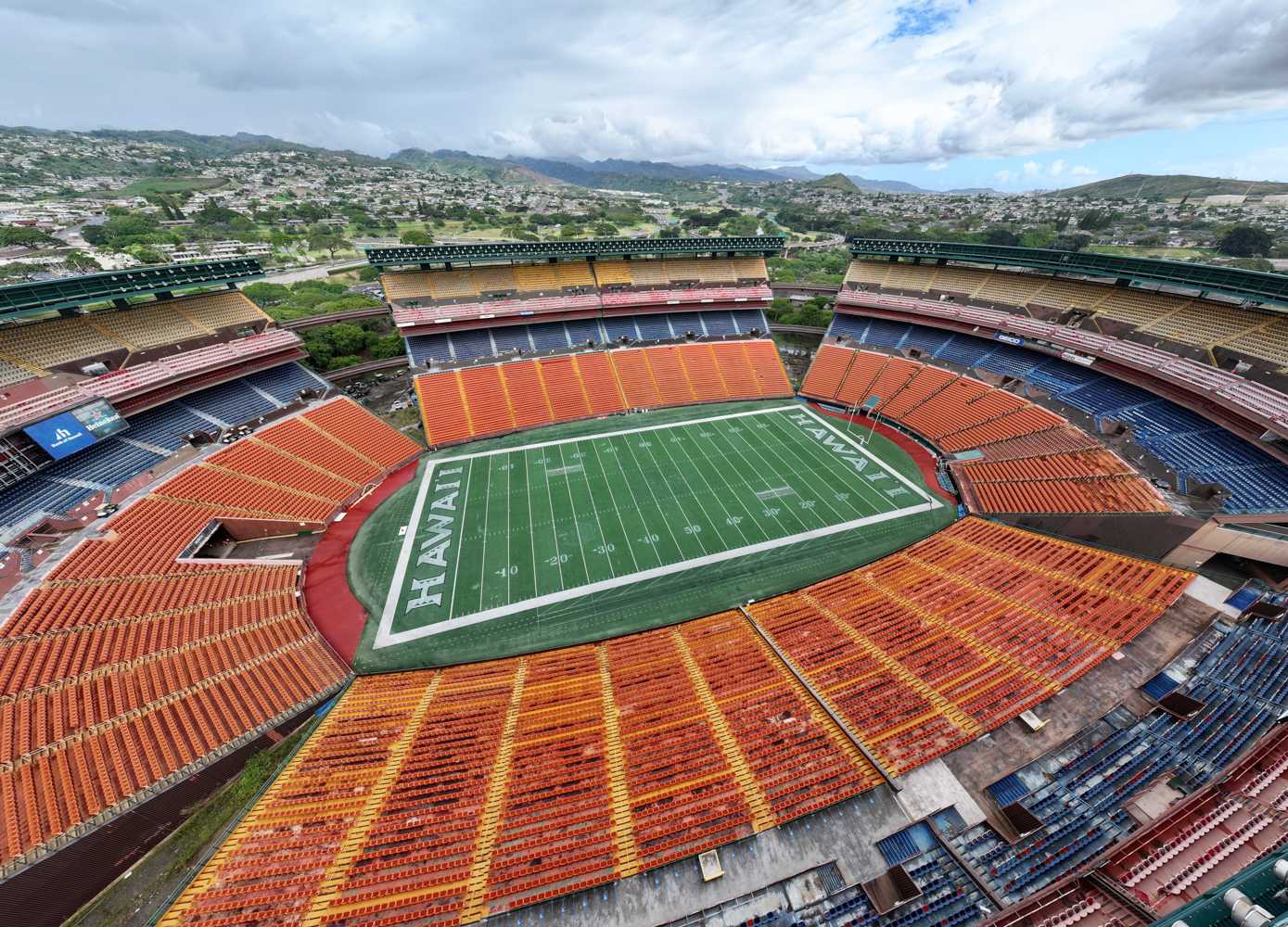
The stands were constructed from weather-resistant corten steel. However, in Hawaii’s humid climate, corrosion progressed over time, ultimately leading to the stadium’s closure at the turn of 2020 and 2021.
A new stadium is to be built on the site of Aloha Stadium. Before all details of the project were finalized, the abandoned venue remained standing for several more years, reaching its 50th anniversary in 2025. Demolition eventually began at the turn of 2025 and 2026, while the opening of the new stadium is planned for 2029.
How was Aloha Stadium built?
What venue previously served as Hawaii’s main stadium?
Before Aloha Stadium was constructed, Honolulu Stadium served as Hawaii’s main venue. It opened in 1926 and had a capacity of 16,000 spectators. The stadium was multi-purpose, with enough space within the stands to accommodate either football or a baseball field.
How did the construction of Aloha Stadium come about?
The wooden stands of Honolulu Stadium proved to be short-lived, and after World War II the idea of building a replacement became a recurring topic in Hawaii. Early attempts to carry out the project, however, were unsuccessful.
It was not until 1965, when the old stadium was deemed a fire hazard, that city and state authorities commissioned a study on the construction of a new venue.
A committee was formed, chaired by Morley Theaker. In February 1966, it recommended a site in Hālawa, on the western outskirts of Honolulu, near Pearl Harbor. Much of the land belonged to the federal government, which had recently declared it surplus property.
In 1967, the city purchased a 58-acre site from the federal authorities, along with additional land from other owners. In early 1968, negotiations began with architectural firms for the design of the new stadium. In June 1968, a contract was signed with Charles Luckman Associates.
According to the initial plans, the new stadium was to accommodate approximately 35,000 spectators. The design by Charles Luckman Associates included movable stands that could be repositioned to switch between football and baseball configurations.
In early 1969, Frank Fasi became the new mayor of Honolulu. Under his administration, the city reduced its involvement in the project, while the state authorities and Governor John Burns assumed the leading role. At his initiative, funding for the project was increased and the planned capacity was raised to 50,000 seats.
When was Aloha Stadium built?
The main contractor for the project was Hawaiian Construction and Dredging. Construction took place between 1972 and 1975, at a cost of $37 million. The new venue was named Aloha Stadium – aloha is the most popular word in the Hawaiian language, meaning both “hello” and “goodbye,” as well as love, affection, or peace.
The stadium was officially inaugurated on September 12, 1975, and the following day hosted its first game, in which the Hawaii Rainbow Warriors lost the season opener to Texas A&I, 9–43.
After Aloha Stadium opened, the old Honolulu Stadium was demolished at the end of 1976.
What was Aloha Stadium like?
Aloha Stadium had a total seating capacity of 50,000. Some of the seats were movable, allowing the stadium’s layout to be adjusted for football or baseball. Thanks to these movable sections, the stadium could serve the same multi-purpose role as the former Honolulu Stadium.
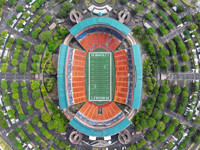
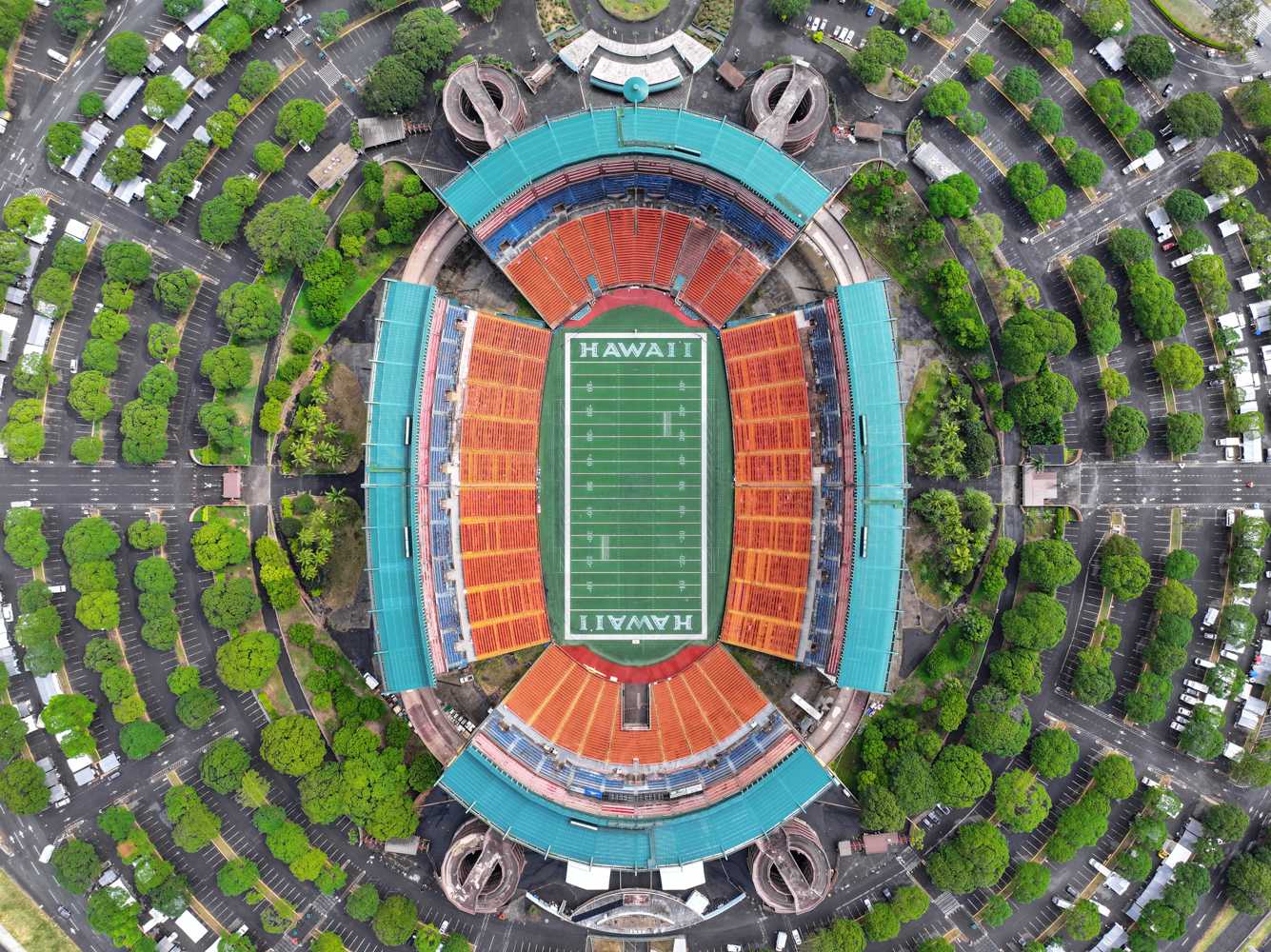
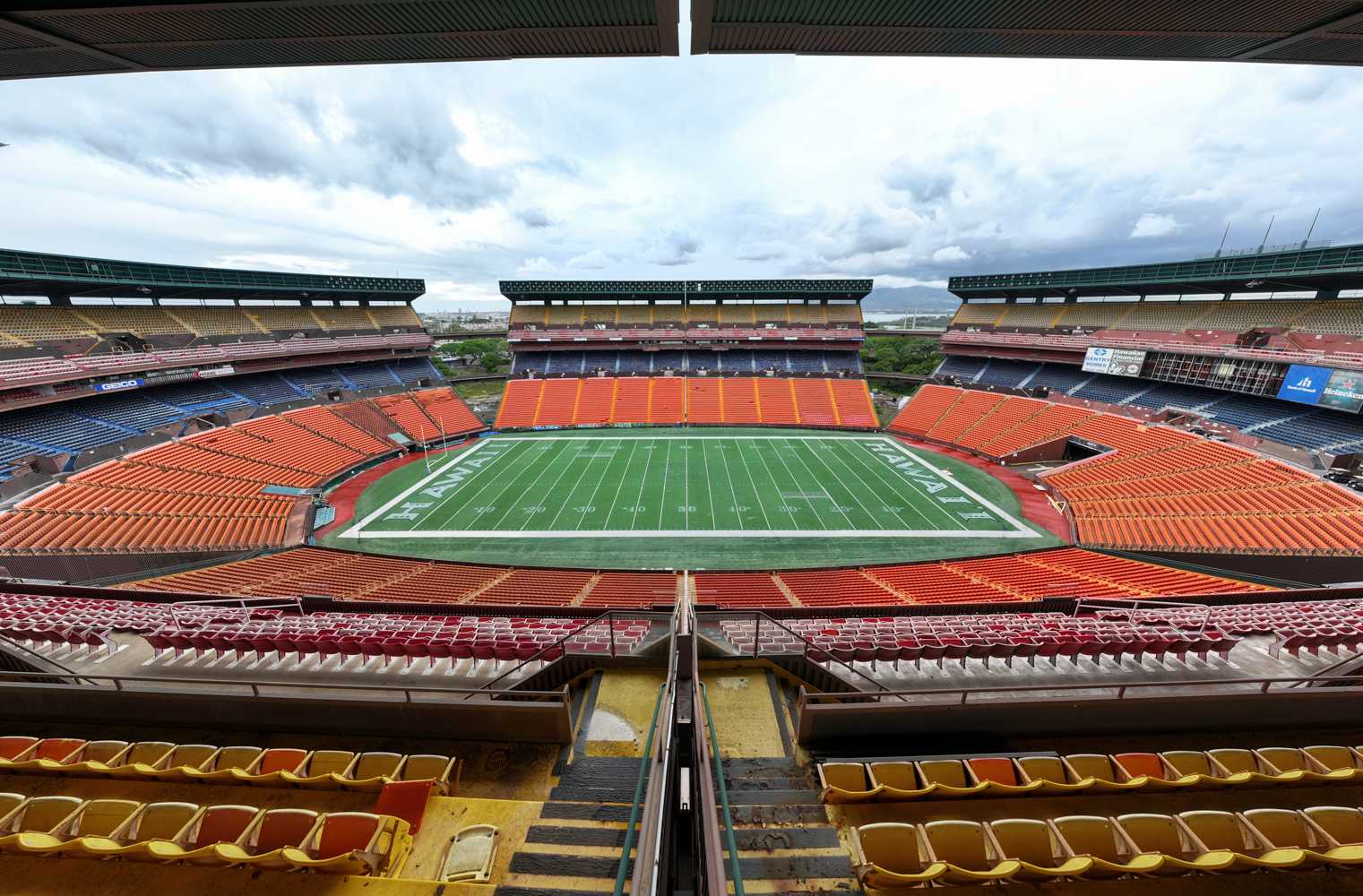
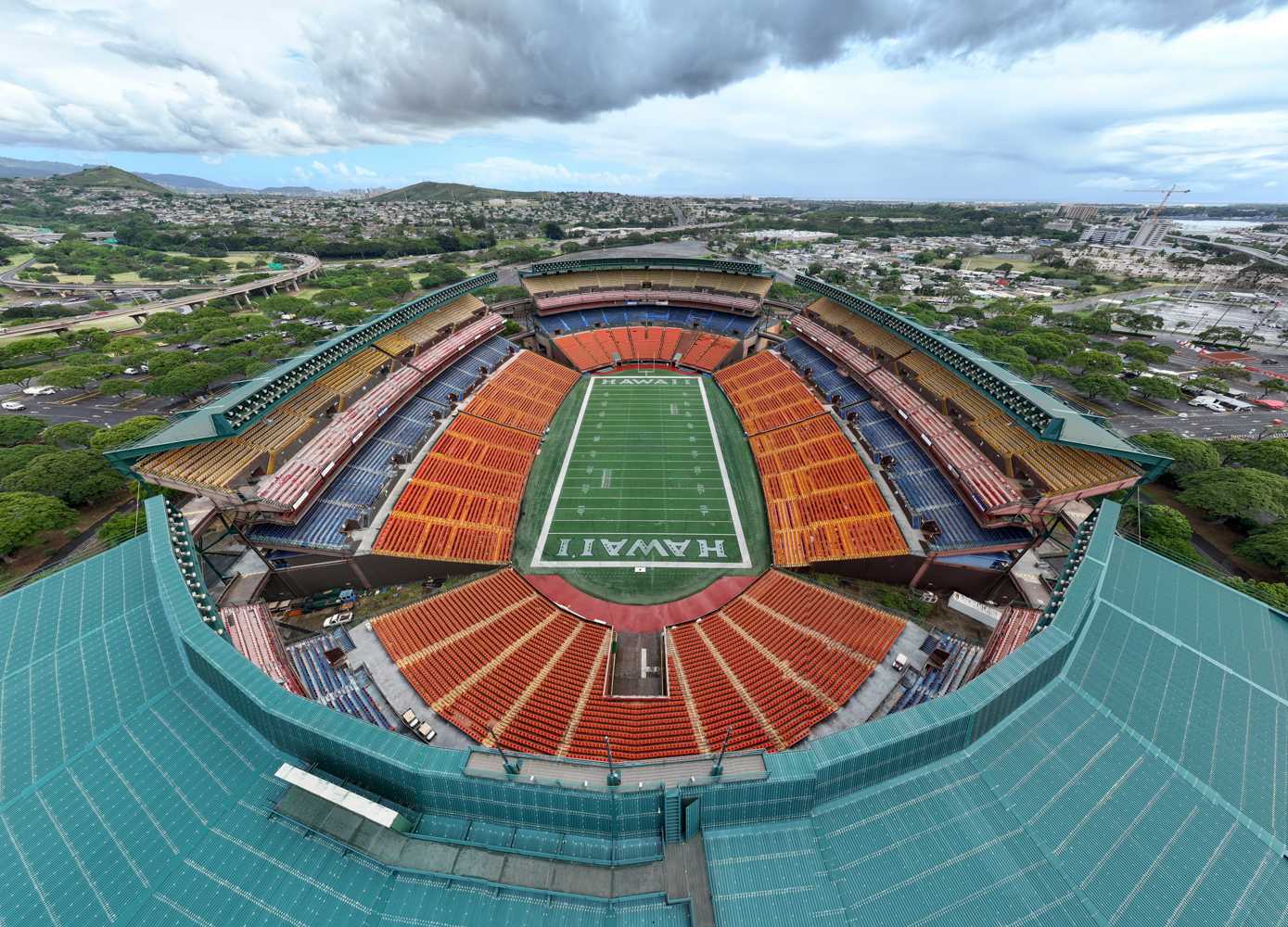
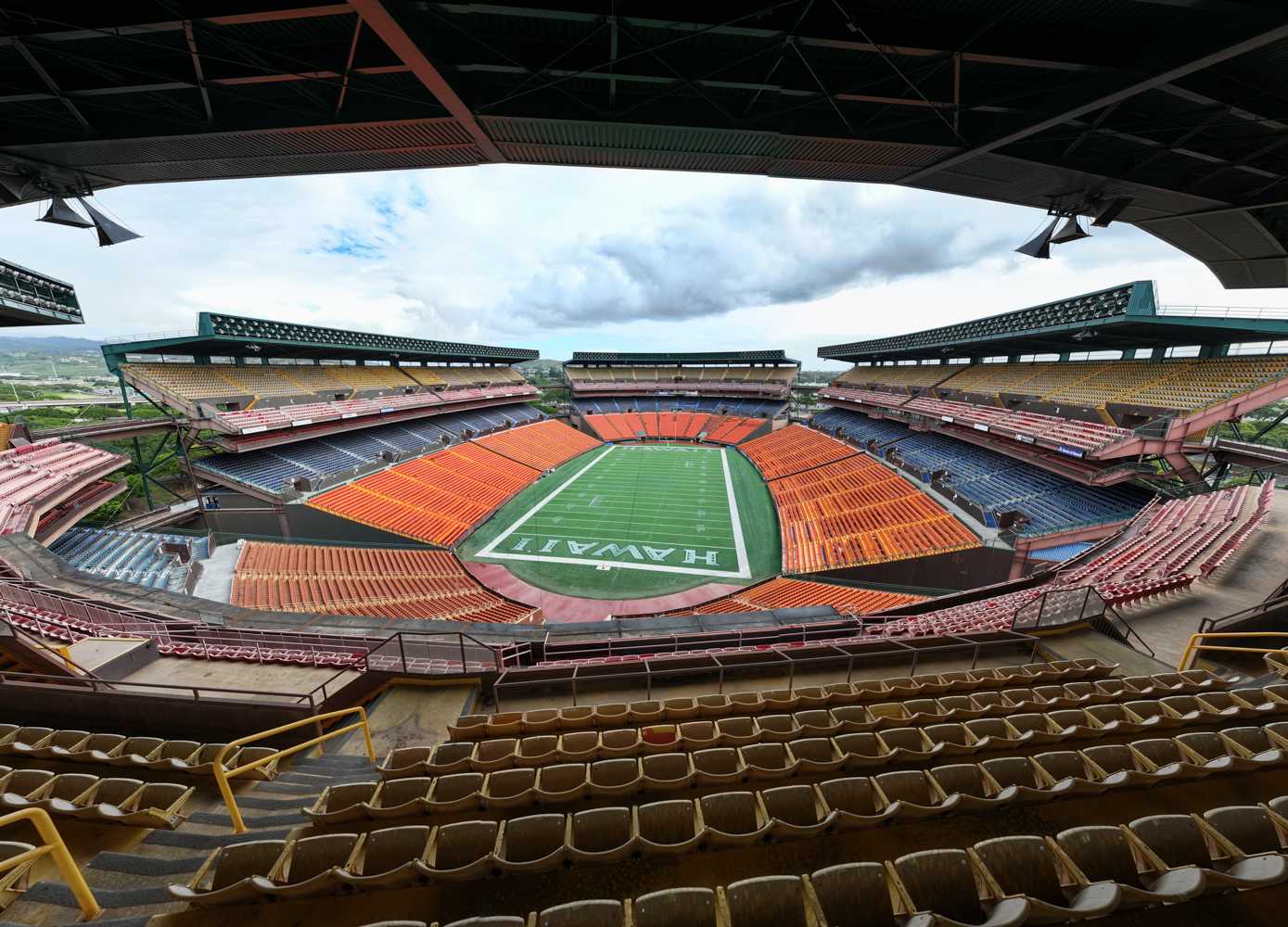
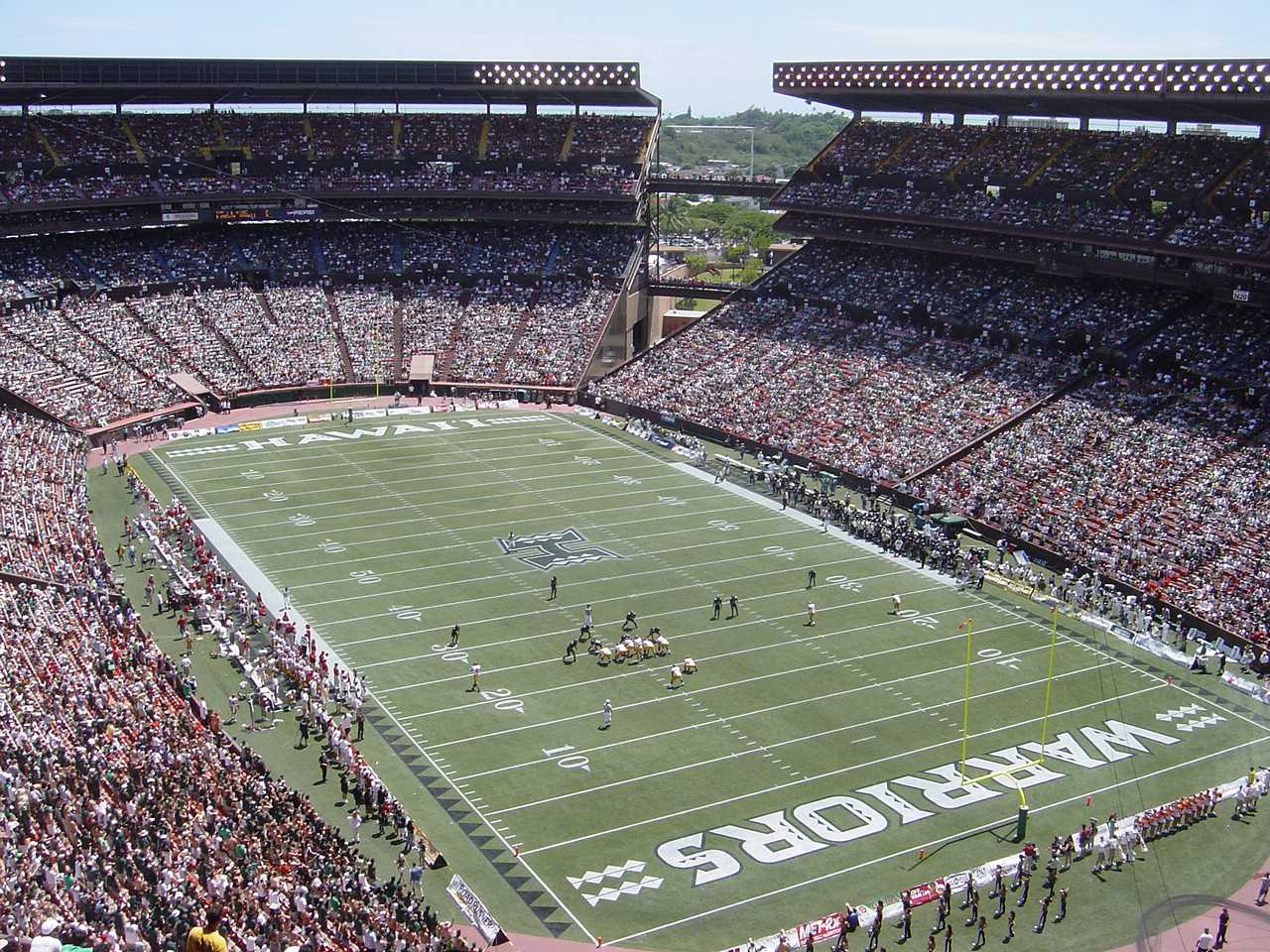
The upper tiers were covered, with floodlights mounted along the edge of the roof. The north and south stands each held 11,000 spectators, while each of the four movable segments accommodated up to 7,000 people. The playing field had an artificial turf surface.
The stadium’s structure was largely made of steel. The stands were divided into two levels, including a narrow balcony suspended under the upper tier, and were fitted with folding seats.
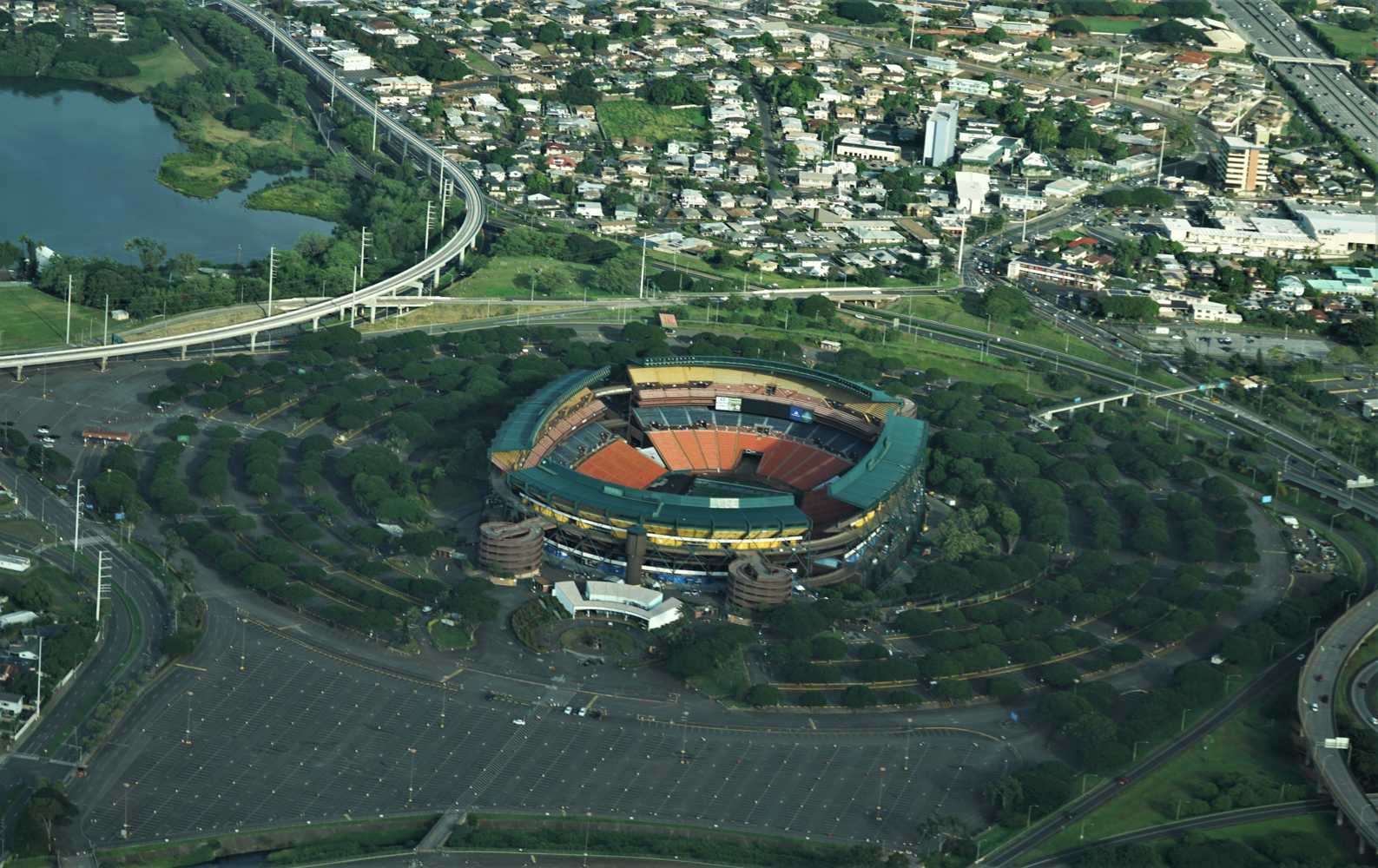
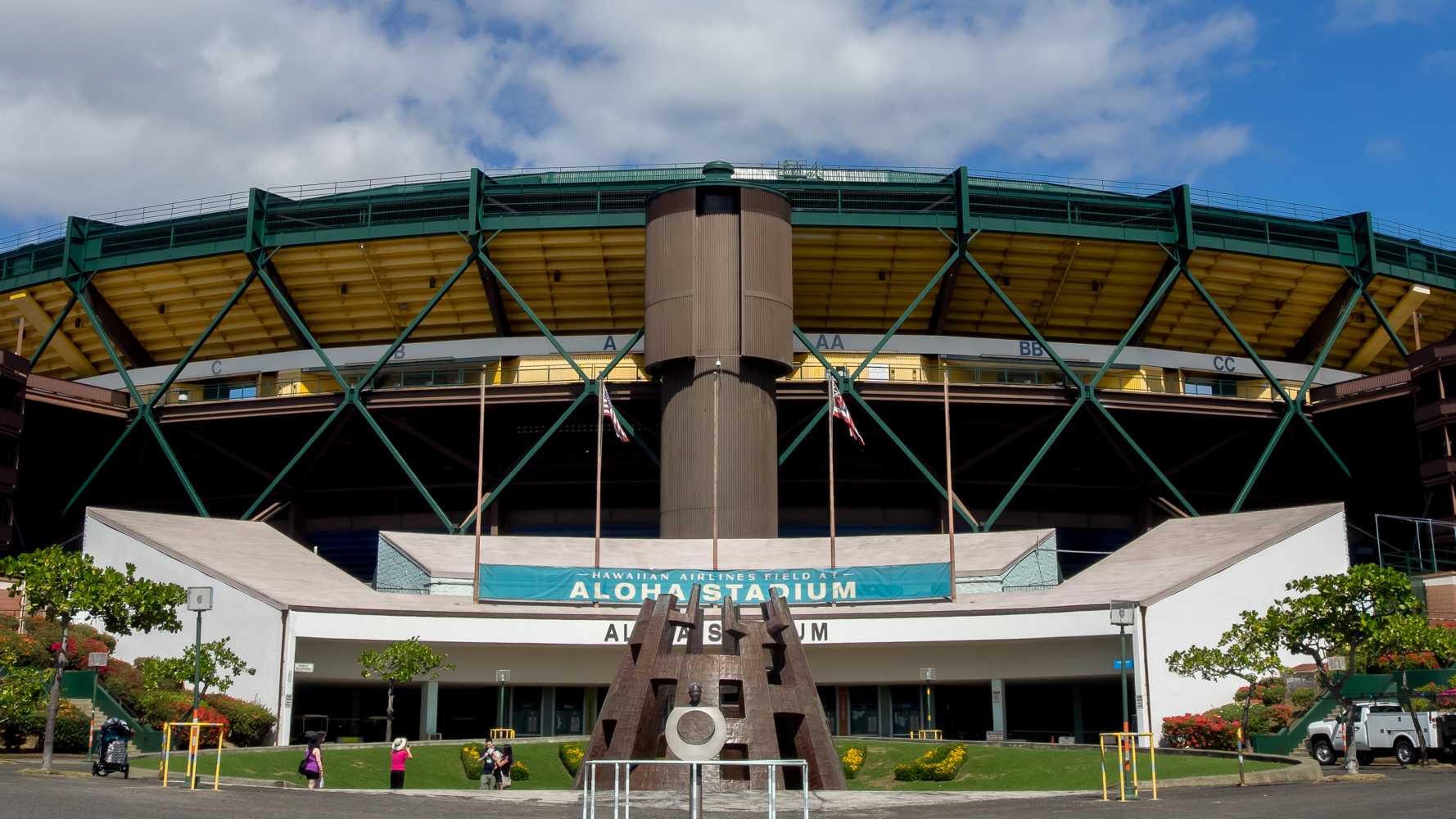
On the exterior, four spiral ramps at the corners provided access to the upper tiers. A circular tower with an elevator was also located at the south stand. The stadium was surrounded by parking lots, with a total capacity of nearly 8,000 spaces.
The main entrance was on the south side, featuring a circular plaza with the abstract sculpture Volcano by Hawaiian artist Satoru Abe (1981) and a bust of Governor John Burns (1980), who had been instrumental in the stadium’s construction and passed away a few months before its opening.
The stadium was owned by the state authorities and managed on their behalf by the Hawaii Stadium Authority.
How did the seating shift system at Aloha Stadium work?
Aloha Stadium was equipped with a unique system that allowed the seating configuration to be changed from football (seats arranged for a rectangular field) to baseball (a more square layout).
The stands were divided into six modules, four of which (two on the east and two on the west) were movable – in total, 28,000 of the stadium’s 50,000 seats were on mobile sections.
To allow the massive segments (each weighing 1,600 tons) to be moved, an air cushion system was used. When inflated, the cushions lifted the structure, enabling it to be shifted with much less force. Each movable section could be repositioned in just half an hour.
The entire mechanism responsible for moving the stands was built by Rolair Systems, a company associated with NASA, using technology derived from the Apollo program.
It should be emphasized that the seating reconfiguration system was a remarkable engineering achievement and unique even on a global scale – although many stadiums have movable stands, it is difficult to find another venue of similar size in which such a large portion of the seating consisted of mobile segments.
To reduce operating costs, from 2007 the stands remained in the football configuration only. The bridging platforms in the gaps between sections (two in each corner – upper and lower), which had previously been removed when switching to the baseball layout, were permanently fixed in place.
Where was Aloha Stadium located?
The stadium was located in Hālawa, on the western outskirts of Honolulu (about 8 miles from downtown and 3 miles from the international airport), near a major highway interchange and Pearl Harbor (close to the Pearl Harbor National Memorial).
On June 30, 2023, when the stadium was already out of use, the Hālawa station opened nearby on Honolulu’s newly built light rail line (Skyline).
What events took place at Aloha Stadium?
Which teams played at Aloha Stadium?
Hawaii Rainbow Warriors
The primary tenant of Aloha Stadium was the Hawaii Rainbow Warriors, the college football team representing the University of Hawaiʻi at Mānoa. The team initially competed as an independent, joined the Western Athletic Conference in 1979, and moved to the Mountain West Conference in 2012.
The Rainbow Warriors won four Western Athletic Conference titles, including one outright (in the 1992 season) and three shared with other teams (1999, 2007, and 2010).
The team played at the stadium from its opening (the first game was held the day after the official inauguration) until its closure at the turn of 2020 and 2021, after which the team temporarily moved to the Clarence T. C. Ching Athletics Complex while awaiting the construction of the new Aloha Stadium.
Hawaii Islanders
The stadium also hosted the Hawaii Islanders, a baseball team competing in the Pacific Coast League (Triple-A) within Minor League Baseball. After relocating to Aloha Stadium, the team served as a farm team for the San Diego Padres (until 1982), then the Pittsburgh Pirates (1983–1986), and the Chicago White Sox (1987).
The Islanders won the Pacific Coast League championship in their final season at the old Honolulu Stadium (1975), and repeated this success in their first season at Aloha Stadium (1976) – but it was their last league championship. In 1988, the Hawaii Islanders moved to the mainland, becoming the Colorado Springs Sky Sox.
Other teams
After the stadium opened, it also hosted The Hawaiians, a team in the World Football League, a new professional American football league that started in 1974. The team played only four games at Aloha Stadium before the league folded.
For a single season (1977), there was also a soccer team, Team Hawaii, which played at Aloha Stadium and competed in the North American Soccer League – the top soccer league in the United States at the time. Notably, it was likely the first fully professional soccer club in the Pacific region.
Which prestigious football events were held at Aloha Stadium?
Aloha Stadium was known as the traditional host of the Pro Bowl – the NFL’s annual all-star game. The Pro Bowl took place in Hawaii from 1980 to 2016 (except in 2010 and 2015).
The stadium also hosted the Hula Bowl, a college football all-star game, which was held there in 1976–1997, 2006–2008, and 2020–2021. The Hula Bowl had previously been played at the old Honolulu Stadium (1960–1975).
Other postseason college football games were also played at the stadium, including the Aloha Bowl (1982–2000), Oʻahu Bowl (1998–2000), and Hawaii Bowl (2002–2019).
What other sports competitions took place at Aloha Stadium?
The stadium also hosted other football games (such as NFL preseason matches), baseball (including Major League Baseball regular-season games), soccer (including the inaugural Pan-Pacific Championship and an exhibition tournament featuring Pelé), and rugby league (two U.S. test matches against Samoa).
Aloha Stadium also held combat sports events, motocross races, monster truck shows, and the finish of the Great Aloha Run.
What non-sporting events took place at Aloha Stadium?
Aloha Stadium hosted numerous concerts by internationally renowned artists, including Stevie Wonder, Frank Sinatra, Michael Jackson, Gloria Estefan, Whitney Houston, The Rolling Stones, Mariah Carey, Celine Dion, U2, Bruno Mars, Guns N’ Roses, and Eminem.
The stadium also served as a venue for public high school graduation ceremonies.
Since 1979, the parking lots at the stadium regularly hosted the Aloha Stadium Swap Meet & Marketplace – the largest flea market in Hawaii, with hundreds of stalls attracting both residents and tourists.
Why was Aloha Stadium closed?
The stadium’s metal seating structures were made of corten steel, which, after forming a protective patina, was intended to provide increased resistance to weathering. In practice, however, in Hawaii’s humid, subtropical climate and salty air, the corrosion process at Aloha Stadium never stopped.
Due to the ongoing degradation, concerns arose about the safety and durability of the structure, and the stadium even earned the nickname “The Rust Palace.” Numerous repairs were carried out as early as the 1980s and 1990s, including replacement of roof elements.
As corrosion continued, plans were considered to replace the aging facility. In 2017, the first study on a potential stadium redevelopment and surrounding area plan was conducted. It also included an initial concept for Aloha Stadium’s successor, prepared by Populous.
In December 2020, a decision was made to close the stands. On January 31, 2021, the Hula Bowl was still held at the stadium, but without spectators, marking the last event at Aloha Stadium.
When will the new Aloha Stadium be built?
The process leading to the construction of a new Aloha Stadium progressed slowly, even after the closure of the old stadium, when the need for investment became more urgent. The project was planned as a public-private partnership, and a private investor was not selected until 2024.
On February 25, 2023, the stadium welcomed visitors for a final farewell tour. The prolonged development process meant that Aloha Stadium “survived” to its 50th anniversary in 2025. On October 25, 2025, a farewell concert was held in the stadium’s parking lot.
Demolition of the inactive Aloha Stadium began in December 2025, with more intensive work starting in March 2026. After demolition, construction of the new stadium is expected to begin by the end of 2026, with an opening planned for 2029.
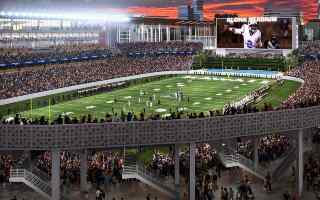
The new Aloha Stadium will be built on the exact site of its predecessor and will have a seating capacity of 31,000 (with the option for future expansion to 40,000). The stands will follow a rectangular, football-oriented layout — no longer adaptable for baseball games. A large development project is planned for the area surrounding the new stadium.
The design of the new Aloha Stadium can be viewed on a separate page
Advertisement
Pictures
2024
13.03.2024 © Quintin Soloviev 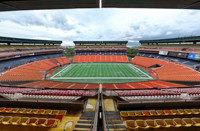
13.03.2024 © Quintin Soloviev 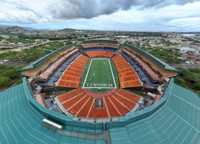
13.03.2024 © Quintin Soloviev 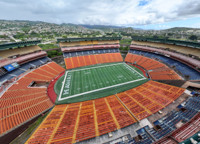
13.03.2024 © Quintin Soloviev 
13.03.2024 © Quintin Soloviev
2020
02.01.2020 © Eric Tessmer (CC BY 2.0)
2015
11.02.2015 © ajay_suresh (CC BY 2.0
2007


2006

2006 © Joseph Warbington 
2006 © Garry Whipple


2005
03.09.2005 © Bobak (CC BY 3.0) 
2005 © pinguskahn

Related news
2025
2022

2017
-

New design: Aloha, Aloha Stadium!
If aloha means both hello and goodbye, then it fits the current situation in Hawaii perfectly. Old Aloha Stadium is about to go, new one is just beginning its route to delivery.
-

USA: Hawaii’s new football stadium for 40,000 people
Covered seating bowl for up to 40,000 people may be created exactly in Pearl Harbor. The current stadium requires replacement in the long term and here’s a sketch of what Hawaii might get.