 StadiumDB
Soldier Field
| Capacity | 61 500 |
|---|---|
| Country | United States of America |
| City | Chicago |
| Clubs | Chicago Fire, Chicago Bears |
| Inauguration | 26/09/2003 |
| Construction | 01/2002 – 09/2003 |
| Cost | $ 632 million |
| Design | Wood & Zapata, Lohan Caprile Goettsch Associates |
| Contractor | Turner, Barton Malow, Kenny |
| Address | 425 East McFetridge Drive, Chicago, IL |
Advertisement
Soldier Field – stadium description
Where does Soldier Field get its name from?
The name Soldier Field was given in 1925 as a tribute to American soldiers who died during World War I. Initially, the venue bore the working name Municipal Grant Park Stadium, but shortly after its opening, it was decided to adopt a more symbolic title. The naming ceremony took place on November 11, 1925 – Armistice Day – highlighting the patriotic nature of this gesture.
Soldier Field
was intended to honor all American soldiers, regardless of the conflict in which they served. Since then, the stadium in Chicago has become not only a venue for sporting events but also a place of national importance, where ceremonies and commemorations for veterans are regularly held.
Where is Soldier Field located?
Soldier Field is located in the southern part of downtown Chicago, Illinois, on the picturesque shore of Lake Michigan. The stadium is situated within Grant Park, one of the city’s most prestigious recreational areas, which stretches along the eastern edge of the downtown waterfront. The exact address of the venue is 1410 Museum Campus Drive, and its position offers a stunning view of both the lake and the Chicago skyline.
The surroundings of the stadium have particular urban significance. Soldier Field forms the central element of the so-called Museum Campus – an area that brings together Chicago’s leading cultural and scientific institutions, such as the Field Museum of Natural History, Shedd Aquarium, and Adler Planetarium. The proximity of Lake Shore Drive (U.S. Route 41) ensures easy access, while the green spaces separating the stadium from major roads help maintain an open, park-like environment. As a result, the arena combines the qualities of a modern sports facility with an exceptional landscape setting, making it one of the most recognizable landmarks in Chicago.
What is the capacity of Soldier Field?
The current capacity of Soldier Field is about 61,500 seats, making it the smallest stadium among all venues used in the NFL. This figure is the result of an extensive reconstruction carried out between 2002 and 2003, which significantly altered the original layout of the stands.
Before modernization, the stadium could accommodate more than 66,000 spectators, but part of the former seating was replaced with new VIP zones, business suites, and fan amenities. In return, the venue gained a modern infrastructure and steeper stands that improved visibility from every seat.
Although Soldier Field now has a smaller capacity than many newer NFL venues, its more intimate character and the proximity of the stands to the field create one of the most intense atmospheres in the league during Chicago Bears games.
When was Soldier Field opened?
Soldier Field officially opened on October 9, 1924, although its construction began two years earlier, in 1922. The opening ceremony was part of the Century of Progress celebrations – a series of events marking the 100th anniversary of Chicago’s founding. The first major event held at the new stadium was a college football game between the Notre Dame Fighting Irish and the Northwestern Wildcats, which drew tens of thousands of spectators.
Although the venue did not yet bear its current name at the time of inauguration, it was conceived from the beginning as a municipal stadium of representative character. The name Soldier Field was officially adopted a year later – on November 11, 1925, Armistice Day – in honor of soldiers who died during World War I. Since then, the stadium has become one of the most historic sports venues in the United States, continuously hosting athletic, patriotic, and cultural events.
Who uses Soldier Field on a daily basis?
Soldier Field is primarily home to the Chicago Bears, a team competing in the National Football League (NFL). The team moved to the stadium in 1971 after more than five decades of playing at Wrigley Field, known mainly as the baseball home of the Chicago Cubs. Since then, Soldier Field has become not only the Bears’ home but also one of the most iconic football venues in the country.
Beyond the NFL, the stadium has long hosted matches of Chicago Fire FC, a soccer team competing in Major League Soccer (MLS). The club played there from 1998 to 2005 and then returned in 2020 after several seasons in Bridgeview.
In addition to regular sports tenants, Soldier Field is frequently used by the City of Chicago for patriotic ceremonies, concerts, and major cultural events. The stadium therefore serves as a truly multifunctional venue – blending professional sports, civic gatherings, and large-scale entertainment – and remains one of the most actively used stadiums in the United States.
What events have taken place at Soldier Field?
Over nearly a century of history, Soldier Field has hosted countless sporting, cultural, and historic events, making it one of the most iconic stadiums in the United States. Since its opening in 1924, the venue has been the site of major athletic competitions and national ceremonies of great symbolic significance.
Among the most notable sporting events were NFL and college football games, as well as international soccer tournaments. In 1994, Soldier Field was one of the venues of the FIFA World Cup, hosting the opening ceremony along with group and knockout stage matches. Two decades later, in 2016, the stadium hosted the final of Copa América Centenario between Chile and Argentina. It has also regularly hosted matches of the U.S. Men’s and Women’s National Soccer Teams, and it is once again among the selected stadiums for the 2026 FIFA World Cup.
Beyond sports, the stadium has also been a significant site for social and religious gatherings. In 1966, Martin Luther King Jr. spoke there, and in 2002, Pope John Paul II celebrated a mass broadcast worldwide. Soldier Field has also served as a concert stage for some of the biggest artists in history, including The Rolling Stones, U2, Beyoncé, Taylor Swift, Coldplay, and Metallica. As a result, the venue remains not only the home of the Chicago Bears but also a major center of cultural and social life in Chicago.
What does the architecture of Soldier Field look like?
The architecture of Soldier Field represents a unique fusion of classical monumentality and modern design, making it one of the most recognizable stadiums in the world. The original project, developed by the Holabird & Roche firm in the 1920s, reflected the spirit of the era – the stadium was built in a neoclassical style, featuring massive limestone colonnades adorning its façade. These classical elements, inspired by ancient Greek and Roman architecture, were intended to symbolize the heroism and sacrifice of the soldiers to whom the venue was dedicated.
The most significant architectural transformation took place during the 2002–2003 renovation, carried out by Wood + Zapata. The modernization completely redefined the interior of the venue – the old bowl was replaced with a new steel-and-glass structure featuring distinctive, undulating stands and an open northern end. The result was a striking contrast between the preserved historic colonnades and the futuristic new form. Although the project was controversial, it is often regarded as a bold example of adapting a historic structure to modern needs.
Today, Soldier Field retains its historic exterior while offering a modern interior with panoramic views of Lake Michigan and the Chicago skyline. The stadium was added to the National Register of Historic Places in 1984, but it lost that designation after the renovation due to the extent of the architectural changes. Nevertheless, it remains a symbol of urban architectural evolution – a place where history and modernity coexist in one of the city’s most distinctive forms.
What amenities and technological features does Soldier Field offer?
Soldier Field provides a wide range of modern amenities and technologies that combine spectator comfort with the functionality required by a top-tier NFL venue. Following its renovation completed in 2003, the stadium was fully modernized with new technical infrastructure, multimedia systems, and premium hospitality zones designed to meet 21st-century standards.
Among the most notable features is an advanced audiovisual system with massive LED video boards at both ends of the stadium, enabling HD broadcasts, replays, and multimedia presentations. The entire facility is covered by high-speed Wi-Fi, while its cabling infrastructure allows for live 4K television production. Dedicated media centers and state-of-the-art commentary booths were also added for journalists and production crews.
For fans, the stadium offers numerous dining areas, premium lounges, and private skyboxes overlooking the field and Chicago’s skyline. Soldier Field is also fully accessible, with elevators, ramps, dedicated seating areas, and audiovisual aids for guests with hearing or vision impairments.
In recent years, the stadium has also introduced eco-friendly solutions – including an energy management system, solar panels, and a recycling program – aligning with Chicago’s broader sustainability strategy. As a result, Soldier Field remains one of the most technologically advanced and environmentally conscious stadiums in the United States.
How can visitors get to Soldier Field and what transportation options are available?
Soldier Field is exceptionally well connected to the rest of Chicago, offering convenient access via multiple public and private transportation options. Located in the heart of the city within the Museum Campus and adjacent to Lake Shore Drive (U.S. Route 41), it can be easily reached by car from both the north and south sides of the metropolis. Several large parking areas are available, including Waldron Deck, South Lot, and North Garage, offering thousands of spaces for visitors.
Public transportation is also well developed. The Chicago Transit Authority (CTA) provides direct bus service to the stadium, including routes 128 and 146, which stop near the venue. Nearby, there are also stations for the Metra Electric Line (Museum Campus/11th Street) and additional bus routes along Michigan Avenue and Roosevelt Road.
For those using alternative transport, there are accessible bike paths through Grant Park and along Lake Michigan, as well as nearby Divvy bike-share stations. On event days, rideshare options like Uber and Lyft are also popular, with designated pick-up and drop-off zones close to the stadium.
What sporting events take place at Soldier Field?
Soldier Field regularly hosts high-profile sporting events on both national and international levels. For decades, the stadium has been home to the Chicago Bears of the NFL, making it one of the most recognizable football venues in the United States. Each NFL season, eight home games are played there, alongside fan open days, training sessions, and charity events.
The stadium is also home to Chicago Fire FC, a Major League Soccer (MLS) club. The team returned to Soldier Field in 2020 after years of playing in Bridgeview, restoring the venue’s position as one of the leading soccer arenas in the country. Soldier Field also frequently hosts U.S. national team matches (both men’s and women’s) and friendly games featuring major international clubs such as FC Barcelona, Manchester United, Bayern Munich, and Paris Saint-Germain.
Beyond American football and soccer, the venue has hosted college football championships, rugby matches, and even the NHL Winter Classic, when an ice rink is temporarily installed on the field. In the past, it has also seen athletic meets and Australian football games. Thanks to its versatile infrastructure, Soldier Field remains a truly multipurpose arena that attracts tens of thousands of spectators each year and plays a vital role on the U.S. sports map.
What attendance records have been set at Soldier Field?
Over nearly a century of history, Soldier Field has witnessed multiple attendance records during both sporting and cultural events. At its peak capacity – before the 2002–2003 reconstruction – the stadium could hold over 100,000 people with additional field seating.
The all-time record was set on November 10, 1927, when a college football game between the University of Southern California (USC) and the University of Notre Dame drew about 123,000 spectators – still one of the largest crowds in college football history. Similar numbers were reached during other major university matchups and patriotic gatherings, such as the 1926 military parade attended by over 100,000 participants and viewers.
In modern times, with capacity reduced to around 61,500, record attendances are typically seen during Chicago Bears games and concerts by major artists. In 2015, two Taylor Swift shows attracted a combined total of over 110,000 fans, with similar numbers achieved by U2 and Beyoncé. In soccer, the highest attendance came during the Copa América Centenario 2016, when more than 61,000 spectators filled the stands.
Has Soldier Field undergone renovations or expansions?
Soldier Field has gone through several major phases of renovation and reconstruction that have completely changed its appearance and functionality over the decades. The first renovation works began in the 1930s and 1940s, when the venue was adapted to accommodate large sporting and patriotic events. Over the following decades, improvements were made to lighting, sound systems, and the scoreboard, but the most significant transformation occurred at the end of the 20th century.
The largest and most controversial renovation took place between 2002 and 2003. During this process, the entire interior of the stadium was demolished, leaving only the original limestone colonnades from the 1920s design. Inside them, a modern steel-and-glass structure of completely new form was built. The work, carried out by the Wood + Zapata architectural firm, cost around $660 million and included new seating tiers, VIP suites, media facilities, and technological systems.
After completion, Soldier Field acquired an entirely new identity but lost its National Historic Landmark designation, granted in 1987, as the changes were deemed too extensive to preserve its original form. Despite the controversy, the modernization gave the stadium a second life: since then, it has met all NFL standards and remains capable of hosting international events, including the 2026 FIFA World Cup.
What are the plans for the future of Soldier Field?
The future of Soldier Field is tied to ambitious plans for a major redevelopment – or even replacement – with a new, state-of-the-art facility designed to meet modern sports and entertainment needs. In 2024, the Chicago Bears unveiled a proposal to build a domed stadium along the shore of Lake Michigan, directly adjacent to the current venue. The total investment is estimated at around $4.7 billion, with over $3 billion allocated to the stadium itself. The design calls for a fixed roof structure that would allow for year-round events such as the Super Bowl, Final Four, and large-scale concerts.
One of the key elements of the plan is to preserve Soldier Field’s historic colonnades, which would be incorporated into the new design or serve as a symbolic façade. The proposal envisions construction beginning around 2025 and completion by 2028, though its realization depends on negotiations between the club and the City of Chicago, as well as project financing.
At the same time, the Bears are considering alternative locations. One of them is Arlington Heights, a Chicago suburb where the team has already purchased land for a potential new sports complex. As of September 2025, representatives confirmed that this site is currently the most realistic option for a new stadium.
If the relocation plan is implemented, Soldier Field would likely shift its primary role. After the Bears’ departure, the stadium could serve mainly as a venue for concerts, civic events, and cultural gatherings, remaining under the management of the Chicago Park District. Regardless of the final outcome, the future of Soldier Field remains one of the most debated topics in the ongoing discussion about Chicago’s sports infrastructure development.
Advertisement
Pictures

11.09.2012 © YoChicago 
11.09.2012 © YoChicago 
26.06.2011 © Julie 
30.09.2009 © City of Chicago (cc: by-nc-sa) 
06.05.2011 © Harold Hall 
2011 © Harold Hall 
2020 © Instagram: @acai_photography 
2020 © Instagram: @tissier.antoine 
2021 © Instagram: @joelqvisuals 
2021 © Instagram: @tissier.antoine 
2021 © Instagram: @tissier.antoine 
2021 © Instagram: @tissier.antoine 
30.06.2012 © mbell1975 
25.11.2011 © John Picken Photography (cc: by) 
12.07.2009 © Mark Ghosh (cc: by-nc-sa) 
30.03.2010 © Stephanie (cc: by-nc-sa) 
20.09.2015 © Alicia Barnhart 
18.03.2014 © Stadiony.net 
18.03.2014 © Stadiony.net 
18.03.2014 © Stadiony.net 
18.03.2014 © Stadiony.net 
18.03.2014 © Stadiony.net 
18.03.2014 © Stadiony.net 
20.09.2015 © Alicia Barnhart 
20.09.2015 © Alicia Barnhart 
25.05.2013 © Roamin Catholic (cc: by-nc-sa) 
12.08.2013 © Daniele De Gaudio 
26.07.2004 © Johnmaxmena2 (cc: by-sa) 
20.07.2012 © Calum Hale 
13.05.2009 © Richard Yuan (cc: by-nc) 
22.08.2009 © Jami Gibbs (cc: by-nc) 
22.08.2009 © Jami Gibbs (cc: by-nc) 
20.09.2015 © Alicia Barnhart 
20.09.2015 © Alicia Barnhart 
20.09.2015 © Alicia Barnhart 
20.09.2015 © Alicia Barnhart 
20.09.2015 © Alicia Barnhart 
20.09.2015 © Alicia Barnhart 
20.09.2015 © Alicia Barnhart 
20.11.2013 © Jim Larisson (cc: by)


Related news
2026
-

USA: McDonald’s becomes title sponsor of new Chicago Fire FC stadium
McDonald's has become the naming rights sponsor of the new stadium for Chicago Fire FC. Rising in Chicago’s The 78 district, McDonald's Park is expected to become not only a modern MLS venue, but also a year-round hub for sports, entertainment and community activity in the heart of the city.
-
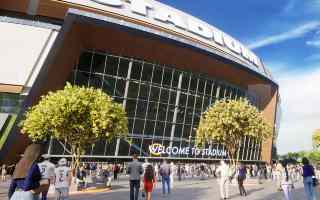
USA: Chicago Bears closer to leaving Chicago than ever before. Megaproject sparks controversy
Chicago Bears may be closer than ever to leaving Chicago. The franchise is pushing hard for a new stadium project in Arlington Heights, but massive infrastructure costs and demands for tax incentives have sparked major political controversy across Illinois.
-
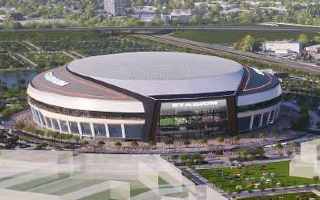
USA: Two locations, one problem. Taxes complicate the Chicago Bears decision
The decision is fast approaching. Chicago Bears are facing a choice that will shape the franchise for decades — stay in Illinois or move to Indiana. But behind this battle, it’s not just about a stadium — it’s about billions of dollars and a growing political conflict over taxes.
-
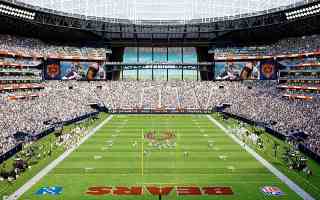
USA: Chicago Bears and new stadium – key decision coming soon
The Chicago Bears face a decision that will shape their future for decades: remain in Illinois or cross the border into Indiana. Although the ambitious project in Arlington Heights remains the club’s preferred option, Hammond’s aggressive offer has turned the choice into a political, economic, and strategic battle.
-
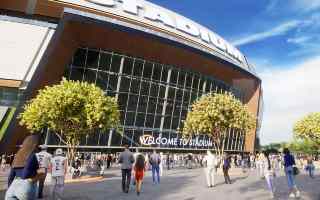
USA: 40-year bonds, $2B vision. Indiana pushes Bears stadium plan ahead
The battle over the future of the Chicago Bears is entering a decisive phase. Indiana is accelerating legislation that would enable the construction of a new stadium in Hammond, and the prospect of leaving Soldier Field is no longer just a negotiating tactic with Illinois. Could the Bears really change states?
2025
-
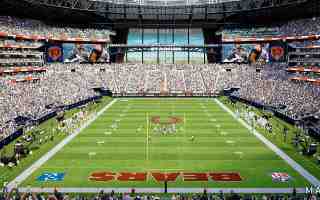
USA: Plans for Bears’ new Arlington Heights stadium delayed amid lack of funding
Plans for the Chicago Bears’ new stadium have hit a major setback. The team failed to secure the expected financial support from the State of Illinois during the fall legislative session, meaning the Arlington Heights project may be delayed until at least 2026.
-
North America: Stadiums ruled out of the 2026 World Cup host race
There’s less than a year left until the start of the 2026 World Cup. The USA, Canada and Mexico are preparing to host the tournament, but not all cities met FIFA’s expectations. We present 15 stadiums that were once in the running but were ultimately left out.
-
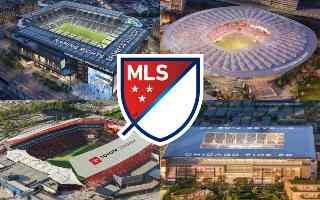
USA: Four stadiums of the future in MLS
Major League Soccer is investing heavily in stadium infrastructure, opening a new chapter in the league’s history. Across the United States, modern multifunctional venues are being built, aimed not only at improving fan comfort but also at becoming catalysts for local community development. From Miami to New York – MLS is building the stadiums of the future.
-
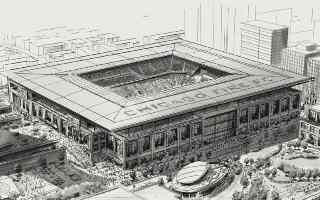
USA: Chicago Fire announces construction of new $650M stadium
Funded entirely by the owner, located on the river and built for football, rugby and concerts – this will be the new home of Chicago Fire. "Our city deserves a world-class club with a world-class home," the owner says.
-
USA: New stadium renderings unveiled in Chicago — will the Bears make a move?
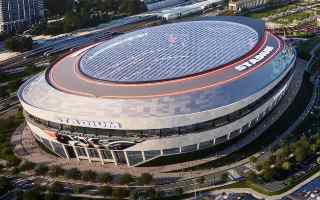
Efforts to keep the NFL’s Chicago Bears in the city have led a developer to propose a site on Chicago’s South Side. Last week, Farpoint Development revealed renderings of a covered stadium and mixed-use complex on the grounds of the former Michael Reese Hospital.
2024

2023
-

NFL: Bears finalize purchase of parcel for new stadium
All signs suggest that the Chicago Bears will soon leave Soldier Field. The club has officially acquired a 326-acre property in Arlington Heights. It is almost certain that a modern facility will be built there.
-

Copa America 2024: USA to host the tournament
CONMEBOL and CONCACAF have signed an agreement for the cooperation of international and club competitions. Under the contract, it was also agreed that the next edition of the Copa America would be organized by the United States. It will be the second such event organized by this country.
2022
-

Chicago: Bears unveiled plans for Arlington Heights development
Last week, the Bears from the NFL unveiled a concept for the development of a site in the suburbs of Chicago. The area, which is currently home to a disused horse racing track, is to feature not only a new stadium, but also recreational and retail facilities as well as housing.
-

USA: Paul Brown Stadium to acquire a new sponsor?
Cincinnati Bengals’ home is about to change its name. The NFL team is closing in on a deal to change the venue’s naming rights. It is worth mentioning that it is the first sponsorship deal in the stadium’s history.
-

USA: New renderings of the dome over Soldier Field!
Chicago officials have just unveiled three concepts for the redevelopment of Soldier Field. This is in response to plans to move the local NFL franchise, Bears, out of the city and attempt to keep the team in the 'Windy City'. The most spectacular redevelopment proposal involves completely roofing the stadium.
-

USA: Chicago’s Soldier Field domed?
Windy City’s mayor Lori Lightfoot is doing everything in her power to keep the NFL team Chicago Bears at their current home along the lakefront. Lightfoot discussed a string of potential upgrades to the nearly 100-year-old venue. That includes adding a dome to the historic stadium, despite the likely departure of its tenants.
-

Chicago: Bears will move out of Soldier Field?!
The 1985 Super Bowl winners are seriously thinking about changing their home venue and moving to the suburbs. A property in Arlington Heights was secured last year and now the club has selected architects to design a new stadium.
![USA: Your stadium guide for MLS 2021 is ready! [Eastern Conference]](https://stadiumdb.com/img/news/2021/04/18740-thumbnail.jpg)
