 StadiumDB
Stadion im. Braci Czachorów (Stadion Radomiaka)
| Capacity | 14 440 |
|---|---|
| Country | Poland |
| City | Radom |
| Clubs | RKS Radomiak Radom |
| Inauguration | 30/07/2023 |
| Floodlights | 1600 lux |
| Construction | 2017–2025 |
| Cost | PLN 190 M ($52.3 M) |
| Contractor | Rosa-Bud, Maxto / Betonox |
Advertisement
Stadion Braci Czachorów – stadium description
How can Radomiak’s stadium be summarized?
Construction of a new arena for Radomiak was scheduled to begin in spring 2016, when the old stadium was bid farewell and the city’s mayor ceremonially drove the first symbolic shovel into the ground. However, the project was delayed from the very start – initially, only the new hall was being built – and in May 2017, a second “first” shovel was ceremonially driven (!).
The initial problems were just a preview of the saga titled “New Stadium for Radomiak.” Further delays soon followed, and eventually the main contractor had to be replaced. At that point, it turned out that some of the already built stands needed to be partially dismantled and rebuilt from scratch…
The first phase (stands along the pitch) was finally completed in summer 2023. In 2024–2025, the missing stands behind the goals were also constructed. The completion of the facade is still planned.
Although the project was significantly delayed, the end result is satisfactory – Radomiak now has a modern, football-specific stadium, suitable for Ekstraklasa, to which the team was promoted during the construction works.
What was Radomiak’s previous stadium like?
The previous stadium on Struga Street was built in the interwar period. After World War II, Radomiak Radom became its main tenant. The venue witnessed, among other things, Radomiak’s appearances in the former I liga in the 1984/85 season, as well as three friendly matches of the Polish national team in the 1990s.
The stadium featured a cinder running track and could accommodate around 6,000 spectators. Its most characteristic element was the commentator’s booth on the western stand, nicknamed the “gołębnik” (“dovecote”). In 2010, the stadium was named after the Czachor Brothers.
How did the construction of Radomiak’s new stadium come about?
How did the concept for Radomiak’s new stadium develop?
Plans to build a new stadium for Radomiak date back to the early 2000s. In 2006, the first concept for renovating the stadium on Struga Street was created. However, this plan was soon abandoned, and the idea of building a stadium in a different location began to be considered.
The chosen site was the Koniówka district, where a full sports and recreation center was planned, featuring a stadium with a capacity of up to 20,000 spectators. The complex was initially designed with Euro 2012 in mind, as one of the training centers.
Ultimately, the plans for the Koniówka center did not materialize, and attention returned to renovating the Struga Street stadium. The new plan involved attracting a private investor. The stadium was now to be exclusively football-specific, with talks of additional commercial functions and the construction of a new sports hall.
Despite finding interested investors, the public-private partnership project stalled due to administrative procedures. The city then turned to the Ministry of Sport and Tourism for funding for the hall. In 2012, a competition was held for its architectural concept, which was won by APA Czech-Duliński-Wróbel studio. The vision also included a preliminary outline of the stadium and became the basis for the final concept of the entire complex.
Meanwhile, between 2010 and 2012, the MOSiR stadium on Narutowicza Street in Radom was renovated. At the same time, seeing the impasse regarding a stadium for their club, Radomiak fans launched the “Stadium for Radomiak” initiative in 2012 and began collecting signatures for a petition to the city authorities.
When were the key decisions regarding Radomiak’s new stadium made?
In December 2014, Radosław Witkowski became the new mayor of Radom, a strong supporter of the stadium project. After revising the concept so that the facilities would avoid disputed land from the abandoned sports complex with a hall and swimming pool, in March 2015 the new mayor announced the construction of the Radom Sports Centre on Struga Street, which was to include the new stadium and sports hall. The preparation of the functional and usage program was handled by Estudio Lamela from Warsaw.
How did the construction of Radomiak’s new stadium proceed?
The construction of the Radom Sports Centre officially began in May 2016, when the city’s mayor, Radosław Witkowski, ceremonially drove in the first symbolic shovel. At that time, it was expected that the new hall and stadium would be completed by 2018.
Initially, however, work focused on building the hall, with a subsidy from the ministry. The stadium was delayed from the very beginning – in May 2017, a second “first” shovel was even ceremonially driven, symbolizing the official start of construction of the football stadium itself.
This was only the beginning of the troubles. Further delays followed, the main contractor was replaced, and already constructed stands had to be dismantled. The fans did not remain passive, expressing their dissatisfaction with the situation.
The project was carried out in stages. The first phase, which included the construction of the two stands along the pitch, was finally completed in summer 2023. In 2024–2025, the missing stands behind the goals were also built, and the completion of the facade is still planned.
A report on the construction of Radomiak’s new stadium can be viewed on a separate page
What were the details of Radomiak’s stadium construction?
When did construction of the Radom Sports Centre begin?
In October 2015, a tender for the construction of the Radom Sports Centre (Radomskie Centrum Sportu, RCS) was announced, which was won by the Rosa-Bud company in partnership with Maxto. The contract was worth 110 million PLN. The farewell match at the old stadium took place on 9 April 2016.
On 4 May 2016, a ceremonial first shovel was driven for the construction of the Radom Sports Centre, with the city’s mayor in attendance. In the following months, the old stadium was demolished and construction of the new hall began.
During the construction, Radomiak played its home matches at the renovated MOSiR stadium, where the team had already played since autumn 2015, following promotion to the II liga.
According to the original plans, the new hall was to be completed in the second half of July 2018, and the stadium two months later. The stadium was ultimately designed to accommodate 15,000 spectators, but in the first phase only the stands along the pitch were planned.
Initially, only 5,500 seats were to be built, but after the plans for the northern stand were extended along the entire length of the pitch, the planned capacity increased to around 8,500, and with the addition of the corners to 8,840. The final stadium concept was presented on 26 September 2016.
The architectural concept of Radomiak’s new stadium can be viewed on a separate page
When did the actual construction of Radomiak’s stadium begin?
The stadium’s construction encountered problems from the very beginning. The building permit was issued only in April 2017, and on 15 May a ceremonial first shovel was driven again, this time marking the official start of work on the stadium itself.
Why was the contract with the first stadium contractor terminated?
Construction was progressing more slowly than planned. Due to the delays, in June 2018 an annex was signed, setting the completion of the hall for November 2018 and the stadium for February 2019.
At the beginning of 2019, when the contractor requested another extension and an additional 23 million PLN, MOSiR terminated the contract. A subsequent inventory revealed a number of irregularities.
Who completed the construction of Radomiak’s stadium?
In May 2019, a tender was announced to finish the remaining work. No bidders came forward in the first round. In the second tender, a consortium of Erekta Budownictwo and Interiors Karolina Pawlak won, but in November, when the contract was to be signed, the consortium withdrew from the project. The contract, worth over 82 million PLN, was finally signed on 16 January 2020 with the second bidder, Betonox.
Why were newly built stands dismantled during the construction of Radomiak’s stadium?
The new contractor was given a year to complete the construction. However, in May 2020 it was discovered that the northern stand had been built without proper foundations. It was decided to partially dismantle the prefabricated structure that had already been erected, and then a new retaining wall had to be built, piles installed, and the foundations corrected.
This caused a significant increase in costs and extended the completion timeline. By summer 2021, it turned out that similar work was also required for the southern stand.
Meanwhile, Radomiak, whose temporary stay at the Narutowicza stadium was considerably prolonged, was promoted to the Ekstraklasa for the second time in its history in 2021.
When was the first phase of Radomiak’s new stadium completed?
In December 2021, the new sports and entertainment hall was opened. The completion of the first phase of the stadium was initially planned for the end of 2022, but in June 2022 the deadline was extended by another six months. The work was finally completed in summer 2023.
When was Radomiak’s new stadium opened?
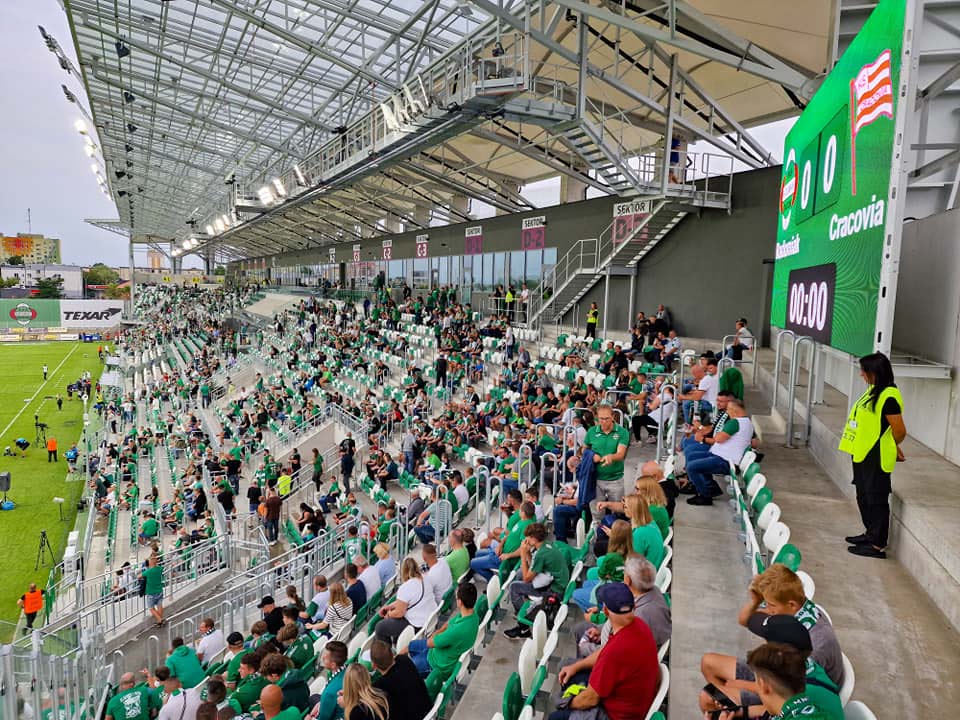
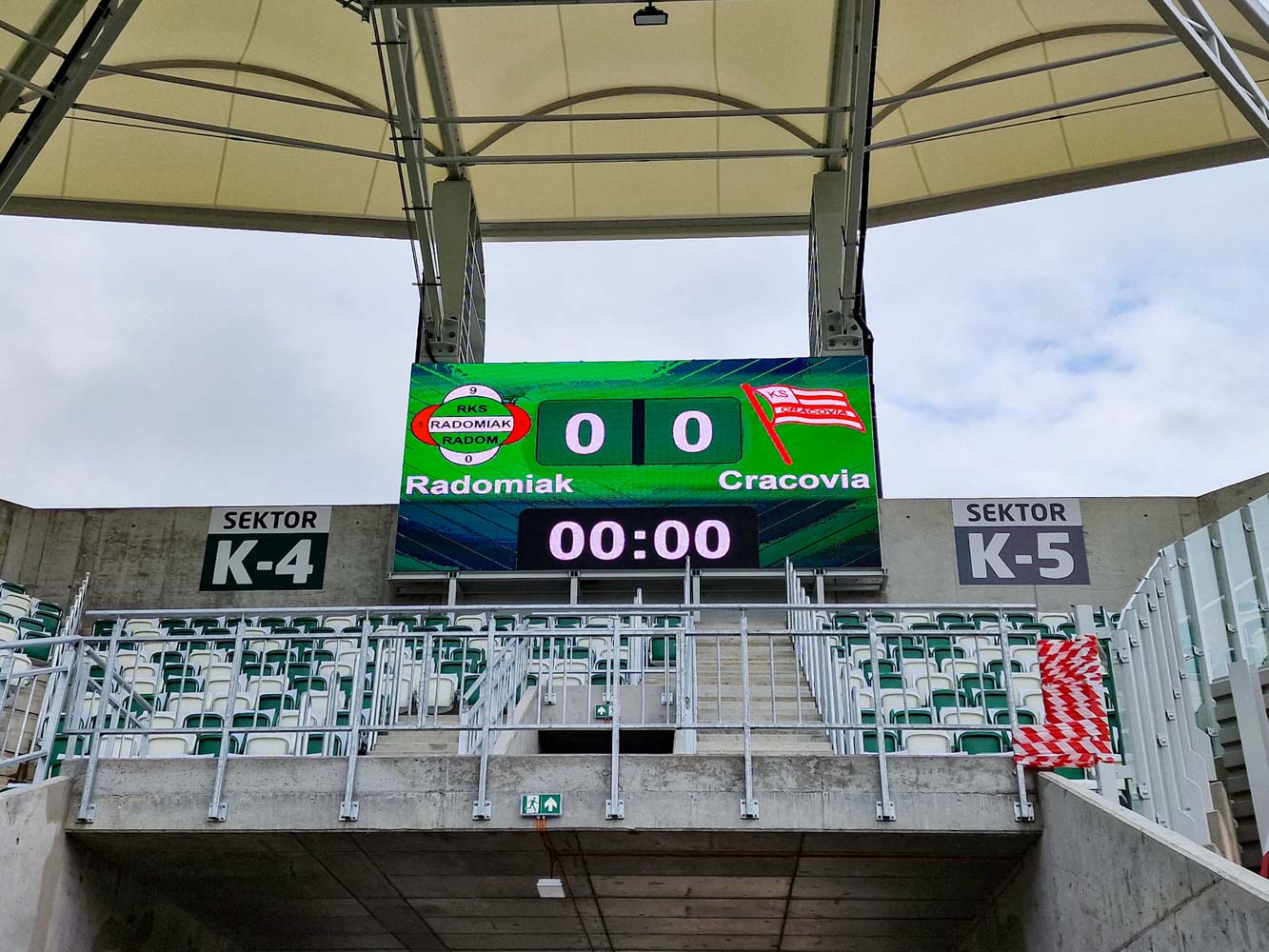
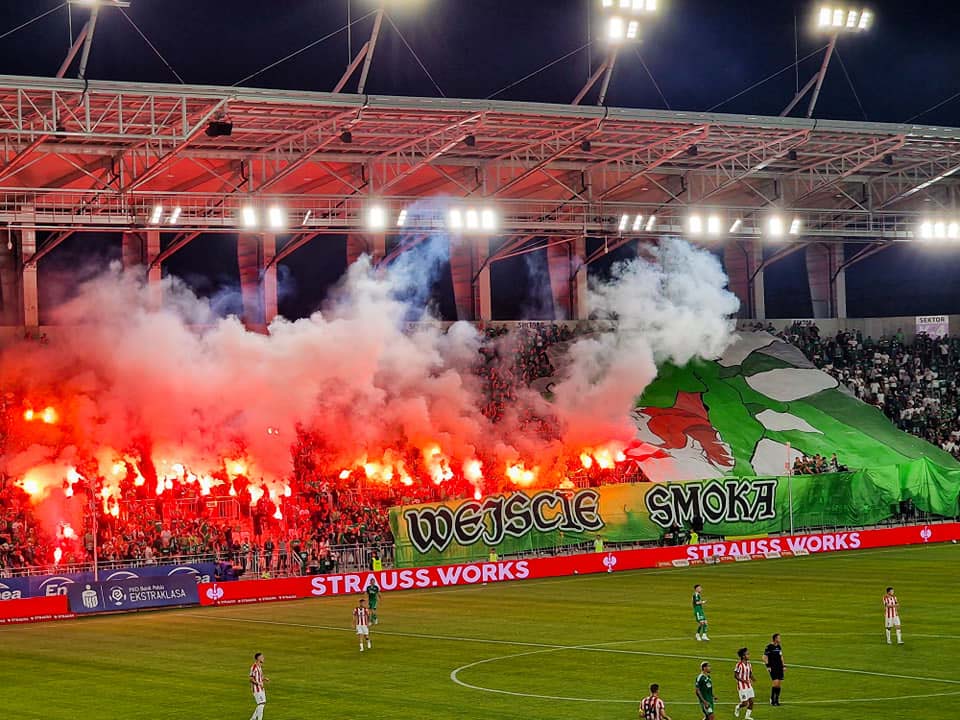
The stadium inauguration – with the two main stands completed – took place on 30 July 2023. On the opening day, a children’s football tournament was held, and the facility was opened to the public for tours. The first official match at the new stadium was played on 5 August 2023, when Radomiak faced Cracovia in the 3rd round of the Ekstraklasa (0–1).
When were the missing stands behind the goals built at Radomiak’s new stadium?
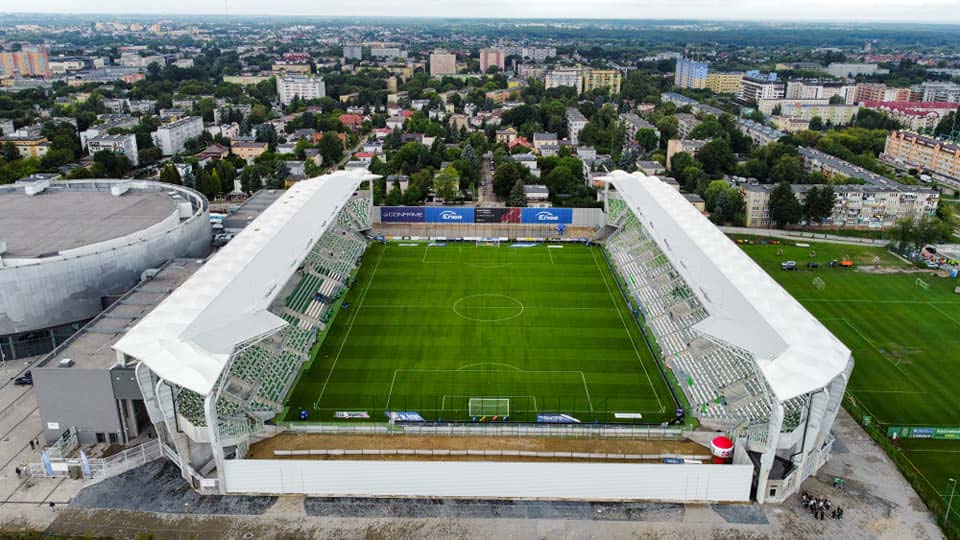
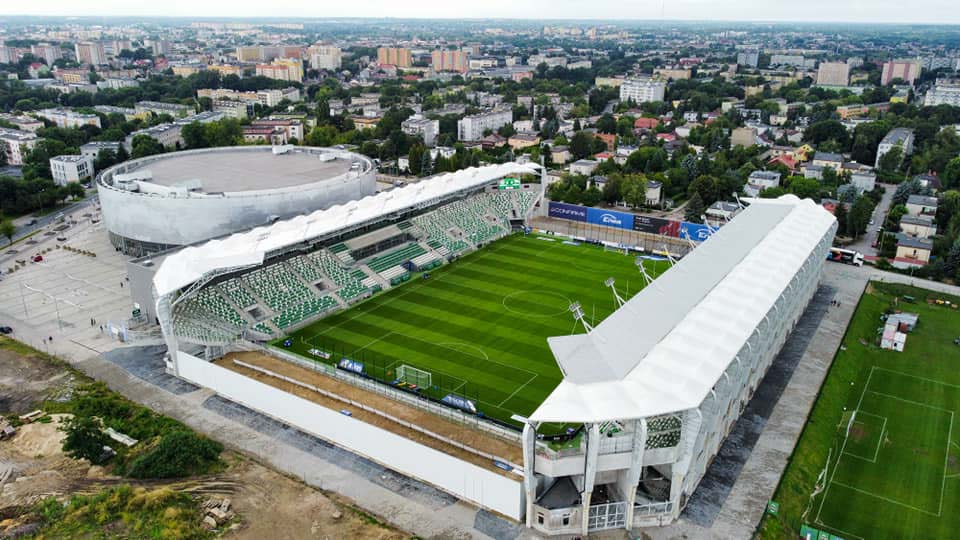
After the first phase of construction, the stadium could accommodate nearly 9,000 spectators and was fully ready to host Ekstraklasa matches. However, the shape of the stadium clearly indicated that the final configuration had not yet been achieved – the way the stands ended and the empty spaces behind the goals suggested readiness for further expansion.
The opportunity to complete the project arose quickly, with a crucial role played by a 30 million PLN grant from the government’s Polski Ład fund, obtained in October 2023.
At the beginning of April 2024, a tender for the construction of the missing stands was held. The winner was Betonox, the same company that had completed the first phase of the stadium. The contract was signed on 18 April 2024, with a value of 39.59 million PLN.
When was Radomiak’s stadium inaugurated with all four stands completed?
The missing stands behind the goals were ready for use in November 2025. They were opened to spectators for the first time on 28 November 2025, during Radomiak’s last home match of the first half of the season, which ended with a 4–0 victory for the hosts over league leaders Górnik Zabrze.
For the first match with all stands completed, the away section was not yet fully ready, as the safety netting was missing. For this reason, the match was played without Górnik fans. The away section is expected to be available from the start of the second half of the season.
What further investments are planned for Radomiak’s stadium?
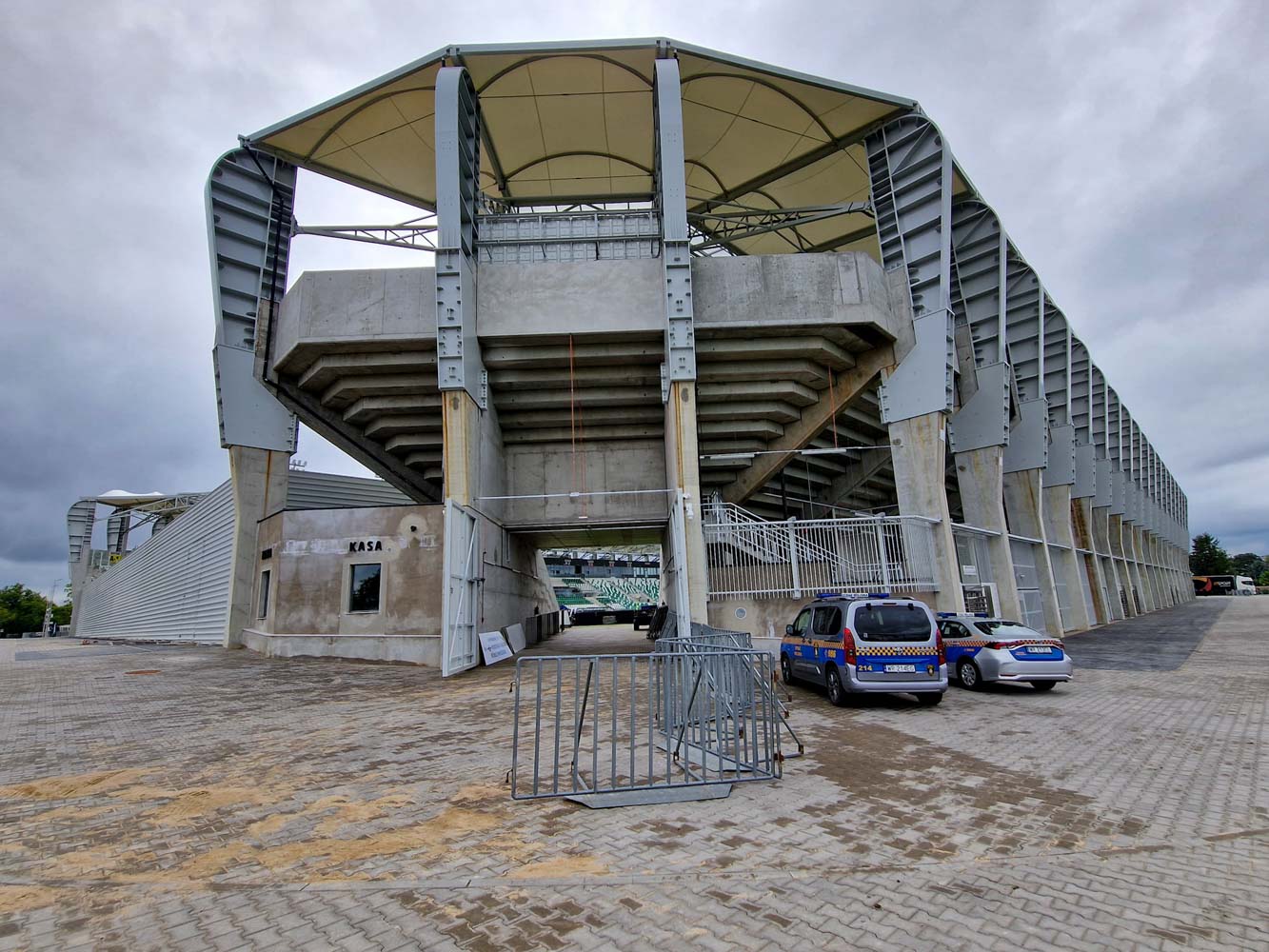
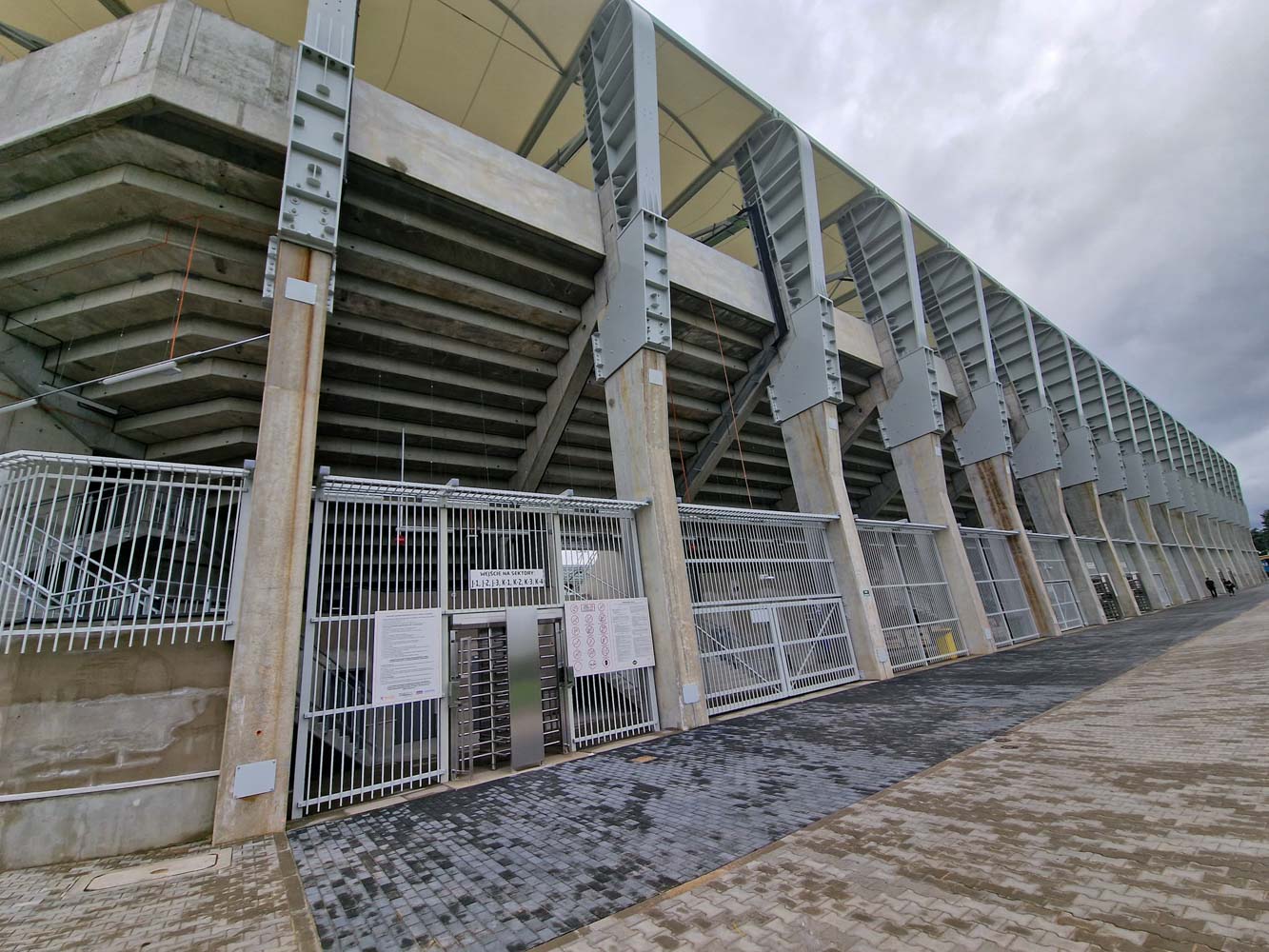
To fully complete the stadium, the façade still needs to be constructed. This is already planned and will be made of expanded metal mesh, which will cover the upper part of the building. Once the issues regarding disputed land near the stadium are resolved, the city also plans to build additional parking around the arena.
How much did Radomiak’s new stadium cost?
The final cost of the first phase of the stadium was around 150 million PLN, while the second phase, covering the stands behind the goals, cost nearly 40 million PLN. The first phase was fully financed by the city, while 30 million PLN from the Polski Ład program was obtained for the second phase.
The construction of the adjacent hall cost 115 million PLN, of which 35.7 million PLN was co-financed by the Ministry of Sport and Tourism.
What does Radomiak’s stadium look like?
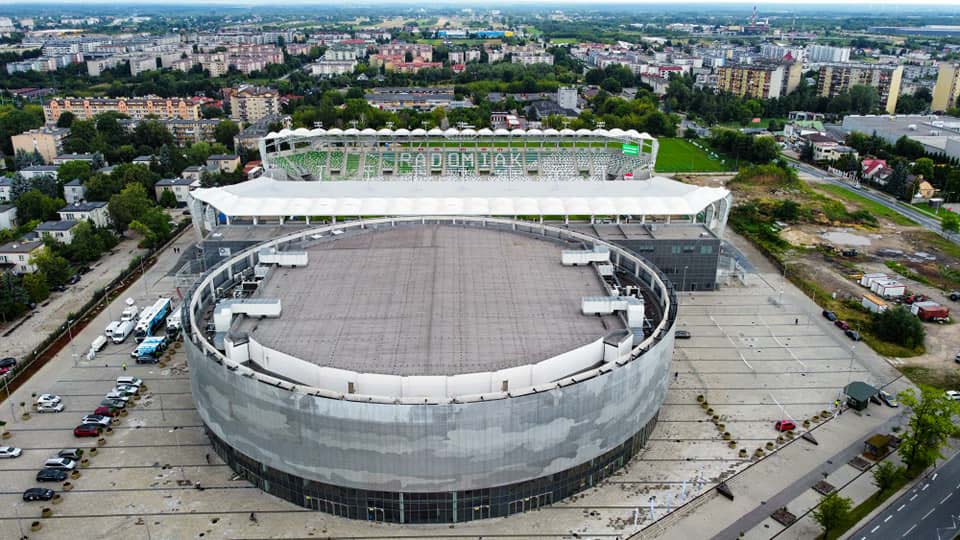
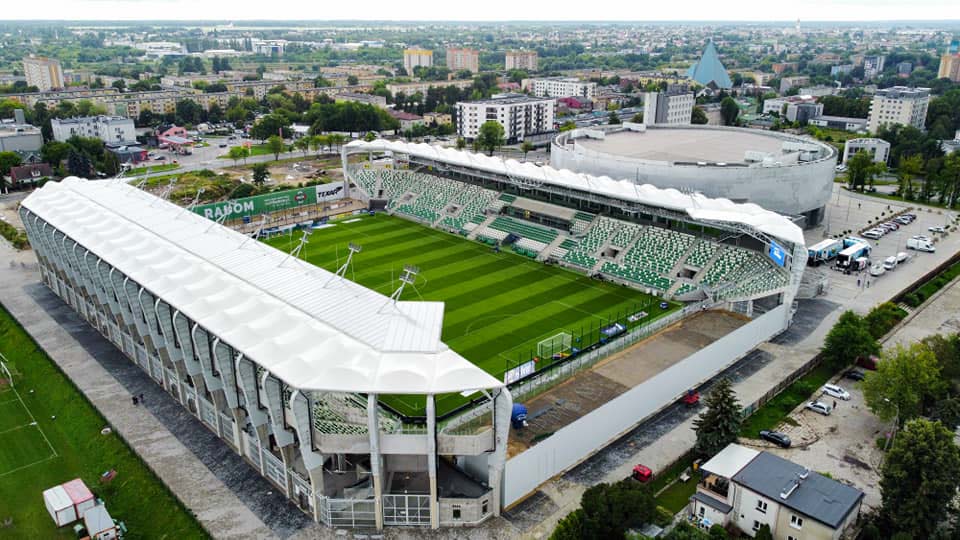
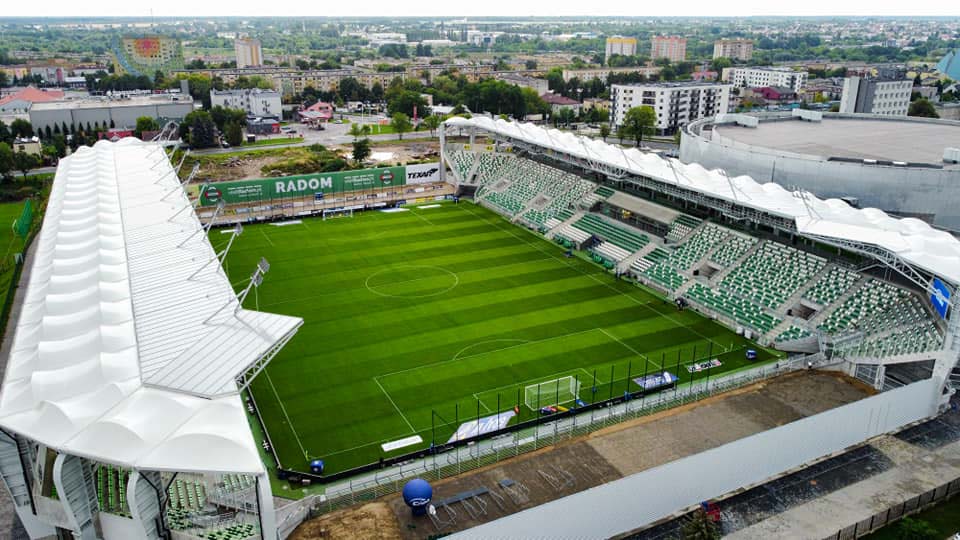
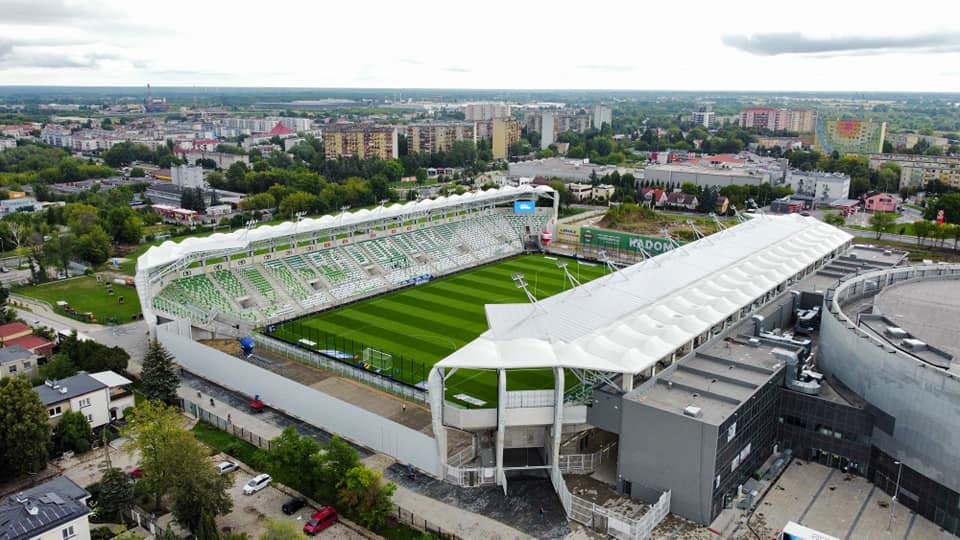
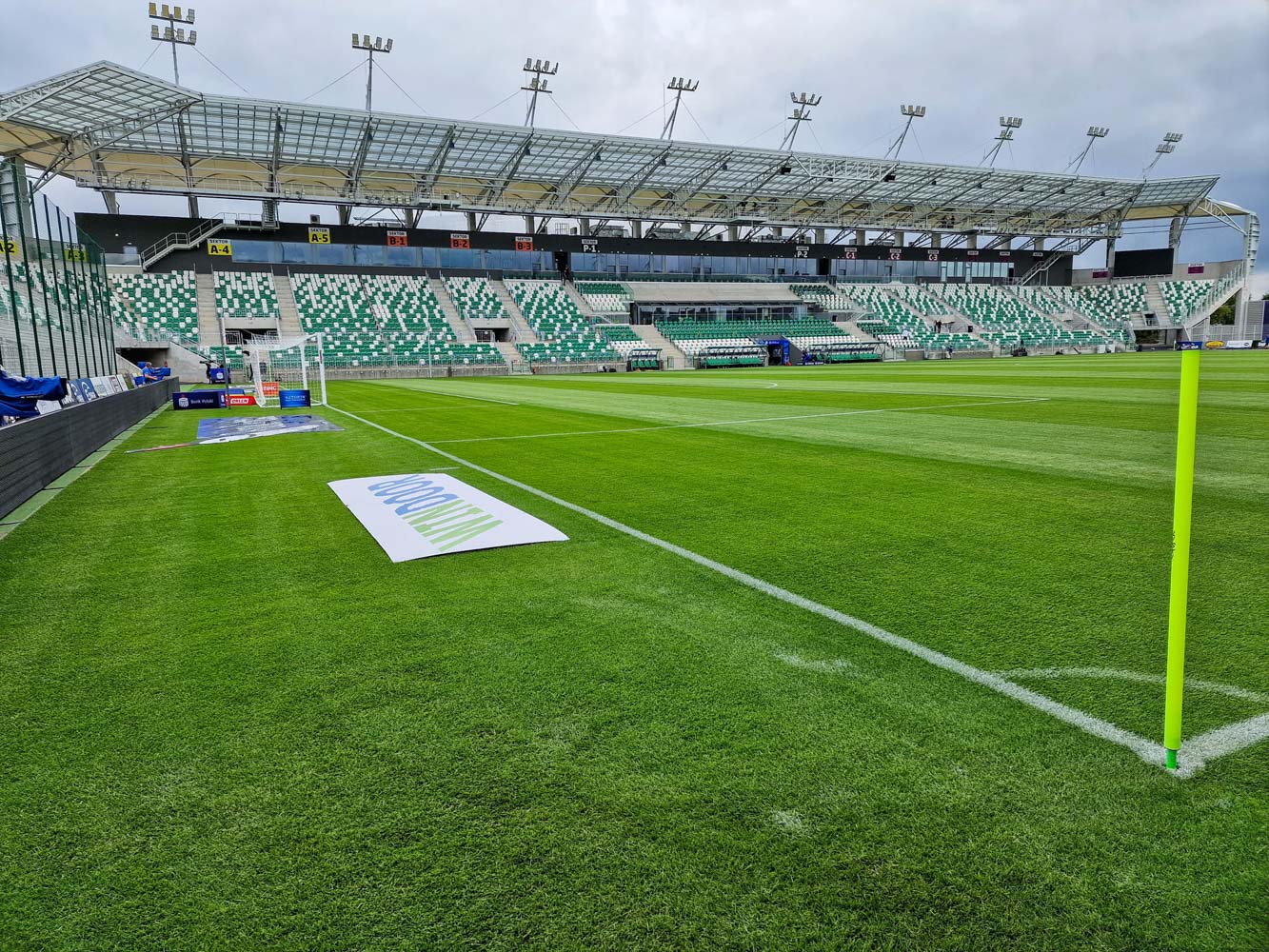
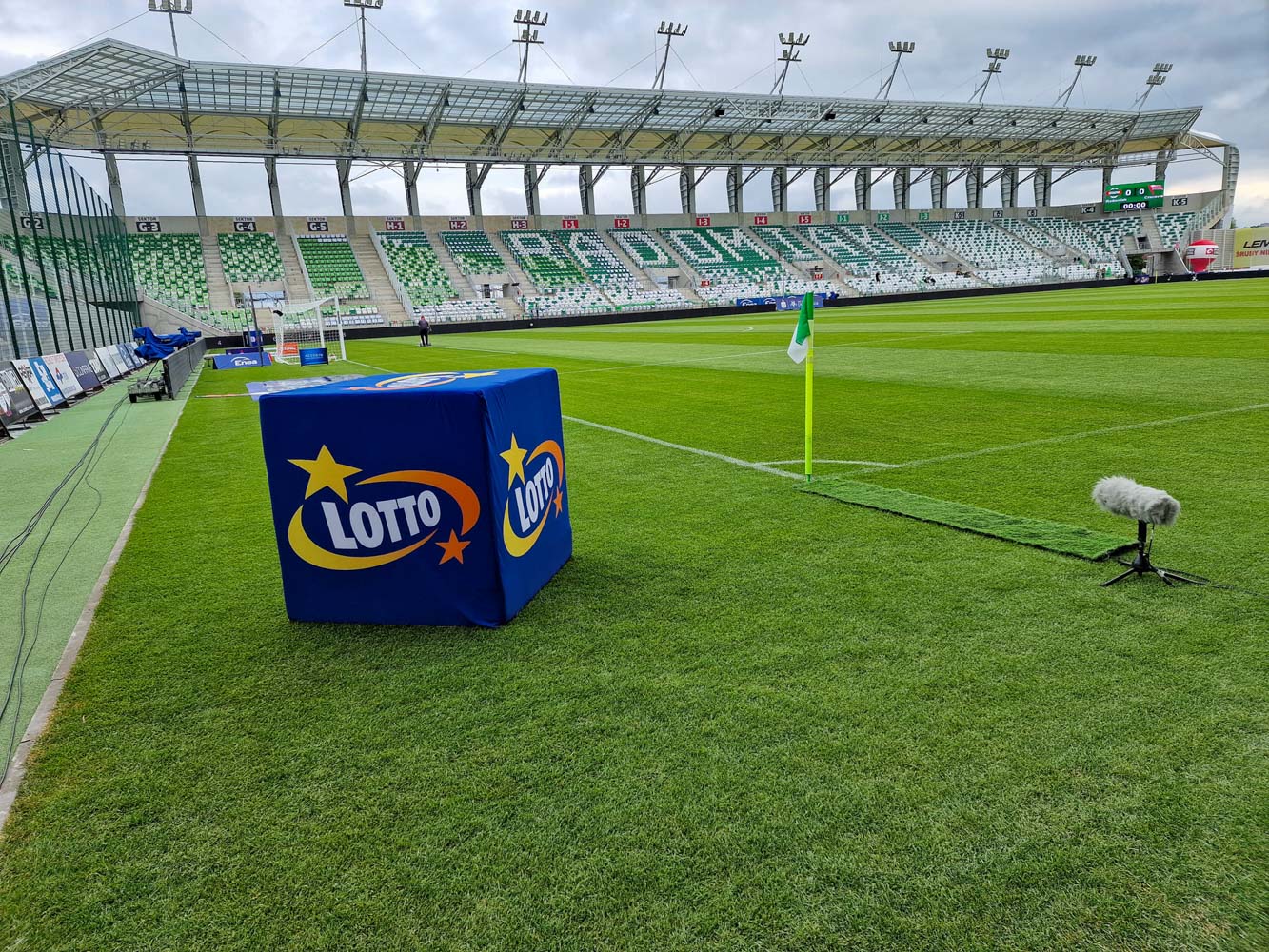
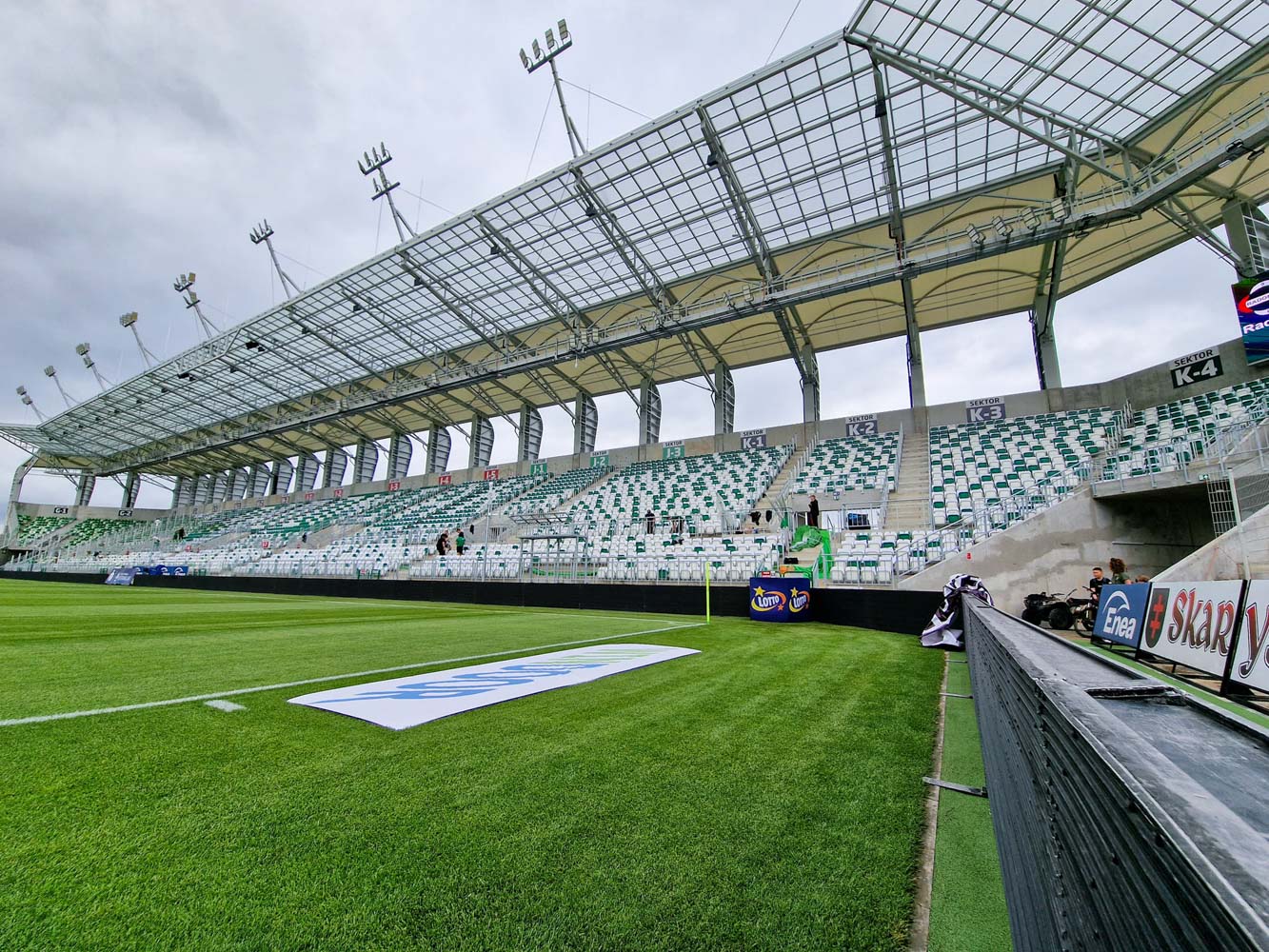
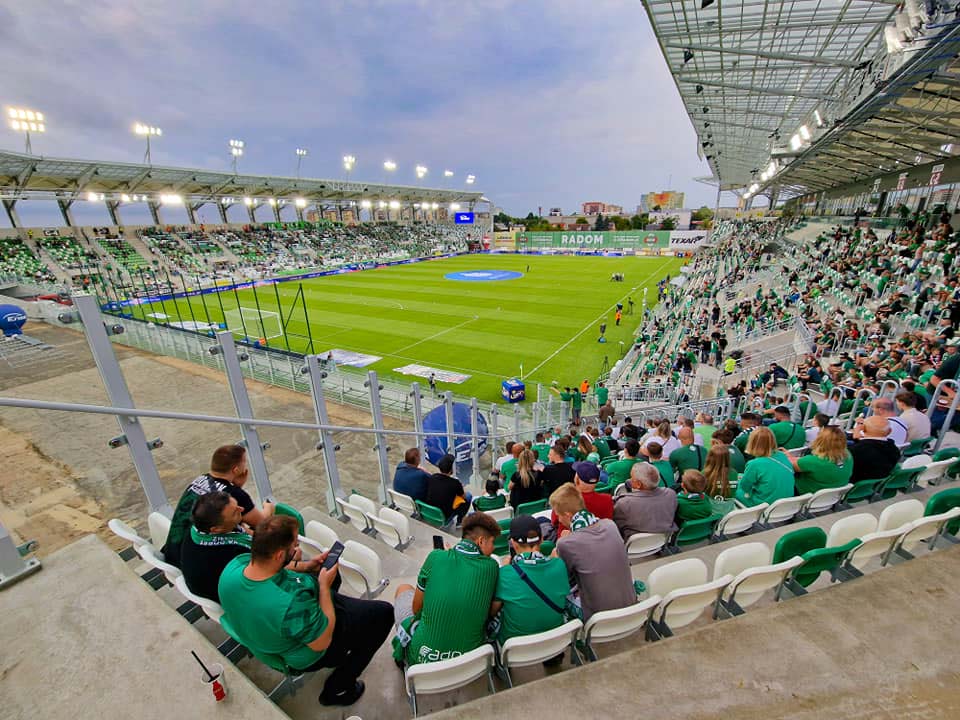
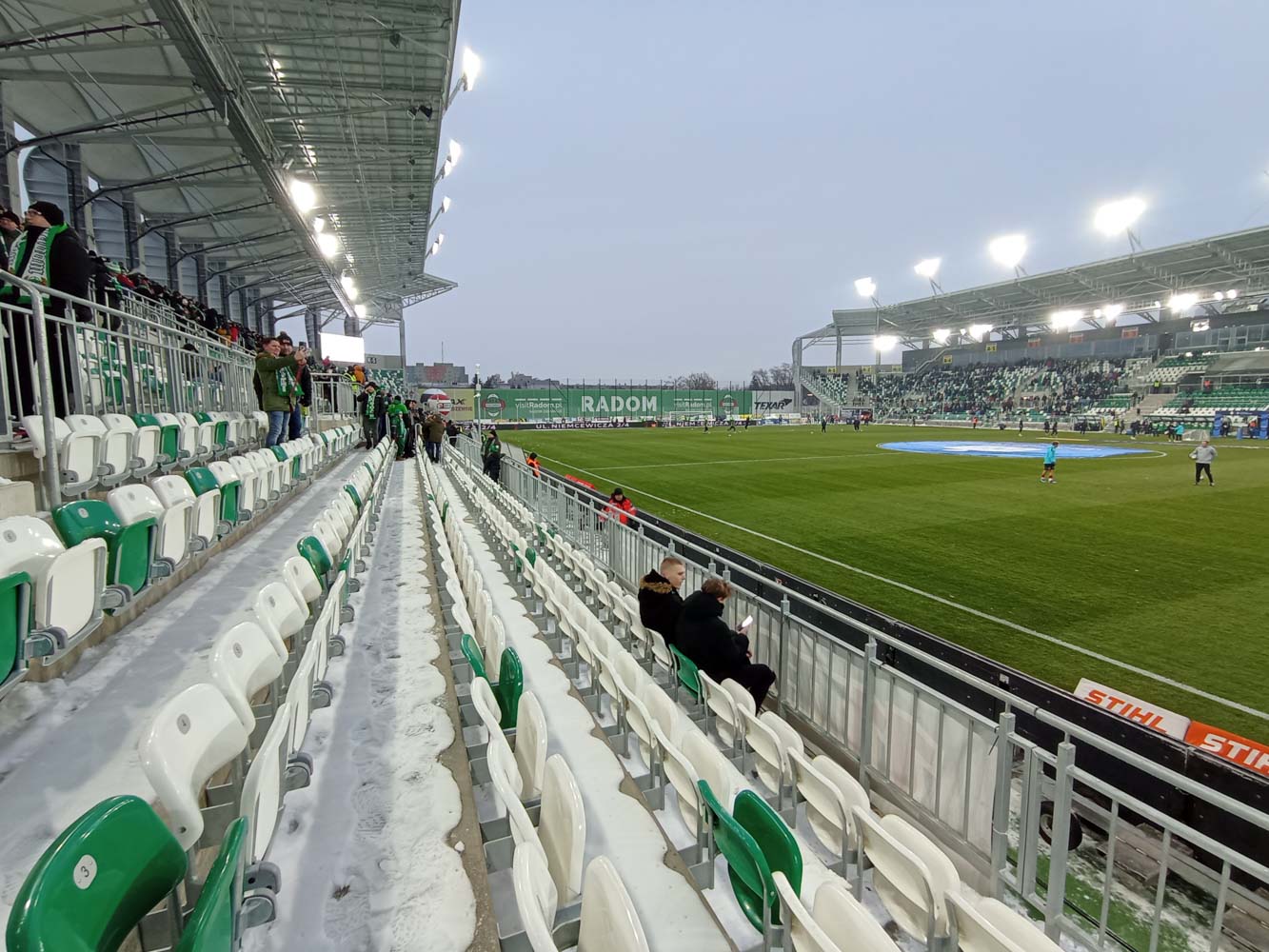
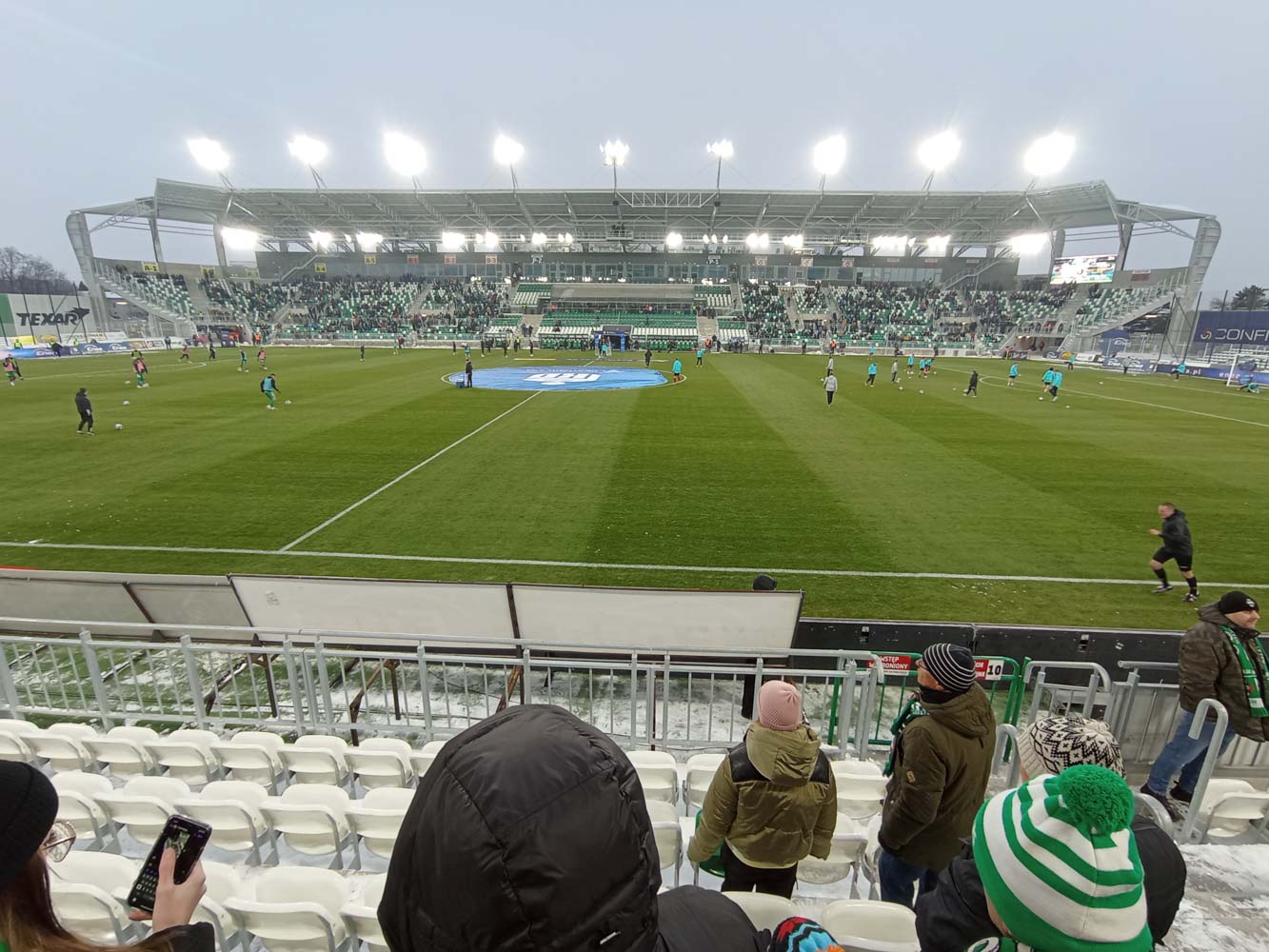
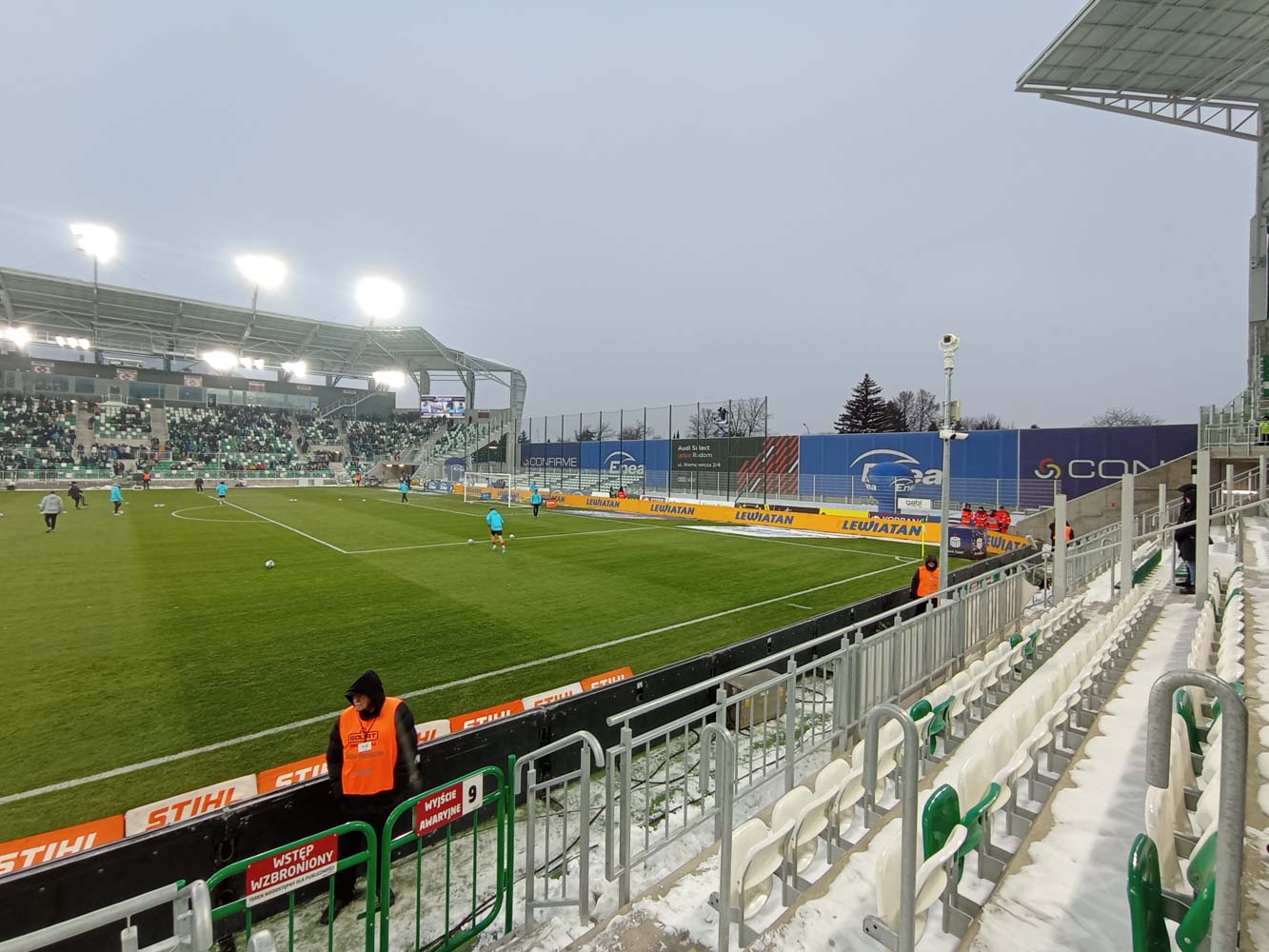
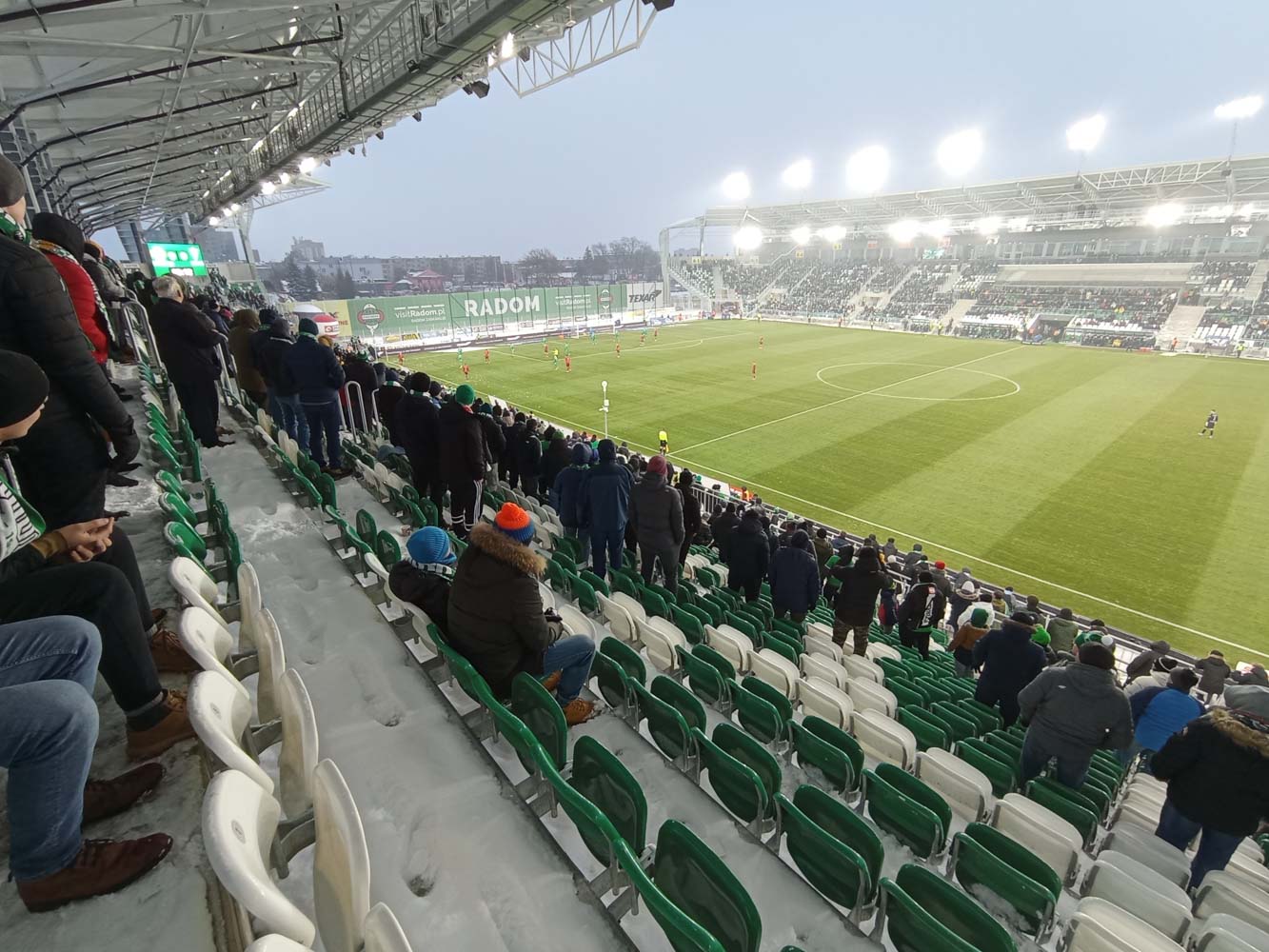
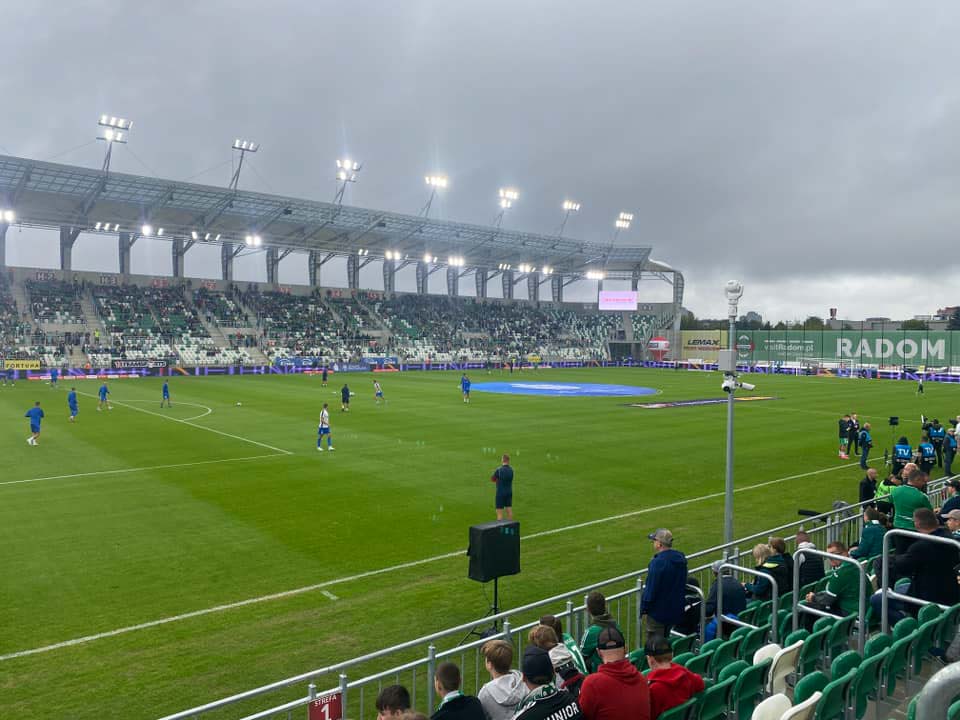
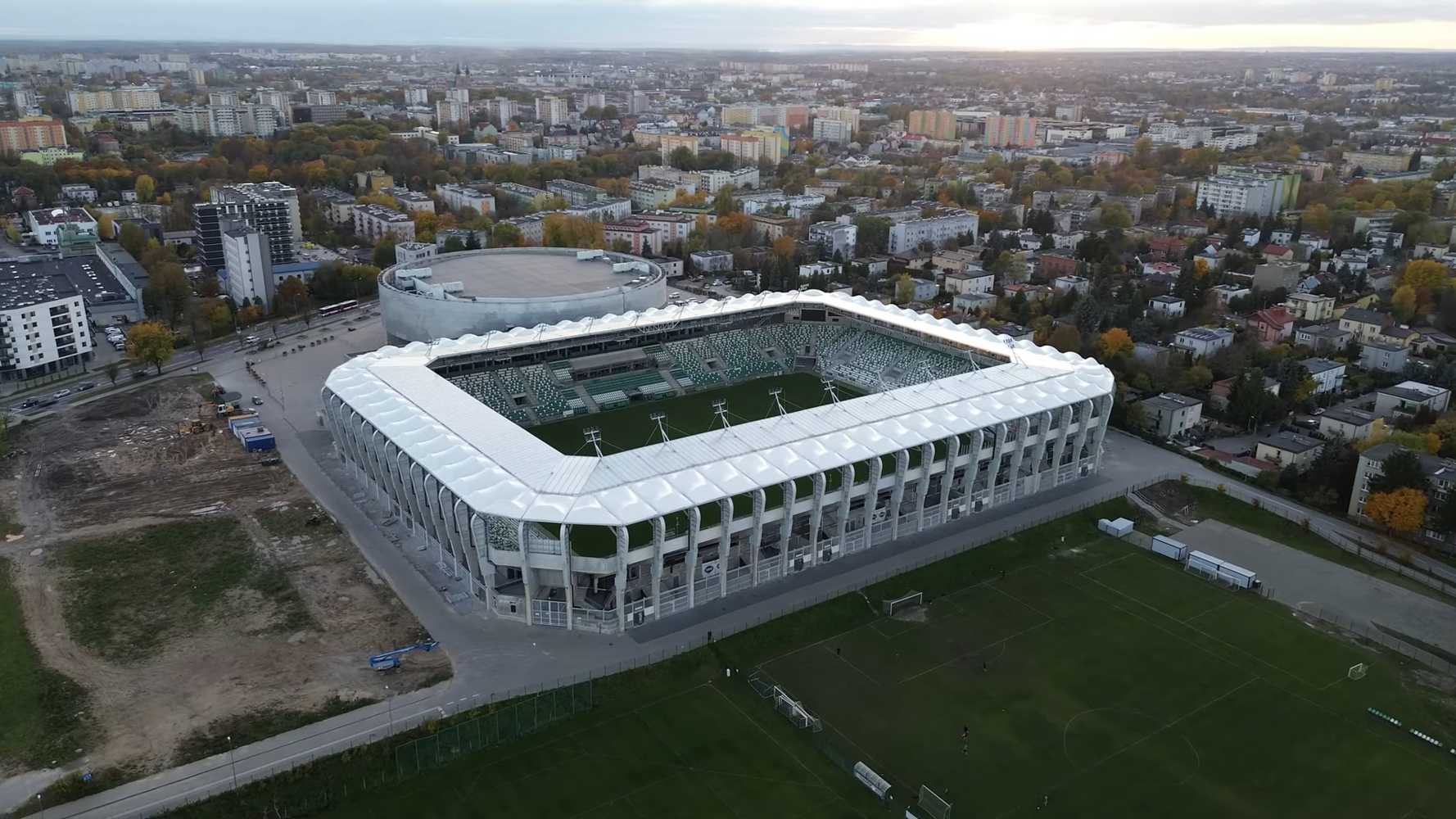
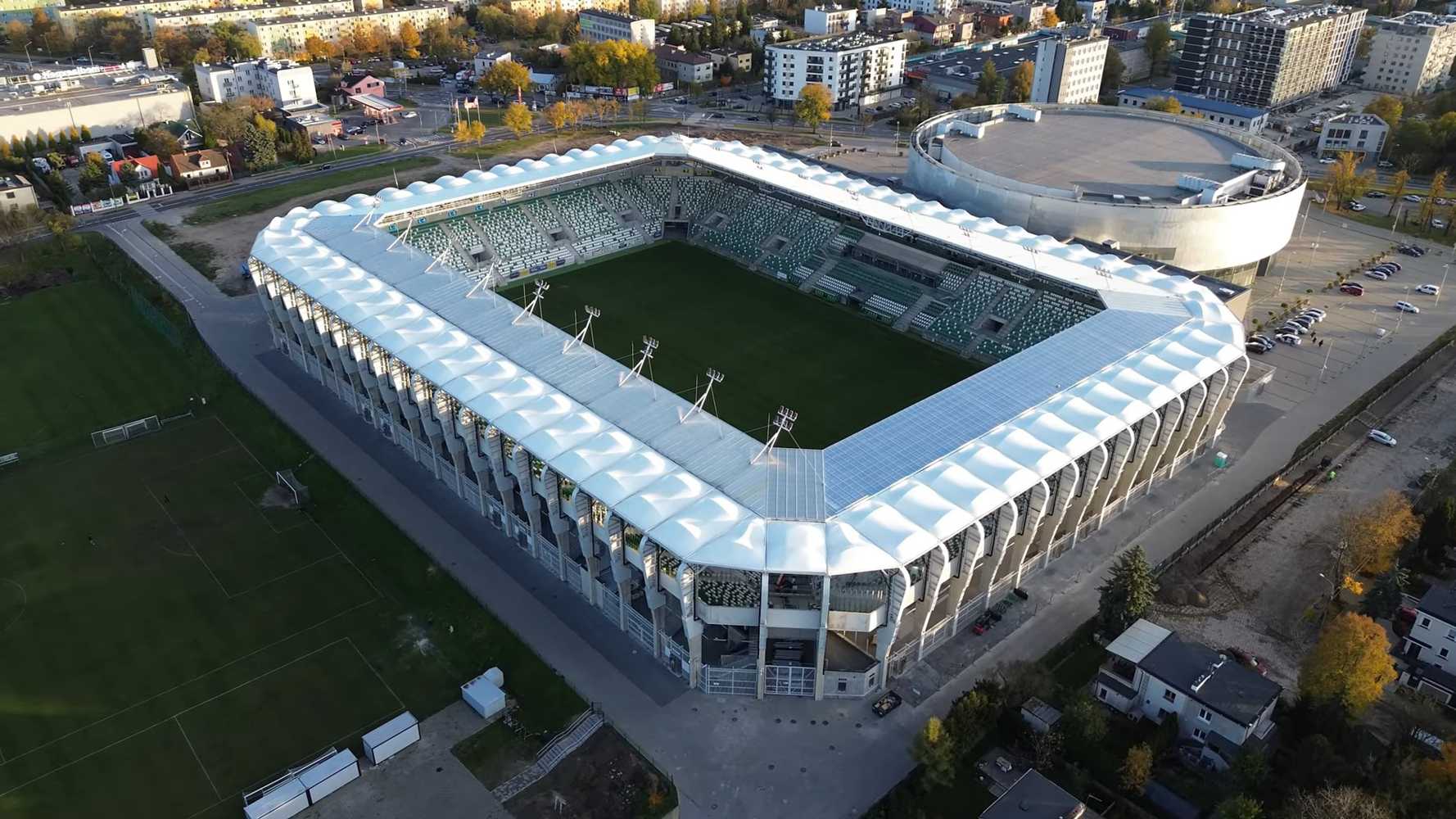
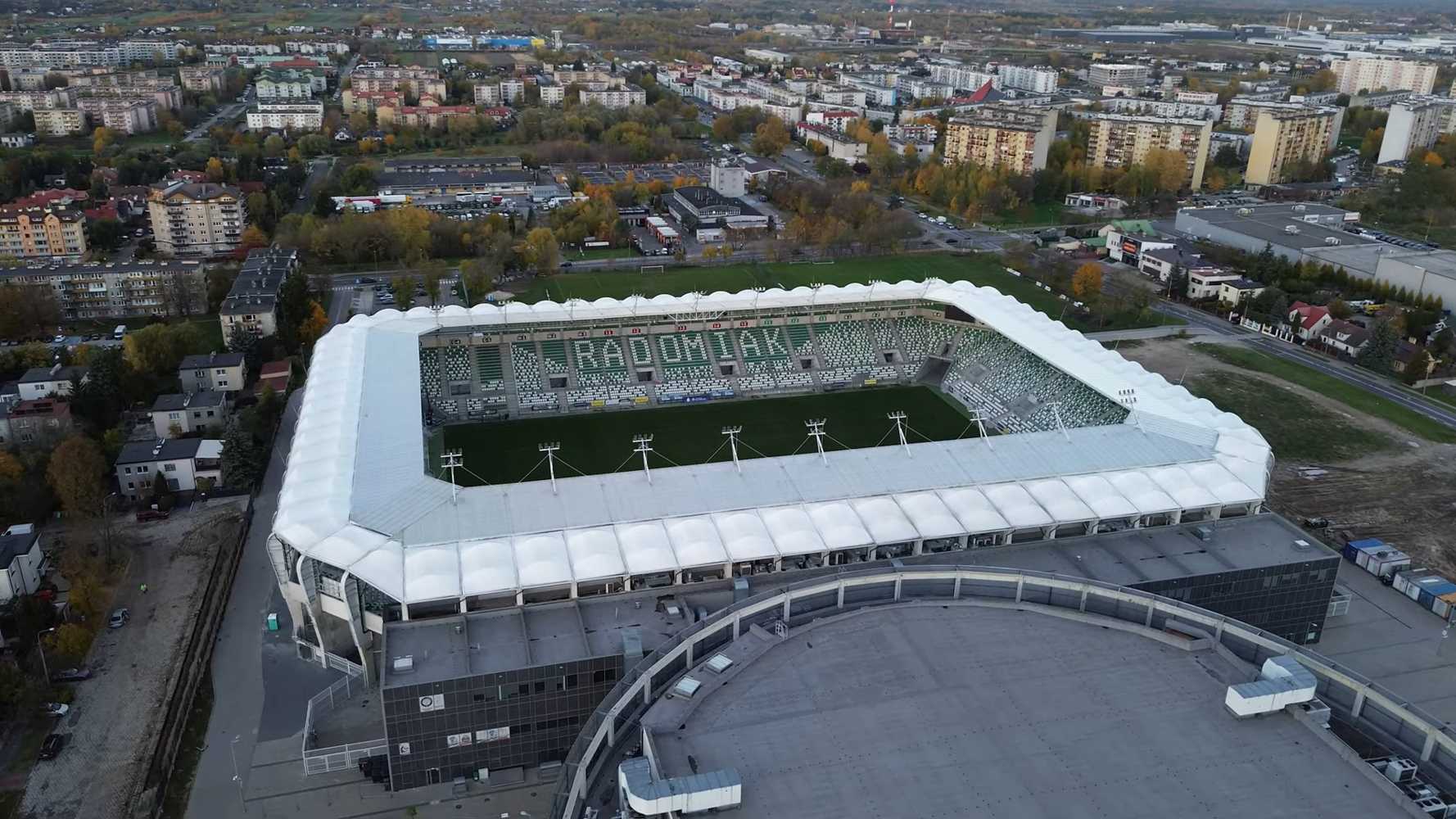
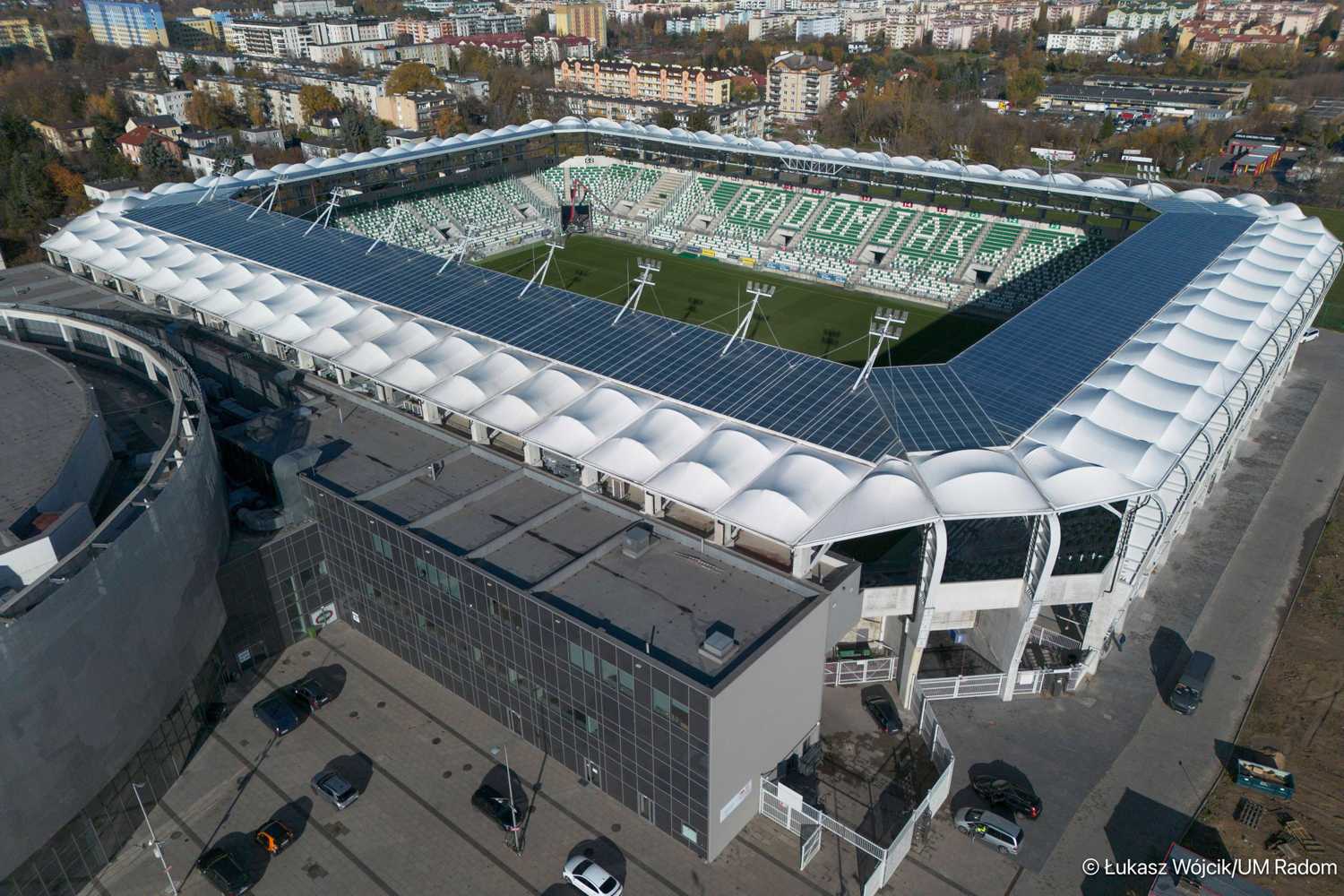
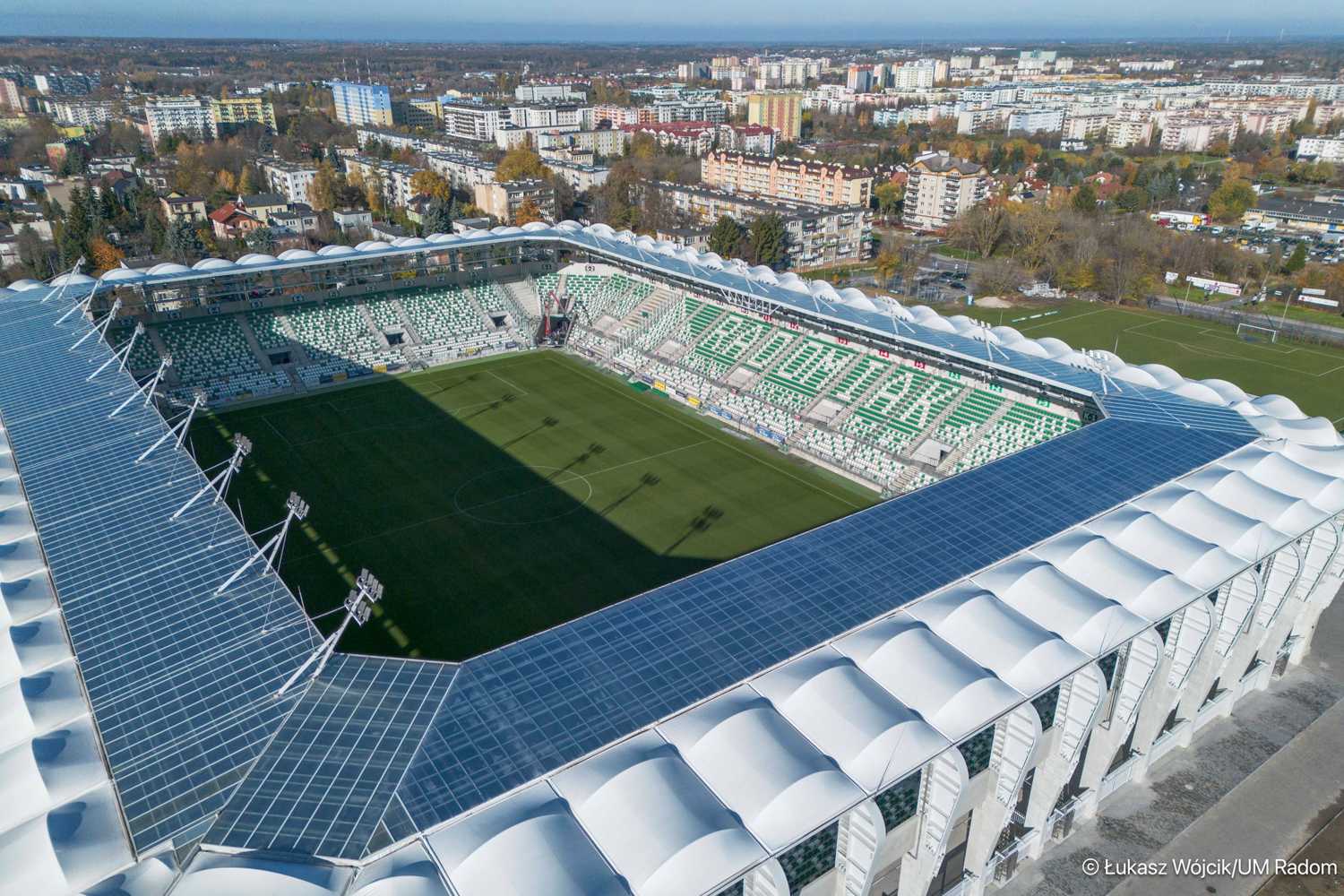
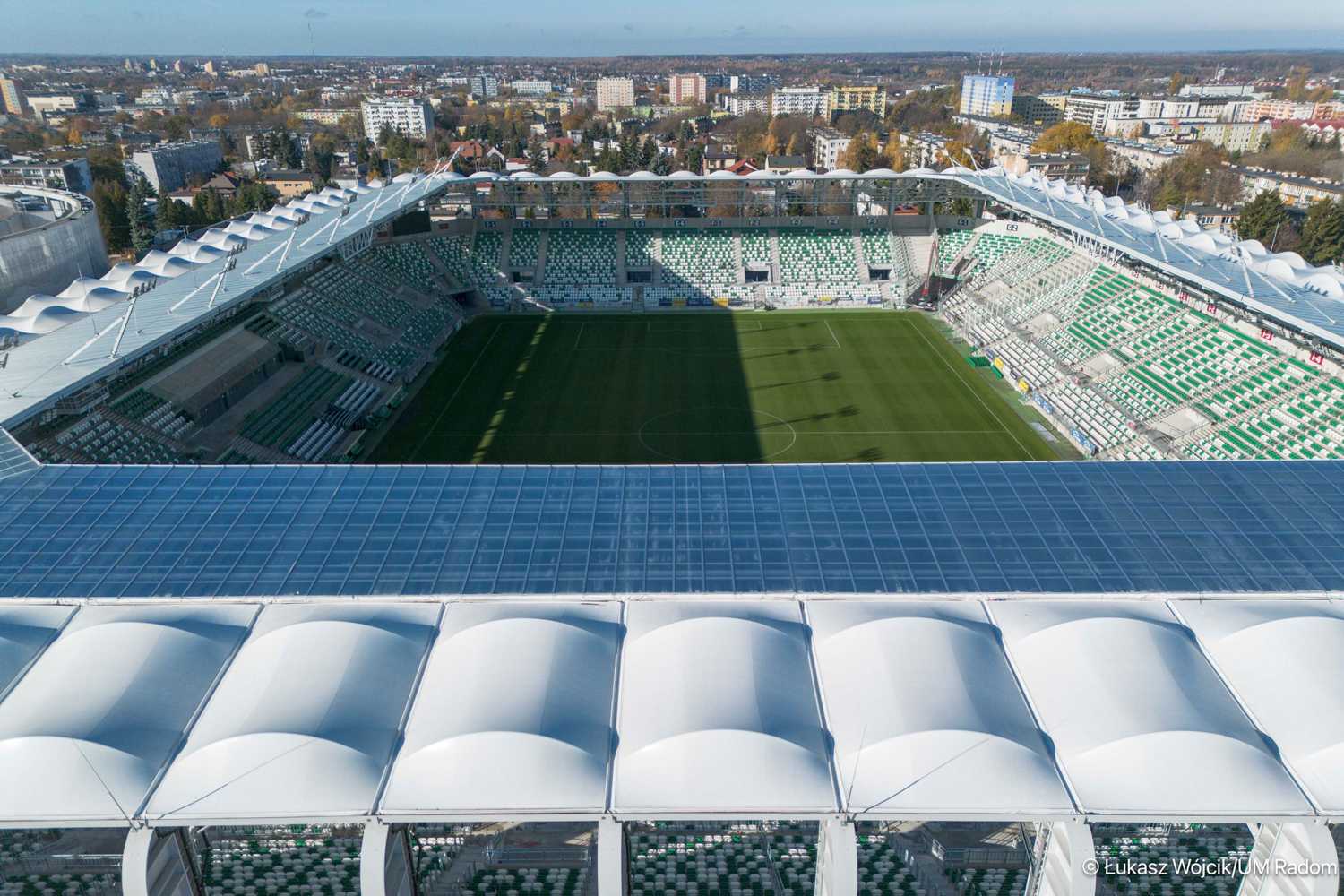
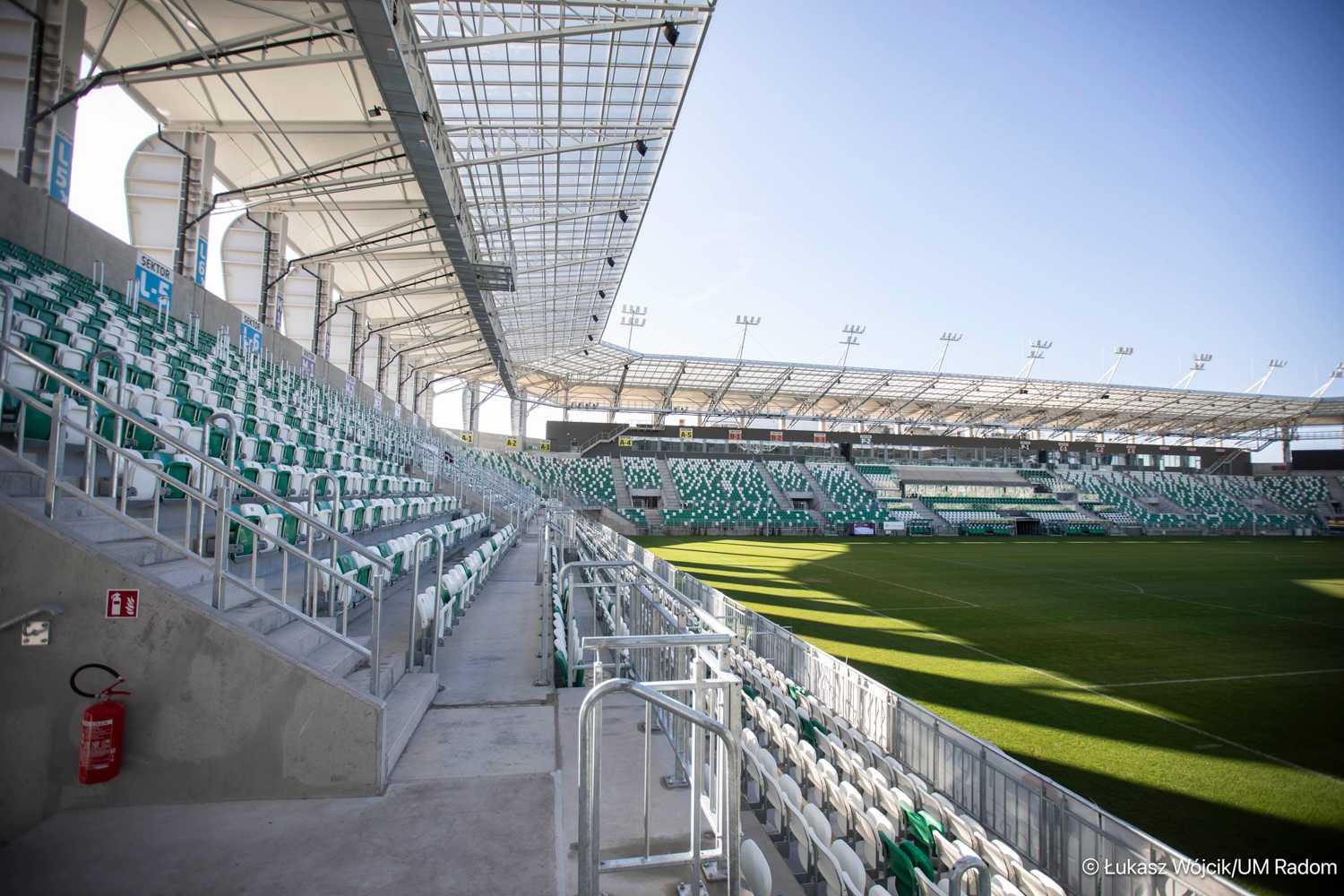
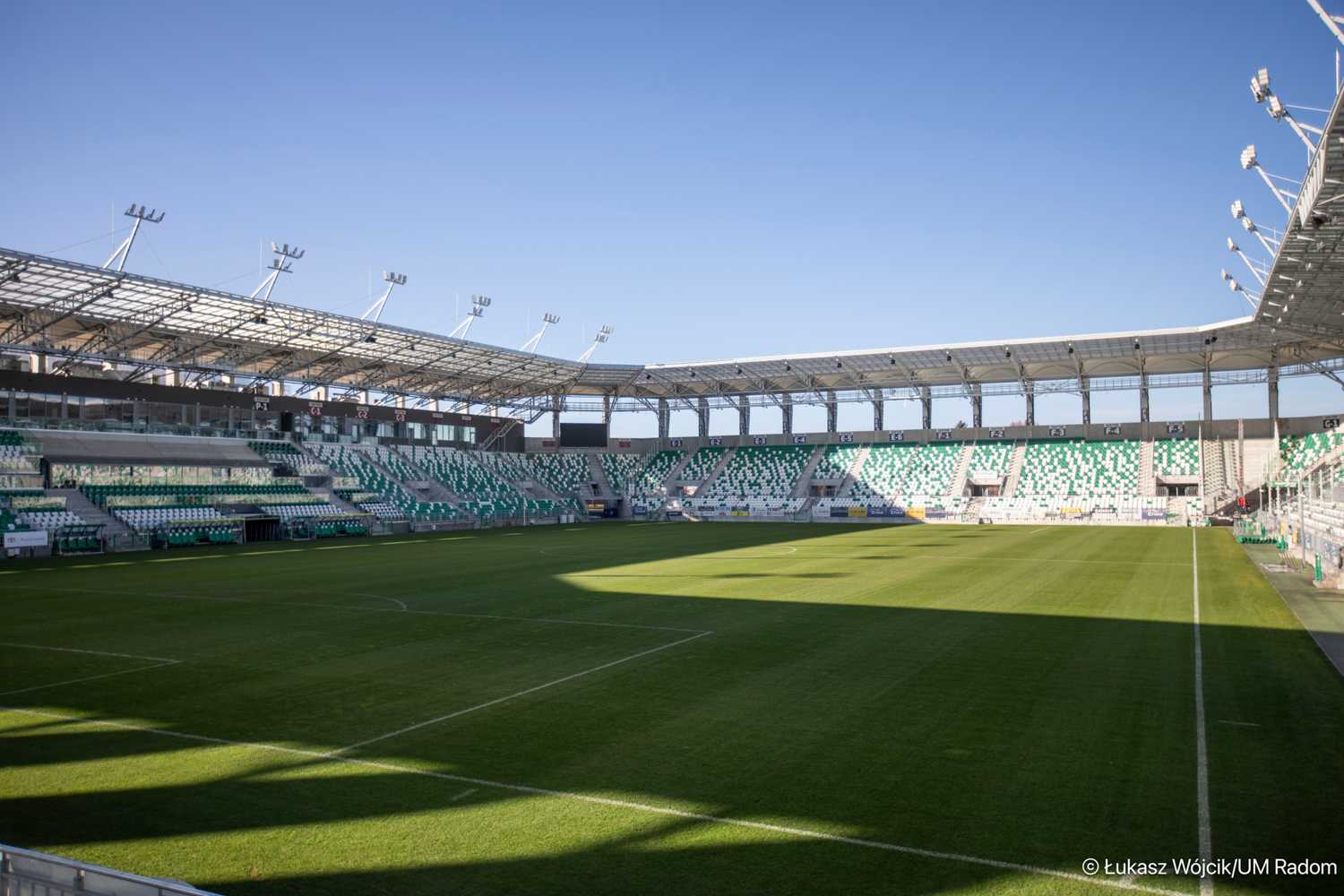
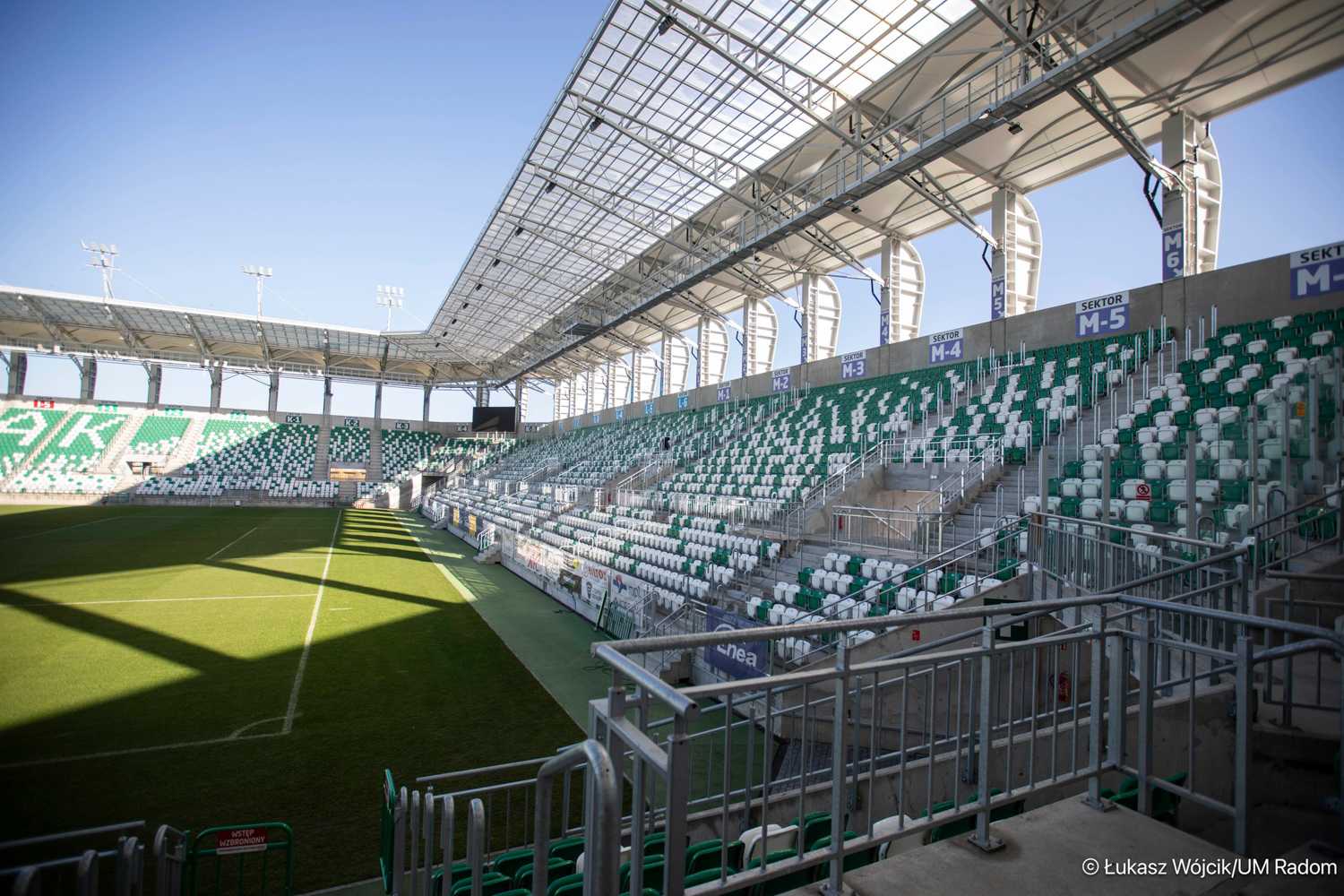
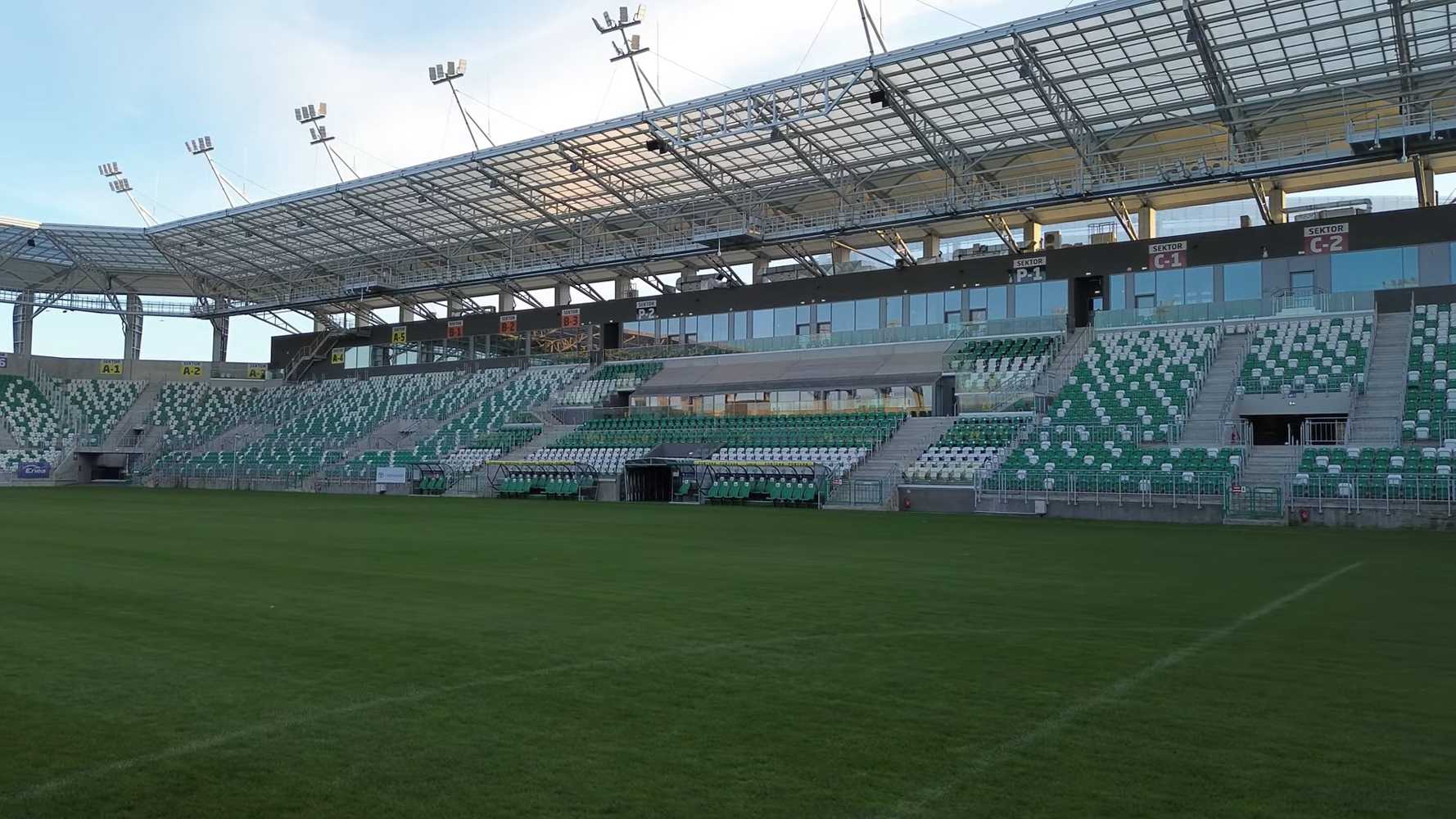
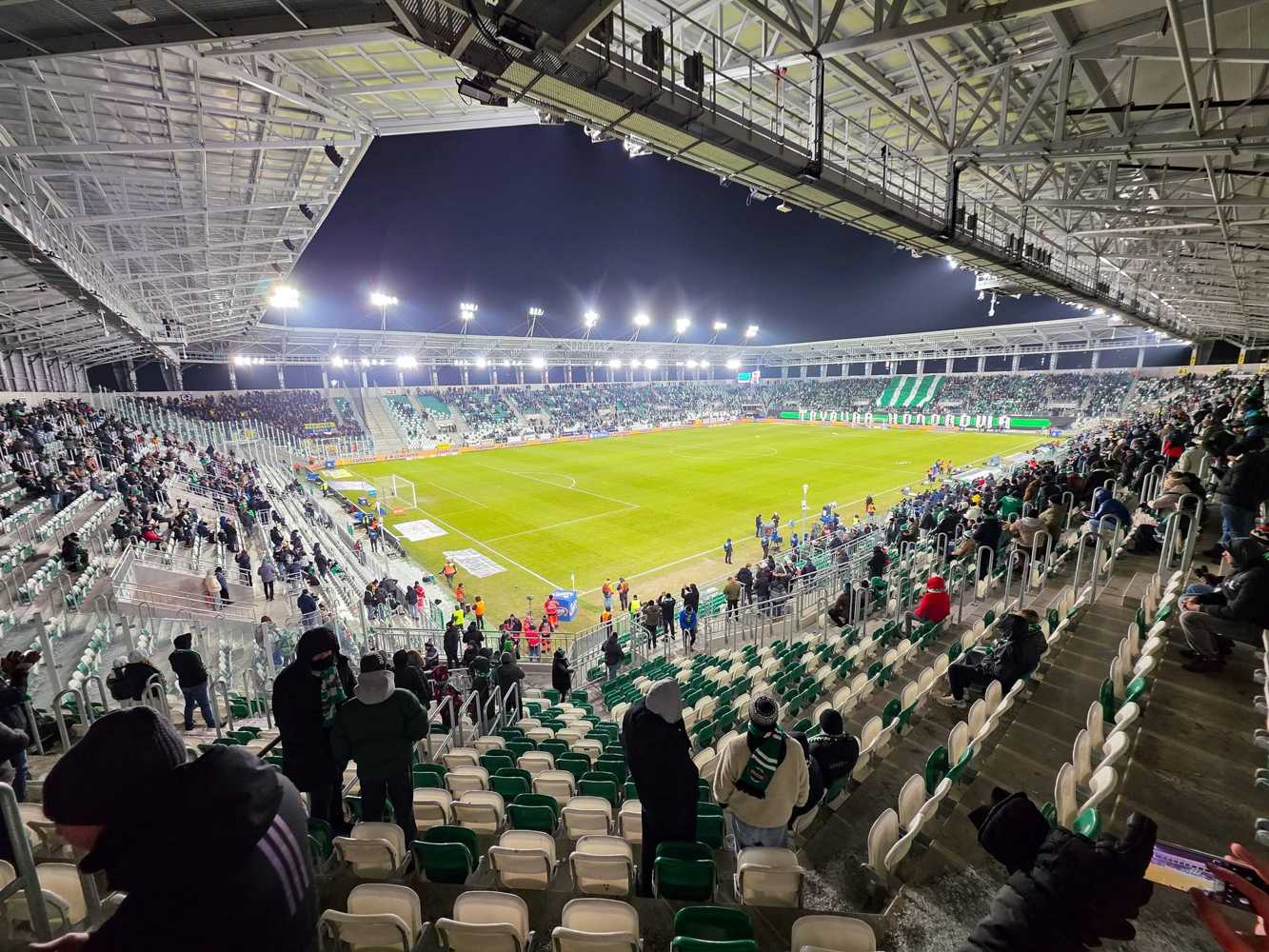
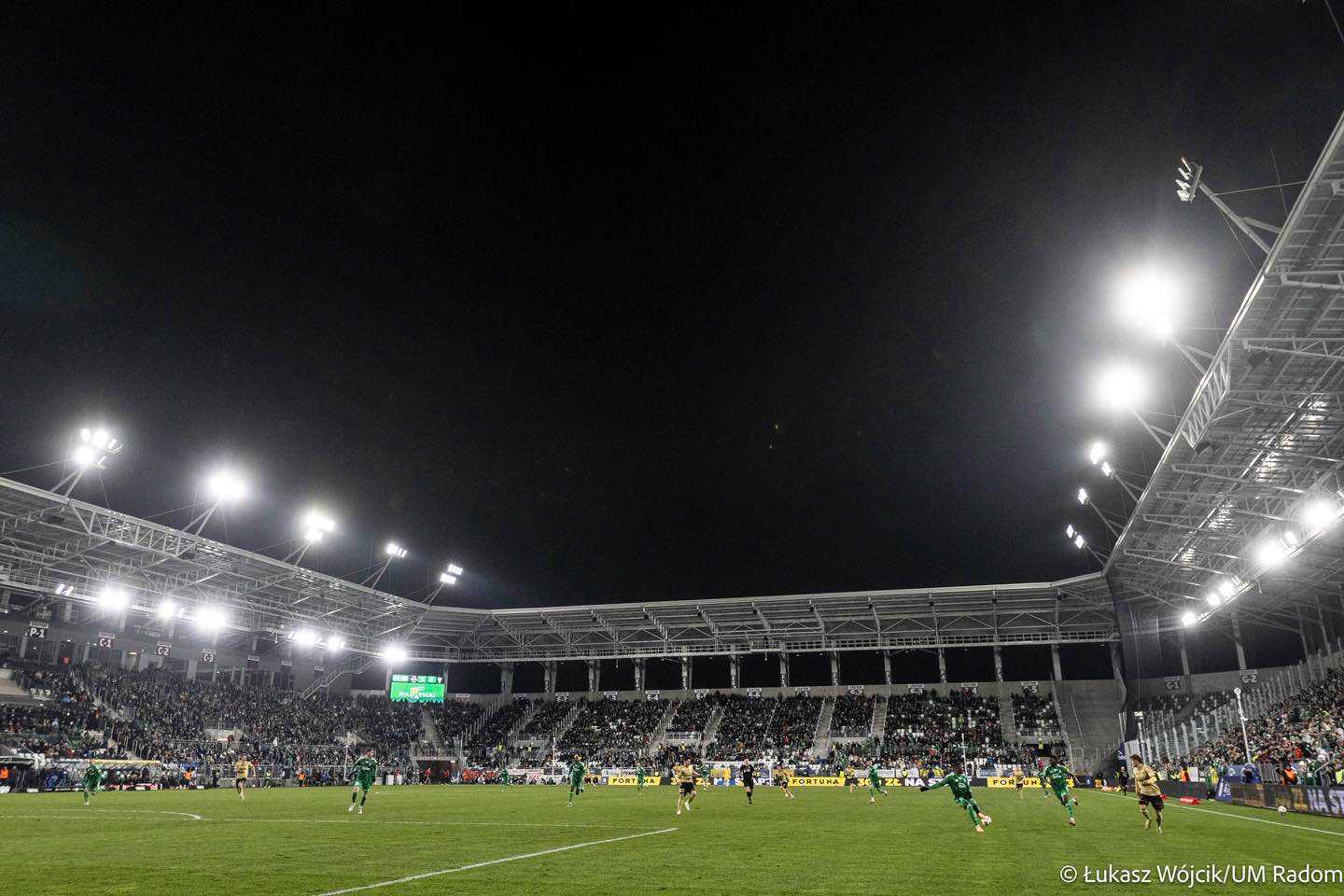
Radomiak’s arena consists of single-tier stands that surround the pitch on all four sides, creating a compact, cohesive structure with a modern football character. The seating area is covered by a lightweight roof made of white membrane and transparent polycarbonate panels.
The seats are colored in the club’s traditional green and white, with the northern stand forming the word “Radomiak.” Small video screens are located in two corners of the stadium. The total capacity is just under 14,500 spectators.
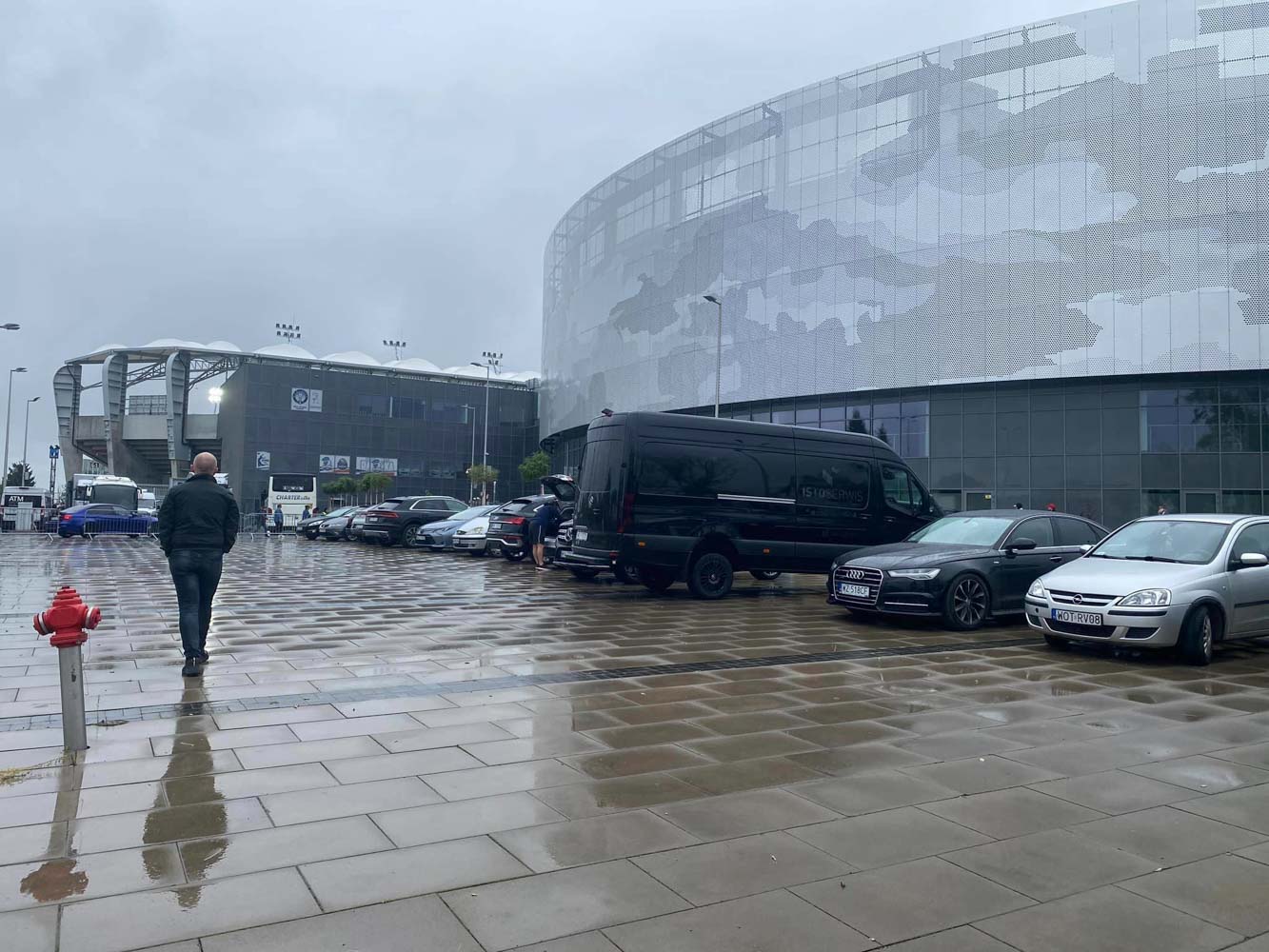
The main stand with VIP boxes is situated on the south side. On its outer side, it adjoins a circular sports hall, which together with the stadium forms the Radom Sports Centre.
Like its predecessor, the stadium on Struga Street is named after the Czachor brothers (Marian, Jerzy, Aleksander, and Ryszard), footballers and club officials who made significant contributions to the city and the club.
Advertisement
Pictures
-
25.10.2025 © Patryk P. / Pod Gołębnikiem 
25.10.2025 © Patryk P. / Pod Gołębnikiem 
25.10.2025 © Patryk P. / Pod Gołębnikiem 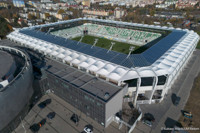
11.2025 © Łukasz Wójcik / Urząd Miejski w Radomiu 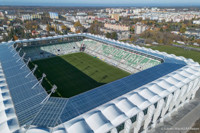
11.2025 © Łukasz Wójcik / Urząd Miejski w Radomiu 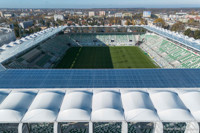
11.2025 © Łukasz Wójcik / Urząd Miejski w Radomiu 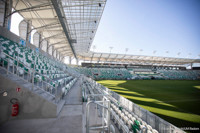
11.2025 © Łukasz Wójcik / Urząd Miejski w Radomiu 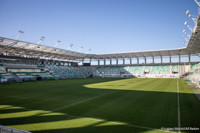
11.2025 © Łukasz Wójcik / Urząd Miejski w Radomiu 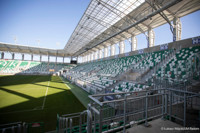
11.2025 © Łukasz Wójcik / Urząd Miejski w Radomiu 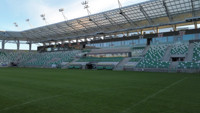
25.10.2025 © Patryk P. / Pod Gołębnikiem 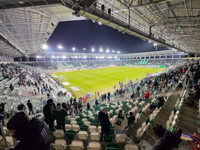
30.01.2026 © Styko Na Stadionach 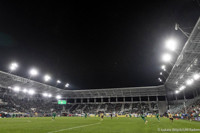
28.11.2025 © Łukasz Wójcik / Urząd Miejski w Radomiu 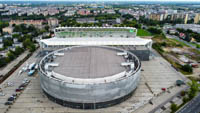
05.08.2023 © Styko Na Stadionach 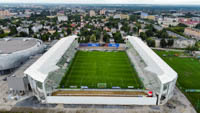
05.08.2023 © Styko Na Stadionach 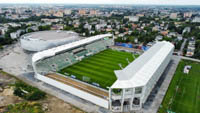
05.08.2023 © Styko Na Stadionach 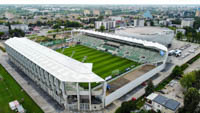
05.08.2023 © Styko Na Stadionach 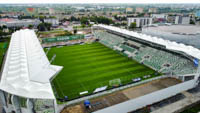
05.08.2023 © Styko Na Stadionach 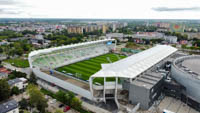
05.08.2023 © Styko Na Stadionach 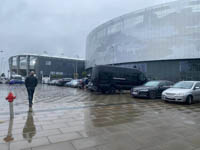
23.09.2023 © Stadium Guide 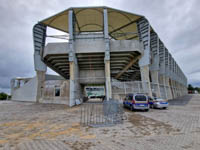
05.08.2023 © Styko Na Stadionach 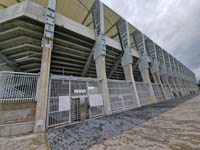
05.08.2023 © Styko Na Stadionach 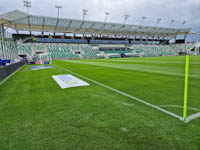
05.08.2023 © Styko Na Stadionach 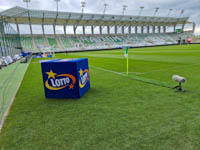
05.08.2023 © Styko Na Stadionach 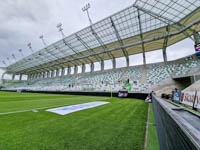
05.08.2023 © Styko Na Stadionach 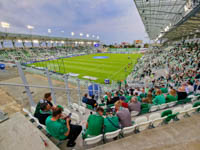
05.08.2023 © Styko Na Stadionach 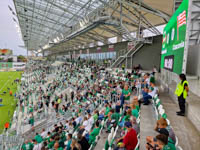
05.08.2023 © Styko Na Stadionach 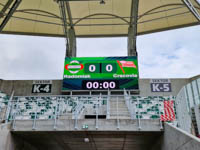
05.08.2023 © Styko Na Stadionach 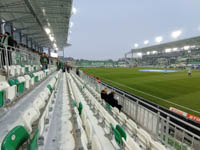
09.12.2023 © Jiří Klobasa 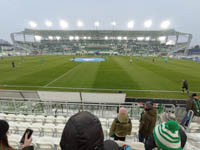
09.12.2023 © Jiří Klobasa 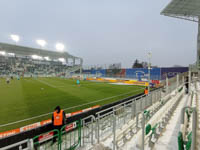
09.12.2023 © Jiří Klobasa 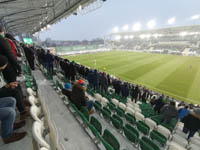
09.12.2023 © Jiří Klobasa 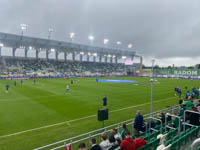
23.09.2023 © Stadium Guide 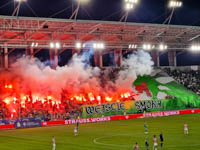
05.08.2023 © Styko Na Stadionach
2023–2024: