 StadiumDB
SOTY: Official results of the Stadium of the Year 2025 contest. Who wins the title?
source: StadiumDB.com ; author: Kuba Kowalski
 We have concluded the 16th edition of the Stadium of the Year contest, which means another venue joins the pantheon of fifteen previous winners. How many people took part in the vote, how many points did the stadiums receive and what exactly do the podium arenas look like?
Advertisement
The Stadium of the Year 2025 contest has come to an end. We would like to thank all readers and fans of stadium architecture for taking part in the vote, which – as every year – attracted participants from all over the world. In this edition, a total of 7,451 votes were cast, while participants evaluated 28 new stadiums that opened worldwide in 2025.
You can check the full results on our Stadium of the Year 2025 subpage. In this article, we take a closer look at the podium of the contest.
3rd place: Claro Arena – a modern stadium in Santiago
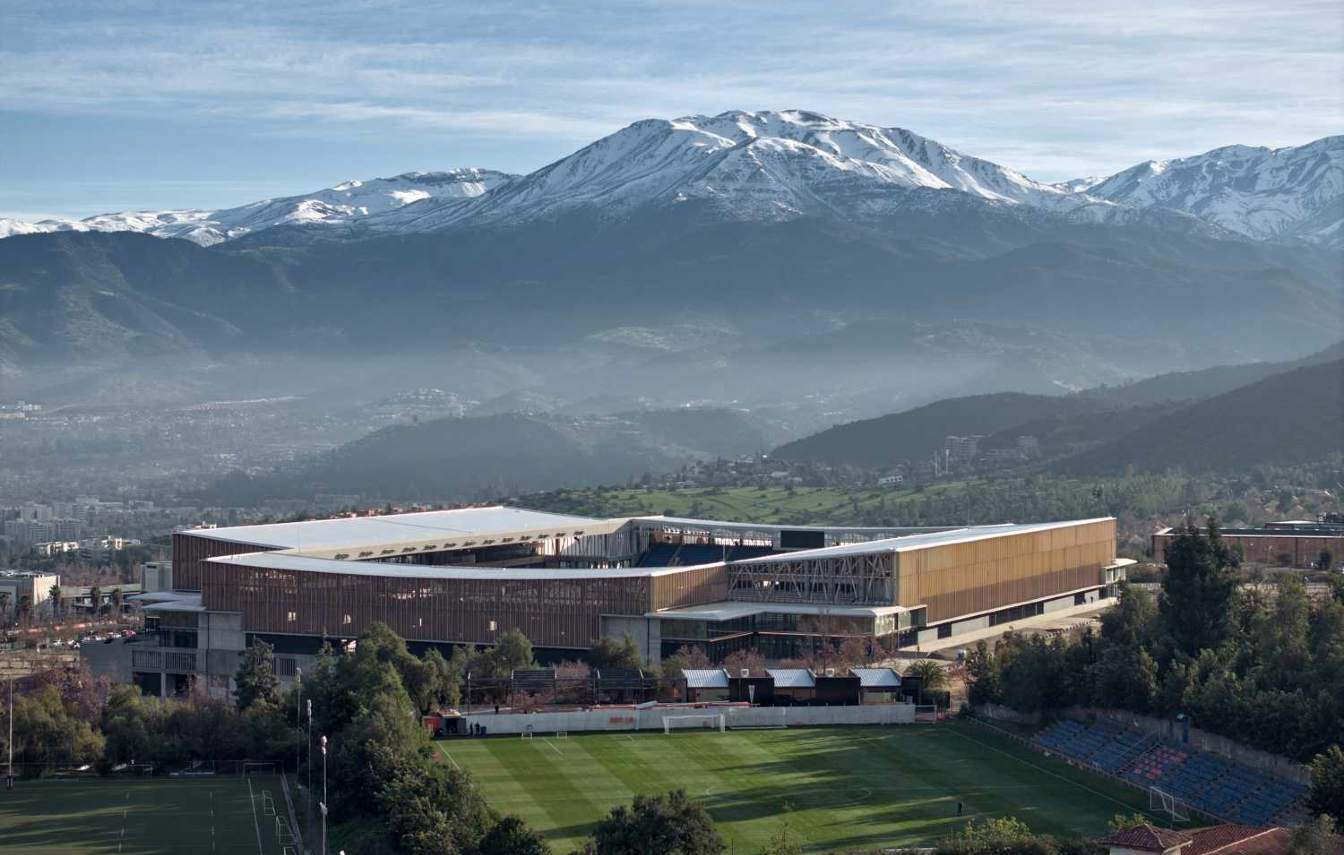
The podium of the contest is completed by Claro Arena in Santiago, which received 10,318 points. The stadium of Universidad Católica is an example of a modern transformation of an existing venue that turned the former San Carlos de Apoquindo Stadium into one of the most innovative football arenas in South America.
The venue originally opened in 1988, but between 2022 and 2025 it underwent a major reconstruction that increased its capacity to 20,249 seats. The project introduced new stands, a roof structure and a redesigned stadium infrastructure, while preserving part of the historic construction above which a modern, lightweight system of stands and concourses was built.
One of the most important aspects of the project is its focus on sustainability. The stadium uses renewable energy, photovoltaic installations and solutions designed to reduce energy and water consumption. Thanks to this approach, Claro Arena has become one of the most environmentally friendly stadiums in the region and a model for future stadium redevelopments in South America.
 © Cristóbal Palma / IDOM
2nd place: Grand Stade de Tanger – a giant after a spectacular redevelopment
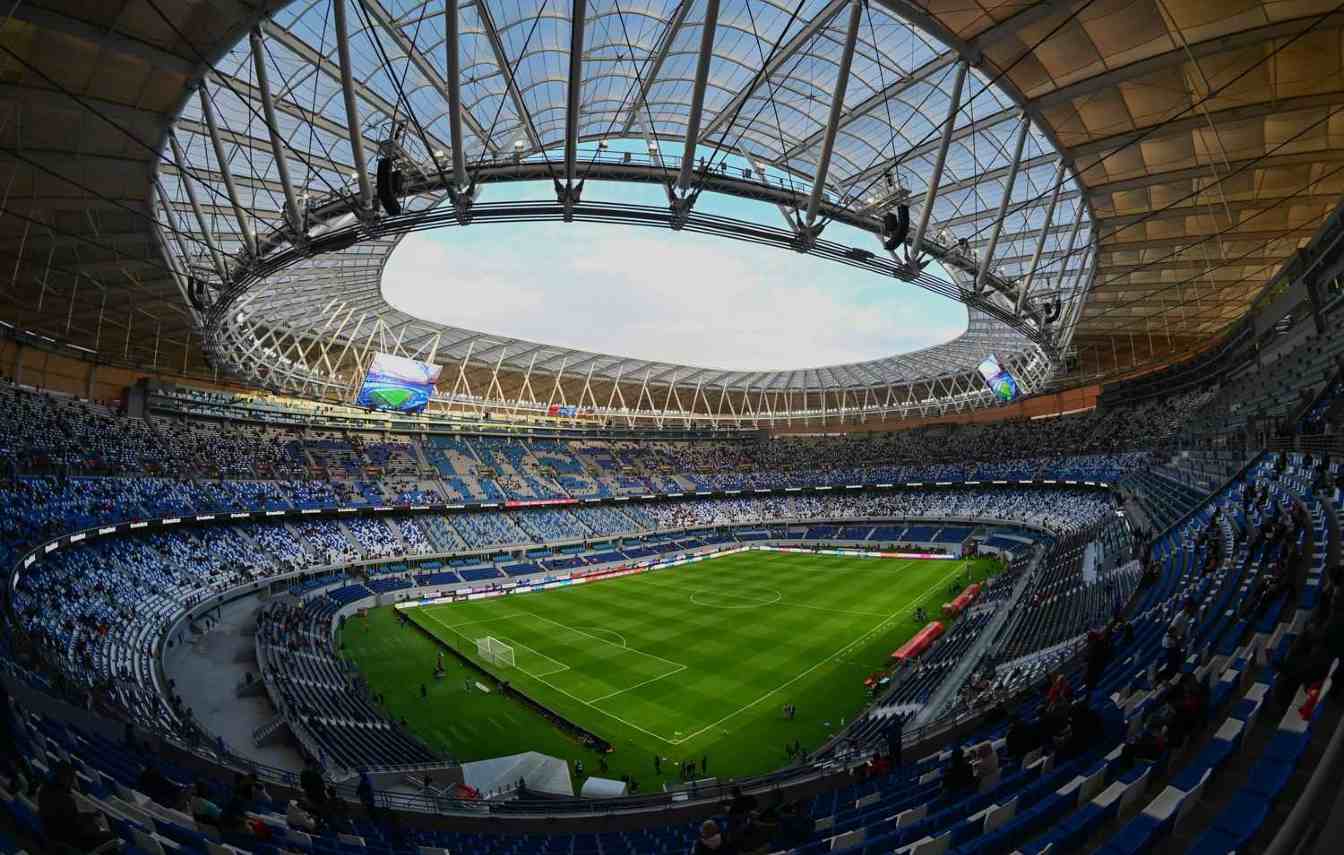
Second place in the contest went to Grand Stade de Tanger, which collected 10,453 points. It is the largest stadium in Morocco, and after its redevelopment it can accommodate around 75,500 spectators, making it one of the most impressive football stadiums in Africa.
The stadium originally opened in 2011, but between 2023 and 2025 it underwent a comprehensive transformation that completely changed its character. The athletics track was removed, the pitch was lowered and the stands were moved closer to the field, turning the venue into a fully football-specific stadium meeting modern FIFA standards.
The renovation also included the construction of a massive roof and new lighting and broadcast systems. As a result, the stadium in Tangier will be one of the key venues of the 2025 Africa Cup of Nations and the 2030 FIFA World Cup, further highlighting its importance in Morocco’s plans to host major international tournaments.
 © TotalEnergies Africa Cup of Nations
Stadium of the Year 2025: triumph of Morocco’s new national stadium
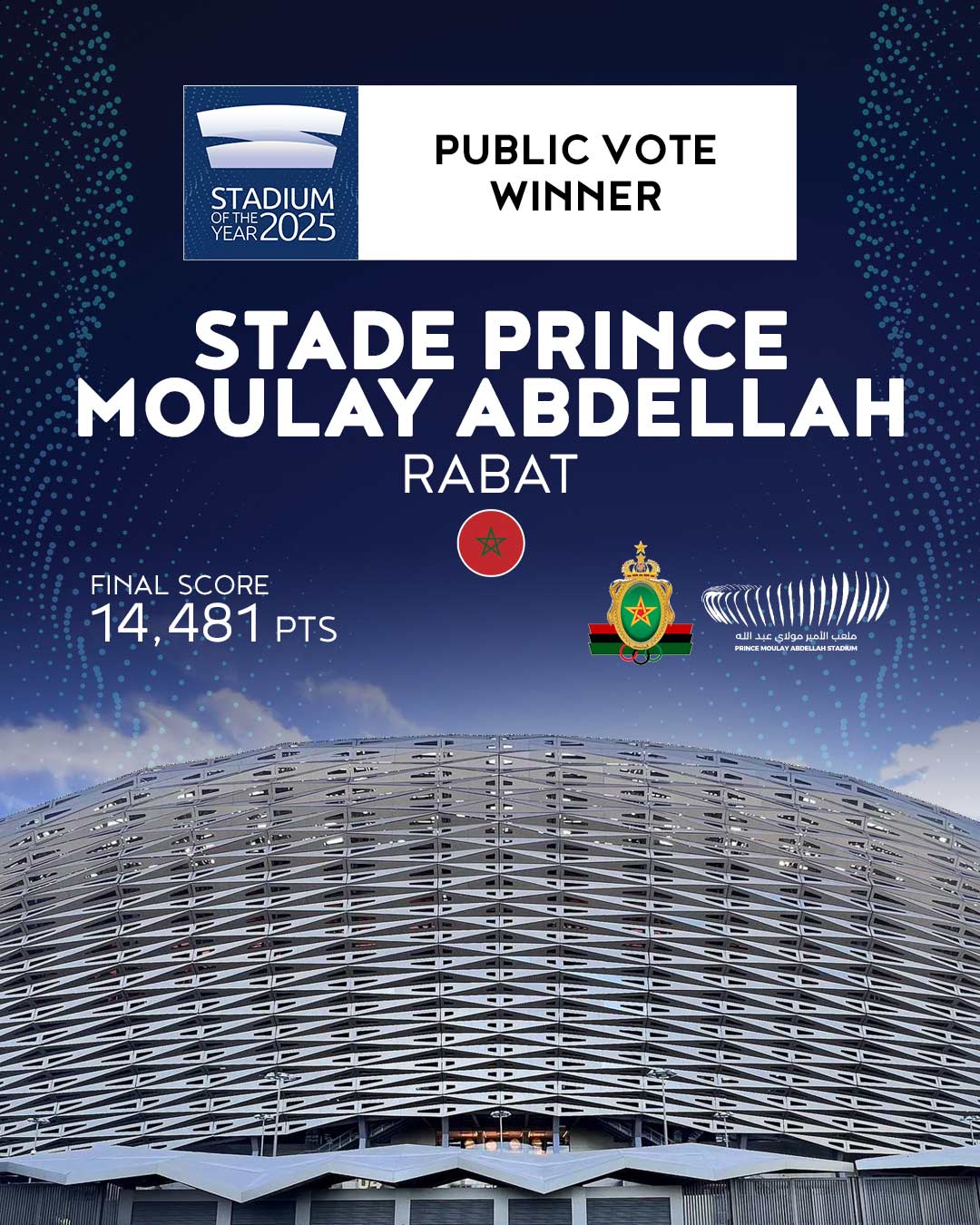
The winner of the Stadium of the Year 2025 contest is Stade Prince Moulay Abdellah in Rabat, which received 14,481 points, clearly ahead of the other finalists. The new stadium of the Moroccan national team has become a symbol of the country’s massive sports infrastructure investments ahead of the 2025 Africa Cup of Nations and the 2030 FIFA World Cup.
The venue in Rabat was built in a remarkably short time – construction began in 2023, and the stadium opened in September 2025. The arena can accommodate around 69,500 spectators and is one of the largest stadiums in the country, forming part of a wider sports complex that also includes an indoor arena, an athletics stadium and an Olympic swimming pool.
Designed by the architectural practice Populous, the project focuses on creating an intense football atmosphere, with stands positioned very close to the pitch to enhance acoustics and crowd energy. The façade features modern LED lighting, and the stadium was designed in line with FIFA requirements, allowing it to host even World Cup semi-final matches in 2030.
Winning the vote is therefore not only recognition of the stadium’s architecture, but also a reflection of the dynamic development of sports infrastructure in Morocco, which has invested billions in recent years in new venues ahead of the world’s biggest football events.
Advertisement