 StadiumDB
Stade Al Medina
| Capacity | 18 000 |
|---|---|
| Country | Morocco |
| City | Rabat |
| Clubs | Union Touarga Sport |
| Other names | Stade Al Barid |
| Inauguration | 13/11/2025 |
| Construction | 2024–2025 |
| Cost | MAD 1.5 B ($162 M) |
| Design | Amine Hjiaj, Pictogramme |
| Contractor | Travaux Généraux de Construction de Casablanca, Inter Tridim |
Advertisement
Stade Al Medina – stadium description
How does Stade Al Medina look in brief?
The new Stade Al Medina was built as part of Morocco’s preparations to host the 2025 Africa Cup of Nations. As a result, Union Touarga Sport received a modern, high-standard football arena with a capacity of 18,000 spectators, replacing their previous, very modest and neglected stadium (Stade Al Barid).
The project required the demolition not only of the old stadium but also of numerous surrounding buildings. Despite a tight schedule, the stadium was completed on time and inaugurated more than a month before the start of AFCON 2025.
How did the Stade Al Medina come about?
Stade Al Medina was conceived as part of preparations for the 2025 Africa Cup of Nations – information about its construction plans emerged at the end of 2023, several months after Morocco was exceptionally designated as the tournament host.
The stadium was planned to replace the old Stade Al Barid, a very modest facility where Union Touarga Sport (UTS) played its matches. Since 2022, UTS has competed in the Botola Pro, Morocco’s top-tier league.
The investment was initiated by the state authorities and executed on their behalf by L’Agence Nationale des Équipements Publics (ANEP). The architectural competition was concluded in August 2024, and the winning design was submitted by Amine Hjiaj of the Casablanca-based studio Pictogramme.
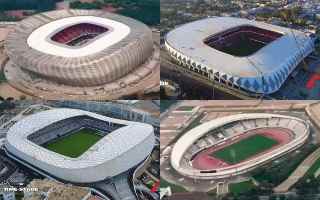
The new Stade Al Medina is one of several modern stadiums built around the same time in Morocco’s capital, Rabat, largely in connection with preparations for the 2025 Africa Cup of Nations and the 2030 FIFA World Cup – alongside the large Stade Prince Moulay Abdellah, the Stade Olympique de Rabat for athletics, and Stade Moulay El Hassan.
How did the old Stade Al Barid look?
The old stadium was built in the early 1970s, together with the adjacent sports hall, Salle Ibn Yassine. It featured a small covered stand on the west side and a few rows of seating on the east, with a total capacity estimated at around 2,000 spectators.
The stadium was located in an attractive area, in the Agdal district, close to Rabat’s main railway stations, the National Library, and other institutions. In 2019, a new shopping center, Arribat Center, opened on the plot immediately to the south, followed by a Marriott hotel in 2022.
When was the Stade Al Medina built?
Demolition of the old stadium and preparatory works began in the second half of 2024. In November 2024, the contract for the main contractor was awarded to Travaux Généraux de Construction de Casablanca (TGCC).
The contract was valued at 692 million dirhams, although earlier estimates had suggested the stadium could be built for 300–400 million. TGCC carried out the project together with the company Inter Tridim, and the first major construction works began at the end of 2024.
To make way for the new, much larger stadium, not only the old facility but also the buildings to the east – up to Avenue Ibn Khaldoun – were demolished, and a small street along the northern edge of the site was removed.
The works proceeded at a very rapid pace, allowing the stadium to be completed more than a month before the Africa Cup of Nations. There had been plans to finish it in time for the Women’s U-17 World Cup, held at the turn of October and November 2025, but this ultimately proved impossible. By the end, the total cost of the project had risen to over 1.5 billion dirhams.
During construction, the new stadium was still referred to by the name of its predecessor, Stade Al Barid. However, before the inauguration it received a new name – Stade Al Medina.
When was the Stade Al Medina inaugurated?
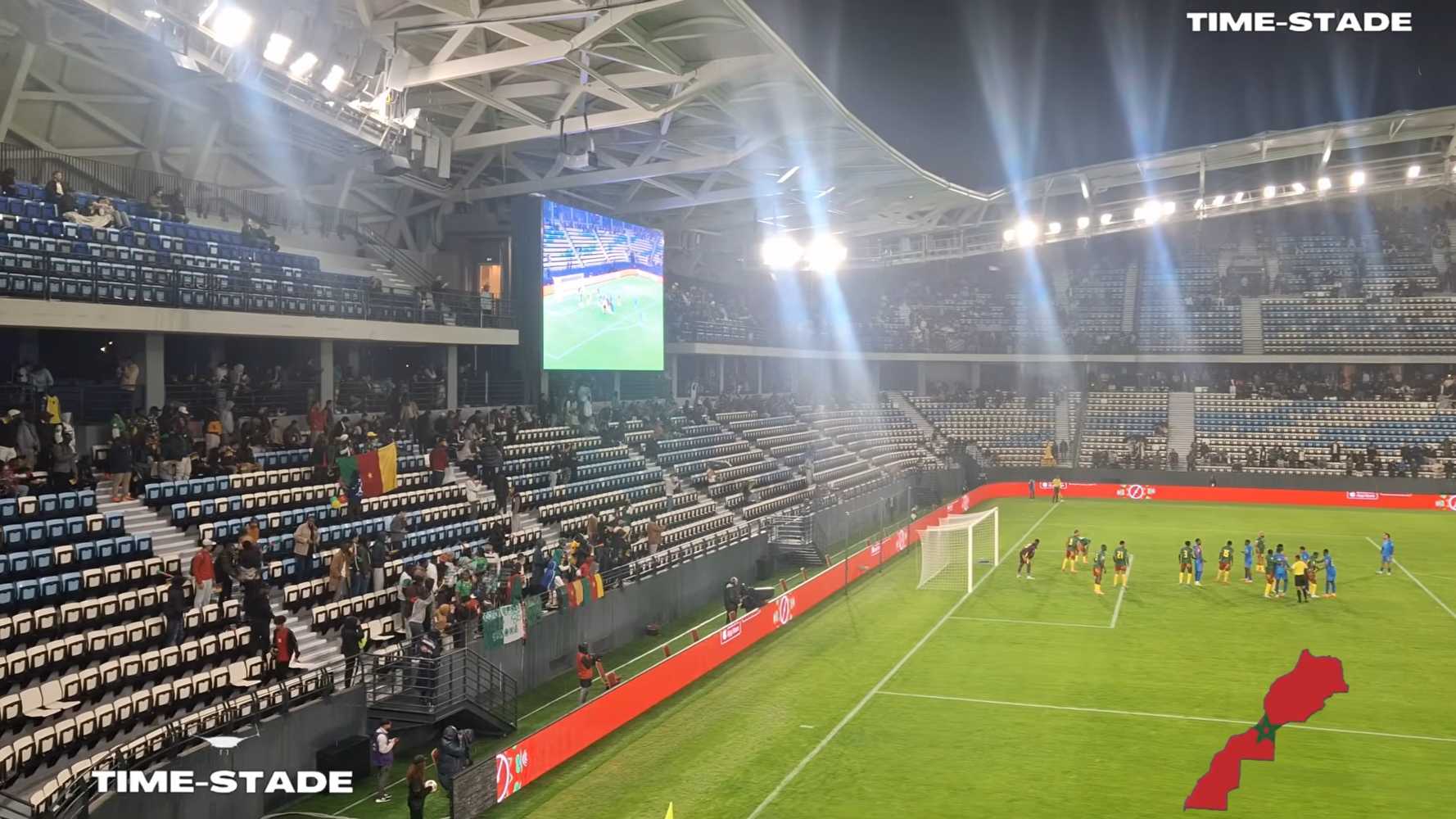
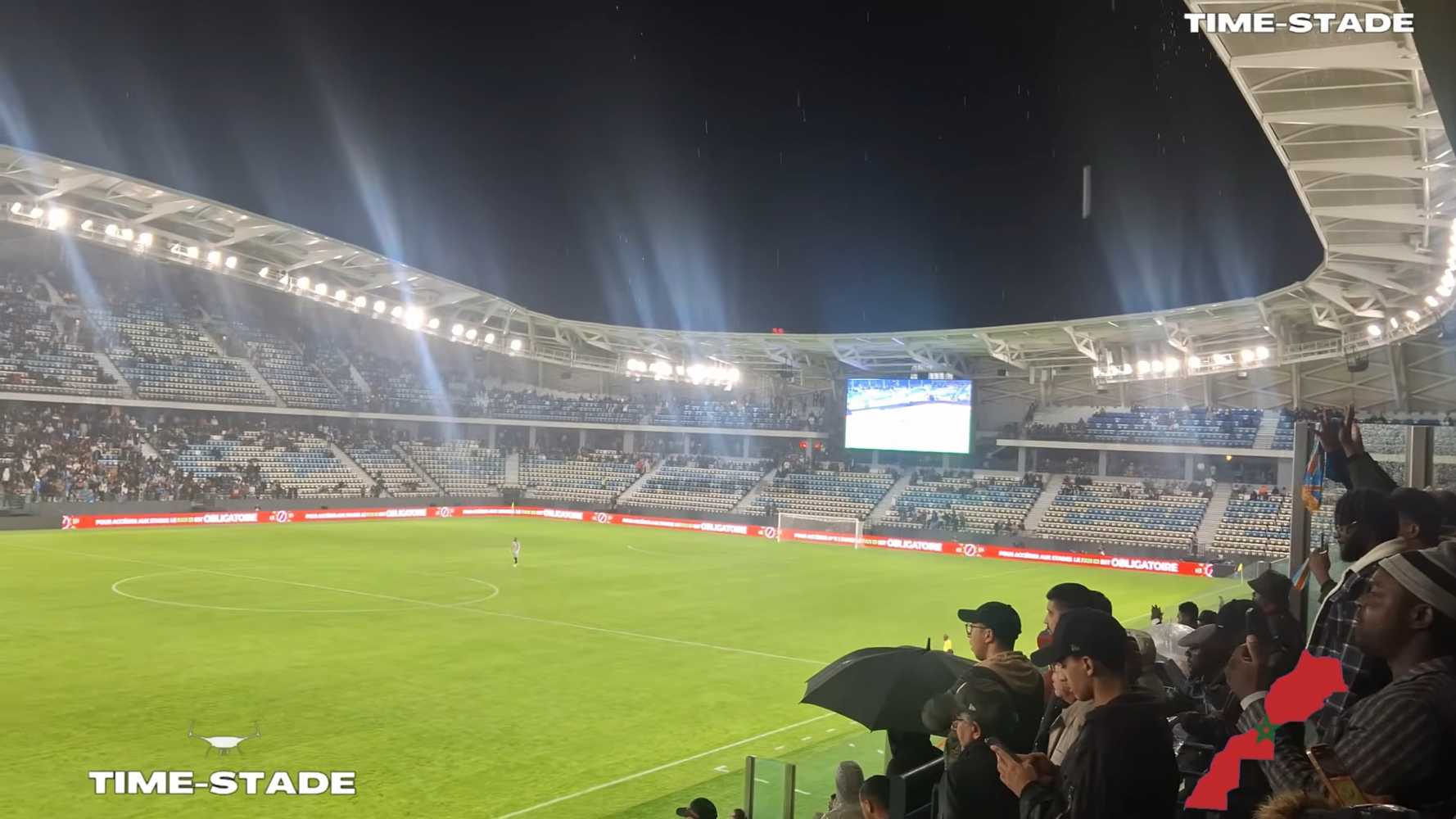
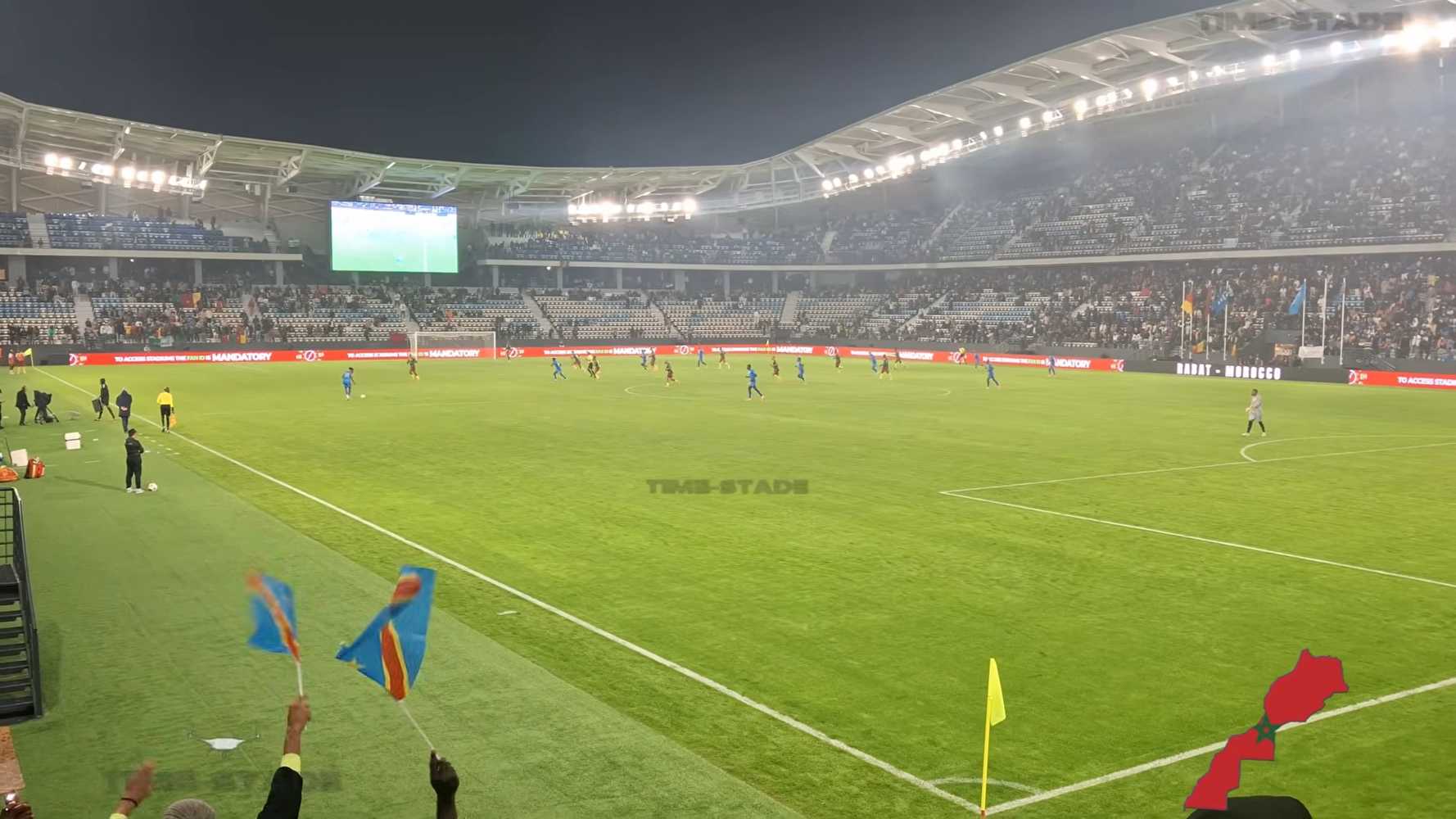
The stadium was inaugurated on 13 November 2025 with a match between the national teams of Cameroon and the Democratic Republic of the Congo. The game ended with a 1–0 victory for DR Congo, thanks to a goal scored in stoppage time.
The match was part of the second round of African qualifiers for the 2026 World Cup. At that time, a mini-tournament involving four teams was held in Rabat, with the winners advancing to the intercontinental playoffs.
The match served as a semi-final, with the winner advancing to the final. The other two games of the mini-tournament – the second semi-final and the final – were held at the new Stade Moulay Hassan, which was inaugurated simultaneously.
What does the Stade Al Medina look like?
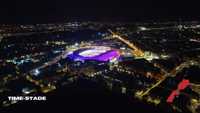
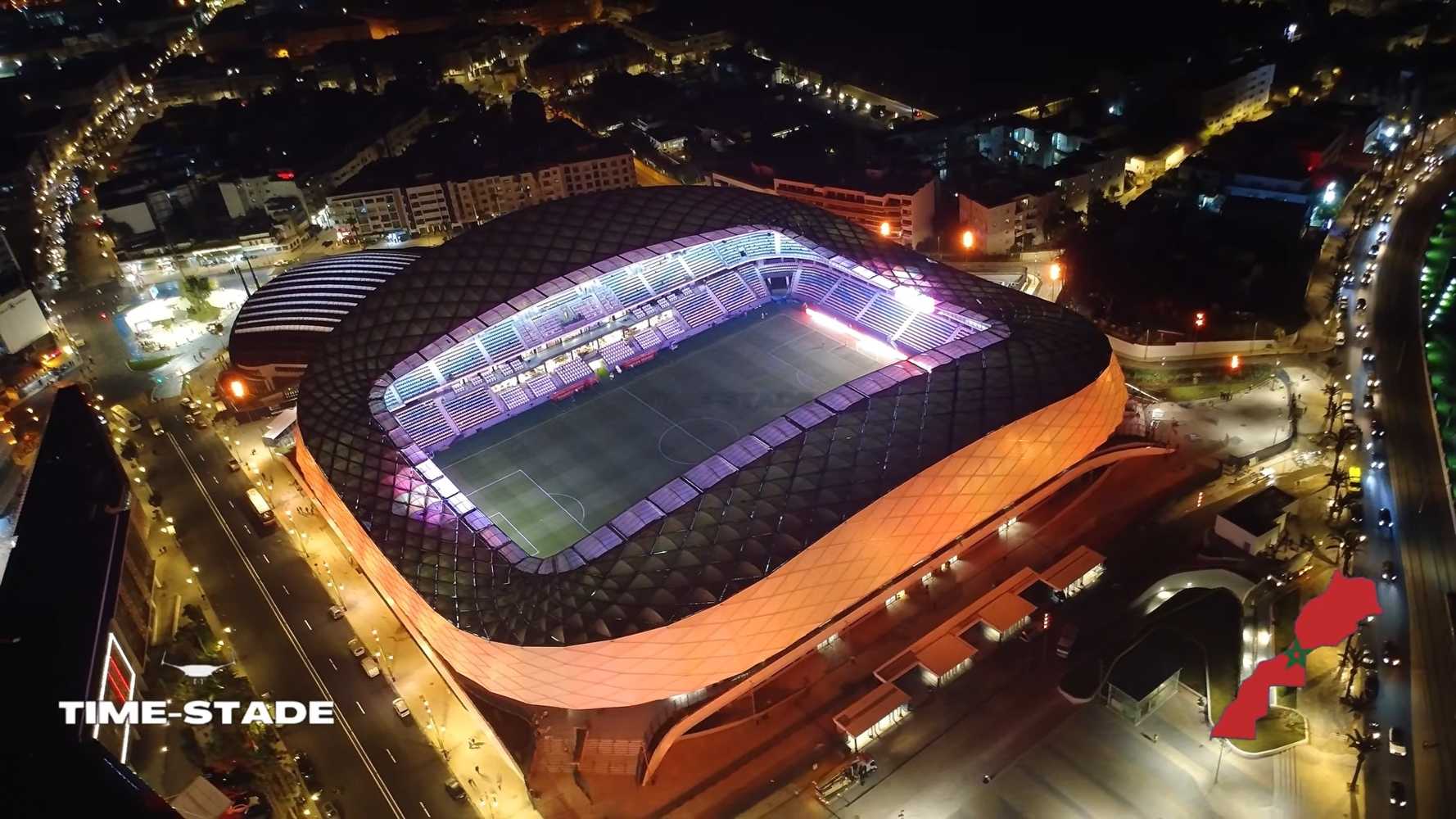
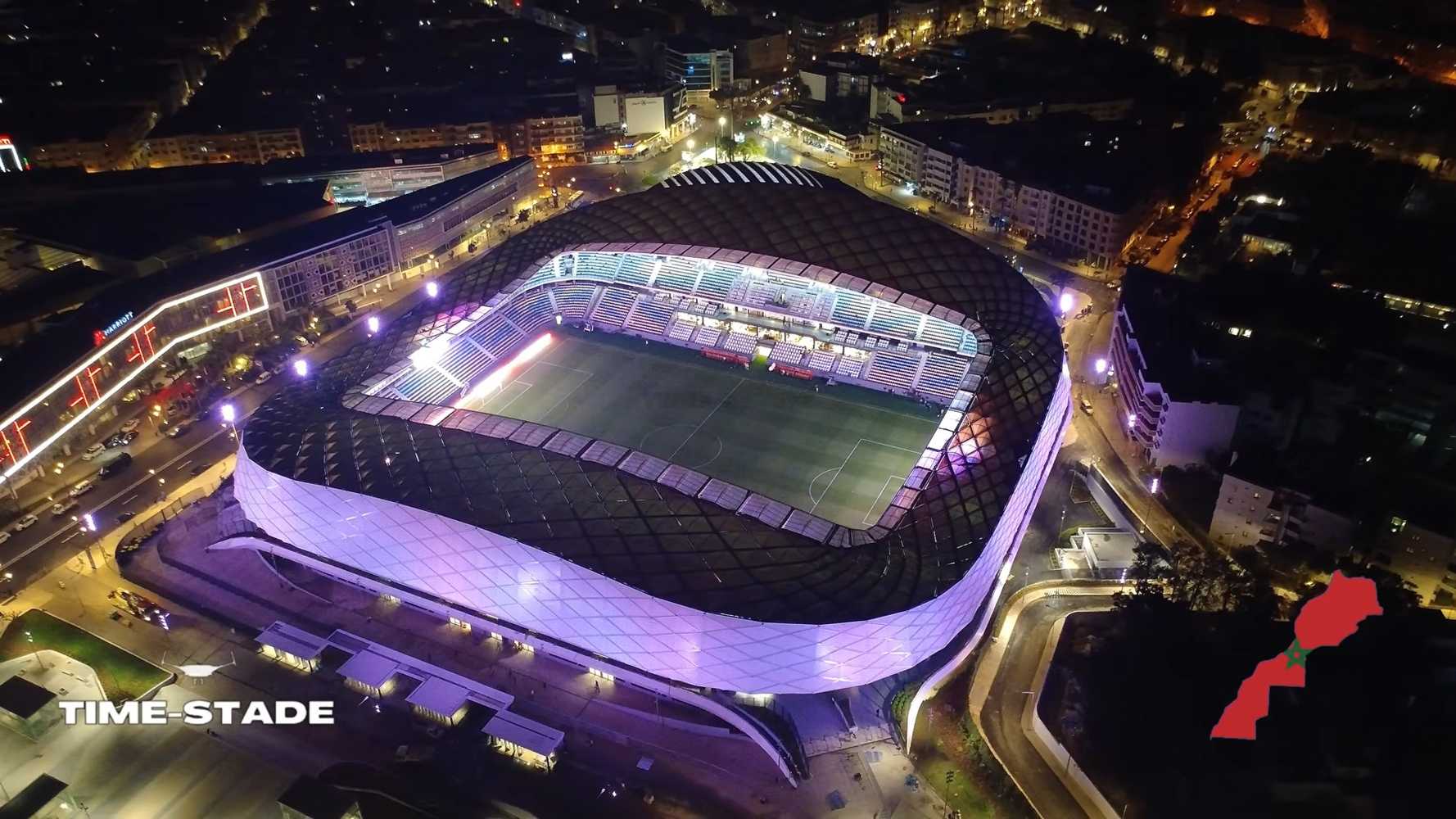
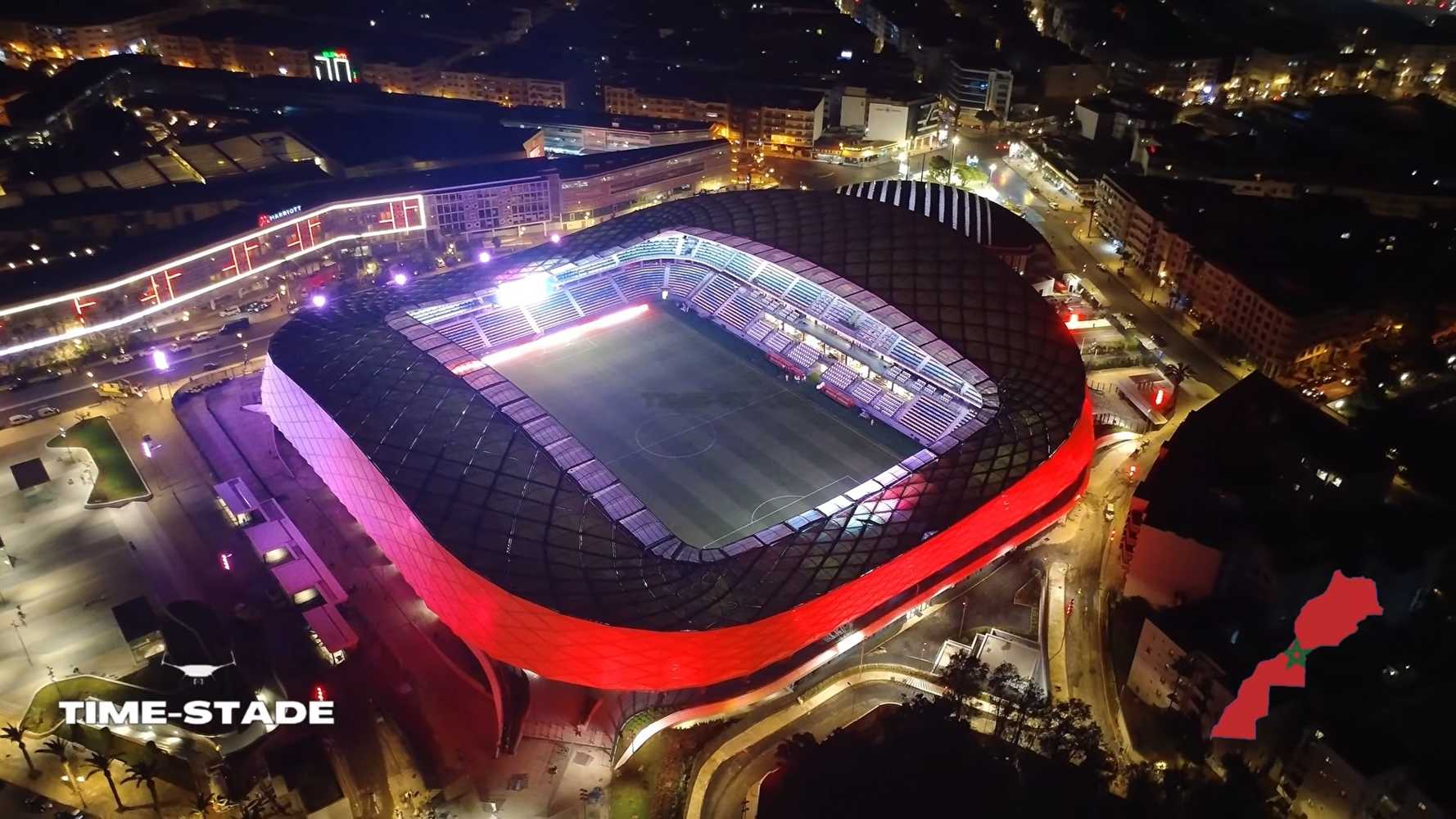
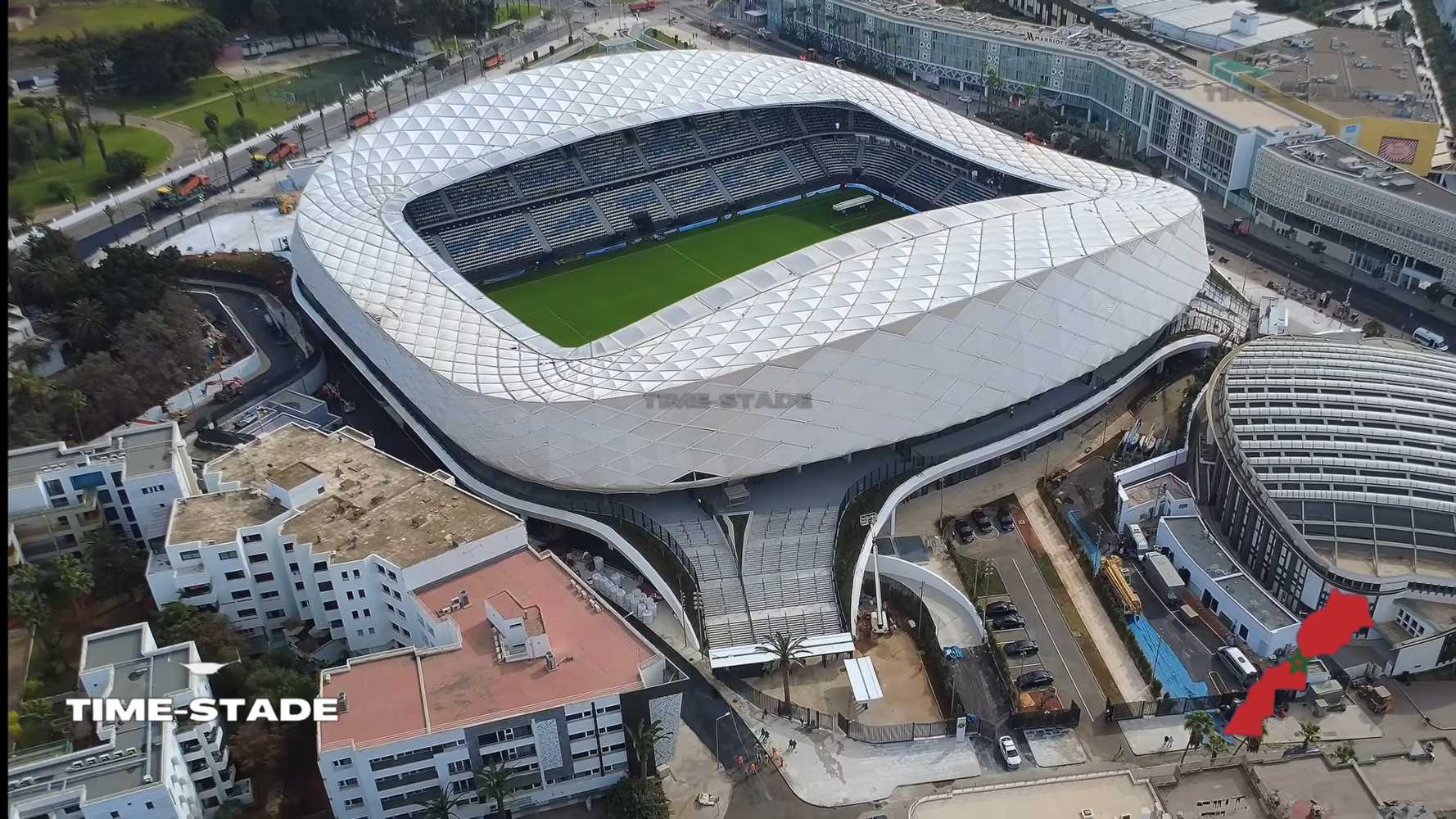
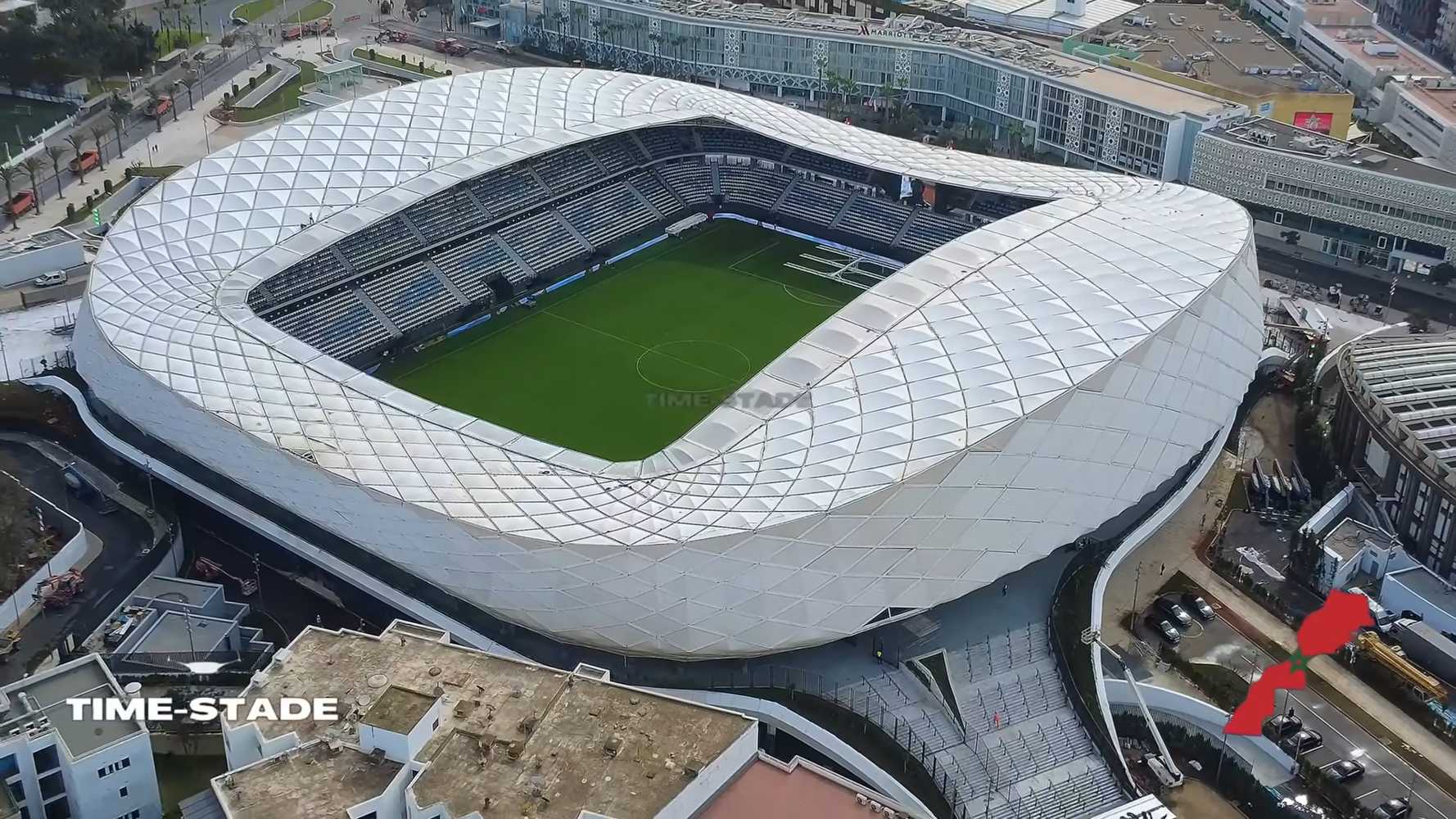
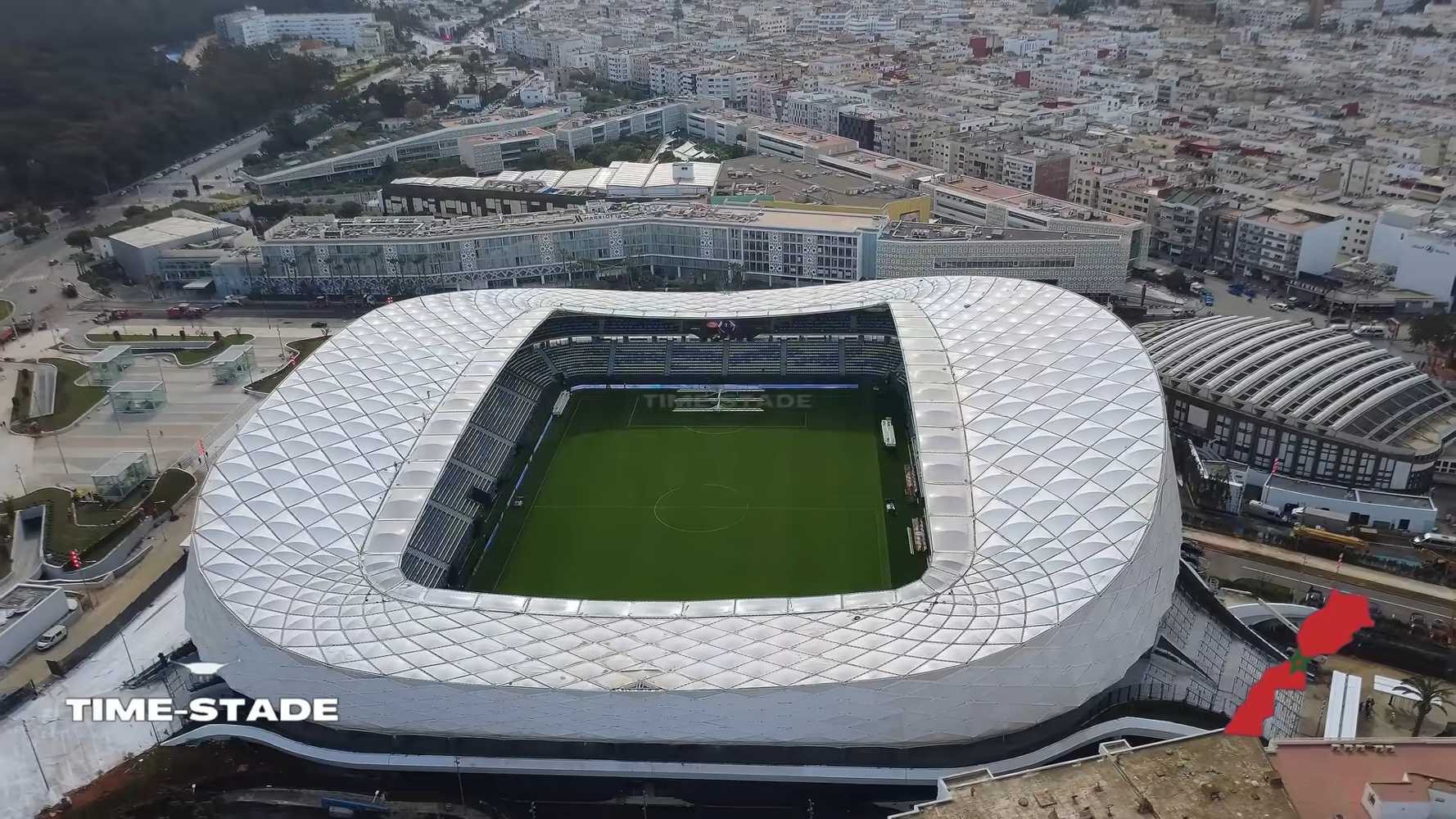
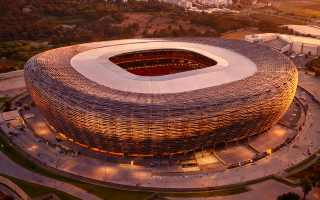
Stade Al Medina is a purpose-built football stadium with a capacity of 18,000 spectators. The stands are divided into two tiers, with the lowest row elevated above pitch level to ensure better sightlines for fans. Two large video screens are positioned behind the goals.
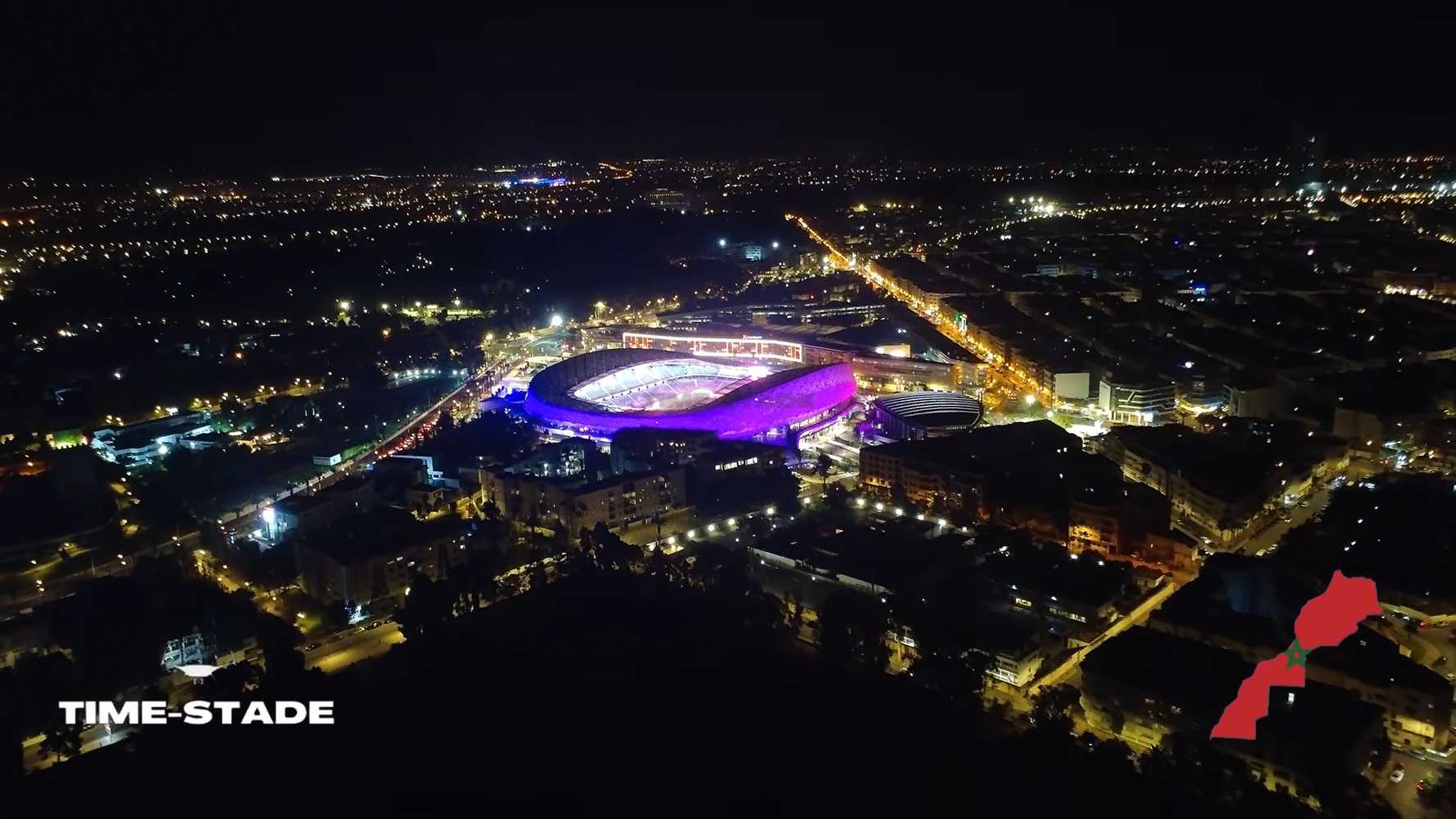
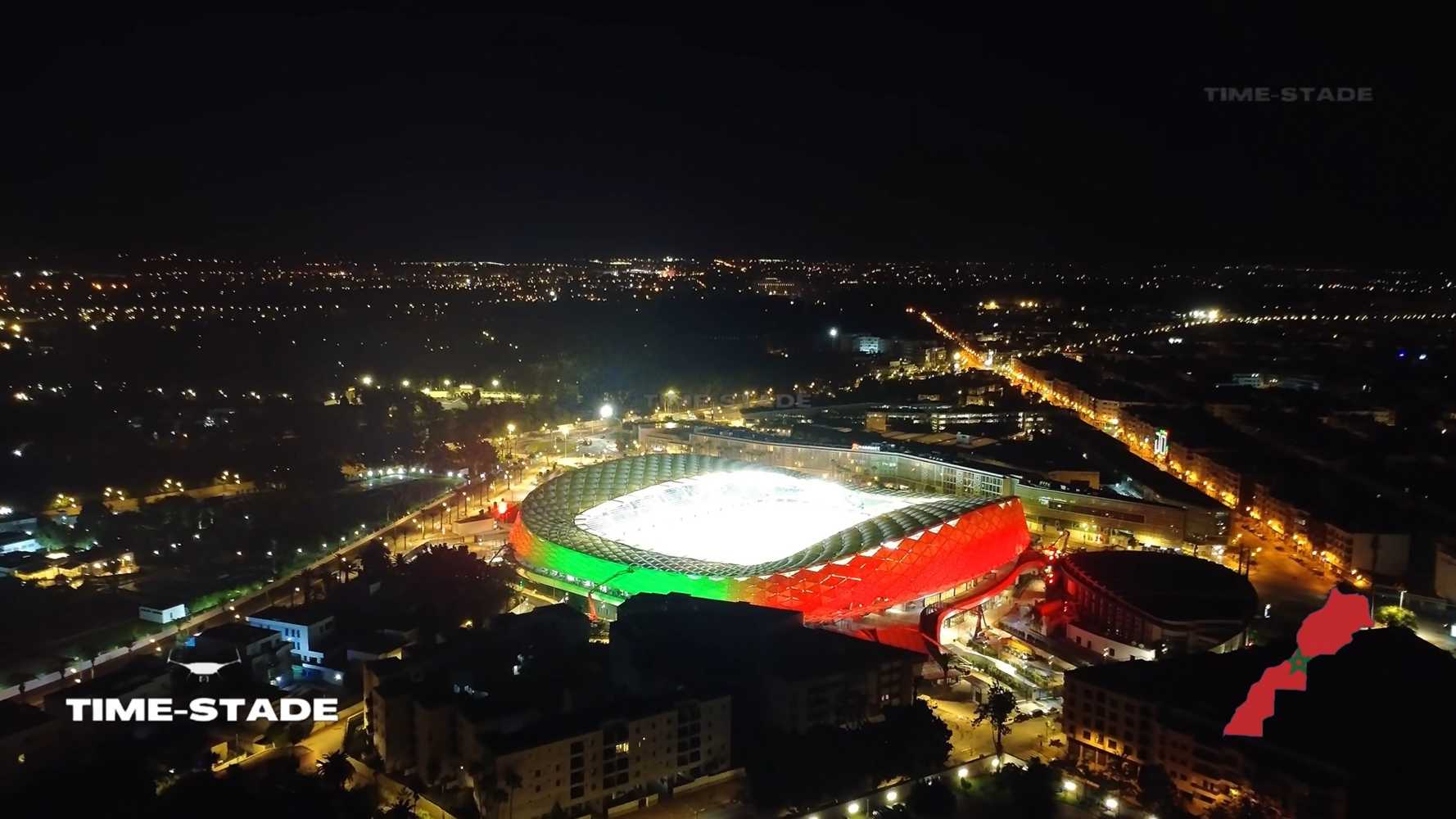
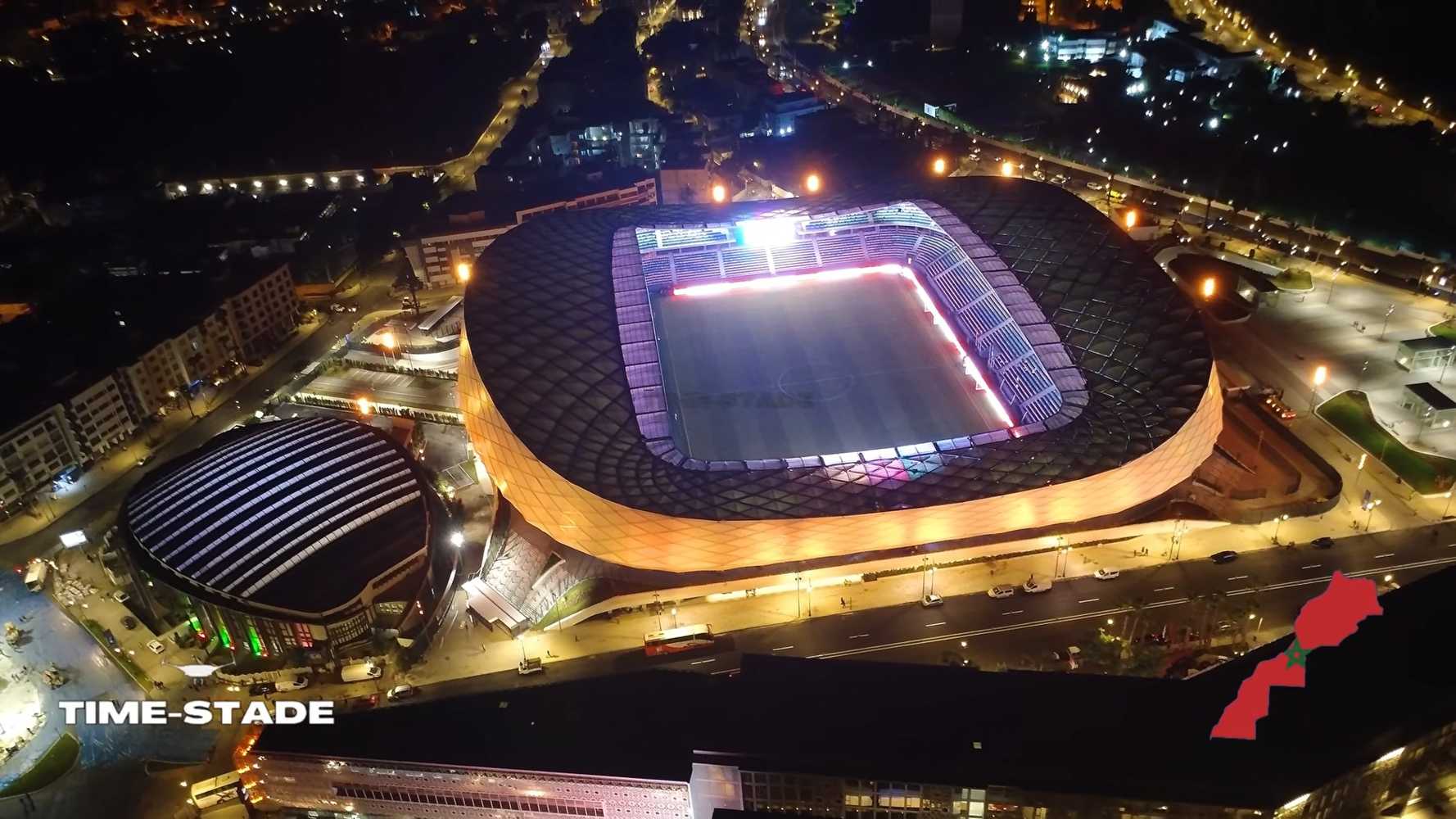
The stands are higher along the sidelines and slope down behind the goals, creating gentle, flowing lines. The entire stadium is surrounded by a uniform white structure with diamond-shaped motifs, which serves both as the roof and the facade.
Where is Stade Al Medina located?
The stadium is situated in the Agdal district, close to the National Library and other institutions. It is also relatively near Rabat’s two main railway stations.
What is located in the immediate vicinity of Stade Al Medina?
Adjacent to the main stand is the sports hall, Salle Ibn Yassine, while on the opposite side, in front of the eastern stand, a small plaza has been created with an underground parking facility beneath it. Behind the southern stand, across Avenue Bin El Ouidane, stands the Marriott hotel, followed by the Arribat Center shopping mall.
What was the purpose of building the Stade Al Medina?
The main impetus for constructing the new Stade Al Medina was Morocco’s organization of the 2025 Africa Cup of Nations. The tournament is scheduled to take place across late 2025 and early 2026, with Stade Al Medina hosting three group-stage matches and one round-of-16 fixture.
On a daily basis, the stadium is intended for use by Union Touarga Sport (UTS). Its high-standard facilities also make it suitable for hosting other prestigious sporting events and cultural activities.
Advertisement
Pictures
12.11.2025 © TIME-STADE 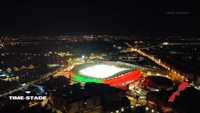
08.11.2025 © TIME-STADE 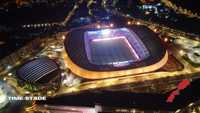
12.11.2025 © TIME-STADE 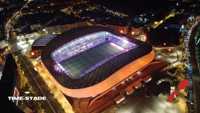
12.11.2025 © TIME-STADE 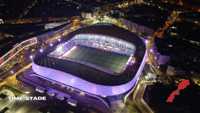
12.11.2025 © TIME-STADE 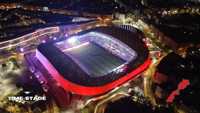
12.11.2025 © TIME-STADE 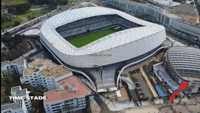
09.11.2025 © TIME-STADE 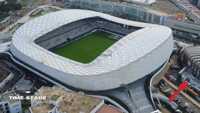
09.11.2025 © TIME-STADE 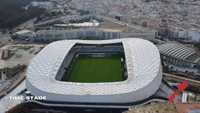
09.11.2025 © TIME-STADE 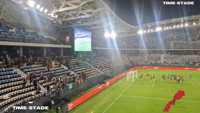
13.11.2025 © TIME-STADE 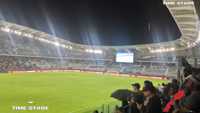
13.11.2025 © TIME-STADE 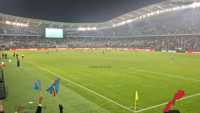
13.11.2025 © TIME-STADE
Related news
2026
-
SOTY: Official results of the Stadium of the Year 2025 contest. Who wins the title?
We have concluded the 16th edition of the Stadium of the Year contest, which means another venue joins the pantheon of fifteen previous winners. How many people took part in the vote, how many points did the stadiums receive and what exactly do the podium arenas look like?
-
SOTY: Fans have chosen the Stadium of the Year 2025! When will the results be revealed?
Voting in the Stadium of the Year 2025 competition, where fans select the most interesting new stadiums in the world, has come to an end. In this year’s edition, 28 venues from different continents took part in the race. When will we find out which stadium has won?
-
Morocco: Help Stade Al Medina win Stadium of the Year 2025 – vote now
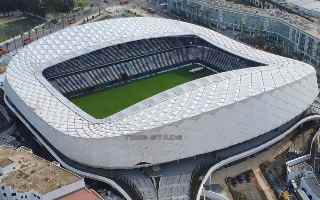
Completed in record time ahead of AFCON 2025, Rabat’s Stade Al Medina reflects Morocco’s ambitious stadium modernization program and rising sporting profile. If you support North Africa’s rapidly evolving football infrastructure, vote for Stade Al Medina in Stadium of the Year 2025.
-
Morocco: Morocco opens 5 stadiums in one year! Public vote favorites for Stadium of the Year 2025?
Morocco is dynamically investing in football infrastructure, building and modernizing arenas. Modern facilities have emerged in Rabat and Tangier, strengthening the country's position on the international stage and preparing it for the 2030 World Cup.
-
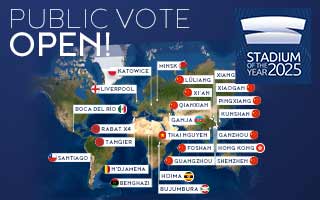
SOTY: The best stadium opened in 2025 – vote now!
Which stadium deserves the title? That decision is in your hands. This year’s Stadium of the Year contest brings together 28 newly opened venues from around the world. Different styles, different scales, one winner. Explore the contenders, make your choice, and spread the word among fellow football fans!
-

Stadium of the Year 2025: The return of an iconic competition! Have your say on 29 new stadiums
A total of 29 stadiums were opened in 2025 — at least according to our findings. Still, it is possible that one venue has slipped through the net. If you spot a stadium missing from the list, now is the right moment to point it out. Take a look at the venues already submitted to the Stadium of the Year competition and let us know if there is an arena that opened in recent months and deserves to be included.