 StadiumDB
Grand Stade d’Al Hoceïma
| Capacity | 11 000 |
|---|---|
| Country | Morocco |
| City | Al Hoceima |
| Clubs | - |
| Inauguration | 18/11/2024 |
| Construction | 2017–2024 |
| Cost | MAD 440 M ($47.7 M) |
| Design | El Kenfaoui Noureddin, Saloua Ater |
| Contractor | TGCC, Inter Tridim |
Advertisement
Grand Stade d’Al Hoceïma – stadium description
How does the Grand Stade d’Al Hoceïma look in brief?
Construction of the Grand Stade d’Al Hoceïma began in 2017, and the initial plans were truly ambitious – a city of just over 50,000 inhabitants was meant to receive a stadium with a capacity of 30,000–35,000 seats.
During the construction process, however, the scale of the project was significantly reduced, and the final capacity amounts to only 11,000 seats. The project progressed very slowly, and the stadium was not opened until late 2024.
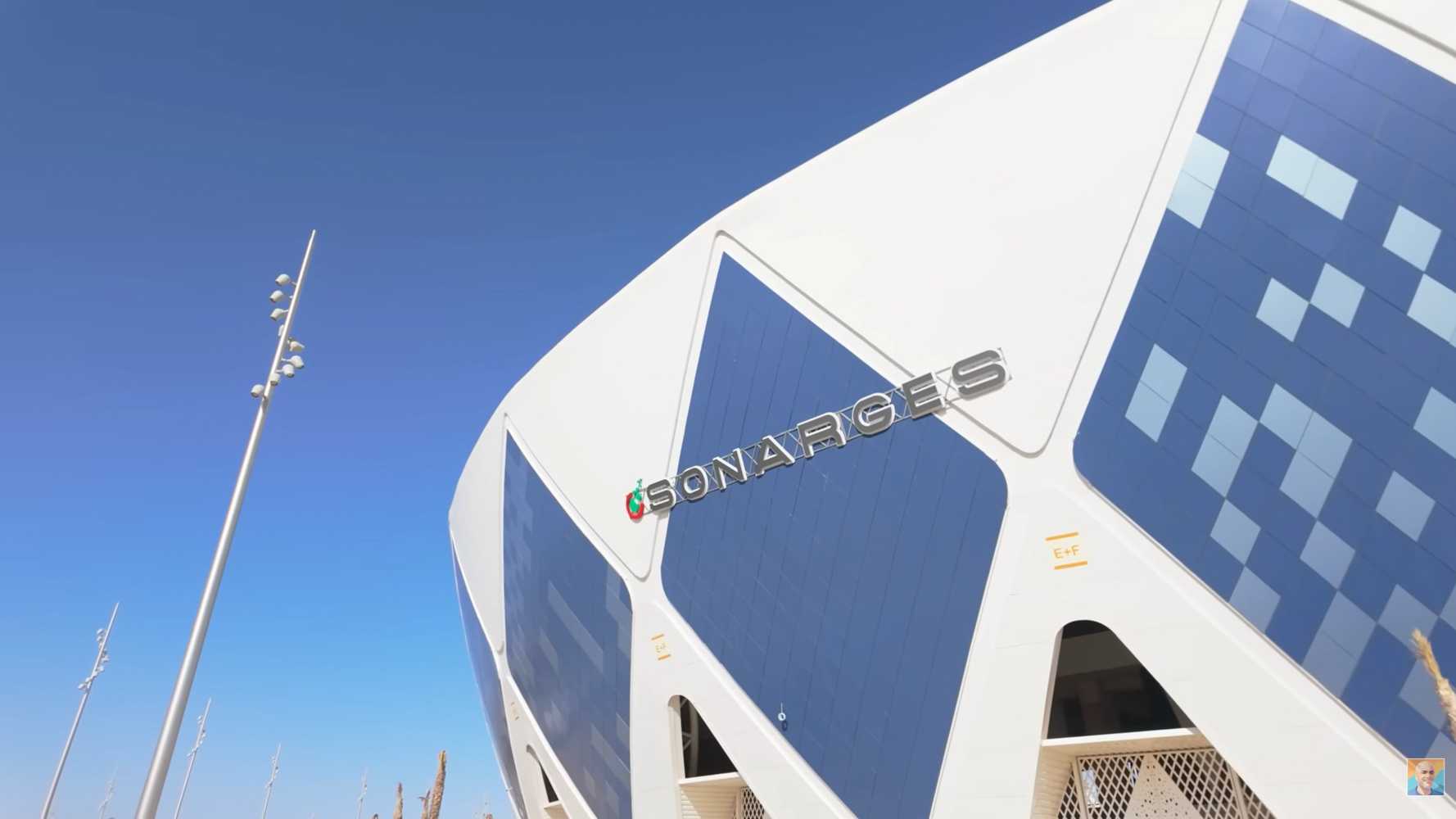
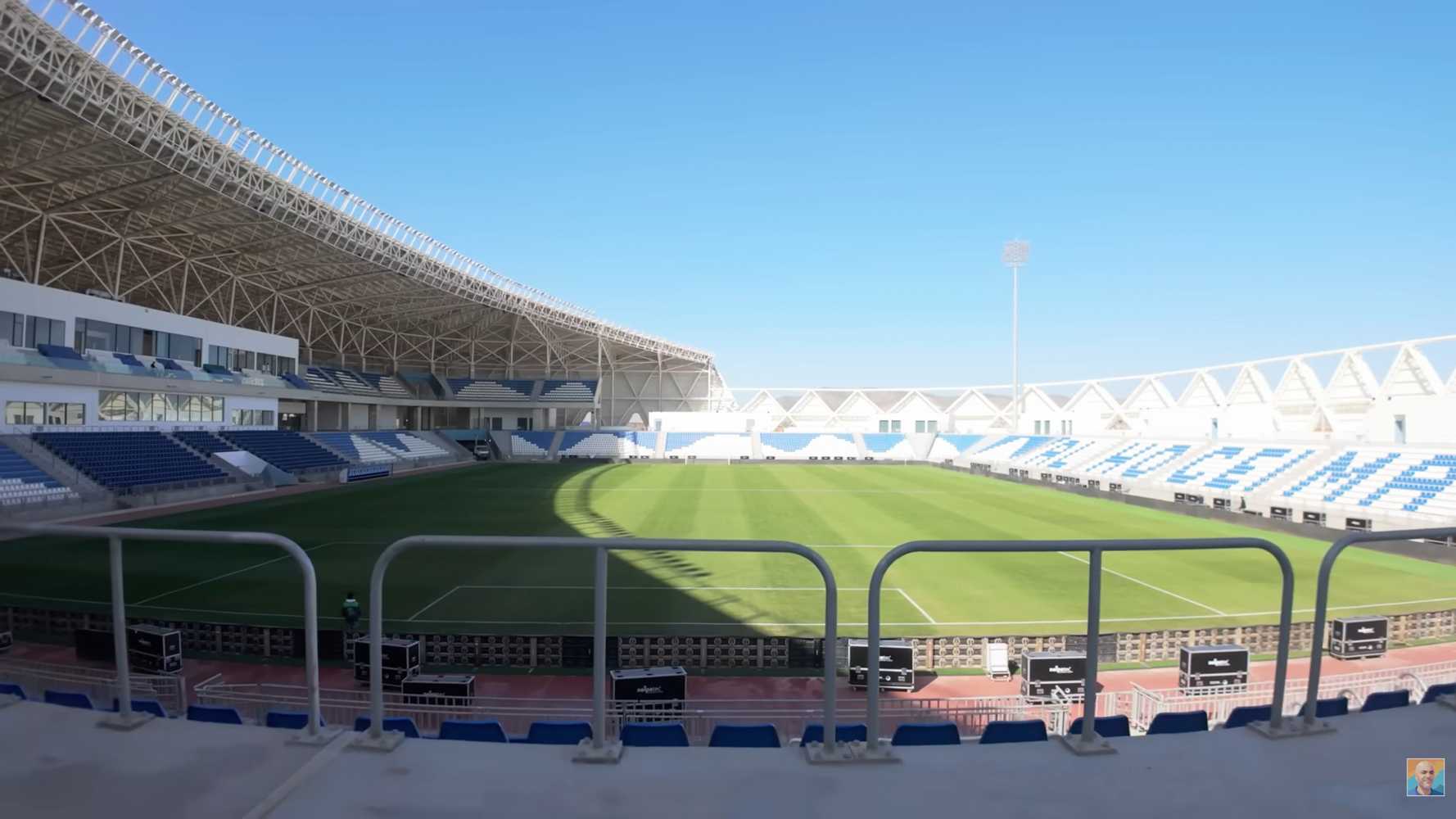
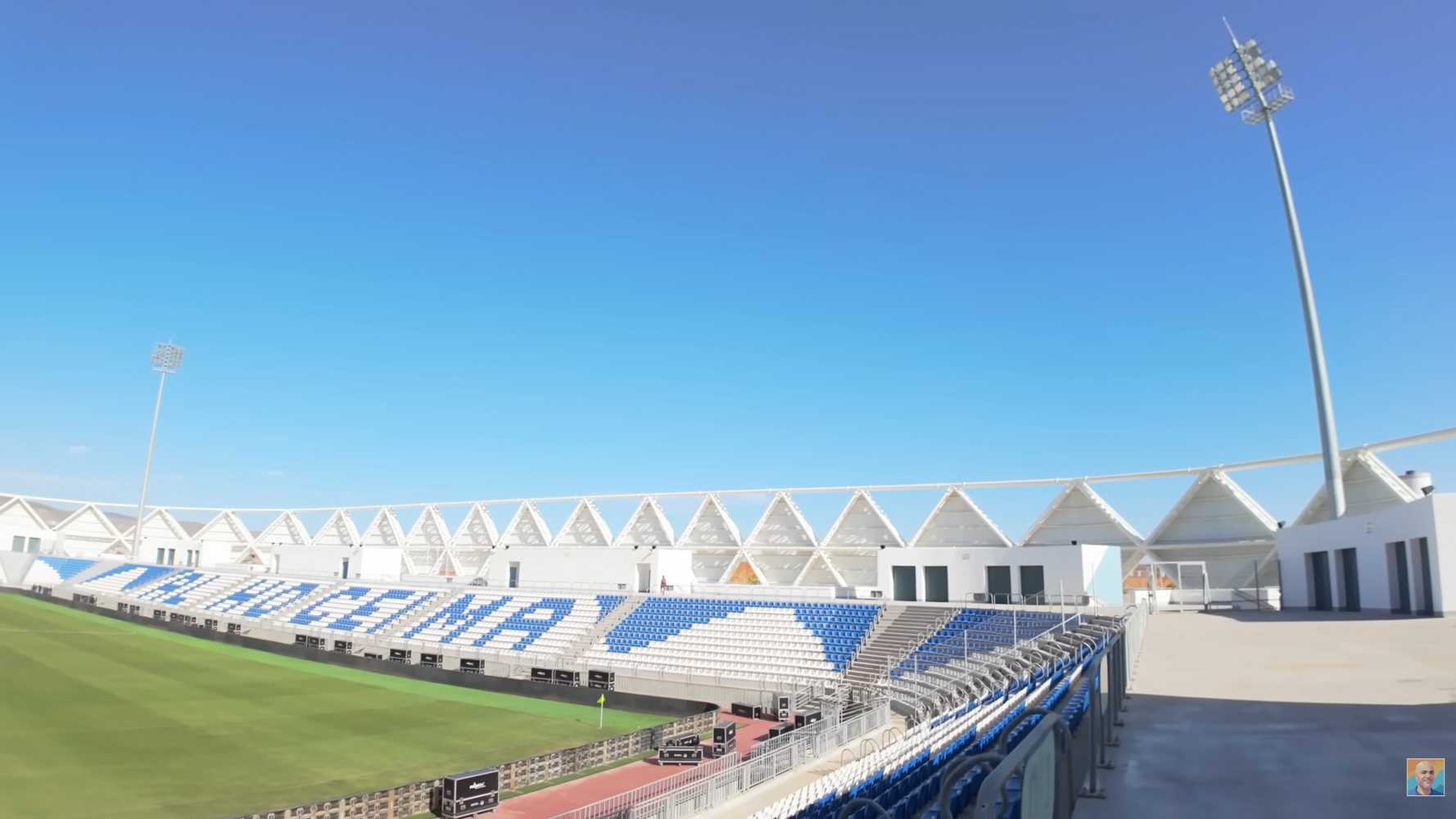
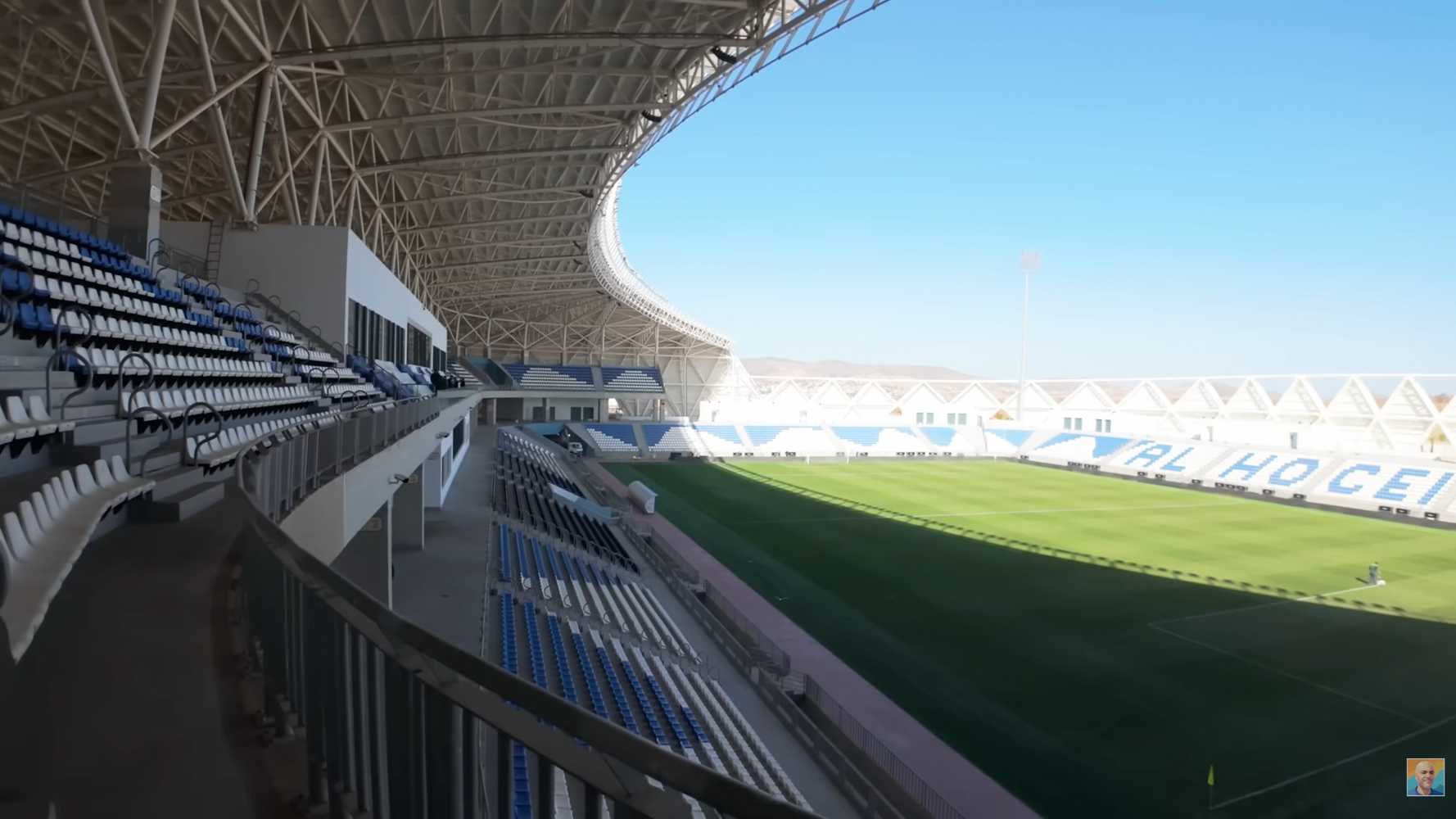
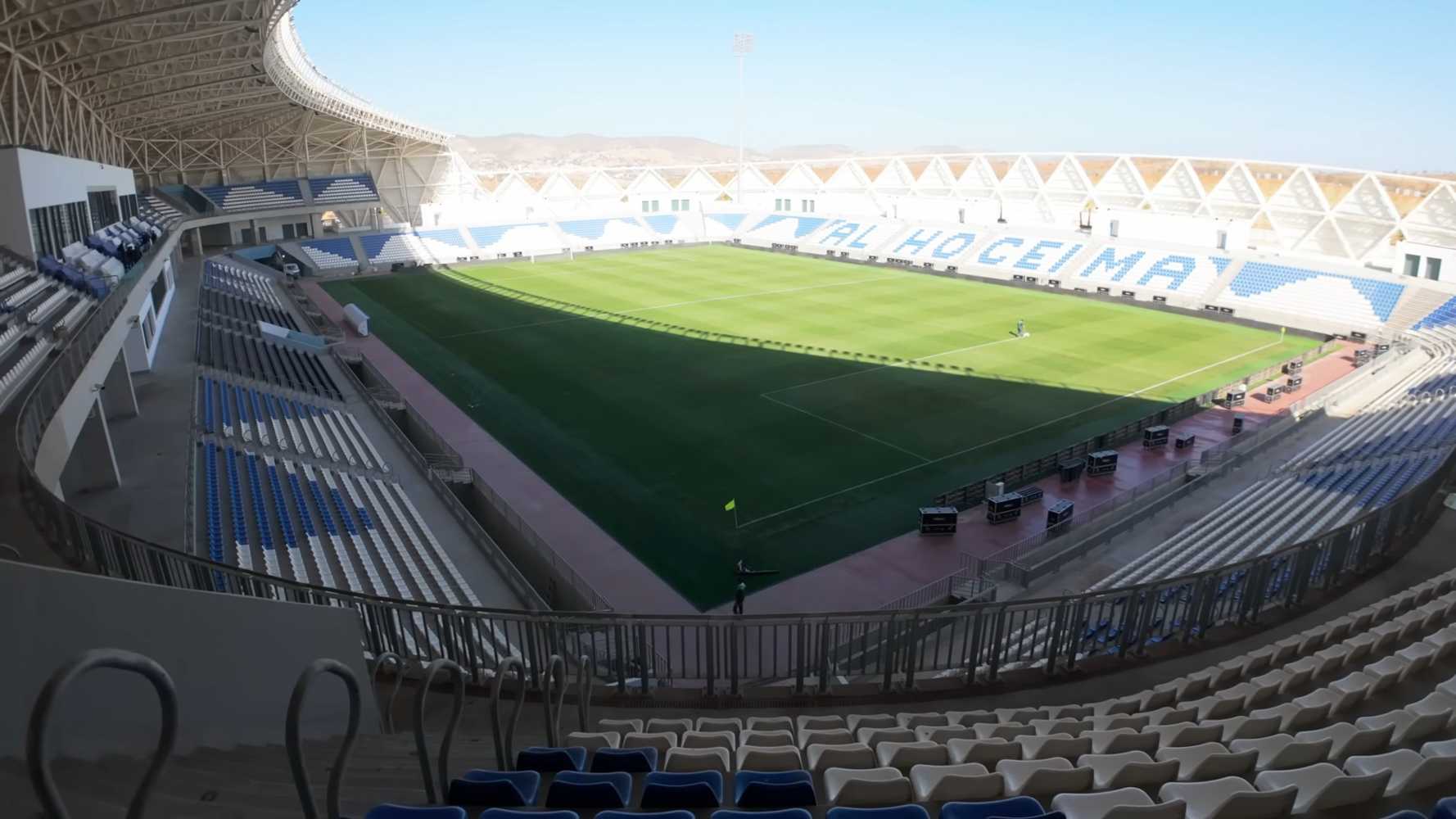
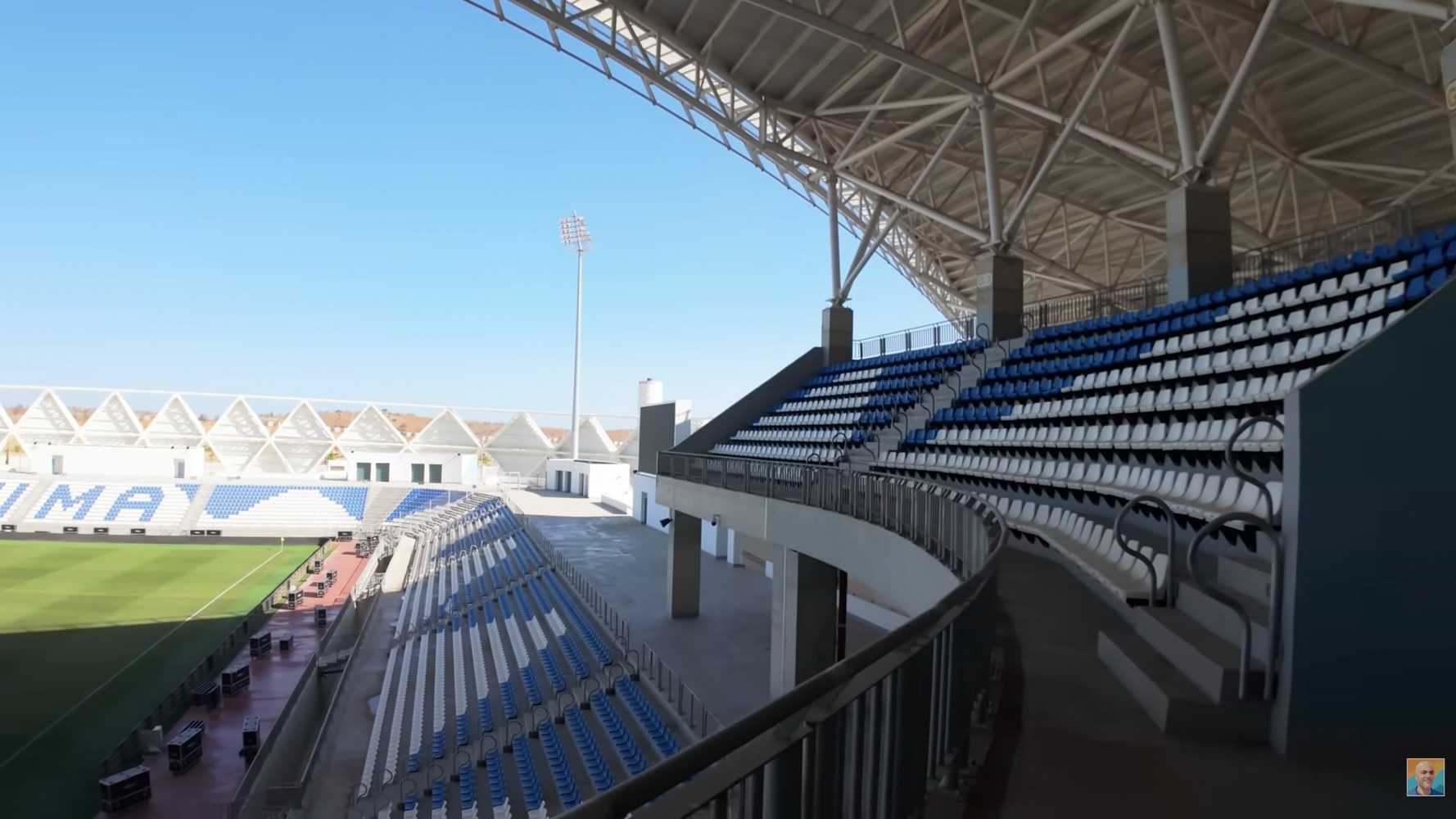
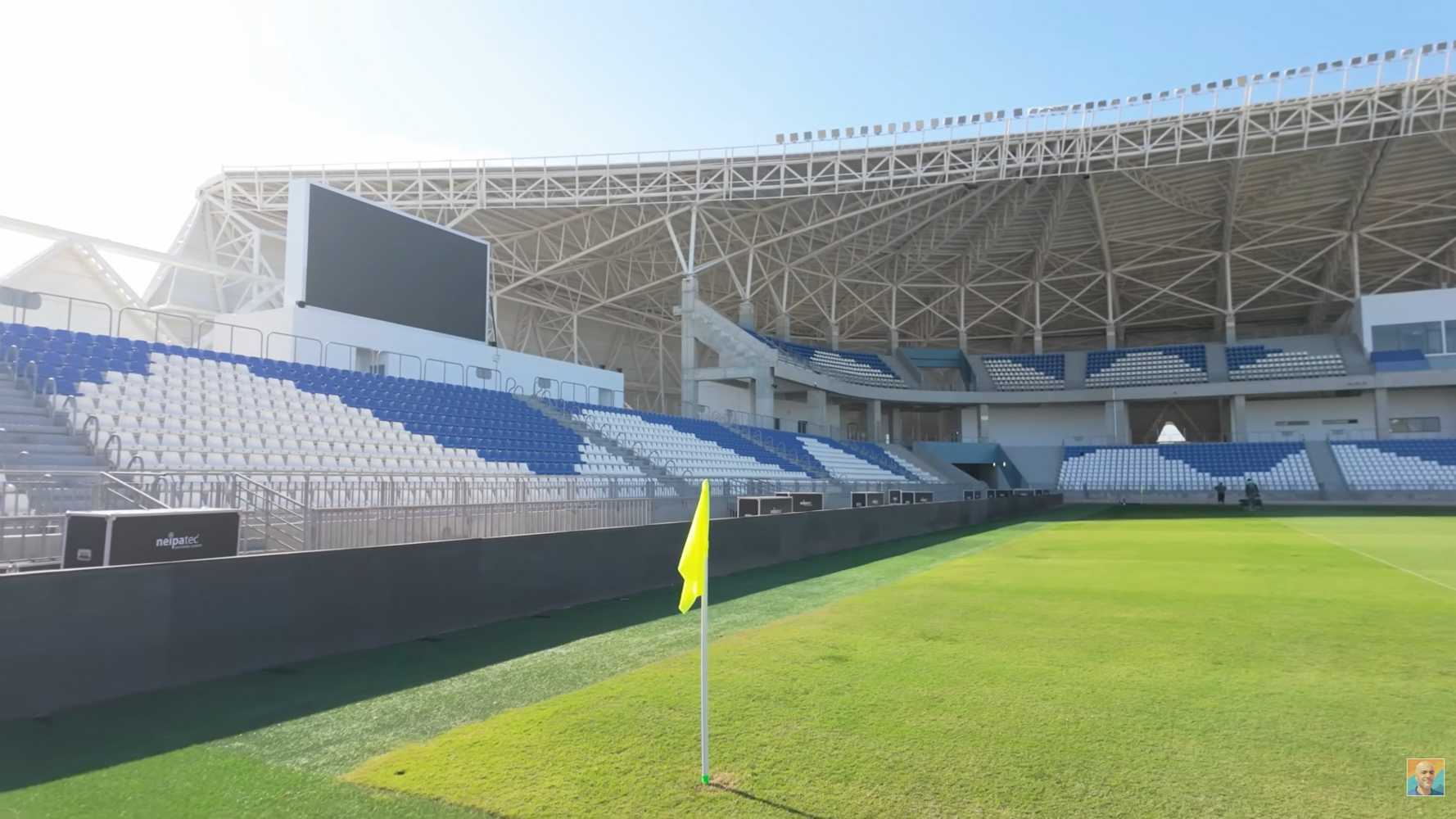
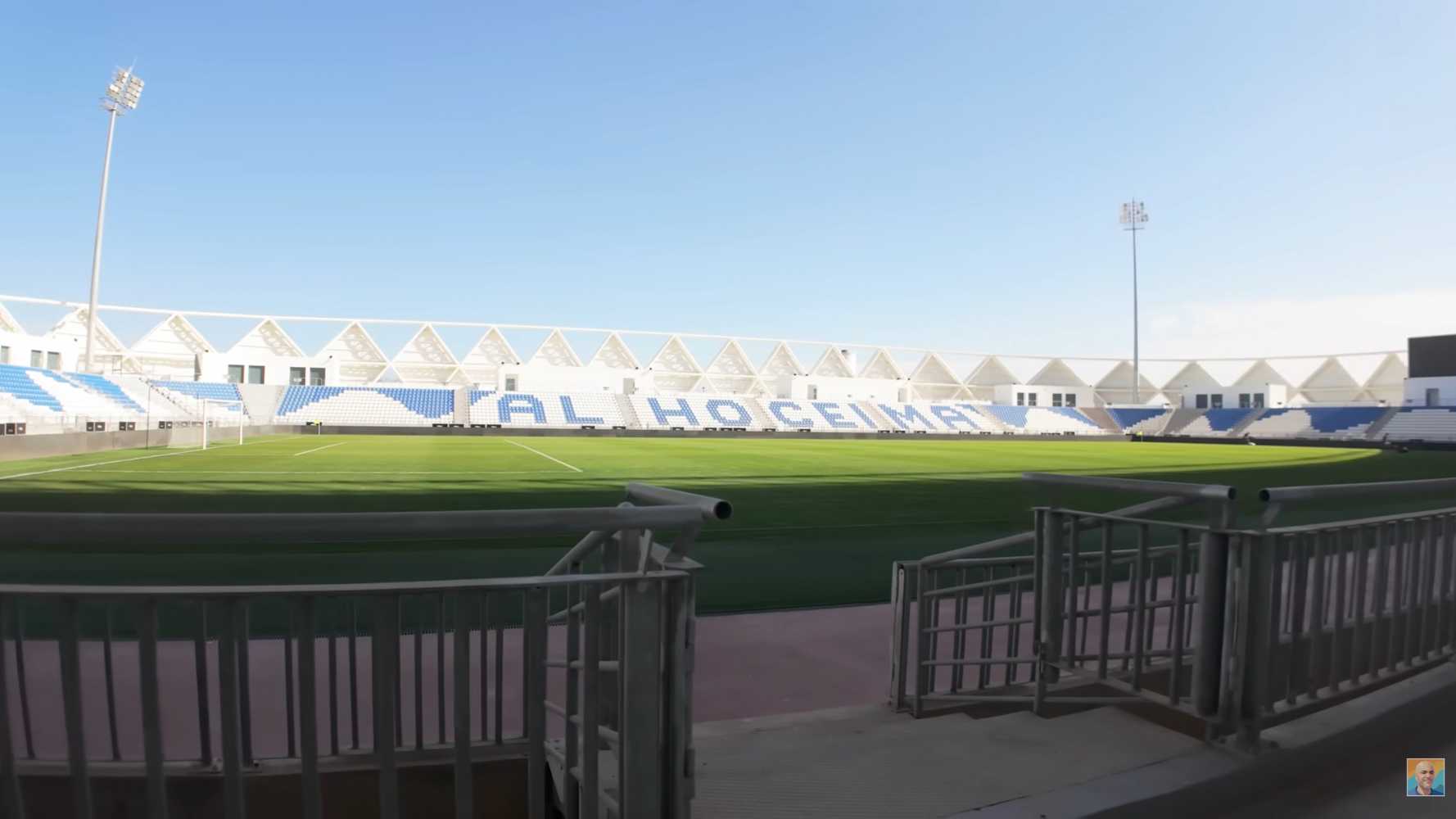
The modern venue is distinguished by an eye-catching roof over the main stand, decorated with a geometric rhombus pattern. The arena features a blue-and-white colour scheme that reflects the city’s visual identity.
Because the stadium was originally intended to be much larger, it occupies a wide footprint, leaving room for potential future expansion. The complex was built far outside the city, and a new swimming pool and sports hall were constructed next to it.
How was the Grand Stade d’Al Hoceïma built?
Construction of the new stadium in Al Hoceima began in the summer of 2017. The project was carried out by the government with major tournaments in mind, including the FIFA World Cup.
Ultimately, however, the Grand Stade d’Al Hoceïma did not make the list of proposed host venues for the 2026 World Cup, for which Morocco was bidding. Later on, the stadium was also omitted from the selection of venues for the 2025 Africa Cup of Nations.
With the ambitious goals set at the beginning, the stadium was planned on a grand scale – in a city of around 50,000 inhabitants, a venue with a capacity of 30,000–35,000 seats was envisaged.
The rationale for building such a large stadium was questioned, especially as the site was located far from the city centre, outside the built-up area. However, Al Hoceima was known as a Mediterranean resort, and at the time the project was launched, the local club Chabab Rif Al Hoceïma was playing in the Botola Pro.
Construction progressed at a very slow pace. During the process, major cuts were also made to the project, reducing the capacity to 11,000 seats and abandoning plans for a fully covered bowl, leaving the roof only above the main stand.
When was Grand Stade d’Al Hoceïma inaugurated?
The stadium was completed only in 2024, and its inauguration took place during a qualifier for the 2025 Africa Cup of Nations: Comoros – Madagascar (1:0), played on 18 November 2024. The match was held in Morocco because the Comoros national team, due to infrastructure limitations, was unable to host games on home soil at the time.
What does Grand Stade d’Al Hoceïma look like?
Grand Stade d’Al Hoceïma is a football-specific venue, built as the main representative stadium for the city of Al Hoceïma. However, it was constructed around 15 km from the city centre, far from the main urban area, near the small locality of Ait Kamara.
The stadium is located along national road N16, and the project also included the construction of an Olympic-size swimming pool, a sports hall, and a large number of parking spaces.
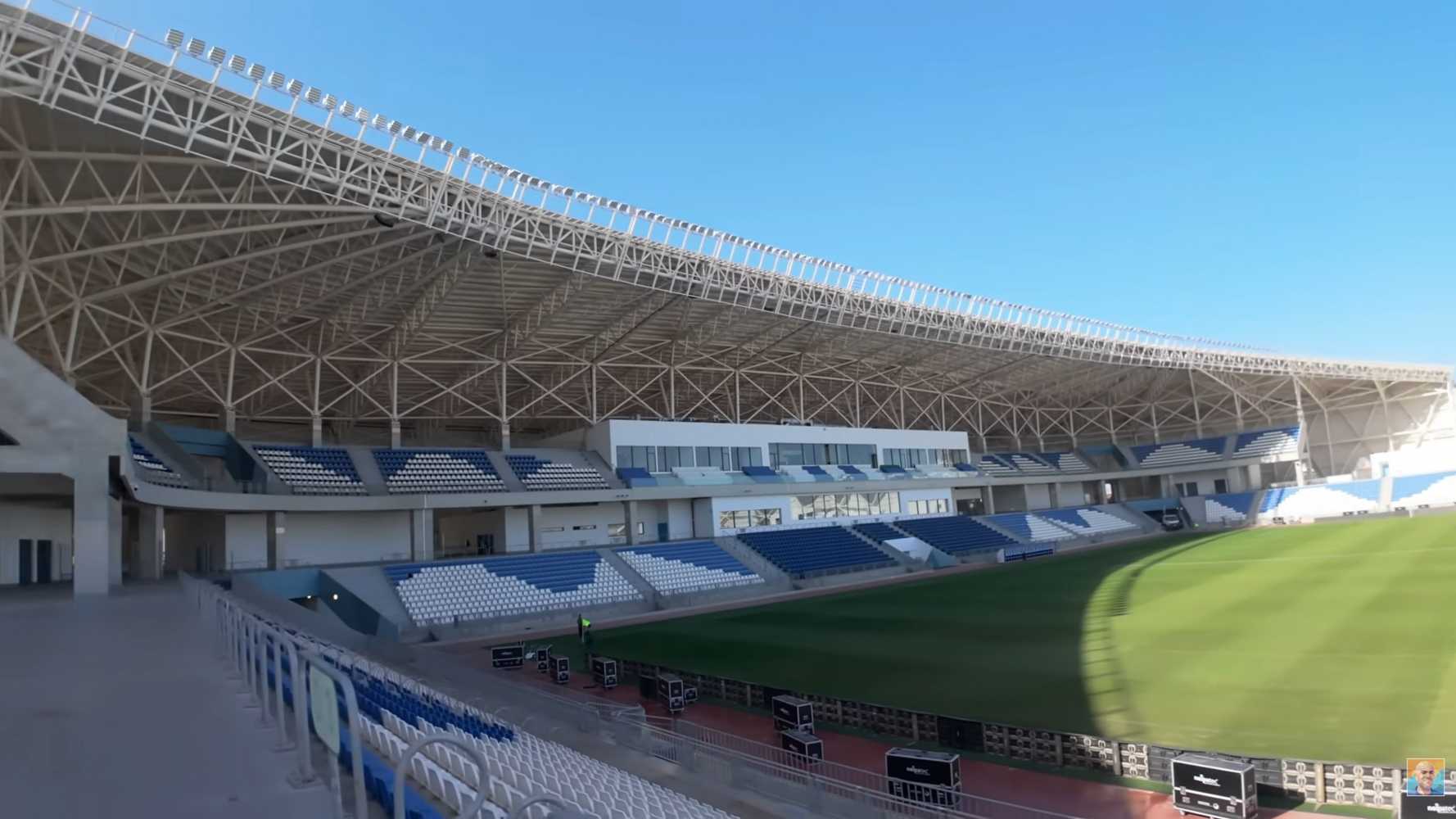
The stadium can accommodate 11,000 spectators. The stands run around the entire pitch, although a second tier was added only on the main stand side (south-west), which is also the part covered by a large roof. A video screen is installed behind the south goal.
The main stand includes VIP boxes and facilities for players, referees, journalists, and staff. Since the stadium was originally planned to be much larger, its overall footprint is quite extensive, leaving room for possible future expansion.
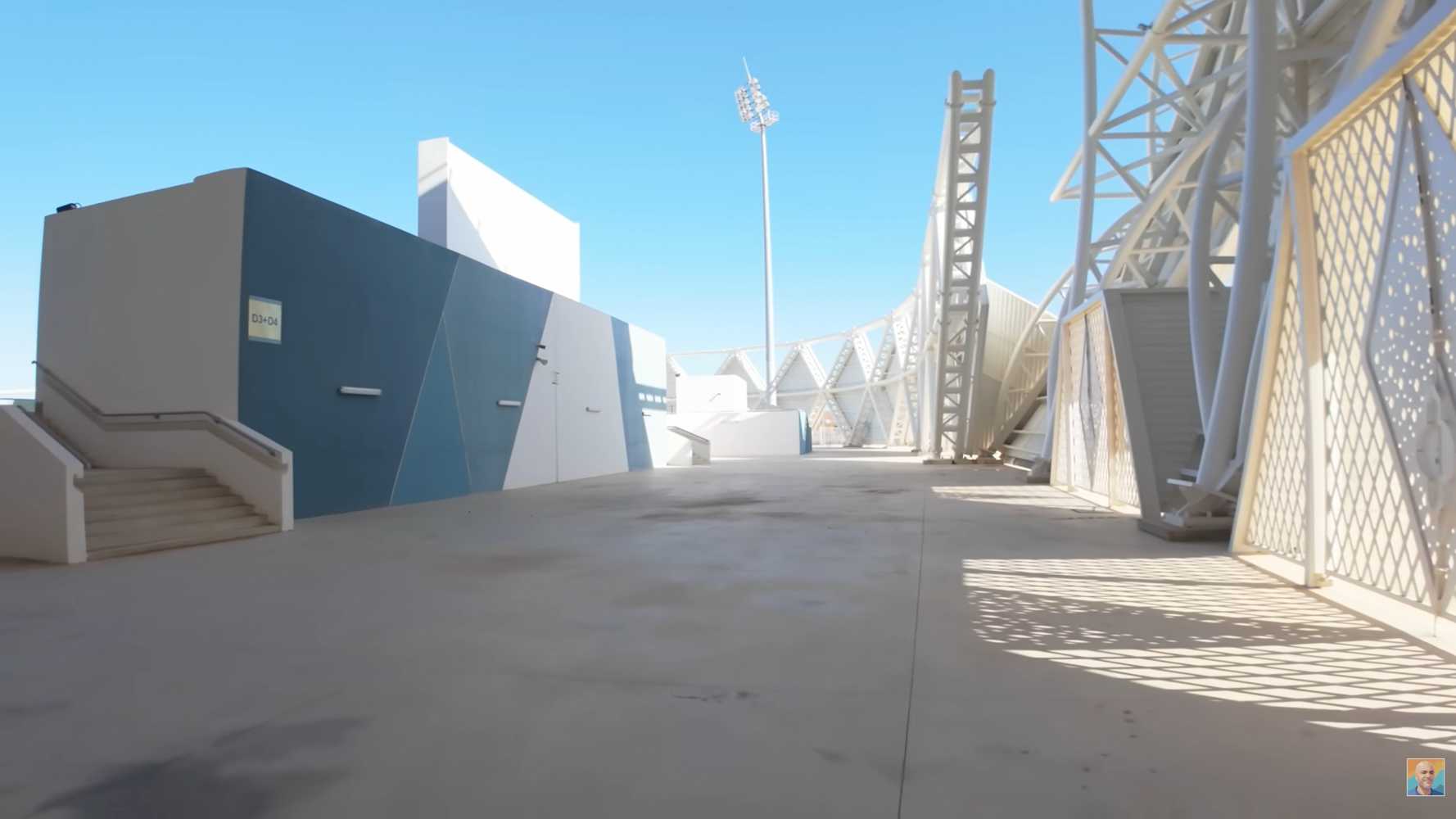
The impressive roof, seamlessly connected to the main stand facade, is decorated with geometric, diamond-shaped patterns. The entire venue is finished in a blue-and-white colour scheme consistent with Al Hoceïma’s visual identity.
Given its location near the epicenter of the tragic 2004 earthquake, the stadium was designed to withstand strong seismic activity.
During the long construction period, Chabab Rif Al Hoceïma dropped into the lower divisions, and after the stadium opened, the club decided not to move from its existing ground, Stade Mimoun Al Arsi, located in the city centre. As a result, the new venue remains largely underused.
Advertisement