 StadiumDB
Vitality Stadium (Dean Court)
| Capacity | 11 286 |
|---|---|
| Country | England |
| City | Bournemouth |
| Clubs | AFC Bournemouth |
| Other names | Seward Stadium (2011-2012) |
| Inauguration | 1910 |
| Renovations | 1925, 2001 (new stadium), 2013 |
| Record attendance | 28 799 (AFC Bournemouth - Manchester United, 1957) |
| Address | Kings Park, Bournemouth, Dorset, England |
Advertisement
Vitality Stadium – stadium description
Where does Vitality Stadium get its name from?
The name Vitality Stadium comes from a sponsorship agreement between AFC Bournemouth and the insurance company VitalityHealth, part of the Discovery Limited group. The partnership was announced in 2015, shortly after Bournemouth’s historic promotion to the Premier League, and included the naming rights for the stadium, which had previously been known as Dean Court. The deal was intended to strengthen Vitality’s brand image across the country by linking it with a rapidly growing club from England’s southern coast.
Vitality is a British company specialising in health insurance, wellness programmes and products that promote an active lifestyle. The stadium’s title sponsor also partners with other major sports organisations in the UK, including England Rugby, England Netball and the Scottish Football Association, making it one of the most recognisable brands in British sport.
Despite its commercial name, many supporters still refer to the ground by its traditional title, Dean Court – the name of the area where the stadium was originally built in 1910. The current name therefore combines the modern, business-oriented aspect of sponsorship with the club’s historical heritage and local identity.
Where is Vitality Stadium located?
Vitality Stadium is situated in the south-eastern part of Bournemouth, in the district of Boscombe, one of the city’s most well-known and densely populated areas. The venue lies within the vast King’s Park, a green recreational complex that also includes training pitches, tennis courts, walking paths and other municipal sports facilities.
The stadium is located only a few kilometres from the English Channel coast, which means that a characteristic seaside atmosphere can often be felt during matches. The surrounding area is dominated by low-rise residential housing typical of Bournemouth’s suburbs, interspersed with greenery and quiet streets. The proximity of the park and the natural setting allow the venue to blend harmoniously into the landscape of this coastal part of the city, remaining one of its most recognisable landmarks.
What is the capacity of Vitality Stadium?
Vitality Stadium, formerly known as Dean Court, has a seating capacity of around 11,307, making it one of the smallest stadiums in Premier League history. Some sources list a slightly different figure of 11,286, which reflects minor variations in seating layout following organisational and infrastructural changes. All stands are fully covered and offer seated accommodation, in line with top-flight league requirements, though this also limits the overall capacity.
The stadium’s modest size is largely due to spatial constraints – it is located within King’s Park, in a built-up area of Bournemouth, which made previous expansion attempts difficult. In the past, before Dean Court was redeveloped, crowds were much larger – the record attendance stands at 28,799, set in 1957 during an FA Cup tie against Manchester United.
Today, AFC Bournemouth is actively working on plans to expand the ground. Proposed works include the extension of the stands and the addition of corner seating, which could increase capacity to around 20,000, and eventually up to 23,000. These plans would allow Vitality Stadium to better match the club’s growing sporting and organisational ambitions.
When was Vitality Stadium opened?
The stadium, now known as Vitality Stadium, was originally opened in 1910 under the name Dean Court. It was built at the initiative of Boscombe F.C., which at the time was seeking a permanent home ground. The name came from the piece of land on which it was constructed, owned by a local businessman, and from the outset the venue became a focal point of sporting life in this part of Bournemouth.
Over the decades, the stadium underwent several improvements, but its most dramatic transformation came in 2001, when it was almost completely rebuilt. The old Dean Court was demolished, and the new one constructed on the same site – but rotated 90 degrees from its original orientation. The redevelopment included four new covered stands and all-seater configuration, bringing the venue up to modern league standards.
The new Dean Court officially reopened on 10 November 2001, when AFC Bournemouth played their first match on the redeveloped ground against Wrexham. Since then, it has undergone minor upgrades, and in 2015 the stadium was renamed Vitality Stadium following the naming rights deal with VitalityHealth.
Who uses Vitality Stadium on a daily basis?
The main and permanent user of Vitality Stadium is AFC Bournemouth, which owns the facility and has called it home for more than a century. From its beginnings in 1910 as the ground of Boscombe F.C. – the club that would later become Bournemouth – the stadium has evolved alongside the team, keeping pace with higher league standards and the club’s rise to the Premier League.
In addition to first-team fixtures, Vitality Stadium regularly hosts matches of the club’s youth and women’s teams, which play selected league and cup games there. The ground also serves as a training and administrative hub, housing the club’s offices, conference rooms, medical and rehabilitation facilities, and other operational spaces.
Beyond football, the stadium occasionally opens its gates for other sporting and cultural events. It has hosted matches of England’s Under-21 national team, youth fixtures under the FA, charity events, and outdoor concerts. Despite its limited capacity, Vitality Stadium remains one of the most distinctive venues in southern England, combining its role as Bournemouth’s football home with that of a local community and sports centre.
What events have taken place at Vitality Stadium?
Throughout its century-long history, Vitality Stadium has witnessed many events that have shaped Bournemouth’s sporting identity. From the first Boscombe F.C. matches in 1910 to AFC Bournemouth’s promotion to the Premier League in 2015, the venue has been the heart of football life on England’s south coast. It was here that the team celebrated its greatest achievements – including its first-ever top-flight promotion – and where fans have seen famous clubs such as Manchester United, Liverpool, Chelsea and Arsenal play.
In addition to regular league fixtures, the stadium has hosted numerous FA Cup and EFL Cup matches. Memorable ties include encounters with Leeds United, Manchester United and Liverpool, often played in front of capacity crowds. The venue has also witnessed symbolic moments in the club’s history – celebrations of promotion, farewells to legendary players, and managerial milestones.
The stadium also plays an important role in English youth and women’s football. It has hosted matches of England’s Under-21s and the senior women’s national team. Beyond football, Vitality Stadium has been the site of local events such as concerts, charity fundraisers and community gatherings, reinforcing its identity not only as a sports venue but also as a meeting place for Bournemouth’s residents.
What does the architecture of Vitality Stadium look like?
The architecture of Vitality Stadium reflects the character of a small yet modern sports venue designed for functionality and closeness between fans and the pitch. The current version of the stadium was completed in 2001 after a total redevelopment that involved rotating the playing surface by 90 degrees and rebuilding the entire structure from scratch. The result is a compact seating layout with optimal sightlines and fully covered stands.
The stadium consists of four separate stands of similar height, positioned close to the pitch to create an intimate atmosphere typical of classic English grounds. The Main Stand houses the club’s offices, VIP boxes, media facilities, and team dressing rooms. Opposite stands the Ted MacDougall Stand, while the North Stand and South Stand sit behind the goals – the latter reserved primarily for away supporters. The roofs are made of lightweight steel, giving the venue a simple, cohesive silhouette.
Externally, the stadium features minimalist, functional façades with metal panels, glass elements, and colours matching the club’s red-and-black identity. Surrounded by the greenery of King’s Park, the venue has an open, spacious feel. Though modest in scale, Vitality Stadium offers excellent sightlines and a sense of proximity that makes fans feel close to the action – qualities that define its charm among English football grounds.
What amenities and technological features does Vitality Stadium have?
Despite its compact size, Vitality Stadium meets modern Premier League standards for comfort, safety and fan experience. All four stands are covered, providing shelter from rain and wind, and the seating layout ensures unobstructed views from every angle. Each seat is individual and made of durable material, with the stands arranged for optimal viewing.
The Main Stand contains corporate boxes, VIP areas, media workspaces and conference facilities. The club also operates state-of-the-art medical and recovery zones, as well as dressing rooms meeting top-tier requirements. Following Bournemouth’s promotion to the Premier League in 2015, the stadium was upgraded with LED floodlights suitable for HD broadcasting, VAR technology, and an expanded wireless communication network for media and staff.
The stadium is equipped with advanced security systems, including CCTV monitoring, electronic turnstiles and controlled access. Fans have access to food kiosks, a club shop, and family-friendly zones with a welcoming atmosphere. In recent years, the club has introduced eco-friendly measures, such as reducing plastic use and improving waste management. Compact yet efficient, Vitality Stadium ranks among the most functional and well-managed smaller venues in English football.
How can visitors get to Vitality Stadium and what transport options are available?
Vitality Stadium is accessible by both public transport and car. The nearest railway station is Pokesdown, located about a 15-minute walk from the ground. Most long-distance trains, however, stop at Bournemouth Station, approximately three kilometres away. From there, the stadium can be reached on foot in about 25–30 minutes or by local buses running towards the Boscombe district, where the venue is situated.
On matchdays, additional bus services operated by Morebus connect the city centre and surrounding towns such as Poole and Christchurch with the stadium area. Bus stops are located near King’s Park, allowing fans to arrive almost directly at the venue. Public transport in Bournemouth is well integrated, making it easy to switch between train and bus connections.
For those travelling by car, the stadium lies close to the A338 road, linking Bournemouth with the M27 motorway and other parts of the south coast. Parking is available around King’s Park and nearby streets, although spaces are limited on matchdays. The club advises supporters to use designated parking zones and avoid residential areas. Dedicated spaces for disabled fans are located near the main entrance.
What sporting events take place at Vitality Stadium?
The stadium primarily hosts AFC Bournemouth’s football matches, serving as the club’s home ground since its establishment in 1910. It stages Premier League fixtures, as well as domestic cup games in the FA Cup and EFL Cup, often drawing sell-out crowds when facing top English teams. It was here that Bournemouth fans celebrated some of the club’s greatest milestones, including promotion to the Premier League in 2015 and their return to the top flight in 2022.
Beyond first-team games, Vitality Stadium is also used by the club’s youth sides and the AFC Bournemouth Women team, which play selected matches there. The venue has been chosen by the Football Association (FA) to host England youth internationals, including the Under-21s, and has also staged matches of the England women’s national team.
Occasionally, the ground serves as a venue for community and recreational events organised by the city of Bournemouth. In the past, it has hosted friendly fixtures, charity games and local tournaments aimed at promoting sport among young people. In this way, Vitality Stadium serves not only as the home of AFC Bournemouth but also as an important sporting hub for the wider region.
Are concerts or cultural events held at Vitality Stadium?
Although primarily a football venue, Vitality Stadium has occasionally been used for concerts and cultural events. In 2006, the stadium hosted a live performance by Elton John, which remains one of its most memorable non-sporting occasions.
The club has also used the stadium and its surroundings for local community events, such as the Christmas Wonderland winter fair held within King’s Park.
However, due to its limited capacity, structure and football-oriented layout, Vitality Stadium is not a regular venue for large-scale concerts or festivals. Such events take place only occasionally and on a smaller scale, with football remaining the stadium’s main purpose.
What are the record attendances at Vitality Stadium?
The highest attendance in the stadium’s history was recorded on 2 March 1957, when 28,799 spectators packed the stands to watch an FA Cup match between AFC Bournemouth and Manchester United. At that time, Dean Court had standing terraces, allowing for much larger crowds than the current all-seater configuration.
After the stadium’s redevelopment in 2001, capacity was significantly reduced, yet modern-era records have also been set. The highest post-renovation crowd came on 21 July 2013, when 11,772 fans attended a friendly against Real Madrid, temporarily exceeding the official capacity thanks to additional seating and standing areas.
In the post-war decades, Dean Court frequently approached attendances of around 25,000, particularly during high-profile league matches against London clubs such as Queens Park Rangers. Today, Premier League regulations and safety standards limit capacity to just over 11,000, making the historic figures from the 1950s an enduring part of Bournemouth’s football heritage.
Has Vitality Stadium undergone renovations or expansions?
Vitality Stadium, formerly known as Dean Court, has undergone several major redevelopments that have transformed its appearance and functionality. The most significant reconstruction took place in 2001, when the ground was almost entirely rebuilt. It was rotated 90 degrees from its original position within King’s Park to make better use of available space. Three new covered, all-seater stands were built, leaving one end temporarily open.
In 2005, this open end was closed with the construction of a fourth stand, giving the stadium its enclosed, compact shape. A few years later, in 2010, a temporary stand was erected at the southern end, later upgraded and roofed. In 2013, it was officially named the Ted MacDougall Stand, honouring the club’s legendary striker from the 1970s.
Subsequent upgrades focused on modernisation – introducing an electronic ticketing system, upgrading the floodlights to meet HD broadcast standards, and improving player and staff facilities. These efforts ensured that the stadium meets all Premier League requirements while retaining the intimate atmosphere that has long defined it.
What are the future plans for Vitality Stadium?
The future of Vitality Stadium looks ambitious and forward-thinking. AFC Bournemouth has announced comprehensive plans to expand and modernise the venue, aiming to increase capacity while improving infrastructure and fan comfort. In 2025, the club officially regained full ownership of the stadium, paving the way for long-awaited investments and greater control over its development.
The primary objective is to expand capacity to around 20,000 seats, with the possibility of further growth to approximately 23,000 in later stages. The project includes a new, larger South Stand to replace the current temporary structure, the addition of corner sections, and upgrades to the North and East Stands. Together, these works will give the stadium a more cohesive, modern appearance and improve its overall functionality.
At the same time, the club plans to enhance supporting facilities – introducing new VIP and hospitality areas, food outlets, a fan zone, and improved access and circulation routes. The redevelopment is expected to be carried out in phases to allow Bournemouth to continue hosting matches throughout the process. Once completed, Vitality Stadium will meet the standards of modern Premier League venues while retaining its trademark intimacy and character.
How Vitality Stadium compares to other Premier League venues?
Advertisement
Pictures
-

19.02.2012 © Manuel Martin (cc: by) 
19.02.2012 © Manuel Martin (cc: by) 
14.05.2011 © Chris Homer 
08.05.2009 © Matt Northam (cc: by-nc-nd) 
15.12.2007 © Trevor Pipe 
15.12.2007 © Trevor Pipe 
12.11.2011 © Trevor Pipe 
12.11.2011 © Trevor Pipe 
12.11.2011 © Trevor Pipe 
15.12.2007 © Trevor Pipe 
04.01.2020 © Matt Rayns - Groundhopper 
04.01.2020 © Matt Rayns - Groundhopper 
04.01.2020 © Matt Rayns - Groundhopper


Related news
2026
-
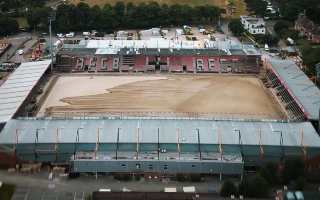
England: AFC Bournemouth begins historic redevelopment of Vitality Stadium
AFC Bournemouth has officially started the historic expansion of Vitality Stadium. The Premier League’s smallest ground will grow from around 11,300 to 20,196 seats, with the project including a new south stand, filled-in corners, upgraded hospitality areas, improved media facilities and better accessibility for fans.
-
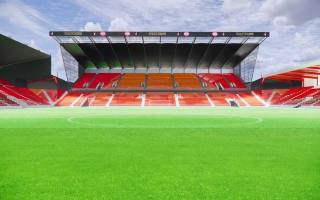
England: Vitality Stadium redevelopment could begin this summer. Investment details revealed
AFC Bournemouth is preparing for a major redevelopment of Vitality Stadium. The project includes building a new south stand, filling the stadium corners and expanding capacity to over 20,000 seats, nearly doubling the current size of the venue.
-
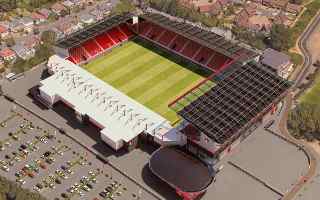
England: Vitality Stadium redevelopment enters a decisive planning phase
AFC Bournemouth has taken an important step towards expanding Vitality Stadium. The submission of a full planning application marks the start of a key administrative phase for a project aimed at aligning the venue with the club’s Premier League ambitions and reshaping its role within the city.
2025
-
England: How the 21st century shaped the Premier League with 8 new stadiums
Although the Premier League is mainly associated with historic stadiums with over a century of tradition, the 21st century has also brought several modern venues. In this article, we will go through all the stadiums that have been built in the last 25 years.
-
England: AFC Bournemouth reveals plans to expand Vitality Stadium
AFC Bournemouth aims to complete the Vitality Stadium expansion by the start of the 2026/27 season. The biggest change will be a new south stand replacing the current temporary structure. Its capacity will jump from 2,337 to around 7,000 seats.
-
England: Bournemouth set to modernize and expand Vitality Stadium
A few days ago, AFC Bournemouth announced that the club had reached an agreement to buy back Vitality Stadium, with plans to expand and modernize the facility.
2024
-
England: Will government introduce new rules on stadium sales?
The government is preparing to grant powers to an independent regulator that will prevent Premier League clubs from selling their stadiums to affiliated companies or third parties.
-

England: Attendance at Premier League stadiums in the 2023/24 season
Another season, another league title for Manchester City. The award for highest attendance also went to the city of Manchester as well, but to the Red Devils, despite the team's worst season in Premier League history. As many as six clubs surpassed one million spectators this season, with five stadiums filling up at an average of more than 99%. Amazing.
2023

2022
-

England: Stadium rises will affect Premier League clubs
The value of almost all 20 stadiums owned by teams playing in the Premier League has recently increased. As a result, clubs will face multi-million pound tax increases involving their infrastructure.
-

England: Meet the 2022/23 Premier League stadiums!
Much to the delight of fans, the new English Premier League season will kick off on Friday, August 5. On this occasion, we would like to introduce you to the stadiums where the footballers of the world's best league will soon be playing. Get your English tea in hand and let's get started!
2021

2020
-

COVID-19 crisis: English supporters to return in October?
The government is preparing to reopen sports stadiums across the UK. While first trial events will take place in just 2 weeks, all stadiums could be open again only from October onwards.
-

England: Safe standing in Premier League and Championship from 2021?
Though physically safe standing is already in Premier League, legally it's still prohibited. But that might change as the government is expected to act quickly, possibly introducing legal standing in 2021.
2018
-

England: Bournemouth not building stadium, not yet
AFC Bournemouth took a lengthy statement to communicate one major piece of information: the new stadium will not be ready as planned. Its construction is delayed and no new deadline has been set.
-

Safe standing: Government to rethink all-seating
By all means the debate was predictable, but that's fine, we'll take it. The most important thing is: British authorities will review the all-seater rule, which officially opens the case for legal standing in top leagues of England and Wales.
-

England: New stadium “only option” for Bournemouth
With another season in Premier League secured, Bournemouth can continue planing their stadium relocation. So far they've been at the very bottom of the league in attendance and ticket revenue. Time to change it.
-

England: Supporters force parliament to debate safe standing!
It took only several days of momentum to reach immense support of 100,000 British citizens and thus force the British government to officially debate safe standing in Premier League and Championship.
-

England: How much are PL naming rights worth?
To secure a naming rights deal in Premier League you only need £300,000 per year. But to buy the most expensive name it's 87 times that amount! Here's the latest valuation by Duff & Phelps.
