 StadiumDB
Selhurst Park
| Capacity | 25 486 |
|---|---|
| Country | England |
| City | London |
| Clubs | Crystal Palace FC |
| Inauguration | 30/08/1924 |
| Construction | 1922-1923 |
| Renovations | 1969, 1983, 1994, 1995, 2013, 2014 |
| Record attendance | 51,801 (Crystal Palace 2-0 Burnley FC, 1979) |
| Design | Archibald Leitch (1923) |
| Structural Engineer | Humphreys of Kensington (1923) |
| Address | Selhurst Park, South Norwood, London, SE25 6PU |
Advertisement
Selhurst Park – stadium description
Where does Selhurst Park get its name from?
The name Selhurst Park comes from the district of Selhurst, located in South London within the London Borough of Croydon, where the stadium stands. The word Selhurst has ancient roots and derives from Old English – from the words sele
(hall, building) and hyrst
(wooded hill). It literally means a wooded hill with a building
or a house among the trees
. This reflects the landscape that once dominated this part of London before urbanisation — an area of woods and parkland formerly belonging to the Archbishop of Canterbury’s Estate.
When Crystal Palace F.C. was searching for a new site in the 1920s, the club chose a plot of land in the Selhurst area owned by the London, Brighton and South Coast Railway Company. That decision naturally influenced the name of the new stadium — Selhurst Park, officially opened on 30 August 1924. Since then, the name has remained unchanged and closely tied to the local identity of this part of Croydon, making the stadium one of the best-known landmarks in South London.
Where is Selhurst Park located?
Selhurst Park is situated in South London, in the district of Selhurst, within the London Borough of Croydon. Its exact address is Holmesdale Road, London SE25 6PU, England. The stadium sits in a dense residential area, surrounded by terraced houses — a classic example of a traditional English ground integrated into the urban landscape.
It lies about 13 kilometres (8 miles) south of central London, near the districts of Thornton Heath, South Norwood, and Croydon. The railway line runs right by the stadium, ensuring excellent transport connections. The nearest stations are Selhurst Station (about 5 minutes’ walk) and Norwood Junction (around 15 minutes), with regular train services to London Victoria, London Bridge, and other key city hubs.
Its location makes the stadium well known not only to local residents but also to visiting supporters. It stands in a region that also hosts other clubs from southern London, such as Millwall and AFC Wimbledon, underlining the strong football identity of this part of the capital.
What is the capacity of Selhurst Park?
Selhurst Park currently holds 25,486 spectators. This is the official capacity after the stands were adapted to modern safety and comfort standards required in English football. All seats in the stadium are seated, in accordance with post-Taylor Report regulations introduced in the early 1990s.
In the past, the stadium could accommodate much larger crowds — before the standing terraces were removed, it could hold over 50,000 fans. The all-time attendance record was set on 11 May 1979, during the Crystal Palace vs Burnley match, when 51,801 people packed the stands. The game secured Palace’s promotion to the top flight and remains one of the most memorable moments in the club’s history.
Today, its capacity makes Selhurst Park one of the smaller stadiums in the Premier League, yet it retains its classic, intimate feel, with four distinct stands and the close-up atmosphere typical of traditional English football grounds.
When was Selhurst Park opened?
Selhurst Park was officially opened on 30 August 1924. The opening ceremony coincided with the first league match at the new ground — Crystal Palace F.C. hosted Sheffield Wednesday in the Second Division. The game ended 0–1, but despite the defeat, the event was a milestone for the club, which for the first time had a permanent, purpose-built home.
Construction began in 1922 on land purchased from the London, Brighton and South Coast Railway Company. The stadium was designed by the renowned sports architect Archibald Leitch, responsible for many iconic British venues such as Ibrox Park and Highbury. Upon completion, Selhurst Park could accommodate around 30,000 spectators, part of them seated in the covered Main Stand, while the rest stood on open embankments.
Since then, the stadium has served continuously as the home of Crystal Palace F.C., making it one of the oldest still-operating football venues in London, preserving many features of Leitch’s original layout.
Who uses Selhurst Park on a daily basis?
Selhurst Park is the permanent home of Crystal Palace Football Club, a Premier League team. Since its opening in 1924, it has been the club’s unbroken home ground and a key symbol of its identity. Founded in 1905, Crystal Palace spent its early years without a fixed stadium until the construction of Selhurst Park marked a turning point in its professional development.
The ground has also served other London clubs in the past. Between 1985 and 1991, it was home to Charlton Athletic, which was forced to leave The Valley at the time. Later, from 1991 to 2003, Wimbledon F.C. shared the ground before relocating to Milton Keynes. Despite these periods, Selhurst Park has always been synonymous with Crystal Palace.
Beyond matchdays, the stadium also houses the club’s administrative offices, including operational and commercial departments. It hosts fan meetings, community events, and club ceremonies, making it a central hub for both Crystal Palace F.C. and local initiatives in Croydon.
What events have taken place at Selhurst Park?
Since its opening in 1924, Selhurst Park has primarily hosted the matches of Crystal Palace F.C., including league and cup fixtures across all tiers of English football — from the Second Division to the Premier League. The most iconic occasion remains the 1979 promotion match against Burnley, watched by a record 51,801 fans.
The stadium has also served as the home ground for other teams, including Charlton Athletic (1985–1991) and Wimbledon F.C. (1991–2003), allowing it to host top-flight matches involving three different London clubs — a rarity in English football.
In addition to football, the venue has occasionally staged charity events, concerts, and local community gatherings. Though it functions mainly as a football ground today, Selhurst Park remains an important landmark in South London and a lasting symbol of Crystal Palace’s football heritage.
What does the architecture of Selhurst Park look like?
Selhurst Park is a classic example of a traditional English football stadium, with four distinct stands tightly surrounding the pitch. Each stand reflects a different era of development, creating a unique mix of old and modern design. The layout still follows the original plan by Archibald Leitch, whose architectural trademarks can be seen in the proportions and structural details.
The oldest part is the Main Stand, opened in 1924, which retains much of Leitch’s original wooden framework. Its exterior is characterised by a red-brick façade and a steep roof supported by steel trusses. Opposite it stands the Arthur Wait Stand, built in the 1960s, known for its covered seating and proximity to the pitch.
Behind the goals are two newer structures: the Holmesdale Road Stand, the largest and most recognisable, with two tiers housing the club’s most passionate supporters, and the Whitehorse Lane Stand, smaller and home to executive boxes and media facilities. Together, the stands form a compact, atmospheric ground with no running track and stands almost touching the pitch — a hallmark of English football intimacy and acoustics.
What facilities and technological features does Selhurst Park have?
Selhurst Park combines its classic appearance with modern technology meeting Premier League standards. The stadium is equipped with a full LED floodlighting system and an advanced public address and sound network ensuring even distribution of sound across all stands. A CCTV monitoring system covers both the interior and exterior of the venue, enhancing safety for spectators.
The pitch features an undersoil heating system, allowing matches to be played in winter conditions. The natural grass surface is reinforced with synthetic fibres, supported by an advanced drainage system and computer-controlled sprinklers.
Inside the stadium there are numerous food kiosks, club shops, and hospitality suites, including executive boxes in the Whitehorse Lane Stand. Selhurst Park is accessible to people with disabilities, featuring ramps, lifts, and dedicated viewing areas. Free Wi-Fi is available throughout the stands, and electronic ticketing helps speed up entry and reduce queues on matchdays.
How can you get to Selhurst Park and what transport options are available?
Selhurst Park is well connected to the rest of London, even though it lies in the city’s southern suburbs. There is no direct Underground link, but the stadium is easily reachable by train, bus, or car.
The nearest station is Selhurst Station, only a five-minute walk from the ground, with frequent services to London Victoria, London Bridge, and Clapham Junction. Slightly further away are Norwood Junction (15 minutes’ walk) and Thornton Heath, both offering fast links to central London.
Several bus routes also serve the area, including 50, 75, 157, 468, and X68. Parking near the stadium is limited, so the club encourages visitors to use public transport. On matchdays, local authorities implement temporary traffic restrictions around the stadium to ease pedestrian movement and access for buses and trains.
What sporting events take place at Selhurst Park?
Selhurst Park hosts primarily football matches featuring Crystal Palace F.C., both in the Premier League and domestic cup competitions. It is the venue for all home fixtures of the first team, as well as occasional matches for the club’s youth and reserve sides. The stadium regularly welcomes top English clubs such as Manchester United, Arsenal, and Liverpool, often selling out and generating one of the liveliest atmospheres in London.
In previous decades, Selhurst Park was also home to Charlton Athletic and Wimbledon F.C., which brought top-flight football from multiple clubs to the same venue. It has additionally hosted England youth internationals and charity games featuring former players.
Although football dominates today, Selhurst Park remains a key part of London’s sporting landscape — a traditional, community-rooted stadium where football lives side by side with local spirit.
Are concerts or other cultural events held at Selhurst Park?
While Selhurst Park is primarily a football stadium, it has also hosted several musical and cultural events throughout its history. Due to its location in a densely populated residential area and noise restrictions, such occasions are rare.
The ground has been used for open-air concerts, charity events, and performances by local artists, often organised in partnership with the Crystal Palace F.C. Foundation. It has also hosted club ceremonies, award evenings, and community gatherings promoting sports and culture in South London.
Because of its compact layout and limited space, Selhurst Park is not a venue for large-scale concerts like Wembley or Emirates Stadium. However, it continues to serve as an important community hub, supporting smaller-scale social, educational, and charitable events backed by the club and Croydon Council.
What attendance records have been set at Selhurst Park?
The record attendance at Selhurst Park was set on 11 May 1979, when Crystal Palace beat Burnley 2–0 in the decisive match for promotion to the First Division. A crowd of 51,801 packed the stands, a record that still stands today. The atmosphere that night is remembered by fans as one of the greatest moments in the club’s history.
In earlier decades, the stadium frequently drew over 40,000 spectators, particularly during successful periods in the club’s history. After the conversion to all-seater configuration and new safety regulations in the 1990s, capacity was reduced, and the maximum attendance in the Premier League era is now around 25,000 — effectively a full house.
Despite being smaller than in the past, Selhurst Park has maintained its reputation for an exceptional atmosphere. The proximity of the stands and the passionate support of Palace fans make it one of the loudest and most intense stadiums in London.
Has Selhurst Park undergone any renovations or expansions?
Selhurst Park has undergone several major renovations to meet evolving safety and comfort standards. Since opening in 1924, the stadium has been gradually transformed from a traditional ground with standing terraces into a fully seated Premier League venue.
The first major upgrade came in the 1960s, when the Arthur Wait Stand was built on the east side of the pitch — covered, fully seated, and named after the club’s then-chairman. In the 1980s, the Whitehorse Lane Stand was added, incorporating retail units and executive boxes.
The most significant redevelopment came in 1994 with the construction of the new Holmesdale Road Stand, a two-tiered structure replacing the old terrace. This upgrade followed the Taylor Report recommendations after the Hillsborough disaster, which required the elimination of standing areas. In the years that followed, the stadium’s façades were refreshed, and technical systems were upgraded — including new lighting, CCTV, electronic entry gates, and undersoil heating. These improvements allowed Selhurst Park to preserve its historic charm while meeting Premier League standards.
What are the future plans for Selhurst Park?
Selhurst Park is set for a major redevelopment, focusing on a complete reconstruction of the Main Stand. The project aims to increase capacity to around 34,000 seats and provide modern facilities for fans, media, and corporate guests. The new stand’s glass façade will take inspiration from the Crystal Palace Exhibition Building, a nod to the club’s origins and identity. Inside, it will feature corporate lounges, restaurants, hospitality areas, and upgraded technical spaces.
The club received initial planning approval in 2018, and the project has since been updated to meet modern planning requirements. Construction will be carried out in phases to ensure that the stadium remains operational throughout. Recent years have focused on preparatory work, including the acquisition of nearby properties — a key step before major construction begins.
The redevelopment is expected to cost between £100–200 million, and Crystal Palace has confirmed its commitment to securing Selhurst Park’s long-term future in the Premier League. The goal is to preserve the stadium’s traditional character while adding contemporary facilities and improving the matchday experience for supporters and the local community alike.
How Selhurst Park compares to other Premier League stadiums?
Advertisement
Pictures
-

15.05.2017 © Bradford Timeline (cc: by-nc) 
07.05.2015 © Heather Ormsby 
07.05.2015 © Heather Ormsby 
16.04.2017 © Ian Johnson 
07.05.2015 © Heather Ormsby 
07.05.2015 © Heather Ormsby 
21.02.2015 © Rockybiggs 
27.08.2008 © Patrick Hendricksen 
27.08.2008 © Patrick Hendricksen 
16.04.2017 © Ian Johnson 
28.04.2018 © Ian Johnson 
28.04.2018 © Ian Johnson 
28.09.2014 © Ian Johnson 
15.12.2018 © Ian Johnson


Related news
2026
2025
-
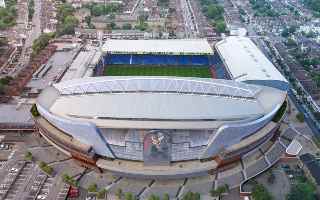
England: Premier League at the turn of the year. 7 must-see fixtures
December in the Premier League is when everything accelerates: packed stadiums, festive energy and matches that can reshape the title race. This article highlights the key fixtures you should consider attending — and shows how to secure tickets before availability disappears.
-

Great Britain: 2035 Women’s World Cup stadiums. New Trafford confirmed
Great Britain could host the 2035 FIFA Women’s World Cup, and today the list of stadiums that could welcome the world’s best players was revealed. England, Scotland, Wales and Northern Ireland have submitted a joint bid – the only one FIFA has received – which puts the project firmly in pole position.
2024
-
England: Will government introduce new rules on stadium sales?
The government is preparing to grant powers to an independent regulator that will prevent Premier League clubs from selling their stadiums to affiliated companies or third parties.
-
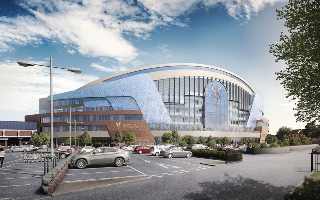
England: Green light for Crystal Palace stadium redevelopment!
Croydon Council has approved a project that has been in the works since 2018. As part of the redevelopment, the main stand at Selhurst Park, which was built 100 years ago, will be demolished.
-

England: Attendance at Premier League stadiums in the 2023/24 season
Another season, another league title for Manchester City. The award for highest attendance also went to the city of Manchester as well, but to the Red Devils, despite the team's worst season in Premier League history. As many as six clubs surpassed one million spectators this season, with five stadiums filling up at an average of more than 99%. Amazing.
2023

2022
-

England: Stadium rises will affect Premier League clubs
The value of almost all 20 stadiums owned by teams playing in the Premier League has recently increased. As a result, clubs will face multi-million pound tax increases involving their infrastructure.
-

London: Selhurst Park renovation given the green light!
Another venue in the UK capital is about to join the ranks of the city's state-of-the-art stadiums. Croydon councillors have approved plans to rebuild the Main Stand at Selhurst Park and finally nothing blocks the way of the project.
-

England: When will Selhurst Park be redeveloped?
In November 2021, Crystal Palace announced that the expansion of the new main stand had been postponed by a year. After 10 months it seems that things are moving in the right direction. Club chairman Steve Parish believes the South London club remains "absolutely committed" to the project.
-

England: Meet the 2022/23 Premier League stadiums!
Much to the delight of fans, the new English Premier League season will kick off on Friday, August 5. On this occasion, we would like to introduce you to the stadiums where the footballers of the world's best league will soon be playing. Get your English tea in hand and let's get started!
2021
-

London: Crystal Palace postpones expansion for a year
The new main stand is the goal of the South London club. These plans were made three years ago, but it seems that their implementation will not start until the end of next year.
-

England: Safe standing trials in Premier League and Championship
There has been talk for some time about introducing safe standing in the two highest leagues in the country. In 2019, the government assured about the imminent change of the regulations, but these were not introduced until 2 years later.
-

New stadium: Wimbledon at home after 30 years
Their last home game in Merton was played in April, 1991. This week fans of Wimbledon were finally able to once more enjoy the atmosphere of Plough Lane, even if with social distancing.
2020
-

London: Crystal Palace expansion in 2022?
It seems the last hurdle has been cleared and Crystal Palace will soon be able to sign the deal to expand Selhurst Park. But it also seems work won't happen before 2022, according to the timeline provided in Section 106.
-

COVID-19 crisis: English supporters to return in October?
The government is preparing to reopen sports stadiums across the UK. While first trial events will take place in just 2 weeks, all stadiums could be open again only from October onwards.
-

England: 341 games in five “regional hubs”?
In case not all stadiums are available to host games of Championship, League One and League Two, the EFL is considering using stadium clusters to hold the 341 remaining league games of 2019/20.
-

England: Safe standing in Premier League and Championship from 2021?
Though physically safe standing is already in Premier League, legally it's still prohibited. But that might change as the government is expected to act quickly, possibly introducing legal standing in 2021.
2018
-

Safe standing: Government to rethink all-seating
By all means the debate was predictable, but that's fine, we'll take it. The most important thing is: British authorities will review the all-seater rule, which officially opens the case for legal standing in top leagues of England and Wales.
-

England: Supporters force parliament to debate safe standing!
It took only several days of momentum to reach immense support of 100,000 British citizens and thus force the British government to officially debate safe standing in Premier League and Championship.