 StadiumDB
Great Britain: 2035 Women’s World Cup stadiums. New Trafford confirmed
source: StadiumDB.com; author: Paulina Skóra
 Great Britain could host the 2035 FIFA Women’s World Cup, and today the list of stadiums that could welcome the world’s best players was revealed. England, Scotland, Wales and Northern Ireland have submitted a joint bid – the only one FIFA has received – which puts the project firmly in pole position.
Advertisement
A chance to stage the biggest tournament in history
If approved, it would become the biggest sporting event ever held in Great Britain and the first World Cup on British soil since 1966. The proposal includes 22 stadiums across 16 cities: sixteen in England, three in Wales, two in Scotland and one in Northern Ireland. The tournament would feature 48 teams, with 104 matches over 39 days, backed by 48 base camps, more than 80 training centres and 32 FIFA fan festivals.
Organisers estimate that 63 million residents of Great Britain would live within a two-hour journey of one of the proposed venues, while the global TV audience could reach 3.5 billion.
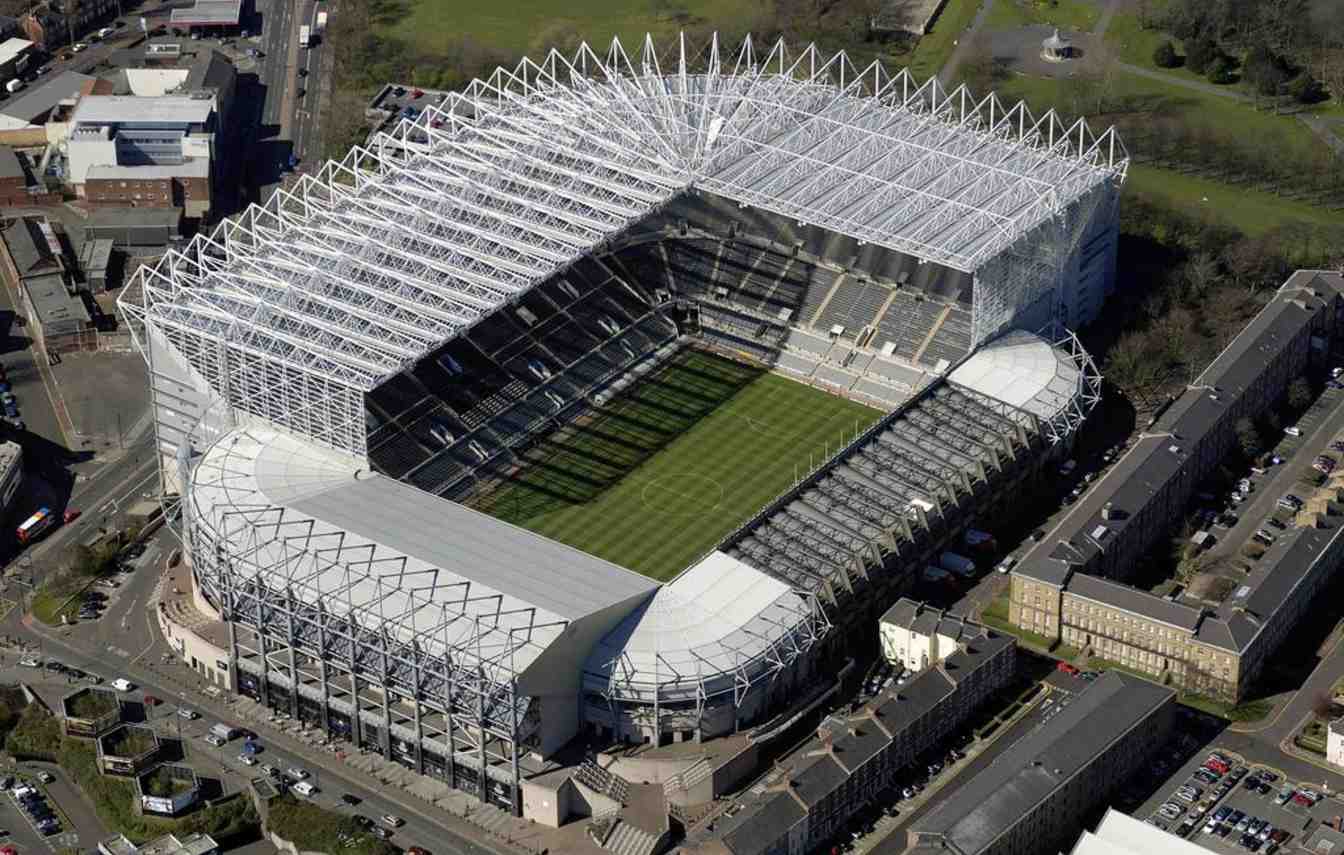 © Mark Walker | St. James’ Park
A long list of proposed stadiums
Some venues already meet FIFA’s top standards — such as Wembley, Emirates Stadium, Tottenham Hotspur Stadium, the Etihad or Hampden Park — while others would need upgrades, including Stok Cae Ras in Wrexham. Stamford Bridge, at present, does not meet the required technical criteria.
The bid also features planned or redeveloped venues, such as New Trafford and the new Powerhouse Stadium in Birmingham (provisionally named Sports Quarter Stadium). The project follows the UK–Ireland joint bid for EURO 2028, which also involved Hill Dickinson Stadium and Casement Park, both still in the planning stage.
List of proposed stadiums:
Northern Ireland
- Windsor Park (Belfast)
Wales
- Cardiff City Stadium (Cardiff)
- Principality Stadium (Cardiff)
- Stok Cae Ras (Wrexham)
Scotland
- Easter Road (Edinburgh)
- Hampden Park (Glasgow)
England
- Sports Quarter Stadium (Birmingham)
- Villa Park (Birmingham)
- American Express Stadium (Brighton & Hove)
- Ashton Gate (Bristol)
- Hill Dickinson Stadium (Liverpool)
- Elland Road (Leeds)
- Chelsea Stadium (London)
- Emirates Stadium (London)
- Selhurst Park (London)
- Tottenham Hotspur Stadium (London)
- Wembley Stadium (London)
- Etihad Stadium (Manchester)
- New Trafford (Trafford)
- St James’ Park (Newcastle)
- City Ground (Nottingham)
- Stadium of Light (Sunderland)
Euro first, then the World Cup
The British bid stands out because it faces no competition. FIFA has confirmed that the only formal candidacy for 2035 comes from Great Britain and Northern Ireland. The host nation will be chosen on 30 April 2026 during the FIFA Congress in Vancouver. In March 2025, the FIFA Council recommended that the 2035 tournament should be held in Europe or Africa, essentially clearing the path for the British project.
The federations must now prove to FIFA that their infrastructure plan, financial model and legacy strategy are solid enough to support an event of this scale. Mark Bullingham, CEO of the English FA, highlights that Britain aims to build on the massive surge in women’s football and stage a tournament played in full stadiums.
The bid comes as Great Britain and Ireland prepare for EURO 2028, which will effectively test the projected economic impact of multinational tournaments. Independent studies estimate that EURO 2028 could generate £3.6 billion between 2028 and 2031, driven mainly by tourism, jobs and infrastructure investment.
The 2035 Women’s World Cup would be even larger — more than twice the number of matches and venues. For local authorities and stadium operators, it represents another chance within a decade to boost local economies, accelerate infrastructure projects and strengthen the sports sector.
 © Instagram: @ncantelow | Tottenham Hotspur Stadium
A World Cup as a catalyst for women’s football
The growing value of women’s football gives the bid additional weight. EURO 2022 set attendance and viewership records, and the 2023 World Cup in Australia and New Zealand became the most profitable in history, selling nearly two million tickets. Netflix has acquired U.S. rights to the 2027 and 2031 World Cups in the biggest streaming deal FIFA has signed. In England, the Women’s Super League sealed a five-year media contract worth £65 million, while Deloitte projects global women’s sport revenues to surpass $2.35 billion in 2025, with football contributing around 35%.
Political support is also strong. Prime Minister Keir Starmer called the possibility of hosting the tournament a monumental moment
for British sport, noting that the Lionesses’ success has inspired a new generation of players. The four federations emphasise that a Women’s World Cup in Great Britain could significantly accelerate the development of women’s and girls’ football both domestically and worldwide.
Their All Together
document outlines a long-term legacy strategy focused on increasing participation — especially in underrepresented communities — doubling the number of female referees, strengthening women’s leadership and driving commercial growth across the women’s game in ways that also benefit other FIFA member nations.
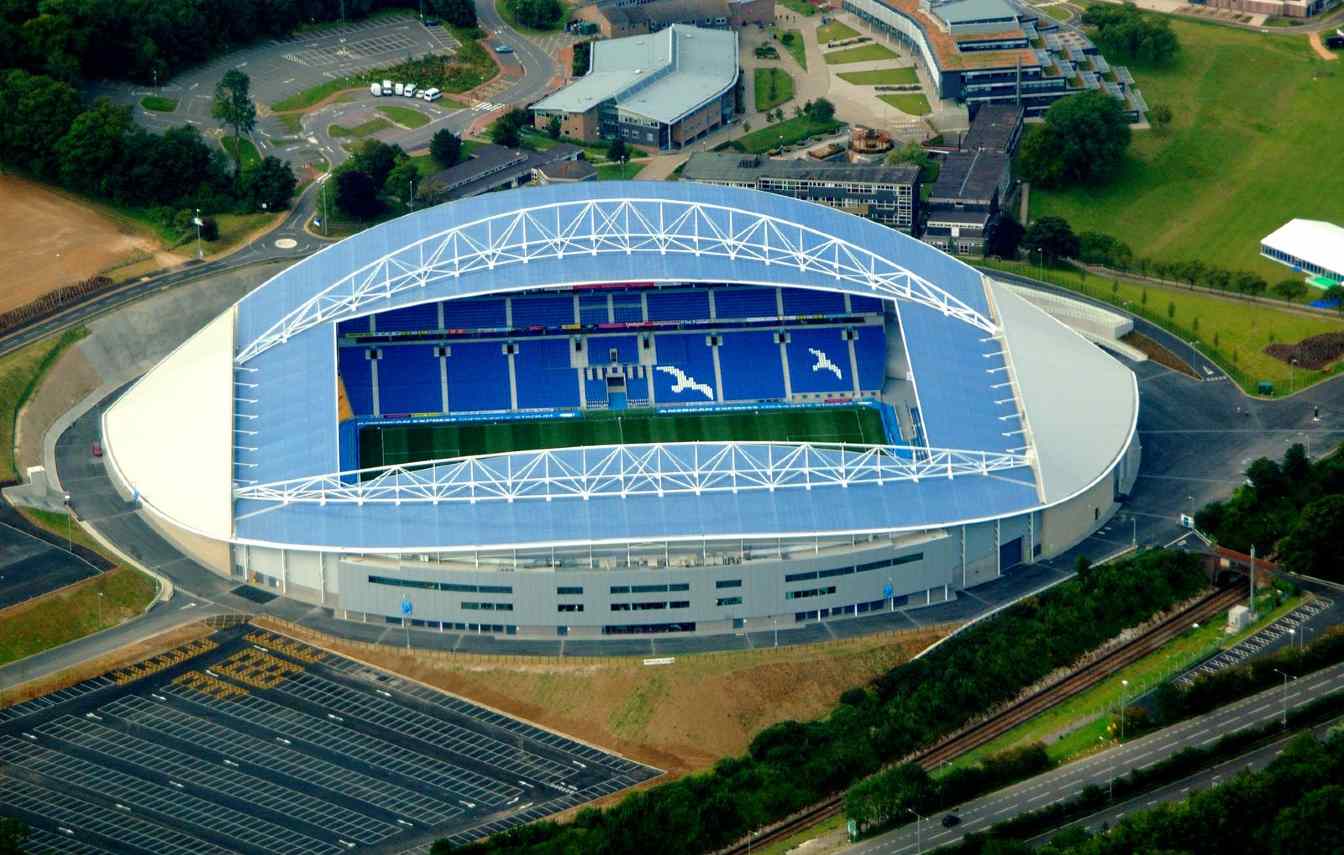 © Barbara van Cleve (cc: by-sa) | American Express Stadium (Falmer Stadium)
Advertisement