 StadiumDB
City Ground (Trentside)
| Capacity | 30 445 |
|---|---|
| 4750 (Away section) | |
| Country | England |
| City | Nottingham |
| Clubs | Nottingham Forest |
| Inauguration | 03.09.1898 |
| Renovations | 1965, 1967, 1980, 1993 |
| Record attendance | 49 946 (Nottingham - Manchester Utd, 1967) |
| Address | Pavillion Road, Nottingham, NG2 5FJ |
Advertisement
City Ground – stadium description
Where does City Ground get its name from?
The name City Ground refers directly to the stadium’s location and its connection with Nottingham – the city
itself. When Nottingham Forest moved to a new site in 1898, the land chosen belonged to the Nottingham City Council and was situated right on the banks of the River Trent. This was a practical solution – the club gained a convenient location close to the city centre, while the name emphasized that the venue was city-owned and an integral part of the local sporting landscape.
Interestingly, the term City Ground was not unique – there are other stadiums in England with the same name (for example in Cambridge or Chester). However, it was Nottingham Forest’s home ground that made the name widely recognized. For Forest, the choice also had another layer of meaning – the club wanted to highlight its belonging to the city and distinguish itself from neighbours Notts County, who at that time were already playing across the river at Meadow Lane.
Since its opening in 1898, the name City Ground has remained unchanged, despite discussions about redevelopment and modernization. Thanks to this continuity, the venue has retained a simple, recognizable identity deeply rooted in Nottingham’s sporting tradition.
Where is City Ground located?
City Ground is located in Nottingham, in the county of Nottinghamshire, in the heart of England. The stadium lies on the south bank of the River Trent, in the district of West Bridgford, which administratively belongs to Rushcliffe Borough. Although technically outside the city boundaries, it has always been considered part of Nottingham, as the land was leased from Nottingham City Council and tied to the club and the city from the very beginning.
One of the most distinctive aspects of its location is its riverside setting and its proximity to another stadium – Meadow Lane, home of Notts County. The two grounds are separated by only about 270 metres, making them the closest professional football stadiums in England.
The surroundings of City Ground form a picturesque landscape with the River Trent and nearby bridges, including the famous Trent Bridge, which further enhances the recognisability of the area. This makes Nottingham Forest’s stadium not only a football venue, but also a landmark in the city’s skyline and a symbol of the region’s sporting tradition.
What is the capacity of City Ground?
The current capacity of City Ground is around 30,445 seats. This is the official figure reported by Nottingham Forest and the Premier League. The stadium belongs to the mid-sized venues in the league but stands out thanks to its atmosphere and character, typical of traditional English football grounds.
The capacity has changed significantly over time. When it first opened in 1898, most terraces were standing and the stadium could hold over 40,000 spectators. During Forest’s golden years under Brian Clough, the stadium regularly filled to the brim. The all-time record attendance was set on 28 October 1967, when 49,946 fans attended a league match against Manchester United.
Major changes came after the 1989 Taylor Report, which required all-seater stadiums in the top divisions. In the early 1990s, City Ground was modernized, the terraces were converted into seats, and capacity was reduced to today’s level. In recent years, the club considered expanding the Main Stand to reach around 38,000 seats, but this project has been put on hold due to high costs and economic challenges.
When was City Ground opened?
City Ground officially opened on 3 September 1898. The first match played there was against Burton Wanderers and ended in a 3–1 victory for Nottingham Forest. The game marked the beginning of a new era for the club, which had previously played at Trent Bridge, a ground mostly associated with cricket.
The decision to build a new stadium followed Forest’s triumph in the 1898 FA Cup. The sporting success created the need for a proper football stadium that would reflect the club’s ambitions and growing popularity. The chosen site by the River Trent, leased from Nottingham City Council, proved to be the ideal location for the club’s development.
Since then, City Ground has been Forest’s permanent home, witnessing countless milestones – from domestic victories in the early 20th century to European Cup triumphs in the 1970s and 80s. With over 120 years of history, it is today considered one of the most traditional and recognisable stadiums in England.
Who uses City Ground on a daily basis?
City Ground is the permanent home of Nottingham Forest F.C., who have played there continuously since 1898. The club plays all its league and cup matches at the stadium, which serves as the central hub of Forest’s sporting life. Known for its rich history and back-to-back European Cup triumphs under Brian Clough, Forest are the sole permanent tenants of the ground.
In the past, City Ground has occasionally hosted other teams and international fixtures. The England national team has played matches here, particularly during periods when Wembley was unavailable. Most notably, the stadium was one of the venues for Euro 1996, hosting three group stage games.
Beyond football, the stadium also functions as a community centre for Forest fans. It regularly hosts player meetings, club events and community initiatives. Unlike many other English stadiums, it has not been shared with rugby or American football teams – its identity remains entirely tied to Nottingham Forest.
What events have taken place at City Ground?
Since its opening in 1898, City Ground has primarily been the stage for Nottingham Forest matches, played continuously to this day. The stadium witnessed the club’s greatest moments – from the 1959 FA Cup win, through Brian Clough’s golden era and back-to-back European Cup victories in 1979 and 1980, to the recent promotion back to the Premier League in 2022.
The ground has also served as an international venue. England’s national team played matches here, and its biggest moment came during UEFA Euro 1996, when City Ground hosted three group stage games in Group D involving Turkey, Portugal and Croatia. This placed the Nottingham venue on the international map and showcased it to a European audience.
Although not typically used for large-scale concerts or cultural events, the stadium has played an important role in community life. It has hosted anniversary celebrations, tributes to club legends, fan meetings and charity initiatives. As such, City Ground is not only a sporting arena but also a symbol of Nottingham’s heritage and identity.
What does the architecture of City Ground look like?
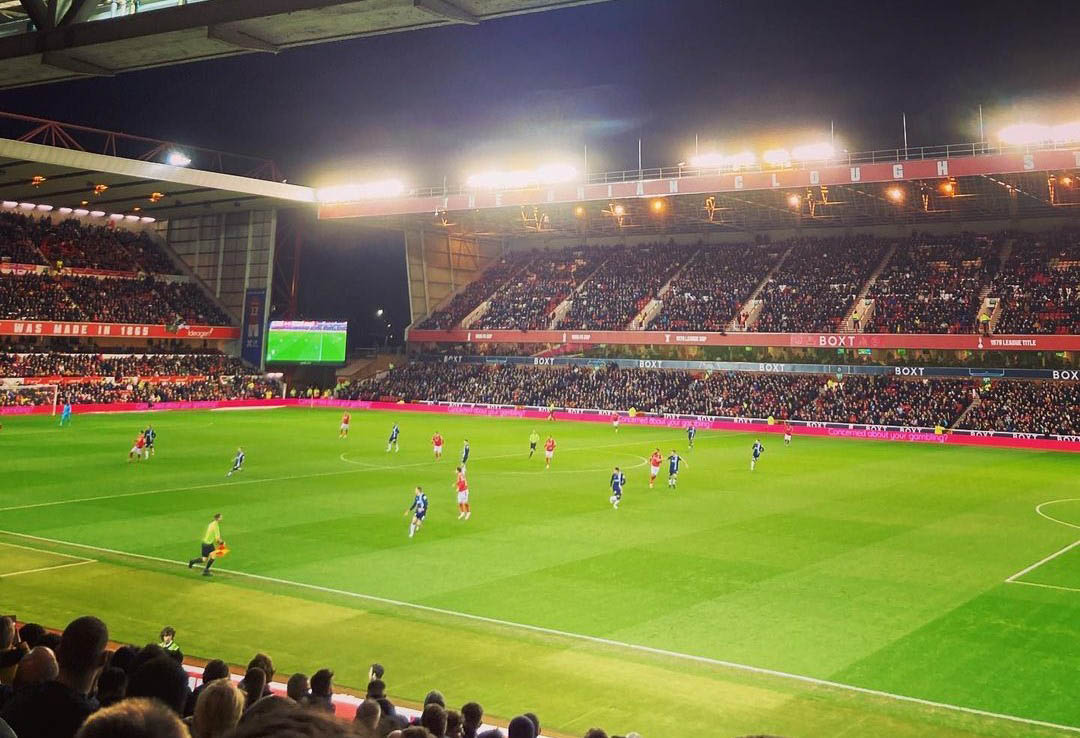
City Ground is a classic example of an English football stadium that has developed gradually over more than a century. Its architecture reflects different stages of modernization in British football, with four distinct stands, each with its own character and history.
The most prominent is the Brian Clough Stand, built in 1980 and named after Forest’s legendary manager. It is the largest stand, with two tiers and seating for around 10,000 fans. Opposite it stands the Trent End, rebuilt in 1994, also two-tiered, with a distinctive curved roof that defines the stadium’s profile from the riverside. This is the heart of Forest’s vocal support.
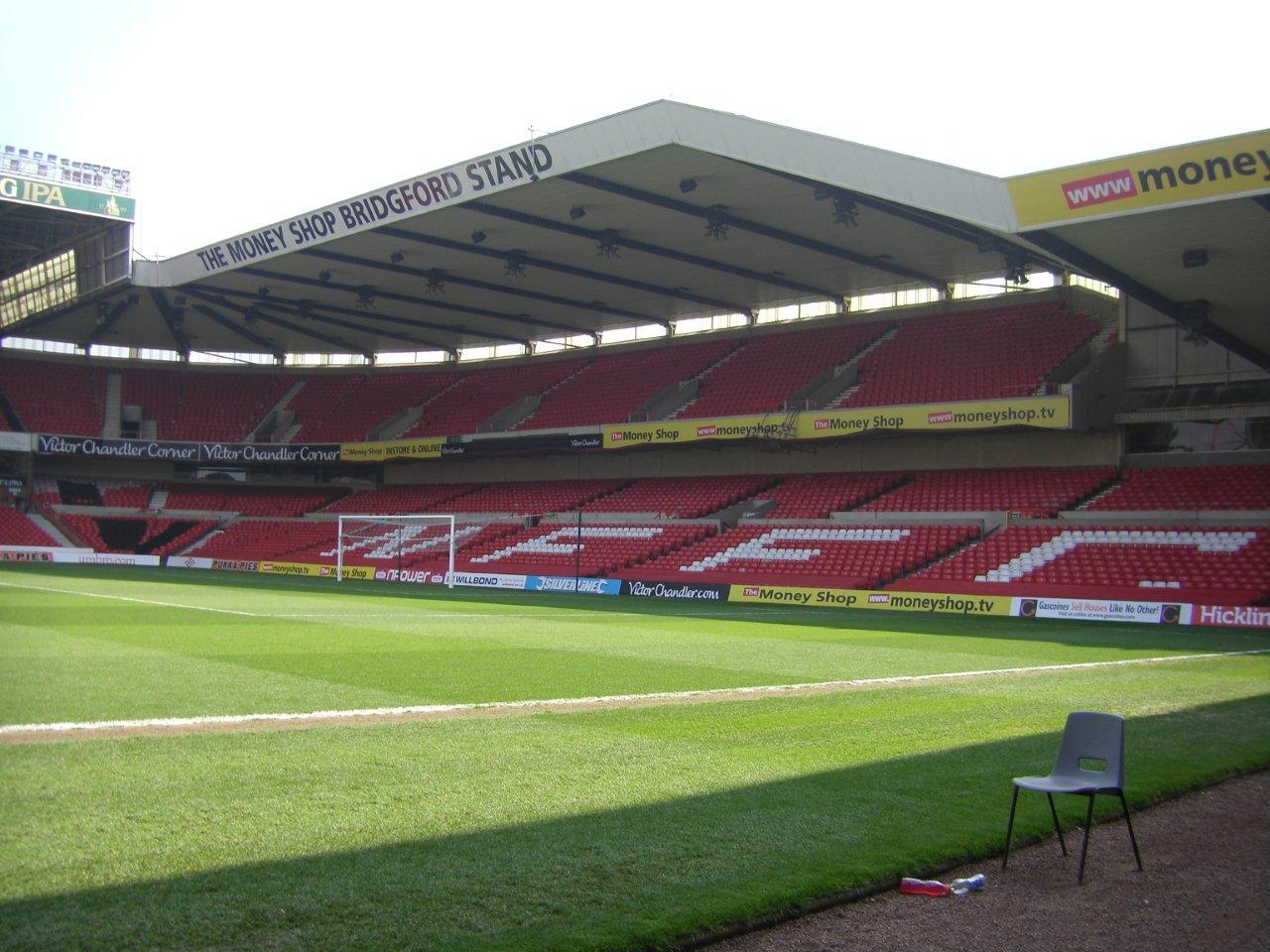
On the south side is the Peter Taylor Stand (formerly Executive Stand), redeveloped in the 1960s and 80s, later renamed in honour of Clough’s long-time assistant. It houses executive boxes, media facilities and business areas. Completing the ground is the Bridgford Stand, first built in 1965 and later expanded. This stand blends modern features with older elements and borders the Trent Bridge Cricket Ground.
The result is a stadium of asymmetrical, layered architecture – typical of English grounds rebuilt in stages rather than from scratch. Its varied stands give City Ground a unique character, combining classic forms with modern elements while maintaining the intimacy and atmosphere of fans being close to the pitch.
What facilities and technological features does City Ground have?
As a stadium with over a century of history, City Ground has undergone numerous upgrades to meet modern football standards. It is now fully seated, with roofs covering all four stands, and has up-to-date matchday facilities. The 1990s brought significant improvements in safety, monitoring and entry systems, in line with the Taylor Report’s recommendations.
The stadium features expanded corporate and VIP areas, particularly in the Peter Taylor Stand, which houses executive boxes, conference rooms and media spaces. Fans also benefit from catering points, club shops and dedicated family sections, making the venue compliant with Premier League standards both sportingly and commercially.
From a technological standpoint, City Ground is equipped with under-soil heating, floodlighting suitable for television broadcasting, as well as modern scoreboards and LED screens. In recent years, the club has also invested in improved sound systems and multimedia facilities to enhance the matchday experience. While not among the most high-tech venues in England, it successfully blends traditional design with amenities that provide comfort for both players and supporters.
How can you get to City Ground and what transport options are available?
City Ground is situated close to Nottingham’s city centre, making it easily accessible by various means of transport. Located in West Bridgford on the banks of the River Trent, it is just a short journey from the heart of the city.
The most common way to reach the stadium is by bus, with Nottingham City Transport operating multiple routes across Trent Bridge and surrounding streets. Services are frequent throughout the week, ensuring convenient access from different parts of Nottingham. Many travelling fans also arrive by train, as Nottingham Station is about a 20-minute walk from the stadium, with the option of continuing by bus.
For those driving, car parks are available in the vicinity, though spaces are limited on matchdays. The club recommends using park & ride services, allowing visitors to leave cars on the outskirts and travel by public transport. The area is also well connected by footpaths and cycle routes, making City Ground accessible to pedestrians and cyclists.
What sporting events are held at City Ground?
The primary events at City Ground are football matches involving Nottingham Forest F.C., who have played here since 1898. These fixtures form the heartbeat of the stadium, attracting tens of thousands of fans every season for Premier League and domestic cup competitions.
The venue has also hosted international matches. England’s national team played here in the past, and most notably, City Ground was selected as one of the stadiums for UEFA Euro 1996. During the tournament, it staged three group stage matches in Group D, featuring Portugal, Turkey and Croatia. This gave the stadium international prestige and a permanent place in the history of European football.
Although occasionally used for other sporting activities, these have been rare. City Ground remains first and foremost a football stadium – both for club and international games – and one of the most recognisable football venues in England.
Are concerts or cultural events organised at City Ground?
City Ground is not a stadium regularly used for concerts or large cultural events. Unlike many modern English venues designed as multi-purpose arenas, Nottingham Forest’s ground has retained its traditional identity as a football-first stadium.
That said, the venue is still used for other occasions. The club frequently hosts fan meetings, anniversary events, team presentations, banquets and conferences within the stadium. The business lounges and executive areas, especially in the Peter Taylor Stand, serve as popular venues for community and commercial gatherings.
Even without large-scale concerts, City Ground plays an important role in Nottingham’s cultural identity. It is a place of remembrance for club legends, of community celebrations and charity initiatives. Above all, it remains a stadium that builds social bonds through football rather than through commercial entertainment spectacles.
What attendance records have been set at City Ground?
The all-time record attendance at City Ground was set on 28 October 1967, when 49,946 fans filled the stadium for a league match between Nottingham Forest and Manchester United. At that time, the ground still featured vast standing terraces, allowing for much larger crowds than today.
During the 1950s and 1960s, it was common for attendances to surpass 40,000, particularly for matches against England’s top clubs. The atmosphere in those years was famously intense, making City Ground one of the most passionate venues in the country.
After the Taylor Report in 1989, all top-division grounds were required to convert to all-seater stadiums. In Nottingham, this reduced capacity to around 30,000 seats, making the 1967 record unbreakable. Today, however, Premier League fixtures regularly sell out, and City Ground remains one of the loudest and most atmospheric grounds in English football.
Has City Ground been modernised or redeveloped?
City Ground has undergone numerous redevelopments, its current form reflecting more than a century of change. The first major step came in 1965 with the construction of the Bridgford Stand, considered highly modern for its time. An even bigger development followed in 1980 with the building of the Main Stand – later renamed the Brian Clough Stand – which still remains the stadium’s largest stand, seating around 10,000.
A true transformation came in the 1990s, when English stadiums had to comply with the Taylor Report and convert into all-seater venues. In 1992, the Executive Stand (now the Peter Taylor Stand) was redeveloped, and in 1994, the new two-tiered Trent End with its curved roof was opened. These changes allowed City Ground to meet Premier League and UEFA standards, enabling it to host Euro 1996 matches.
In subsequent decades, the focus was on technical upgrades – under-soil heating, modern floodlights, improved media facilities and VIP areas. While several expansion projects were considered in the 21st century, none have yet been carried out. As a result, City Ground today represents a blend of architectural eras from different stages of English football history.
What are the plans for the future of City Ground?
Nottingham Forest’s current priority is the redevelopment of the Peter Taylor Stand. In June 2025, Rushcliffe Borough Council approved plans to demolish the existing stand and build a new one with capacity for around 10,000 fans, which would increase the overall stadium size to nearly 35,000 seats. The proposed design includes three tiers, a modern cantilever roof, expanded hospitality areas, executive boxes and restaurants.
The latest proposals go further, incorporating the infill of the Trent End corners, which could boost capacity to 43,000–45,000 seats. This would make City Ground one of the largest stadiums in England outside the so-called big six.
The redevelopment plan also covers improvements to the surrounding infrastructure, with new pedestrian routes, landscaped areas and updated public space.
Initially, the project also included 170 residential units near the ground, but this part has been dropped to reduce logistical complications and local opposition. In July 2025, Nottingham City Council approved the signing of a Section 106 agreement, formally clearing the way for construction. Although in the past the club considered building a new stadium in Toton, the direction is now clear – Nottingham Forest intends to remain at the historic City Ground and transform it into a modern venue fit for the 21st century.
How City Ground compares to other Premier League stadiums?
Advertisement
Pictures
-

07.01.2007 © Nffcchris (copyright-free) 
11.08.2021 © Harry Edmo 
17.09.2009 © Cormac70 (cc: by-nc-nd) 
23.04.2011 © Stephan Hoogerwaard 
05.05.2019 © Manchopper’s Ventures 
21.04.2007 © Tim Bunce (cc: by) 
25.01.2022 © Harry Edmo 
05.05.2019 © Manchopper’s Ventures 
23.08.2008 © Gary McCafferty (cc: by-nc-nd) 
03.2007 © citytyke 
22.01.2022 © Harry Edmo 
26.02.2022 © Harry Edmo 
30.12.2021 © Harry Edmo 
11.08.2021 © Harry Edmo 
23.04.2011 © Stephan Hoogerwaard 
22.01.2022 © Harry Edmo 
26.02.2022 © Harry Edmo 
26.02.2022 © Harry Edmo 
23.04.2011 © Stephan Hoogerwaard 
03.2007 © citytyke 
23.04.2011 © Stephan Hoogerwaard






Related news
2026
2025
-

England: Nottingham Forest unveils new, ambitious City Ground expansion vision
Nottingham Forest has revealed the latest, even more ambitious plans to redevelop the legendary City Ground – a project that could transform the stadium into one of England's largest football arenas. The club held open meetings for fans and residents over the weekend, presenting a vision for a venue holding up to 52,000 spectators.
-

Great Britain: 2035 Women’s World Cup stadiums. New Trafford confirmed
Great Britain could host the 2035 FIFA Women’s World Cup, and today the list of stadiums that could welcome the world’s best players was revealed. England, Scotland, Wales and Northern Ireland have submitted a joint bid – the only one FIFA has received – which puts the project firmly in pole position.
-
England: Supply and demand. Nottingham Forest face City Ground revamp poser
Nottingham Forest returned to the Premier League in 2022, sparking a scramble for limited tickets to watch top-flight action. It quickly became apparent that the City Ground needs to be expanded, with redevelopment plans already in place.
-
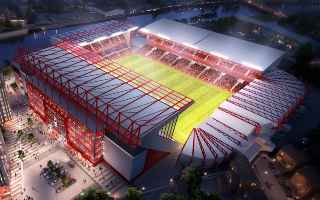
England: Nottingham Forest revise plans – City Ground to expand even further?
Nottingham Forest are preparing for an even more ambitious redevelopment of the City Ground, according to the latest planning documents submitted to local authorities.
-
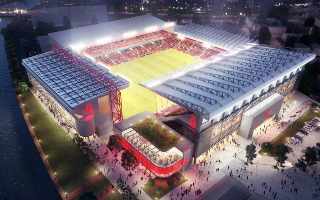
England: Green light for City Ground redevelopment
The large-scale redevelopment of Nottingham Forest’s City Ground has officially been approved. Under the plan, the existing Peter Taylor Stand will be demolished and replaced with a new 10,000-seat structure, increasing the stadium’s total capacity to 35,000.
2024
-
England: Will government introduce new rules on stadium sales?
The government is preparing to grant powers to an independent regulator that will prevent Premier League clubs from selling their stadiums to affiliated companies or third parties.
-
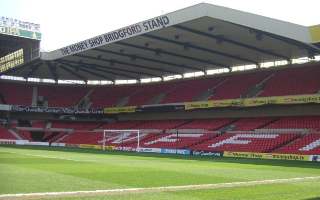
England: Many upgrades introduced at City Ground in Nottingham
During the inaugural match of the new Premier League season against AFC Bournemouth, Nottingham Forest unveiled improvements to City Ground. The stadium underwent a multi-million-pound redevelopment program that lasted all summer.
-

England: Nottingham Forest have reached agreement with city to buy City Ground
Nottingham Forest have reached an important milestone by gaining agreement to purchase the land on which their stadium, the City Ground, is located. This step is crucial for the future of the club as they plan to expand and modernise their ground.
-

England: Attendance at Premier League stadiums in the 2023/24 season
Another season, another league title for Manchester City. The award for highest attendance also went to the city of Manchester as well, but to the Red Devils, despite the team's worst season in Premier League history. As many as six clubs surpassed one million spectators this season, with five stadiums filling up at an average of more than 99%. Amazing.
-

England: Forest fans demand a stadium - will club grant their wish?
Talks regarding the extension of the City Ground lease have reached a deadlock. This has prompted Nottingham Forest authorities to consider the option of building an entirely new facility elsewhere. Fans support this possibility, stating that the club needs a better stadium.
2023

2022
-

England: Stadium rises will affect Premier League clubs
The value of almost all 20 stadiums owned by teams playing in the Premier League has recently increased. As a result, clubs will face multi-million pound tax increases involving their infrastructure.
-

England: Meet the 2022/23 Premier League stadiums!
Much to the delight of fans, the new English Premier League season will kick off on Friday, August 5. On this occasion, we would like to introduce you to the stadiums where the footballers of the world's best league will soon be playing. Get your English tea in hand and let's get started!
-

England: Stadiums partially closed due to pitch invasions?
The end of the season in most European leagues, including the UK, was marked by many football club successes. Fans, in the heat of the moment, have on many occasions decided to run onto the pitch after the final whistle. "Pitch invasions" may have greater consequences than it may seem.
2021
-

England: Safe standing trials in Premier League and Championship
There has been talk for some time about introducing safe standing in the two highest leagues in the country. In 2019, the government assured about the imminent change of the regulations, but these were not introduced until 2 years later.
-

England: Nottingham Forest further adjust stadium design
City Ground’s expansion is still the plan but changes are taking place in the planning documents. The new facade is different but main alterations cover the residential building behind the stadium.
-

United Kingdom: Will they bring football home in 2030 again?
Prime Minister Boris Johnson has recently supported the potential candidacy of the UK and Ireland for the FIFA 2030 World Cup. The formal process for a prospective five-association bid will be opened in 2022.
2020
-

COVID-19 crisis: English supporters to return in October?
The government is preparing to reopen sports stadiums across the UK. While first trial events will take place in just 2 weeks, all stadiums could be open again only from October onwards.
-

England: 341 games in five “regional hubs”?
In case not all stadiums are available to host games of Championship, League One and League Two, the EFL is considering using stadium clusters to hold the 341 remaining league games of 2019/20.