 StadiumDB
Stamford Bridge
| Capacity | 40 173 |
|---|---|
| Country | England |
| City | London |
| Clubs | Chelsea FC |
| Nicknames | The Bridge |
| Inauguration | 28.04.1877 |
| Renovations | 1905, 1973, 1984, 1990-1998 |
| Record attendance | 82,905 (Chelsea - Arsenal, 12.10.1935) |
| Design | Archibald Leitch (1905), KSS Group (1990-1998) |
| Address | Stamford Bridge, Fulham Road, London SW6 1HS |
Advertisement
Stamford Bridge – stadium description
Where does Stamford Bridge get its name?
The name Stamford Bridge comes from an old designation of the area that existed long before the stadium was built. It derives from a bridge that crossed the Stanford Creek (or Stamford Creek), a tributary of the River Thames. The word Stamford
originates from the Old English words stony ford – meaning stone crossing
– which was a typical way of naming medieval river crossings in England.
The Bridge
part of the name refers directly to the bridge over the stream in the area of today’s stadium. Although the stream was channelled underground in the 19th century, its presence shaped the local toponymy. A former watermill was also located nearby, which further underlined the importance of the crossing at this spot.
Interestingly, the name Stamford Bridge is often mistakenly associated with the Battle of Stamford Bridge of 1066, fought in Yorkshire between the Anglo-Saxons and the Vikings. There is, however, no historical connection between that event and the stadium’s location in London – the similarity is due only to a shared Old English etymology.
Where is Stamford Bridge located?
Stamford Bridge is located in west London, in the district of Fulham, which is part of the borough of Hammersmith and Fulham. Although it is commonly said that the stadium lies in Chelsea, reflecting the club’s name, administratively it belongs to Fulham, right on the border with Chelsea.
The stadium is situated on Fulham Road, one of the main arteries of the area, around five kilometres southwest of central London (Charing Cross). Thanks to this location, Stamford Bridge is well connected – the nearest Underground station is Fulham Broadway (District Line), and several bus routes also serve the area, linking it with central London and other districts.
The surroundings of the stadium are typically urban and densely built-up. Stamford Bridge is enclosed by residential and commercial buildings, which has limited its potential for expansion compared to arenas located on the outskirts of London. In the immediate vicinity there are former industrial sites, parks, sports facilities and the club’s offices.
What is the capacity of Stamford Bridge?
Stamford Bridge today has a capacity of 40,341 seats, which places it among London’s larger stadiums, though it is smaller than venues such as Tottenham Hotspur Stadium or the Emirates Stadium. This number is the result of decades of redevelopment – the stadium originally held many more fans, but adjustments to meet modern safety regulations and the introduction of an all-seater format significantly reduced its size.
The current capacity allows Chelsea FC to host matches in modern and comfortable conditions, meeting both Premier League standards and UEFA requirements. The stands are positioned close to the pitch, and with the stadium’s compact, enclosed layout, the atmosphere remains intense. Despite offering fewer seats than the largest arenas in Europe, Stamford Bridge is still one of the world’s most recognisable football venues.
When was Stamford Bridge opened?
Stamford Bridge was opened on 28 April 1877. It was originally an athletics and cricket ground, designed by the renowned sports architect Archibald Leitch, and owned by the London Athletic Club. For its first years it had no connection to football, instead hosting athletics competitions, rugby matches and other sporting events.
Only in 1905, when brothers Gus and Joseph Mears took over the site and founded Chelsea FC, did Stamford Bridge become a football stadium. Since then, it has been the club’s permanent home.
Who uses Stamford Bridge on a daily basis?
The primary user of Stamford Bridge is Chelsea Football Club, one of the most successful teams in England and Europe. The stadium has been the club’s home since its creation in 1905, when the Mears brothers established the team specifically to play there. Since that time, all of Chelsea’s home games in the Premier League, FA Cup, League Cup and European competitions have been played at Stamford Bridge.
In the past, the stadium also hosted other sporting events and teams. Before the football era, it was used for athletics and rugby, and in the 20th century it occasionally staged England national team matches, FA Cup finals (before Wembley), and even American football games. Nonetheless, since 1905 Chelsea has been the permanent and principal tenant of the stadium.
What events have taken place at Stamford Bridge?
Stamford Bridge is first and foremost the home of Chelsea FC, and most of its key moments are tied to the club’s footballing history. The stadium has hosted Premier League fixtures, domestic cup ties and prestigious European nights in the European Cup, the UEFA Champions League and the Europa League. It has witnessed quarter-finals and semi-finals of continental tournaments, title-deciding games, and heated rivalries with Arsenal, Tottenham and Manchester United.
In its early decades, Stamford Bridge also staged FA Cup finals before the competition moved permanently to Wembley. The stadium has hosted matches of the England national team, both friendlies and qualifiers. In the 1980s and 1990s it occasionally welcomed American football games, rugby matches and athletic events, reflecting its origins as a multi-sport ground.
Beyond sport, Stamford Bridge has been used for cultural and commercial events. It has hosted concerts, charity galas, corporate functions and conferences. Over time the wider complex has grown to include hotels, restaurants and the Chelsea Museum, which means the stadium is active year-round, not only on matchdays.
What does Stamford Bridge’s architecture look like?
The architecture of Stamford Bridge reflects over 140 years of transformation, turning an old athletics ground into a modern football stadium. It was never designed in a single, unified style but has evolved through successive redevelopments, giving it a distinct and eclectic character.
The East Stand, built in the 1970s and later modernised, is the largest and most striking part of the stadium, with its towering glazed facade and multiple tiers of seating and facilities. The West Stand, opened in 2001, is the most modern section, a three-tier structure with executive boxes, restaurants and commercial space, in line with Premier League standards. Behind the goals are the Matthew Harding Stand (north) and the Shed End (south), compact, steep stands rebuilt in the 1990s that bring fans close to the pitch and create a loud, intimate atmosphere.
The stadium is fully enclosed, which amplifies the noise and atmosphere inside. Its location in a densely built-up area of London means there is little external space; entrances and facilities blend into the surrounding urban fabric. Visually, Stamford Bridge is a mix of eras: the monumental East Stand of the 1970s, the modern West Stand of the early 2000s, and the more traditional north and south stands. This blend gives Stamford Bridge its unique identity as one of the classic venues of the Premier League.
What facilities and technological features does Stamford Bridge have?
Although it is one of England’s oldest stadiums, Stamford Bridge has been modernised with facilities and technologies that meet the standards of the Premier League and UEFA. The pitch is equipped with under-soil heating and a full irrigation system, while the stadium features high-quality floodlighting and sound systems suitable for international TV broadcasts. All four stands are covered, ensuring fans are protected from the weather.
Inside, the stadium provides advanced facilities for players, coaches and the media. Chelsea’s teams have access to modern dressing rooms, recovery areas and tactical rooms. Journalists and broadcasters work from dedicated media areas with high-speed connectivity and a press centre, enabling efficient coverage of major events.
The stadium is also adapted for accessibility. It includes designated wheelchair spaces, lifts, ramps and adapted toilets. For safety, Stamford Bridge is fitted with CCTV surveillance, electronic turnstiles and access control. Supporters also benefit from free high-speed Wi-Fi during matches and events.
The wider complex around the stadium includes hotels, restaurants, bars and the Chelsea Museum. These facilities make Stamford Bridge a year-round destination for business, tourism and leisure, extending its use beyond football.
How can fans get to Stamford Bridge and what transport is available?
Stamford Bridge is located on Fulham Road in west London and is well connected to the city’s transport network. The easiest way to reach the stadium is by Underground. The nearest station is Fulham Broadway on the District Line, just a few minutes’ walk from the ground. Alternative stations include West Brompton (District Line and London Overground) and Earls Court, both around a 10–15 minute walk.
Buses also serve Stamford Bridge, with several routes running along Fulham Road and nearby streets. Direct buses from central London take around 25–30 minutes depending on traffic. In addition, the London Overground stop at Imperial Wharf is within a 15-minute walk of the stadium.
Travelling by car is not recommended. Parking near the stadium is extremely limited, and on matchdays there are additional restrictions on road traffic. Both the club and local authorities strongly encourage supporters to use public transport.
What sporting events are held at Stamford Bridge?
The vast majority of sporting events at Stamford Bridge are Chelsea FC home matches, including Premier League fixtures, FA Cup and League Cup ties, and European matches in the Champions League and Europa League. These games form the core of the stadium’s activity and its identity as Chelsea’s home ground.
In the past, Stamford Bridge hosted other significant football occasions. In the early 20th century, it was the venue for FA Cup finals before they were moved to Wembley. The stadium has also staged England international matches, both friendlies and competitive fixtures.
While today it is almost exclusively associated with football, Stamford Bridge once welcomed other sports. In its multi-sport years, it hosted rugby and athletics, and later even American football games and other exhibition events. Its role now is clearly defined, with football – and Chelsea in particular – at the centre.
Are concerts or cultural events organised at Stamford Bridge?
Stamford Bridge has also been used for concerts and cultural events. It has staged performances by international artists, although due to its limited capacity and tightly packed urban setting, it has never become a concert venue on the scale of Wembley or Tottenham Hotspur Stadium.
The stadium is widely used for non-sporting events such as charity galas, banquets, corporate meetings and business conferences. Its modern facilities inside the stands make it a versatile event venue in addition to being a football ground.
A notable cultural feature is the Chelsea Museum, which showcases the history of the club, its trophies and memorabilia. Open year-round, it attracts visitors from around the world and makes Stamford Bridge a popular tourist destination in London even outside matchdays.
What attendance records have been set at Stamford Bridge?
The all-time attendance record at Stamford Bridge was set on 12 October 1935, when Chelsea hosted Arsenal in a league match. A total of 82,905 spectators filled the stadium that day, a figure that still stands as the ground’s record.
At that time, the stadium’s layout allowed for vast standing terraces, enabling crowds of 70–80,000. With the conversion to an all-seater format and modern safety standards, the capacity has since been reduced to just over 40,000, making it impossible to repeat such numbers today.
Throughout the early to mid-20th century, Stamford Bridge often recorded attendances of over 70,000, particularly in matches against major rivals. These historical records highlight Chelsea’s enduring popularity long before the modern era and underline the stadium’s significance in English football.
Has Stamford Bridge been modernised or redeveloped?
Stamford Bridge has undergone numerous redevelopments that reshaped it across different eras. Opened in 1877 as an athletics ground, it became a football stadium in 1905 with the founding of Chelsea FC. At that time, its capacity was close to 100,000, making it one of England’s largest venues.
One of the most important phases came in the 1970s with the construction of the monumental East Stand, which introduced a steep, multi-tiered structure and became the stadium’s architectural landmark. In the 1990s, following the Taylor Report and the requirement for all-seater stadiums, Stamford Bridge was extensively modernised. The Shed End and the North Stand (now Matthew Harding Stand) were rebuilt, completing the ground’s enclosed, four-stand layout.
The last major redevelopment was the West Stand, opened in 2001. This three-tiered structure includes executive boxes, hospitality areas and commercial facilities, elevating Stamford Bridge to Premier League standards in both sporting and business terms.
As a result of these changes, the stadium evolved from a multi-sport ground with standing terraces into a modern, all-seater football venue with a capacity of over 40,000.
What are the plans for the future of Stamford Bridge?
Stamford Bridge now faces major decisions about its future. The main option under consideration is a comprehensive redevelopment of the current site, which would expand the capacity to around 60,000 seats. To facilitate this, Chelsea purchased the neighbouring Sir Oswald Stoll Mansions site in 2023, creating more space for construction.
Another possibility under discussion is relocating to a completely new stadium at Earl’s Court in west London. This location offers greater space, but the plan would require changes to the existing development framework, as the area is currently designated mainly for housing and commercial use.
Club owner Todd Boehly has suggested that the process of planning, approvals and construction could take 15 to 20 years. One of the biggest challenges would be finding a temporary home ground during the works, which would be a complex logistical and financial undertaking.
A decisive factor is the role of Chelsea Pitch Owners (CPO), the organisation that controls the freehold of the Stamford Bridge site and the rights to the club’s name. Without their approval, neither a relocation nor a radical redevelopment is possible. The future of Stamford Bridge will therefore depend on agreements between the club, the CPO and local stakeholders.
How Stamford Bridge compares to other Premier League stadiums?
Advertisement
Pictures
-

04.08.2007 © Craig Grobler (cc: by-nc-nd) 
24.05.2012 © Brent Flanders (cc: by-nc-nd) 
24.05.2012 © Brent Flanders (cc: by-nc-nd) 
23.02.2022 © Matt Rayns - Groundhopper 
23.02.2022 © Matt Rayns - Groundhopper 
25.10.2009 © Jason Bagley (cc: by-sa) 
24.05.2012 © Brent Flanders (cc: by-nc-nd) 
24.05.2012 © Brent Flanders (cc: by-nc-nd) 
24.05.2012 © Brent Flanders (cc: by-nc-nd) 
24.05.2012 © Brent Flanders (cc: by-nc-nd) 
26.08.2008 © Patrick Hendriksen (cc: by-nc) 
23.02.2022 © Matt Rayns - Groundhopper 
23.02.2022 © Matt Rayns - Groundhopper 
23.02.2022 © Matt Rayns - Groundhopper 
23.02.2022 © Matt Rayns - Groundhopper 
23.02.2022 © Matt Rayns - Groundhopper 
23.02.2022 © Matt Rayns - Groundhopper 
26.08.2008 © Patrick Hendriksen (cc: by-nc) 
24.05.2012 © Brent Flanders (cc: by-nc-nd) 
24.05.2012 © Brent Flanders (cc: by-nc-nd) 
23.02.2022 © Matt Rayns - Groundhopper


Related news
2026

2025
-
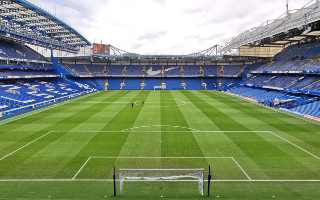
England: Chelsea at a crossroads – Earl's Court or Stamford Bridge?
Chelsea’s plans for a new stadium in London remain under consideration, even as recent local government decisions increasingly complicate the scenario. Officially, the club states that all options are being analysed — including a complete redevelopment of the current Stamford Bridge stadium and a potential move to the 40-hectare Earl’s Court site, long regarded as the most attractive alternative.
-

England: Premier League at the turn of the year. 7 must-see fixtures
December in the Premier League is when everything accelerates: packed stadiums, festive energy and matches that can reshape the title race. This article highlights the key fixtures you should consider attending — and shows how to secure tickets before availability disappears.
-

Great Britain: 2035 Women’s World Cup stadiums. New Trafford confirmed
Great Britain could host the 2035 FIFA Women’s World Cup, and today the list of stadiums that could welcome the world’s best players was revealed. England, Scotland, Wales and Northern Ireland have submitted a joint bid – the only one FIFA has received – which puts the project firmly in pole position.
-

England: New stadium for Chelsea not until 2040?
Chelsea co-owner Hansjörg Wyss has spoken publicly for the first time about the club's stadium plans since the Clearlake Capital–Todd Boehly consortium took over.
-

England: Stamford Bridge expanded? Backup stadium already secured
The Rugby Football Union (RFU) would be open to sharing Allianz Stadium with Chelsea if the Premier League club decides to rebuild Stamford Bridge.
-
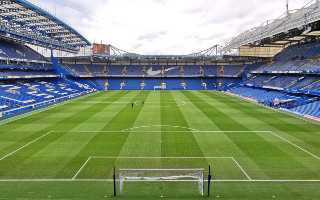
England: Chelsea co-owner confident about new stadium plans
Todd Boehly suggested in an interview with Bloomberg that Chelsea’s owners remain aligned on the club’s development but emphasized that the future of Stamford Bridge will be crucial for their ongoing partnership.
-

Europe: Real Madrid earns three times more from the stadium than Inter and Milan
The modernisation of Bernabeu has had a spectacular financial effect. With an investment of more than €1 billion, Real Madrid has increased its lead over other clubs in terms of revenue.
2024
-

England: Will government introduce new rules on stadium sales?
The government is preparing to grant powers to an independent regulator that will prevent Premier League clubs from selling their stadiums to affiliated companies or third parties.
-
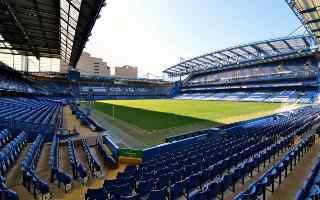
England: Chelsea seeks to build new stadium in different location
Chelsea has been in talks about leaving Stamford Bridge and relocating to Earl's Court as it seeks a solution for its plans to build a larger stadium. Increasing the capacity is the owners' top priority, and difficulties in redeveloping the current stadium have led the club to explore new locations in West London.
-

England: Attendance at Premier League stadiums in the 2023/24 season
Another season, another league title for Manchester City. The award for highest attendance also went to the city of Manchester as well, but to the Red Devils, despite the team's worst season in Premier League history. As many as six clubs surpassed one million spectators this season, with five stadiums filling up at an average of more than 99%. Amazing.
-

England: Step forward on Stamford Bridge expansion
The construction of one of the largest and finest stadiums in the country is a priority for Chelsea's owners, Todd Boehly and Clearlake Capital. In 2023, the club purchased a 1.2-acre plot adjacent to Stamford Bridge. This plot belonged to a charity organization that supports veterans. Does this group have reason to worry?
-

England: Chelsea to move out of Stamford Bridge for six years?
Chelsea's leaders are facing a tough choice regarding the future of the stadium. According to The Sun, two options have been considered for years: a thorough reconstruction of Stamford Bridge or the construction of an entirely new facility on land near the current home of The Blues. What decision will be made?
2023
-

England: What will Chelsea's stadium future be?
Chelsea are continuing to consider the possibility of moving from their current Stamford Bridge stadium, despite the club receiving confirmation of the purchase of the land next to their current stadium for £80 million.
-

England: Chelsea to invest millions in stadium plans
The Blues are constantly trying to improve their infrastructural situation. One of the richest clubs in the world has to play in a facility whose capacity is clearly not up to the expectations of both officials and supporters of the Londoners. New reports have just emerged that herald a breakthrough in the upgrading of Stamford Bridge.
-

England: An expanded Stamford Bridge closer than ever?
Chelsea have not made a final decision on their plans to redevelop Stamford Bridge, although they have agreed terms to purchase a plot of land next to the stadium. Winning the race to buy the site will mean that The Blues will not be forced to look for a new home.
-

England: New stadium for Chelsea - decision in a few months?
A new facility for one of the world's biggest clubs has been talked about for many years. Rumors have ranged from a major renovation at Stamford Bridge to a move to another location. The new owners are also probing various solutions, and the decision is expected to be made after the end of the current season.
-

England: All-star game for Ukraine?
We recently reported on an event that is a part of Ramadan, which Chelsea FC is organizing. As it turns out, this is not the only initiative of the club. There will also be an all-star match at Stamford Bridge, which will be played for Ukraine.
-

England: Premier League stadium to host Ramadan's biggest event?
Groundbreaking, controversial, tolerant? Whatever you call the idea of the Chelsea authorities, it would be a first of its kind for both the club and the league. What exactly will the meeting, which will take place at Stamford Bridge, involve?
-

England: Stamford Bridge to be completely revamped?
There has been a long-standing debate among Chelsea FC officials about the future of their home venue. Stamford Bridge has changed little over the past decades, with talk of moving to another location under previous owners. The club’s news boss, Todd Boehly, has reportedly promised that Chelsea will stay in Fulham.