 StadiumDB
Stade Armand-Cesari (Stade de Furiani)
| Capacity | 16 200 |
|---|---|
| Country | France |
| City | Furiani |
| Clubs | SC Bastia |
| Other names | Stade du Docteur Luciani (1932–1937) |
| Inauguration | 16/10/1932 |
| Renovations | 1948, 1992, 1995, 1997, 2001, 2011, 2012, 2024–2025 |
Advertisement
Stade Armand-Cesari – stadium description
What is Stade Armand-Cesari like in brief?
Bastia’s stadium is located in the southern suburb of Furiani, where a suitable plot of land was identified in the 1930s, right next to the railway station. Initially, it was a very modest facility, which was gradually expanded over time.
As the club grew in stature, so did the importance of the stadium. In 1968, SC Bastia made its debut in Division 1, and in 1978 the team sensationally reached the final of the UEFA Cup. The first leg of the final (then played over two matches) against PSV Eindhoven took place in Furiani and, despite very poor weather conditions, was a major event.
The history of the stadium was marked by the tragedy of 5 May 1992. On that day, a Coupe de France semi-final against Olympique de Marseille was due to be played. The match attracted enormous interest, which led to the hurried construction of a large temporary stand.
Built in haste, the makeshift structure collapsed after being filled with spectators – before the opening whistle – resulting in 18 fatalities and more than 2,300 injuries. The disaster is regarded as one of the greatest tragedies in the history of French sport.
After the tragedy, the stadium was taken over by the local authorities, and over the following two decades it was completely rebuilt, stand by stand. The transformation was completed through a modernisation carried out in 2024–2025, giving the venue a modern appearance and the status of the largest stadium on Corsica.
How was Stade Armand-Cesari built?
The football club SC Bastia was founded in 1905. In its early years, the team played its matches on pitches set up in city squares – first on Place Saint-Nicolas and later on Place d’Armes. As the club’s popularity grew, plans began to emerge for the construction of its first dedicated stadium.
The new stadium was to be built in the southern suburb of Furiani, around 6 km from Bastia’s city center. The choice of location was influenced by the low cost of the land (combined with a lack of suitable sites in the city centre), the proximity of a railway station, and the quality of the ground, which was suitable for laying a grass pitch.
Construction began in the early 1930s, and the stadium was inaugurated on 16 October 1932. Initially, the new venue was very modest and featured only a single stand on the southern side.
How did the history of Stade Armand-Cesari unfold?
Over the years, the stadium was gradually expanded, although some of the interventions were provisional in nature, which resulted in a relatively low overall standard. In 1968, SC Bastia was promoted to the top tier for the first time in its history, and floodlighting was installed at the stadium.
When was the UEFA Cup final played at Stade Armand-Cesari?
In the 1977/78 season, Bastia reached the final of the UEFA Cup, where they faced PSV Eindhoven. At the time, the finals were played over two legs, with the first match taking place on 26 April 1978 at Stade Armand-Cesari.
The match is remembered for difficult conditions: heavy rain left the pitch very muddy, making play challenging for the footballers and affecting the final result, which ended in a goalless draw.
Despite the bad weather, around 15,000 spectators attended the match, setting a record attendance for Bastia’s stadium at the time. In the return leg in Eindhoven, the Dutch side won 3–0 and claimed the trophy.
Reaching the UEFA Cup final was one of the greatest achievements in the club’s history. A short documentary, Forza Bastia 78, was even made about the first leg against PSV. Another major success for Bastia was winning the Coupe de France in the 1980/81 season.
What tragedy occurred at Stade Armand-Cesari?
In the 1991/92 season, Bastia, then playing in the second division, was performing very well in the Coupe de France. In the semi-final, they faced the strongest team in the country at the time, Olympique de Marseille. The match was scheduled for 5 May 1992 at Stade Armand-Cesari.
Due to enormous interest in the match, the club decided to build a large temporary stand on the northern side of the stadium, intended to hold nearly 10,000 spectators. The structure was to be completed in just one week. While the stand was erected, the final elements were still being assembled on the day of the match.
The stand’s framework consisted of a metal scaffolding, which was constructed hastily, without proper calculations, and with missing elements. As a result, when the stand filled with spectators, the entire structure began to sway, and before the match had even started, its rear section collapsed.
The disaster resulted in 18 deaths and 2,357 injuries. At the moment the stand fell, the event was already being broadcast live on French television.
The dramatic event went down in history as one of the greatest tragedies in French sports. As a consequence of the Furiani disaster, in 2021 France passed a law stipulating that, in memory of the victims, no matches may be played in professional domestic competitions on 5 May.
How was Stade Armand-Cesari rebuilt after the tragedy?
After the 1992 disaster, the stadium was taken over by the local authorities, who began a complete reconstruction. In 1995, a new east stand was built. Two years later, a new main stand was opened on the northern side – the same location where the temporary structure had collapsed in 1992. In 2001, a new stand behind the western goal was also completed.
The reconstruction of the final, southern stand was “facilitated” by a fire on the night of 6–7 November 2009, which destroyed the old structure. The new south stand was opened in 2011. A year later, the north stand was also modernised and equipped with a membrane roof similar to the one on the south stand.
In this way, over the course of two decades following the disaster, the stadium was completely rebuilt, acquiring a modern appearance and the status of the largest stadium on Corsica.
When did the most recent major modernisation of Stade Armand-Cesari take place?
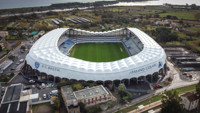
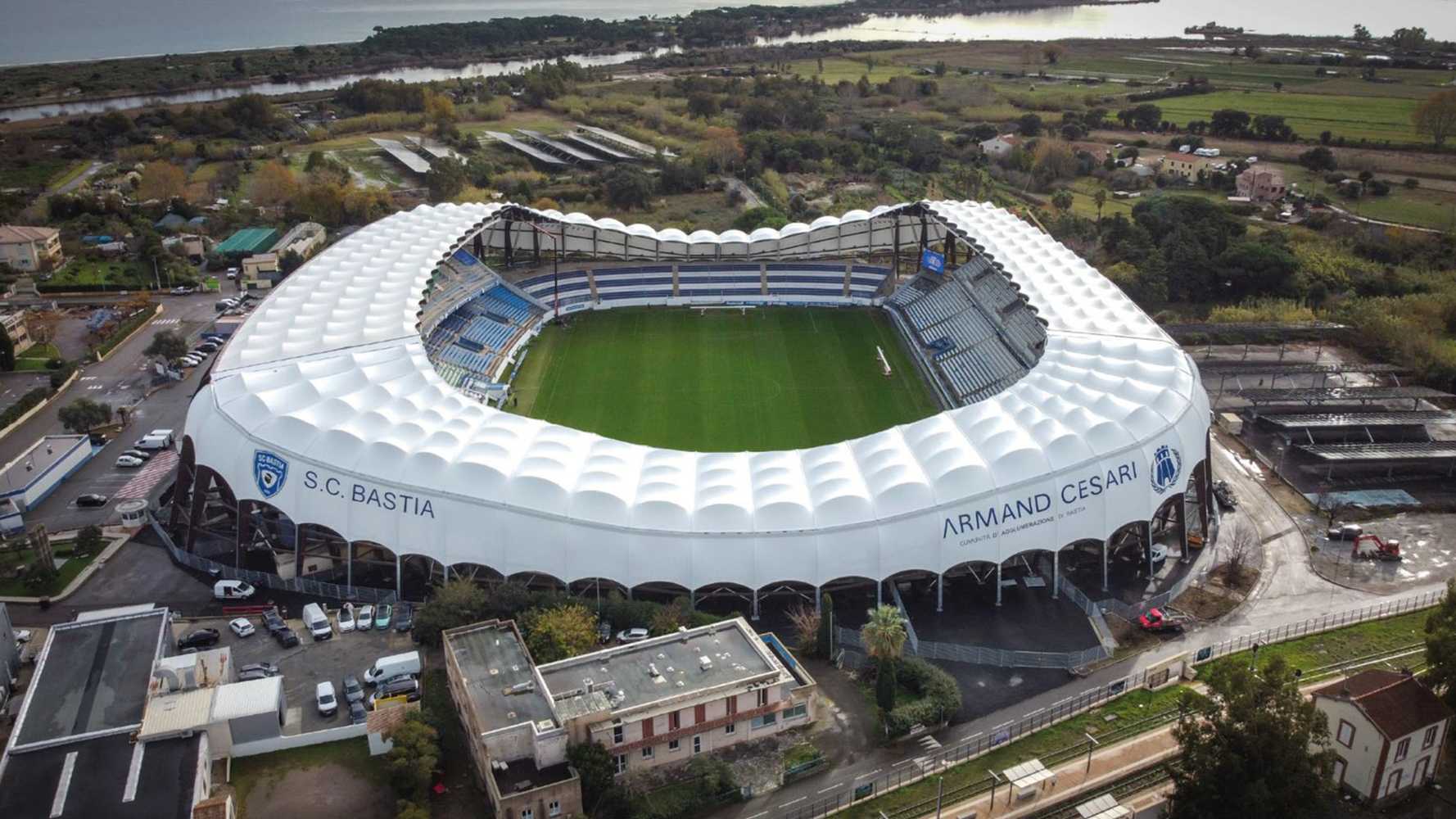
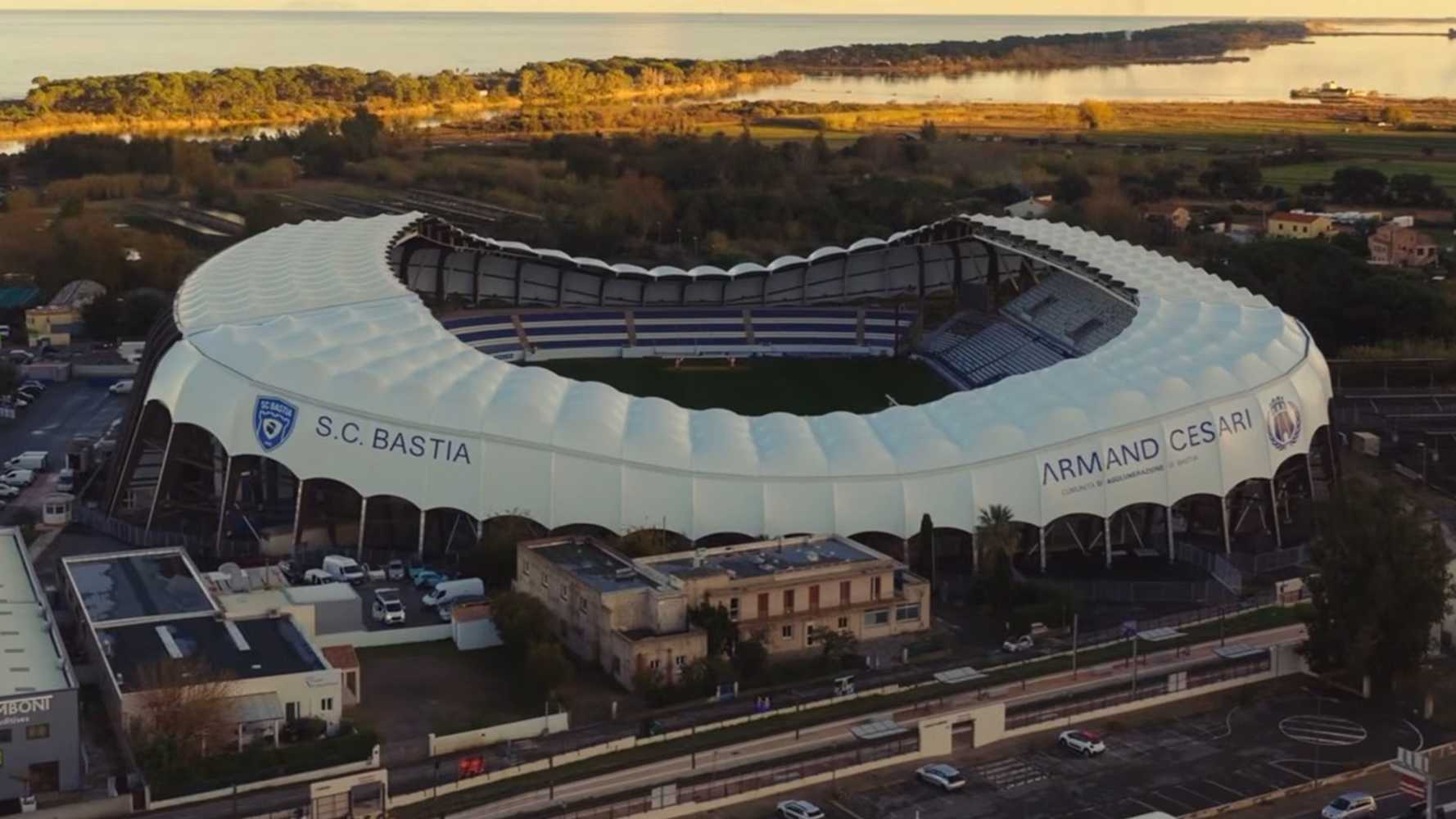
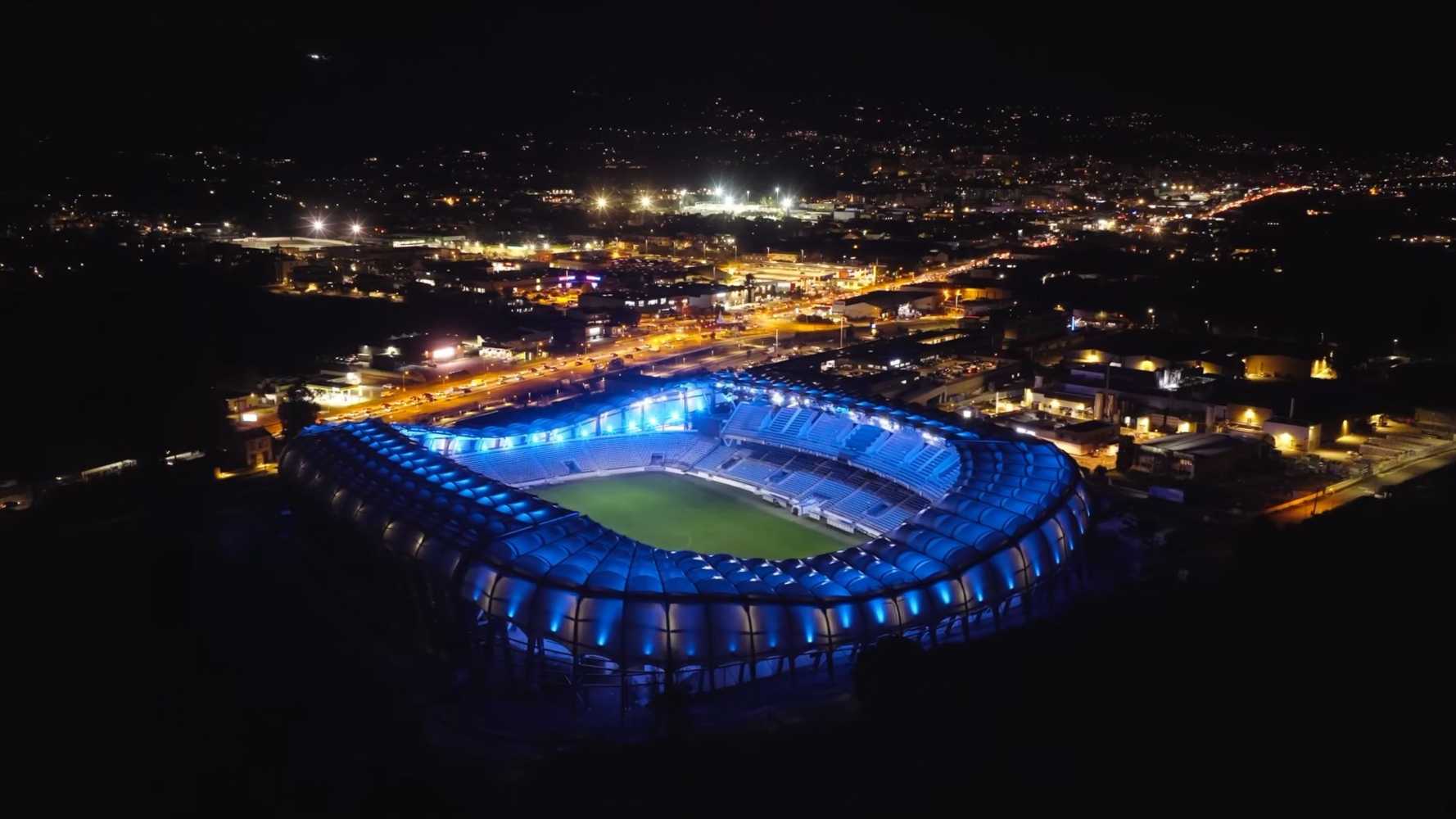
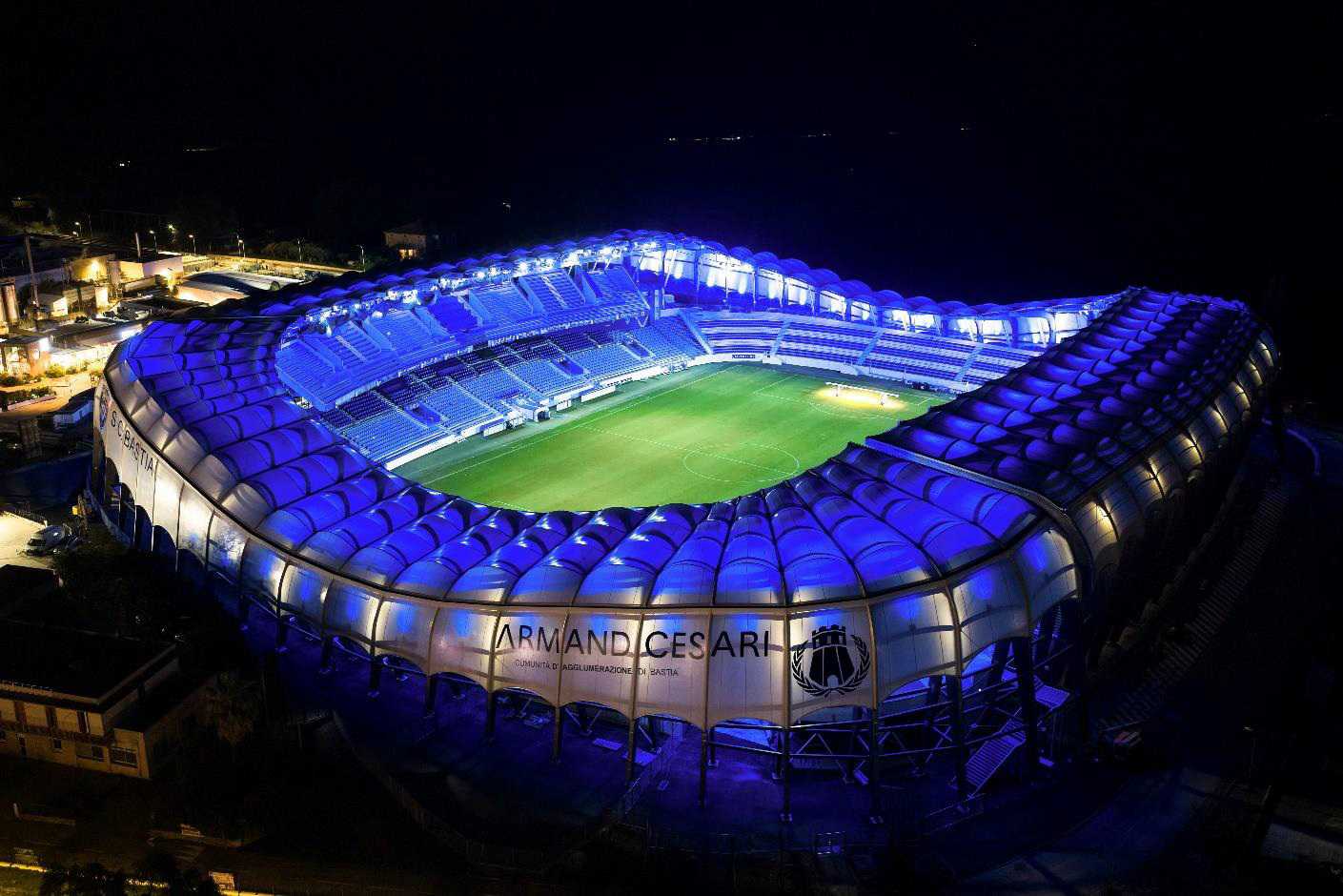
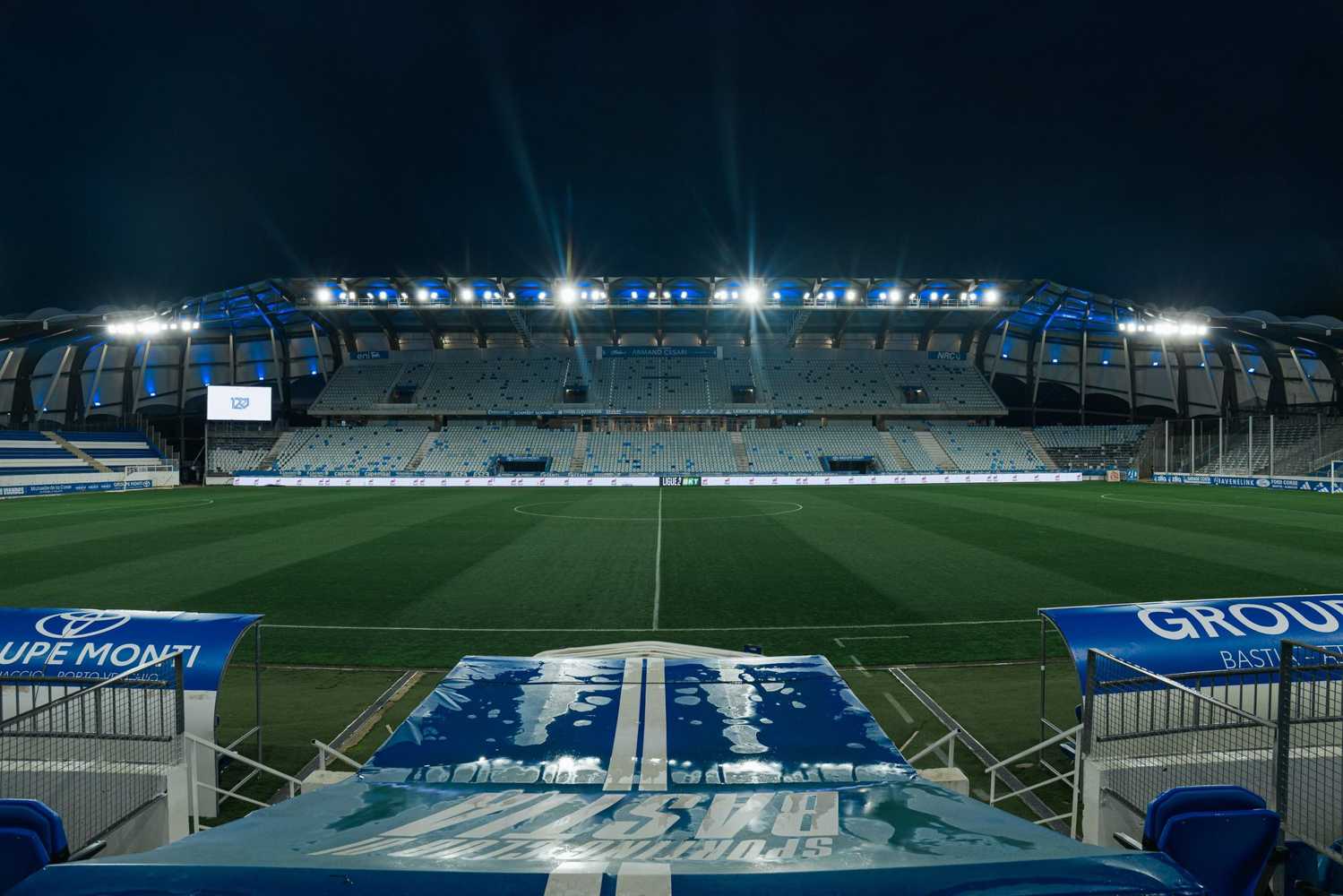
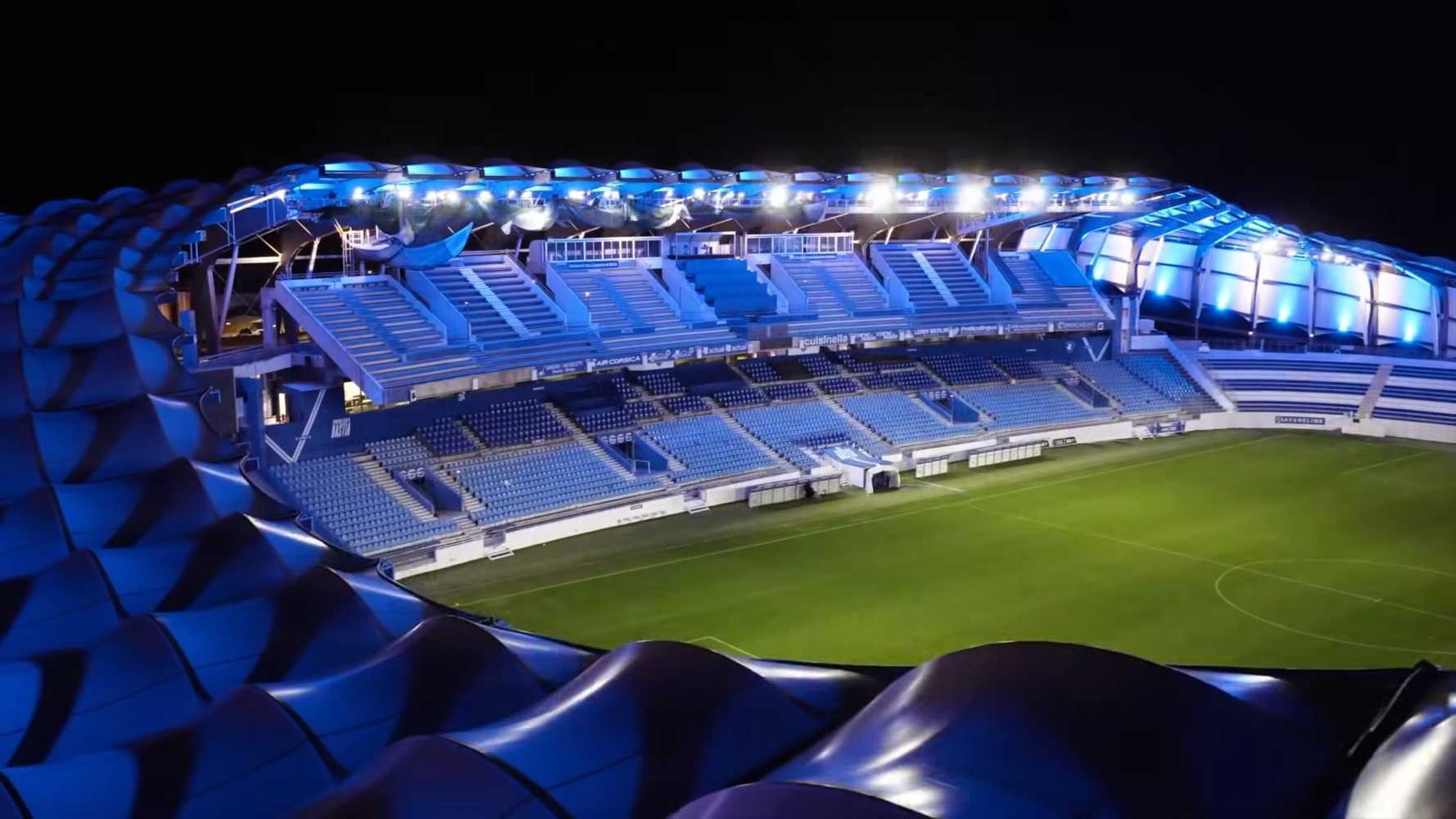
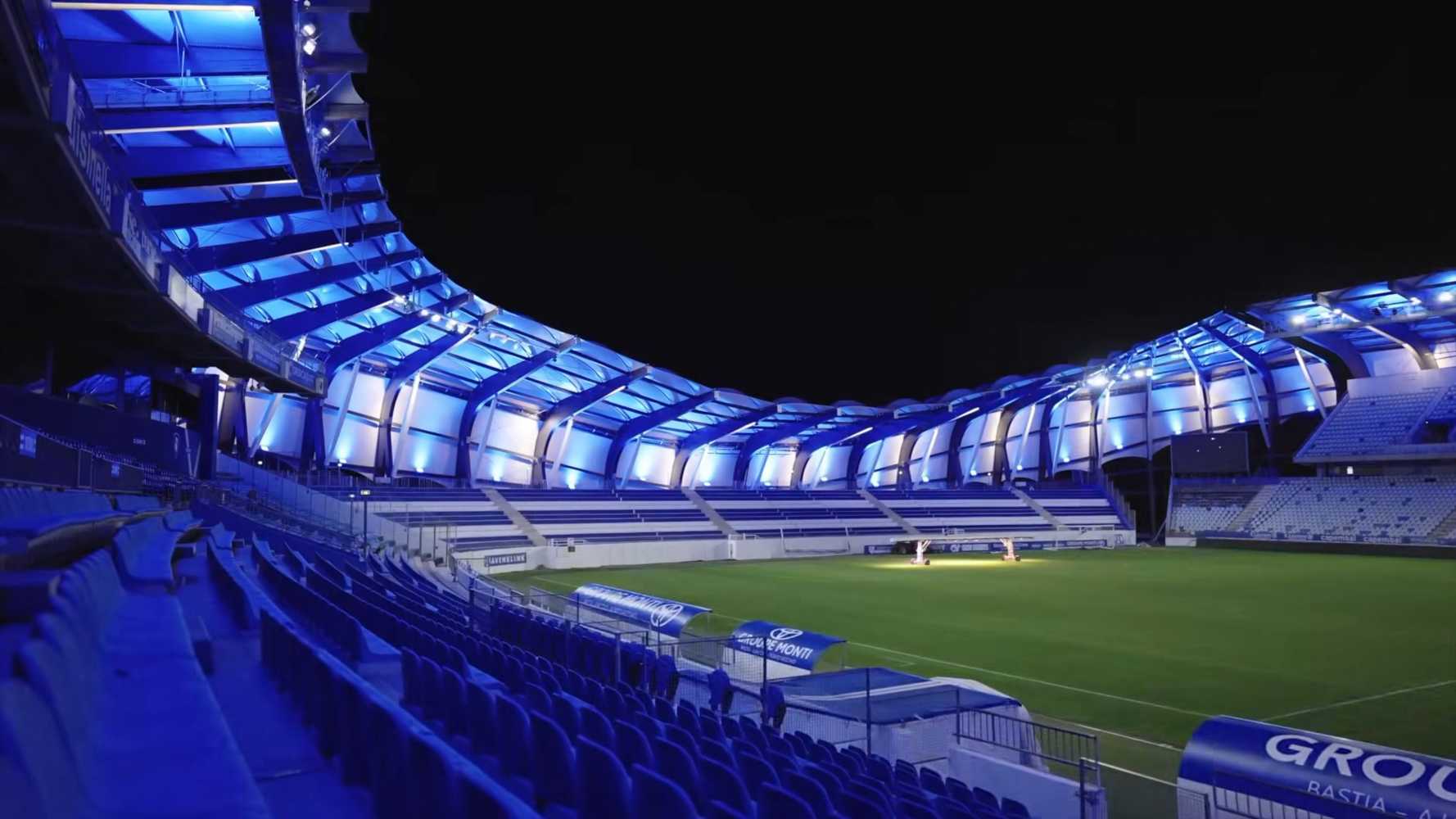
Another modernisation was carried out in 2024–2025. This time, the stadium received the “missing” roof over the stands behind the goals, giving the building a more compact, enclosed form. The floodlight masts were removed, with the lights now installed under the roof.
On the exterior, a new façade was added, which, in addition to decorative purposes, helps to reduce the impact of strong winds. The project also included the reconstruction of the stand behind the east goal (the ultras section), giving it a form similar to that of the west stand.
The first match after the completion of the works, featuring the new east stand, was played on 5 December 2025. During the match, the 120th anniversary of the club was also celebrated. However, the festive atmosphere was marred by an incident: in the second half, a flare was thrown from the new stand and hit one of the Red Star players. The match was abandoned, the result was awarded as a forfeit, and the club was sanctioned.
What does Stade Armand-Cesari look like?
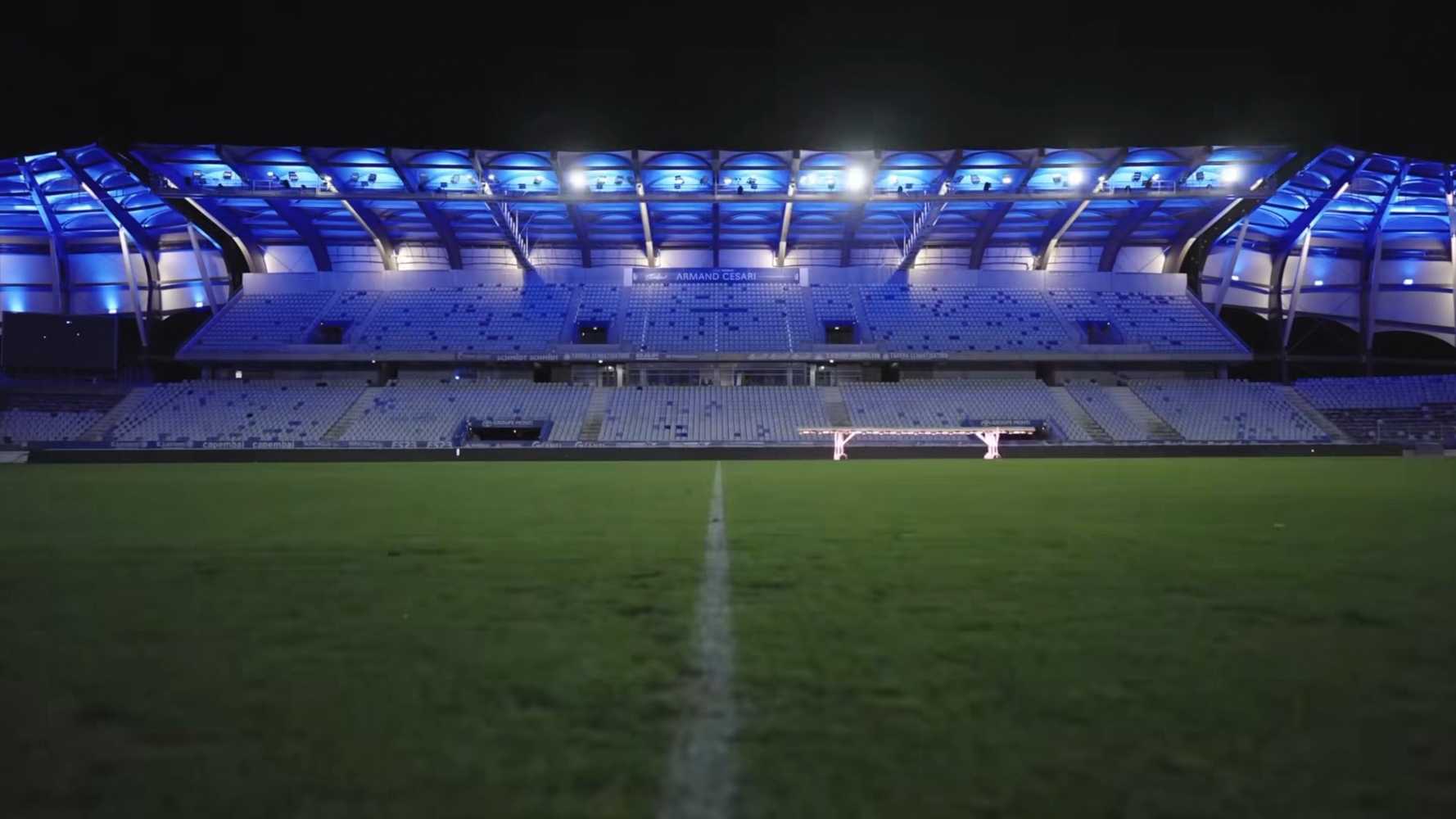
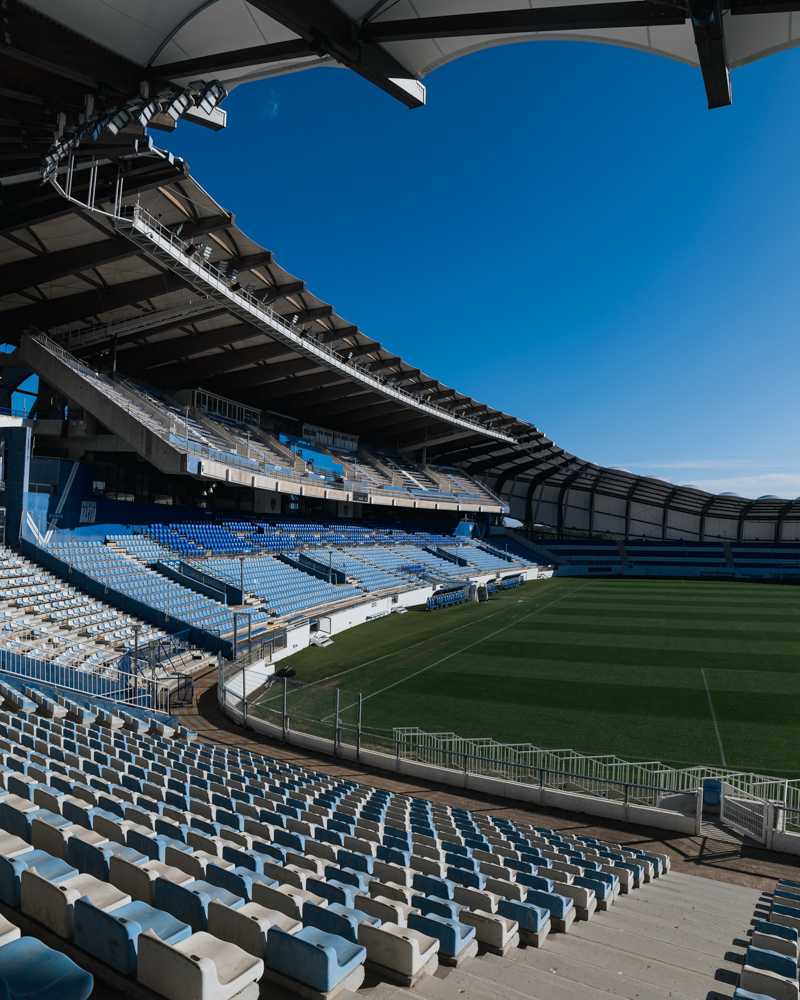
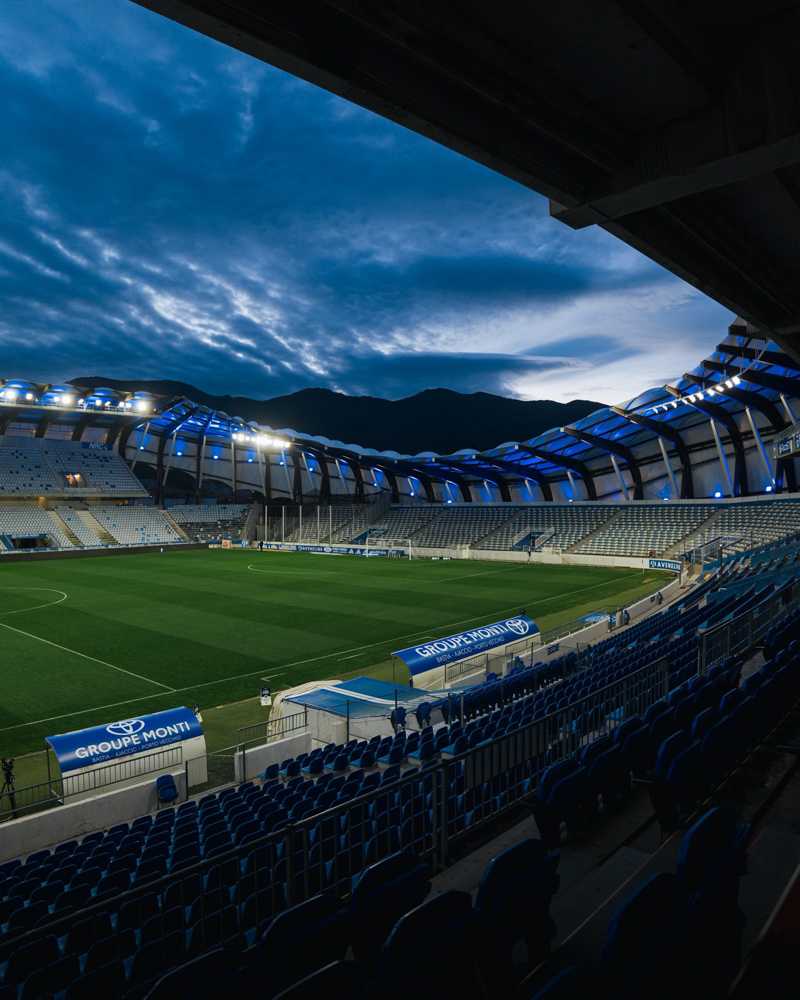
The stadium has a typical football layout, with large two-tiered stands running along the length of the pitch. The design of the main (north) stand is particularly interesting, as its upper tier is interrupted by several recesses, creating a sort of “tooth” or “crown” effect.
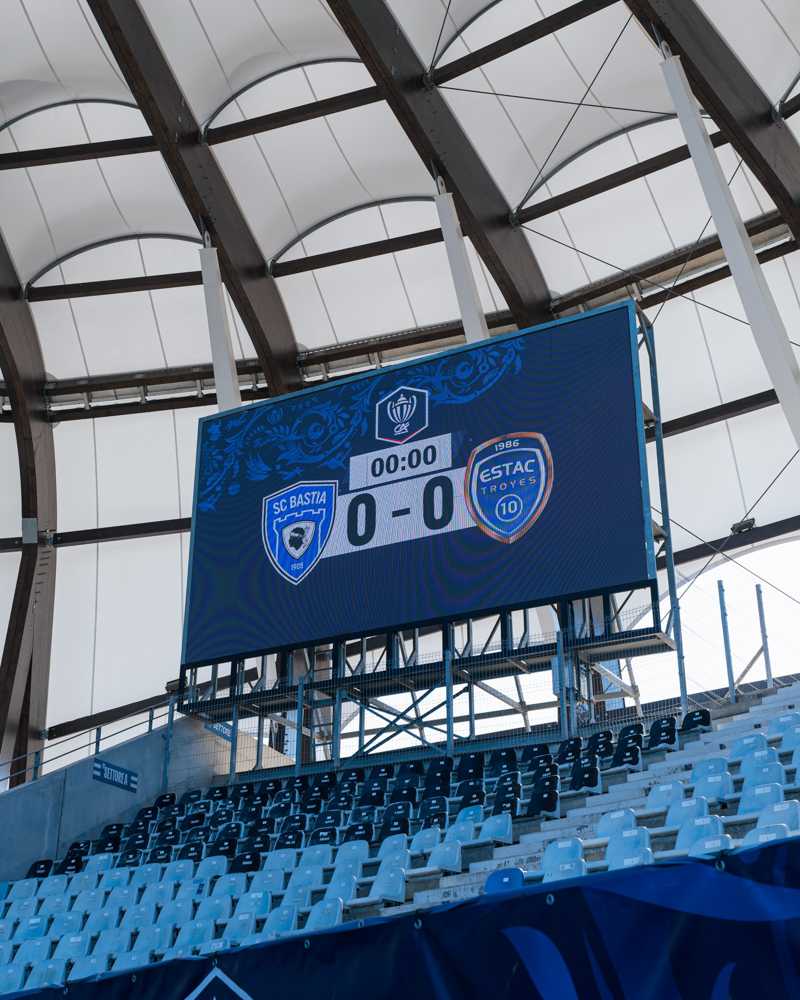
The structure is visually unified by the distinctive white membrane roof, which forms descending arches behind the goals. The membrane is also partially stretched over the external framework, creating a facade that, in addition to its decorative function, helps reduce the impact of strong winds.
The stands have a capacity of 16,200, making the stadium the largest on Corsica. The venue is equipped with floodlighting (including dynamic event lighting), video screens, VIP boxes, and other amenities.
What is Stade Armand-Cesari’s reputation?
The stadium is known for its passionate – and at times dangerous – atmosphere. Until the 1980s, there were known cases of spectators bringing weapons into the stands. The club and its fans were repeatedly sanctioned for various incidents, through measures such as temporary stand closures and being required to play matches at alternative venues.
Over the years, the stadium has served not only as a sports venue but also as a central hub for the region’s sporting and social life. In Bastia, a town with just under 50,000 inhabitants, matches attracting several to over ten thousand spectators engage a significant portion of the local community.
Bastia’s supporters (known as the Turchini – the Blues) are recognised for expressing local patriotism and Corsican identity, sometimes even through symbols or gestures associated with separatist movements.
What is the name of Bastia’s stadium?
The stadium was initially called Stade du Docteur Luciani, in honour of a former president and co-founder of the club. In 1937, the stadium was renamed Stade Armand-Cesari in honour of a former Bastia captain who had died the previous year from a sudden illness, at the age of 32.
The name in Corsican is Stadiu Armand Cesari. The stadium is also commonly known simply as Stade de Furiani.
In 2005, on the club’s centenary, the stands at Stade Armand-Cesari were also named to honour figures who had made significant contributions to Bastia:
- North (main) stand: Tribune Claude Papi – in honour of the former Bastia player, who spent his entire career at the club and is considered the best footballer in its history; he notably led the team to the 1978 UEFA Cup final.
- East (ultras) stand: Tribune Jojo Petrignani – in honour of one of the club’s most famous and dedicated supporters.
- South stand: Tribune Victor Lorenzi – in honour of the long-serving club president, who held office from 1933 to 1973.
- West stand: Tribune Pierre Cahuzac – in honour of Bastia’s coach from 1971 to 1979, during which time the club achieved some of its greatest sporting successes.
Where is Stade Armand-Cesari located?
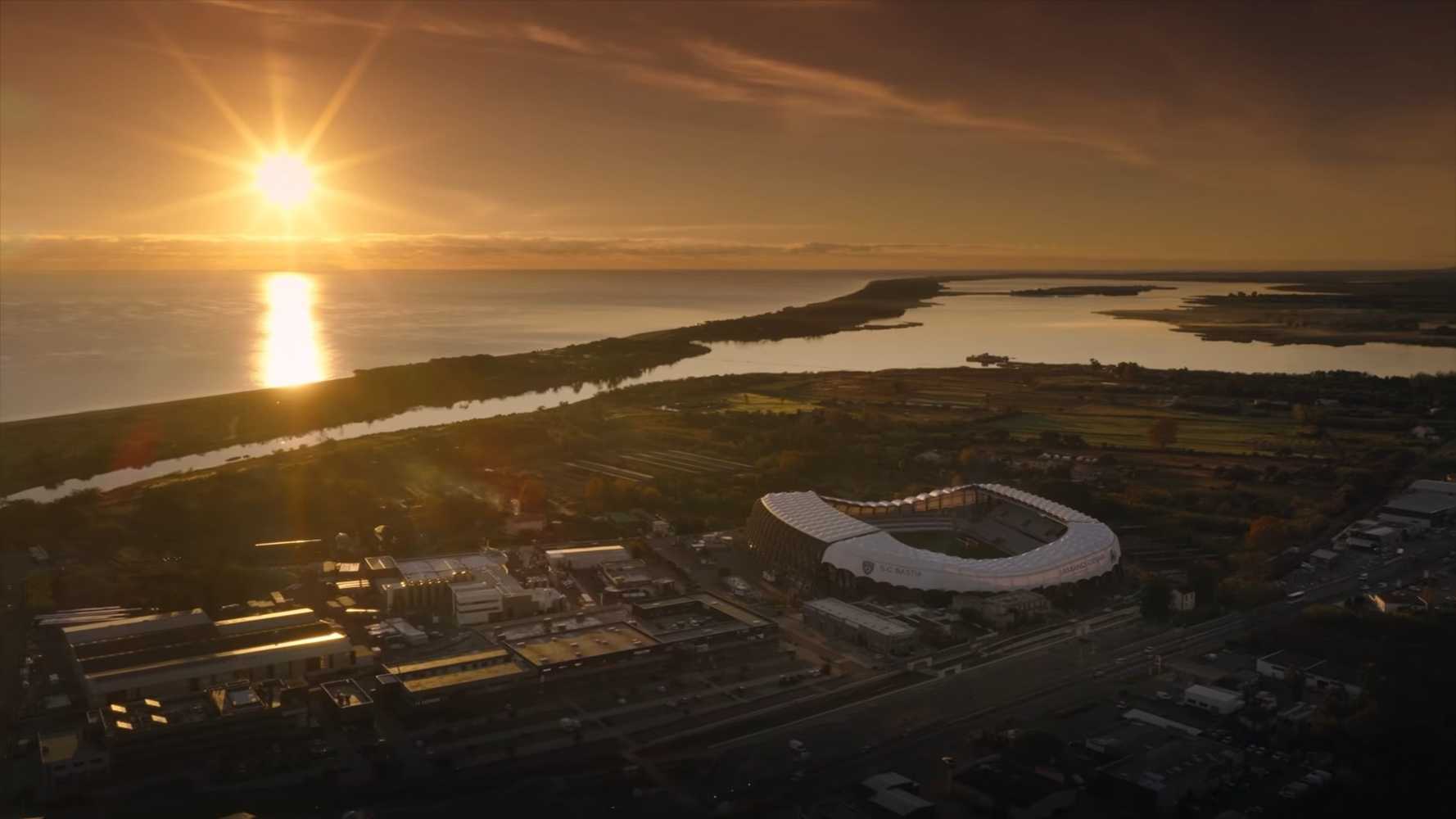
The stadium is situated in the southern suburb of Furiani, about 6 km from the center of Bastia. Immediately next to the stadium is Furiani railway station, and the main road (RT11) passes nearby.
Advertisement
Pictures
12.2025 © Cumunità d'Agglumerazione di Bastia 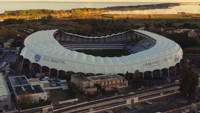
12.2025 © Cumunità d'Agglumerazione di Bastia 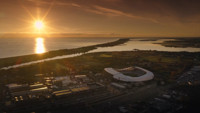
12.2025 © Cumunità d'Agglumerazione di Bastia 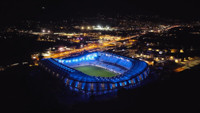
12.2025 © Cumunità d'Agglumerazione di Bastia 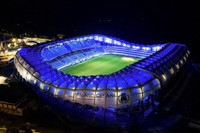
12.2025 © Cumunità d'Agglumerazione di Bastia 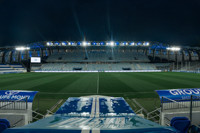
01.2026 © SC Bastia 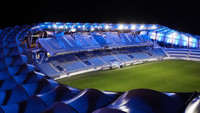
12.2025 © Cumunità d'Agglumerazione di Bastia 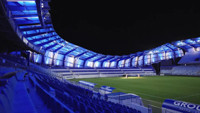
12.2025 © Cumunità d'Agglumerazione di Bastia 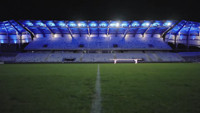
12.2025 © Cumunità d'Agglumerazione di Bastia 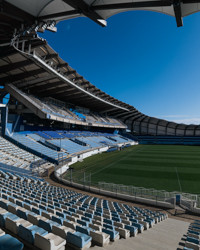
01.2026 © SC Bastia 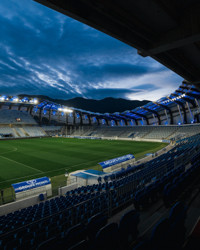
01.2026 © SC Bastia 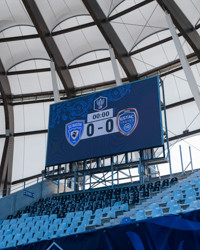
01.2026 © SC Bastia 
03.05.2012 © Dany Tolenga 
03.05.2012 © Dany Tolenga 
03.05.2012 © Dany Tolenga 
03.05.2012 © Dany Tolenga 
03.05.2012 © Dany Tolenga 
03.05.2012 © Dany Tolenga 
03.05.2012 © Dany Tolenga 
03.05.2012 © Dany Tolenga 
08.03.2012 © Scb2b (cc: by-sa) 
03.05.2012 © Dany Tolenga 
03.05.2012 © Dany Tolenga
2012–2024:


Related news
2022

2020

2015
-
10+ Ranking 2015: Attendances in Europe (Part 2. The Clubs)
Borussia, Barca and Man United – lovely dominant trio. But it wasn’t them who gained most fans last season. Check all 217 clubs that draw an average crowd of 10,000+!
-

10+ Ranking 2015: Attendances in Europe (Part 1. The Leagues)
Numbers don’t lie: French Ligue 1 outgrew Italian Serie A as Europe’s fourth largest league. Premier League seems unlikely to catch up to Bundesliga, while Turkey, Ukraine and Scotland are down.


