 StadiumDB
Estadio BBVA (Estadio de Futbol de Monterrey)
| Capacity | 53 500 |
|---|---|
| Country | Mexico |
| City | Guadalupe |
| Clubs | CF Monterrey (Rayados) |
| Other names | Estadio BBVA Bancomer (2015-2019) |
| Inauguration | 01/08/2015 |
| Opening game | 02/08/2015 (CF Monterrey - SL Benfica) |
| Construction | 10/2011 - 31/07/2015 |
| Cost | $ 200 million |
| Design | Populous, VFO Arquitectos |
| Design time | 2008-2011 |
| Contractor | Grupo Garza Ponce |
Advertisement
Estadio BBVA – stadium description
Announced for years, under design works from 2008 and then under construction from 2011. Then with delayed delivery date, this stadium tested the patience of CF Monterrey fans. But eventually it got built just in time to celebrate the club’s 70th anniversary, by the end of July 2015.
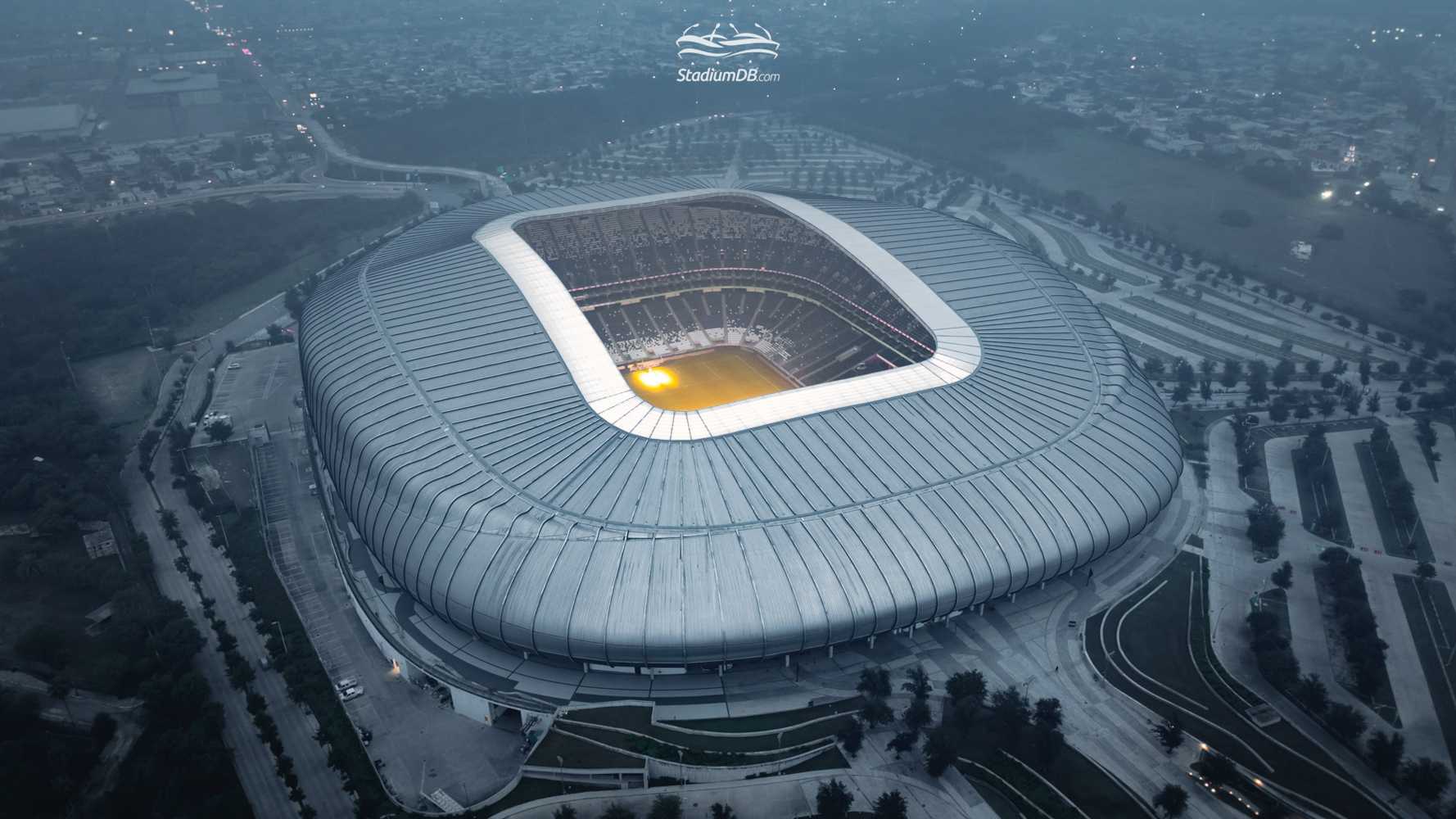
Estadio de Futbol de Monterrey or Estadio BBVA Bancomer, as it’s commercially known, is the largest and most modern stadium in Mexico built and operated entirely privately. It’s the outcome of joint venture between CF Monterrey and beverage giant FEMSA, but since FEMSA also own CF Monterrey, it’s really their project. From start to finish declared price stood at $200 million.

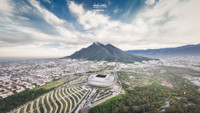
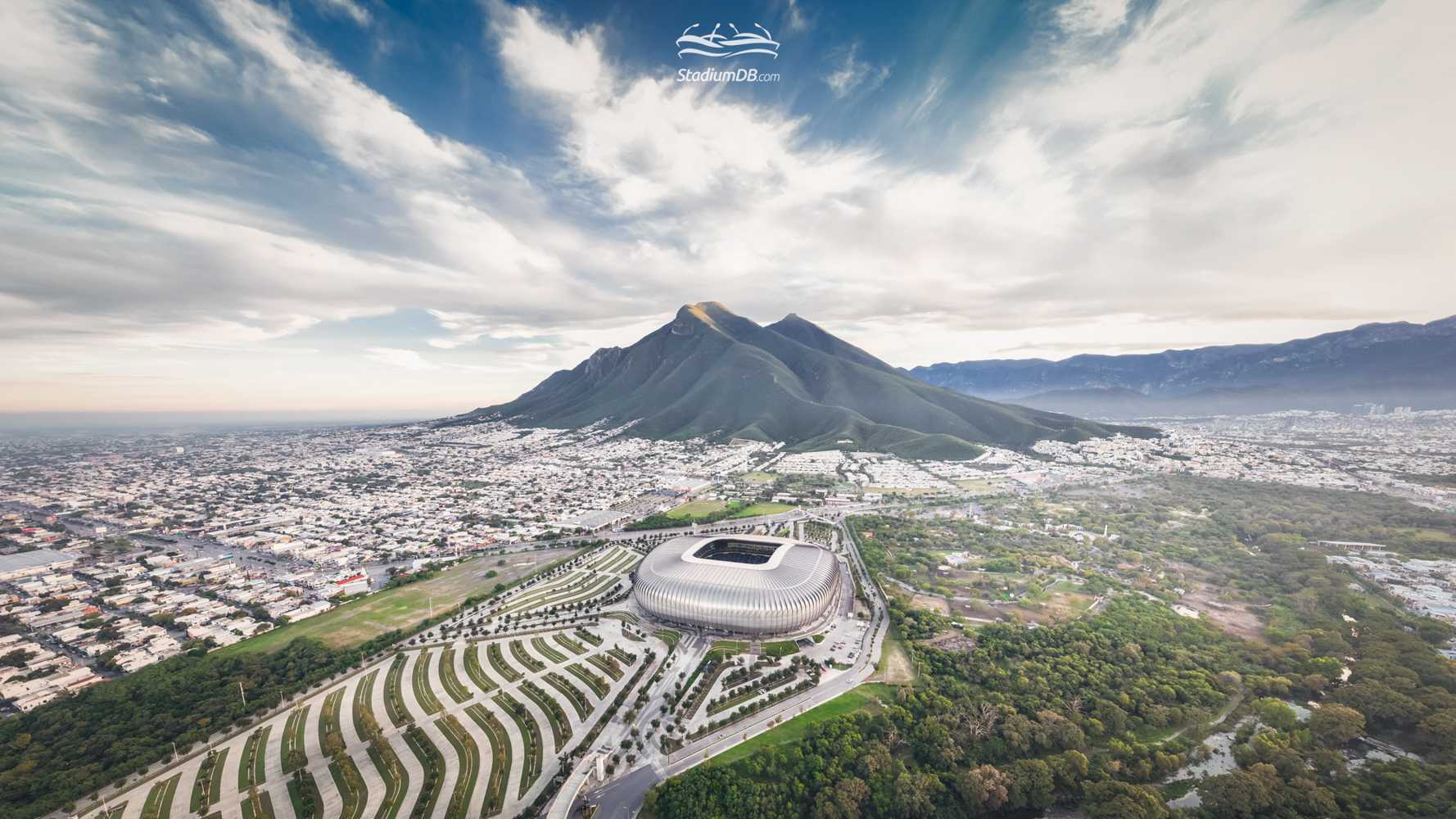
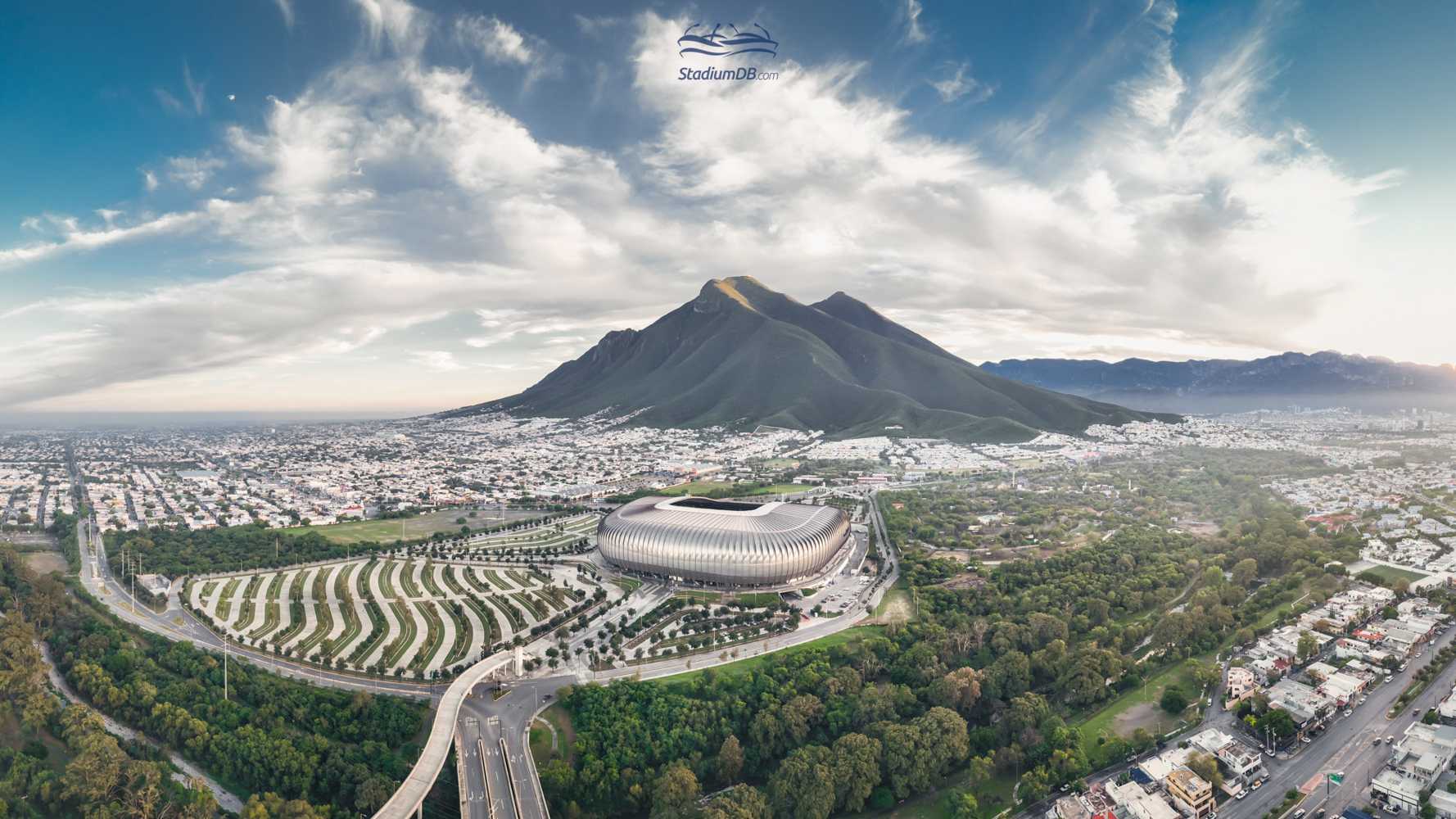
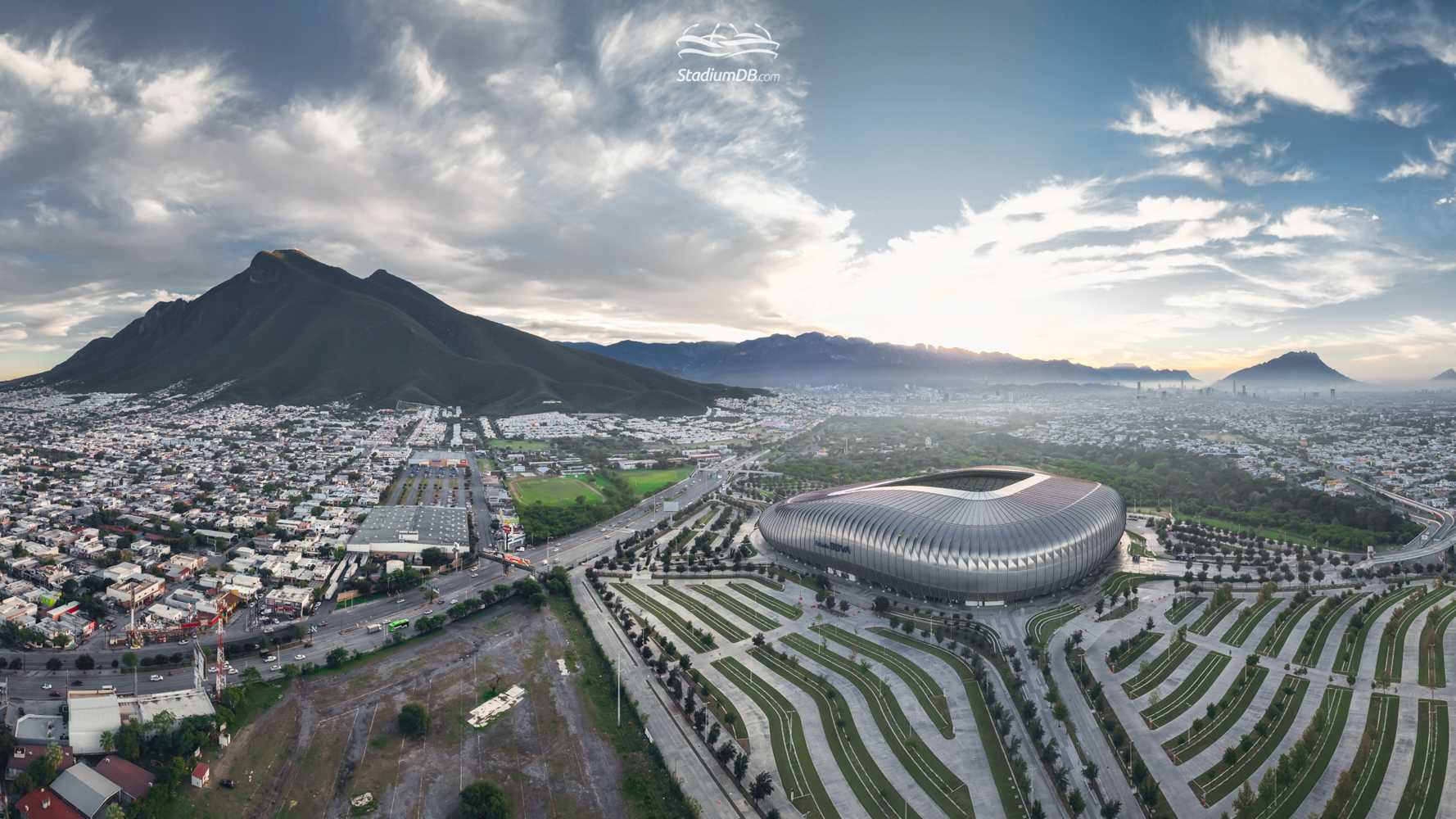
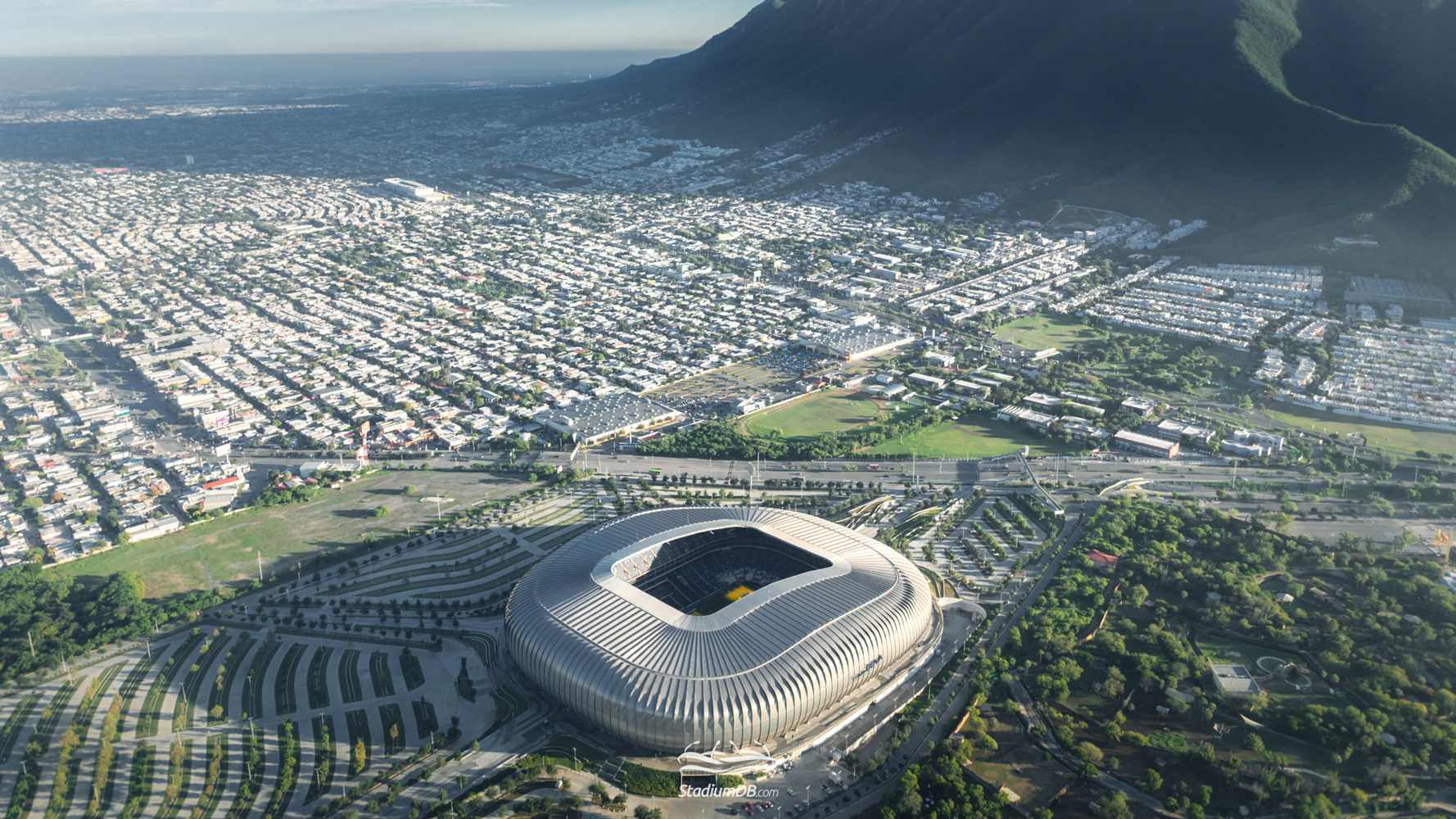
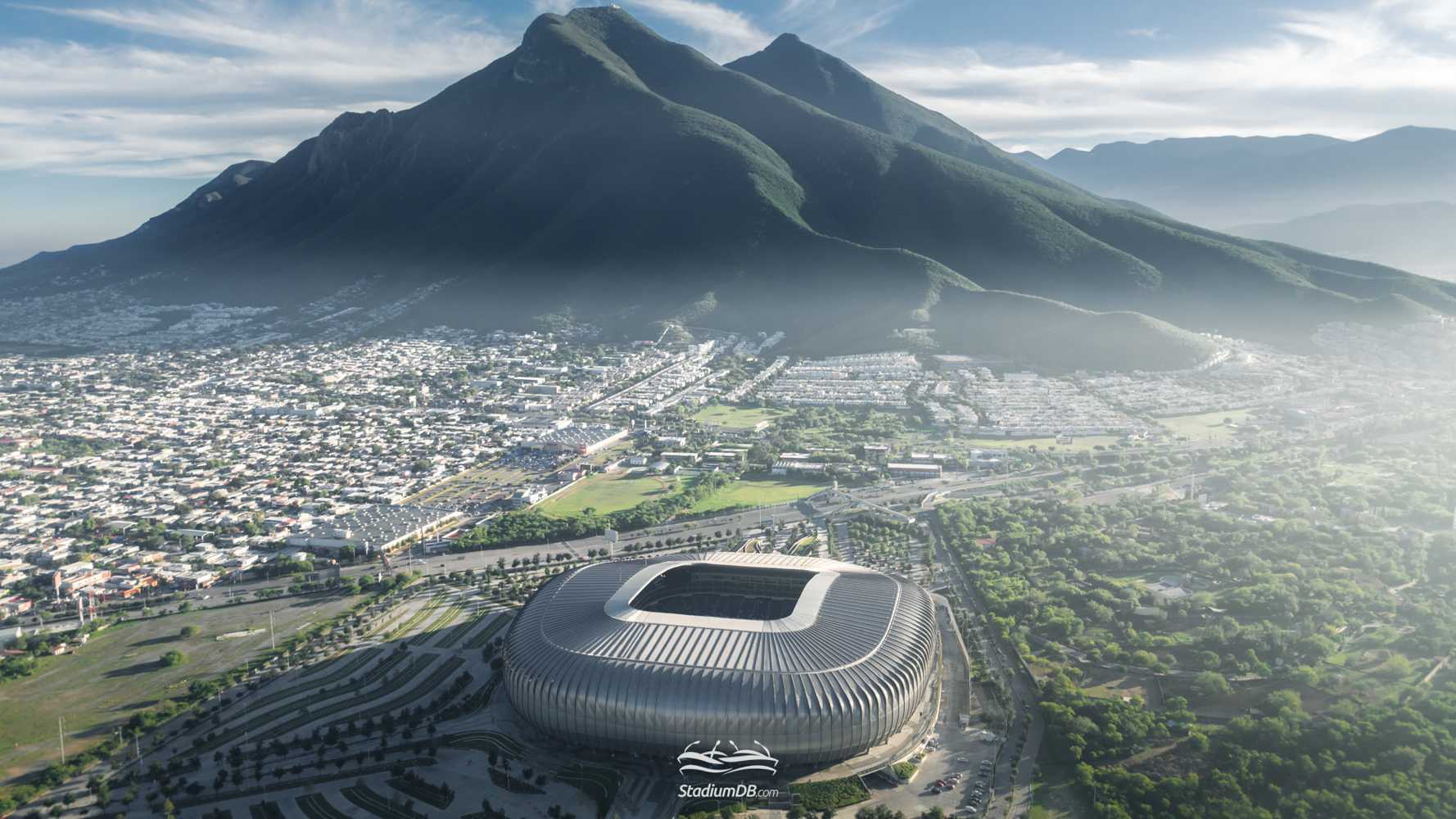
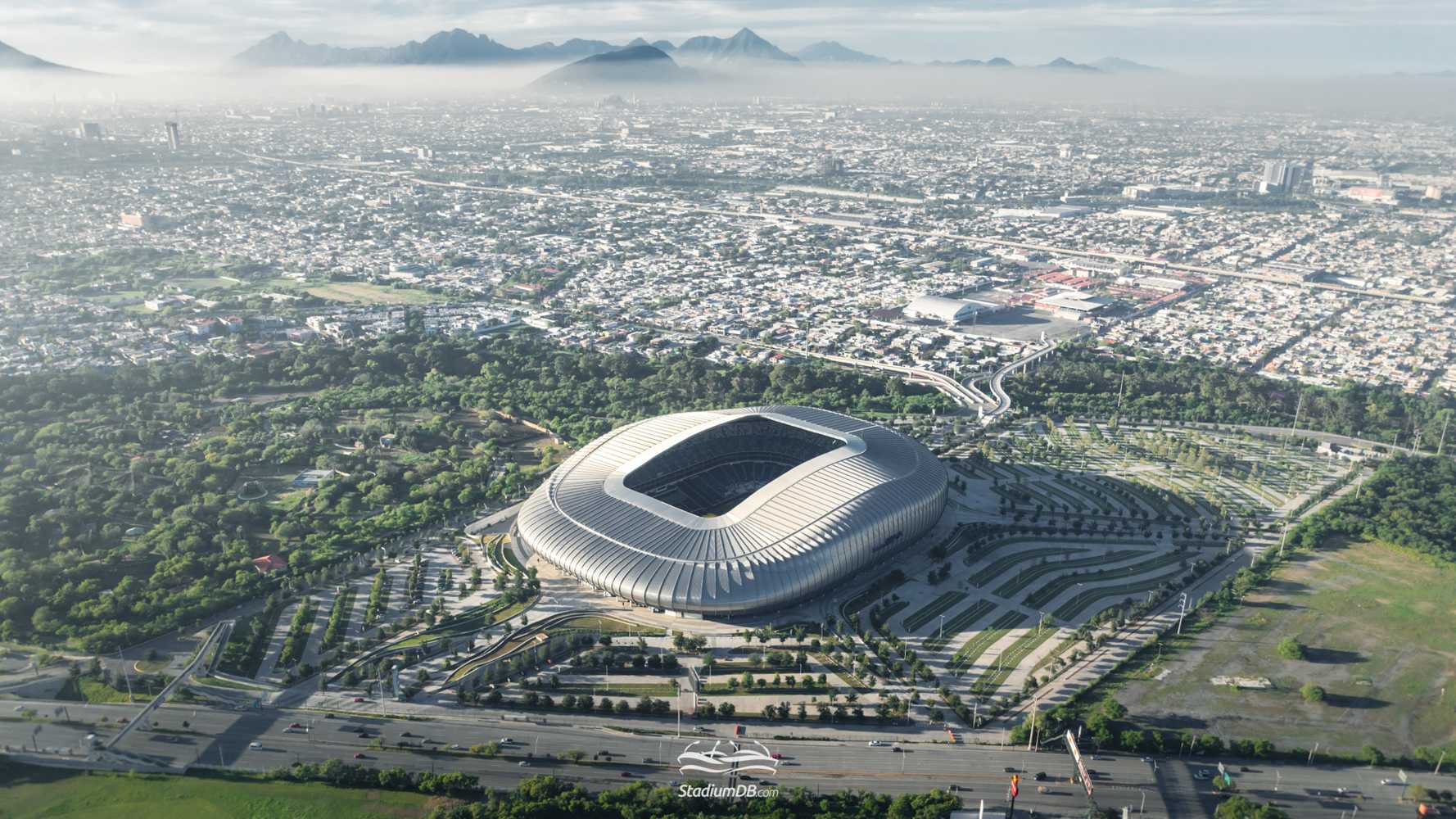
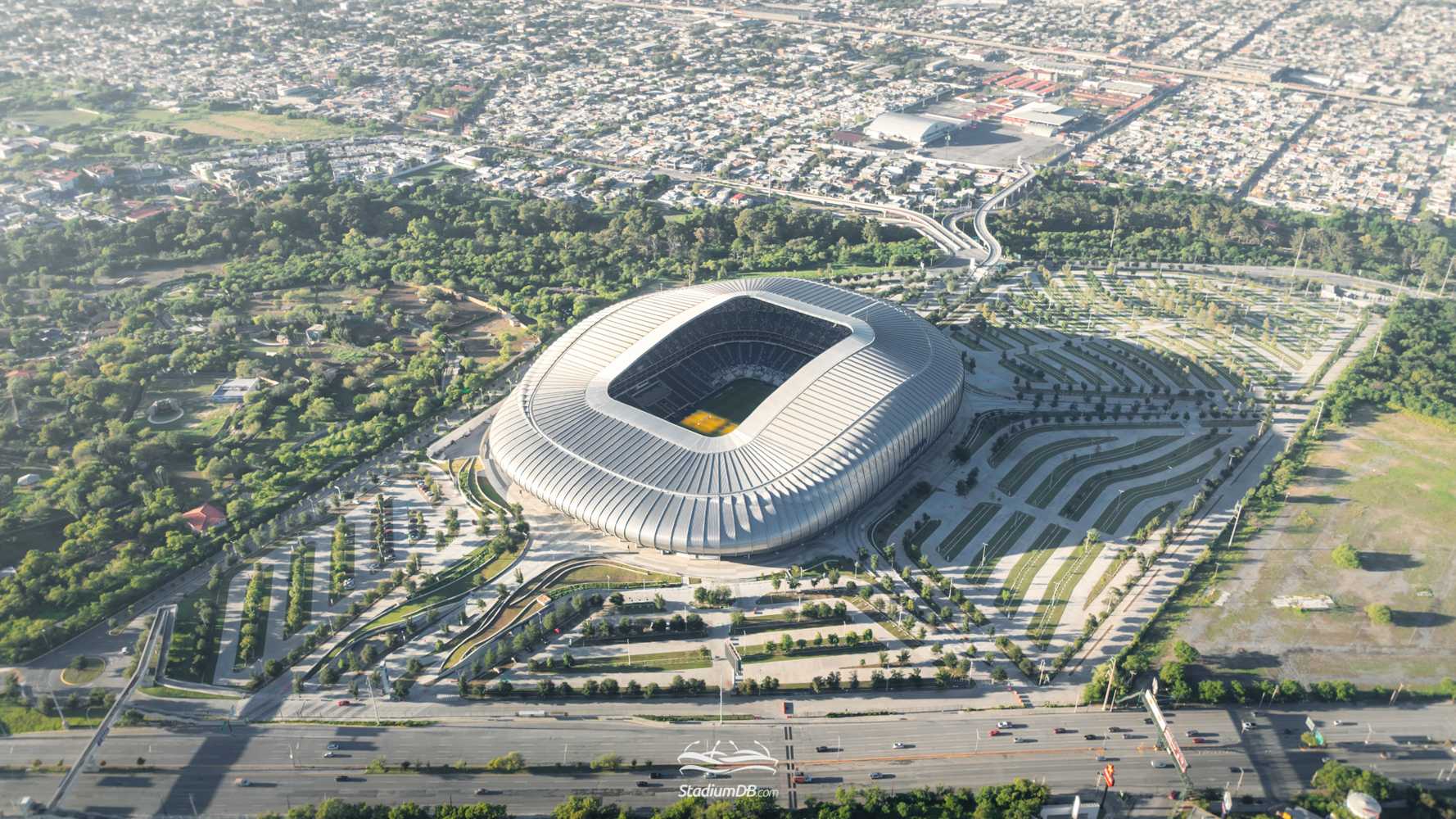
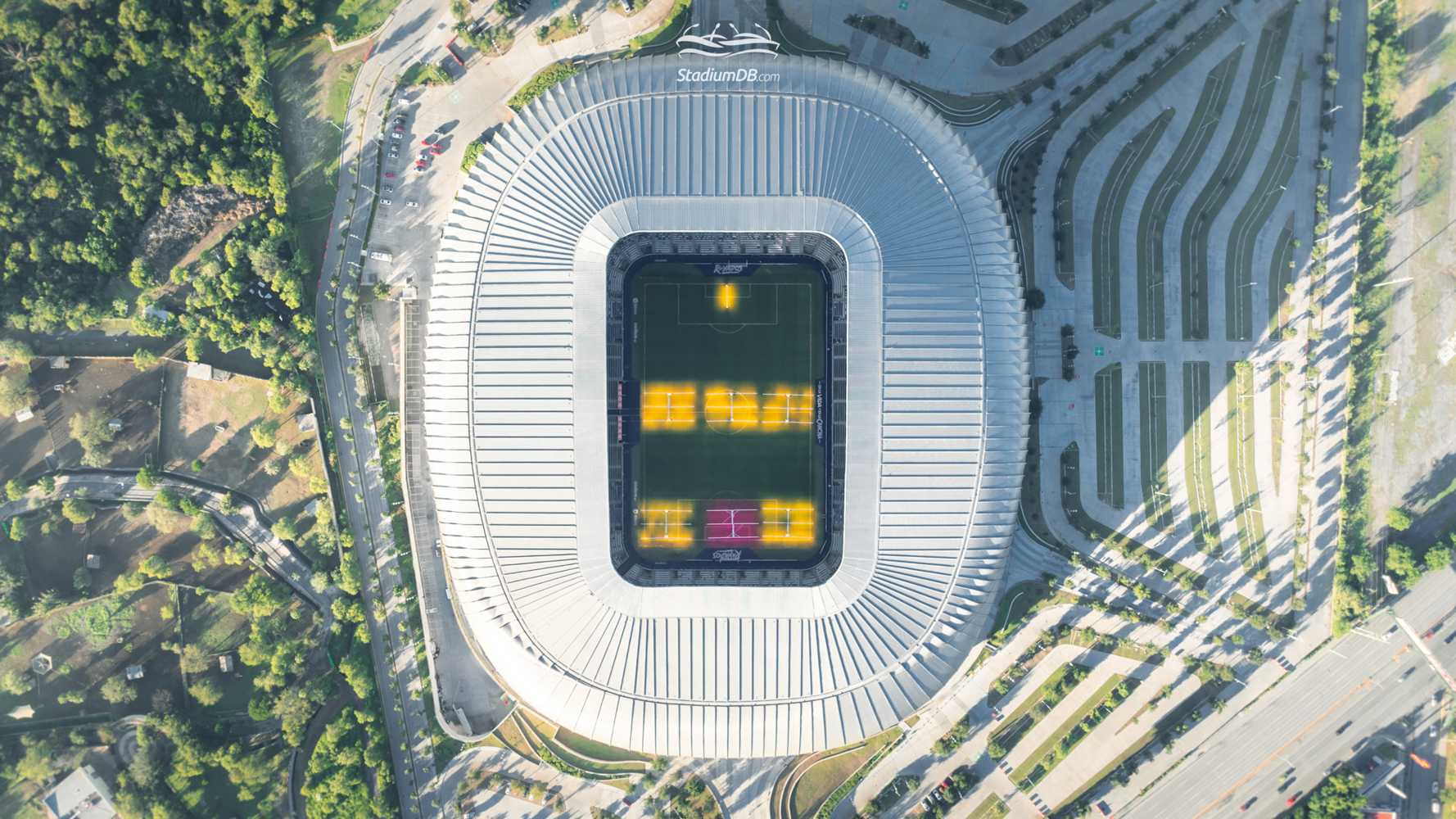
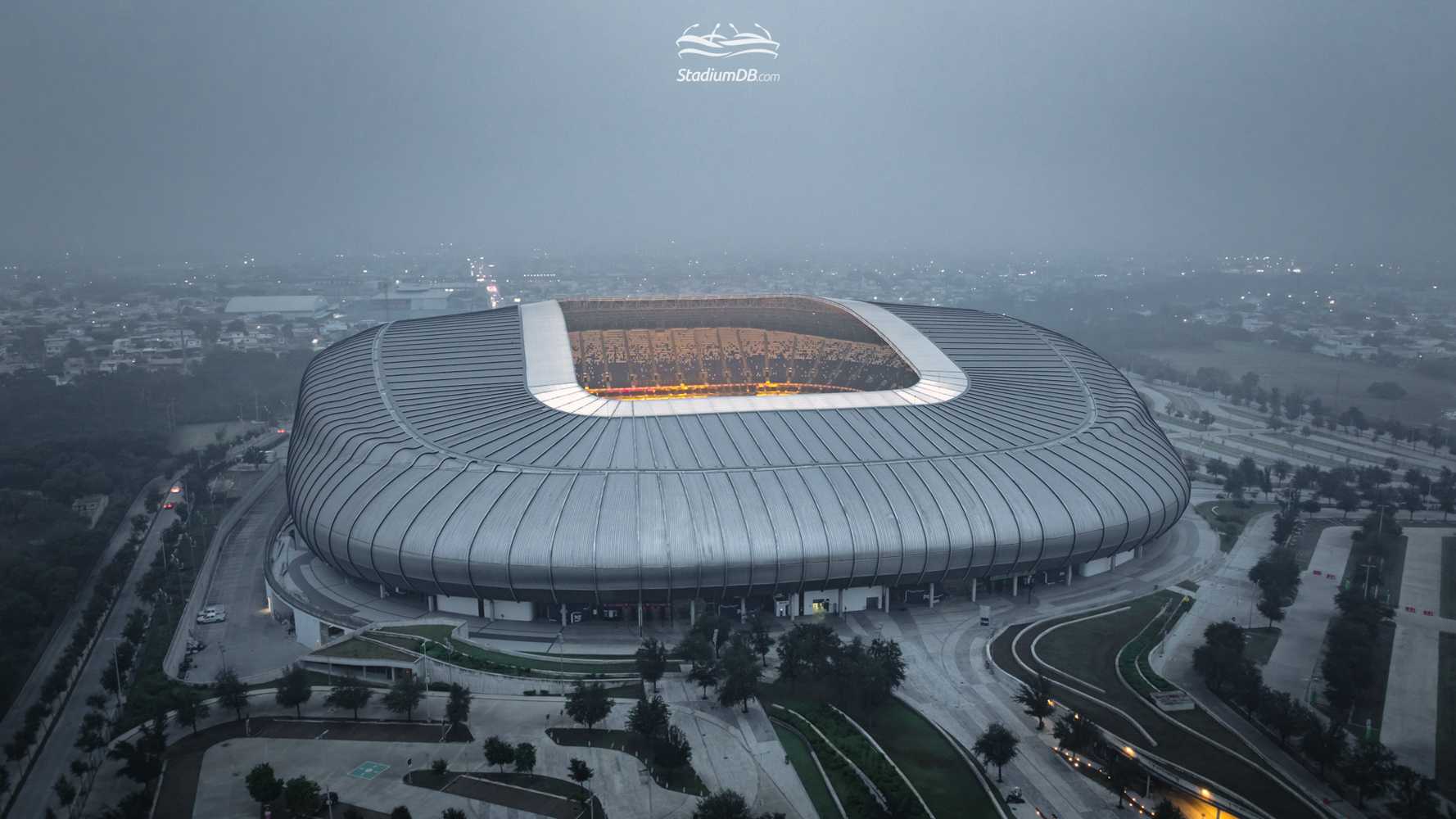
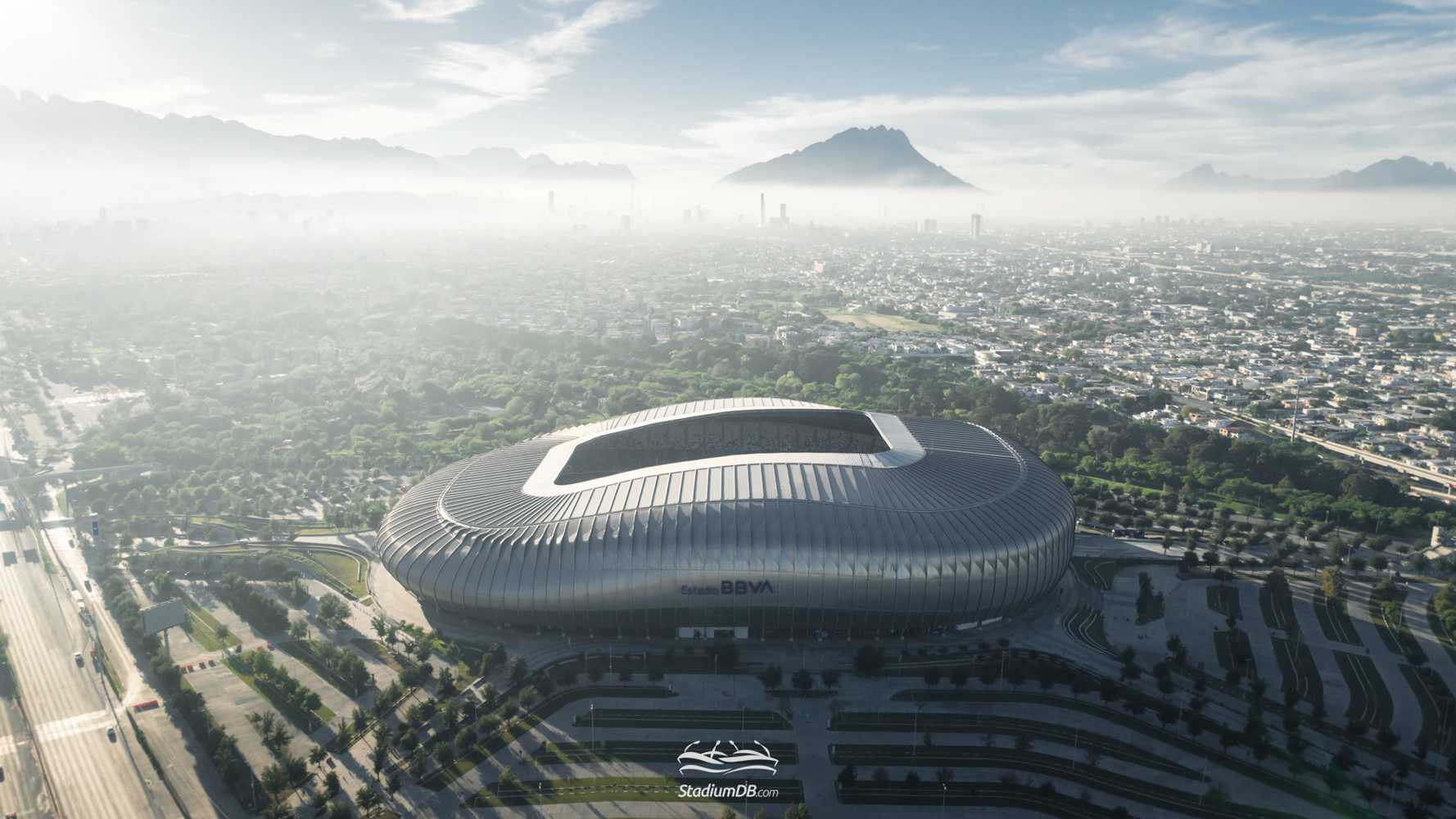
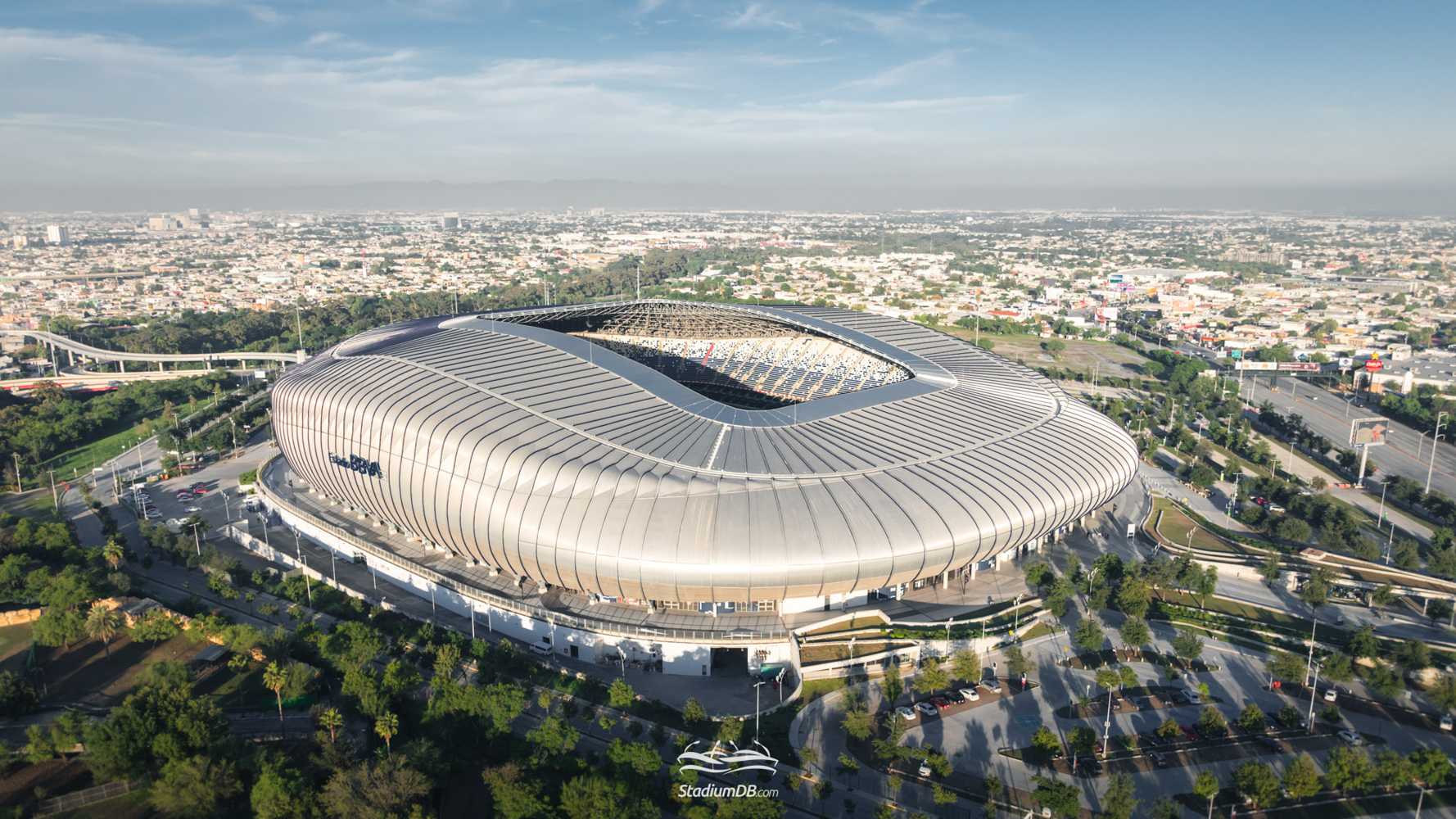
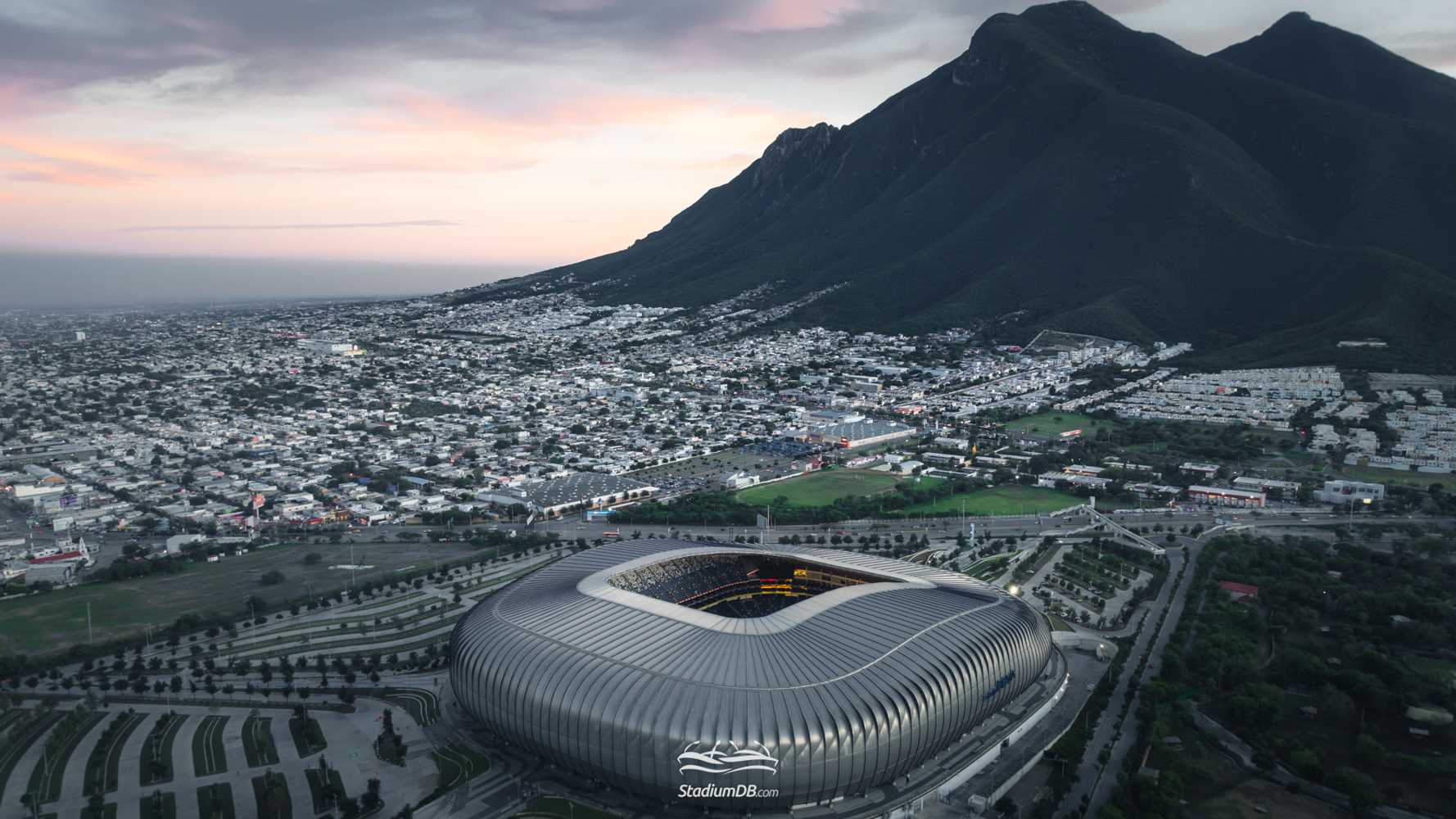
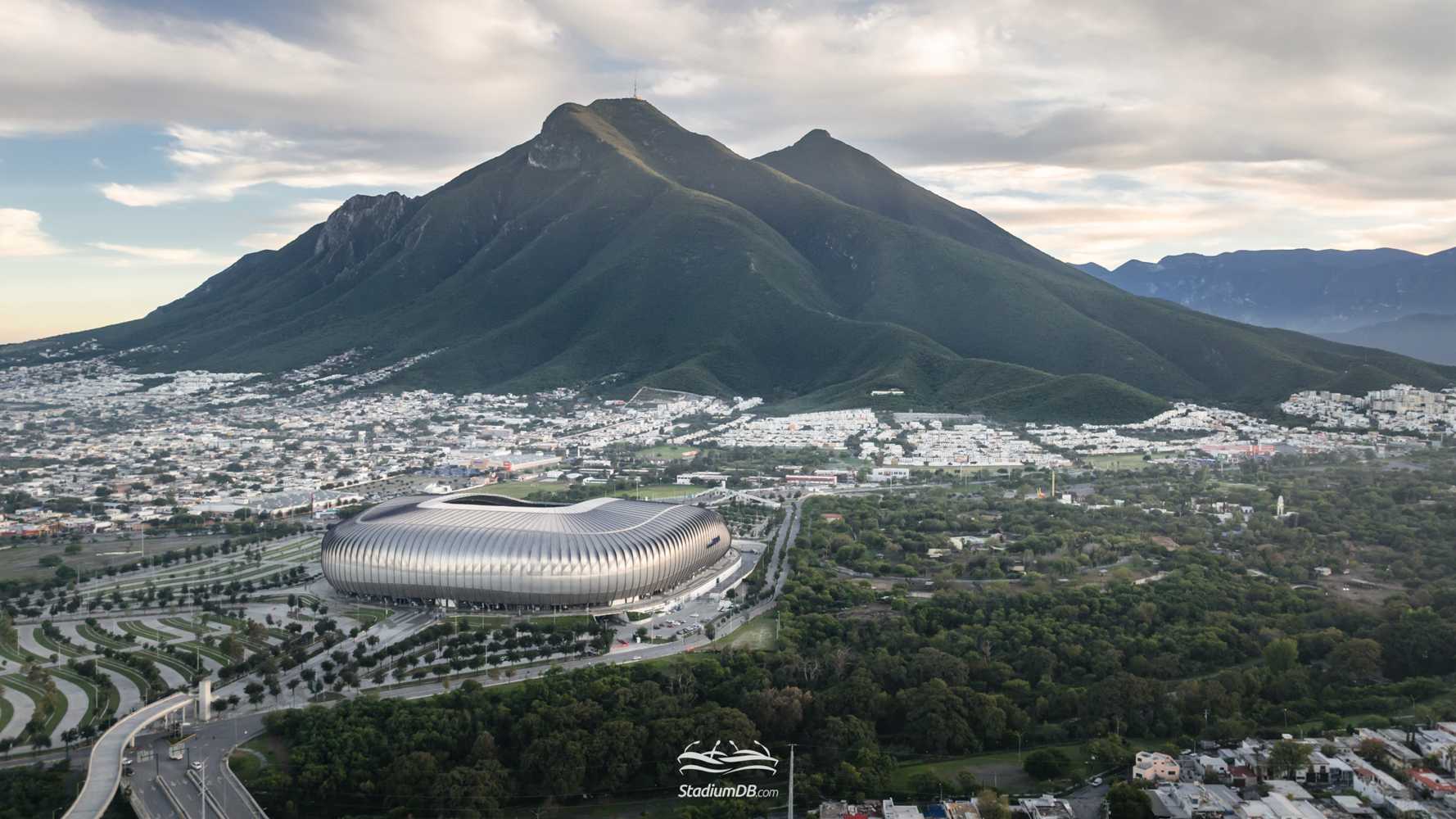
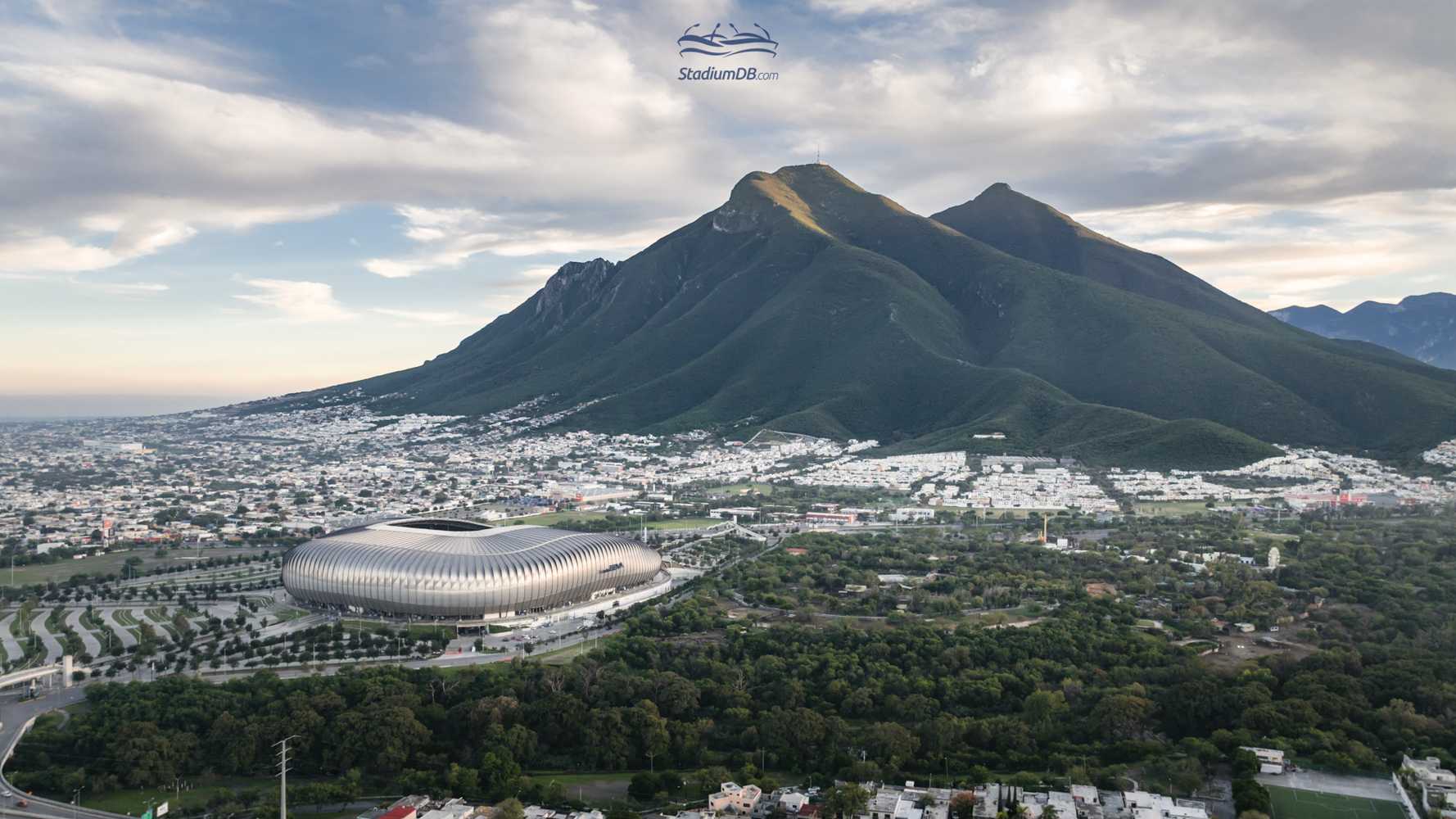
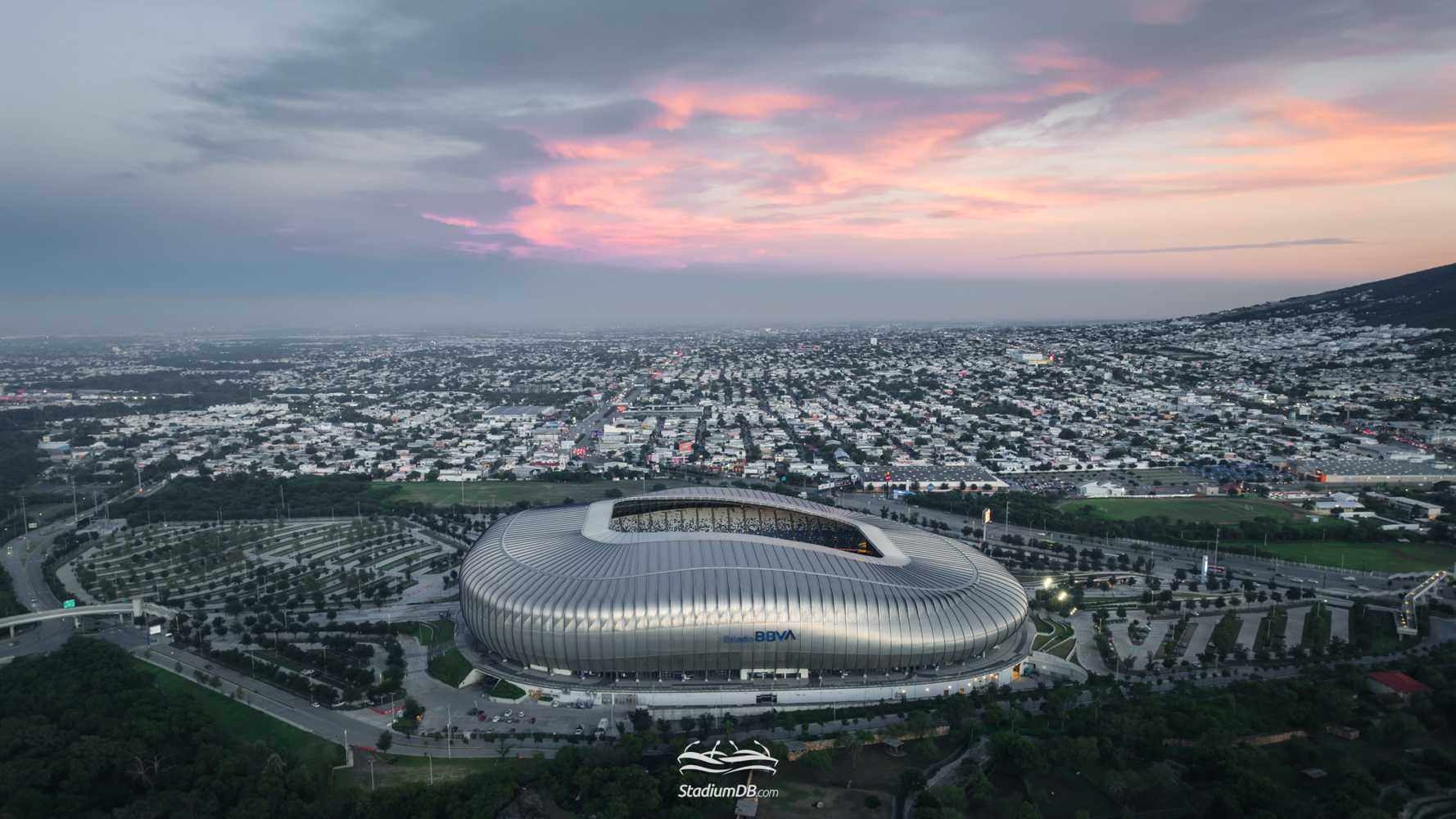
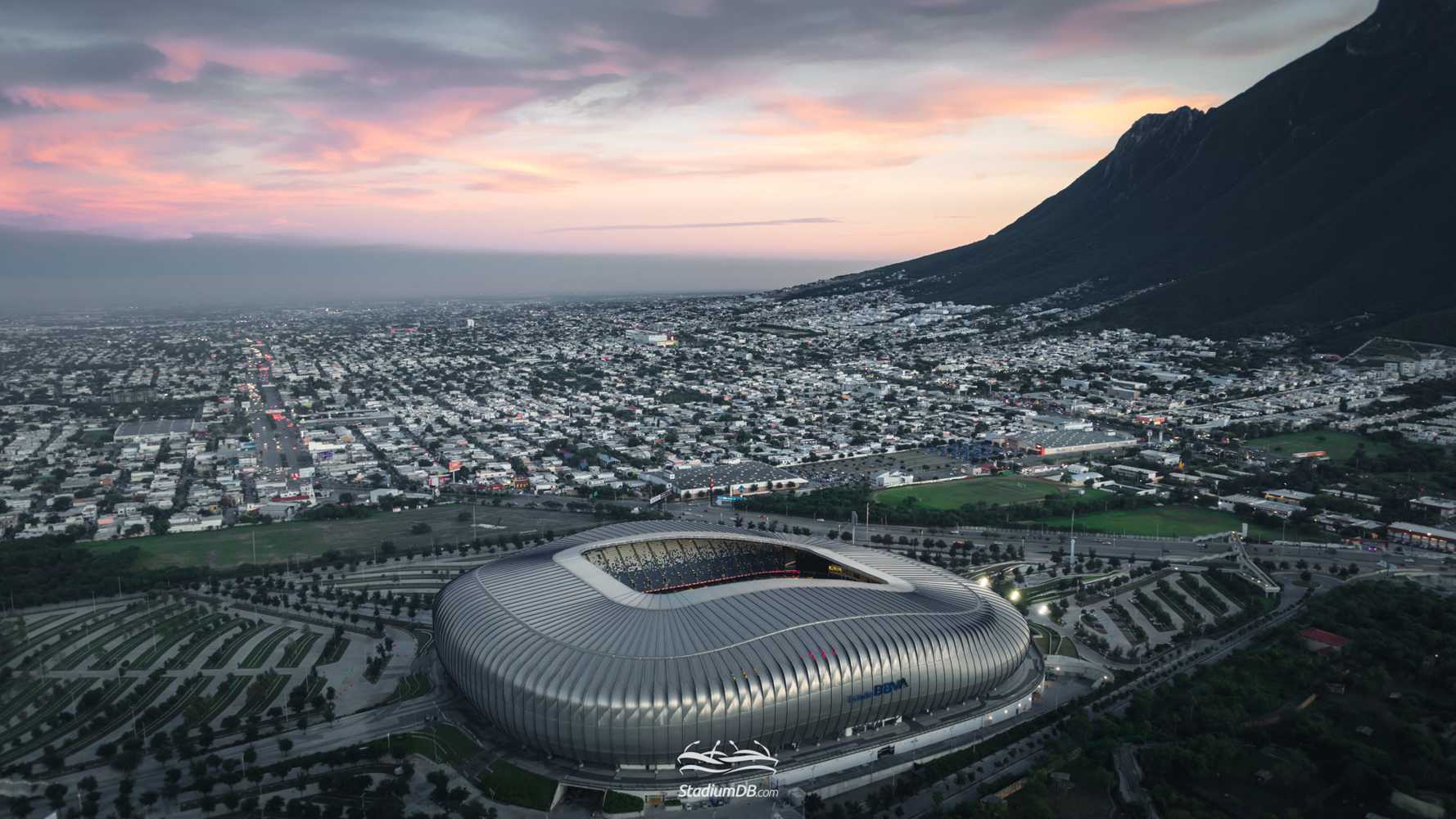
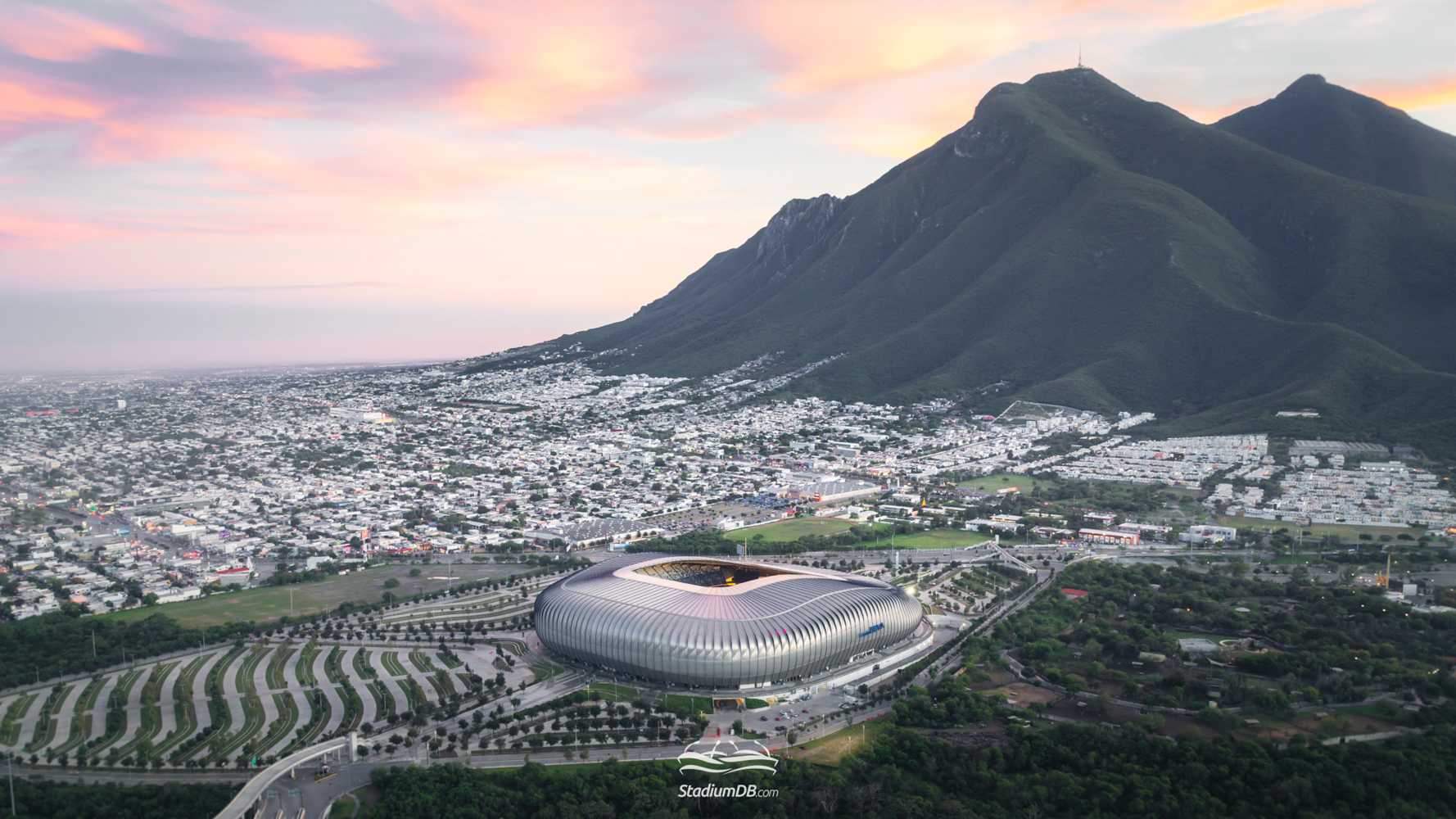
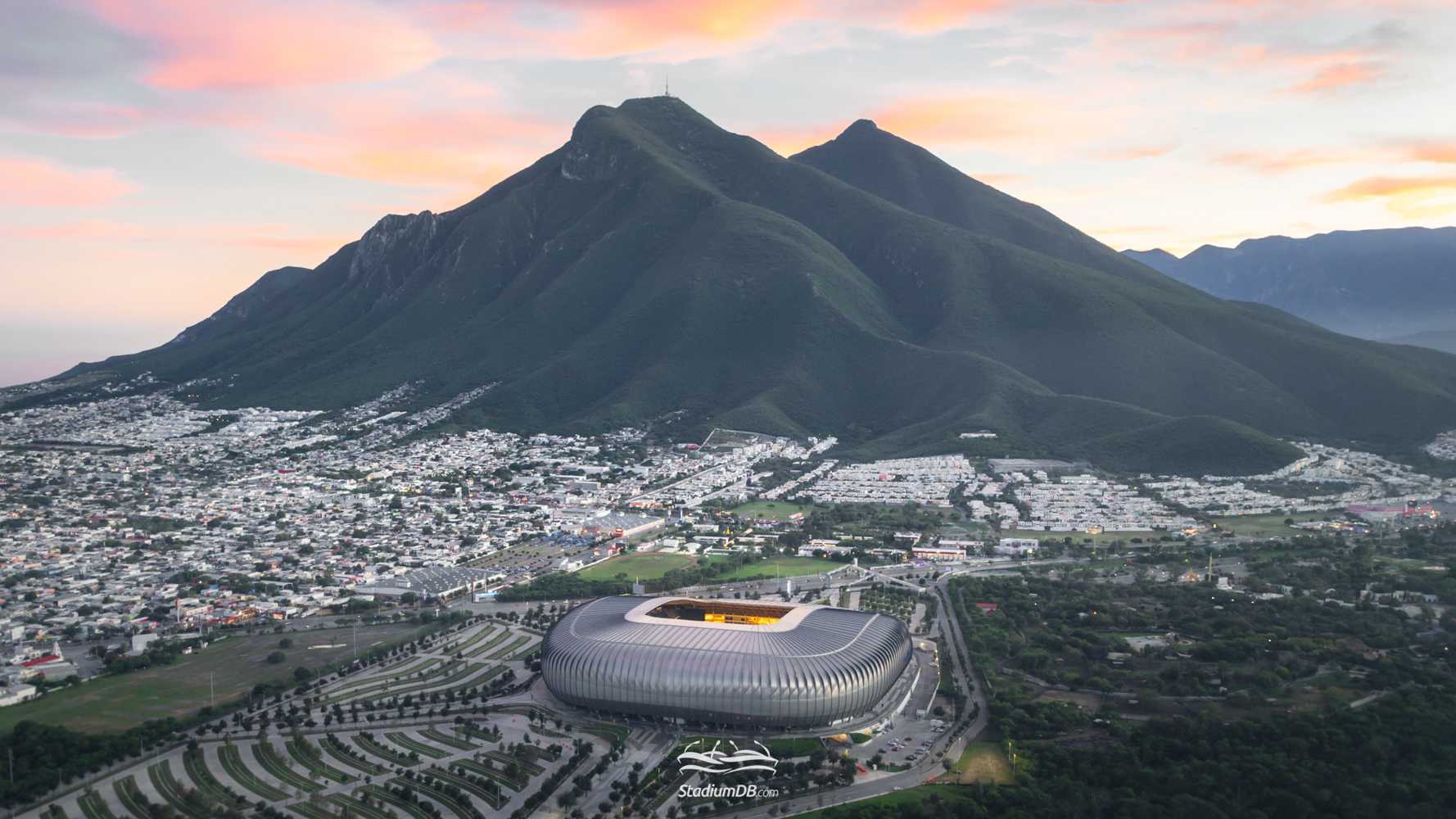
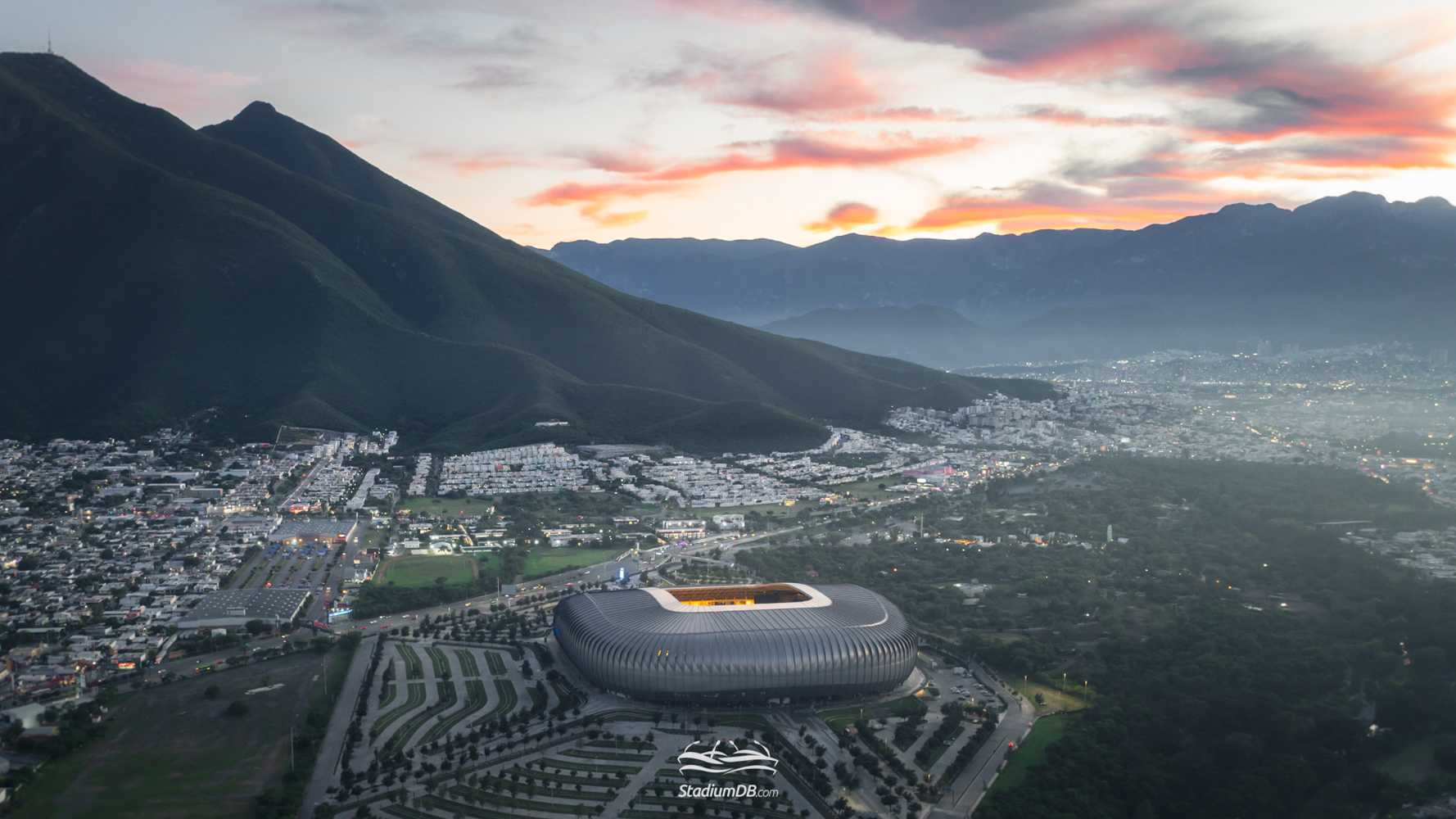
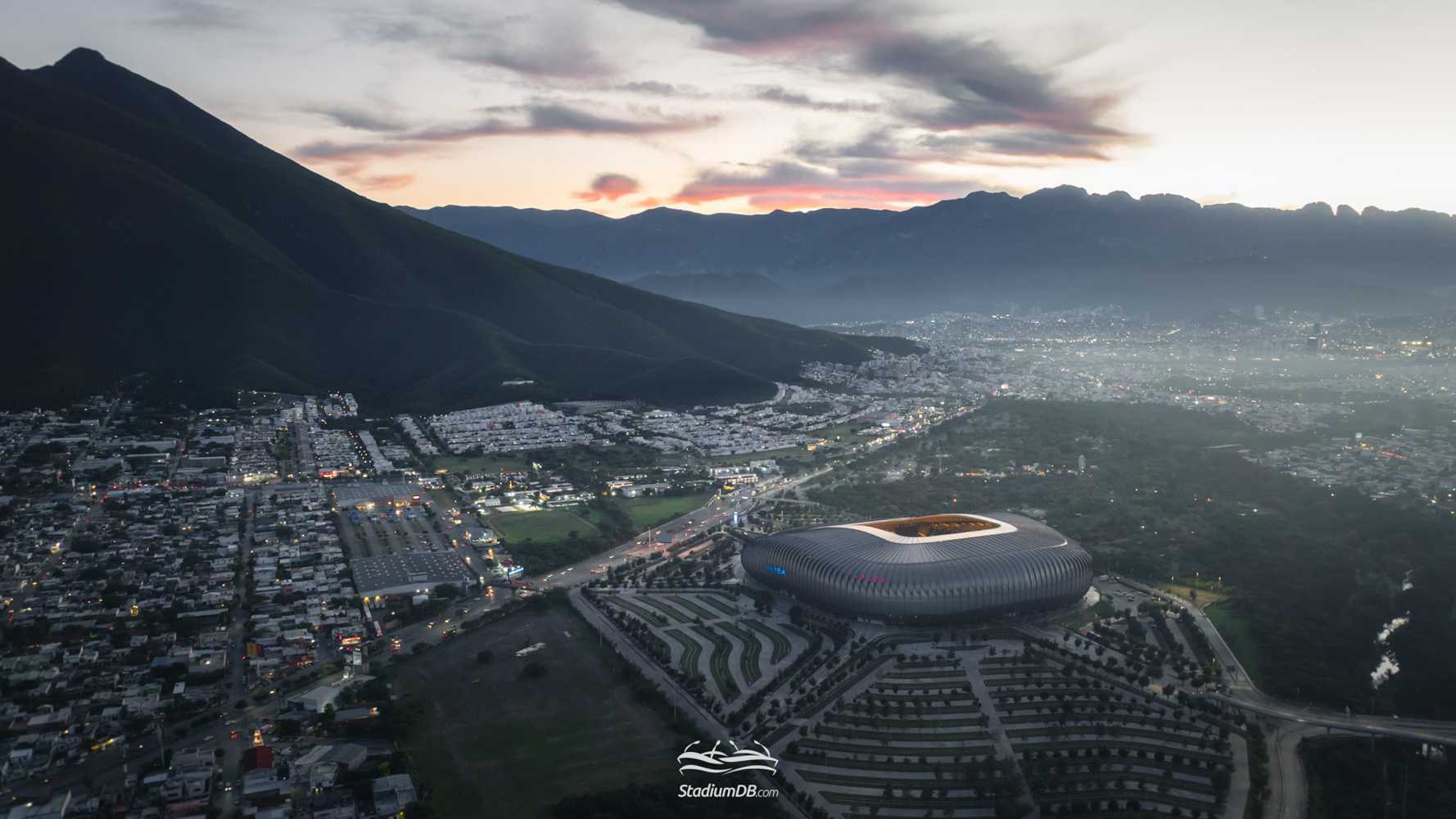
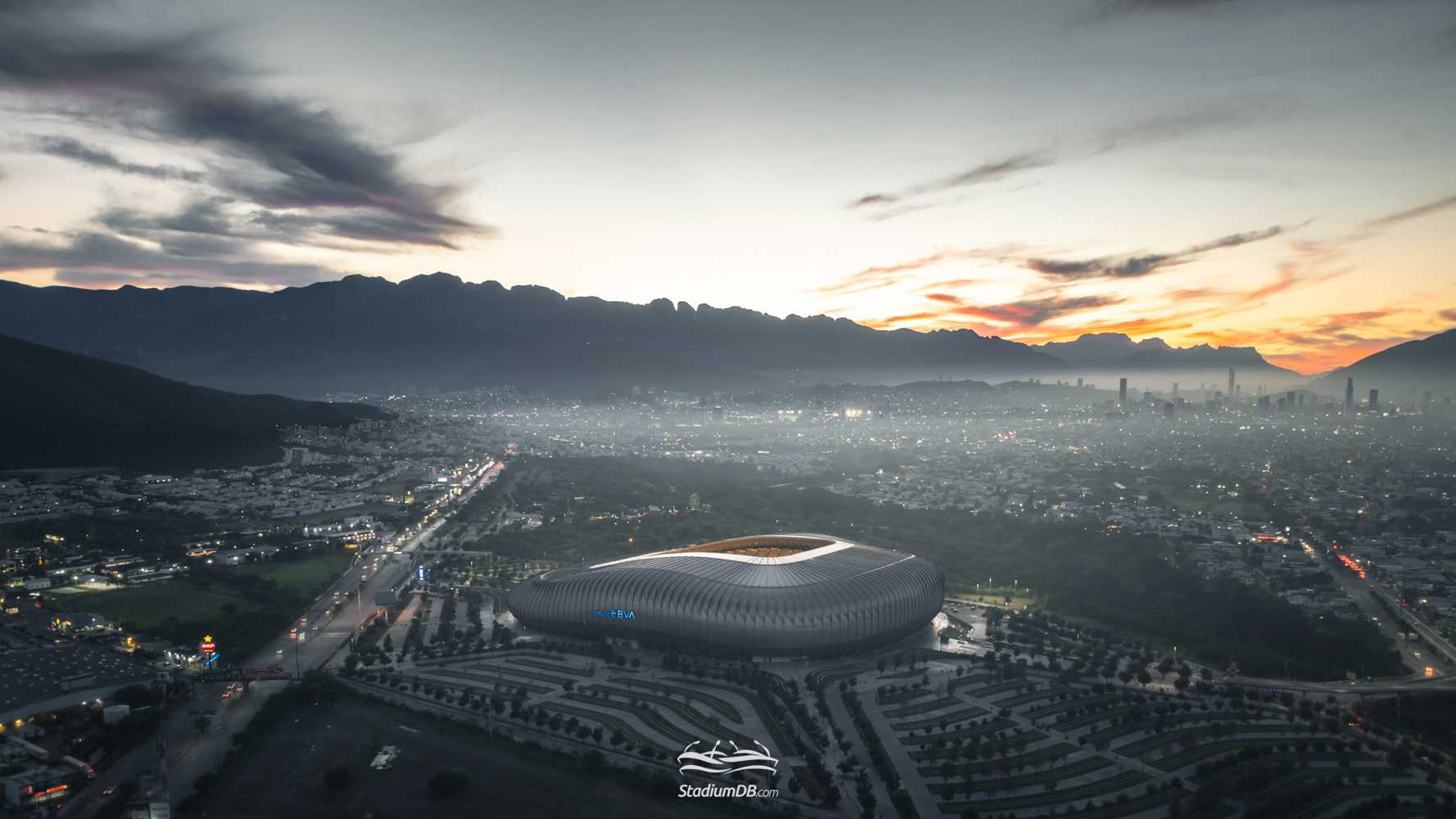
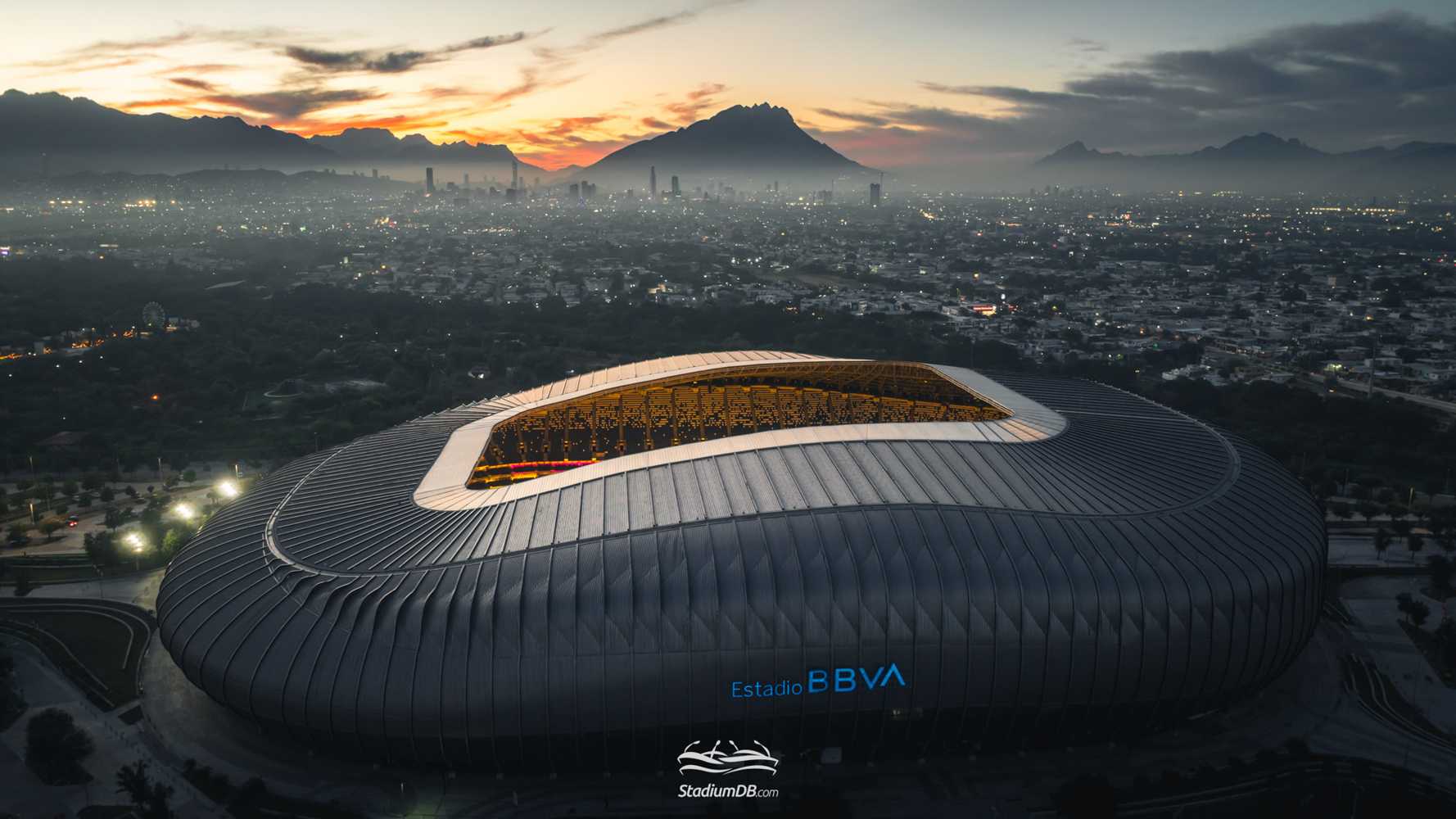
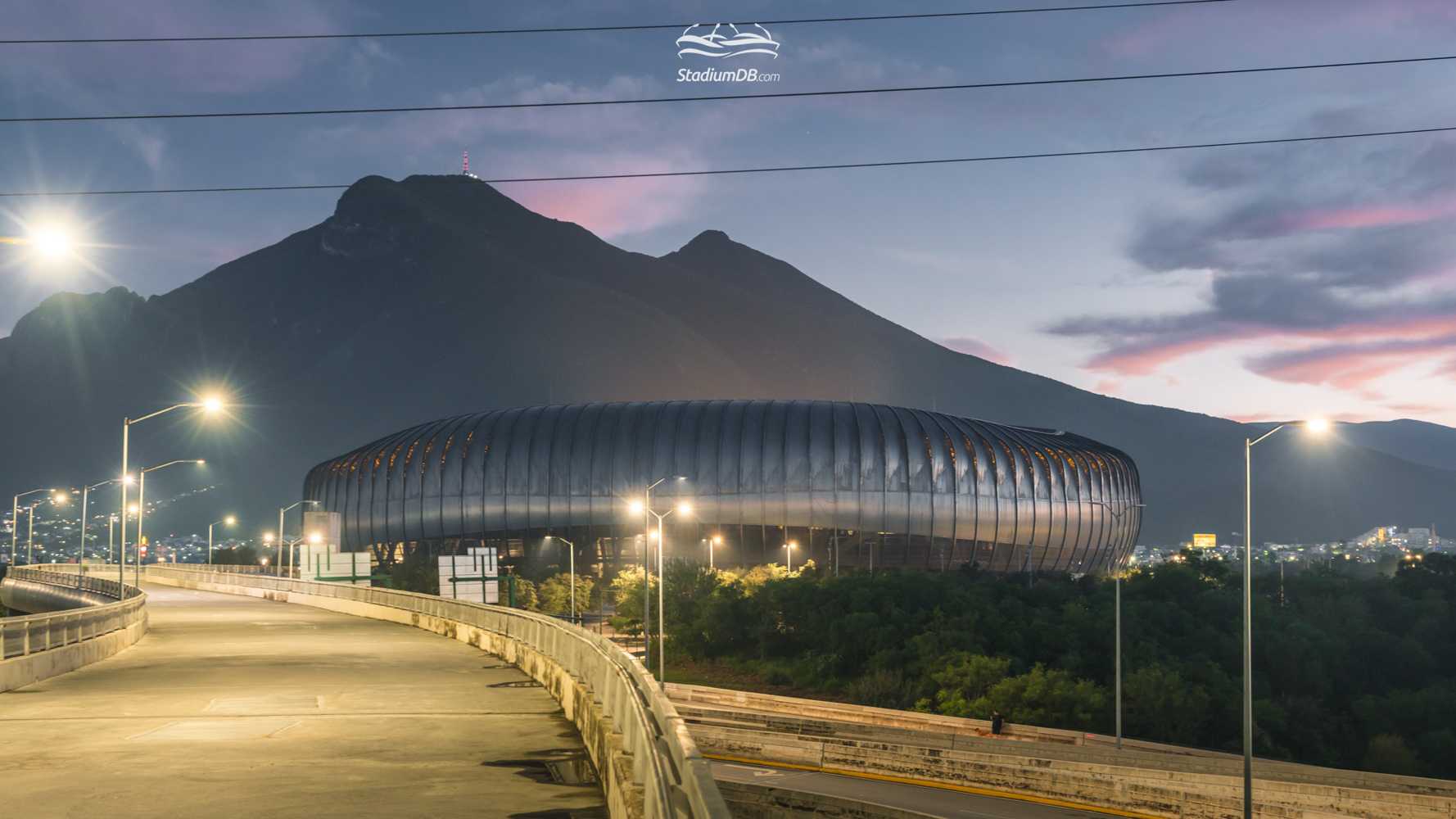
Somewhat ironically, the new Monterrey stadium isn’t located in Monterrey. It stands in Guadalupe, eastern part of the agglomeration. In the west it borders local zoo, in the east it neighbours low-rise residential/commercial district. It’s not an accidental spot, but part of a growing leisure destination, something which the stadium should further improve. Aside from Liga MX games it was designed with 2-4 concerts annually in mind.
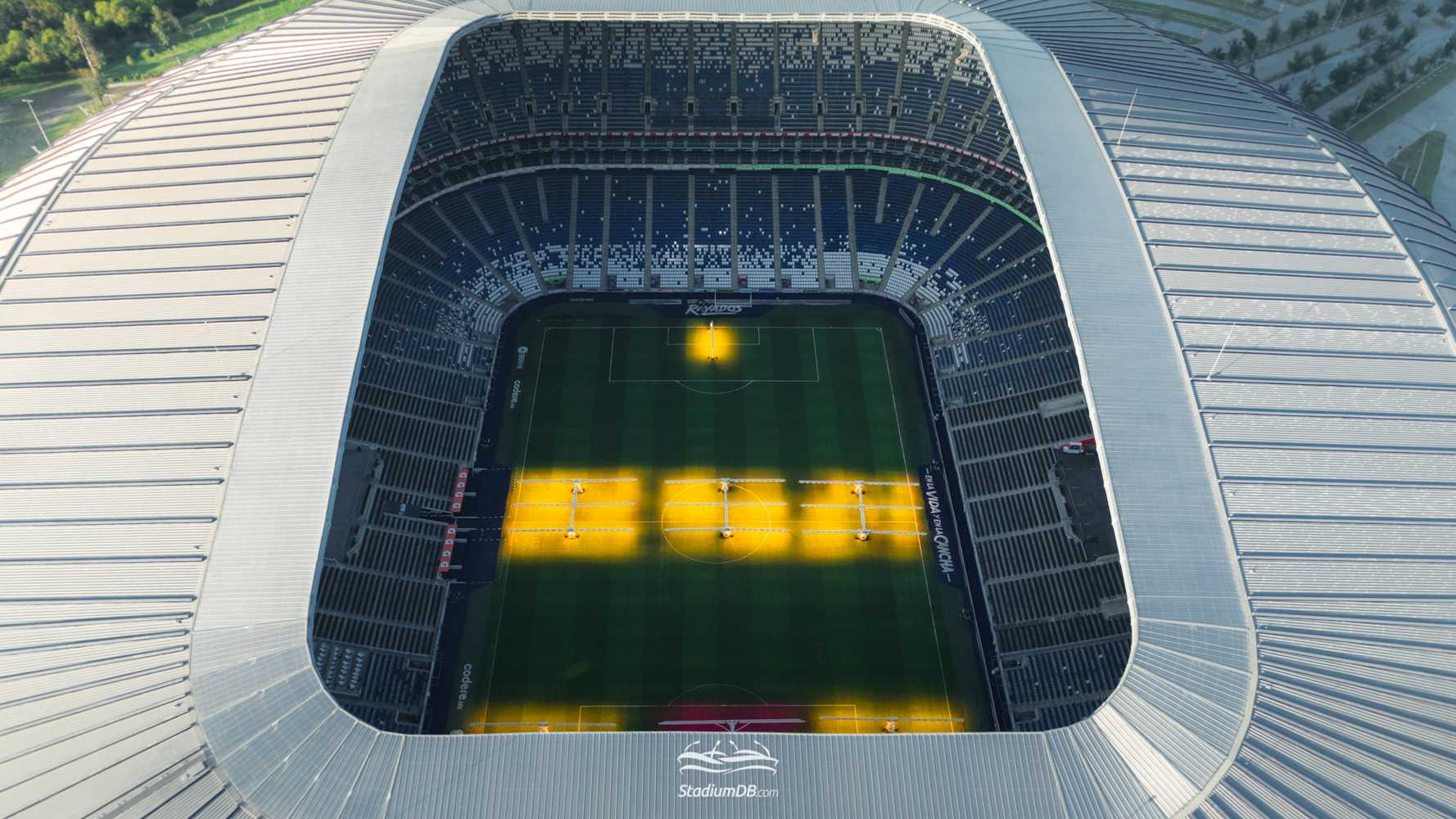
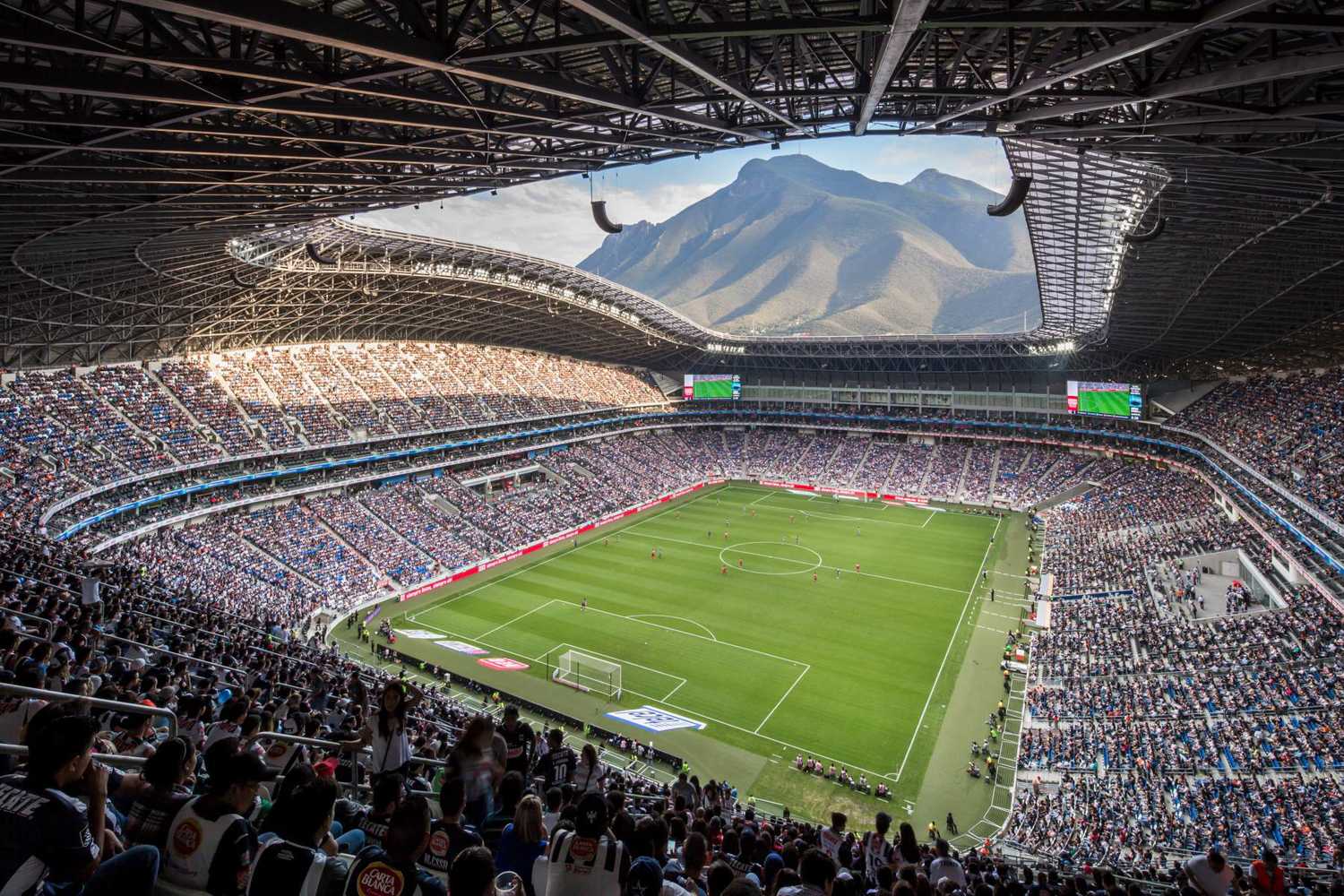
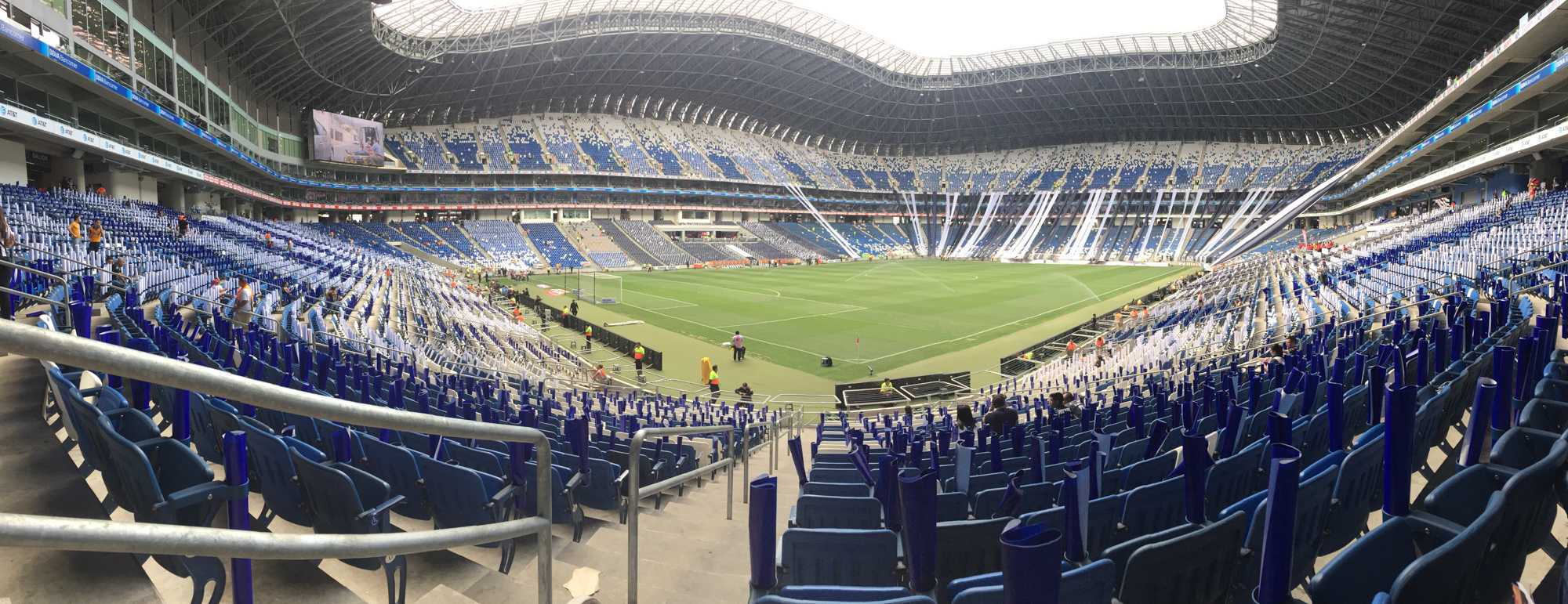
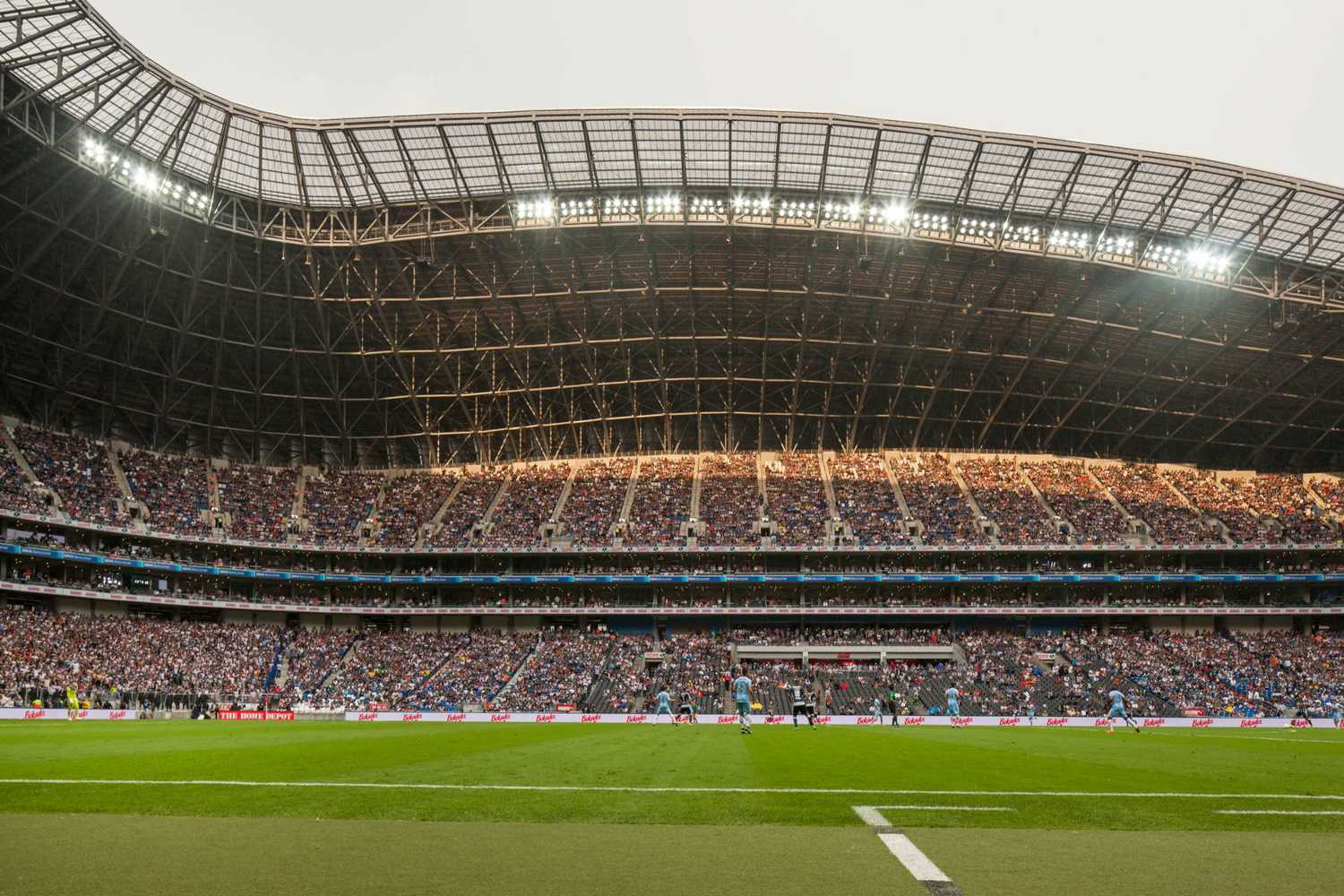
Nominal capacity is set at 51,000 and that’s a great leap from Estadio Tecnológico’s 32,000. Also a leap in terms of quality as spectator amenities are unmatched nationwide. One change football fans will enjoy is being closer to the players: 9 meters instead of 27 separate spectators in the first row from the playing field. Of course that’s the distance in lower tier, only one built in a sunken bowl.
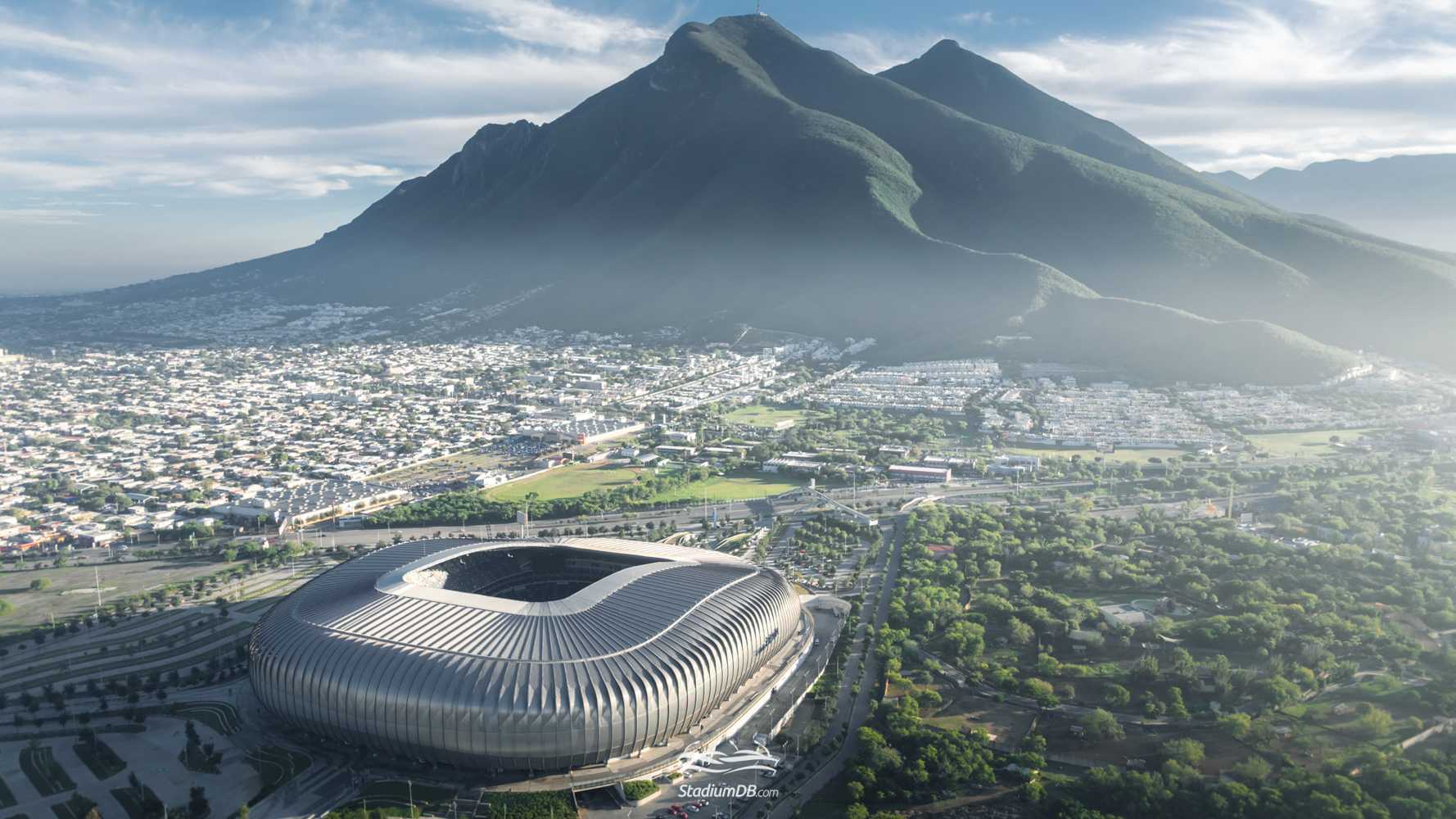
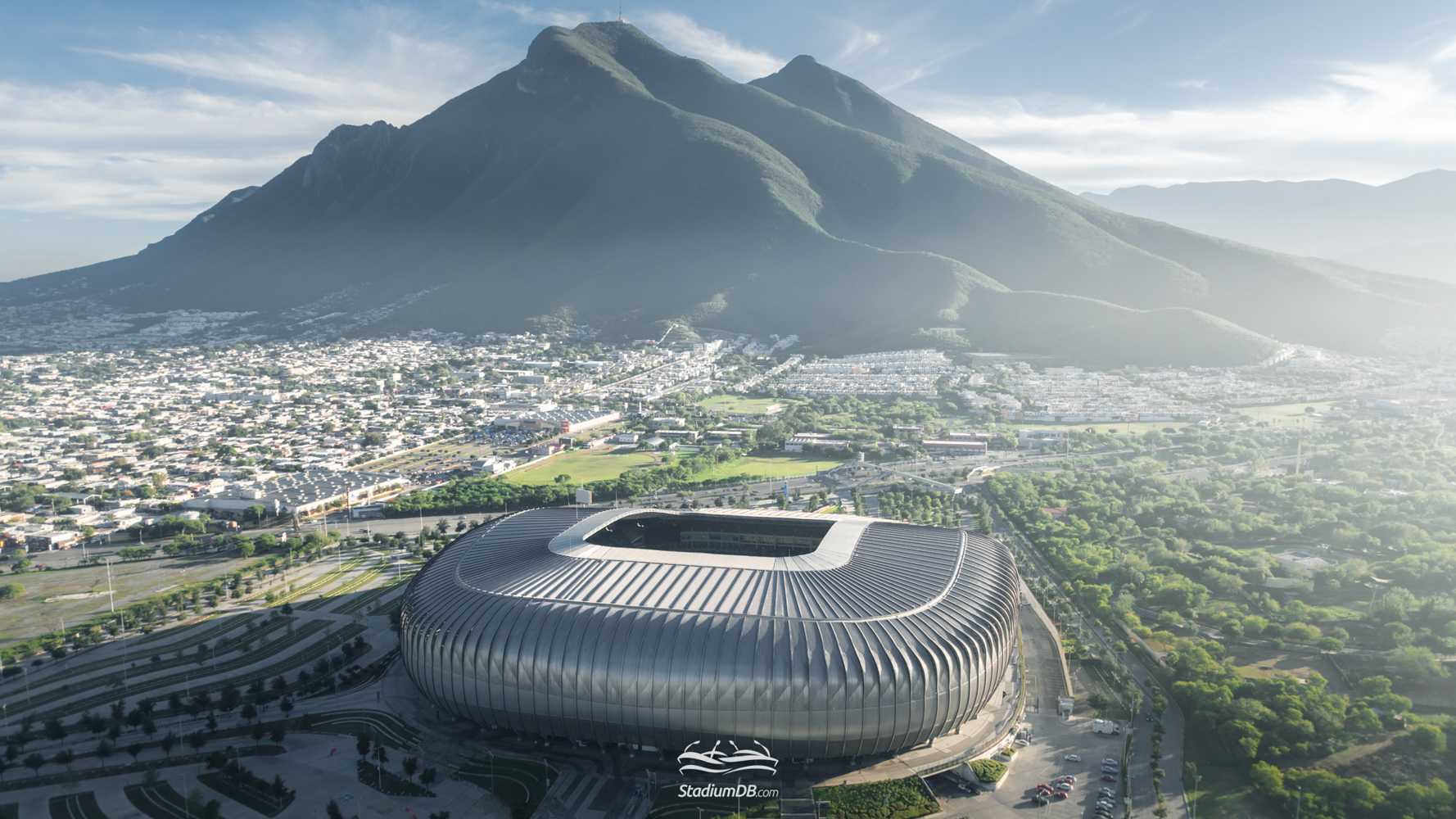
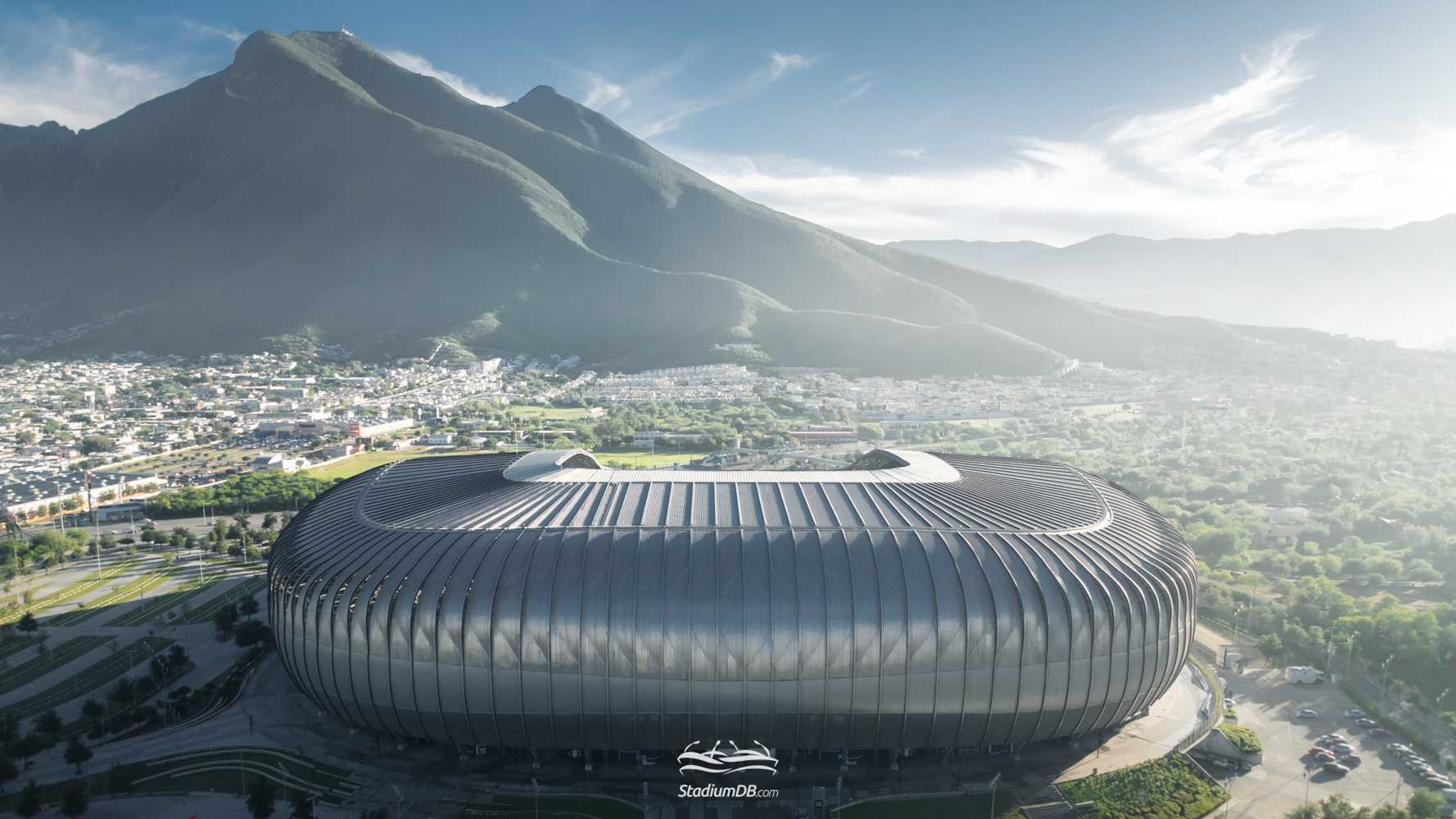
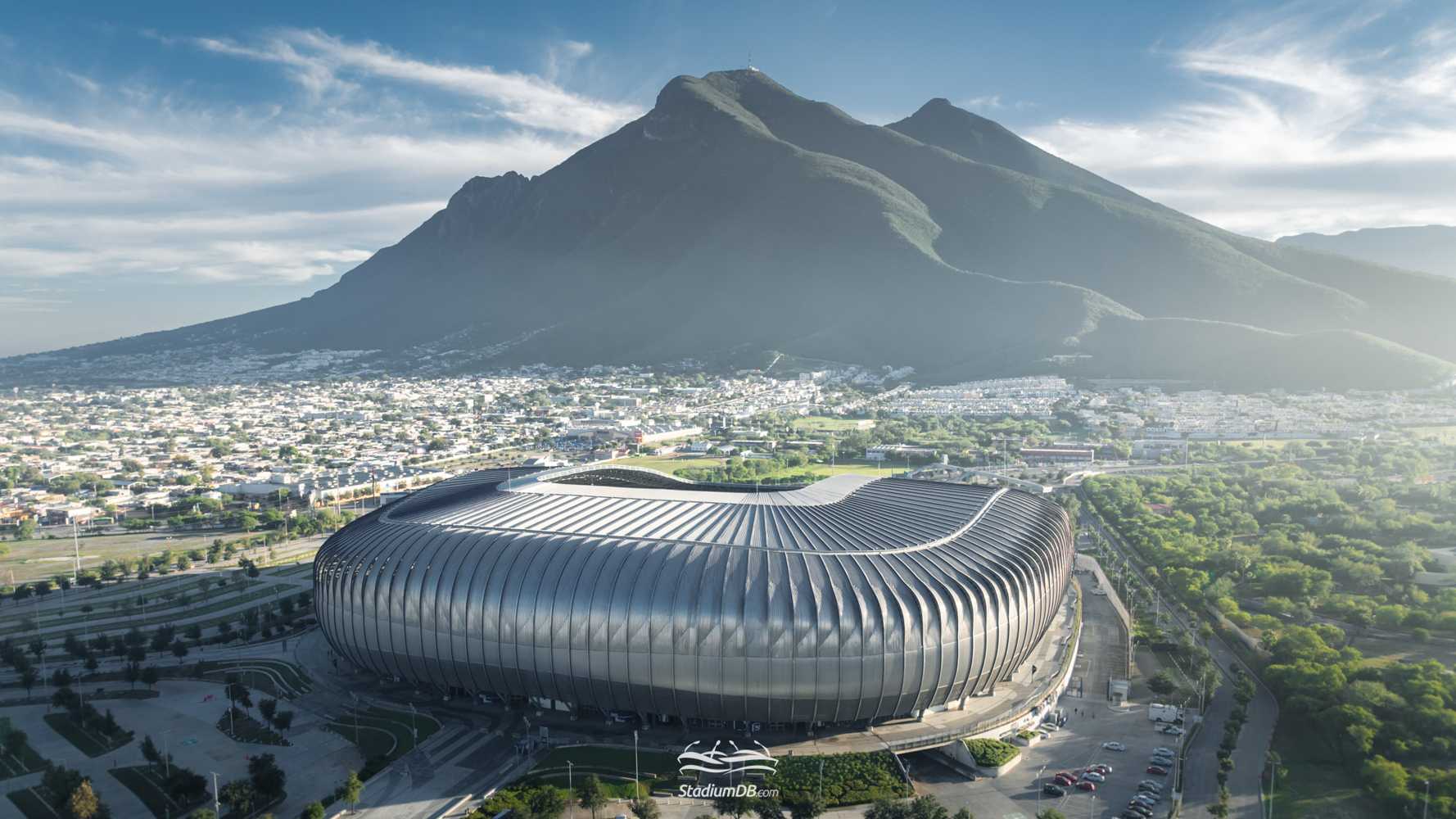
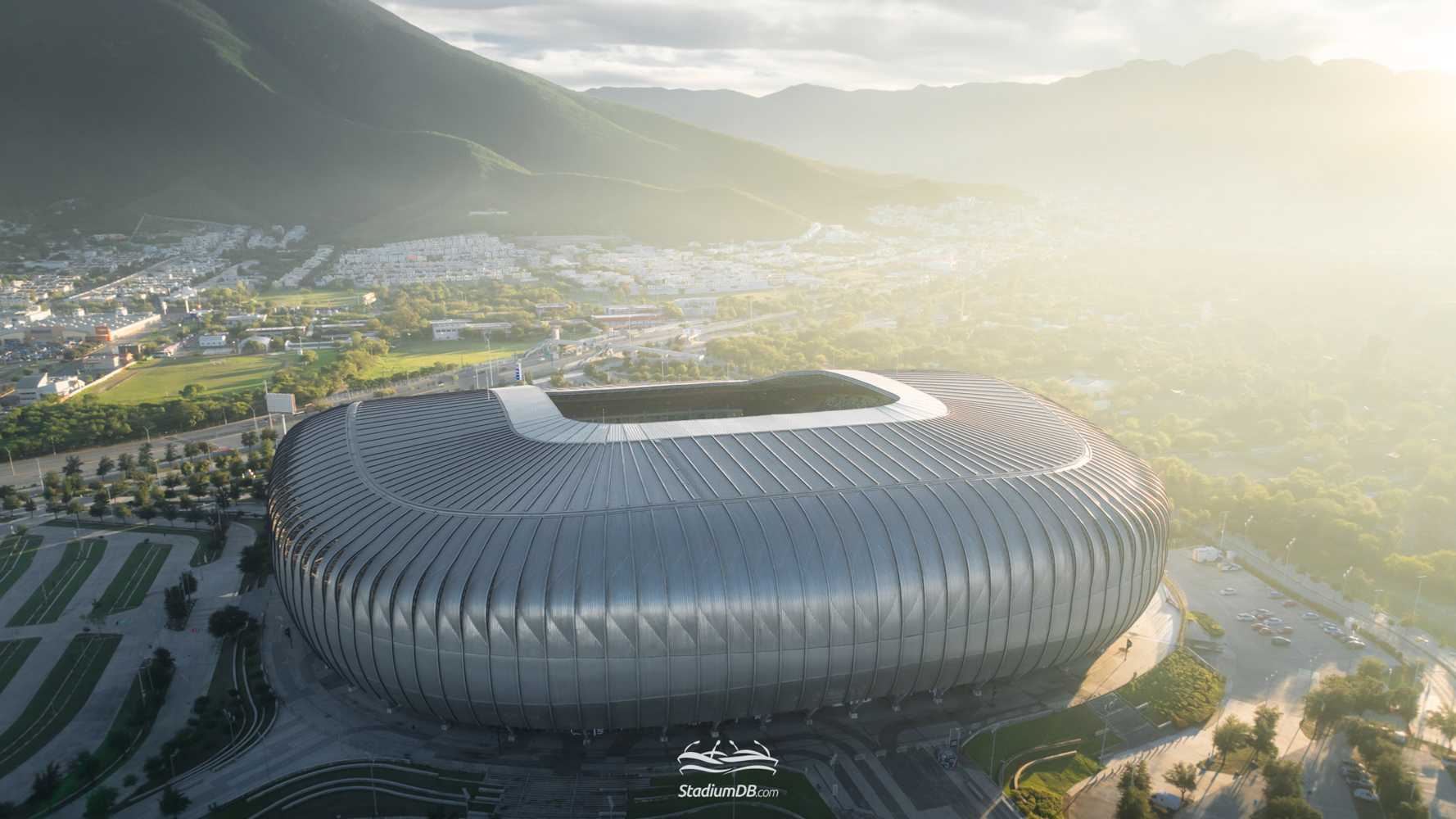
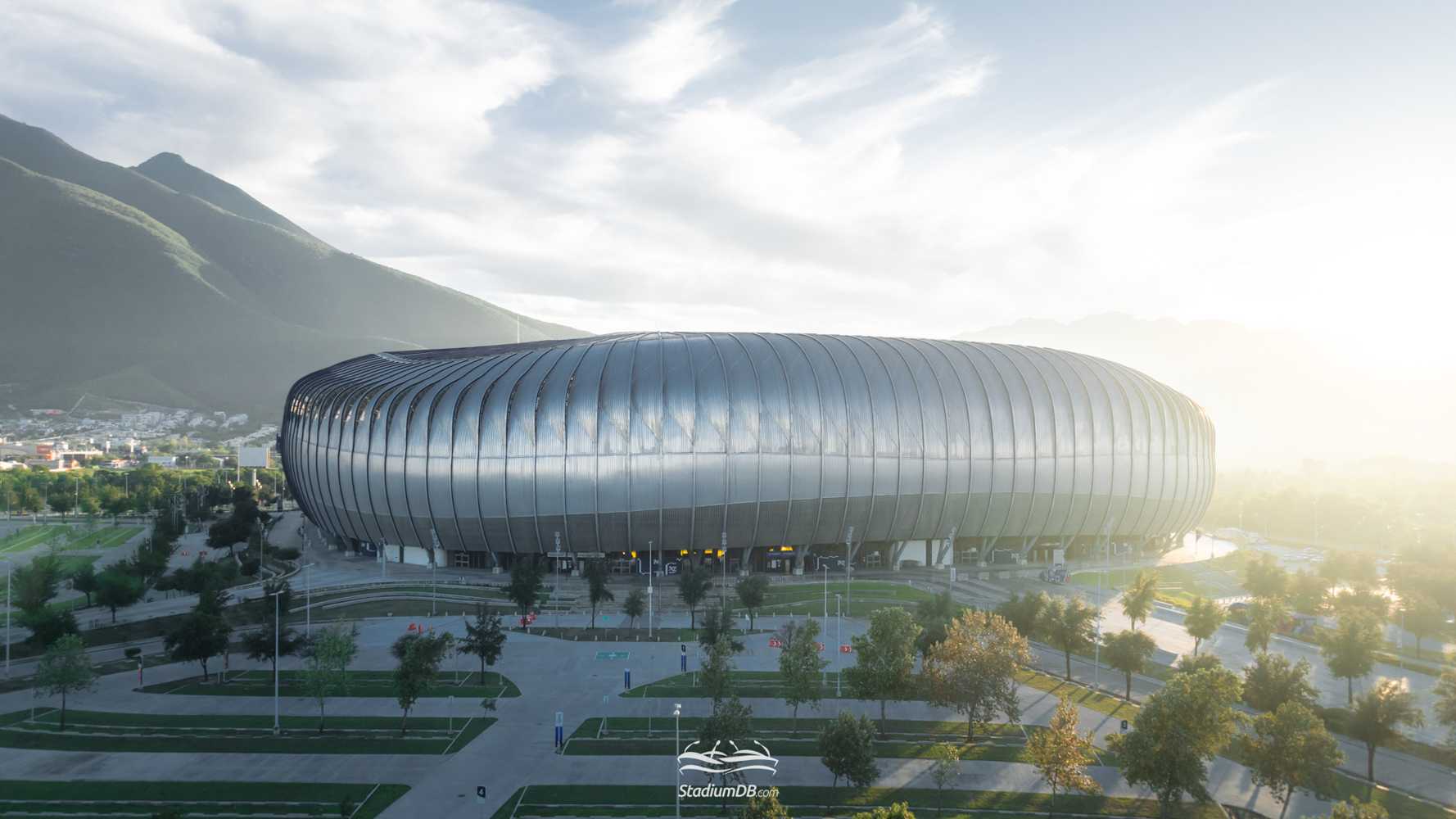
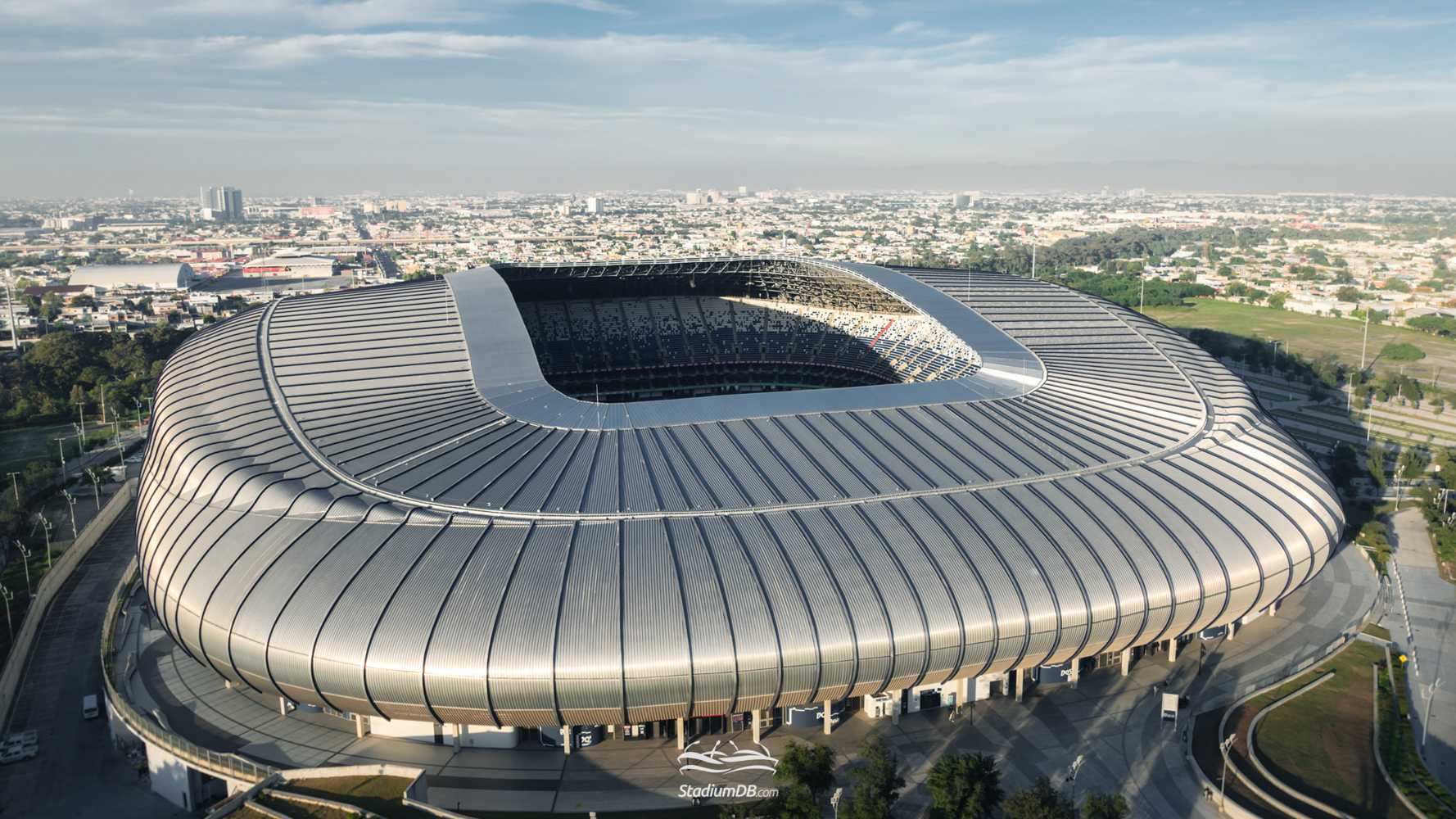
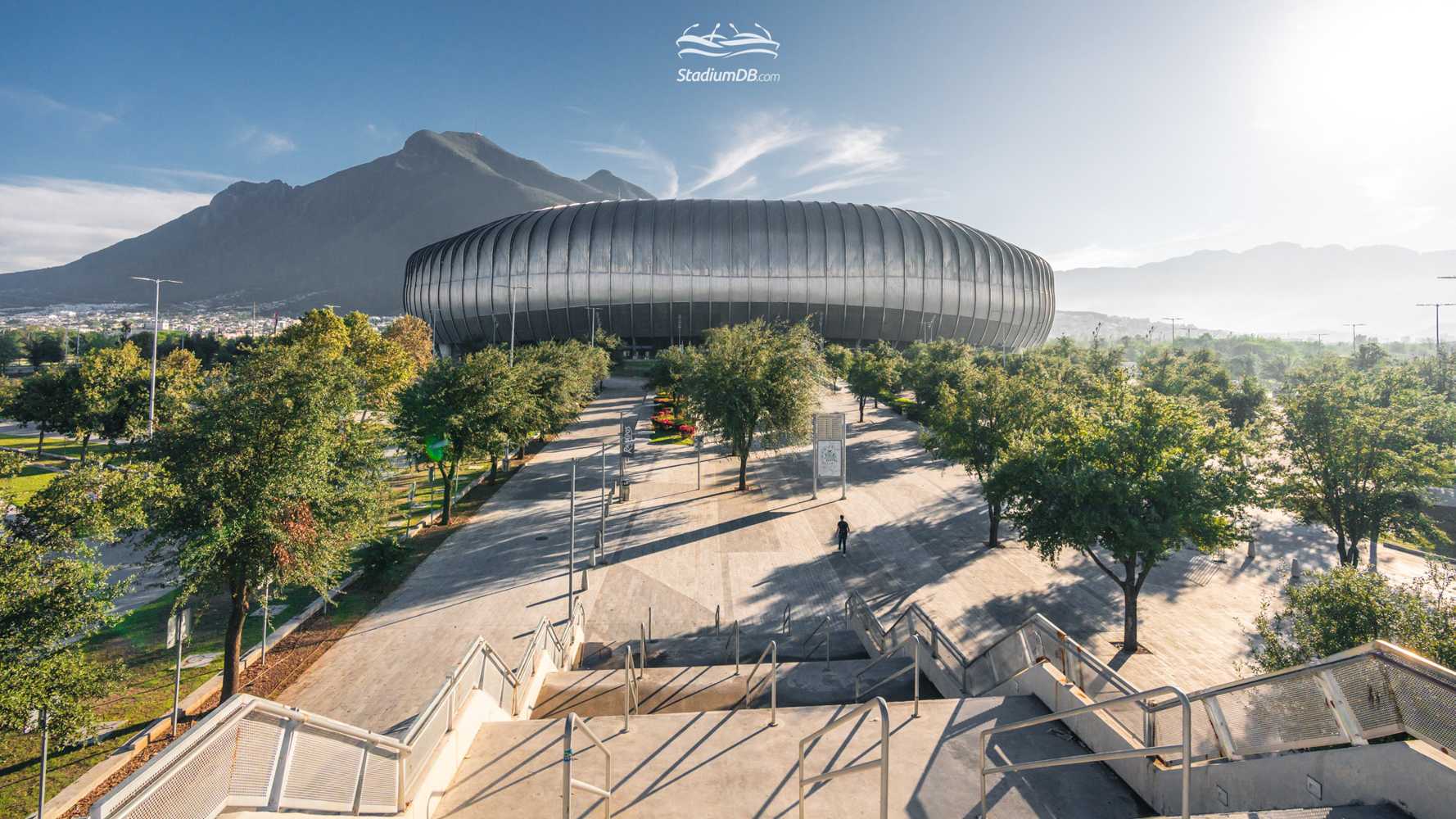
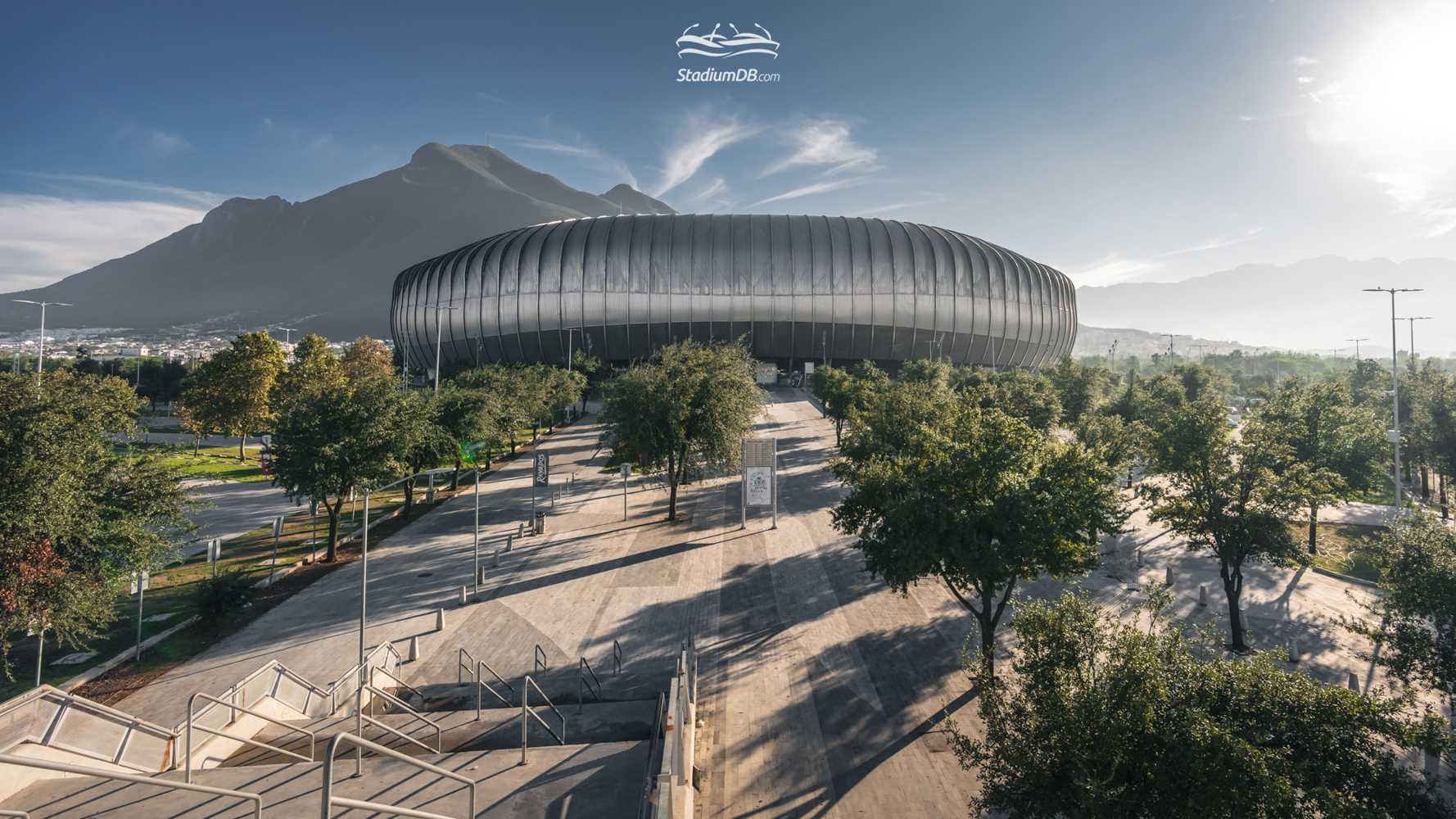
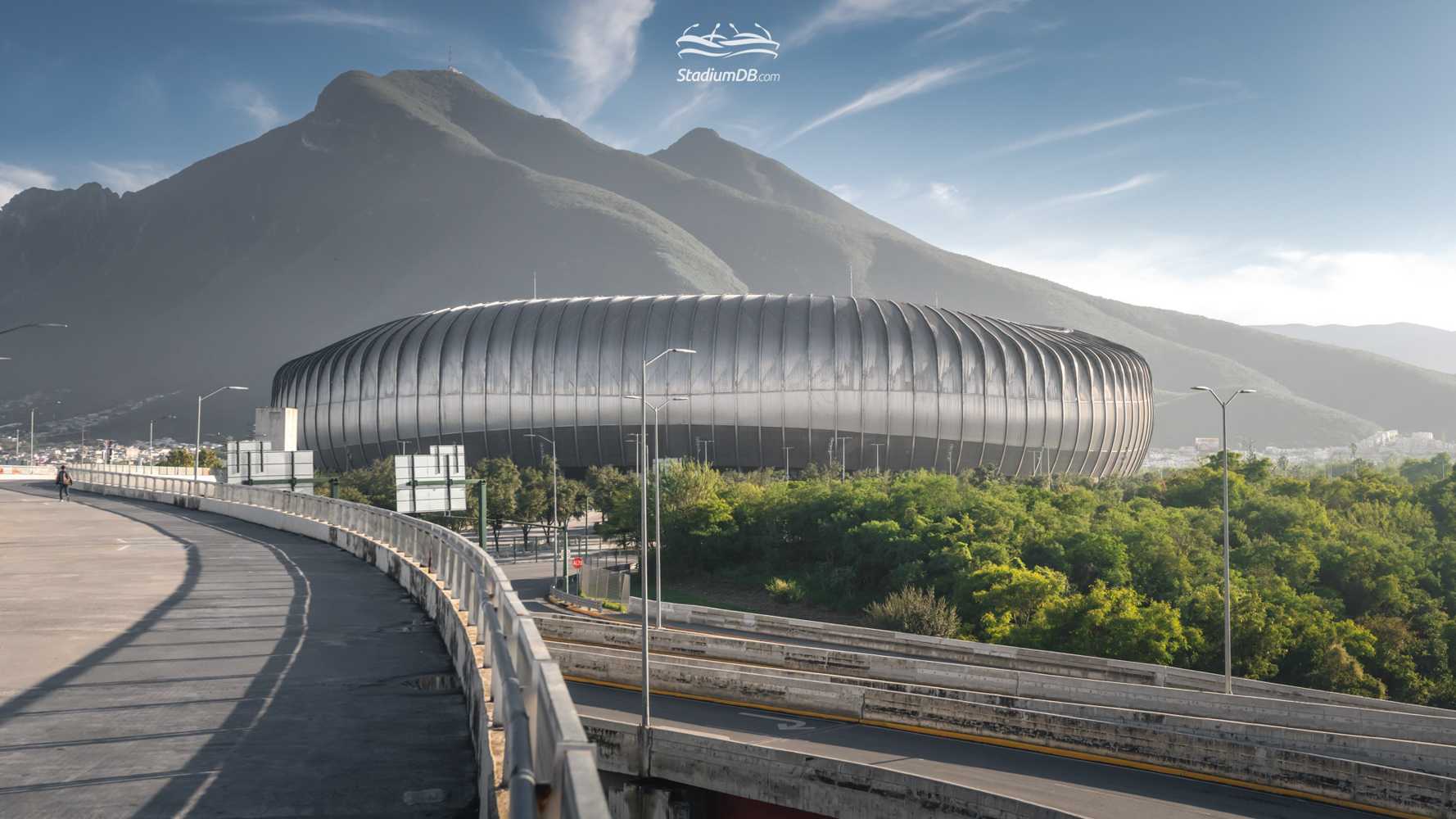
In the south there are only corporate hospitality facilities above the lower tier. This is where the stadium’s height lowers to give other supporters a stunning view of Cerro de la Silla mountain.

And while we’re at hospitality, Estadio BBVA offers 324 skyboxes (9-12 people), one of the highest percentages worldwide. The boxes alone hold over 3,200 people, while further 4,500 business seats can be find in the lower tier seating.
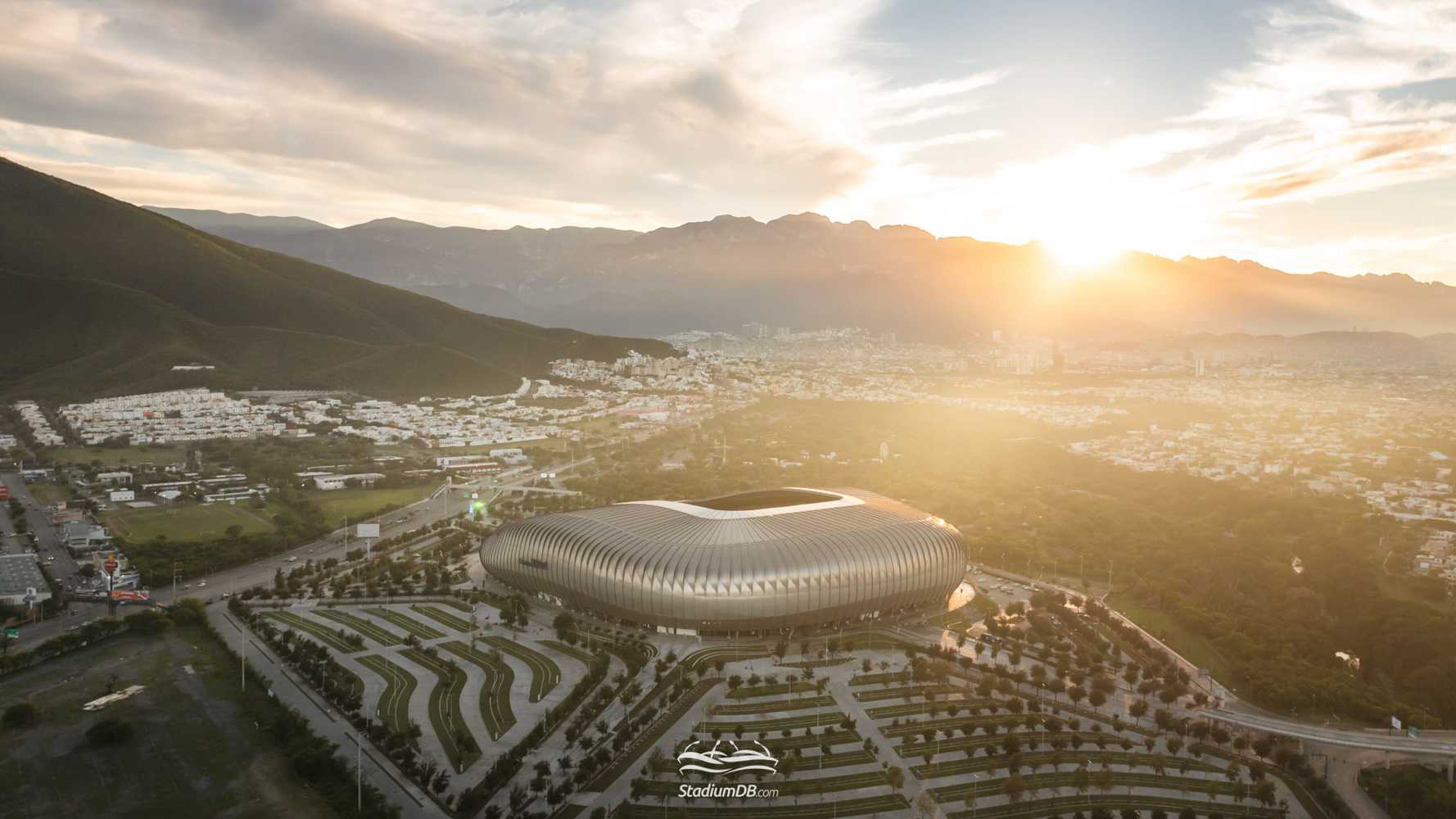
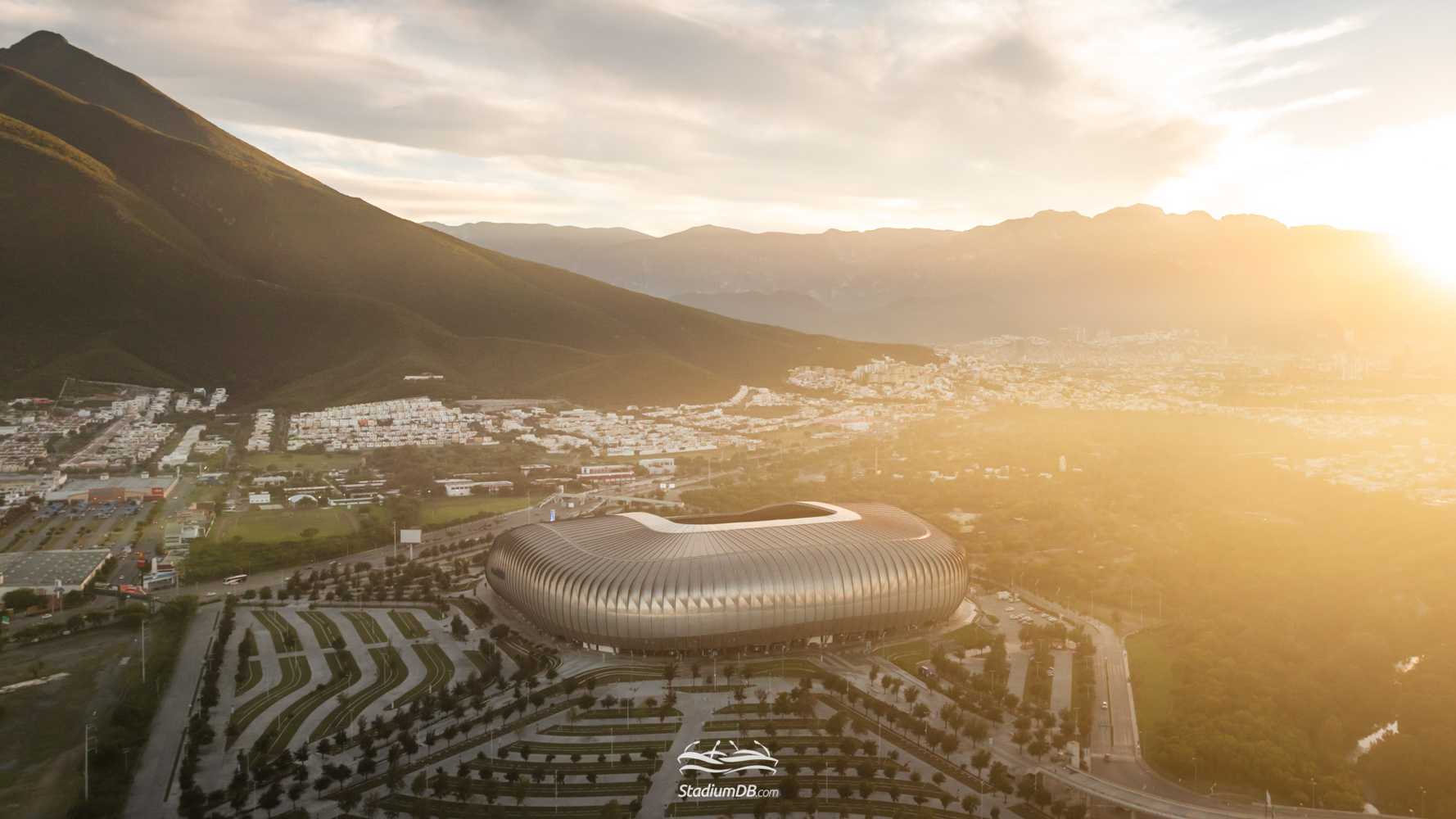
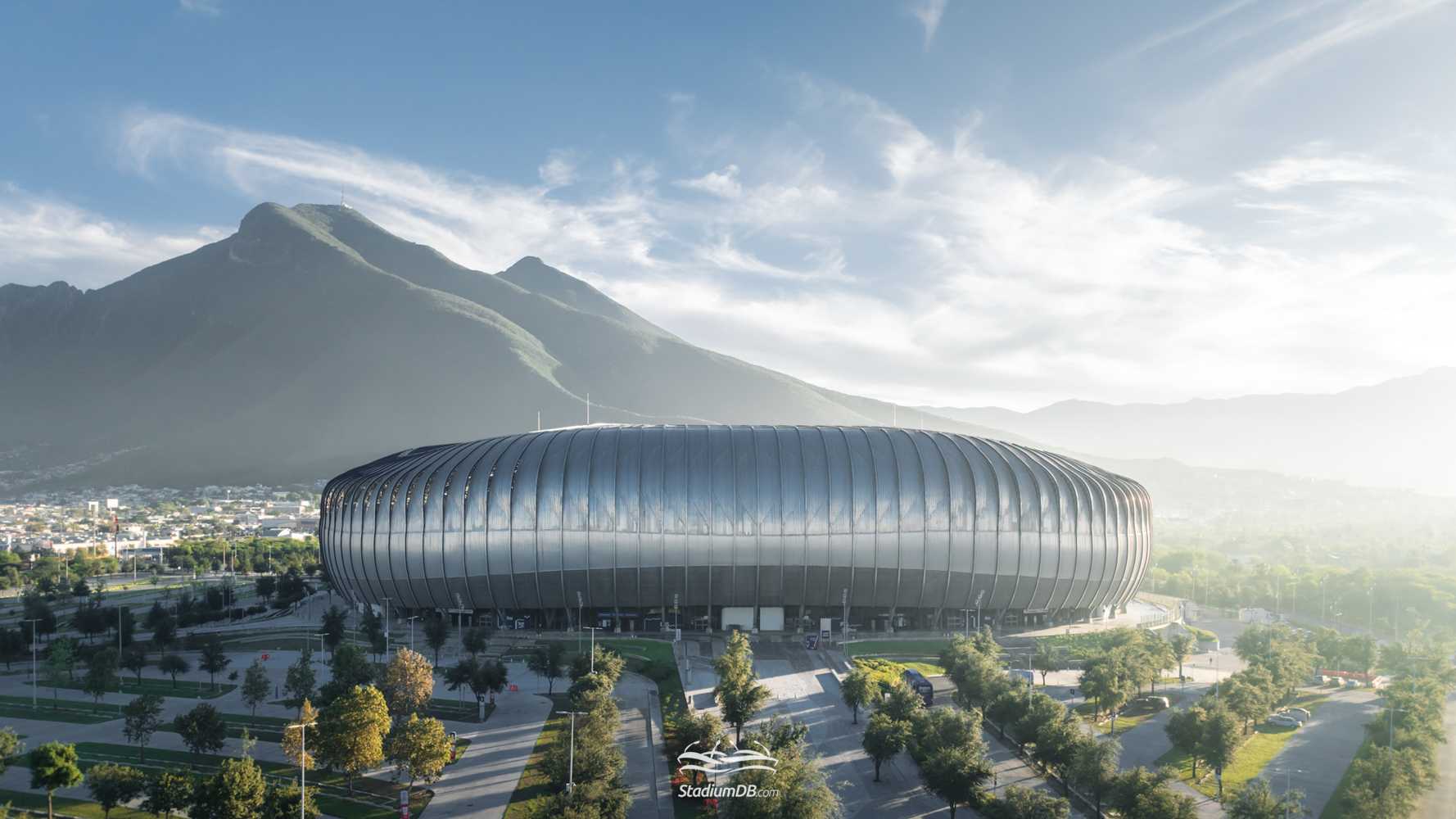
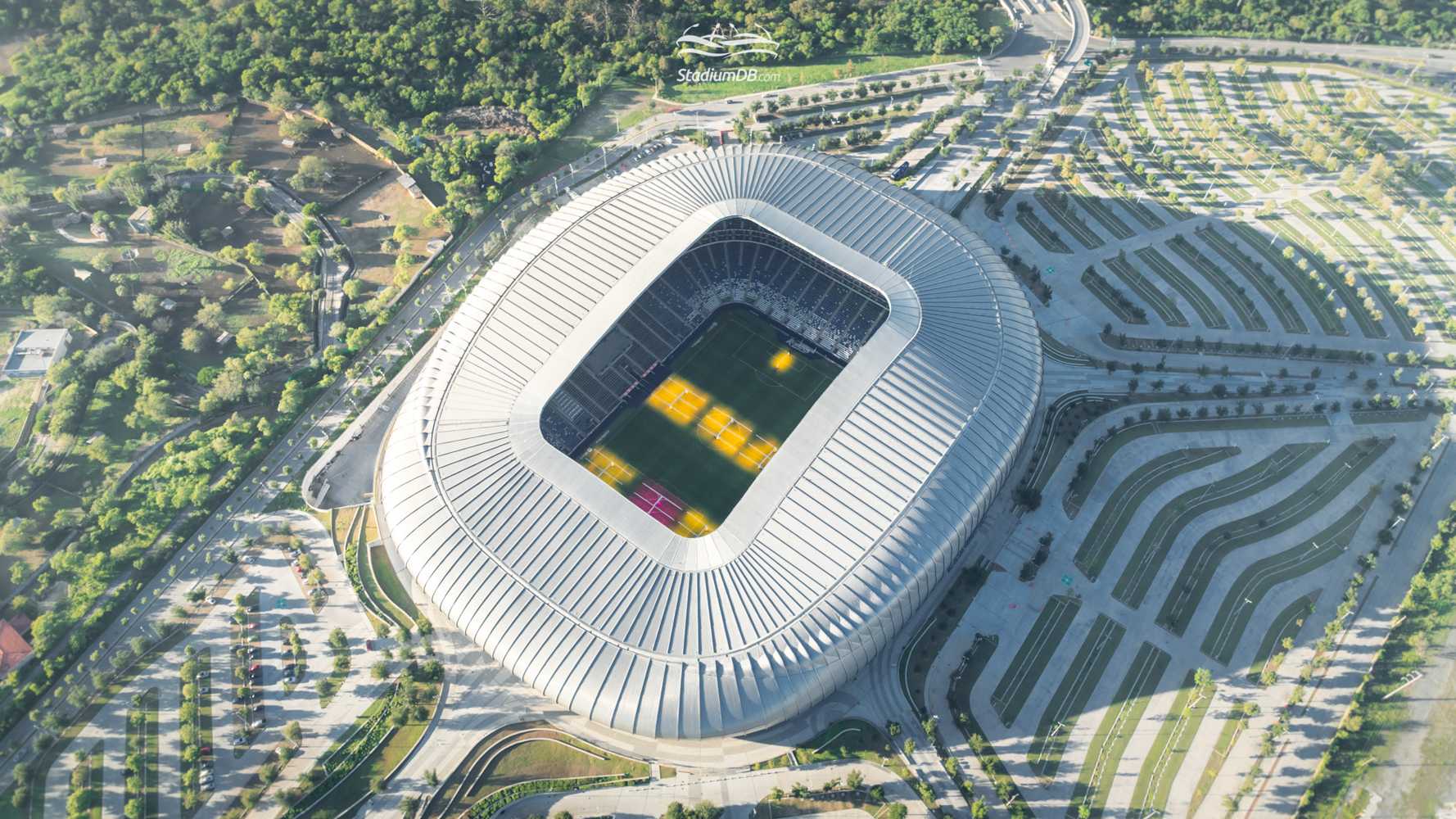
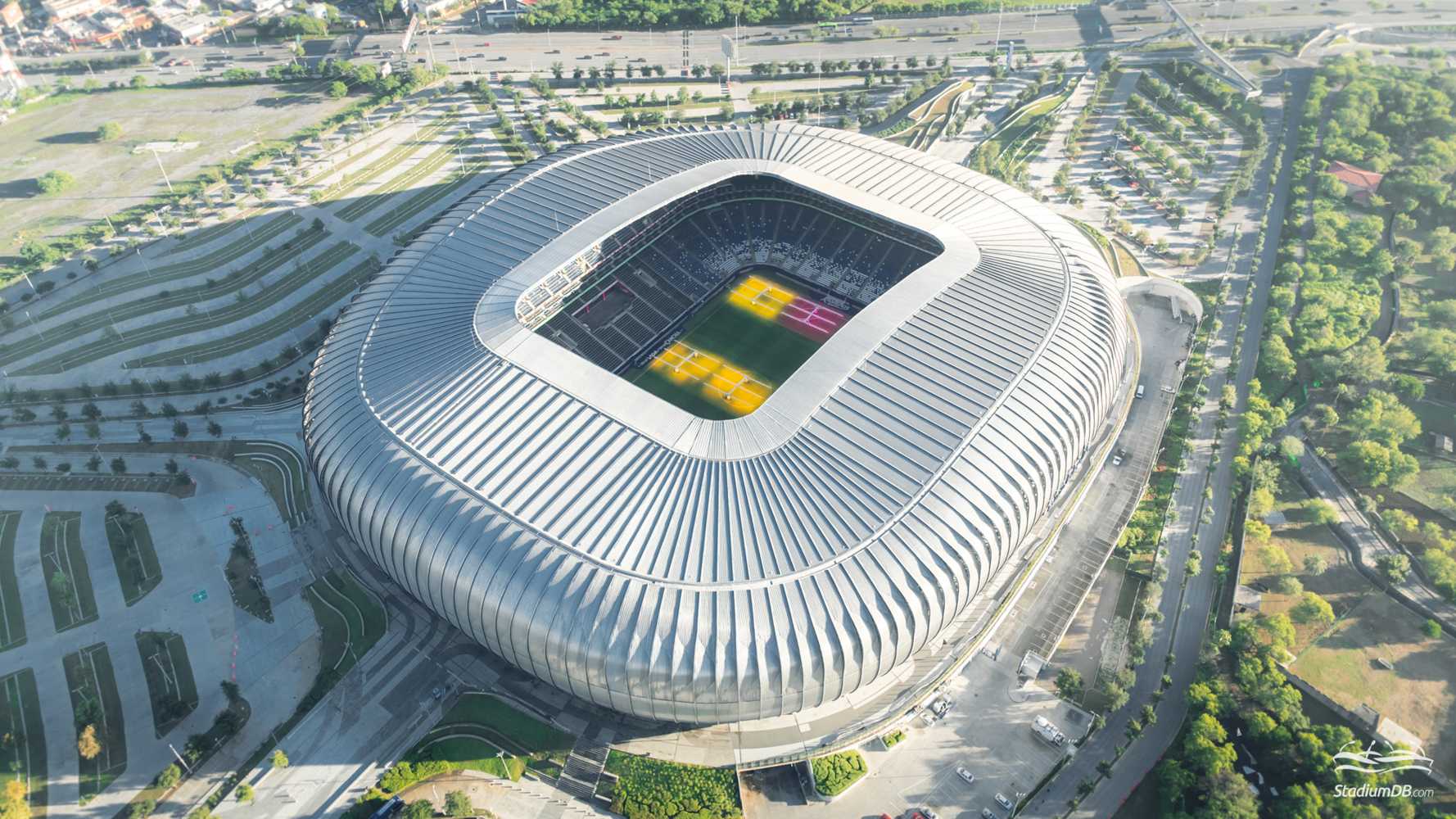
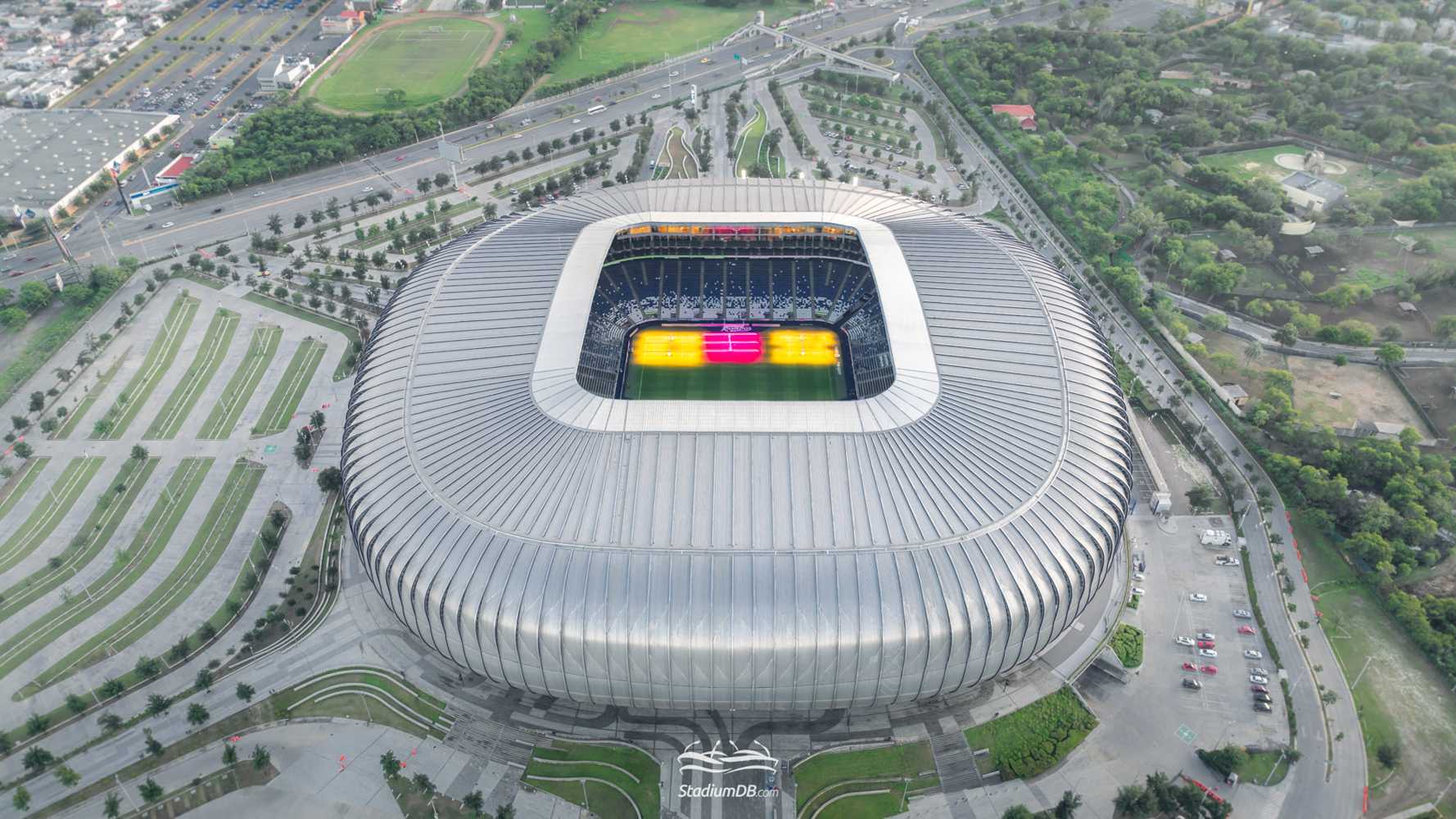
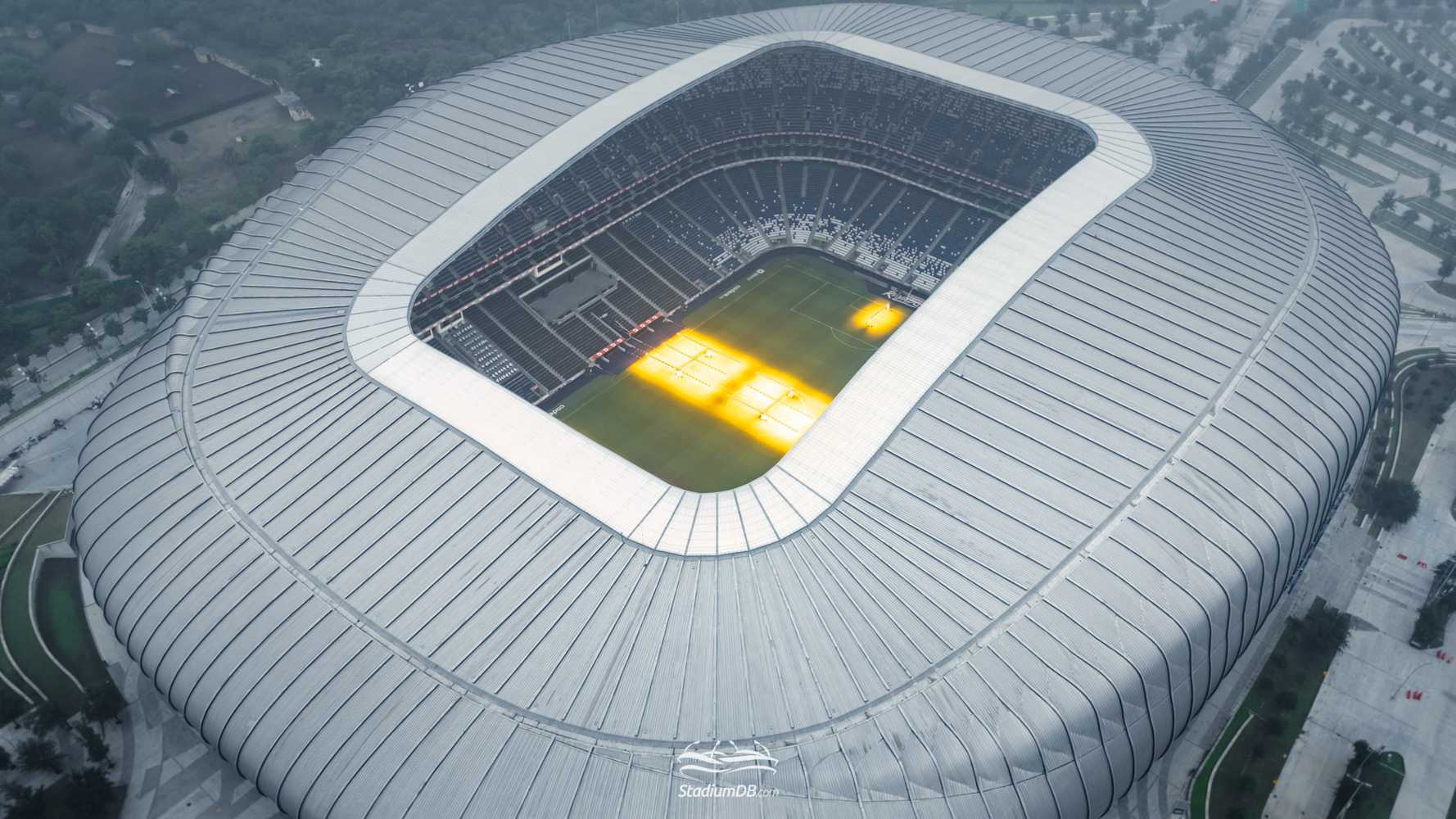
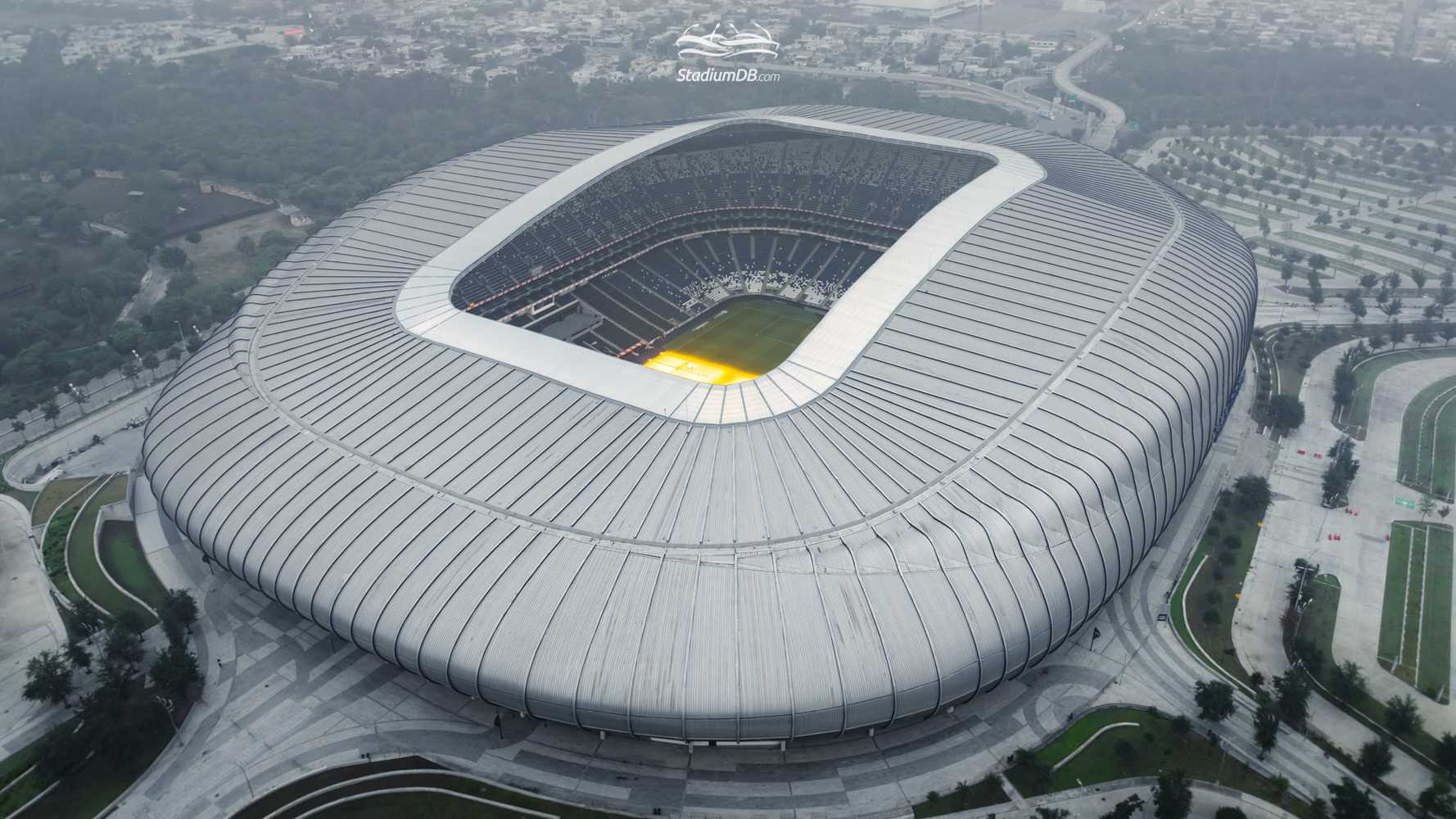
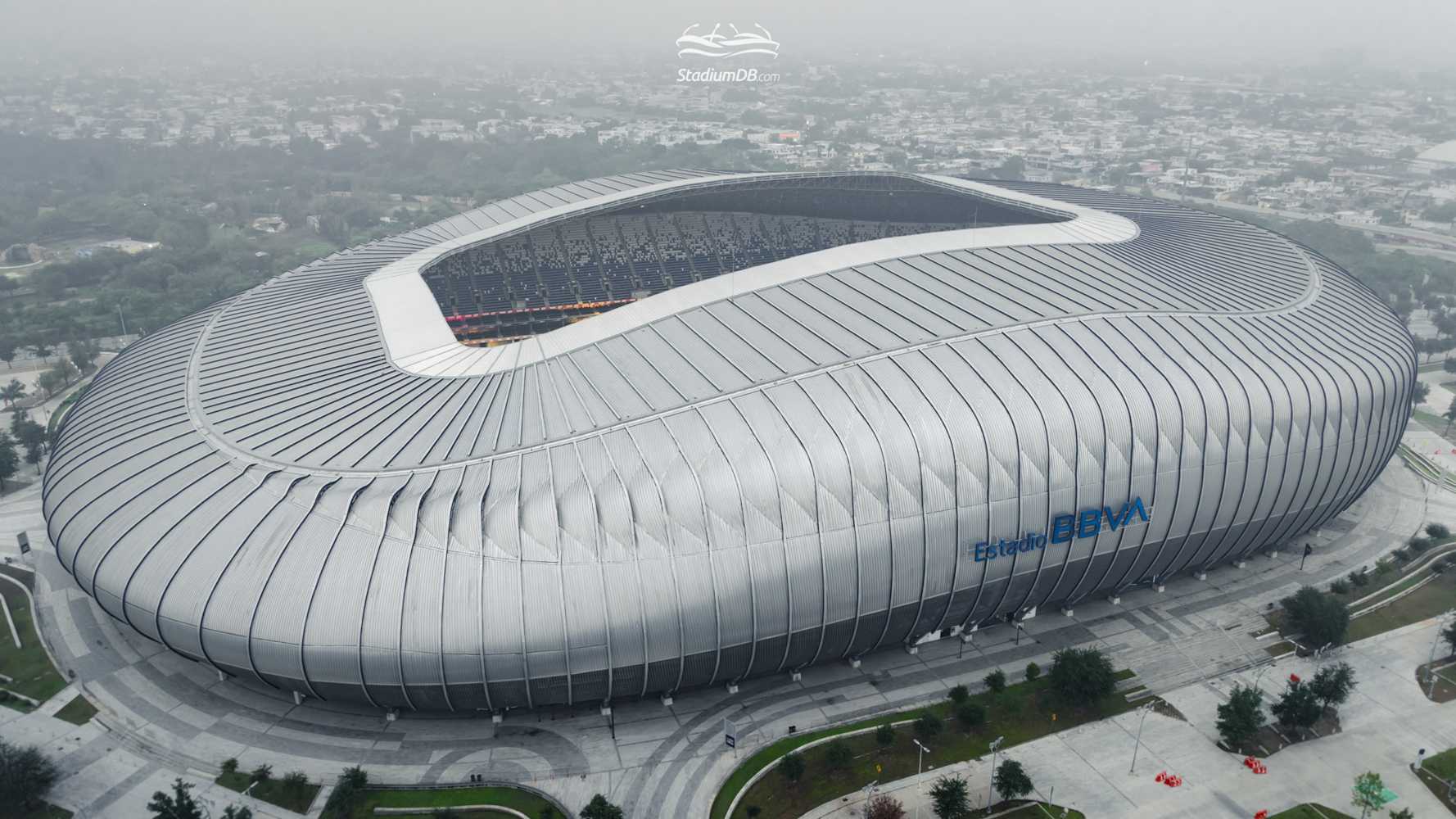
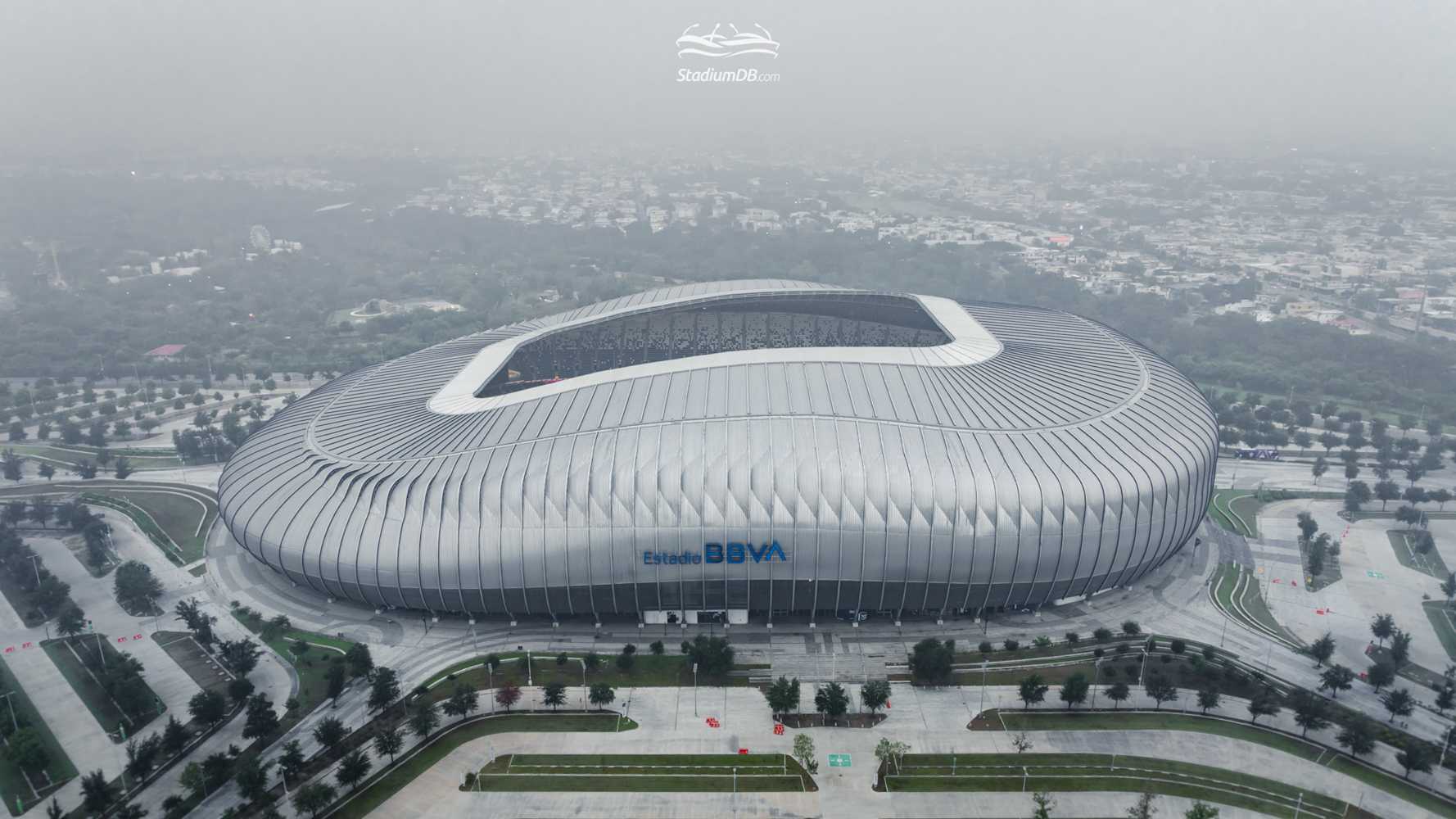
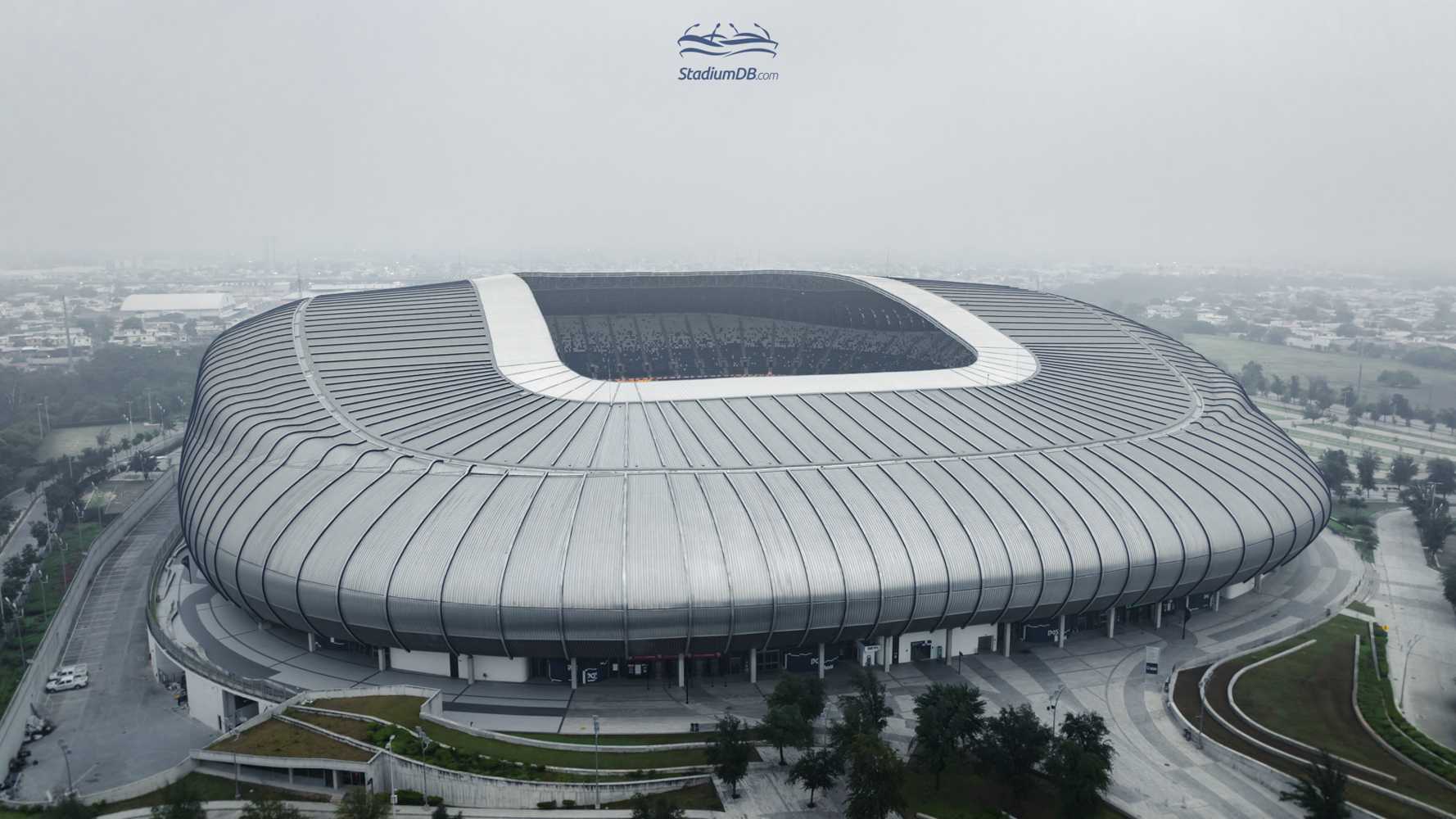
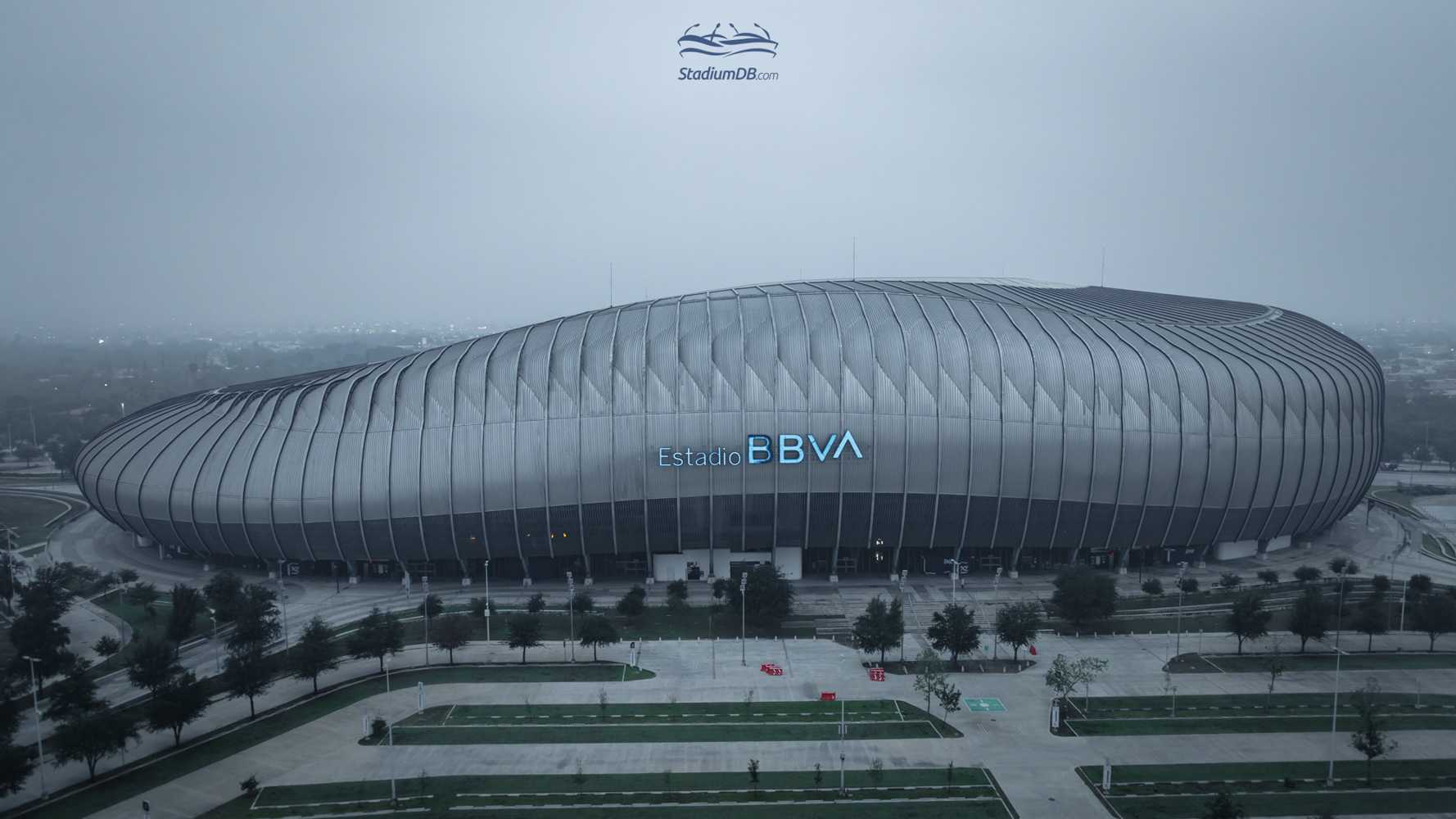
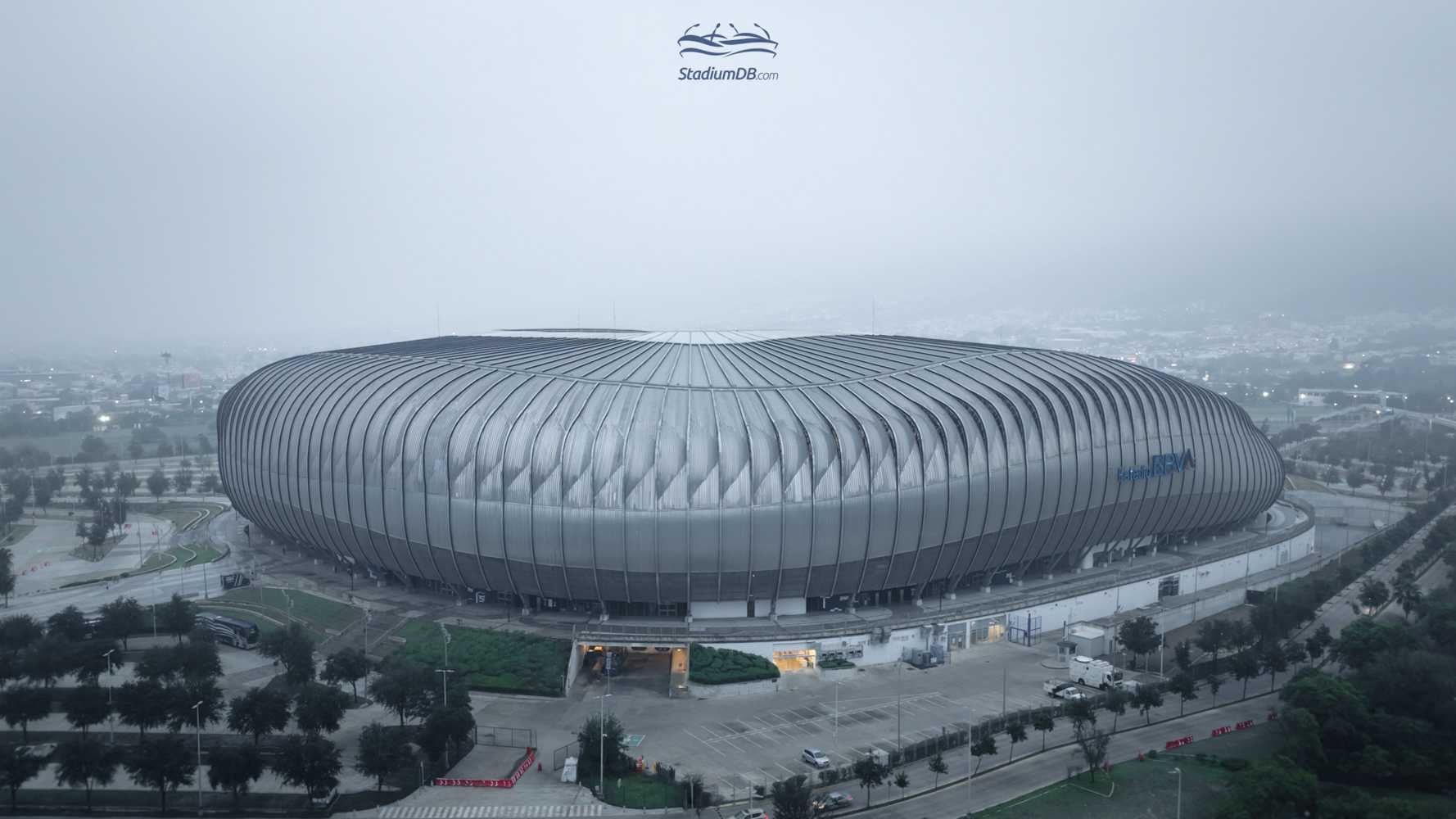
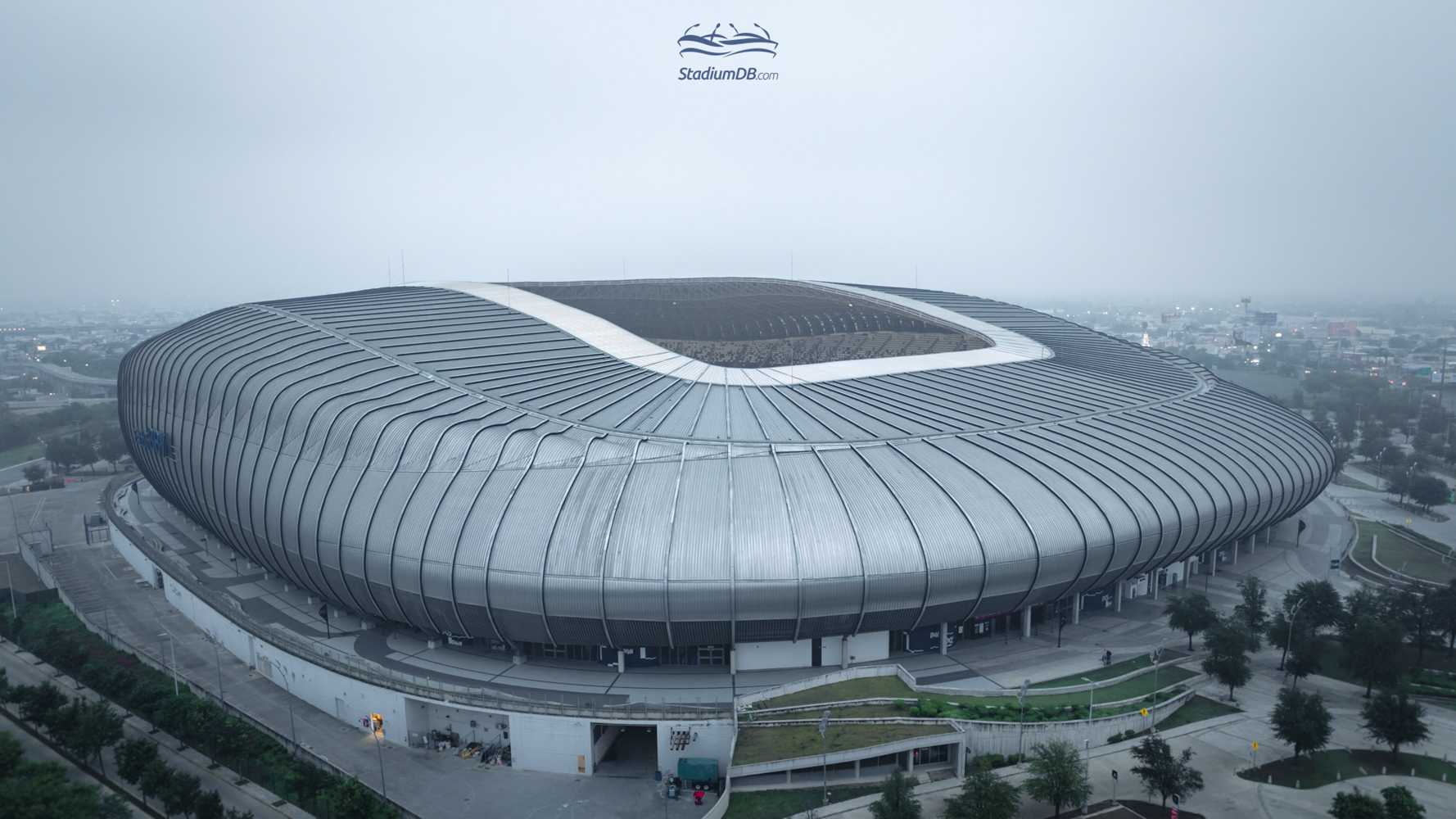
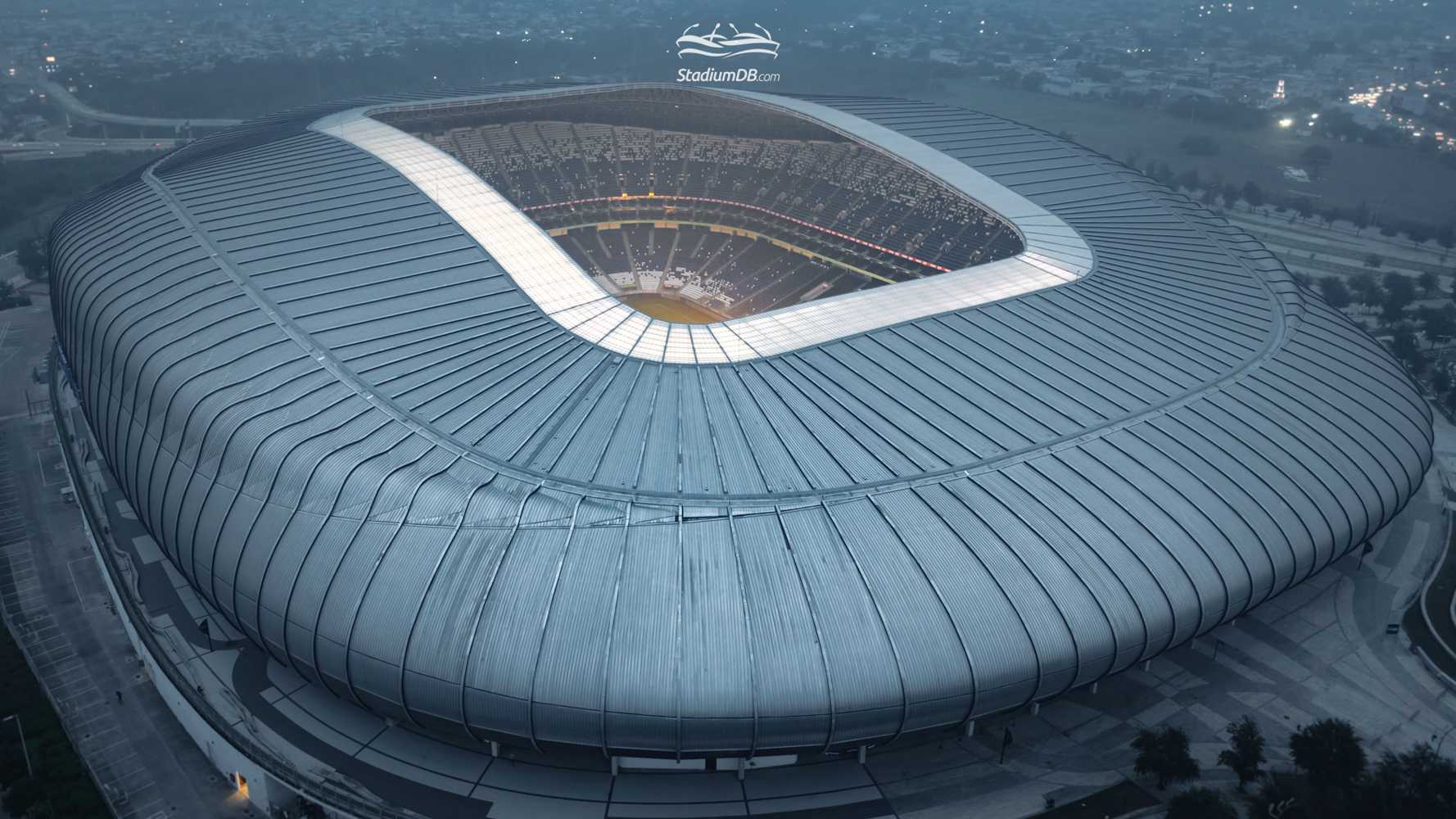
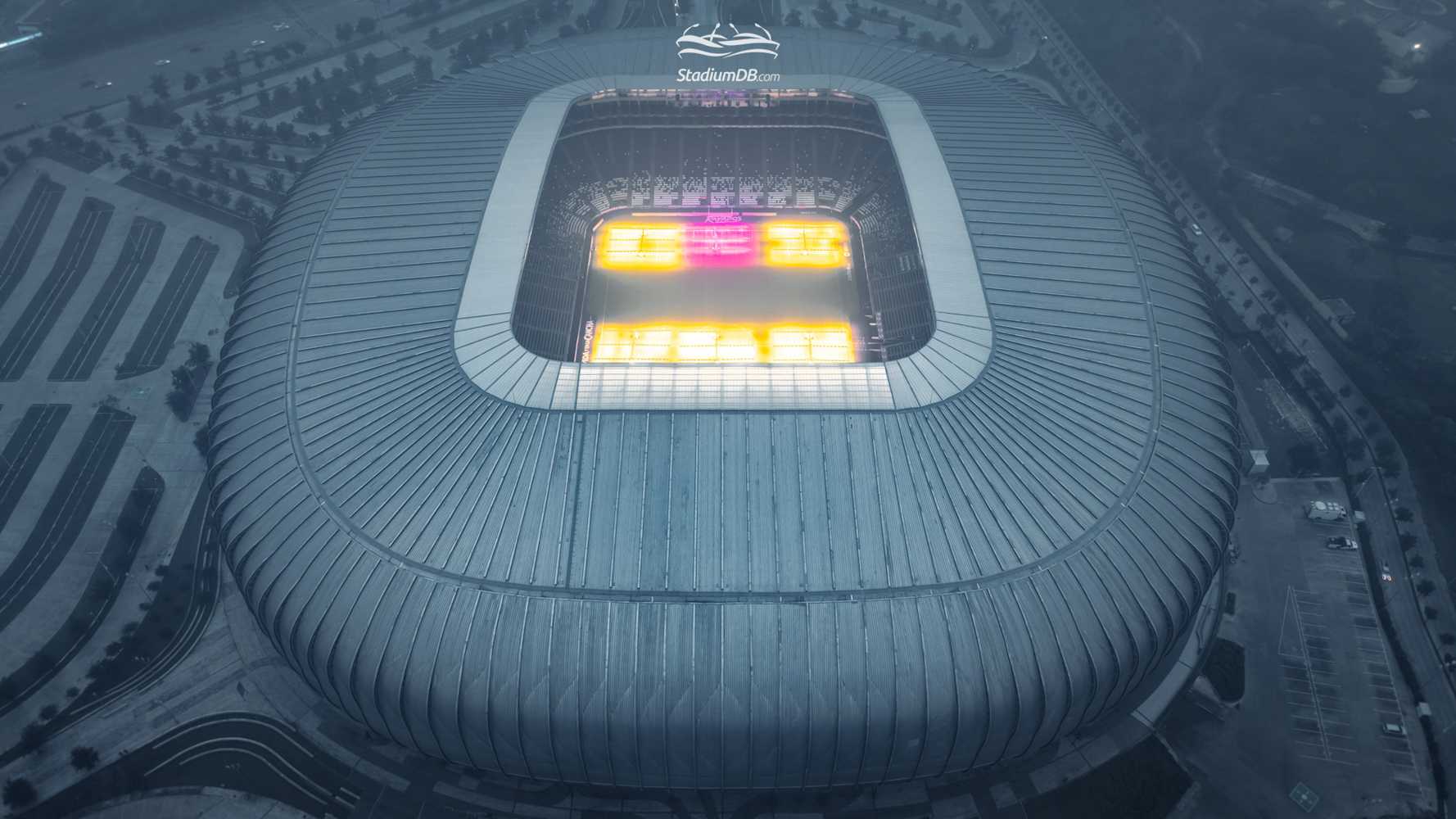
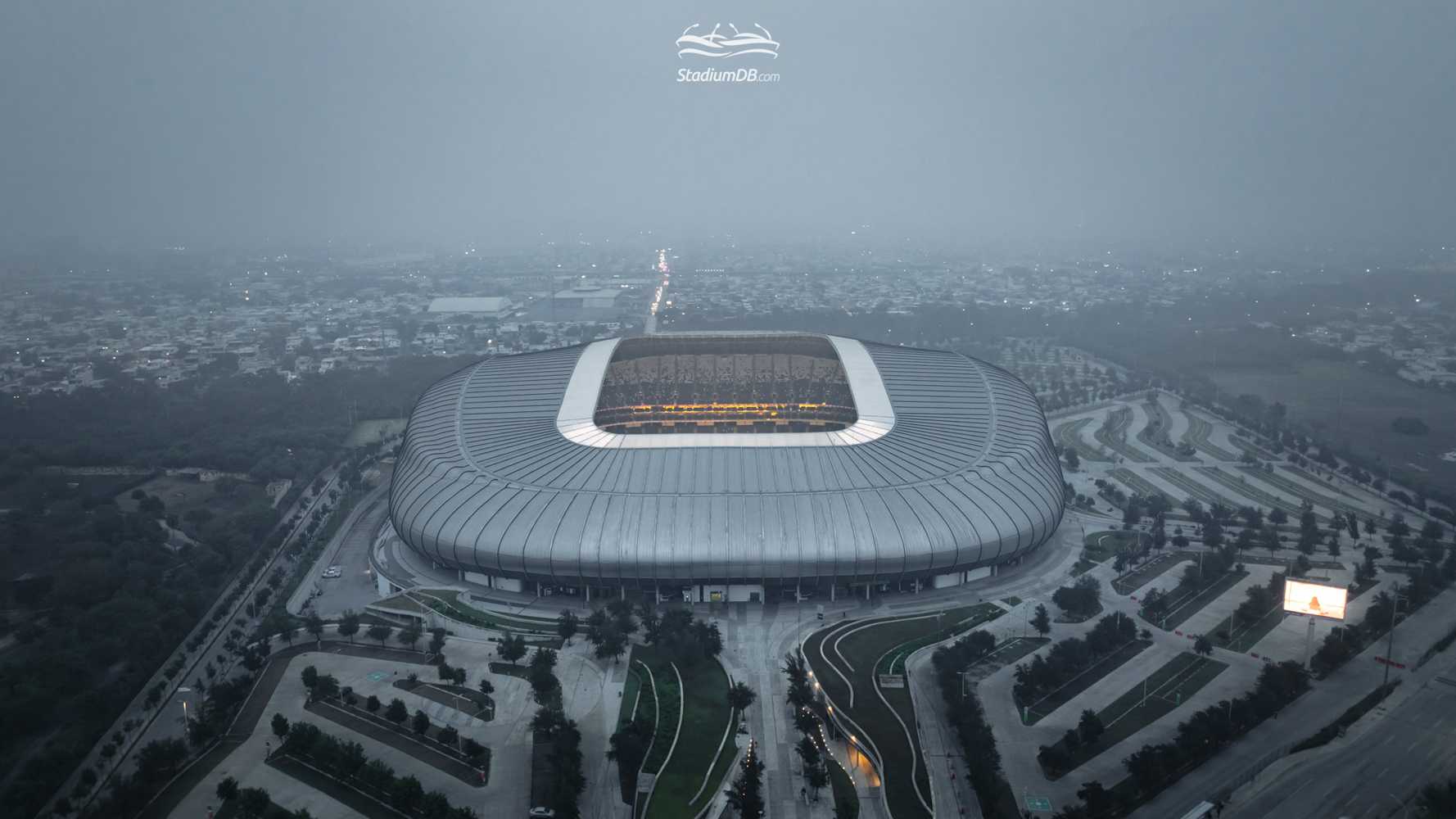
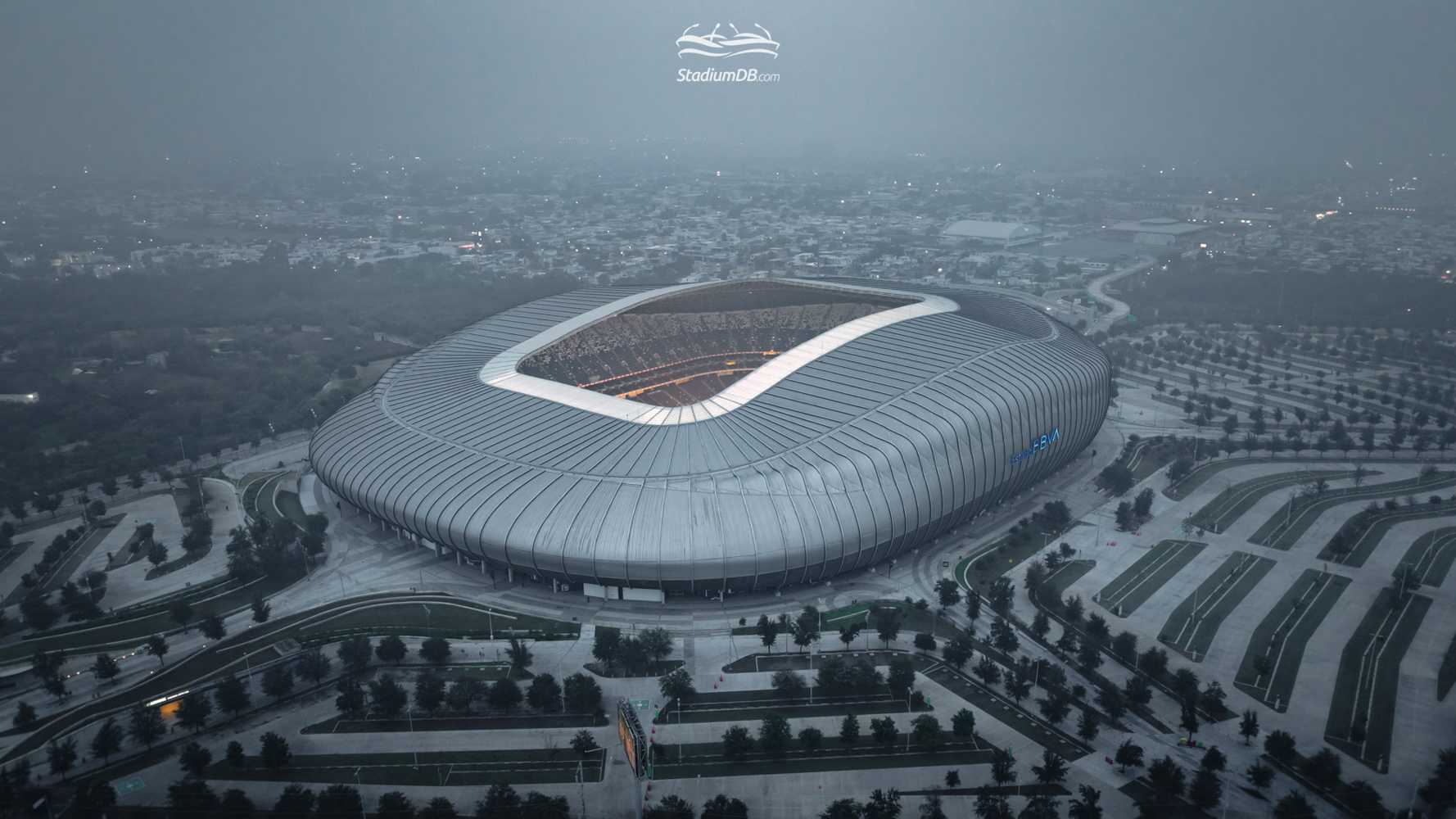
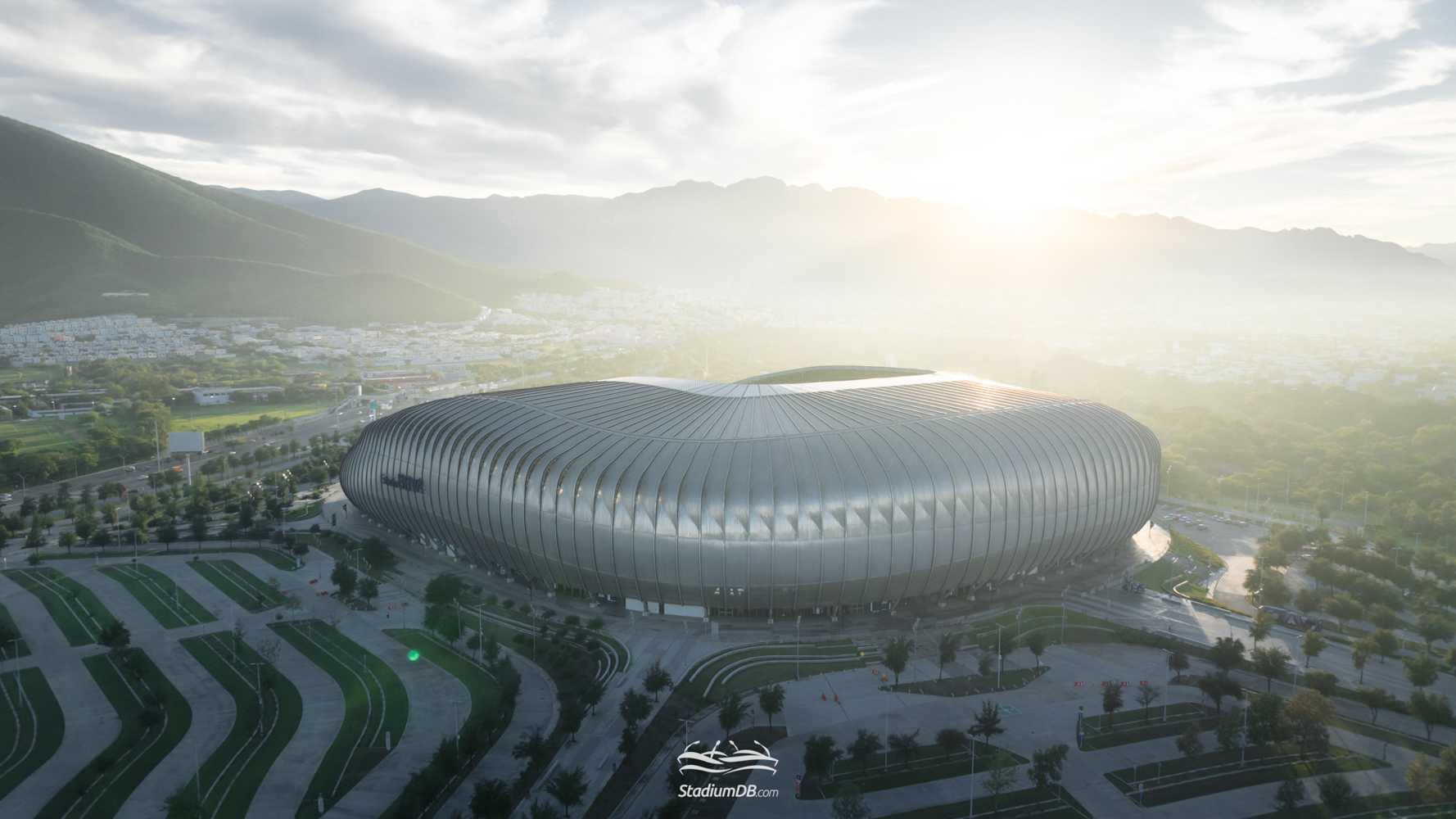
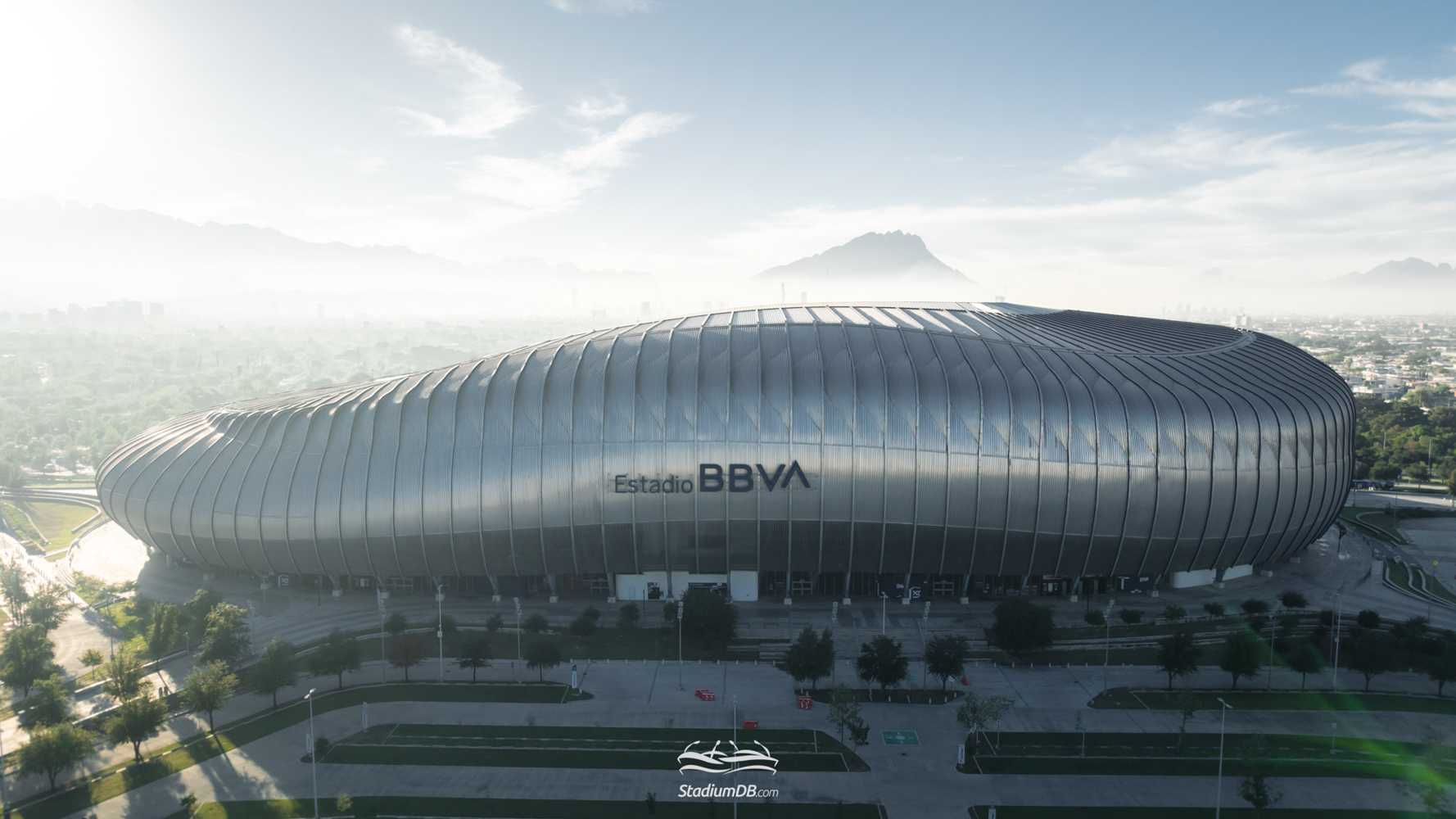
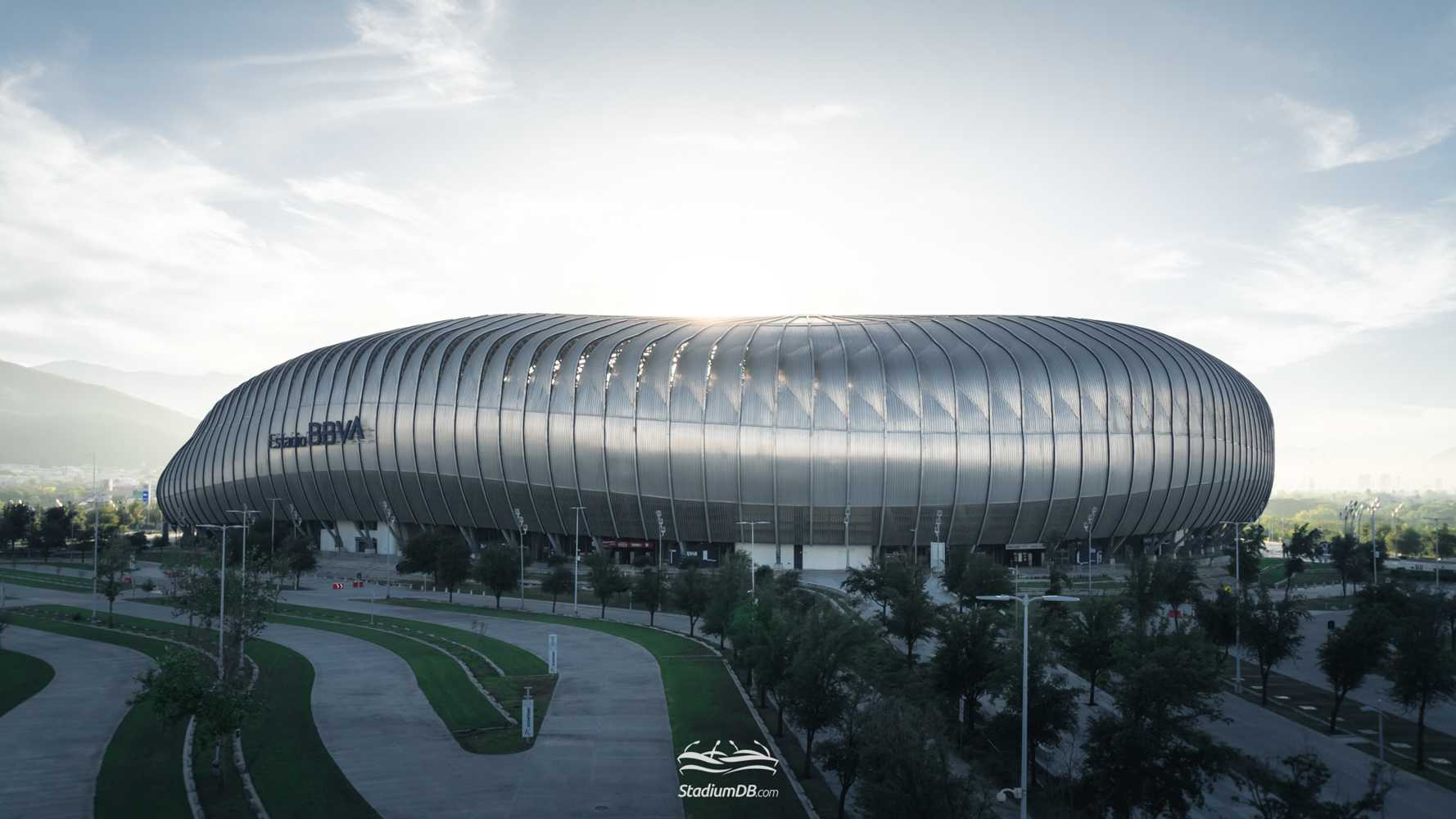
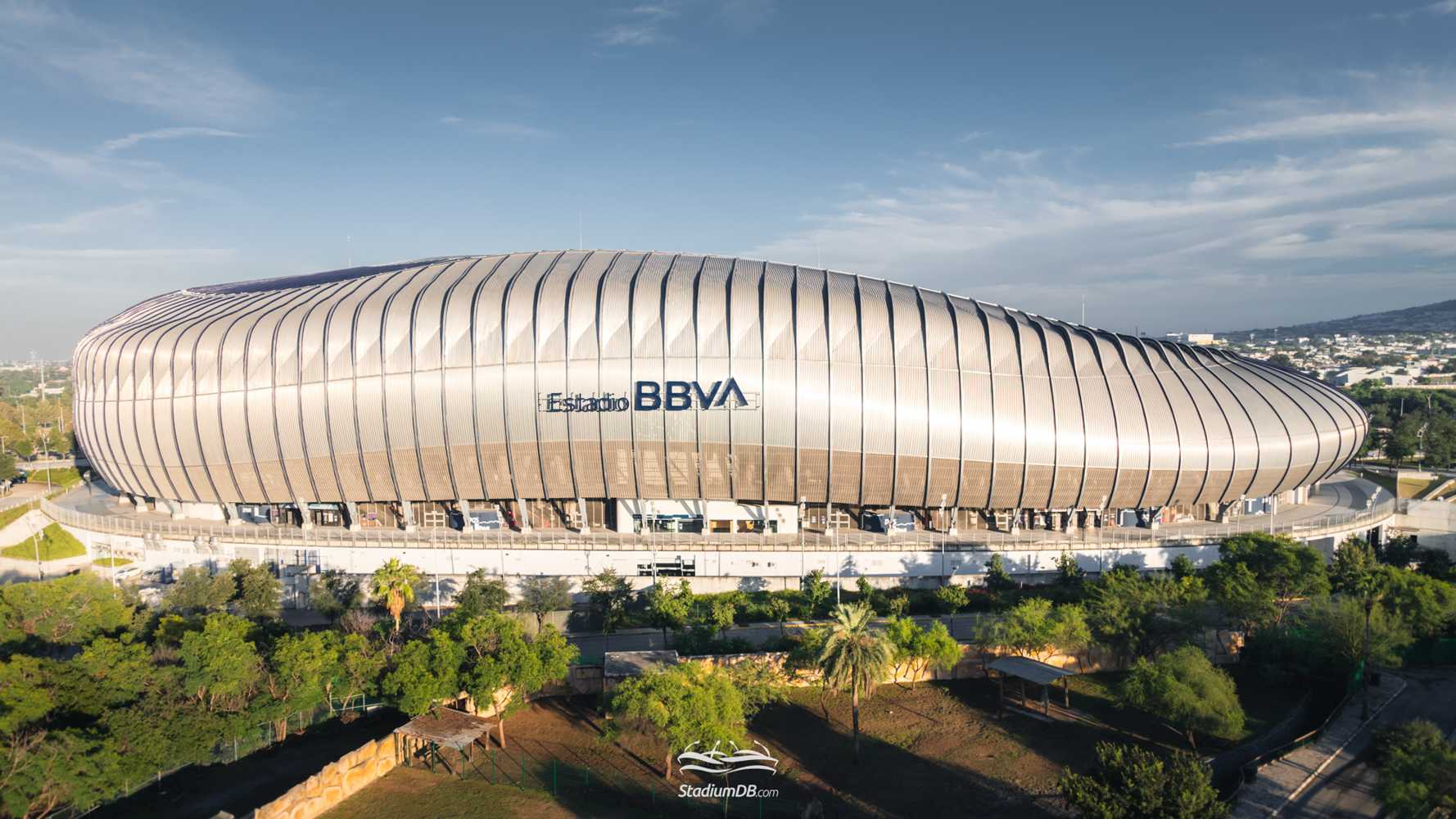
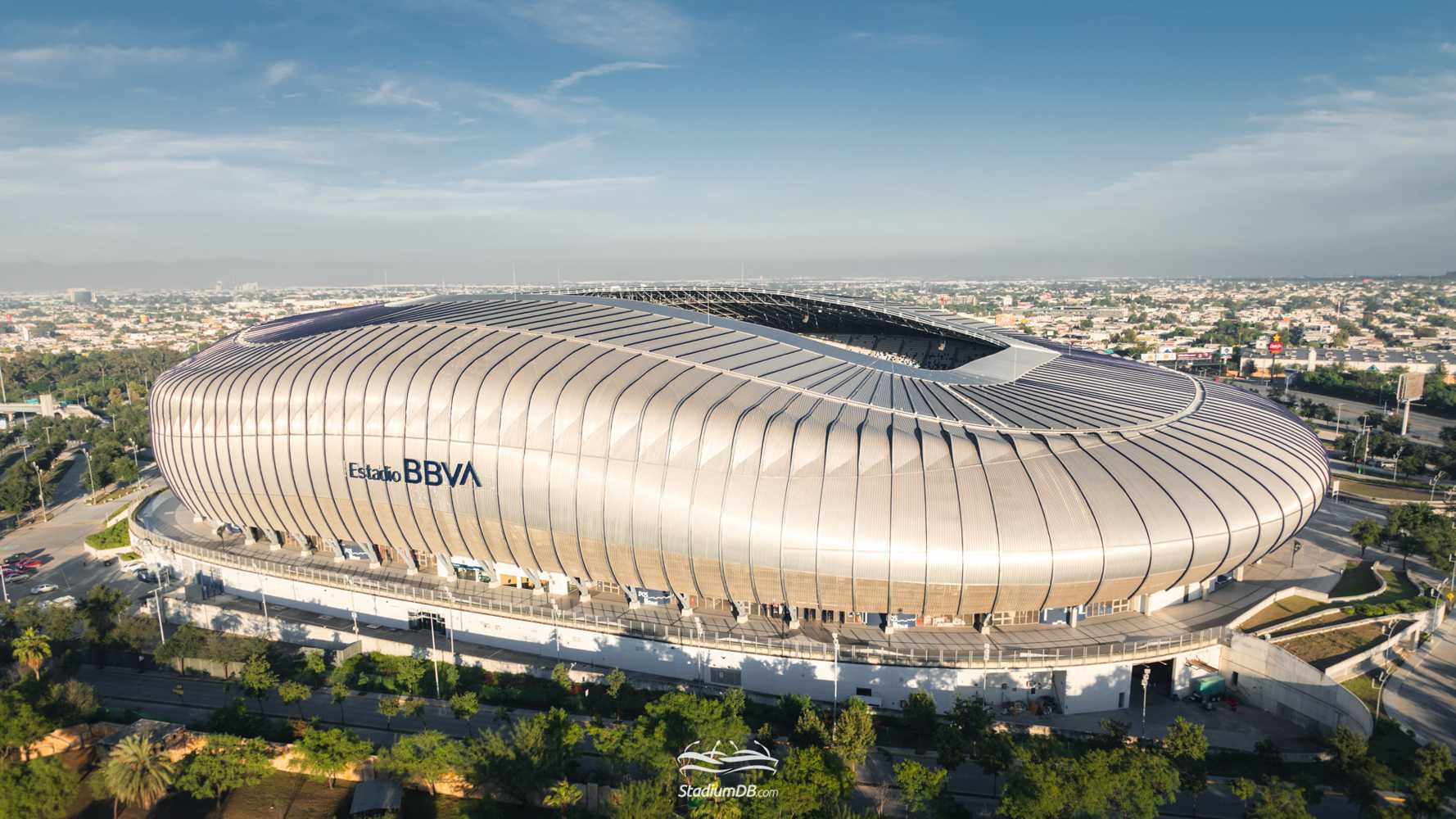
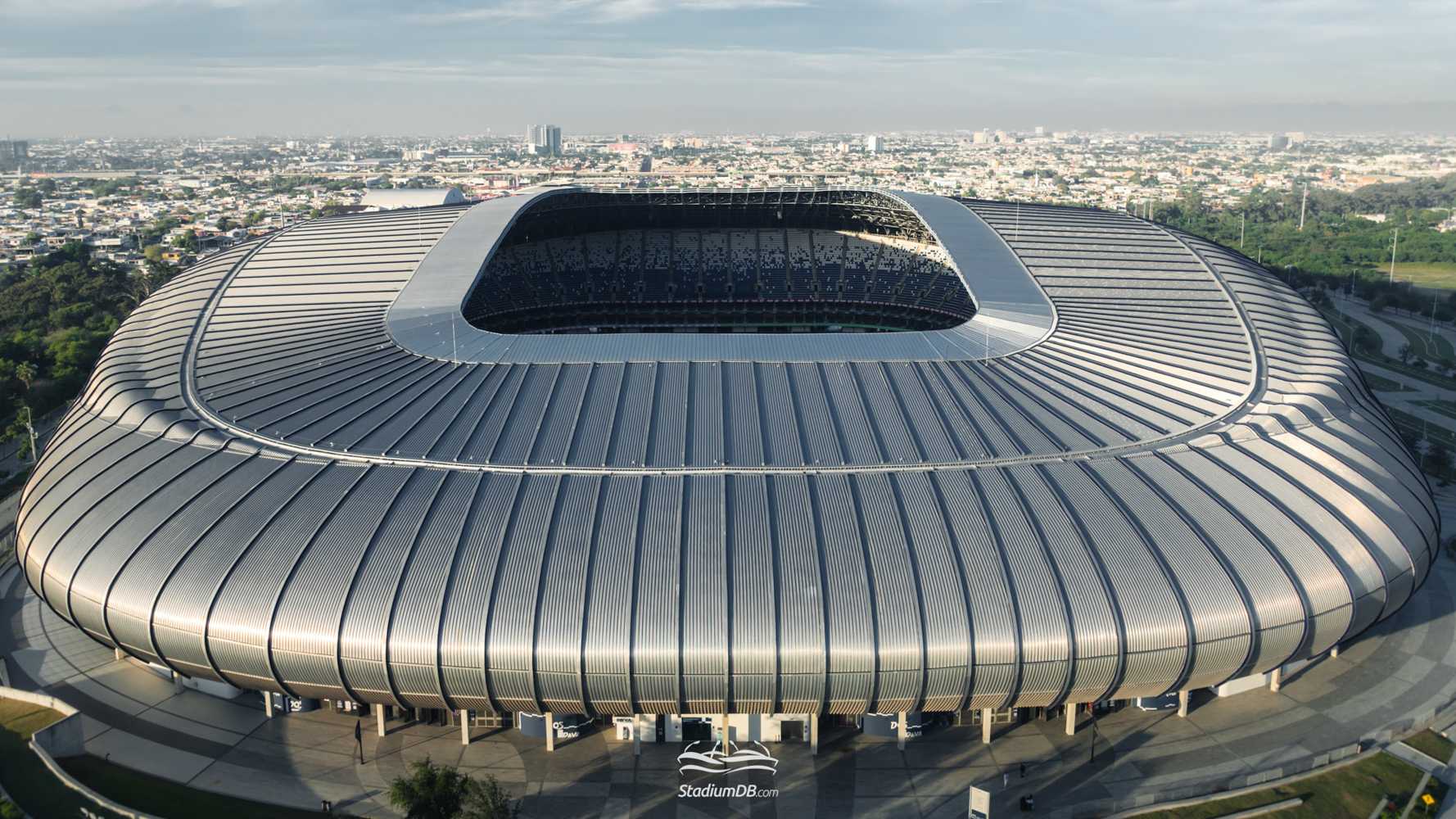
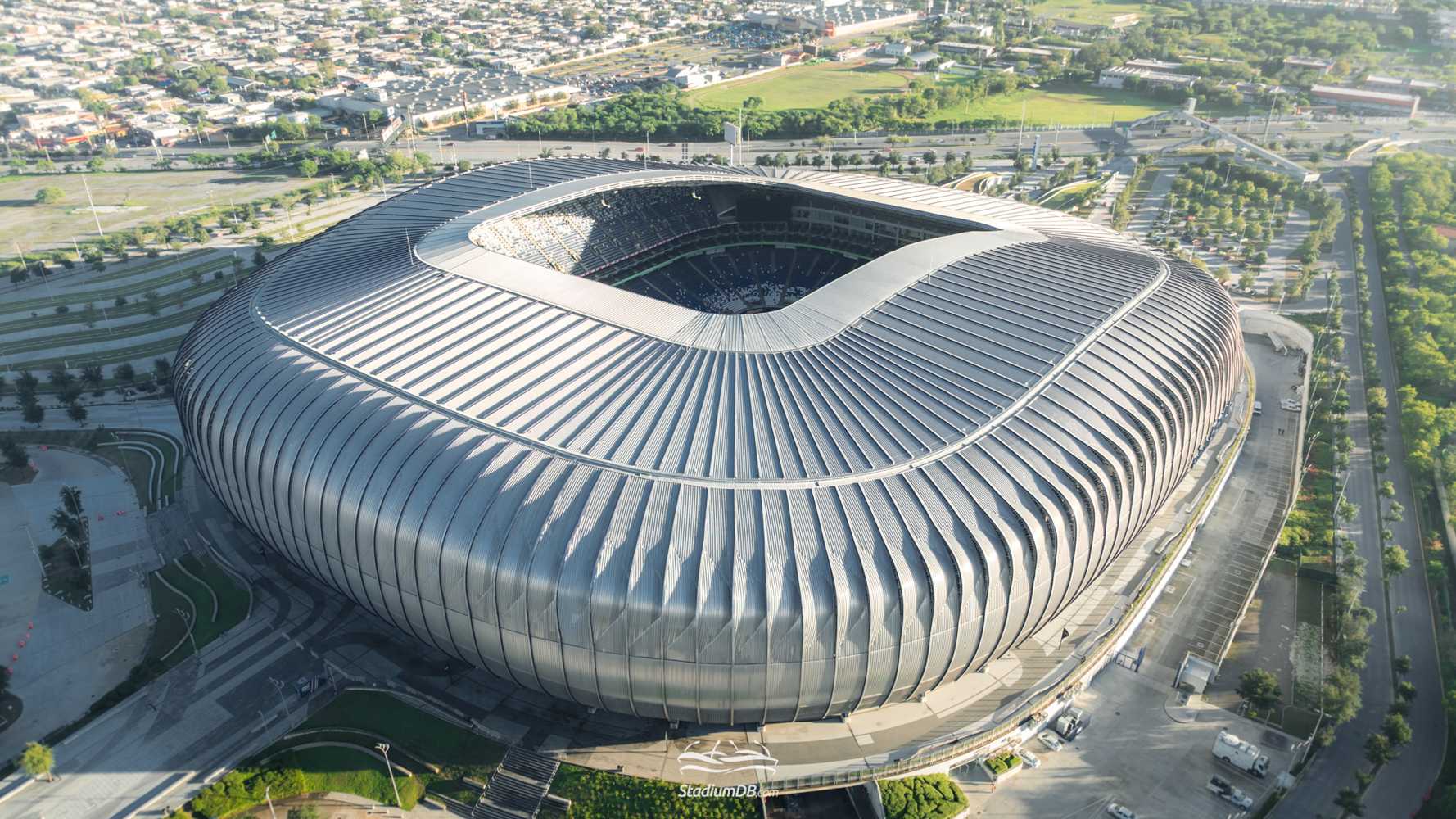
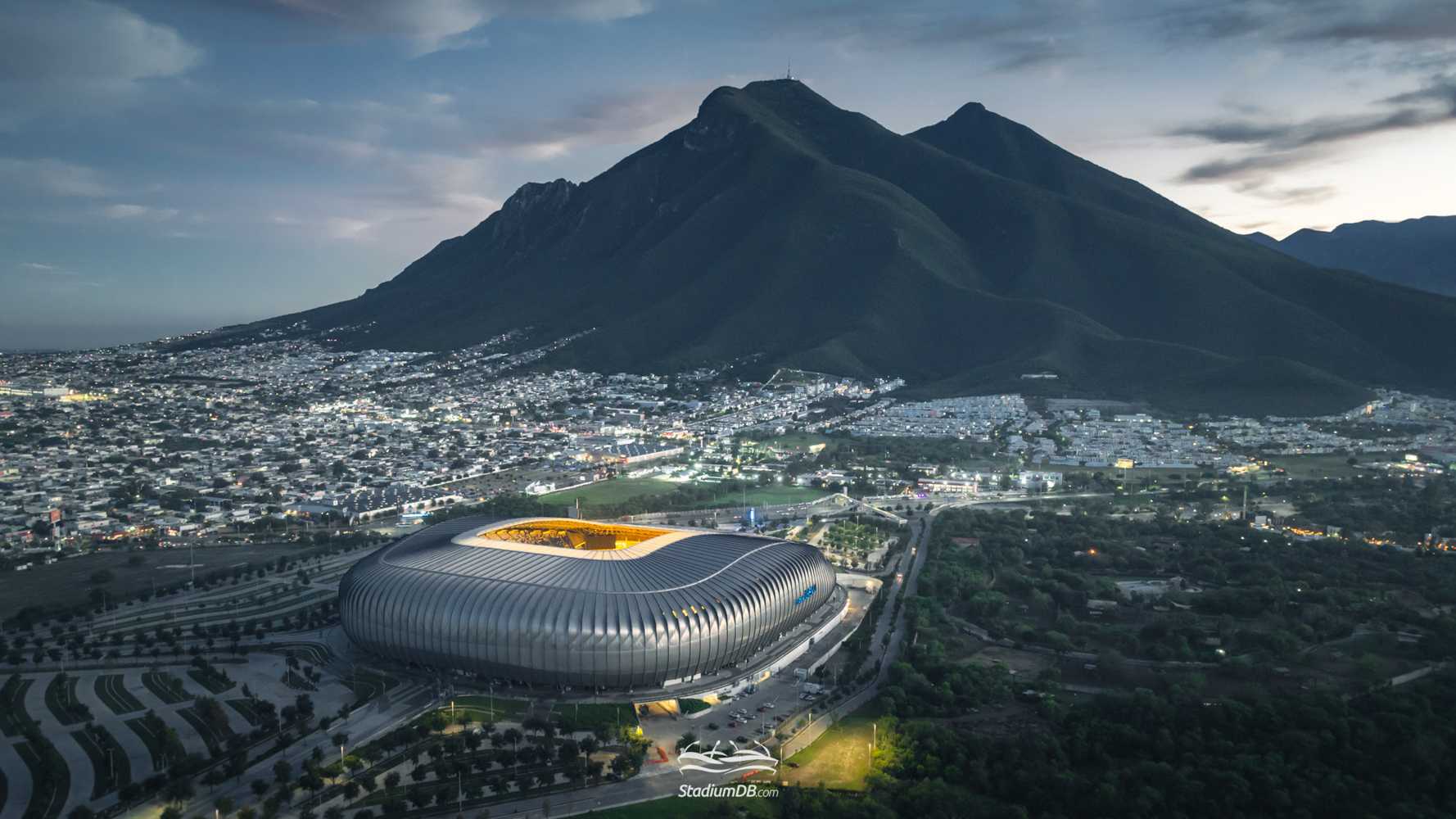
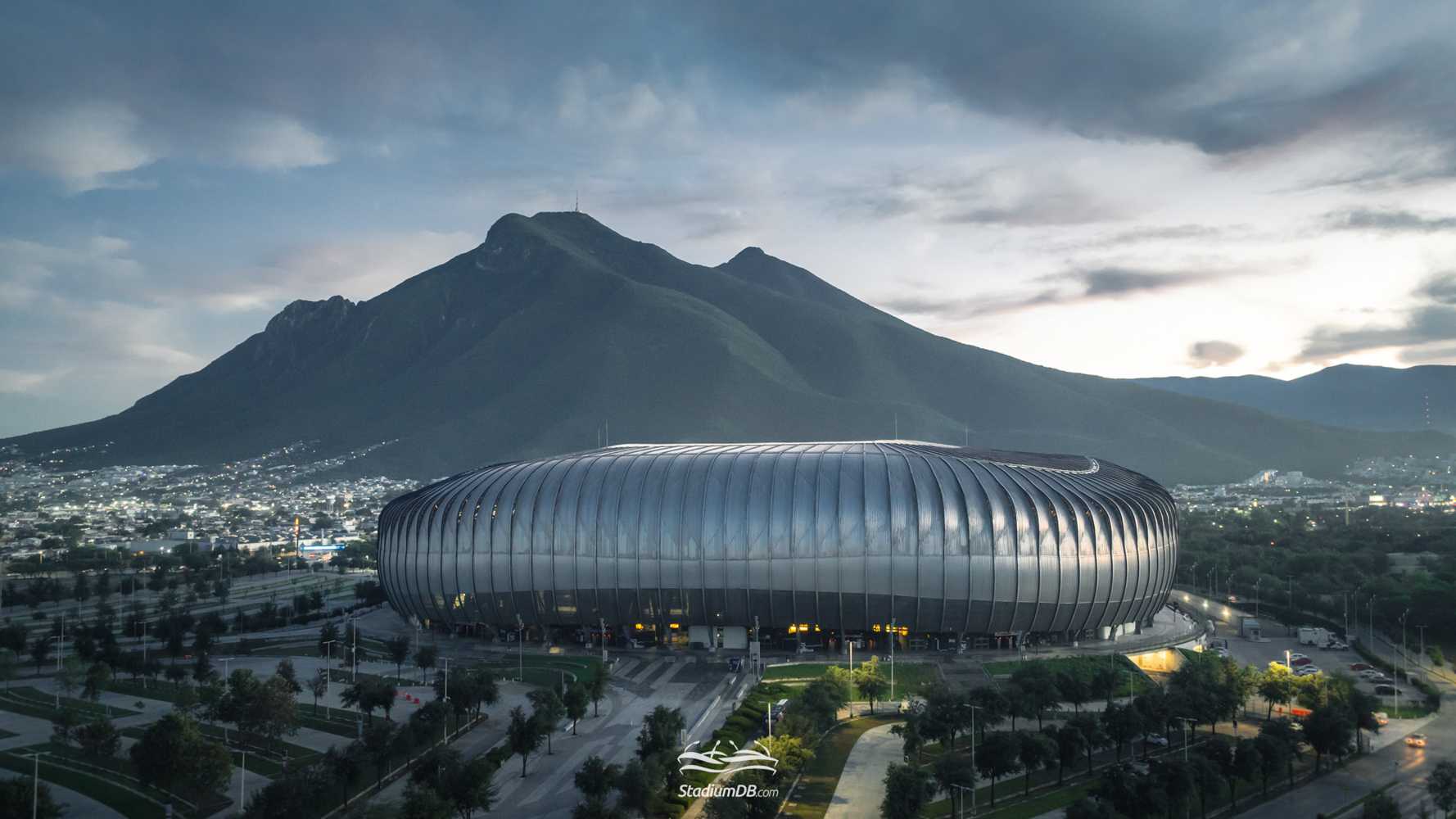
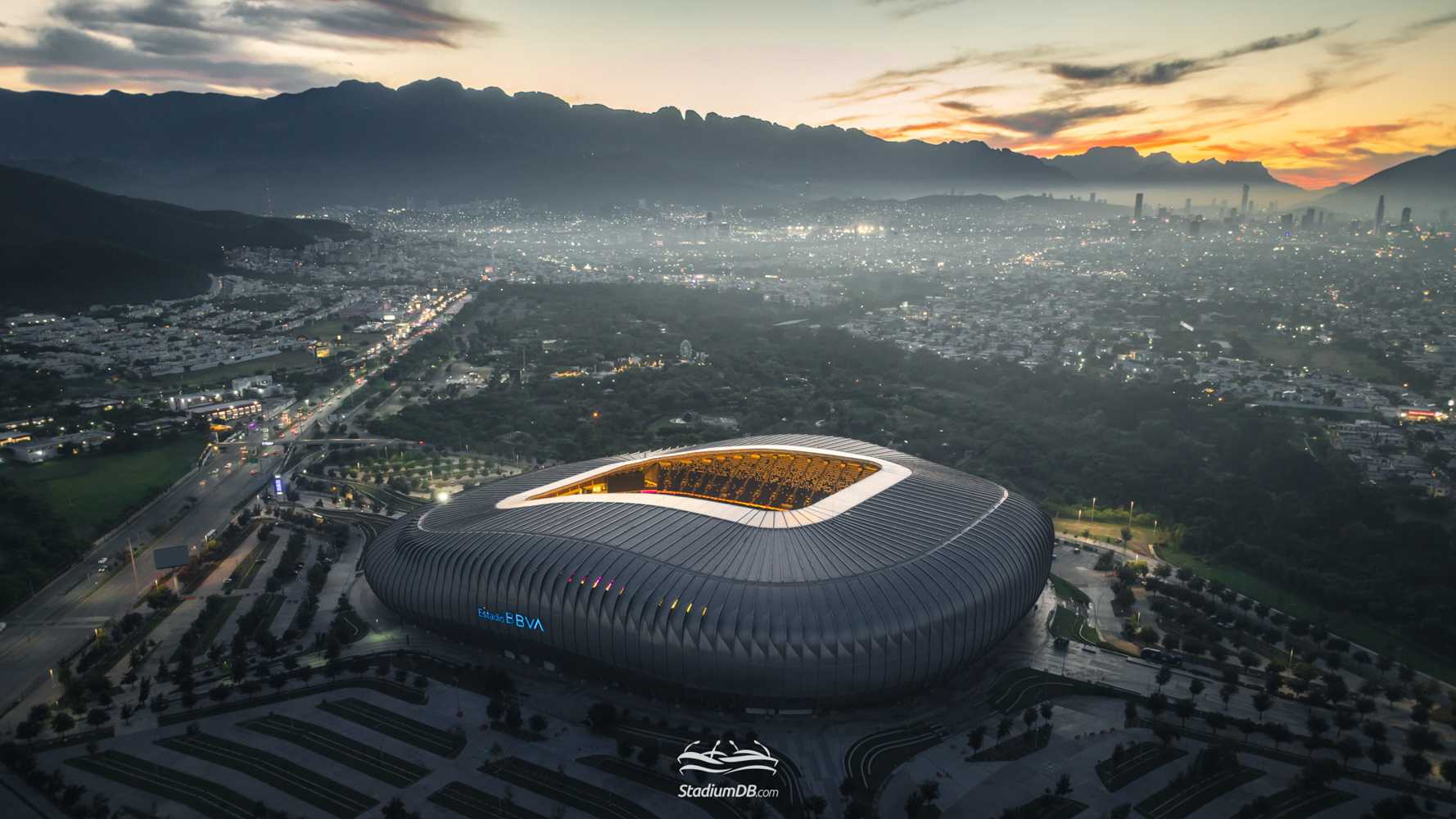
Aesthetically the stadium is a mixture of seemingly unconnected ideas. Vast use of aluminum tinware across the façade and roof is said to honour Monterrey’s steelwork industry traditions. And the tin-covered and crescent-shaped arena is also somewhat reminiscent of a beer still, another thing the city is known for.

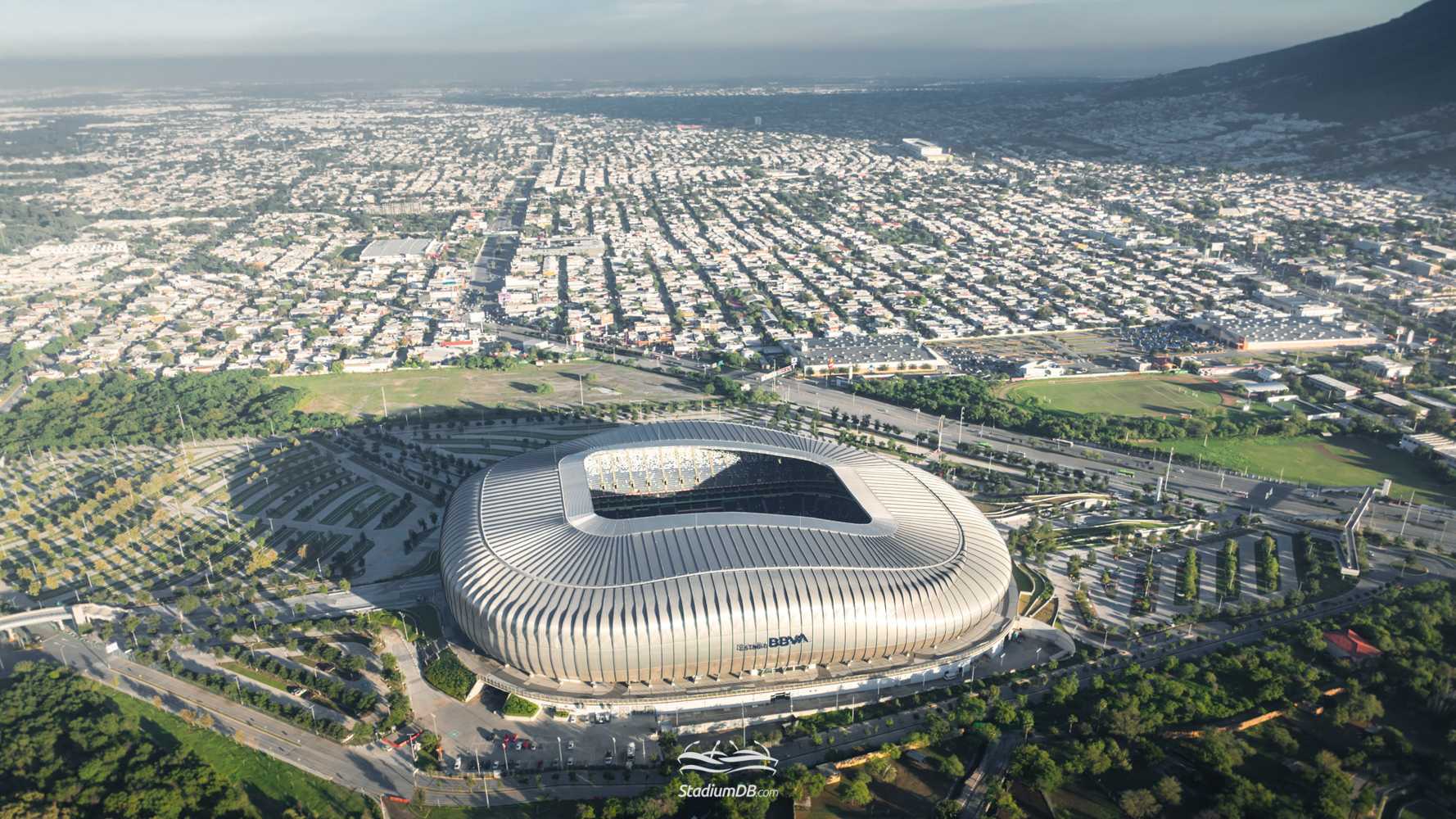
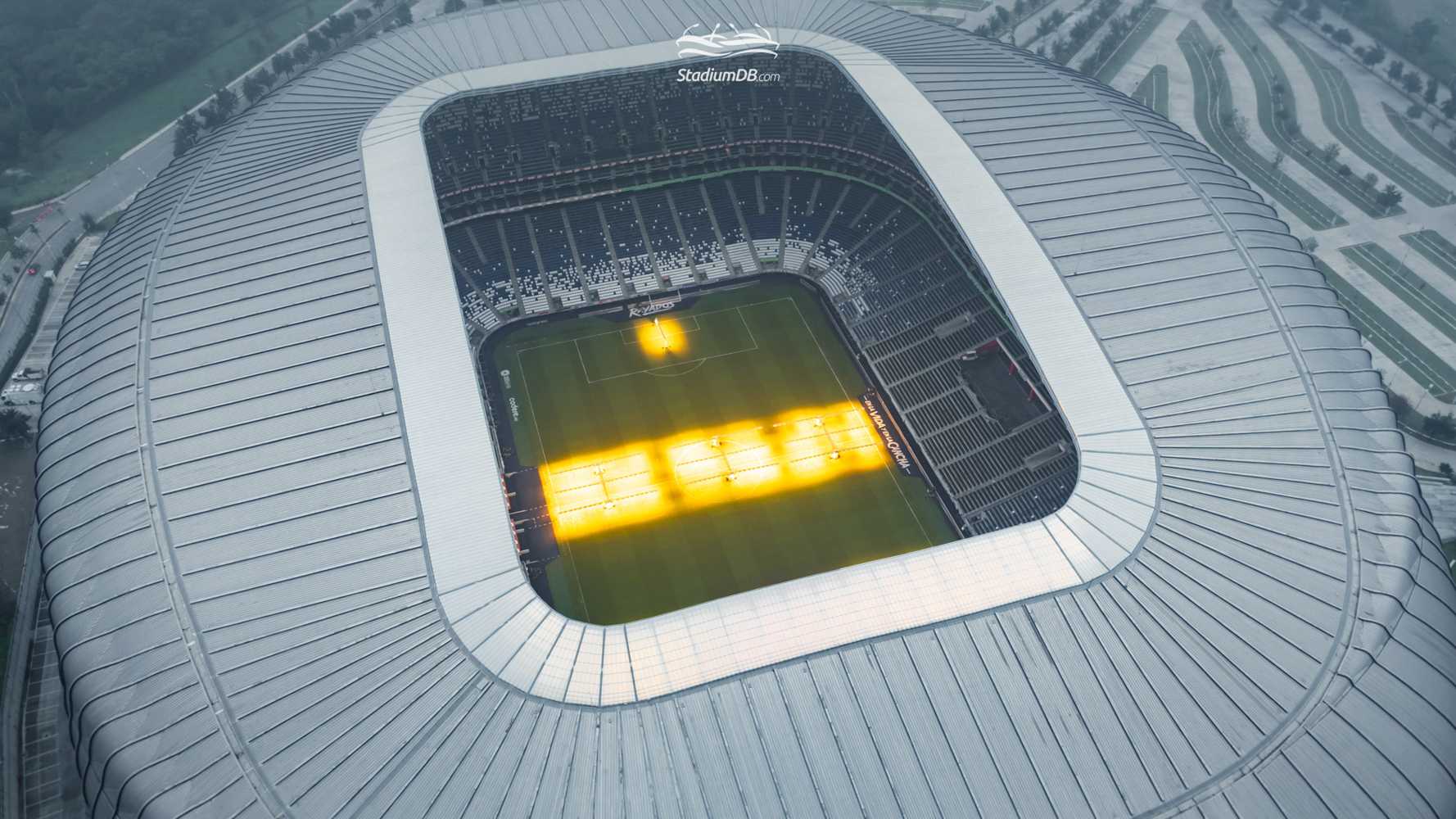
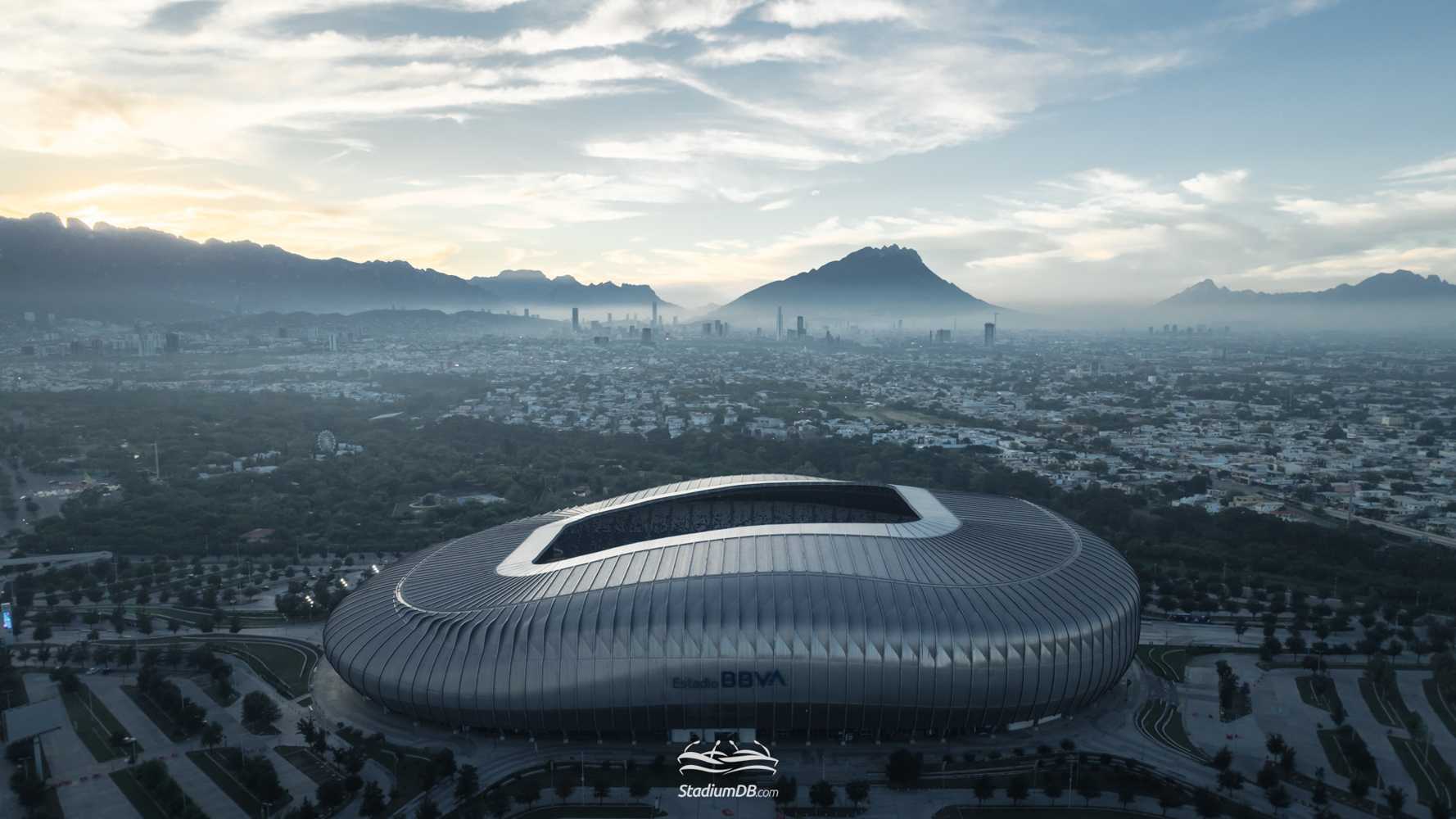
However, to a passerby the stadium will be none of those associations. It seems to be very organic, almost a live organism, owing to the rhythm of segmented façade and overall dynamic shape changing appearance depending on sunlight. One distinctive feature this vivid building includes is a long row of perforations resembling gills. And those in fact are gills as they offer access of fresh air (and sunlight) to the vast infrastructure behind Estadio BBVA façades.
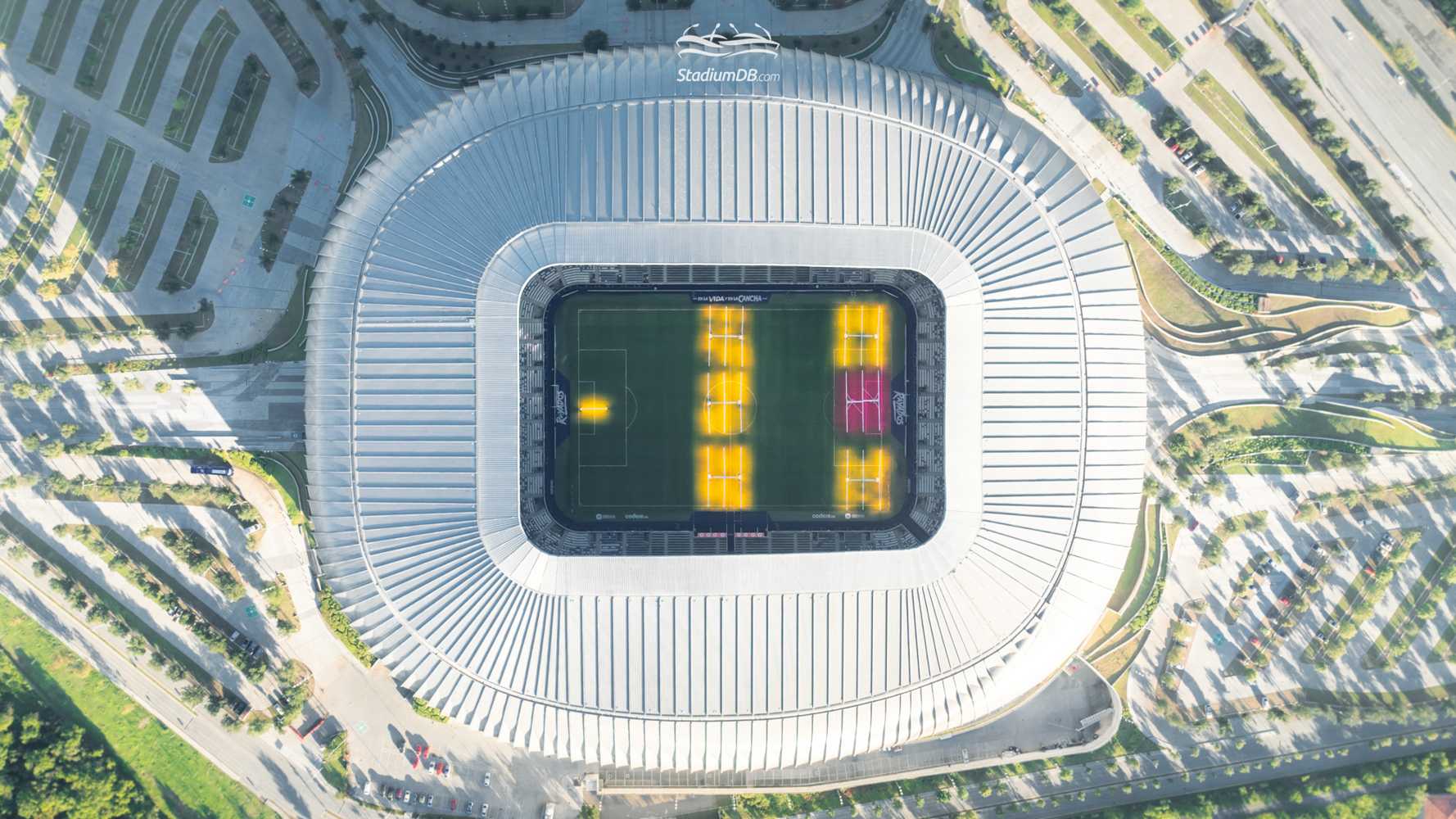
Aside of the stadium itself (footage of 187,000 square meters) the entire plot (24.5 ha) also includes 3,600 parking spaces. And instead of offering only car bays, the parking is planned as a public green space. Sections of the parking are divided with green areas which collect rainwater. This way the parking gets cooled faster and allows for tree growth to provide shade upon stadium access.
Advertisement
Pictures
30.11.2023 © Grzegorz Kaliciak 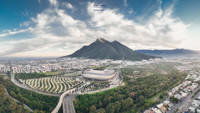
30.11.2023 © Grzegorz Kaliciak 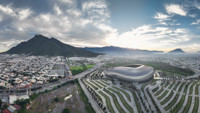
30.11.2023 © Grzegorz Kaliciak 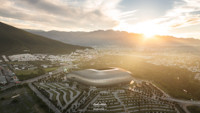
30.11.2023 © Grzegorz Kaliciak 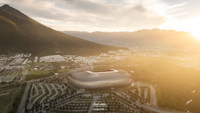
30.11.2023 © Grzegorz Kaliciak 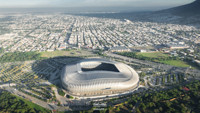
30.11.2023 © Grzegorz Kaliciak 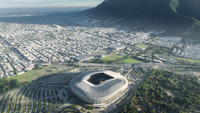
30.11.2023 © Grzegorz Kaliciak 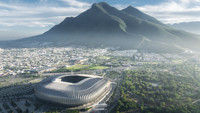
30.11.2023 © Grzegorz Kaliciak 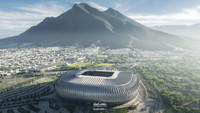
30.11.2023 © Grzegorz Kaliciak 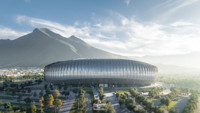
30.11.2023 © Grzegorz Kaliciak 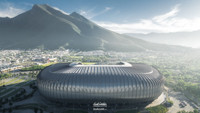
30.11.2023 © Grzegorz Kaliciak 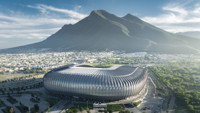
30.11.2023 © Grzegorz Kaliciak 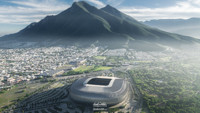
30.11.2023 © Grzegorz Kaliciak 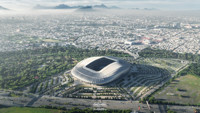
30.11.2023 © Grzegorz Kaliciak 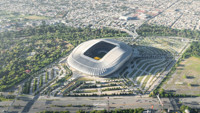
30.11.2023 © Grzegorz Kaliciak 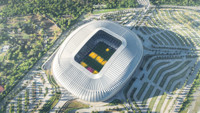
30.11.2023 © Grzegorz Kaliciak 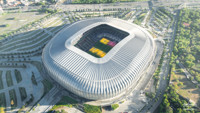
30.11.2023 © Grzegorz Kaliciak 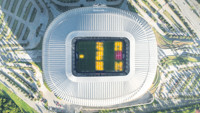
30.11.2023 © Grzegorz Kaliciak 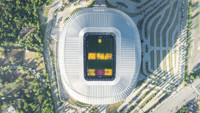
30.11.2023 © Grzegorz Kaliciak 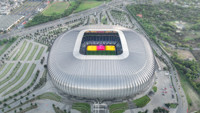
30.11.2023 © Grzegorz Kaliciak 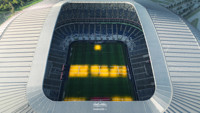
30.11.2023 © Grzegorz Kaliciak 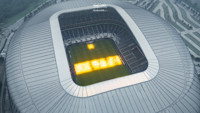
01.12.2023 © Grzegorz Kaliciak 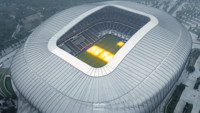
01.12.2023 © Grzegorz Kaliciak 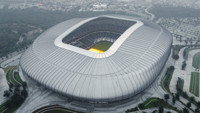
01.12.2023 © Grzegorz Kaliciak 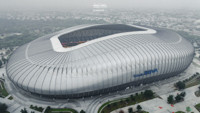
01.12.2023 © Grzegorz Kaliciak 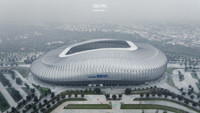
01.12.2023 © Grzegorz Kaliciak 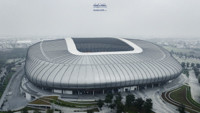
01.12.2023 © Grzegorz Kaliciak 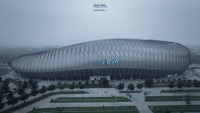
01.12.2023 © Grzegorz Kaliciak 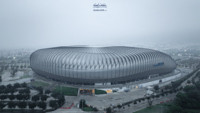
01.12.2023 © Grzegorz Kaliciak 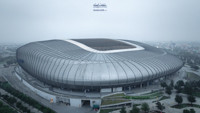
01.12.2023 © Grzegorz Kaliciak 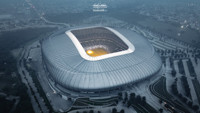
01.12.2023 © Grzegorz Kaliciak 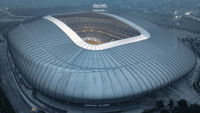
01.12.2023 © Grzegorz Kaliciak 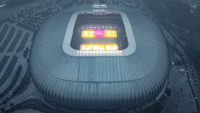
01.12.2023 © Grzegorz Kaliciak 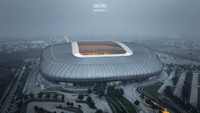
01.12.2023 © Grzegorz Kaliciak 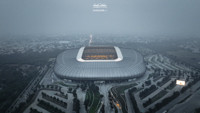
01.12.2023 © Grzegorz Kaliciak 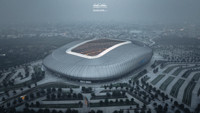
01.12.2023 © Grzegorz Kaliciak 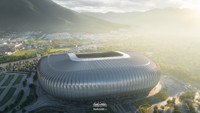
30.11.2023 © Grzegorz Kaliciak 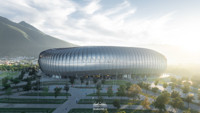
30.11.2023 © Grzegorz Kaliciak 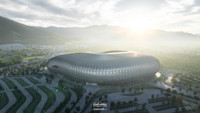
30.11.2023 © Grzegorz Kaliciak 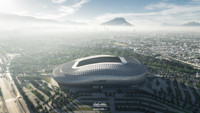
30.11.2023 © Grzegorz Kaliciak 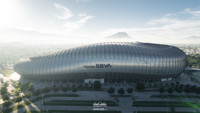
30.11.2023 © Grzegorz Kaliciak 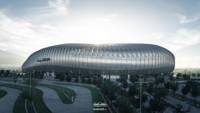
30.11.2023 © Grzegorz Kaliciak 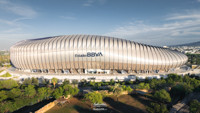
30.11.2023 © Grzegorz Kaliciak 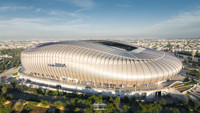
30.11.2023 © Grzegorz Kaliciak 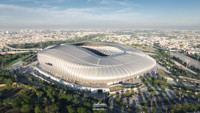
30.11.2023 © Grzegorz Kaliciak 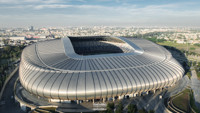
30.11.2023 © Grzegorz Kaliciak 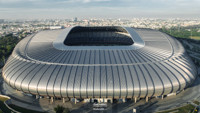
30.11.2023 © Grzegorz Kaliciak 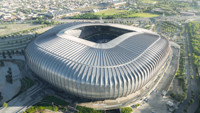
30.11.2023 © Grzegorz Kaliciak 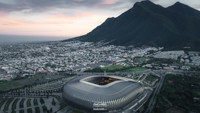
30.11.2023 © Grzegorz Kaliciak 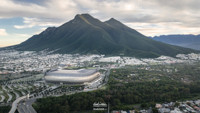
30.11.2023 © Grzegorz Kaliciak 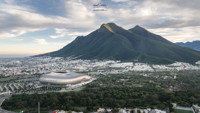
30.11.2023 © Grzegorz Kaliciak 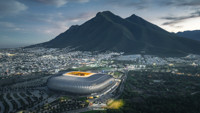
30.11.2023 © Grzegorz Kaliciak 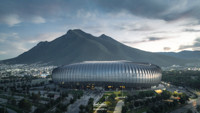
30.11.2023 © Grzegorz Kaliciak 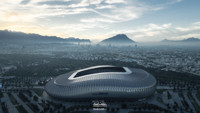
30.11.2023 © Grzegorz Kaliciak 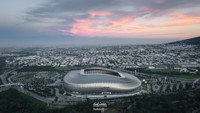
30.11.2023 © Grzegorz Kaliciak 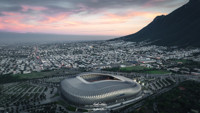
30.11.2023 © Grzegorz Kaliciak 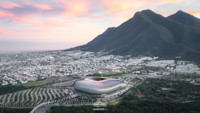
30.11.2023 © Grzegorz Kaliciak 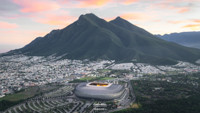
30.11.2023 © Grzegorz Kaliciak 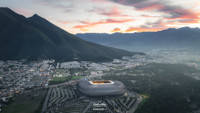
30.11.2023 © Grzegorz Kaliciak 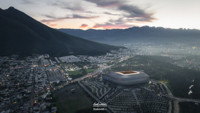
30.11.2023 © Grzegorz Kaliciak 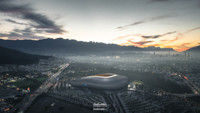
30.11.2023 © Grzegorz Kaliciak 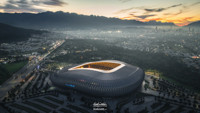
30.11.2023 © Grzegorz Kaliciak 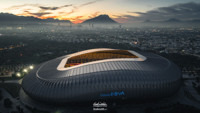
30.11.2023 © Grzegorz Kaliciak 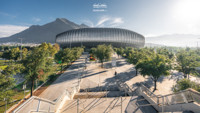
30.11.2023 © Grzegorz Kaliciak 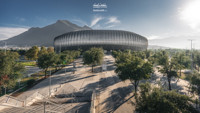
30.11.2023 © Grzegorz Kaliciak 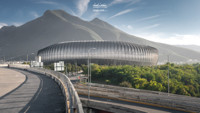
30.11.2023 © Grzegorz Kaliciak 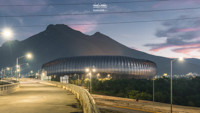
30.11.2023 © Grzegorz Kaliciak 
01.08.2015 © Presidencia de la Republica 
02.08.2015 © t-100 . 
01.08.2015 © Presidencia de la Republica 
01.08.2015 © Presidencia de la Republica 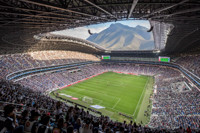
07.05.2016 © Jorge Toboada / Populous 
17.09.2015 © Rick González (cc: by) 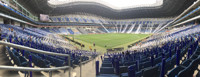
13.05.2017 © Eduardo Saldaña (CC BY 2.0) 
26.09.2015 © Clemente Saenz Rosas 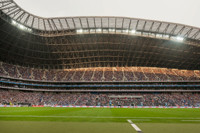
23.04.2016 © Jorge Toboada / Populous 
26.09.2015 © Clemente Saenz Rosas





Related news
2026
-
Mexico: World Cup vs fear? Mexico at the heart of the security discussion
Just days before the start of the 2026 World Cup, Mexico has found itself at the centre of a debate about security. Social protests, cartel activity and an unprecedented security operation mean the tournament will be not only a celebration of football, but also one of the biggest organisational and security tests in the country's history.
-
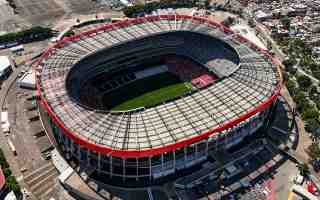
WC 2026: Mexico welcomes the World Cup. Three stadiums and multi-million-dollar transformations
Before the start of the 2026 FIFA World Cup, three key venues in Mexico — Estadio Banorte in Mexico City, the stadium in Guadalupe, and Estadio Guadalajara in Zapopan — are fully ready to host the tournament. What has changed?
-
WC 2026: Weather already poses a challenge. The 2026 World Cup could make history
The 2026 FIFA World Cup could be remembered not only for what happens on the pitch, but also for the extreme weather surrounding the tournament. Heat, humidity and severe thunderstorms are already raising concerns, with experts warning that this could become one of the most climatically challenging World Cups in decades.
-
USA: Inside the billion-dollar machine behind World Cup 2026. Costs, controversy and complexity
Although the 2026 FIFA World Cup will be a joint effort of the United States, Canada and Mexico, it is the USA that bears the greatest organizational burden of the tournament. Most matches — including the final — will be played on American soil, which has required massive investment in stadiums, transport and security systems.
-
WC 2026: How US stadiums are preparing for the World Cup? Grass, construction, and criticism
Preparations for the 2026 FIFA World Cup involved extensive upgrades that transformed NFL venues into stadiums meeting FIFA requirements. The key changes included switching to natural grass surfaces, adjusting pitch geometry and expanding technical infrastructure and operational facilities.
-
USA: A revolution underfoot. Have scientists perfected the World Cup pitch?
For eight years, scientists have been working on a pitch designed to withstand the biggest World Cup in history. As BBC reports, the grass for the 2026 FIFA World Cup will not be just another part of the stadium, but the result of advanced research, testing and technological refinement of every detail.
-
World: The best stadiums built in the last 16 years (2010–2025)
From Aviva Stadium to Stade Prince Moulay Abdellah. We look back at every edition of Stadium of the Year and revisit the venues that, between 2010 and 2025, won the recognition of fans from all over the world in our competition.
-

World Cup 2026 – Ultimate Fan Guide
The 2026 World Cup sets a new scale in the history of the tournament. This guide will help you plan your trip and secure your match attendance without the risk of losing out in ticket lotteries, while also organizing the format, host cities, and stadiums for fans watching the tournament on TV.
2025
-

World Cup 2026: Key matches and stadiums for the biggest national teams
As the 2026 World Cup schedule takes shape, fans around the globe are eagerly planning the football journey of a lifetime. This could be the final chance to witness Messi and Ronaldo shine on the world’s biggest stage! Here’s where the top national teams will play, which stadiums will host their battles, and how to track ticket availability before it’s too late.
-
USA: World Cup 2026 under extreme heat as stadiums surpass safe limits
Ten of the 16 stadiums set to host the 2026 FIFA World Cup in the United States, Canada and Mexico currently exceed safe playing limits due to extreme temperatures, according to a report by Football for Future, Common Goal and Jupiter Intelligence.
-
Mexico: Estadio BBVA showcases its pitch and technology for the 2026 World Cup
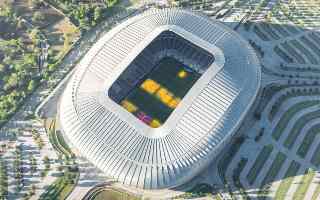
Mission accomplished. After two months of intense work, Estadio BBVA in Monterrey unveiled the best pitch in Mexico, designed specifically for the 2026 World Cup, where the stadium will host four matches.
-
USA: One year to the 2026 World Cup! Did the Club World Cup test deliver?
A new format and a major dress rehearsal ahead of the 2026 World Cup. From political undertones and turbulent weather conditions to controversies over attendance and pitch quality – did the expanded edition of the Club World Cup live up to expectations?
-

WC 2026: Infantino shocked by… summer? Heatwave exposes FIFA unprepared
FIFA president Gianni Infantino announced that during the 2026 World Cup, to counter expected heat, matches scheduled for early hours will be played primarily in stadiums that are covered and air-conditioned.
2024
-
Mexico: Stadium of three teams may soon empty
Atlante FC has already announced its move, Club América will not be able to play the final of the 2025 Apertura at its home stadium, and both the Eagles Cruz Azul are considering a change of venue. In a matter of days, Estadio Ciudad de los Deportes could go from hosting 3 clubs to being completely empty.
-
World Cup 2026: Locations, stadiums and schedule
FIFA has already announced the details of the 2026 World Cup, which will be held in the USA, Mexico and Canada. As happens when a tournament of this size is co-hosted by several countries, there was no shortage of controversial decisions. So let's check what we already know about the 2026 World Cup.
2023

2022

2018
-

2026 World Cup: Canada, Mexico and (largely) USA win
As we await the joy and sadness of this year's World Cup, we've also learnt who will host the 2026 edition. For the first time in history three host countries will hold the event. Also, no new stadium (!) is listed for the event.
-

Monterrey: Estadio BBVA Bancomer and the field issue
Chosen as Stadium of the Year just 2 years ago, one of Mexico's most modern stadiums has been dealing with a rather important issue: poor field quality. Recent visit from FIFA delegates suggests crucial improvements if the stadium is to hold the 2026 World Cup.
