 StadiumDB
World: The best stadiums built in the last 16 years (2010–2025)
source: StadiumDB.com ; author: Jakub Ducki
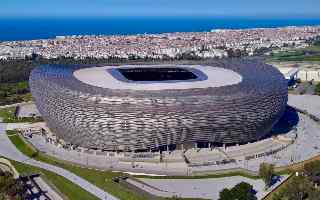 From Aviva Stadium to Stade Prince Moulay Abdellah. We look back at every edition of Stadium of the Year and revisit the venues that, between 2010 and 2025, won the recognition of fans from all over the world in our competition.
Advertisement
From a local plebiscite to a globally recognized brand
The Stadium of the Year competition debuted in 2010 and very quickly grew into the largest plebiscite of its kind in the world. Over time, its reach expanded significantly: since 2012, an English-language version has operated in parallel, and in 2024, a Spanish-language version joined as well. It was thanks to this that votes began flowing in from an increasing number of countries, and the competition itself gained a truly international character.
The scale of interest was most visible during record-breaking editions — at its peak in 2014, nearly 100,000 votes were gathered from all over the world. This was also an exceptional period in terms of the number of candidates, as due to the World Cup in Brazil, the list of nominees grew to 32 stadiums at the time. In the following years, the competition confirmed its status geographically as well: venues from Europe, North and South America, and Asia emerged victorious, and in 2025, Africa also joined this group! Between 2014 and 2020, alongside the public vote, renowned jurors from the world of architecture also indicated their picks.
SOTY 2010: Aviva Stadium, 4138 pts
Aviva Stadium, the winner of SOTY 2010, faced the difficult task of replacing the legendary Lansdowne Road. The new national stadium of Ireland was built between 2007 and 2010 in the exact location of its predecessor and retained its most characteristic feature — a noticeably lower north stand. However, this was not just a nod to history, but a necessity arising from the proximity of residential buildings, for which a structure that was too high would have restricted access to light.
It was precisely this skillful integration of a large stadium that became one of the project's greatest assets. The undulating glass covers of the roof and facade gave the massing a lightness and a unique appearance, and the venue itself quickly confirmed its status by hosting the Europa League final after barely a year.
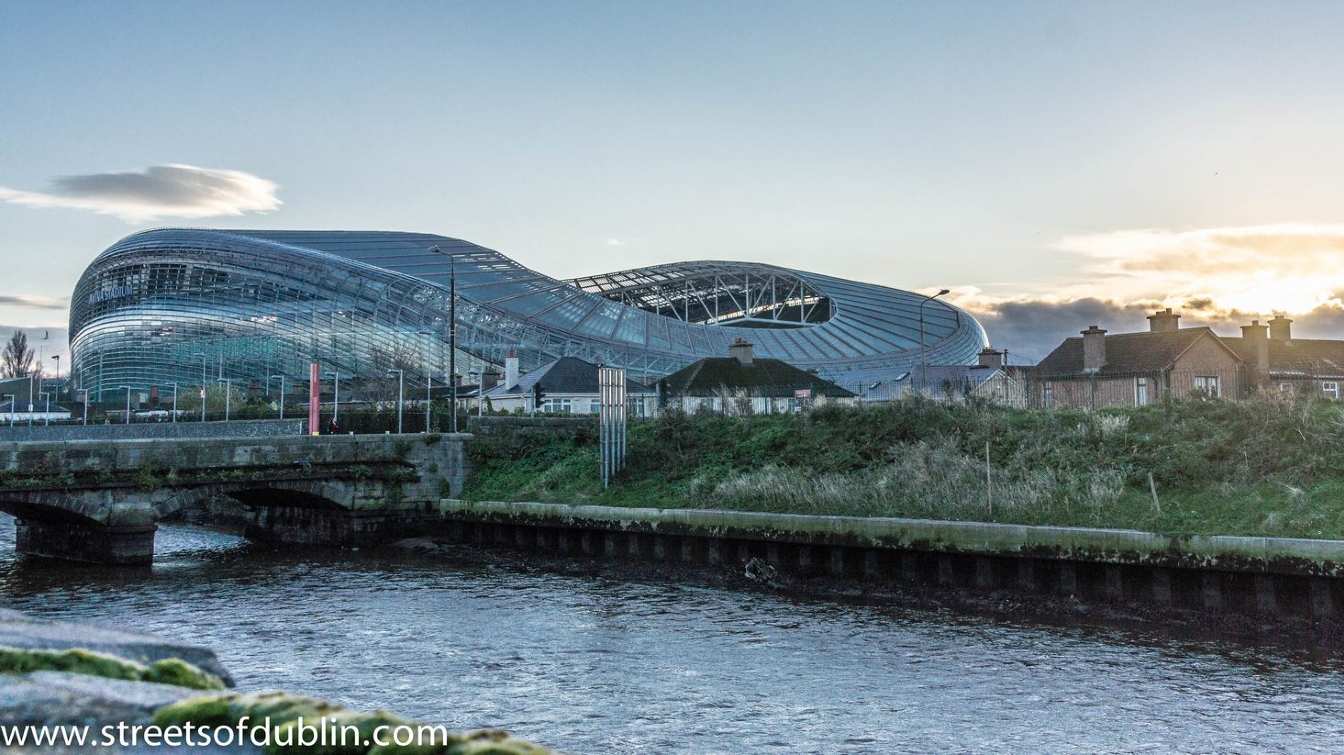 © William Murphy (cc: by-sa) / streetsofdublin.com | Aviva Stadium
SOTY 2011: Polsat Plus Arena Gdańsk, 32 120 pts
The second edition of the stadium of the year plebiscite proved that the competition was quickly growing in strength — nearly 12,000 people took part in it, and 23% of the votes came mainly from Great Britain, Germany, and Ukraine. However, the results showed an absolute outclassing.
Built with Euro 2012 in mind, Stadion Gdańsk straight-up knocked out the competition, scoring 32,120 points and finishing ahead of the next venue by over 10,000 points. Costing 864 million PLN, the facility in Letnica delighted voters with its unique form, which to this day is considered one of the most beautiful and original football projects in Europe.
The German firm Rhode-Kellermann-Wawrowsky was responsible for the venue's appearance, giving it the shape of a giant amber — the gold of the Baltic.
The whole structure is covered in polycarbonate panels in six warm shades. During the day, they shimmer phenomenally in the sun, and at night, the stadium shines thanks to internal lighting. A contrast to the bright, amber facade is the interior — the two-tier stands are filled with a mosaic of green seats, which was a direct nod to the fans of the local Lechia Gdańsk.
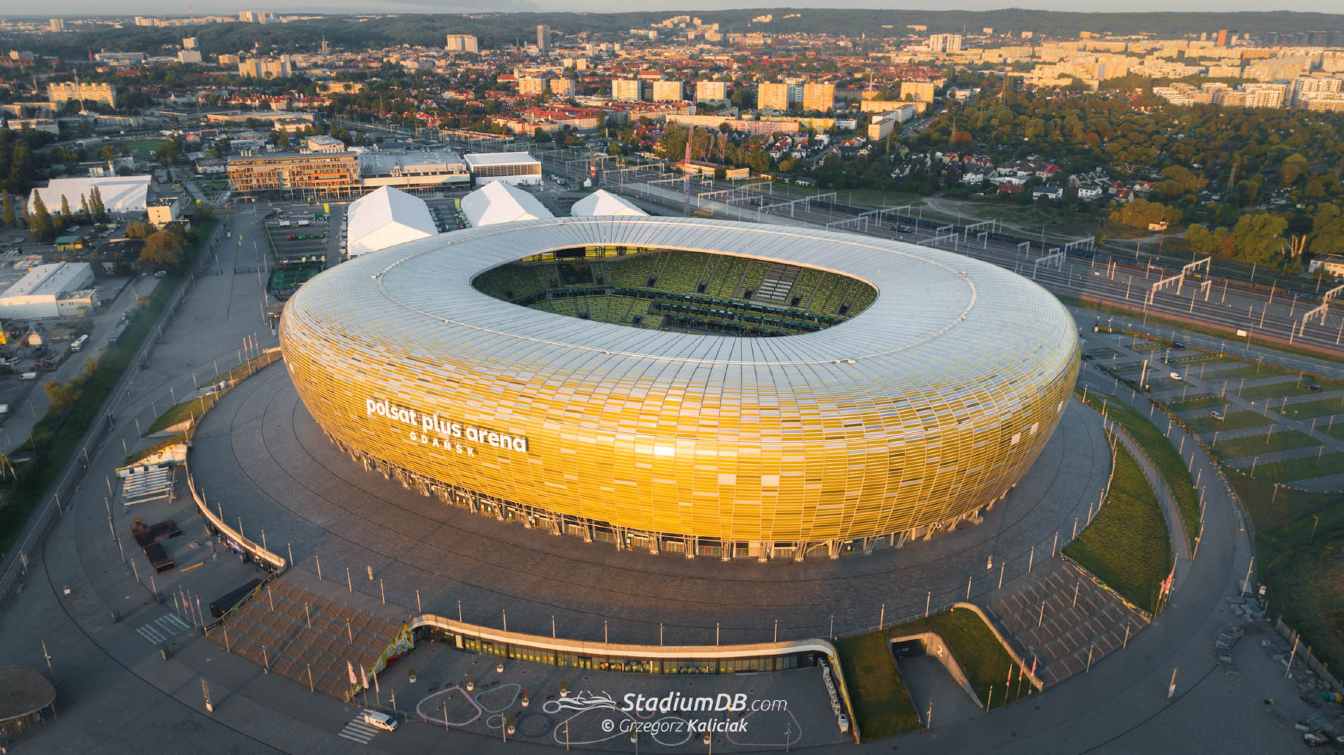 © Grzegorz Kaliciak | Polsat Plus Arena Gdańsk (Stadion Gdańsk)

SOTY 2012: Arena do Grêmio, 29 627 pts
The third edition of Stadium of the Year brought a huge breakthrough in the history of the competition. Out of 14.4 thousand voters, as many as 82% came primarily from Brazil, Indonesia, Israel, and France. This was the moment when SOTY ultimately became a global race. The winner also proved to be exceptional.
Gathering nearly 30,000 points, the new home of the Brazilian Grêmio became the winner in 2012. The venue in Porto Alegre is a true phenomenon in the local market, as its implementation went almost flawlessly. The construction, financed with the club's private funds, took just two years and fit within the assumed budget.
The arena, with a capacity of over 55,000 spectators, was entirely designed around the club's identity. Its interior is decorated exclusively in blue, white, and black colors, and the venue itself went down in the history of the Brazilian fan movement due to an unprecedented compromise between architects and supporters. Following consultations with a group of the most devoted fans, known as Geral, the club authorities decided to keep one standing stand. It was specially structurally reinforced to withstand the famous local tradition of the so-called avalanche,
which is the mass running down of thousands of fans to the bottom of the sector after a goal is scored.
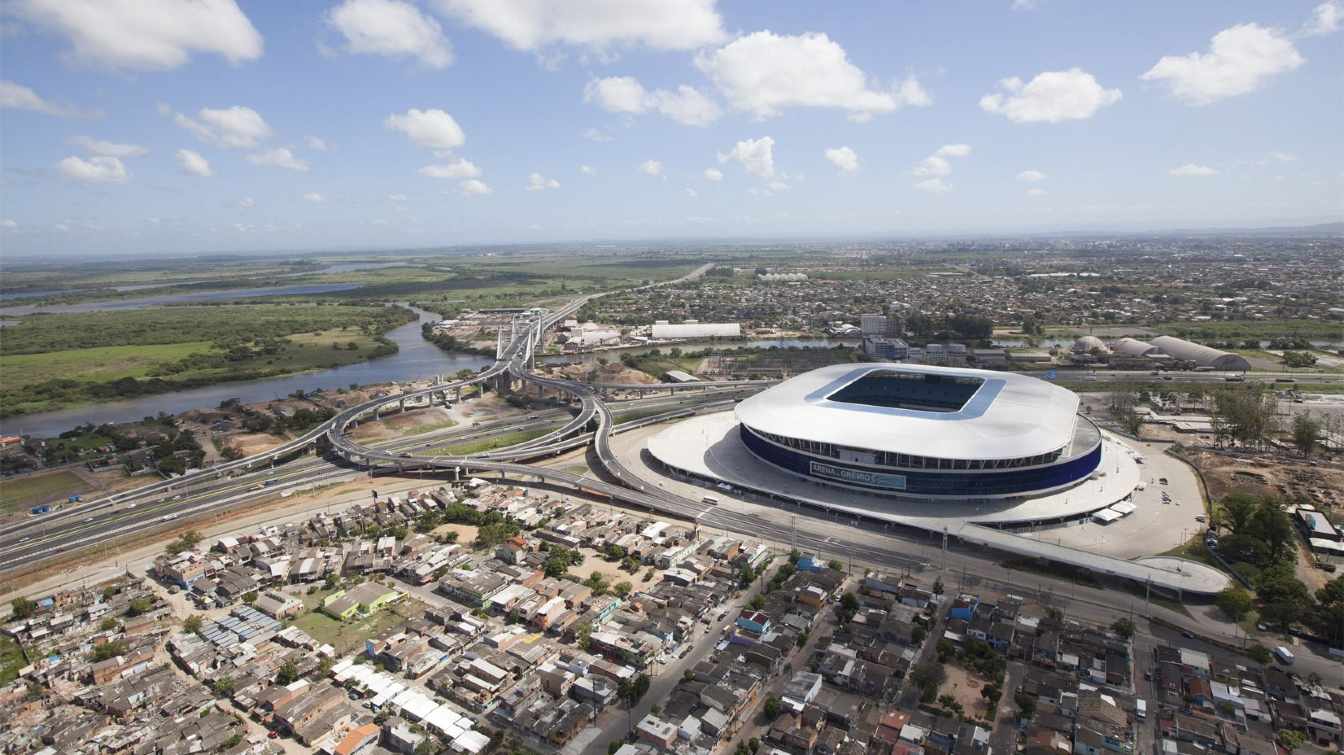 © Copa2014.gov.br | Arena do Grêmio
SOTY 2013: Planet Group Arena, 51 024 pts
Stadium of the Year in 2013 was the moment when the competition gathered momentum. At the beginning of 2014, as many as 27,851 votes were cast, pouring in from a record number of 105 countries. The most engaged participants turned out to be fans from Belgium, Brazil, the USA, and Chile.
Scoring over 51,000 points, the Belgian venue, known under the working title Arteveldestadion and opened under the name Ghelamco Arena, took first place in 2013. The victory of the stadium from Ghent is a story of great determination, as the first visualizations were presented back in 2003. For the next seven years, the project was blocked by financial problems, a lack of agreement between the club and the city, and procedural complications.
Designed by the Bontinck studio, the facility, whose realization absorbed €50 million, delighted voters with an unusual hybrid concept. The stadium was conceived as an innovative combination of a sports arena and a modern office building. This found its reflection in the external architecture dominated by elegant glazing, which at night lights up with thousands of LED lamps integrated into the facade. The single-tier auditorium with a capacity of 20,000 seats was designed with the future in mind – if needed, it can be expanded without major problems.
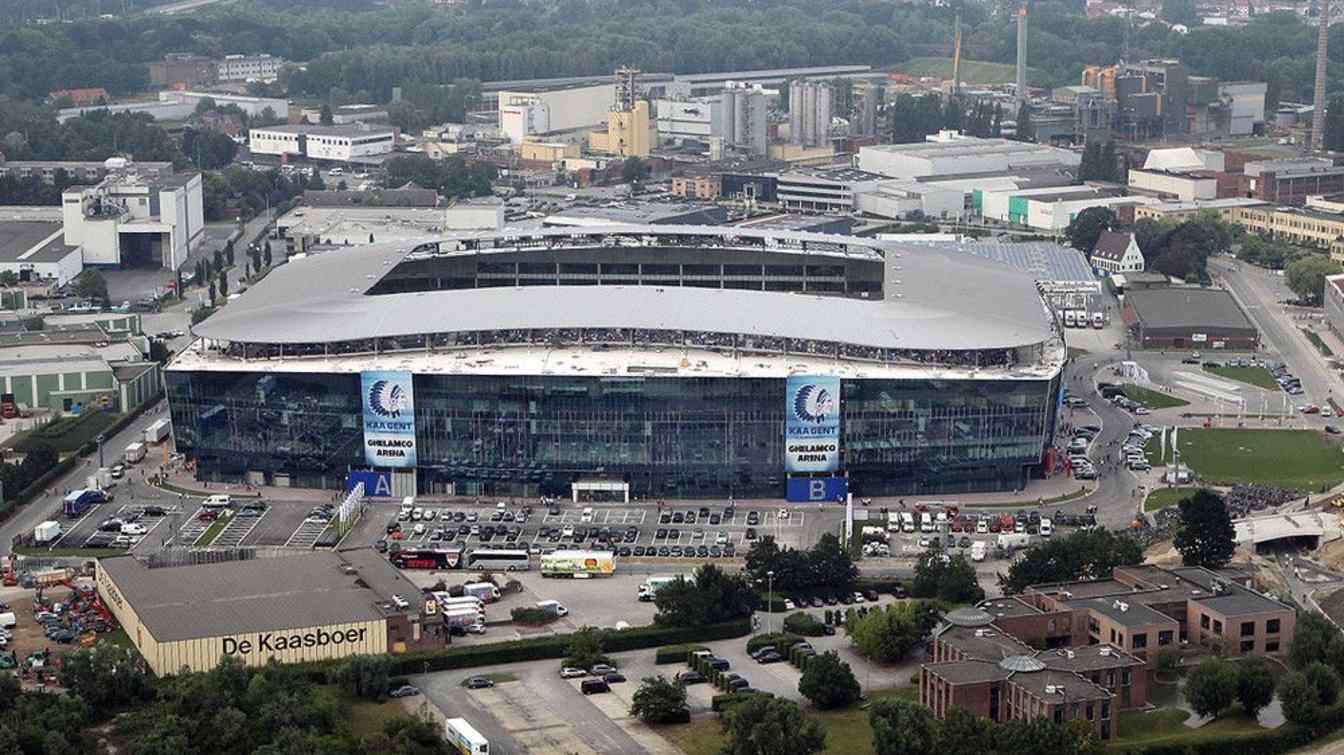 © ourfuturestartshere.be | Planet Group Arena (Arteveldestadion)
SOTY 2014: Allianz Parque, 134 725 pts
The fifth edition of the SOTY competition went down in history as absolutely record-breaking and groundbreaking. At the turn of January and February 2015, nearly 100,000 votes were cast, coming from an unprecedented 136 countries. Fans from Brazil, Russia, Spain, Turkey, and Poland demonstrated the greatest mobilization. Furthermore, this edition saw the debut of the independent Jury Vote, in which six experienced architects awarded points to venues across four categories.
Through the votes of internet users, the new arena of the Brazilian Palmeiras indisputably won, outclassing rivals and scoring over 130,000 points. Interestingly, the investment in São Paulo kicked off in 2010 in parallel with preparations for the 2014 World Cup, yet it was not part of the World Cup program. The stadium stands out with an unusual shape, which was dictated by the decision to preserve the northern curve of the old stands. As a result, one end of the auditorium is almost rectangular, and the other is oval.
The initial outline was created by Tomas Taveira, and the final design — including the characteristic, metallic braid of perforated sheet metal — was developed by Edo Rocha's team. Looming over the massive structure are five towers, which serve a dual function: communication routes and main guy-wires for the roof structure.
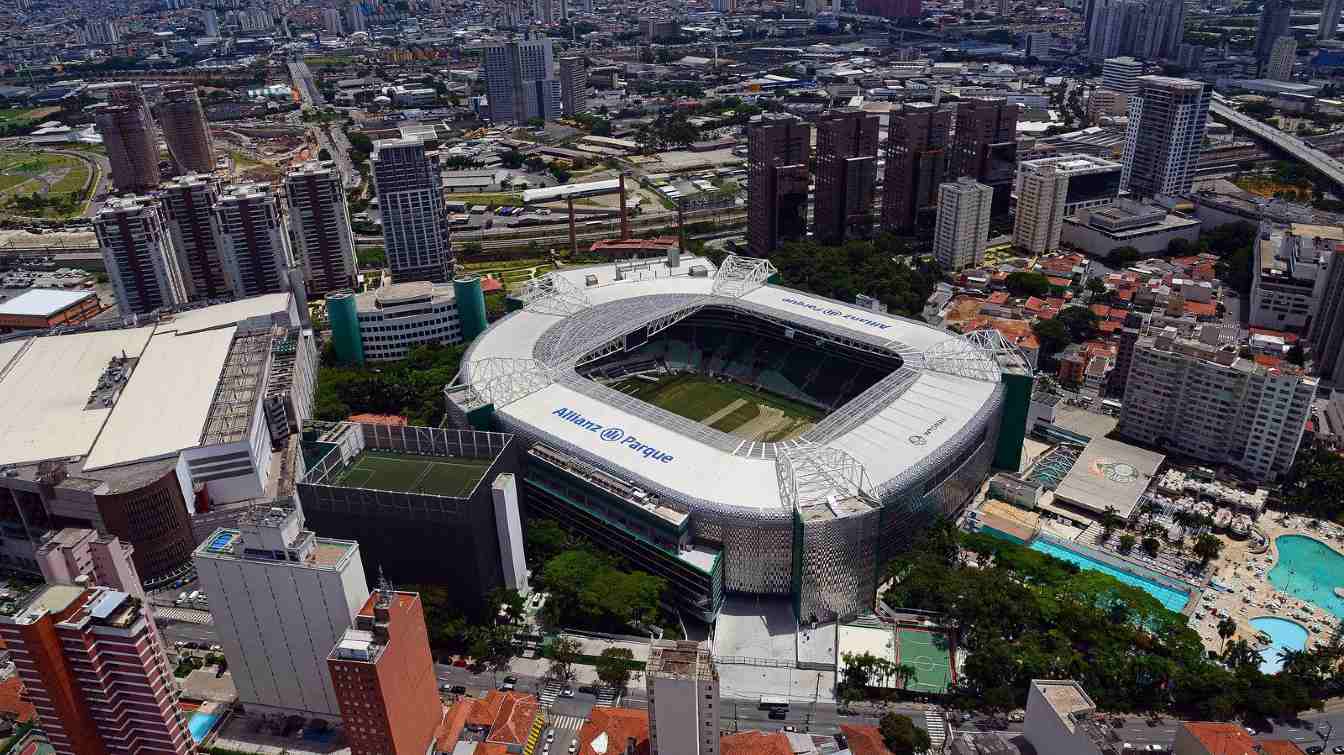 © Allianz Parque | Allianz Parque (Palestra Itália)
SOTY 2015: Estadio BBVA, 74 097 pts
Stadium of the Year 2015 proved that the public award in the Stadium of the Year competition is also about massive fan mobilization. Although the turnout was lower than in the record-breaking 2014, over 37,000 votes from 111 countries were collected during the month of voting, with internet users from Mexico, the USA, Israel, Poland, and France setting the tone for the fun. It was the votes of the former that decided the decisive victory of the venue from Latin America.
With a score of over 74,000 points, the public pointed to the new home of the Mexican CF Monterrey, also known under the commercial name Estadio BBVA. This victory was the culmination of years of efforts; the construction itself, although it began in 2011 and struggled with delays, finally concluded in the summer of 2015, perfectly timing with the celebrations of the club's 70th anniversary. Interestingly, this largest modern stadium in Mexico was built entirely with private funds.
Although the venue bears the name of the club from Monterrey, it is physically located in the eastern part of the agglomeration, in the Guadalupe entertainment district, where it borders a zoo, among other things. Offering 51,000 seats, the stadium provided fans with a gigantic qualitative leap compared to the old Estadio Tecnológico. The most noticeable change was the distance to the pitch, which in the lowest rows dropped from 27 to just 9 meters. Architecturally, Estadio BBVA is a masterful combination of local traditions with an almost organic form. The extensive use of aluminum sheet metal on the facade refers to the metallurgical and brewing history of Monterrey.
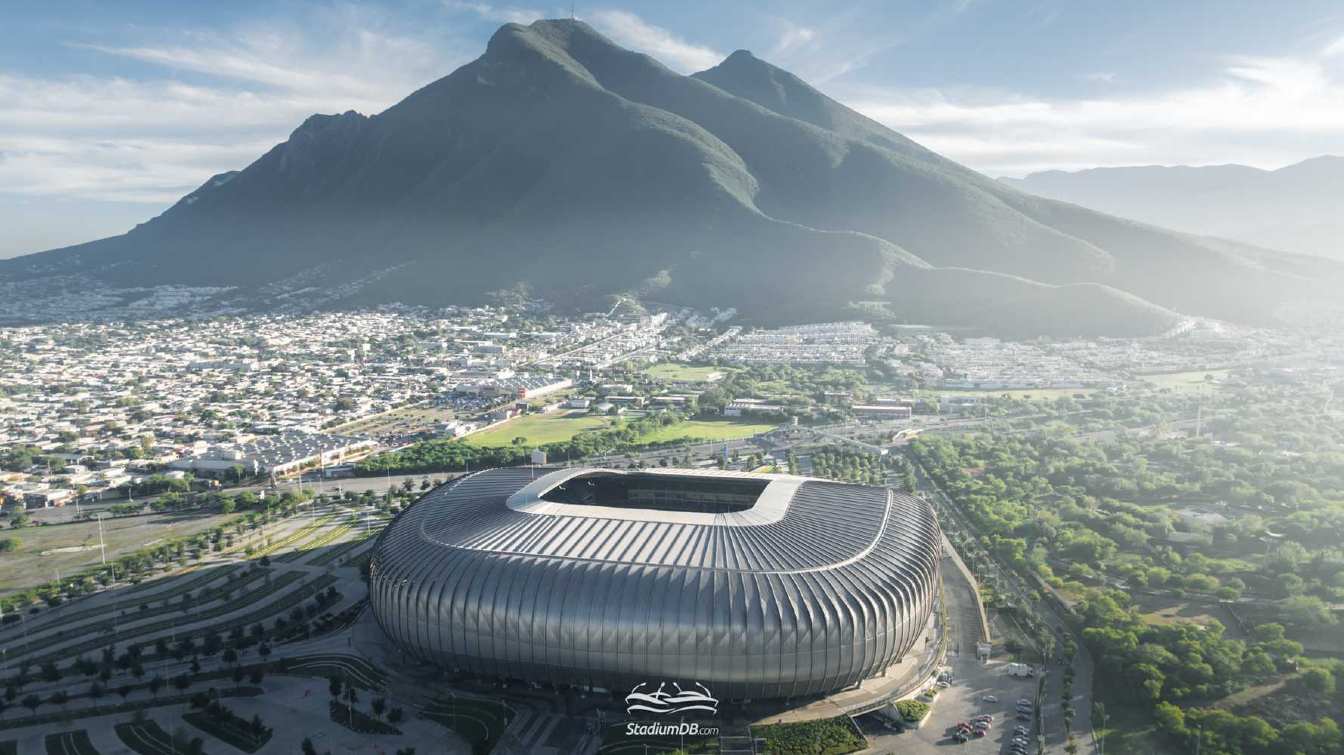 © Grzegorz Kaliciak | Estadio BBVA (Estadio de Futbol de Monterrey)
SOTY 2016: Tüpraş Stadyumu, 102 251 pts
We enter the seventh edition of the stadium of the year competition, where emotions reached their zenith. It was a return to a gigantic turnout – at the turn of January and March 2017, nearly 83,000 people from over 100 countries voted, which was the second-highest result in the history of the plebiscite. The most numerous representation were internet users from Turkiye, ahead of fans from Russia, France, Uruguay, and the USA. This was an extraordinary edition also due to its dynamics; during 33 days of voting, the leader changed three times, and the winner regained the lead at the very end, only on the final day. Moreover, for the first time in the history of the competition, two stadiums broke the 100,000-point barrier, fighting an incredibly tight battle in which votes from their home countries constituted a minority of the support.
The winner of this fierce race, with barely a two-thousand-point advantage over second place, was the long-awaited home of Istanbul's Beşiktaş, currently known as Tüpraş Stadyumu. With a score of over 102,000 points, the venue proved that patience pays off. The fans of the Eagles
were the last of the big Turkiye three to live to see a modern arena.
Delays stemmed mainly from an extremely prestigious, but difficult location. The stadium was built in the very heart of Istanbul, on the site of the historic Inönü Stadi, in a strictly protected landscape zone due to its proximity to the Dolmabahçe Palace. This meant drastic restrictions: the facility could not be built too high, it could not be dug deeper than its predecessor, and the tight grid of surrounding roads prevented sideways expansion. For this reason, despite the huge fan potential, the capacity was limited to 42,000 seats.
Architects from DB Architects met the challenge, having to make a number of compromises to squeeze roomy stands onto such a limited plot. They designed a relatively flat lower tier and a very steep upper one. The stands have a variable height – from the highest in the north to the lowest in the south. This clever trick allowed them to recreate the impression known from the old stadium, which sloped towards the Bosphorus, revealing a view of the Asian part of the city from the upper rows of the north stand.
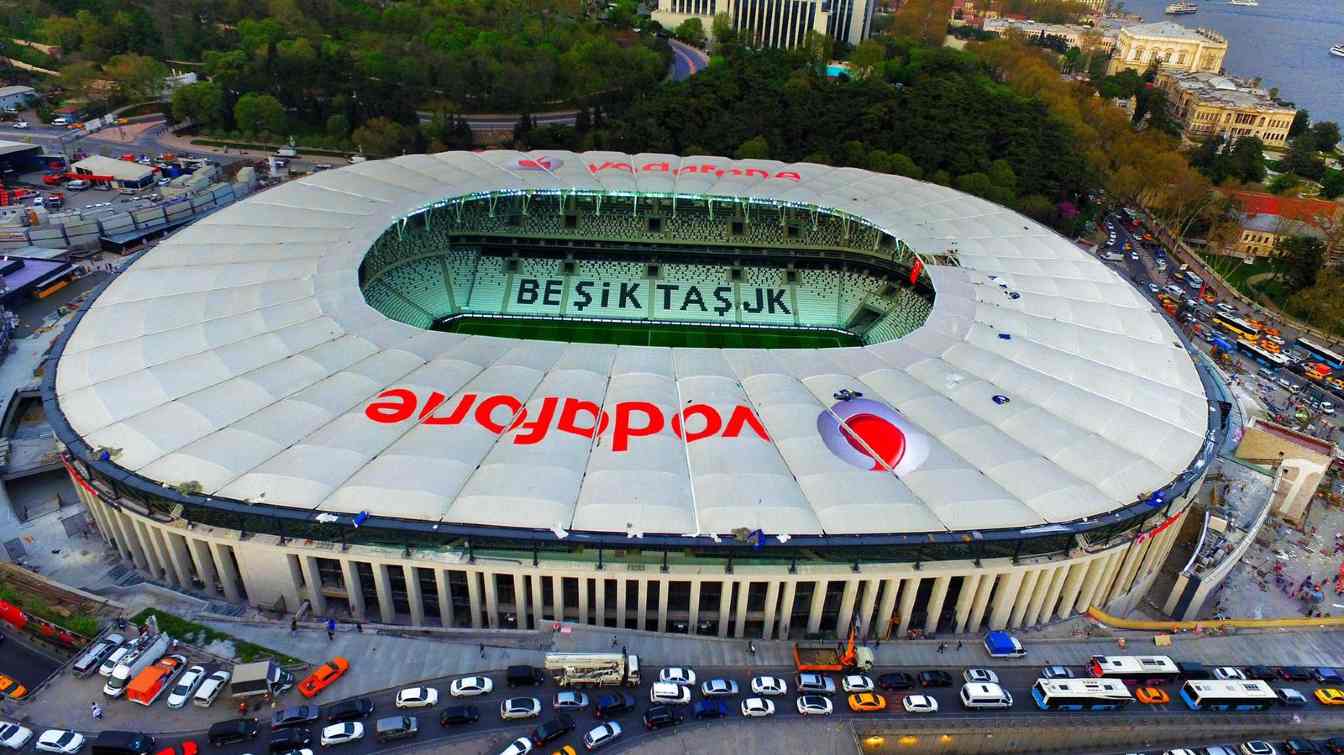 © Beşiktaş JK | Tüpraş Stadyumu
SOTY 2017: Estadio General Pablo Rojas, 79 378 pts
The eighth edition of Stadium of the Year showed how strongly the plebiscite has rooted itself in South America. Voting for the best venues commissioned in 2017 attracted 53,083 people from 106 countries. The most votes this time came from Paraguay, Ecuador, Russia, Mexico, and Poland. It was this gigantic mobilization of fans from Latin America that decided the results.
With a score of over 79,000 points, the public pointed to the home of the Paraguayan Cerro Porteño located in Asunción. The victory of the stadium widely known as La Olla
(The Cauldron) is the crowning of a fascinating, multi-year history. It wasn't until the 21st century that they managed to buy back the problematic plot and close up the massing, which over the years had grown in a very irregular way — with an asymmetrical main stand and sectors behind the goals bent at different angles.
The victory in the plebiscite, however, is the merit of the massive reconstruction from 2015–2017 under the banner La Nueva Olla
(The New Cauldron). As part of the investment, the stands in the excavated basin were unified, and a second tier was added to the southern, eastern, and northern sectors. For the first time since 1970, the western stand gained a regular shape, as well as additional usable space, several dozen boxes, and a roof. A curiosity and a global phenomenon was the fact that the club employed about 40 fans from organized supporter groups on the construction site, who carried out simpler physical work at the stadium for 18 months.
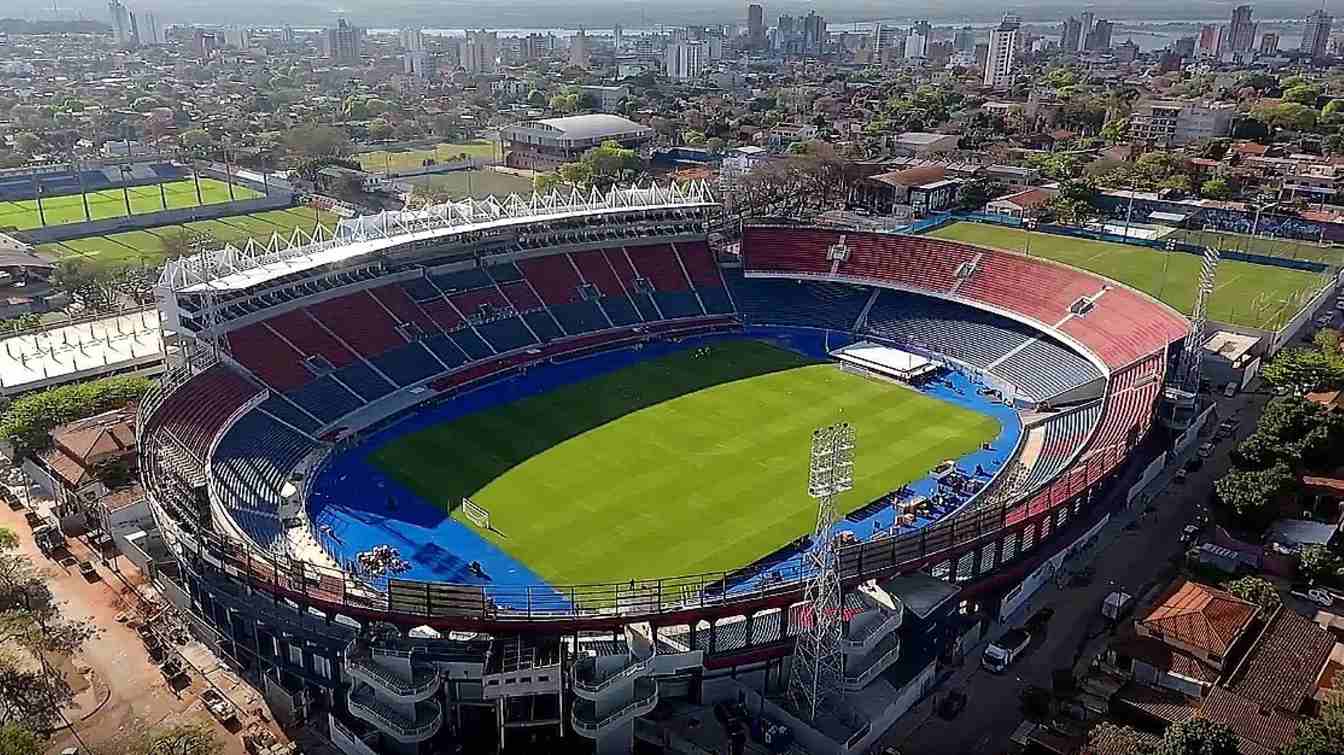 © GEN | Estadio General Pablo Rojas (La Olla Monumental)
SOTY 2018: Volgograd Arena, 68 213 pts
The ninth edition of Stadium of the Year was a return to a slightly calmer turnout, but with an equally broad international reach. In the voting, 35,330 votes were counted, flowing in from 111 countries. Most of them came from users in Russia, Hungary, Iran, Belarus, Austria, the USA, Poland, and Italy. It was this Russian dominance among voters that directly translated into the choice of the winner.
With a score of over 68,000 points, the public award in 2018 was won by the stadium located in the heart of Volgograd. The venue, which replaced the old arena of the local Rotor, had been on the priority list since the very beginning of the Russian bid for the 2018 World Cup. Its location is absolutely unique: on one side it borders the majestic Mamayev Kurgan and the famous Motherland Calls monument, and on the other — the Volga embankment.
A compromise and most landscape-fitting vision of a circle was chosen, based on assumptions developed by GMP Architekten. This shape guaranteed a cohesive perception of the stadium from every side. The most spectacular element of Volgograd Arena are its steel facades. The dynamic, modern structure, echoing the shape of a wicker weave, widens upwards and reaches 43 meters in height. The outer part of the roof, covered with a white-and-blue ETFE membrane, refers to Rotor's club colors, and the cable system holding the inner part of the roof is an engineering masterpiece weighing over 2,000 tons.
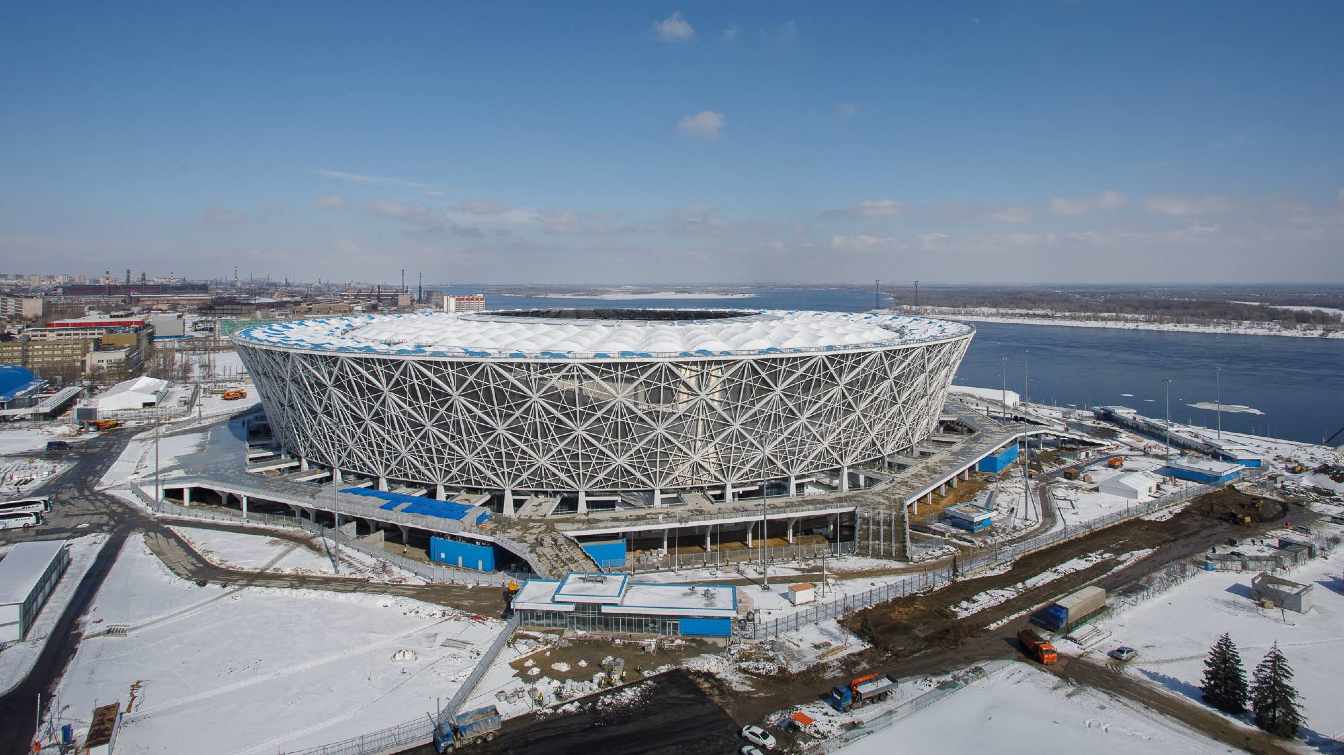 © Stroytransgaz | Volgograd Arena
SOTY 2019: Puskás Aréna, 57 613 pts
The tenth, anniversary edition of the Stadium of the Year plebiscite fell on an exceptionally difficult moment — February and March 2020, which was the beginning of the COVID-19 pandemic. Despite the global crisis, the Public Vote attracted 30,632 people from 127 countries and territories. The greatest mobilization was shown by internet users from Hungary, Argentina, Indonesia, the Philippines, Slovakia, Russia, and Great Britain. The votes from the very top of this list decided the decisive triumph of the national arena from Budapest.
Scoring over 57,000 points, the winner of the decade of the plebiscite became the new Hungarian national stadium. The path to its creation, however, was one of the longest in the history of European football. Despite these perturbations, Puskás Aréna is an architectural masterpiece that refers to its predecessor with great respect. Although the original, famous pylons could not be saved, the new towers faithfully imitate the historical prototype. The stadium's facade, clad in steel mesh, corresponds with the neighboring László Papp Arena. The legacy of the old venue was preserved not only in the name — as much as 50,000 cubic meters of crushed concrete from the former stands were used to build the new arena. An element of Hungarian national pride remains the fact that the entire project, from the first sketches to the topping out, was carried out by domestic specialists.
The construction itself, despite its gigantic scale, went extremely smoothly, lasting less than three years. The result is the largest stadium in Central Europe, capable of holding over 67,000 spectators. The three-tier, steep stands will witness the final of the most important club football final, namely the Champions League, in 2026.
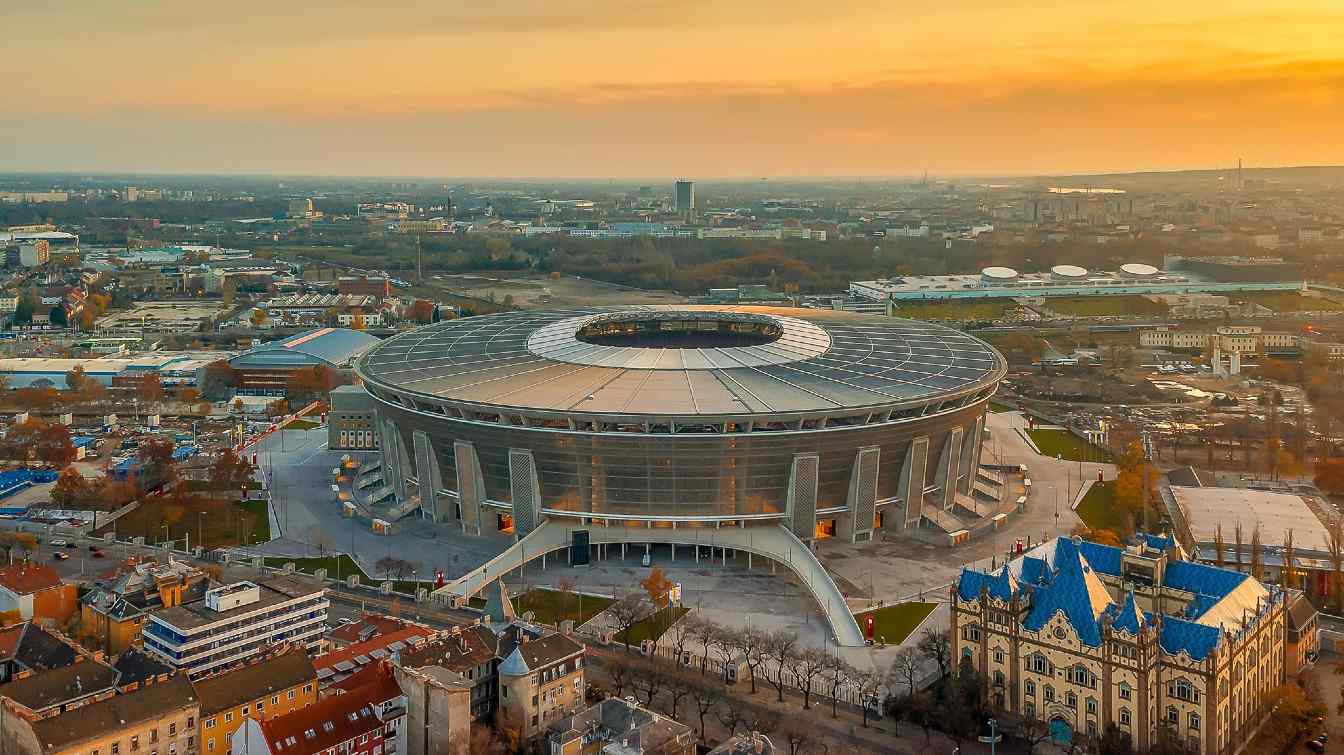 © Instagram: @gezakurkaphotos | Puskás Aréna
SOTY 2020: Sultan Ibrahim Stadium, 64 260 pts
The eleventh edition of the SOTY plebiscite took place in the shadow of the pandemic. Although the competition selected venues commissioned in the crisis year of 2020, it managed to collect 21,821 valid votes from about 100 countries. Interestingly, a complete reshuffle occurred at the top of national activity – this time the voting was driven mainly by internet users from Malaysia, the USA, Turkey, Georgia, Israel, Romania, and Japan. It was this engagement of fans from Southeast Asia that directly translated into the fact that for the first time in history, a stadium from this continent became the winner of the Public Award.
With a crushing score of over 64,000 points, the public chose the new home of the Malaysian club Johor Darul Ta’zim. The impressive facility is the fruit of a sporting and organizational revolution that arrived with the royal family of the state of Johor taking over the club. Sultan Ibrahim Stadium was built in the western, rapidly developing suburbs of the Johor Bahru metropolis.
What captivated the voters the most is the arena's highly modern, aerodynamic silhouette. Conventionally divided into two tiers, the stands vary in height – the upper ring drops dramatically towards the areas behind the goals from 29 to just 6 rows. The roof is supported by 56 bent girders mounted on the crown of the auditorium. The roof has a variable reach, which guarantees excellent sunlight for the pitch. Thanks to the division into vertical stripes, the stadium gained rhythm, and as much as 36,300 square meters of translucent PTFE and ETFE membranes imported from nearby Singapore were used to cover the audience and create the facade.
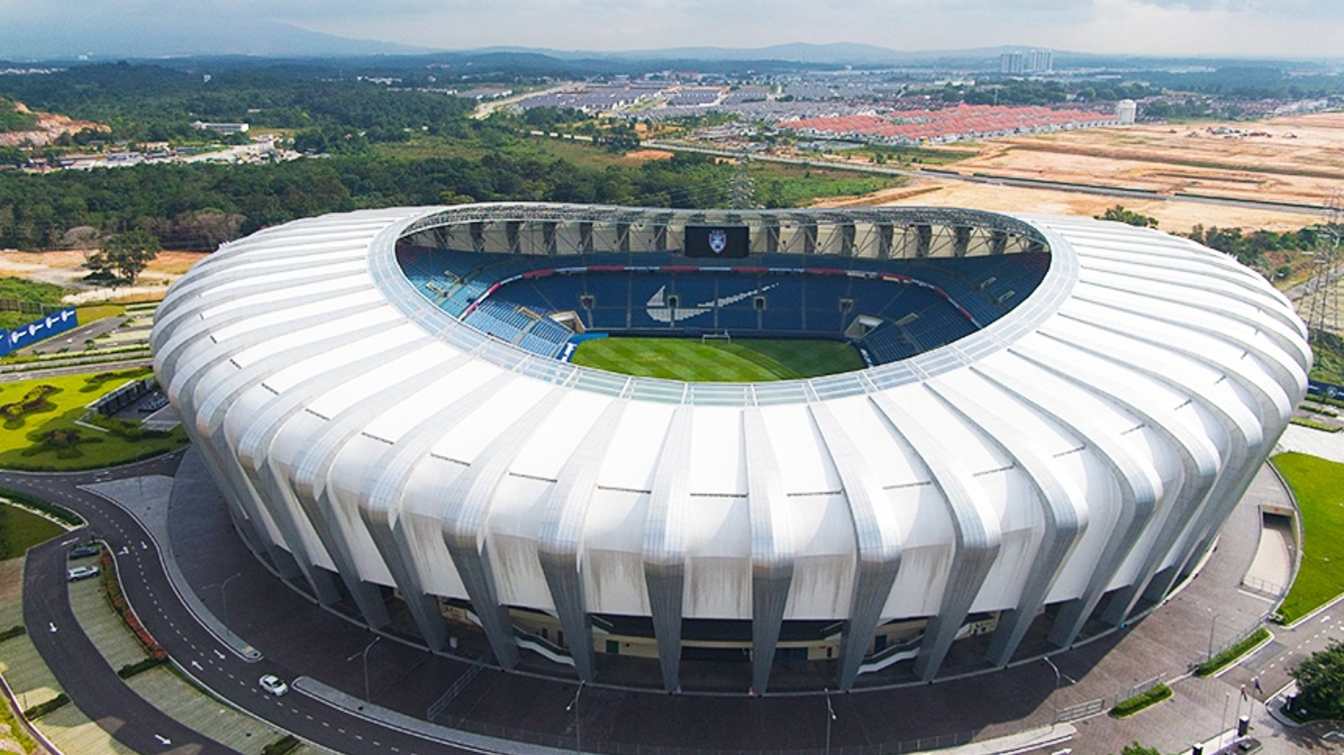 © Multimedia Engineering Pte Ltd | Sultan Ibrahim Stadium
SOTY 2021: Estadio El Sadar, 41 415 pts
The competition for stadium of the year 2022 concerned stadiums commissioned in 2021. Although the turnout was lower, this edition brought a unique, symbolic moment in the history of the plebiscite: the first-place award was presented in person! Grzegorz Kaliciak, the founder of the Stadiony.net and StadiumDB.com websites, was specially invited by the Spanish club CA Osasuna to Pamplona. Just before the match against Real Madrid, he ceremonially handed the statuette to the club president, Luis Sabalza, and this ceremony was broadcast as part of the official La Liga feed to 115 countries.
The victory was claimed by the venue from Navarre, gathering over 41,000 points. Contrary to many previous winners, in this case, we were not dealing with building from scratch, but with a thorough reconstruction of the stadium, which had served the club since 1967 and ceased to meet the requirements of the Spanish top division. What distinguishes El Sadar the most is the fully democratic process of choosing its appearance — for the first time in the history of professional football, it was the fans who decided what their new home should look like.
During the reconstruction, carried out in stages since 2019, the design underwent modifications. However, the investment turned out to be a bullseye, as architecturally the facility gained a cohesive, compact form. The stadium now has a rectangular shape with sharp edges, dominated by a roof in the form of a giant red ring. The color red actually dominates the entire venue. The seats, external illumination of the facade, and the players' exit zone onto the pitch — everything refers to the club's identity. As part of the investment, three stands were expanded with an additional tier, and the lower part of the south stand was equipped with over 1,200 special, metal seats, which, when folded, allow the most passionate fans to comfortably cheer standing up.
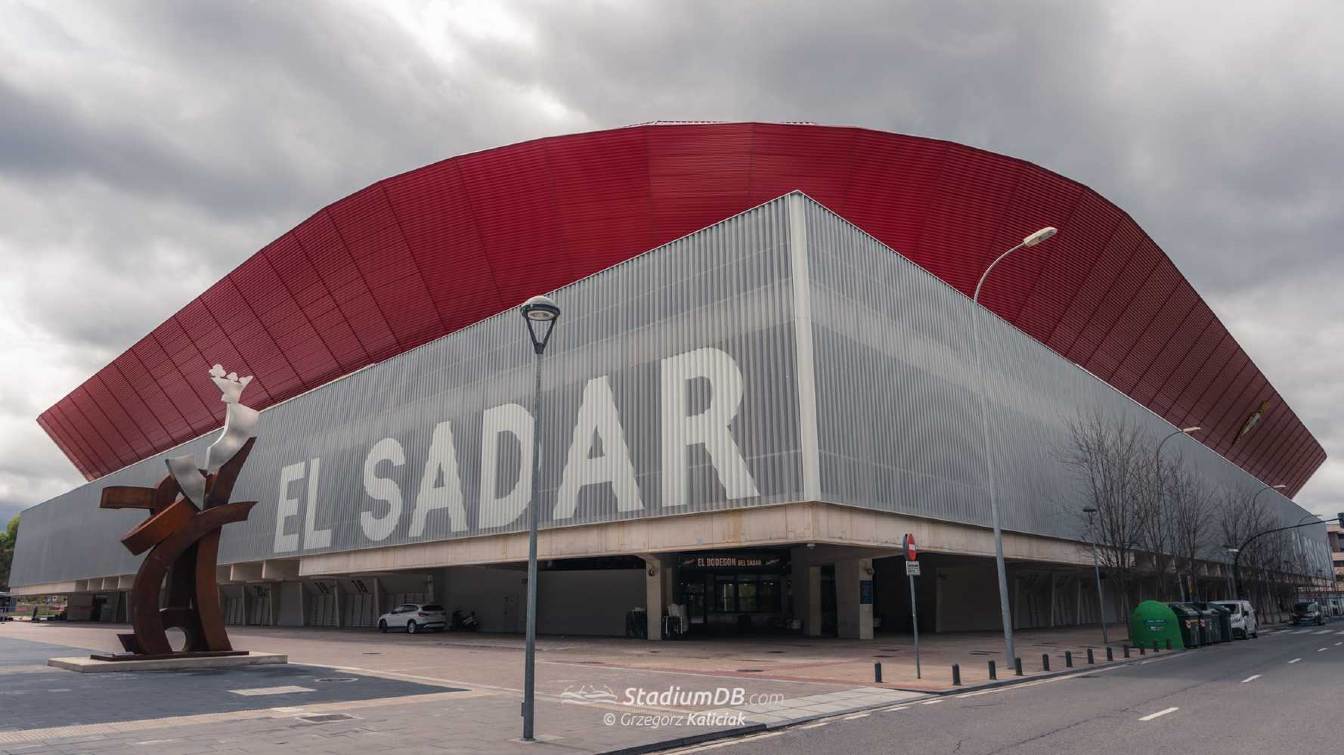 © Grzegorz Kaliciak | Estadio El Sadar
SOTY 2022: OPAP Arena, 69 797 pts
The thirteenth edition of Stadium of the Year brought a clear increase in interest compared to the previous year. In the voting lasting until mid-March 2023, over 24.5 thousand valid votes were cast, deciding which stadium built in 2022 deserves the title of the best in the world. The triumphator was an arena with an extremely rich and turbulent history, into the construction of which a lot of emotion, determination, and symbolism were poured.
With a very strong score of nearly 70,000 points, the plebiscite was won by the new home of the Athenian club AEK. For one of the most successful Greek teams, the opening of OPAP Arena in 2022 was the end of an incredibly difficult epic and an awaited return to historical roots. The winning arena is a facility with a very strong architectural expression.
Designed by Thanasis Kyratsous's studio, the massing loosely refers to ancient architecture. This impression is amplified by the massive, monumental entrances and four characteristic towers in the corners, which give the venue aesthetics and perform an important supporting function for the roof structure. A metal sculpture of a two-headed eagle proudly stands in front of the pavilion in the southern part of the stands. The 32,500-seat interior with two-tier stands is dominated by club colors, namely yellow and black seats, among which yellow clearly prevails. The main stand, along with the boxes, is located on the eastern side.
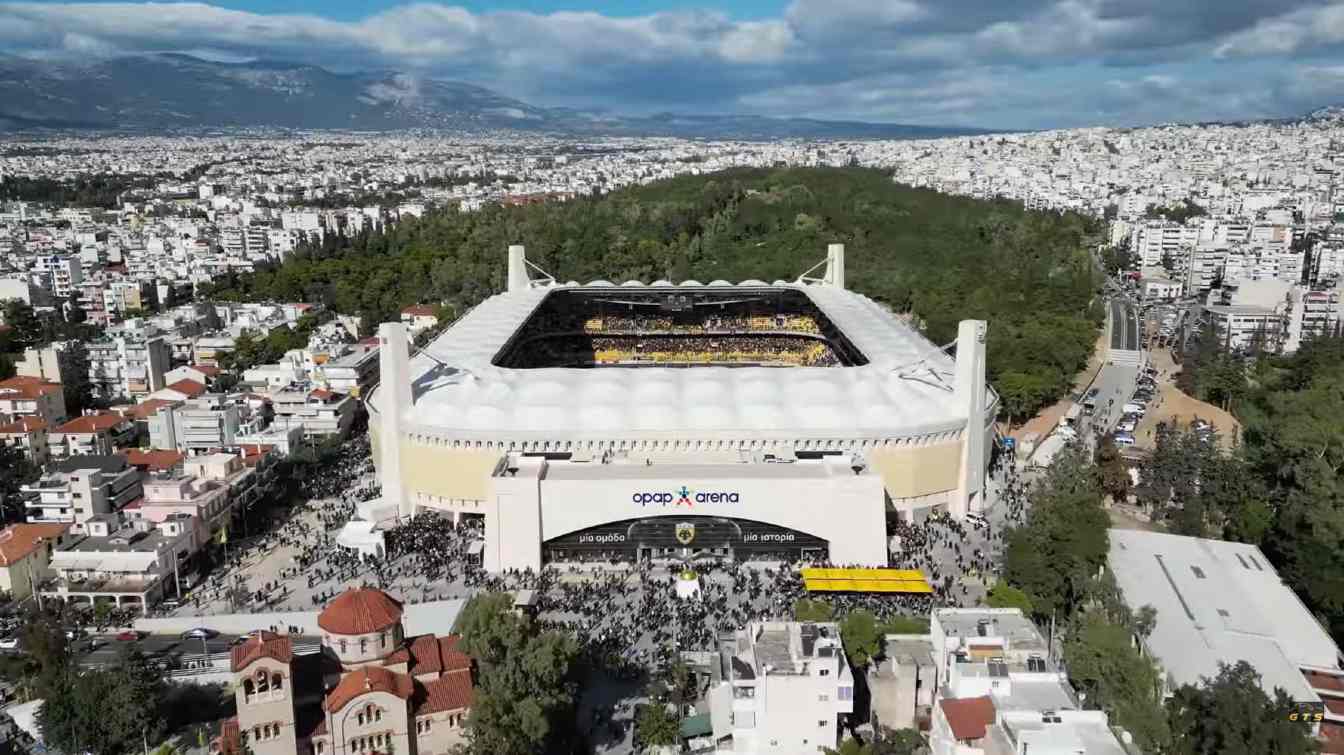 © GEORGE TSAPOGAS | OPAP Arena
SOTY 2023: Arena MRV, 25 515 pts
This is the fourteenth SOTY edition in our ranking, which took place in 2023. The competition closed the voting with a result of over 12,000 valid votes. This time, South America triumphed again – specifically a country that in the history of Stadium of the Year can traditionally count on a massive mobilization of fans.
Through the votes of over 25,000 internet users, the new arena of the Brazilian Atlético Mineiro was recognized as the best stadium of 2023. The creation of this facility is an absolute breakthrough for the club from Belo Horizonte, as the popular Roosters
hadn't played in their own venue since 1950. Interestingly, the new stadium was built thanks to… a shopping mall.
The stadium design, created by architect Bernardo Farkasvölgyi, who privately supports the club, had to undergo several cost optimizations during realization. Despite these cuts, the budget still grew – from an assumed 410 million to even 950 million reais at the finish line. Local authorities additionally forced side investments on the club: a park, bike paths, a clinic, and… the protection of endangered bird species on the construction site. Despite these perturbations and the ongoing pandemic, the construction ongoing since 2020 went extremely smoothly. Arena MRV is today a massive, rectangular structure sitting on an uneven elevation. The roof seamlessly transitions into the facade, creating an eye-catching, black-and-white stripe pattern that directly refers to the club's colors.
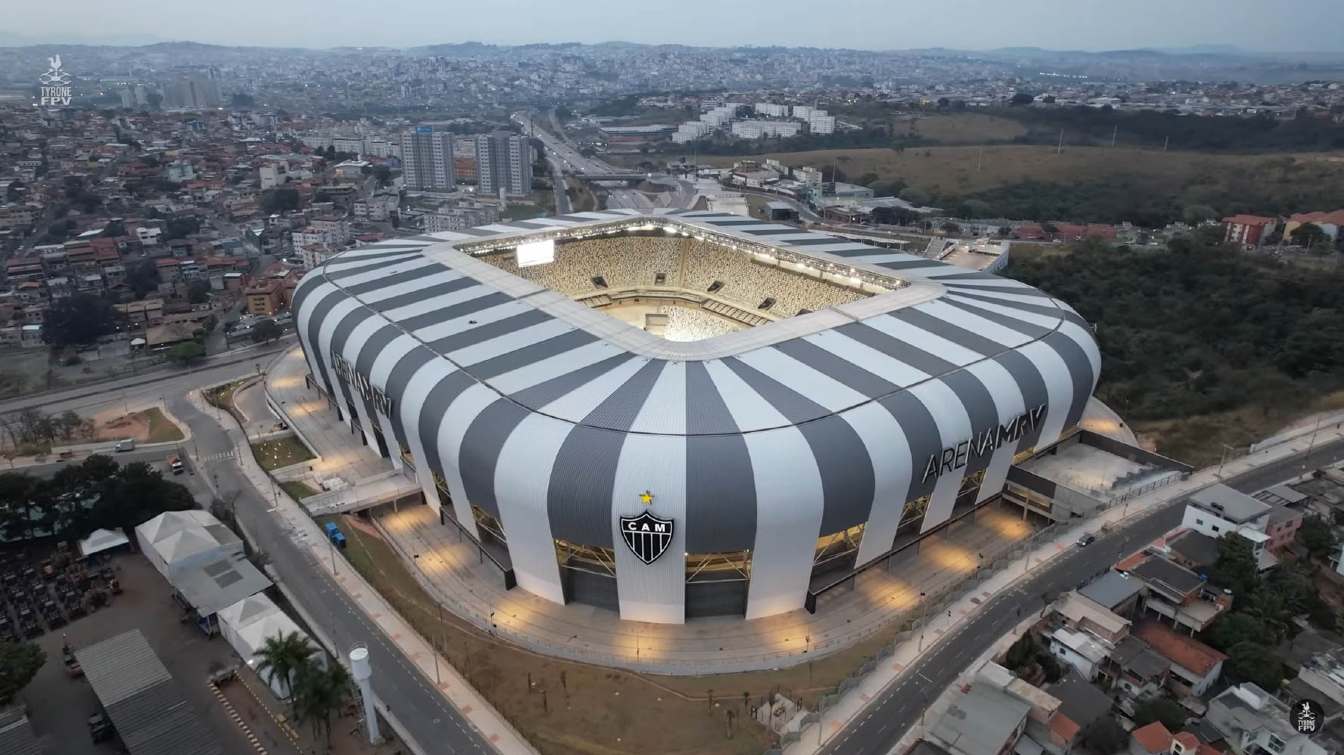 © Tyrone FPV | Arena MRV
SOTY 2024: ad hoc Arena im Ernst-Abbe-Sportfeld, 15 329 pts
The fifteenth edition of the stadium of the year plebiscite went down in history not only because of the debut of the Spanish-language version of the competition on the EstadiosDB website, but above all because of the most sensational outcome in years. At midnight on March 3, 2025, after counting 9,750 valid votes, it turned out that the massive favorite – the legendary and astronomically expensive Estadio Santiago Bernabéu – had to concede superiority to a much more modest, but extremely important for the local community venue from Germany. The difference was a mere 250 points!
The winner was the home of the German lower-league FC Carl Zeiss Jena, gathering over 15,000 points. The triumph in the plebiscite acts as a clasp binding almost a hundred years of history of this place — the original stadium was inaugurated exactly in August 1924, and since 1939 it has borne the name of Ernst Abbe, a local physicist and optician.
From the old facility, only the west stand (built at the end of the 90s) was preserved, to which three completely new sectors were added. The whole thing was bound together by a new roof with photovoltaic panels and a translucent, white facade, under which lighting was integrated. The arena's capacity increased to 15,432 seats, a full third of which are standing areas, so highly valued in Germany. Care was also taken to provide a new main stand (on the eastern side) with glazed back facilities, in which the title sponsor — the company ad hoc — located its headquarters.
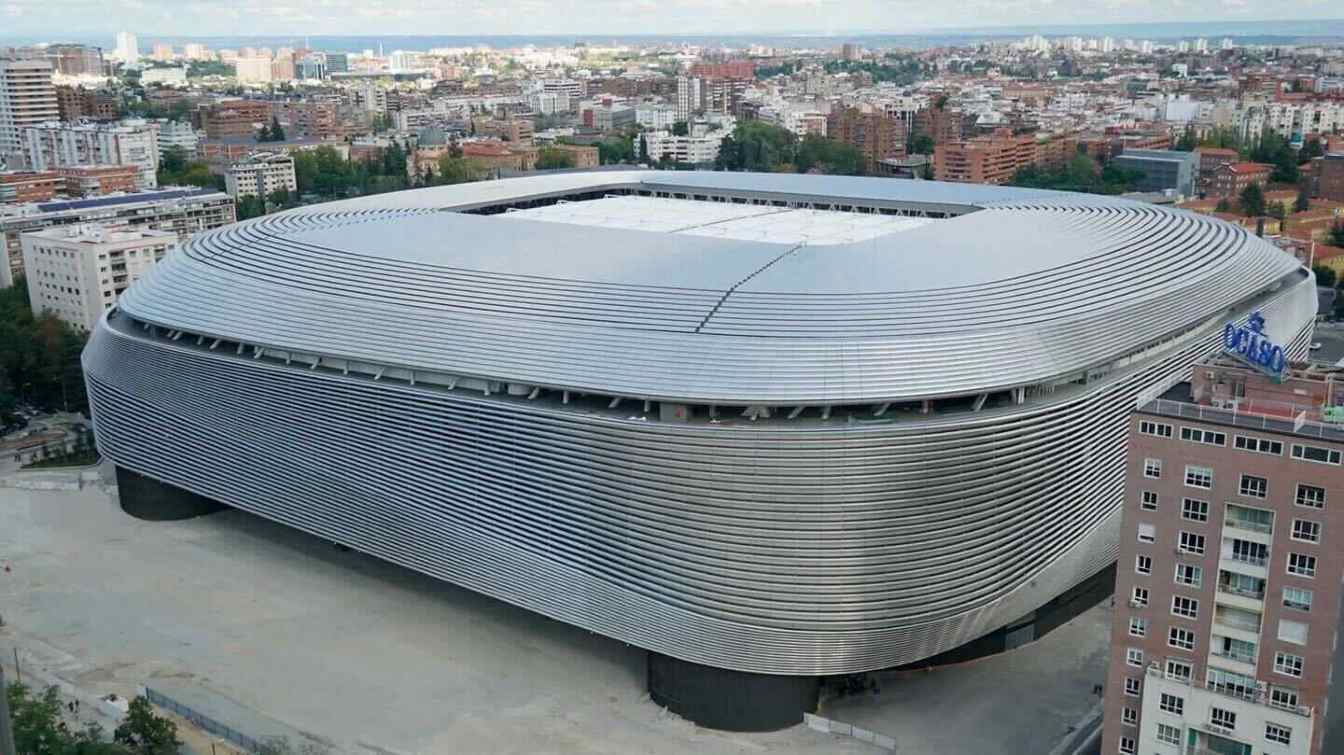 © Real Madrid | Estadio Santiago Bernabéu
SOTY 2025: Stade Prince Moulay Abdellah, 14 481 pts
The sixteenth SOTY edition went down in history primarily as the first in which the Public Award went to Africa. Voting summarizing venues opened in 2025 ended at midnight on March 10, 2026. Although the turnout was slightly lower, the result was decided by the gigantic determination of the residents of Morocco, proud of their new national showcase. A total of 7,451 fans took part in the voting.
With a score of almost 14.5 thousand points, the flagship arena of Rabat won. The new Stade Prince Moulay Abdellah replaced the worn-out facility from 1983, which was ultimately closed in 2023. The new, monumental structure was built at an express pace in just two years, being the focal point of Moroccan preparations for the Africa Cup of Nations and the 2030 World Cup.
The Orange Atelier office and the renowned, global Populous studio were responsible for the venue's design. The biggest impression is made by the phenomenal, large metal shell in the shape of traditional, local motifs referring to palm leaves. This structure serves a dual function: roofing for the stands and an effective facade, which can be illuminated at night, giving the massing lightness and rhythm. The interior hides multi-tier stands, designed with the thought of creating an unforgettable atmosphere. Particular attention is drawn here to the south stand, which features an extensive, uniform upper tier created specifically for the most passionate fans of the local club AS FAR. The stadium constitutes the center of a massive sports complex, next to which there is, among others, an indoor arena and a covered swimming pool, and the whole thing was located in a very convenient location near the main bus station in the capital.
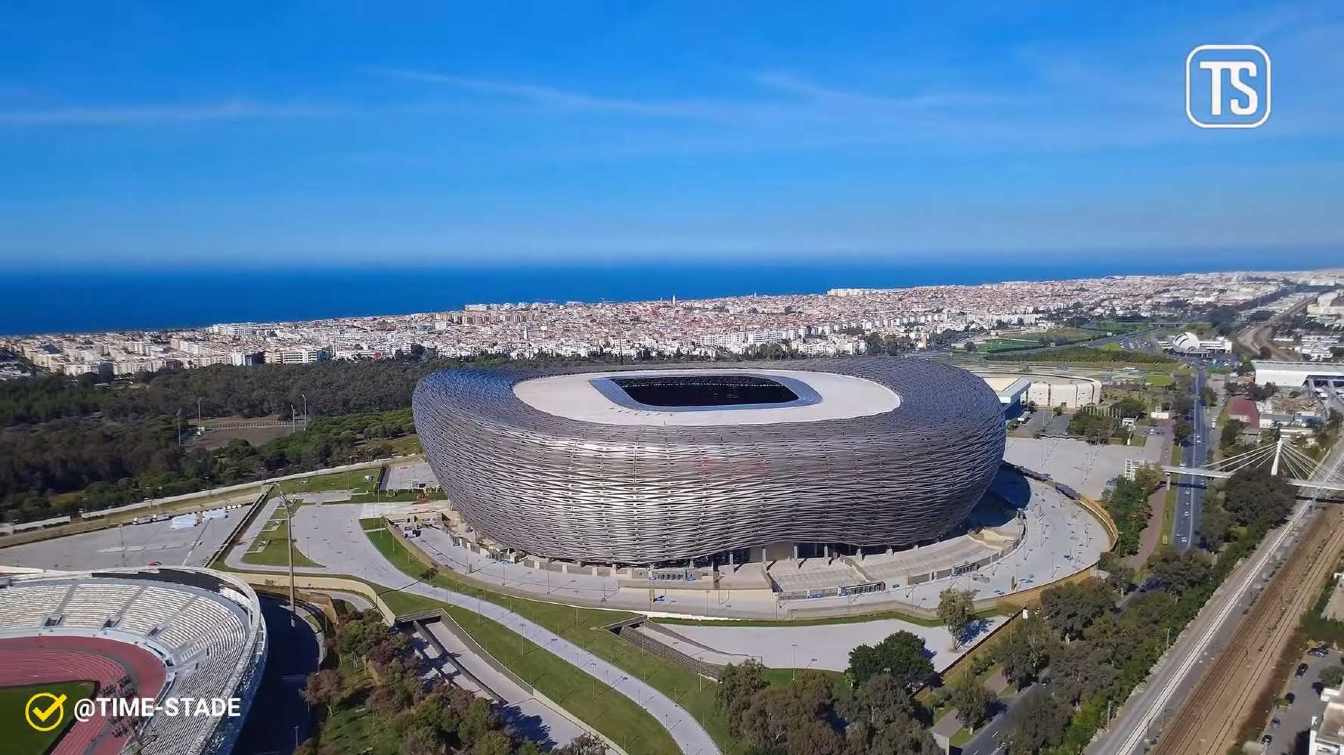 © TIME-STADE | Stade Prince Moulay Abdellah
Advertisement