 StadiumDB
Spain: The highest tier of Camp Nou is rising! Conflict and workers’ protests
source: StadiumDB.com; author: Paulina Skóra
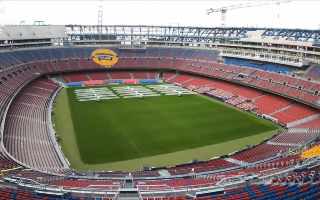 Camp Nou is entering one of the most intense phases of its redevelopment. Progress on the third tier, the façade and VIP areas is bringing the stadium closer to its new form, while at the same time tensions are growing over licensing, scheduling and workers’ protests on the construction site.
Advertisement
Construction of the third tier at Camp Nou enters a decisive phase
One of the key elements of the project is the third tier of Spotify Camp Nou, which will determine the venue’s future capacity. In the lateral section of the stadium, the structure is already close to completion, with remaining gaps concentrated mainly around the Main Stand and the Gol Sud and Gol Nord sectors. Work is currently most advanced in the latter area, although the club stresses that the schedule remains under control. The new tier will not only increase capacity but also change the perception of the stadium, making Camp Nou more vertical, compact, and monumental, in line with modern standards for the world’s largest football arenas.
VIP boxes and hospitality areas key to Barcelona’s finances
Alongside the construction of the stands, hospitality areas are being developed intensively. The VIP boxes at Spotify Camp Nou, located between the second and third tiers, already feature installed glazing across much of the structure. These spaces are expected to generate a significant share of the club’s future revenue, particularly through non-sporting events.
The management of FC Barcelona assumes that the first VIP boxes could become operational even before the full stadium redevelopment is completed, allowing new revenue streams to be activated earlier than initially planned.
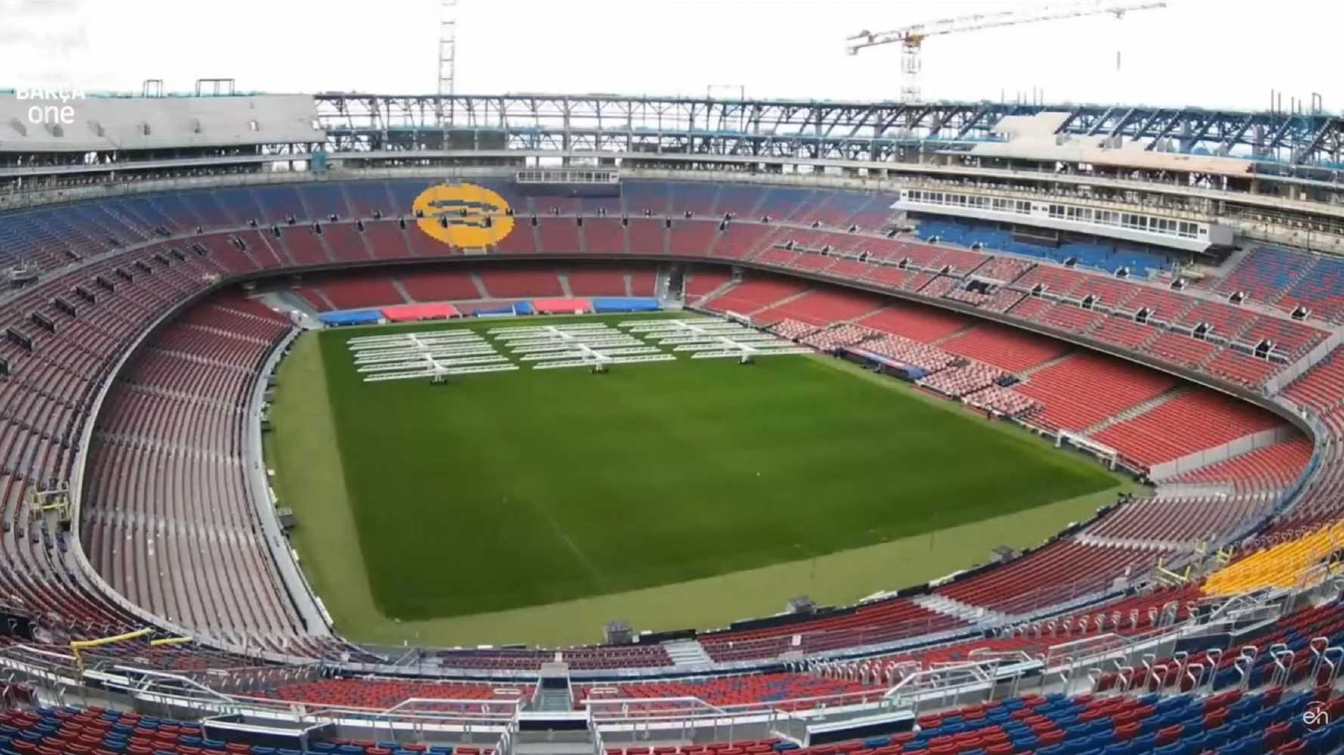 © Espai Héctor | The third and final tier of seating at the new Camp Nou is currently under construction.
Spotify Camp Nou façade reshapes Barcelona’s skyline
Substantial progress is also visible on the exterior of the stadium. Ceramic panels are being installed on the façade, especially along the lateral sections, which will eventually give the stadium its distinctive, wave-like form. Their color scheme directly references the club’s colors, while an integrated LED lighting system will ensure that Camp Nou presents a striking appearance after dark. The new façade is intended to become one of the symbols of modern Barcelona, combining the stadium’s sporting function with the role of an architectural city icon.
Circulation routes are another important element of the redevelopment. Escalators connecting the future official club store with the seating sectors have already been installed, significantly improving spectator comfort. Although technical tests are underway, regular use is planned for later in the season, once internal works reach a sufficient level of completion.
Delay in 1C license for Spotify Camp Nou
Spotify Camp Nou is still awaiting the 1C license that would increase capacity to 62,000 spectators. FC Barcelona is planning a full reopening for matches against Mallorca (7 February), Levante (22 February), or Villarreal (1 March). The delay is due to the holiday period and additional requirements imposed by the city council. The current 1B license allows for a maximum attendance of 45,401 spectators. The club is pushing for the next phase to be completed before the elections scheduled for 15 March.
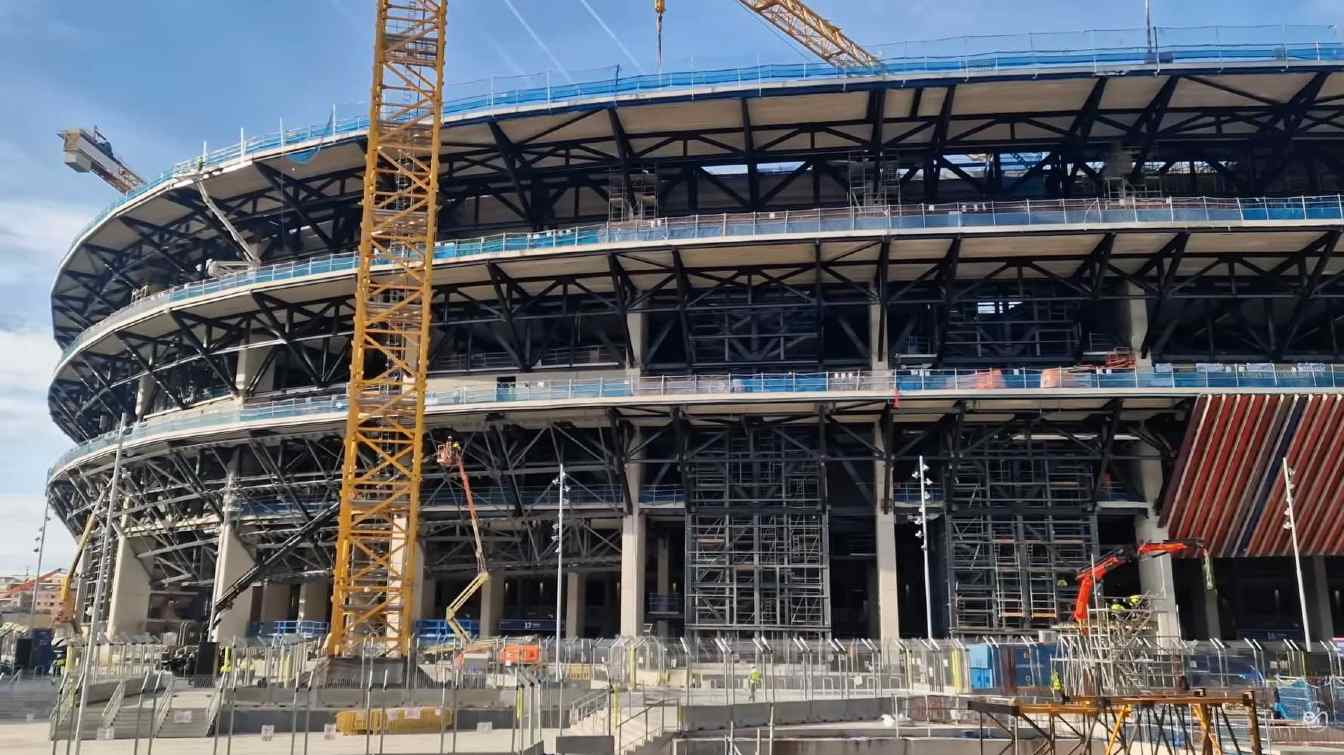 © Espai Héctor | The façade of FC Barcelona’s new stadium is visible for the first time since construction began.
Worker protests escalate during Spotify Camp Nou redevelopment
One of the most problematic aspects of the Spotify Camp Nou modernization has become the protests by workers employed by subcontracting companies involved in the project. What initially began as a dispute over individual dismissals has evolved into a serious labor conflict involving trade unions, the labor inspectorate, and the management of FC Barcelona.
Groups of workers have launched protests directly outside the stadium, setting up makeshift camps and organizing daily pickets. Their aim is to draw attention to what they describe as systemic violations of labor rights occurring during the execution of one of the largest infrastructure projects in the history of Catalan sport.
Layoffs and allegations of illegal employment at the Camp Nou site
At the heart of the conflict are layoffs affecting workers employed by subcontractors, including companies operating under the main contractor, the Turkish firm Limak. Trade unions claim that some workers lacked the required work permits or were employed in the informal economy, leading to violations related to residency legalization, social security contributions, and wages.
According to protesters, some workers performed their duties for months without full social protection and were dismissed after reporting irregularities. The companies deny these allegations, arguing that workforce reductions are solely the result of construction progress and the natural decline in labor demand as the project moves into subsequent phases.
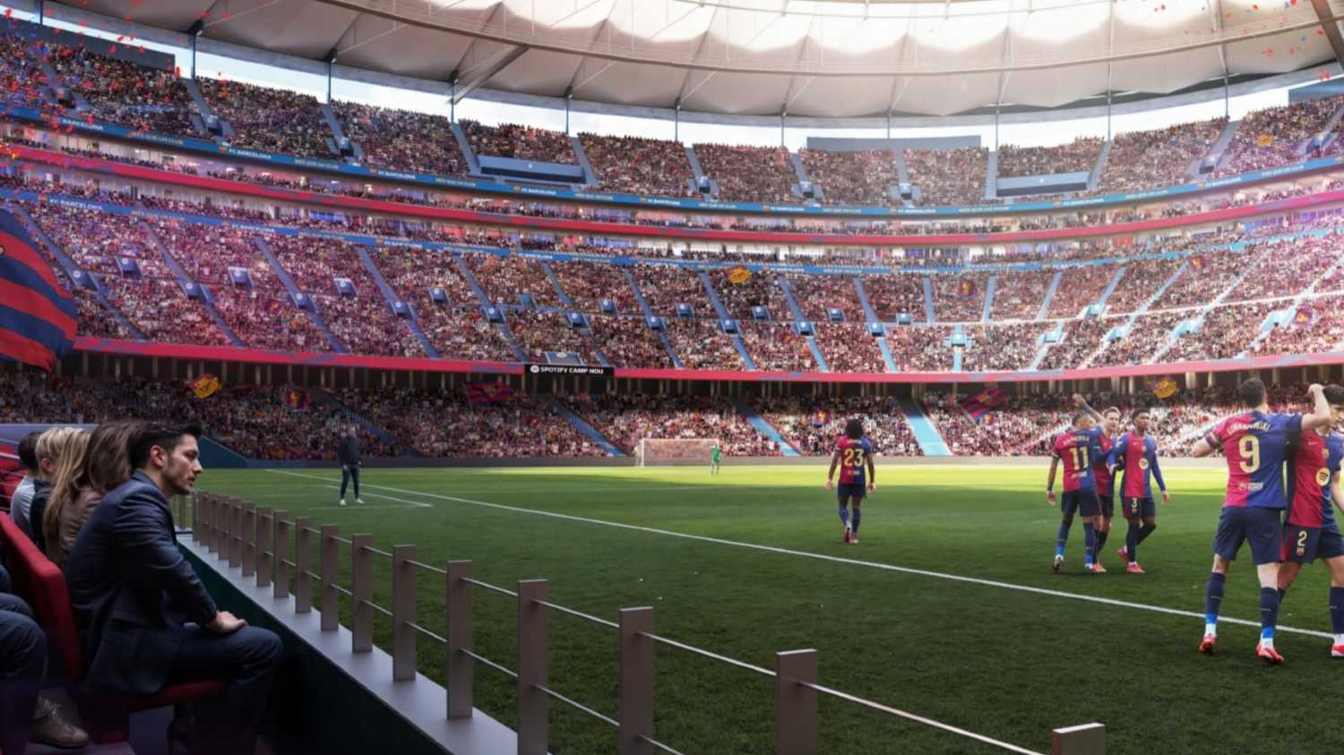 © FC Barcelona | Protests by workers from subcontracting companies involved in the construction of Camp Nou may affect the pace of the works.
Labor inspection investigates stadium subcontractors
The Catalan Labor Inspectorate has taken an interest in the matter and is conducting multiple inspections of companies operating at the Camp Nou construction site. Available information indicates that previous inspections already uncovered irregularities related to working hours, wages below collectively agreed rates, and unpaid overtime.
The current investigations have a much broader scope and also address migration issues and the legality of employing workers from outside the European Union. Their outcomes could result in substantial financial penalties and, in extreme cases, restrictions on further participation by certain companies in the project.
FC Barcelona between responsibility and club image
Although FC Barcelona is not formally the direct employer of the protesting workers, growing social and media pressure is increasingly directed at the club. Trade unions argue that as the project’s investor and beneficiary, Barça bears moral and indirect responsibility for working conditions at the stadium construction site.
For the club, this is an exceptionally delicate situation. On the one hand, it is fighting to rebuild its financial and sporting position; on the other, each new controversy damages the image of an institution that has emphasized its social and ethical values for decades. Voices are emerging that FC Barcelona should exercise tighter oversight of its subcontracting chain and introduce more restrictive control mechanisms.
Advertisement