 StadiumDB
Spain: Camp Nou opens after a year of delay. Euphoria mixed with criticism of the project
source: StadiumDB.com; author: Paulina Skóra
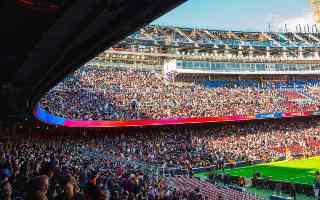 On Friday, November 7 at 11:00 a.m., FC Barcelona held an open training session at Spotify Camp Nou, attended by 21,795 fans. After 894 days of closure, the team officially returned to its historic home.
Advertisement
A long-awaited comeback
The club had already announced that all available tickets were sold out two days earlier. The huge excitement over Barça’s homecoming meant that in record time, almost the entire capacity of the Tribuna and Gol Sur sections — covered by the stadium’s Phase 1A license — was filled.
Beyond its emotional symbolism, the session served as a general rehearsal ahead of the stadium’s full reopening for official matches. Once the club receives Phase 1B authorization, expected on November 22 or 29, the Lateral stand will also open, raising capacity to 45,000 spectators. The final stage, activating the Gol Nord section (Phase 1C), is planned for December 2025, marking full functionality of the venue.
Local residents fear traffic chaos
While excitement in the city is palpable, the reopening has also sparked controversy. On the eve of the open training, the Sant Ramon residents’ association held a meeting attended by more than a hundred locals to discuss planned changes to traffic management around the stadium — measures they say will make normal life impossible.
Association president Andrés Quílez presented the city’s proposed mobility plan for match days, demanding residents be allowed to access the neighborhood via Avinguda de Xile and that traffic on Cardenal Reig Street remain open. He criticized the city council for failing to consult locals, despite earlier promises.
Quílez also denounced the alternative route suggested by the council, leading through Collblanc in L’Hospitalet de Llobregat: We’re proposing a 600-meter route, while theirs is over two kilometers long — it’s absurd. Add to that the traffic jams from the planned 3,200 parking spaces near Camp Nou.
Tweet FC Barcelona https://x.com/FCBarcelona/status/1986754535264538869
— FC Barcelona (@FCBarcelona) June 11, 2025
Buses and congestion — a new neighborhood problem
Another source of concern is the bus circulation plan. According to the city’s design, coaches will drop fans off on Martí i Franquès Street, then — empty — circulate through Sant Ramon before parking on Avenida del Doctor Marañón. We don’t want bans, but we also don’t want 50 buses driving aimlessly through our district,
said Quílez. The residents proposed a simpler solution: allowing coaches to remain parked on Martí i Franquès until the match ends, to avoid post-game gridlock.
Threat of protests and legal action
Frustrated by the lack of dialogue, residents now plan to mobilize. After earlier failed attempts to create a victims’ platform, they have announced concrete action: a protest on November 12 during the Sant Ramon District Council meeting, targeting councilor David Escudé.
More demonstrations and even legal proceedings may follow to defend their right to free movement within their neighborhood. Locals accuse FC Barcelona and city officials of acting jointly while ignoring community concerns.
The wider Espai Barça redevelopment — which includes the new Camp Nou, Palau Blaugrana, Petit Palau, offices, and a hotel — could deepen these mobility issues. If they don’t listen to us, this conflict could drag on for years — maybe until 2032, when the whole project is due to finish,
warned Quílez.
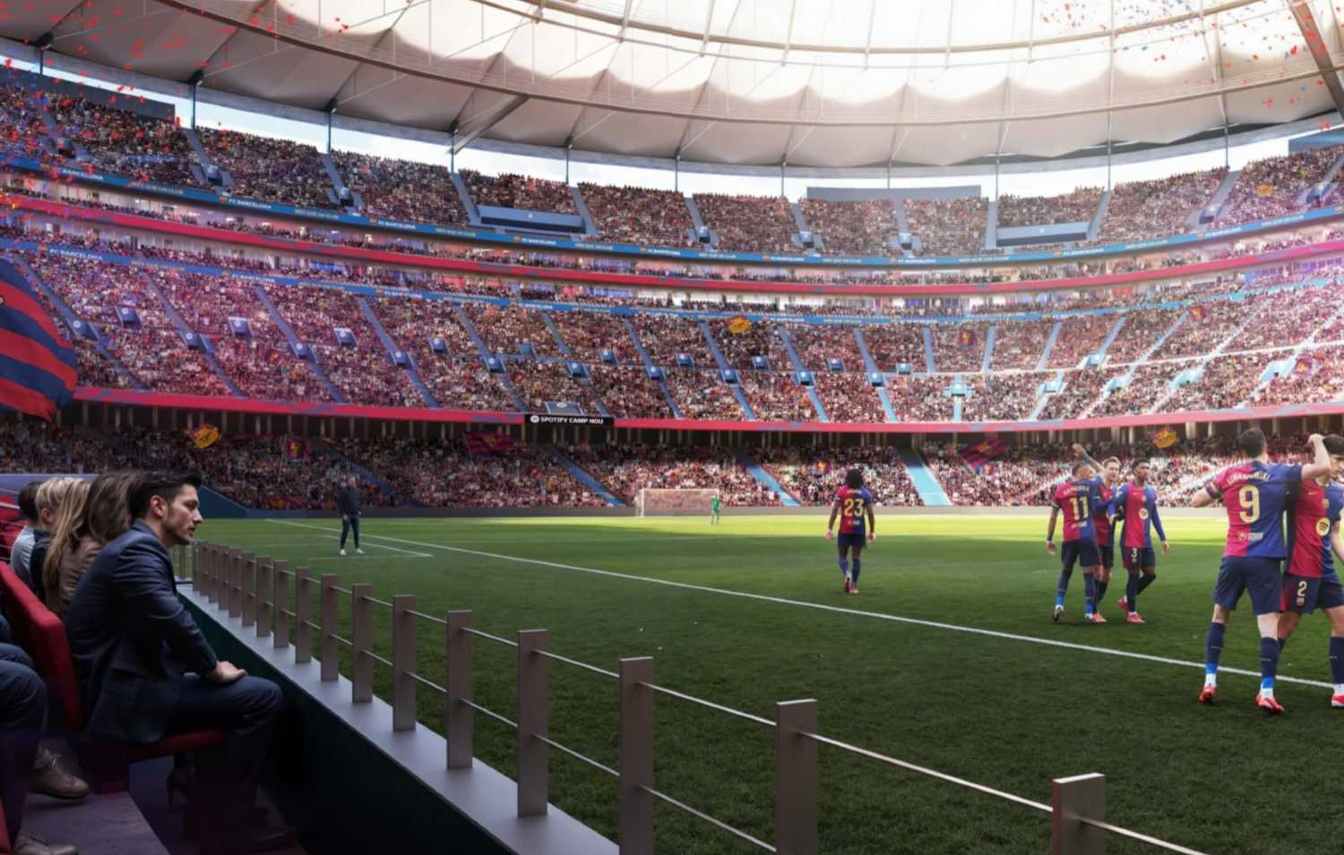
Spanish architect raises alarm
Similar concerns have been voiced by Spanish architect Ignacio Morente, who warns the new stadium will age faster than expected.
In his analysis, the design fails to meet the architectural, urban, and aesthetic standards worthy of a club of Barça’s stature.
Morente notes that the surroundings haven’t been properly integrated, risking permanent traffic problems. The project focuses solely on the building itself, ignoring its relationship with the urban fabric. It’s a planning mistake Barcelona will feel every time there’s a major event.
Lack of identity and design courage
Designed by Fermín Vázquez in collaboration with Japan’s Nikken Sekkei, the new Camp Nou was meant to blend modernity with the legacy of Francesc Mitjans, architect of the 1957 stadium. Morente, however, finds the result disappointing: It’s a white building with no link to the club’s colors or the spirit of Barcelona. It lacks the symbolism and emotion that should define this place.
He adds that while the three access levels and open façade aim to suggest lightness, in practice they offer only a superficial sense of modernity. There’s no real innovation, no sustainability, no flexibility. It’s conservative, not visionary.
Lessons from elsewhere
Morente points to examples such as Munich’s Allianz Arena, designed by Herzog & de Meuron, whose ETFE façade reduces noise and adapts lighting to events. He also recalls Norman Foster’s 2007 proposal, inspired by Catalan trencadís mosaics and Barça’s colors. Though once rejected as too radical, Morente now calls it visionary and timeless.
Camp Nou is a football temple, but this rebuild is a halfway measure. In a few years, we’ll be talking about another renovation. Barcelona deserves something bolder, more visionary — and truly Barcelonan.
Advertisement