 StadiumDB
Spain: Camp Nou needs hundreds of millions more euros. Will Barcelona take on a larger loan?
source: StadiumDB.com ; author: Paulina Skóra
 The redevelopment of Spotify Camp Nou could cost hundreds of millions of euros more than originally planned. According to Spanish media, FC Barcelona is considering increasing the financing of the Espai Barça project as inflation, additional structural work and construction delays continue to push costs higher.
Advertisement
Spotify Camp Nou renovation costs continue to rise
When FC Barcelona launched the Espai Barça project, the total investment was estimated at around €1.45 billion. Financing was secured through a group of investors led by Goldman Sachs. The budget was intended to cover not only the redevelopment of Spotify Camp Nou, but also the construction of the new Palau Blaugrana, additional facilities and the transformation of the entire stadium district.
However, the original financial assumptions now appear to have been overly optimistic. According to reports in the Spanish media, the cost of the project could increase by an additional €300–400 million. Within the club, there is even discussion of expanding financing by around €500 million to provide a buffer against further unforeseen expenses.
Several factors have contributed to the rising costs. The most significant remains the global increase in construction material prices, driven in part by the war in Ukraine. Over recent years, the cost of steel, aluminium, cement and other essential materials has risen sharply.
Another challenge emerged during the renovation itself. Engineers discovered that the first and second tiers of the stadium required more extensive structural repairs than initially expected. The budget has also been affected by changes in construction and safety regulations. Additional requirements have led to greater use of steel and concrete than envisaged in the original plans.
Restrictions on construction hours have also proved costly. Barcelona initially hoped work could continue seven days a week on a three-shift schedule. Local authorities rejected that proposal after taking into account concerns raised by residents of the Les Corts district. As a result, contractors have been unable to operate at maximum capacity, affecting both the pace of construction and the overall cost of the project.
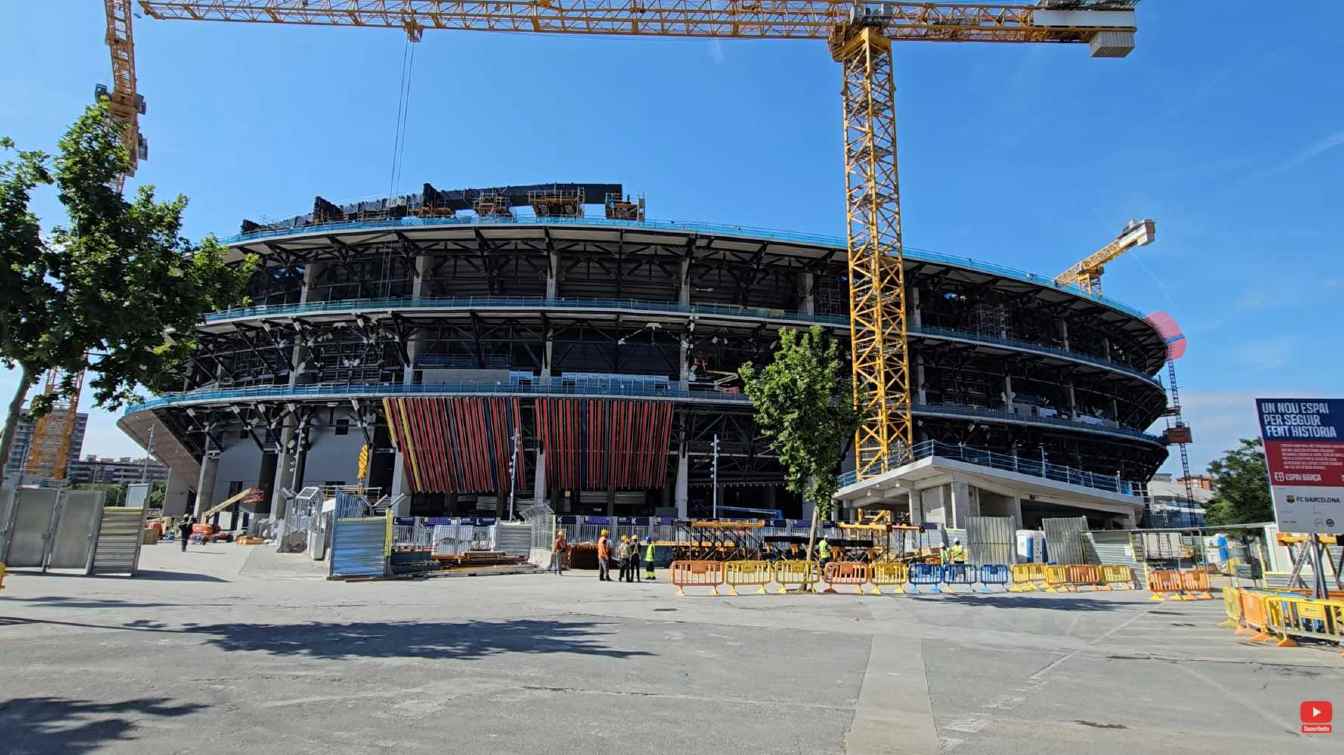 © Dani Pardo "Cosas cotidianas" | The redevelopment of Spotify Camp Nou could become significantly more expensive than initially expected. According to Spanish media, FC Barcelona is considering increasing Espai Barça financing by several hundred million euros.
FC Barcelona considers increasing its Goldman Sachs financing
Club officials are currently evaluating when to present members with a proposal to increase the debt associated with the Espai Barça project. One option would be to call a special assembly as early as July, where members would also formally approve the composition of the board following the latest elections.
Alternatively, the issue could be discussed during the club’s regular assembly in October, when Barcelona traditionally reviews its financial results and approves the budget for the following season. Increasing the financing package would raise the club’s extraordinary debt, although Barcelona maintains that repayment has always been planned through future revenue generated by the new stadium and its commercial infrastructure.
Construction of the third tier gathers pace
With the football season over, work at the stadium has accelerated significantly. The current priority is the completion of the third tier and the two VIP rings, which are expected to play a key role in generating future revenue.
In recent months, the stadium has reached another milestone, increasing its capacity to more than 62,000 seats. Once completed, Spotify Camp Nou is expected to accommodate around 105,000 spectators, making it one of the largest football stadiums in the world. After work on the upper tier is finished, the final phase of the project will begin: the installation of a vast roof covering the entire venue.
One of the main objectives of the redevelopment is to significantly increase the stadium’s commercial potential. In addition to the expansion to around 105,000 seats, the venue will feature more than 9,000 premium and VIP seats. Revenue generated by these high-end hospitality areas is expected to become one of the main pillars supporting repayment of the debt linked to the project. The club is also targeting substantial growth in income from food and beverage operations, non-sporting events, retail space and international events.
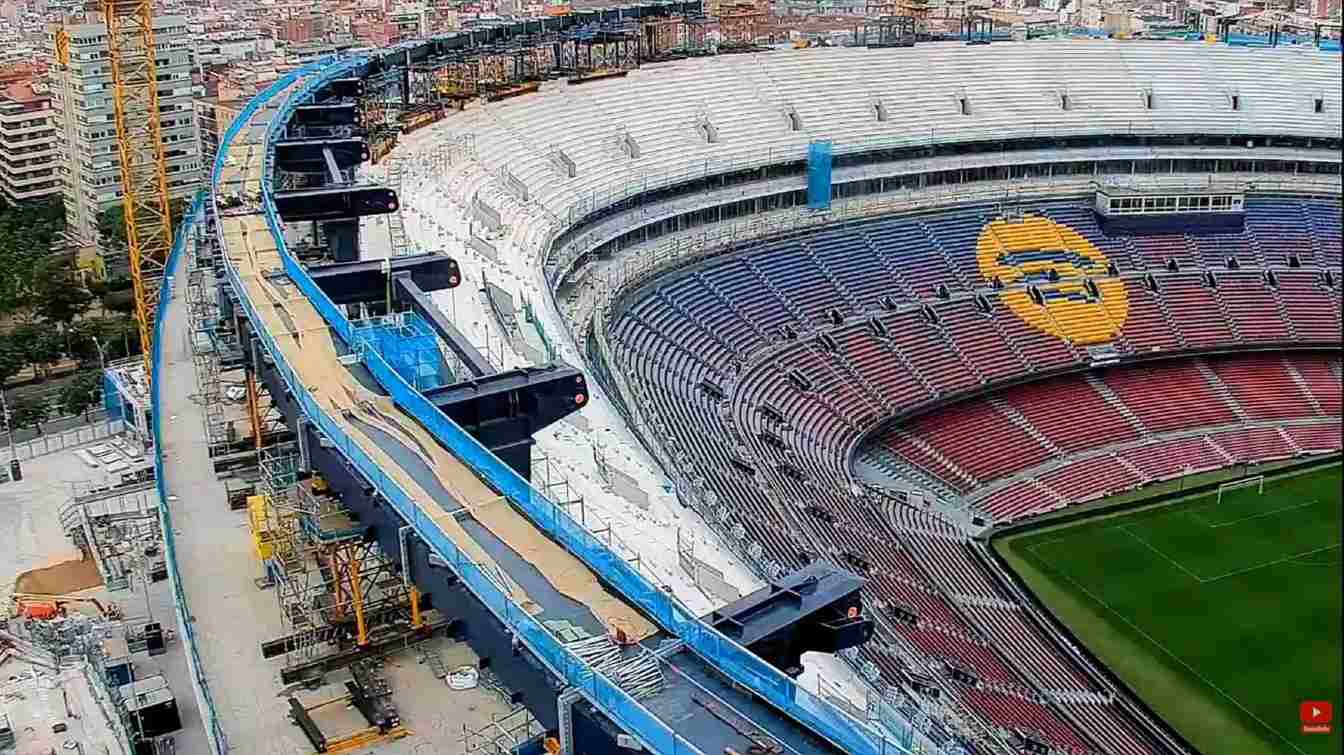 © Dani Pardo "Cosas cotidianas" | Rising construction costs, additional structural work and delays are creating new financial challenges for FC Barcelona. The club is reportedly evaluating a larger loan to keep the Camp Nou project on track.
FC Barcelona could return to Estadi Olímpic again
Despite the progress made, Barcelona remains cautious when planning future seasons. The club has already secured the option of continuing to use Estadi Olímpic Lluís Companys if necessary. The uncertainty revolves around the installation of the roof at Spotify Camp Nou. Officially, this phase is expected to take around four months, but experience from similar projects suggests such schedules are often extended. If work on the roof takes longer than anticipated, Barcelona could be forced to play part — or even the entirety — of the first half of the 2027/28 season away from its home stadium.
Advertisement