 StadiumDB
Spain: First phase of works begins on the new Benito Villamarín
source: StadiumDB.com ; author: Paulina Skóra
 After months of standstill, machinery has returned to Benito Villamarín and the works are entering a key phase. The bulk of the project begins with fundamental works that will lay the foundations for the ambitious redevelopment aimed at modernizing Real Betis’ stadium.
Advertisement
Benito Villamarín construction – scope of the initial groundwork phase
The first phase of the project is focused mainly on preparatory work ahead of the main stadium structure. This stage includes earthworks such as excavation and the construction of diaphragm walls, which will allow for the development of underground levels. It is one of the most technically demanding phases and lays the foundation for the rest of the project. Proper ground stabilization is crucial to ensuring the overall structural integrity of the stadium.
At the same time, the club and the contractor are working through a collaborative design process aimed at refining the final architectural and technological solutions. This approach is expected to improve cost control and keep the construction timeline on track.
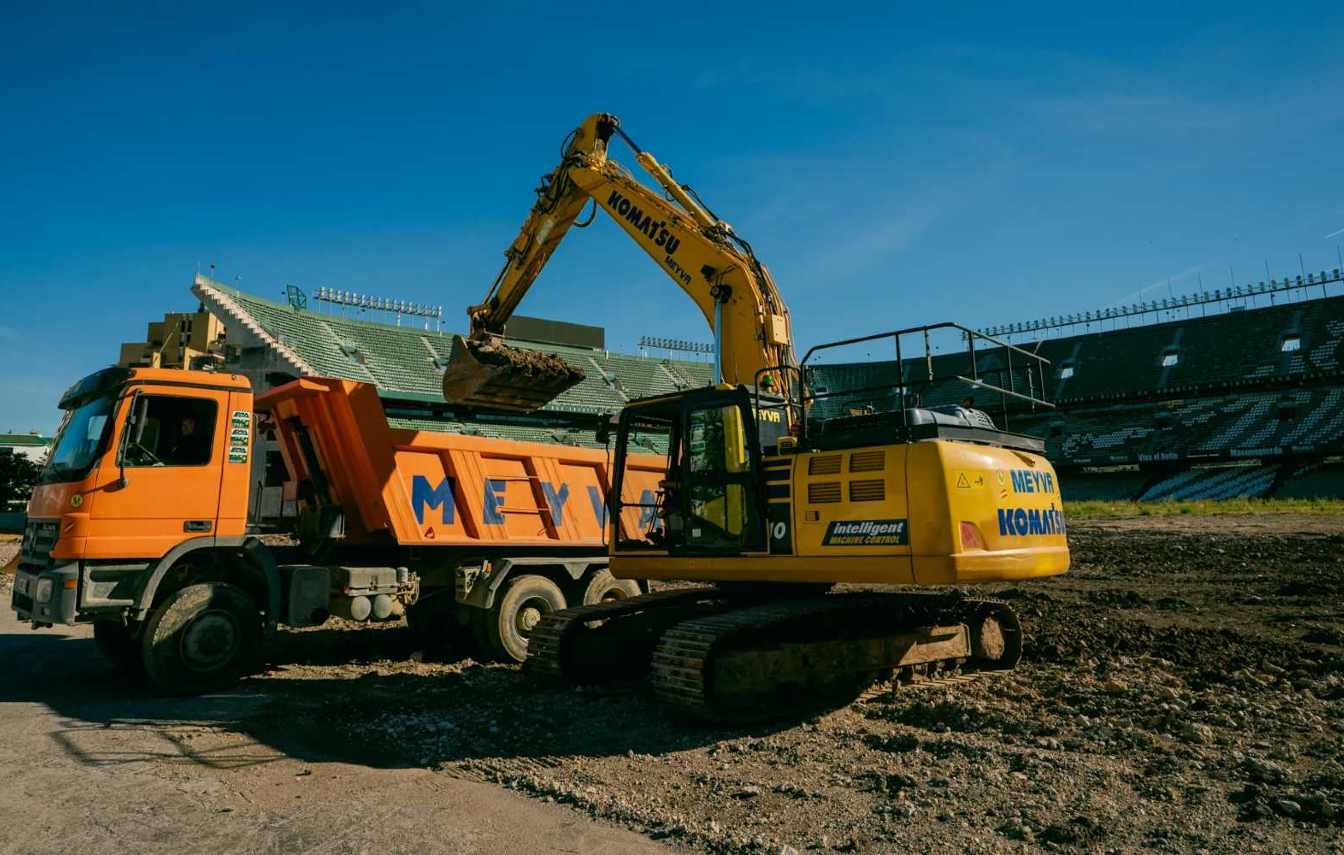 © Real Betis Balompié | The first phase of works at Benito Villamarín has begun, focusing on earthworks and diaphragm walls for the stadium’s future structure.
Benito Villamarín redevelopment and stand upgrades
The core construction works are scheduled for the second phase, which will involve a comprehensive modernization of the stadium. This includes the construction of a new Preferencia stand, as well as upgrades to the remaining sections of the ground. The Gol Norte, Fondo and Gol Sur stands will all be redeveloped to meet modern standards of functionality and spectator comfort. The design foresees steeper seating arrangements, intended to enhance both visibility and matchday atmosphere.
While the final capacity of Estadio Benito Villamarín has not yet been officially confirmed, the goal is to deliver a modern venue that meets high European standards and responds to the growing expectations of fans and event organizers.
The project also includes a complete transformation of the stadium’s exterior. A new façade and a full roof covering the entire venue will be added, significantly improving comfort regardless of weather conditions. In addition, modern technological solutions will be implemented, including advanced stadium management systems and digital infrastructure.
An important part of the plan is the development of supporting infrastructure. This includes underground parking beneath the Preferencia stand and a new commercial building. The latter is intended to host services and retail, generating additional revenue outside matchdays. It forms part of a broader strategy to improve the stadium’s profitability and ensure year-round use.
 © Real Betis Balompié | The project includes a full stand redevelopment, a new roof, and commercial and parking facilities to enhance the stadium’s functionality.
Benito Villamarín project and its impact on the Heliópolis district
During the construction period, Real Betis will play its home matches at Estadio de La Cartuja. This solution allows the works to proceed without disruption from sporting events, but it also creates logistical and organizational challenges for both the club and its supporters.
The project is being carried out in a densely built-up urban area, which requires careful planning of construction activities. The club stresses that efforts are being made to limit noise and minimize traffic disruption in the Heliópolis district. Planning includes traffic management measures and monitoring the impact of works on the daily life of local residents.
Advertisement