 StadiumDB
World: Four stadiums, one match. Where will the 2030 World Cup final be held?
source: StadiumDB.com ; author: Jakub Ducki
 Two continents, three countries, and only one final. When the football world celebrates the centenary of the World Cup in 2030, one arena will go down in history. Which stadium has the biggest chances for the final?
Advertisement
Tournament scheduled across three continents
The 2030 World Cup is an unprecedented undertaking. The main part of the tournament will be co-hosted by Spain, Portugal, and Morocco, while three opening matches will be played in Uruguay, Argentina, and Paraguay – as a tribute to the centenary of the competition.
The final list of host stadiums will be approved in December 2026. FIFA noted, however, that officially announcing the final venue is a premature decision – pointing out that for the 2026 World Cup, the final city was announced only two years before the tournament. Unofficially, however, the backstage games are in full swing.
The percentage estimates below represent an editorial assessment of probability based on available media reports, analysis of stadium infrastructure, and the political and organizational context of the tournament. They are not official FIFA forecasts, but rather an attempt to illustrate the current balance of power in the race to host the final.
Estadio Santiago Bernabéu: 40% chances
Santiago Bernabéu is widely considered the favorite. The head of the Spanish Football Federation, Rafael Louzan, leaves no illusions about what his country wants: Spain has been proving its organizational capabilities for many years. It will be the host of the 2030 World Cup, and the final of this championship will take place right here
. The journalist of the Madrid daily Marca, Roberto Gómez, claims that FIFA has already made the decision on choosing the final stadium, and it will be the home of Real Madrid. According to his sources, FIFA President Gianni Infantino had personally informed the Spanish Prime Minister Pedro Sanchez about this fact. The choice of Bernabéu is – as Gómez added – also a gesture of recognition for the history and successes of Los Blancos.
Bernabéu stands out among the candidates in terms of technology: it features a 360° screen, a retractable roof, and a hypogeum. In FIFA's December evaluation, the venue received a score of 4.3 points – the highest in the entire field, although tied with several rivals. There is one but,
however: the World Cup capacity of the stadium is 78,297 seats, while FIFA regulations for the final arena require a minimum of 80,000. It is unofficially speculated that Real Madrid is considering adding the missing approximately 1,700 seats, which is technologically possible given its architecture.
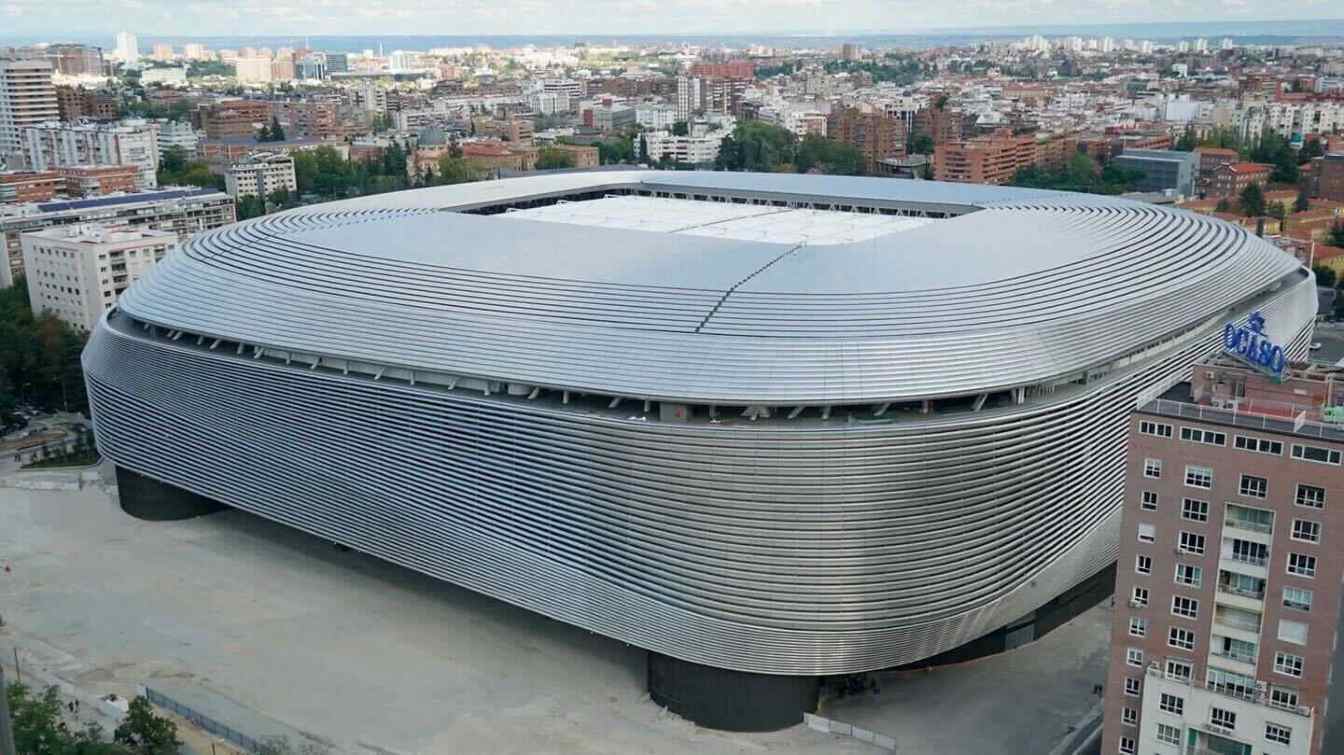 © Real Madrid | Estadio Santiago Bernabéu
Camp Nou: 30% chances
FC Barcelona relies on a completely different argument – scale. After the reconstruction is completed, Spotify Camp Nou is expected to hold 105,000 spectators, making it the largest stadium in Europe and by far the largest among the candidates for the final on the Old Continent. Capacity is a key criterion – and Camp Nou meets it with a surplus, without any regulatory doubts that weigh over Bernabéu.
A FIFA technical delegation scheduled a visit to Barcelona on March 9 for a direct assessment of the progress of the works. The renovation includes a new third tier, full roofing, VIP areas, media facilities, and ecological solutions. However, the stadium is still under reconstruction – and it is the pace and quality of the works that will weigh on FIFA's final assessment, alongside the undeniable global brand that the Camp Nou name carries. The president of the Spanish Federation spoke out a year ago in favor of Madrid as the venue for the final – which in this rivalry between the two Castilian-Catalan giants is not without significance.
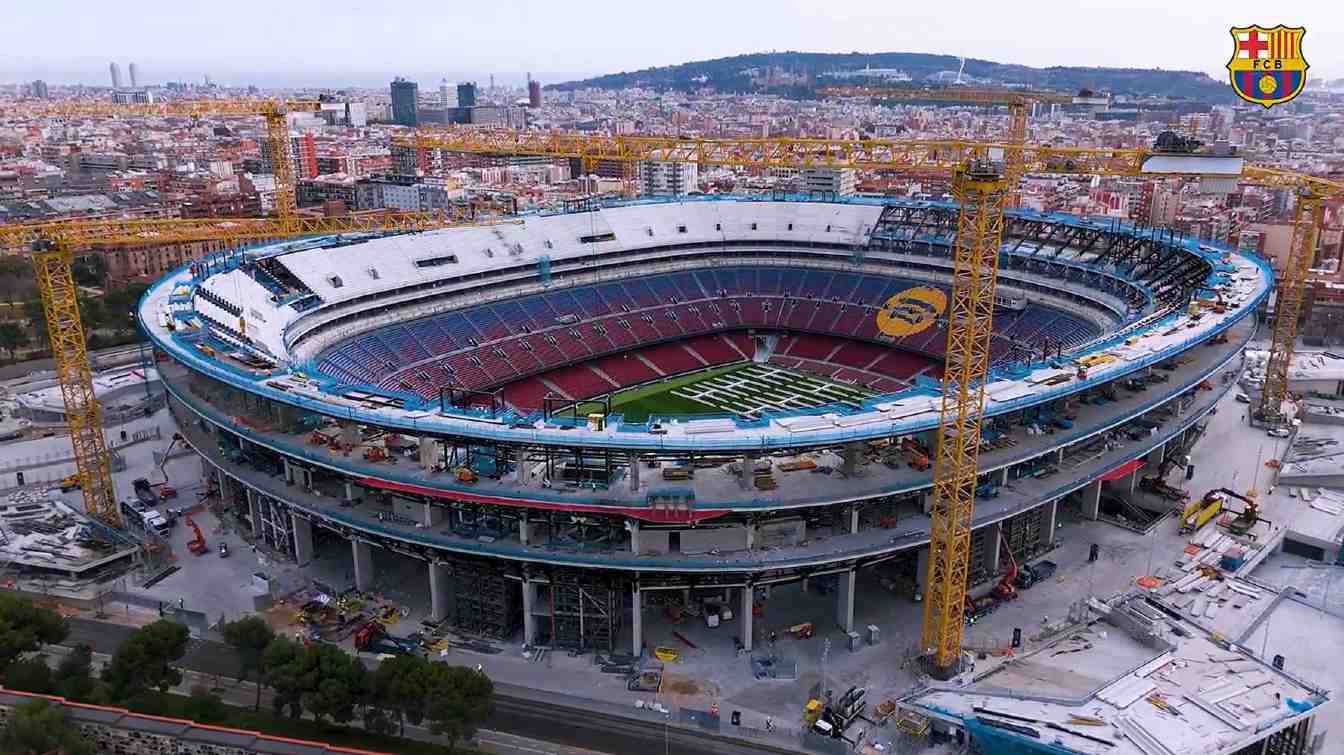 © FC Barcelona | Construction of Spotify Camp Nou
Grand Stade Hassan II: 28% chances
Morocco does not intend to settle for the role of an extra. The planned Grand Stade Hassan II in Casablanca is expected to accommodate 115,000 fans, which will make it the largest stadium in the world. The construction was designed so that the venue resembles a traditional Moroccan tent in form – the project is being carried out by the global architectural firm Populous. The company's COO Jorge Betancor announced in November: It will certainly be the largest stadium in the football industry, and if not the largest, then the second largest in the world.
Ambitious plans have their limitations. Construction started late last year and will take an estimated two and a half years. The stadium is being built in the far suburbs of Casablanca – on one hand, this avoids city traffic jams, but on the other, it requires an efficient transport network, which Morocco is building as part of a $10 billion railway expansion. An additional shadow on Moroccan ambitions is the Africa Cup of Nations final from earlier this year: chaos in the stands, player protests, and a temporary halt in play between Morocco and Senegal sparked a wave of criticism. Louzan commented on those scenes bluntly: During the Africa Cup of Nations, we witnessed scenes that harm the image of world football.
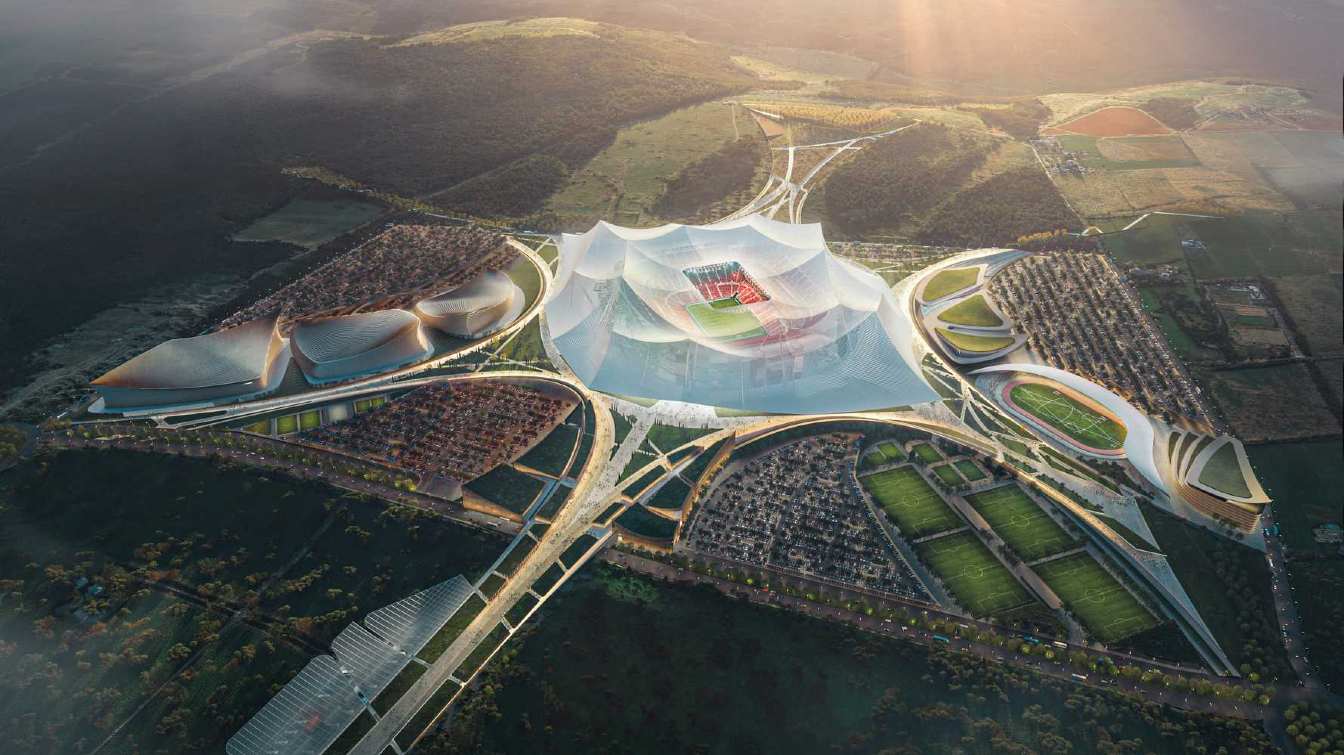 © Oualalou + Choi, Populous | Stade Hassan II project
Estádio da Luz: 1% chances
With significantly lower chances, but with significant symbolism, Lisbon's Estádio da Luz also remains in the game. Benfica presidential candidate Martim Mayer openly announced that the club will apply to host the final after the modernization is completed, which involves expanding the venue to 83,000 seats. The firm CBRE – the same one participating in the renovation of Camp Nou and Santiago Bernabéu – has been engaged for the project.
Lisbon is a different kind of bargaining chip in this rivalry. Portugal, as the third co-host of the tournament, could represent a neutral compromise in the eyes of FIFA – an option allowing to avoid tensions between Spain and Morocco. Behind the scenes at UEFA and FIFA, this scenario is reportedly being discussed with interest. Mayer summed up his club's ambitions concisely: Da Luz wants the 2030 World Cup final. Dreams are there to be fulfilled – and we are ready to do it.
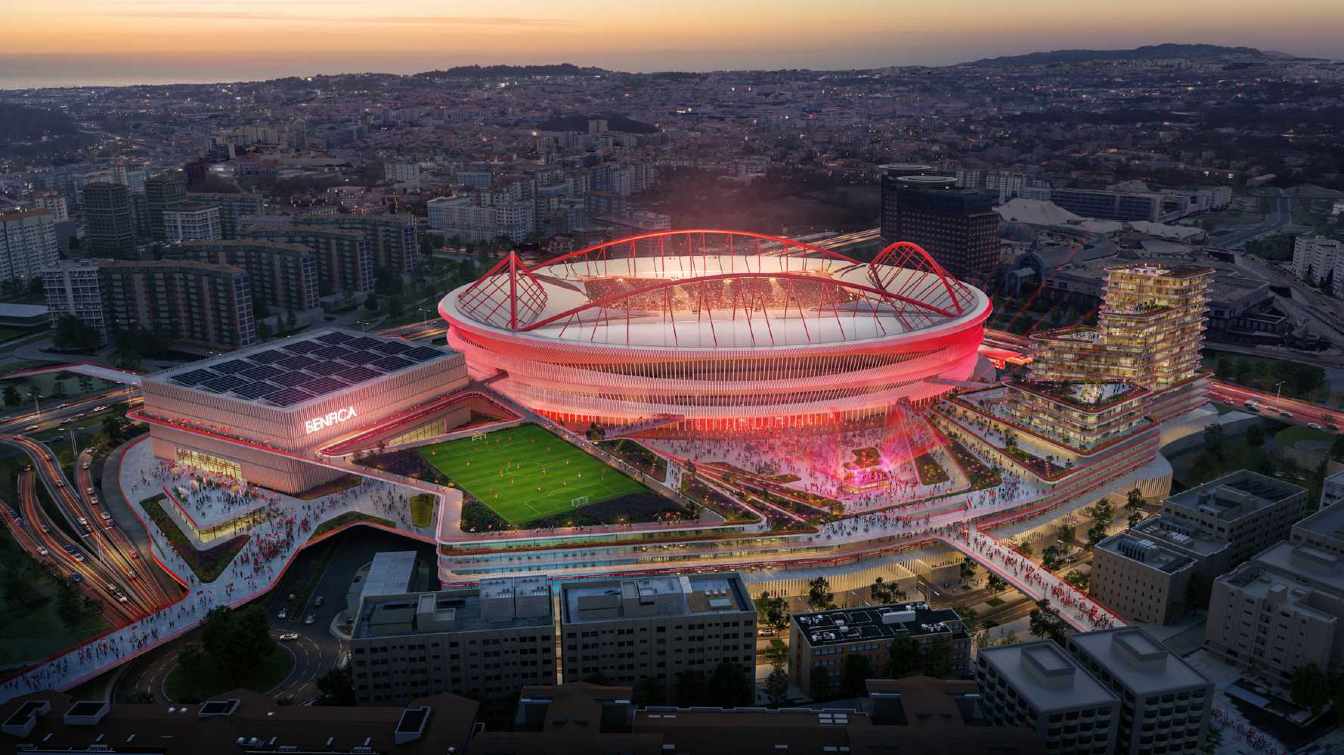 © Populous | Benfica District project
Advertisement