 StadiumDB
Spain: Betis’ stadium after the entire stand was demolished. A major transformation is coming soon
source: StadiumDB.com ; author: Paulina Skóra
 After months of paralysis, work at Estadio Benito Villamarín is set to resume imminently. Real Betis has selected the company that will carry out the first phase of the new structure’s construction, a step that allows the works to restart.
Advertisement
Acciona to start the first stage of the Benito Villamarín construction
The president of Real Betis, Ángel Haro, confirmed that the start of construction works is now very close. After many months of delays, the club’s board has decided to select the contractor for the first phase of the investment. The contract for the initial works at Estadio Benito Villamarín has been awarded to the Spanish construction company Acciona.
This decision marks the effective return of heavy machinery to the construction site. In the coming weeks, the first construction equipment is expected to appear at the stadium site. The first phase of the project will mainly involve earthworks and the preparation of foundations for the future stadium structure. Acciona will be responsible for excavation works and for building a diaphragm wall, a key structural element of the future facility.
As part of this stage, the foundation for an underground parking facility and the load-bearing structure for future stadium infrastructure will also be built. Although these works are preparatory in nature, they are essential for the start of the actual construction of the new stadium. According to the plans of Real Betis, the earthworks and construction of the basic structural infrastructure are expected to last several months. The club assumes that this stage will be completed between June and July, allowing further construction works to begin later in 2026.
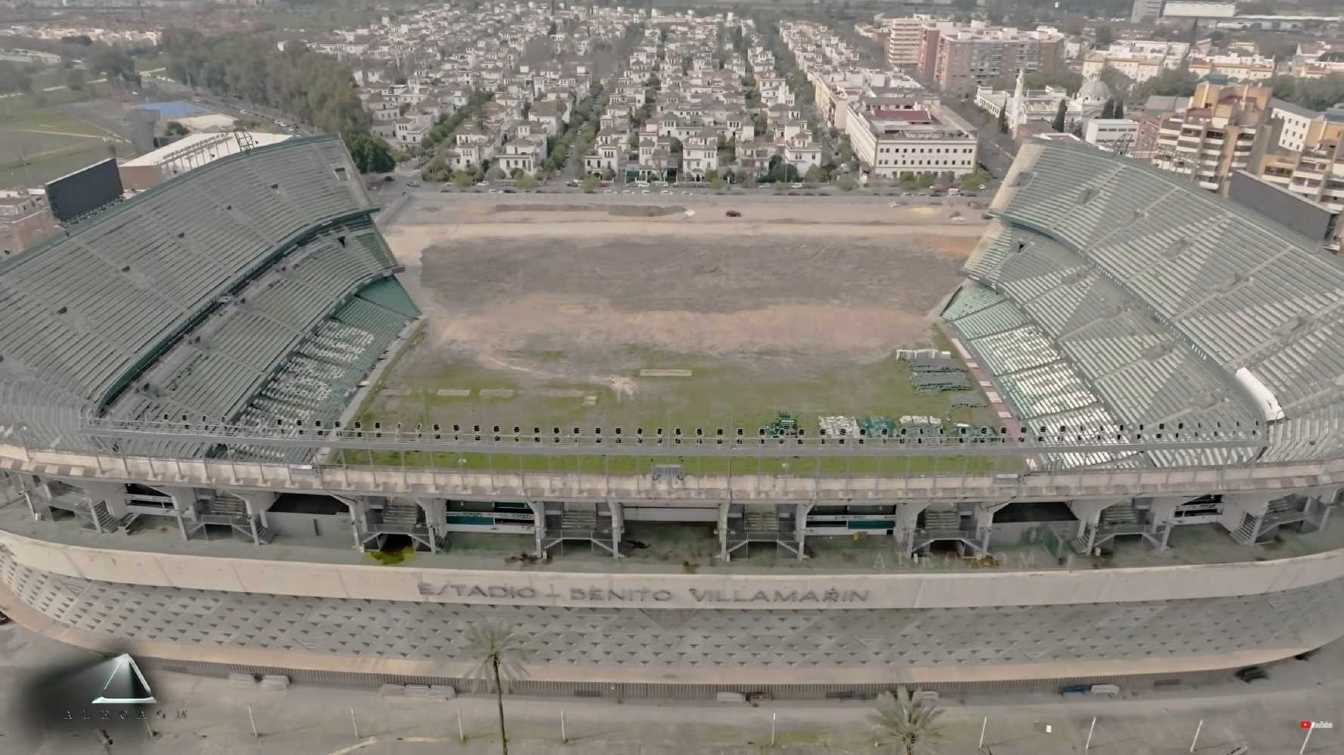 © Alecaom | The Estadio Benito Villamarín currently looks unique because it is missing one entire stand.
Modernization of Benito Villamarín after the demolition of the Preferencia stand
The start of further stages of the project has been made possible thanks to the completion of earlier demolition works. Last summer, the old Preferencia stand—one of the oldest parts of Estadio Benito Villamarín—was demolished. The demolition works were carried out by the company Herri Berri. After the demolition was completed, the stadium area remained largely empty for several months as the club conducted intensive negotiations with construction companies interested in carrying out the project.
Three major construction companies participated in the tender: Sacyr, Fomento de Construcciones y Contratas, and a consortium of Acciona and Sando. Ultimately, Acciona was selected as the contractor for the first stage of the investment. The selection process lasted several months. Bids were submitted at the end of January, after which the club held individual discussions with each bidder to thoroughly analyse costs and the implementation strategy for the project.
Complete redevelopment of Benito Villamarín will change its functions
The modernization plan involves much more than simply rebuilding the demolished stand. In fact, the project includes an almost complete redevelopment of Estadio Benito Villamarín. The new facility will include modern commercial spaces that will allow the club to increase revenues from non-sport activities. Plans include the construction of a large underground parking facility and a multifunctional service building on the esplanade along Doctor Fleming Street.
The stadium complex is expected to become a modern hub for sports, cultural and business events. The club hopes that the new infrastructure will significantly increase revenues in the long term. Club officials emphasize that the modernization of the stadium is crucial for the financial future of Real Betis. New commercial spaces, VIP boxes, restaurants and business areas are expected to enable a substantial increase in income.
The project aims to create infrastructure that will operate year-round rather than only on matchdays. As a result, the stadium is expected to become an important venue for business meetings, corporate events and cultural activities. Real Betis hopes that this approach will transform the club’s operational model and reduce its dependence on television rights revenue.
 © Real Betis Balompié | Three large construction companies submitted bids for the work: Sacyr, Fomento and the Acciona and Sando consortium.
Cost of the Benito Villamarín redevelopment reaches hundreds of millions of euros
According to information presented during the shareholders’ general meeting of Real Betis, the total cost of the investment is estimated at around €262 million. The construction of the stadium itself is expected to cost about €202 million, while the remaining funds will cover financing costs, advisory services and budget reserves. In recent months, the club has negotiated with contractors to optimize the project’s costs. Thanks to modifications to the project and renegotiation of certain financial conditions, there is a possibility of reducing the total value of the investment by around €20 million.
The financing will come from several sources. Part of the funding will be provided by CVC Capital Partners, while the remaining amount will be secured through external debt financing.
New Real Betis stadium expected to be ready in 2028
Real Betis expects the construction of the new Estadio Benito Villamarín to take approximately three years. The club plans to return to the modernized stadium at the beginning of the 2028/2029 season. Until then, the team will play its home matches at Estadio de La Cartuja. The temporary relocation is expected to last three seasons.
After the completion of all works, Benito Villamarín will become one of the most modern football stadiums in Spain. The new infrastructure is intended not only to improve fan comfort but also to significantly increase the club’s commercial opportunities and strengthen its financial position in European football.
Advertisement