 StadiumDB
Spain: Barcelona aims for the 2030 World Cup final. Can Camp Nou win FIFA’s approval?
source: StadiumDB.com ; author: Paulina Skóra
 Barcelona is increasingly asserting its role in the race to host the World Cup final. The city and FC Barcelona are placing their hopes on the potential of Spotify Camp Nou, believing that its scale, ongoing redevelopment and global profile could prove decisive for FIFA.
Advertisement
Why Barcelona wants to host the 2030 World Cup final
Barcelona’s city authorities argue that Spotify Camp Nou perfectly matches FIFA’s vision of a World Cup final venue. FC Barcelona’s iconic stadium combines sporting legacy, cutting-edge architecture and a scale befitting the most important match of the tournament. The city also highlights its global brand recognition, positioning Barcelona as one of the most attractive hosts for FIFA.
The city stresses its proven track record in staging major international sporting events, from the Olympic Games to UEFA Champions League finals. Camp Nou’s candidacy is intended to demonstrate that Barcelona is fully prepared, both logistically and infrastructurally, to welcome hundreds of thousands of fans from across the globe.
Camp Nou’s redevelopment as Barcelona’s strongest argument
One of Barcelona’s key strengths is the ongoing redevelopment of Spotify Camp Nou. The transformation of FC Barcelona’s stadium is scheduled for completion before 2030 and will fundamentally reshape the venue. The project covers new stands as well as technical, commercial and transport infrastructure.
The addition of a new third tier will significantly boost capacity, making Spotify Camp Nou the largest stadium in Spain. This is a crucial factor in the race to host the World Cup final. A fully covered roof will enhance spectator comfort and ensure compliance with the latest FIFA standards. The project also includes expanded VIP areas, hospitality suites, media facilities and sustainable solutions, positioning Camp Nou among Europe’s most technologically advanced stadiums.
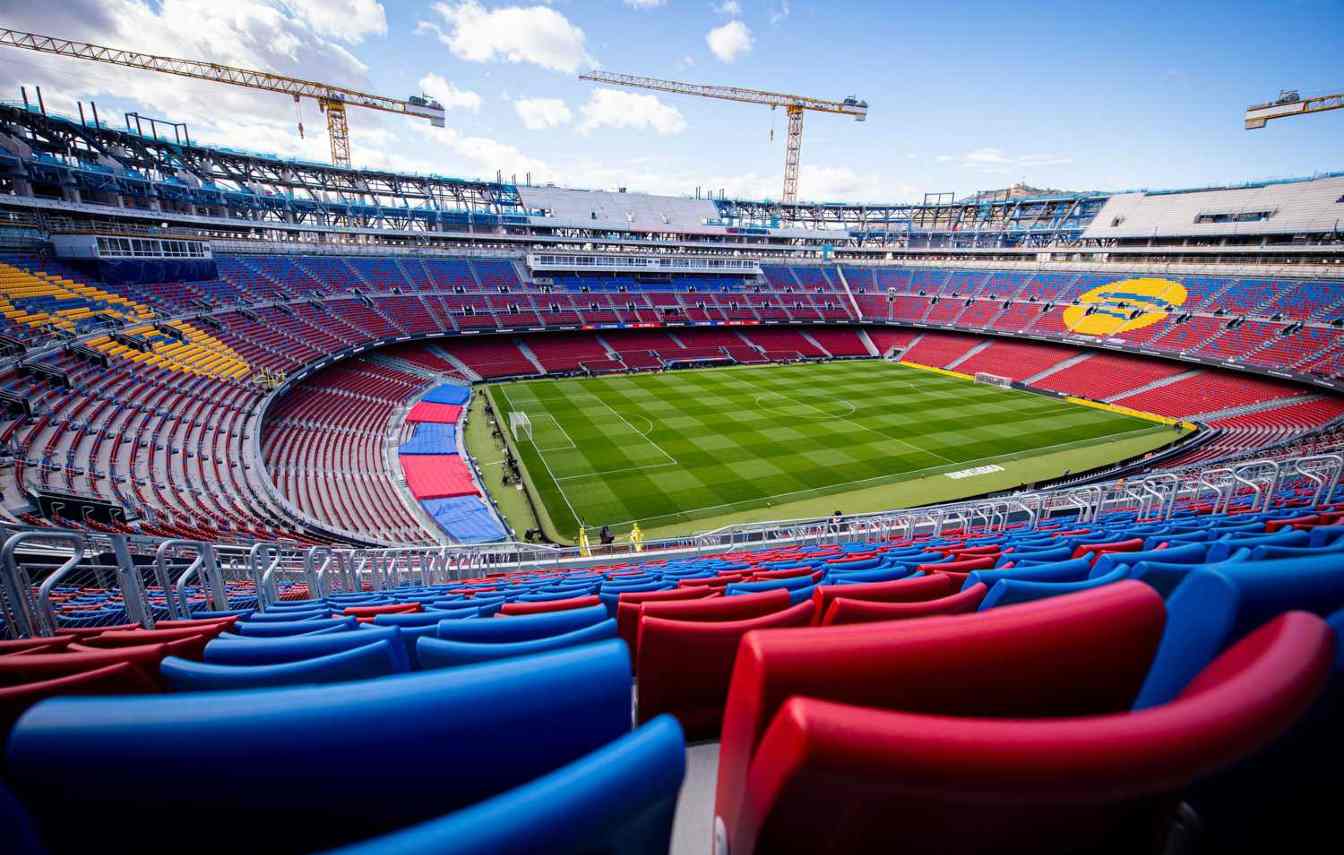 © FC Barcelona | Camp Nou is competing to host the World Cup final with the Bernabéu and Stade Hassan II.
After completion, Spotify Camp Nou is expected to hold around 104,600–105,000 spectators, surpassing Madrid’s Santiago Bernabéu, which offers roughly 78,000 seats following its renovation. Capacity remains one of FIFA’s most important criteria when selecting a World Cup final venue.
Camp Nou vs Bernabéu vs Casablanca: the battle for the 2030 final
Spotify Camp Nou faces stiff competition. Santiago Bernabéu, home of Real Madrid, is also bidding to host the final. Despite being one of Europe’s most modern stadiums, its lower capacity could weaken its position compared to Camp Nou.
A major international rival is Grand Stade Hassan II in Casablanca, currently under construction. With a planned capacity of around 115,000 seats, the Moroccan stadium would be the largest of all candidates and a powerful alternative for FIFA.
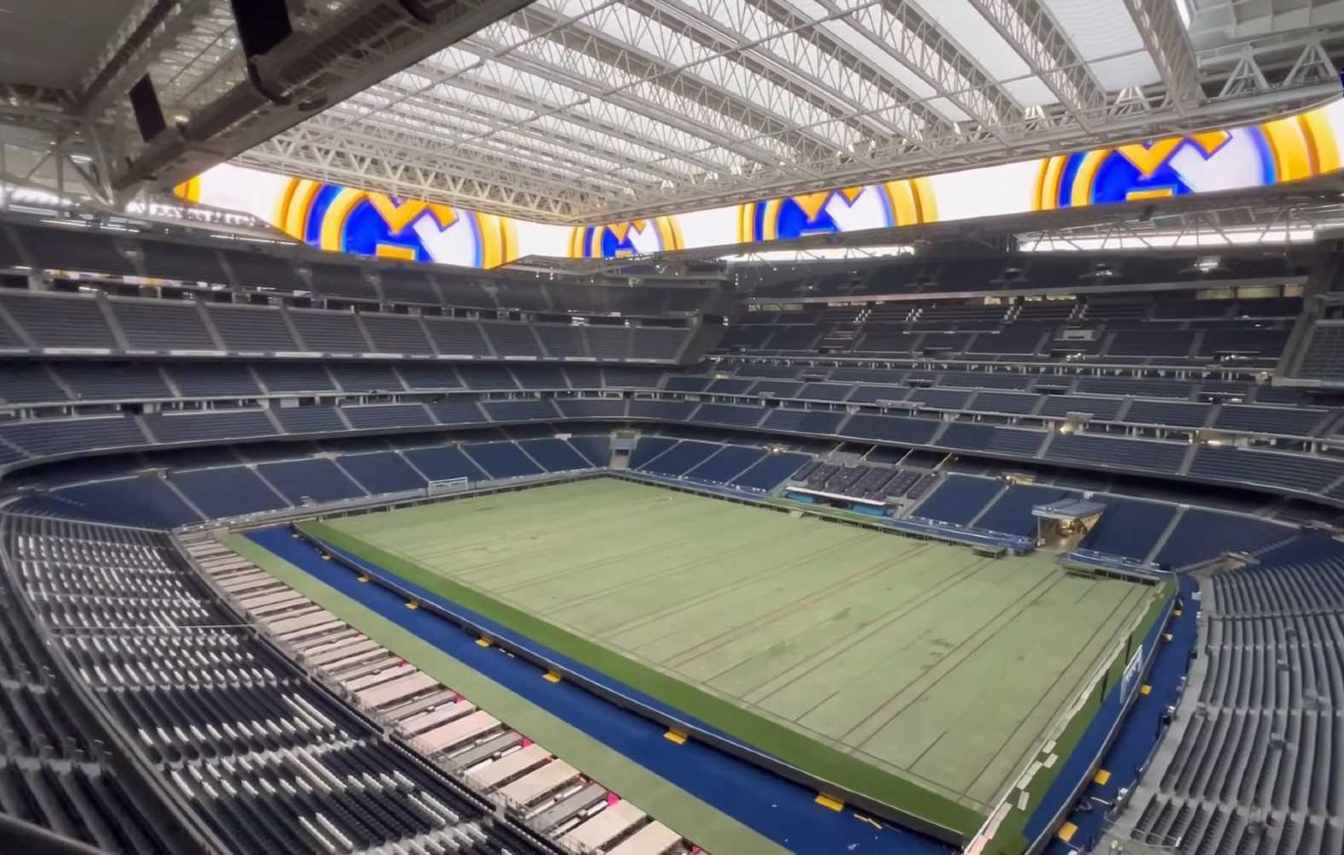 © Madrid1902 | The Bernabéu has been hailed as the final stadium several times by the Spanish media.
When will FIFA decide on the 2030 World Cup final venue?
FIFA has confirmed that the final venue will be selected no later than two years before the tournament kicks off. At this stage, Camp Nou, Santiago Bernabéu and the Casablanca stadium have received similar technical assessments. The final decision will depend not only on capacity, but also on construction progress, delivery timelines and the organisational strength of each host city.
Advertisement