 StadiumDB
Spain: Vigo accelerates modernisation of Balaídos. World Cup 2030 getting closer?
source: StadiumDB.com ; author: Paulina Skóra
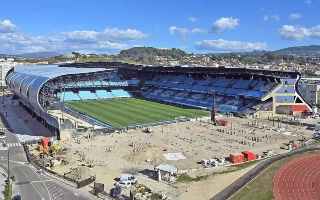 The authorities of Vigo are clearly accelerating actions related to the Balaídos stadium, treating it as one of the city’s key infrastructure projects for the coming years. Recent decisions by the city council show that the local government believes Vigo has a realistic chance of being selected as a host city for the 2030 FIFA World Cup, even though the official list of stadiums has not yet been confirmed.
Advertisement
Modernisation of Balaídos and FIFA requirements
During the final city council session of the year, the ruling PSOE majority approved a motion concerning the financing of further modernisation works at Balaídos. The central element of the project is the expansion of the Tribuna stand, whose capacity is set to increase from around 5,500 to 16,000 seats. Combined with the new Gol stand, which is already under construction, the total stadium capacity is expected to reach approximately 43,000 spectators—meeting FIFA requirements for World Cup venues.
City officials stress that Málaga’s withdrawal from the race to host World Cup matches has significantly strengthened Vigo’s position. According to the municipal authorities, the expansion of Balaídos is feasible both technically and within the required timeframe.
Dispute over financing the expansion
The most controversial issue remains the distribution of investment costs. The city government is calling for a financing model based on equal contributions from three institutions: the City of Vigo (Concello de Vigo), the regional government of Galicia (Xunta), and the Provincial Council of Pontevedra. Local authorities have criticised attempts to condition financial support on the participation of Spain’s central government.
The opposition Popular Party has highlighted the lack of a finalised project, a detailed timeline, and precise cost estimates. Its representatives argue that since Spain is officially backing the 2030 World Cup bid, the central government should contribute to stadium modernisation. Meanwhile, the Galician Nationalist Bloc (BNG) is demanding greater transparency and clear data on the total cost and expected economic return of the investment, proposing the commissioning of an independent study.
 This is how Balaídos could look after being expanded to 43,000 seats.
Abel Caballero: The city will proceed regardless
After the vote, Vigo mayor Abel Caballero adopted a firm stance toward regional and provincial authorities. In his view, making financial participation conditional effectively signals a lack of genuine willingness to cooperate. At the same time, he announced that the city is prepared to carry out the modernisation of Balaídos even without support from the Xunta or the Provincial Council.
Caballero argues that in other Spanish cities, stadium upgrades are financed by municipalities, regional governments, and clubs, without direct involvement from the central government. According to this logic, the state should focus on major infrastructure projects linked to the tournament, such as transport and mobility.
Balaídos in the race for the 2030 World Cup
Although the final list of World Cup host stadiums remains undecided, there is a strong belief in Vigo that Balaídos meets FIFA’s key criteria and deserves a place among the selected venues. City officials have criticised the selection process conducted so far by the Spanish Football Federation, arguing that with a limited number of candidates, including Vigo would be a logical step.
The modernisation of Balaídos is not seen solely through the lens of the 2030 tournament. The city emphasises that the investment will improve the stadium’s functionality for decades to come, enhancing its role as a venue for football matches, concerts, and large-scale events. The debate surrounding Balaídos shows that the stadium has become one of Vigo’s most important infrastructure projects, combining sport, city branding, and significant public spending. The coming months will be crucial both for reaching institutional agreements and for determining whether Vigo will ultimately appear on the map of the 2030 FIFA World Cup.
Advertisement