 StadiumDB
Australia: Dispute over the stadium for 2032 Olympic Games. New project unveiled in Brisbane
source: StadiumDB.com; author: Paulina Skóra
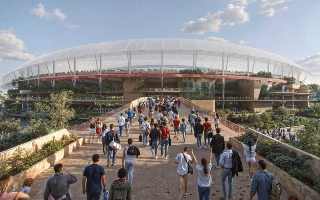 The new Olympic stadium in Brisbane was meant to become a showcase of the Games in Australia, but instead it has sparked a wave of opposition. The dispute over its location, scale and the future of Victoria Park is placing the Brisbane 2032 project under growing scrutiny.
Advertisement
Brisbane 2032 Olympic stadium as a new city icon
The planned stadium in Brisbane is set to play a key role during the 2032 Games. The venue will host athletics competitions as well as the opening and closing ceremonies of both the Olympic and Paralympic Games. According to government announcements, the stadium will have a capacity of around 63,000 spectators, with the option of further expansion after the Games, provided that budgetary conditions allow.
The architectural concept of the winning design, prepared by a consortium of COX Architecture, Hassell, and the Japanese firm Azusa Sekkei, is based on the idea of openness and integration with the surrounding landscape. A central feature of the project is the pedestrian platform encircling the stadium, inspired by the verandas of traditional Queenslander houses, known for their semi-open form and natural ventilation.
The new stadium is planned to be built in Victoria Park, a vast area of approximately 158 acres located north of Brisbane’s city center. For much of the 20th century, the park functioned as a golf course and was transformed into a publicly accessible green space only in 2021.
Social protests and opposition to the Olympic arena project
Queensland authorities emphasize that the stadium will occupy only 12–13% of the park’s total area, while the remaining space is to be preserved and better connected to the city. Critics of the project, however, present different calculations. Independent reports suggest that the real impact of the investment—taking into account technical facilities, infrastructure, and access roads—could affect a much larger portion of the park, including the removal of more than 1,200 trees.
The stadium project in Victoria Park has triggered strong opposition from local activists, environmental groups, and organizations advocating for the protection of cultural heritage. The Save Victoria Park group described the presented visualizations as greenwashing
detached from reality, pointing to the risk of irreversible loss of valuable public space.
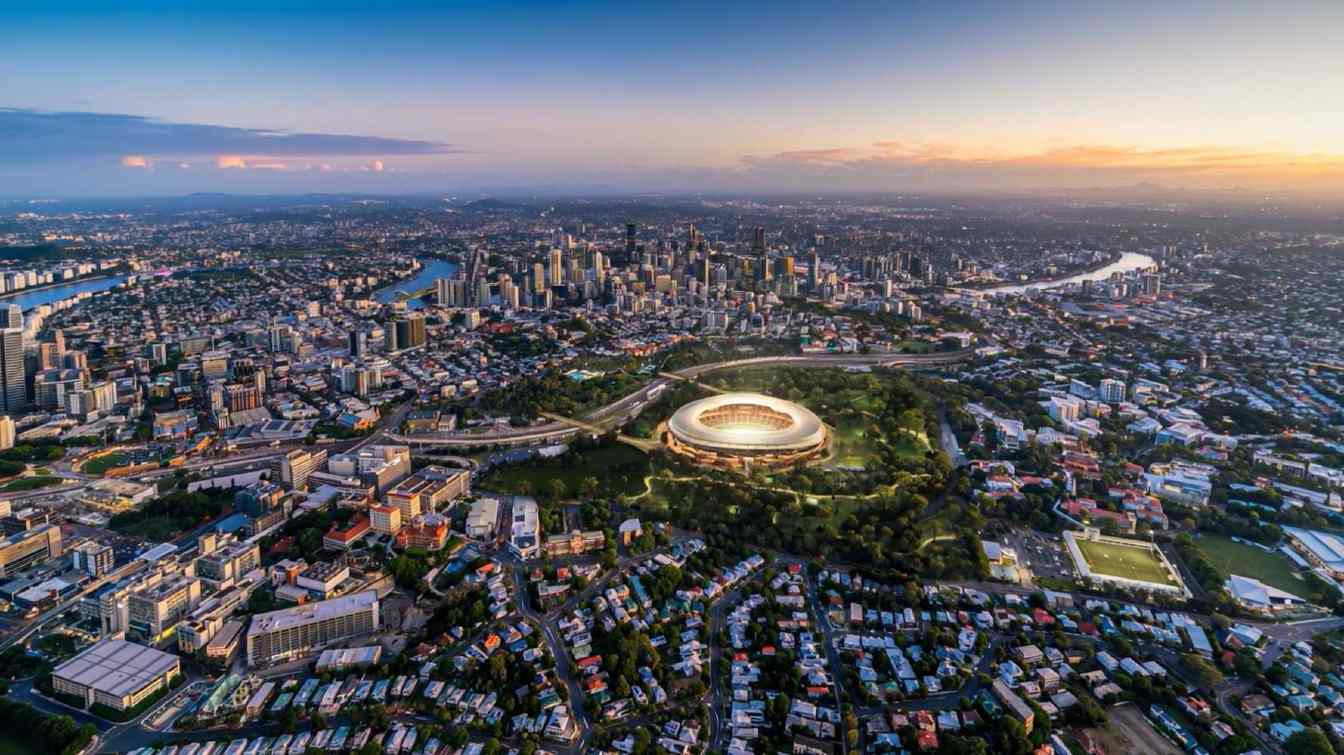 © COX Architecture, Hassell | The stadium is set to accommodate around 63,000 spectators, with the option for further expansion after the Games.
The cultural aspect is also particularly significant. Victoria Park, known to Indigenous communities as Barrambin (windy place
), served for thousands of years as a gathering and living area for Aboriginal communities. Representatives of the Yagara Magandjin Aboriginal Corporation warn of potential destruction of sites of spiritual, archaeological, and ecological importance, including possible ancestral burial grounds.
Queensland authorities defend the Brisbane stadium project
Government representatives firmly reject the accusations raised by opponents of the investment. The chair of the Games Independent Infrastructure and Coordination Authority (GIICA), Stephen Conry, argues that the project will, in fact, increase accessibility to the park and enable hundreds of thousands of residents and tourists to use it.
An even stronger stance was taken by Queensland Deputy Premier Jarrod Bleijie, who openly criticized protesters, labeling them NIMBYs
—people opposed to any changes in their immediate surroundings. Bleijie also reminded the public that the area had not served as a public park for decades, having previously functioned as a closed golf course and, earlier still, as a landfill.
Architecture inspired by the Queenslander style
One of the key design assumptions is adapting the stadium to Brisbane’s subtropical climate. Architects emphasize the importance of natural ventilation, shade, and free airflow, which are intended to reduce energy consumption and improve spectator comfort. The project envisions a partially open structure, numerous terraces and pedestrian passages, as well as multi-level entrances designed to disperse foot traffic and encourage use of the venue even outside event days. New bridges over the Inner City Bypass are also planned, connecting the stadium with other parts of the city and serving as publicly accessible transport routes.
After the Olympic Games, the stadium is expected to function as a multifunctional sports and entertainment venue. It will become the new home of the Brisbane Lions (Australian rules football), as well as the cricket teams Brisbane Heat and Queensland Bulls. Thanks to pitch dimensions similar to athletics arenas, post-Games adaptation of the stadium is expected to be relatively quick and straightforward. Authorities stress that the stadium will not become a so-called white elephant
—a costly and rarely used facility. Instead, it is intended to regularly host sporting events, concerts, and mass gatherings, while its open design will allow parts of the space to be used even without major events.
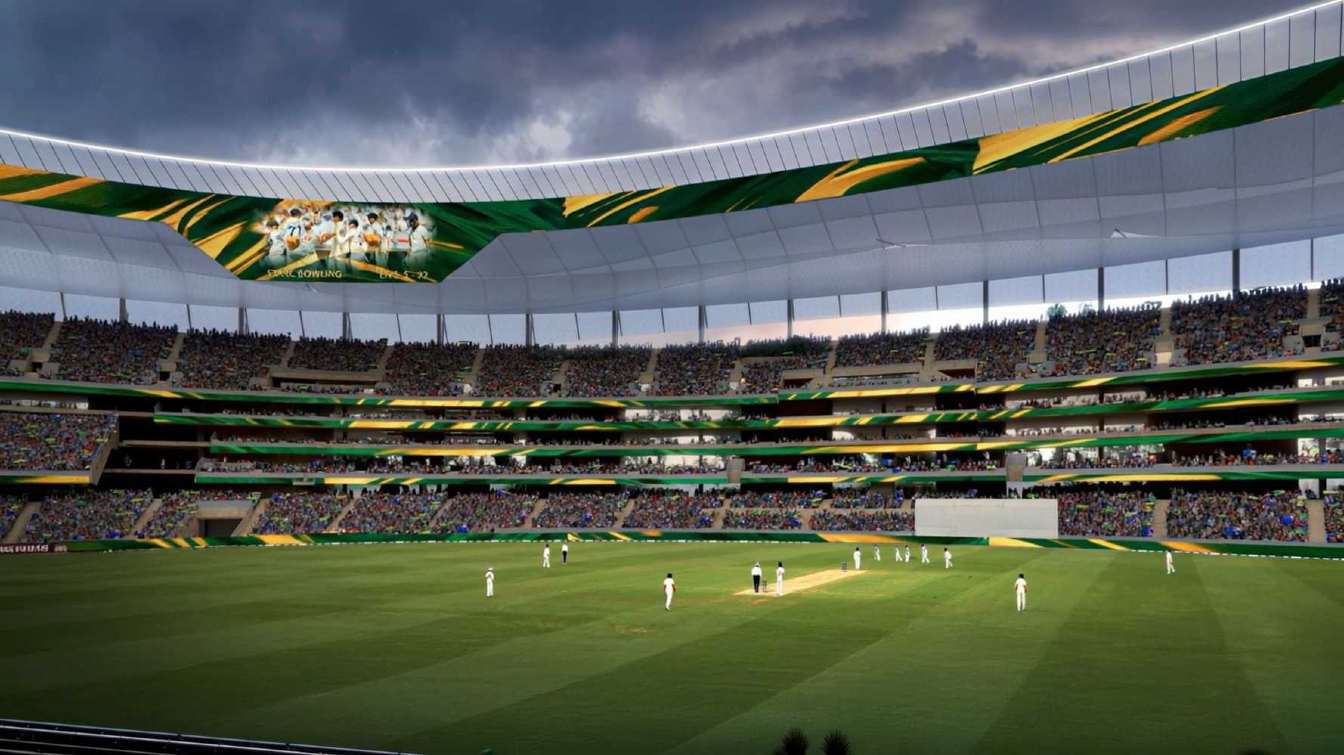 © COX Architecture, Hassell | After Brisbane was awarded the rights to host the 2032 Olympic Games in 2021, the question emerged of which stadium would serve as the main venue for the event.
Construction schedule for the Brisbane Olympic stadium
Construction work is scheduled to begin in 2026, with completion planned for 2031, providing sufficient time for operational testing ahead of the Games. Earlier, the golf complex in Victoria Park will be closed, no later than mid-2026.
While Queensland authorities declare full confidence in the project’s schedule and budget, opponents continue to announce further legal actions and social protests. Procedures are also ongoing to determine whether the site should receive special legal protection due to its cultural significance.
Advertisement