 StadiumDB
Spain: From crisis to recovery? Sevilla FC bets on a new stadium
source: StadiumDB.com; author: Paulina Skóra
 Sevilla FC held its Annual General Shareholders’ Meeting amid a tense atmosphere, although emotions were noticeably lower than during previous editions. The discussions focused primarily on financial matters, the club’s recovery plan, and the future of the new Ramón Sánchez-Pizjuán stadium, which is expected to become a key pillar of Sevilla’s long-term development strategy.
Advertisement
Financial difficulties and a recovery roadmap
Club president José María del Nido Carrasco presented shareholders with an overview of the current financial situation. After closing the 2024/25 financial year, Sevilla FC reported losses exceeding €50 million, leading to a further increase in debt. Club officials stressed, however, that these losses represent a deliberately accepted phase of a restructuring process that began several years ago.
According to projections presented at the meeting, losses in the 2025/26 season are expected to be reduced drastically to around €3 million. By the 2026/27 campaign, the club aims to reach full operational break-even, opening the door to a new phase of stability and a gradual return to sporting investment.
One of the factors worsening the financial situation was the failure to complete planned player transfers worth €90 million. As a result, Sevilla will need to carry out an additional player sale during the winter transfer window, estimated at around €9 million, in order to move closer to its budgetary targets.
Green light for the new stadium
A central topic of the meeting was the future of the new Ramón Sánchez-Pizjuán stadium project. Club officials confirmed that both the City Council of Seville and the Junta de Andalucía have already approved the urban planning framework and the initial phase of the project.
According to the proposed timeline, the urban planning study is set to be formally presented by the end of the current month, with approval expected in the first quarter of 2026. The basic design project is scheduled for the second quarter of 2026, followed by the executive project in the third quarter. The tender for construction works is planned for the first quarter of 2027, with construction expected to begin in June or July 2027. The building phase is projected to last approximately three seasons.
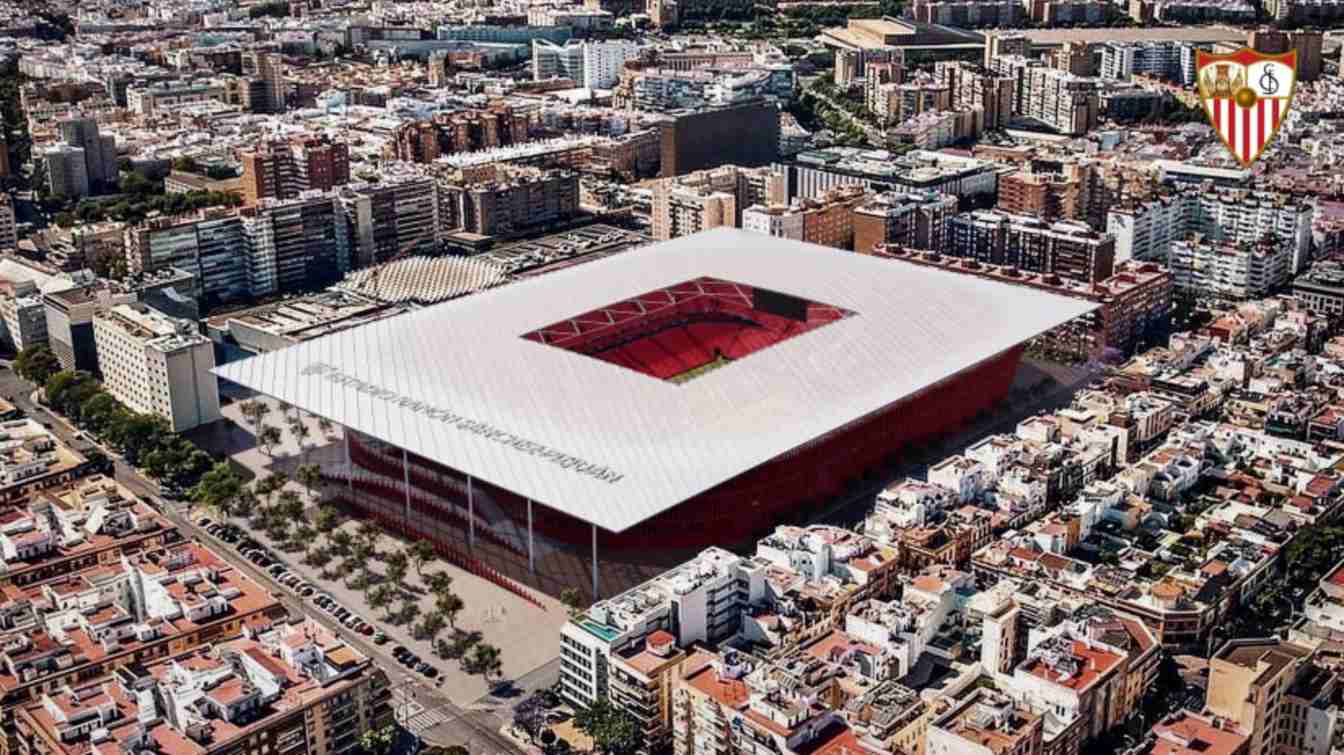 © Sevilla FC, IDOM | Nuevo Ramón Sánchez-Pizjuán project
A stadium as a business hub
The new Ramón Sánchez-Pizjuán is envisioned as a venue that goes far beyond a purely football-related function. The project aims to create a stadium open year-round, with a strong commercial focus. Nearly 50,000 square metres of retail and service space are being considered, designed to generate steady revenue regardless of the match calendar.
Financing for the project is expected to follow a self-sustaining model based on increased future revenues. In addition, Sevilla has secured €40 million from CVC funds, which are earmarked directly for the stadium development.
Shareholder concerns and lack of trust
Despite the plans presented, a segment of shareholders expressed clear scepticism toward the board’s declarations. Concerns were raised about the potential sale of the stadium or the club’s training complex, as well as questions regarding the role of possible foreign investors in the club’s future. Minority shareholders voiced strong opposition to any scenarios involving the loss of Sevilla’s key assets.
Club representatives emphasised that the stadium project is not yet final and may still be modified, but insisted that its purpose is to strengthen Sevilla’s position rather than to liquidate its assets.
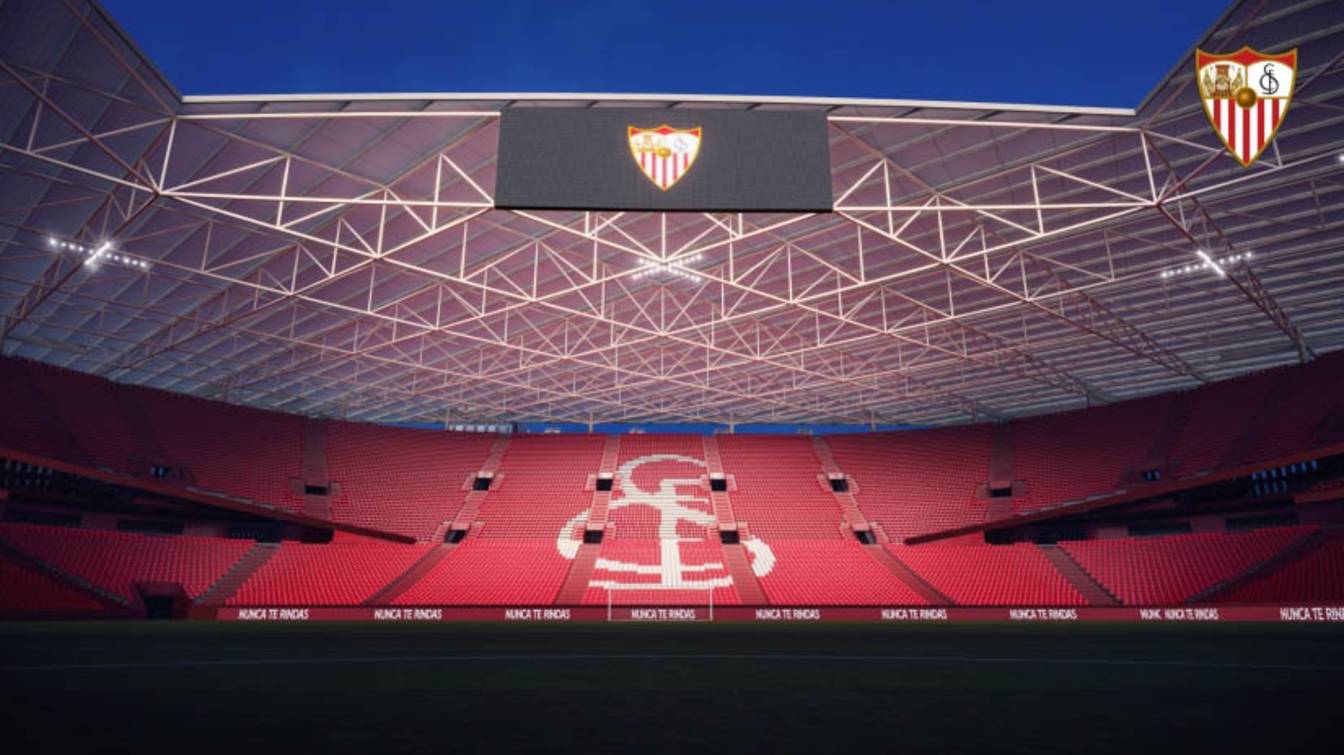 © Sevilla FC, IDOM | Nuevo Ramón Sánchez-Pizjuán project
La Cartuja as a temporary solution
In the context of the planned redevelopment of the Ramón Sánchez-Pizjuán, the possibility of temporarily moving Sevilla’s home matches to Estadio de La Cartuja has gained traction. The situation is complicated by the fact that the venue is already being used by Real Betis, which, due to delays in the renovation of Benito Villamarín, may remain there until 2028.
Although both clubs have expressed a willingness to share the stadium, potential scheduling conflicts — particularly in the case of European competitions — pose a significant logistical challenge. Furthermore, La Cartuja is set to undergo upgrades in preparation for the 2030 World Cup, further complicating planning.
Advertisement