 StadiumDB
Netherlands: Historic ownership change and ambitious De Kuip modernization plan
source: StadiumDB.com; author: Paulina Skóra
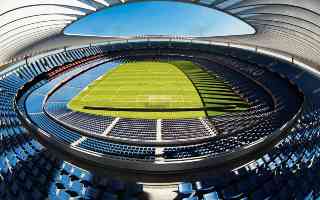 Feyenoord stands at the threshold of one of the most important moments in its recent history: the club has agreed terms with Stadion Feijenoord and Vereniging Aandeelhouders Stadion Feijenoord (VASF) to take control of De Kuip. The ownership structure change aims to create a coherent, long-term foundation for stadium investments, modernization, and the club's further sporting and business development.
Advertisement
New ownership structure
Under the terms agreed on December 4, Feyenoord will take up 80,365 new Stadion Feijenoord shares worth around €3.7 million total, which after diluting existing capital will translate to 95.08% ownership in the stadium company. This ends the period when club and stadium company operated as two separate entities often thinking at cross-purposes, hindering investment decisions, partner talks, and long-term planning.
The new structure ensures the club's sporting interests, stadium's business needs, and fans' expectations align as much as possible rather than compete. A key agreement element is Feyenoord's commitment to allocate €3–5 million annually to De Kuip investments for the next ten years, separate from the standard maintenance budget funded by day-to-day operations and rent.
Executives' statements and shareholder guarantees
Feyenoord CEO Dennis te Kloese calls the agreement very good news
and a milestone
toward the long-awaited club-stadium unity, stressing its role as foundation for sporting and organizational growth. In his assessment, the deal opens the path to infrastructure modernization, better matchday experience for fans, and stronger club commercial positioning.
Stadion Feijenoord director Lilian de Leeuw describes it as a historic step meeting years-long expectations of club, stadium, and fans, while enabling urgent conservation works to start. VASF chairman Conré Oostrom emphasizes that only intense negotiations allowed modifying initial assumptions so original shareholders' rights and interests—who funded the stadium build—remain preserved at a level acceptable to the association.
Seat rights and licenses
A key package element is guarantees for current De Kuip shareholders, who retain seat rights for 15 years from June 30, 2026 to end of 2040/41 season, regardless of stand configuration changes. In case of rebuild, renovation, or broader modernization, they get comparable standard seats so their long-term commitment stays intact despite infrastructure investments.
After that period comes a thirty-year seat license
running to June 30, 2071, giving holders first refusal on season ticket purchases. The license will be transferable, enabling trade within families or fan communities.
Tensions around management and financial condition
The latest stadium shareholders' meeting showed that despite strategic direction consensus, relations between some shareholders and stadium company remain tense. VASF reps sharply criticized current management and communication styles, citing delays in info delivery, unequal shareholder group treatment, digital ticket issues, and lack of transparency in club unification process.
Stadion Feijenoord's 2024/2025 financial report revealed a complex economic picture: on one hand, the stadium closed the year with about €10 million profit and largely reduced negative equity, plus repaid the Goldman Sachs loan tied to the Feyenoord City project. On the other, the venue's book value adjusted from ~€60 million to around –€11 million, underscoring De Kuip as primarily a costly facility needing major repair and modernization outlays, not a classic easy-value-generating asset.
ODE365 program and current improvements
In this context, the ODE365 program takes on special weight, where the stadium seeks gradual fan comfort and experience improvements while finding partners to co-fund specific upgrades. Example: Heineken partnership funding supportersbeleving
(fan experience) improvements including beverage sales system modernization (raptaps), screen and video board refresh, and select stadium space modernizations.
Such projects execute relatively quickly and immediately boost public match perception, but don't address long-term structural neglect or outdated backroom infrastructure. Hence growing attention turns to full-scale venue renovation.
Team De Kuip renovation project
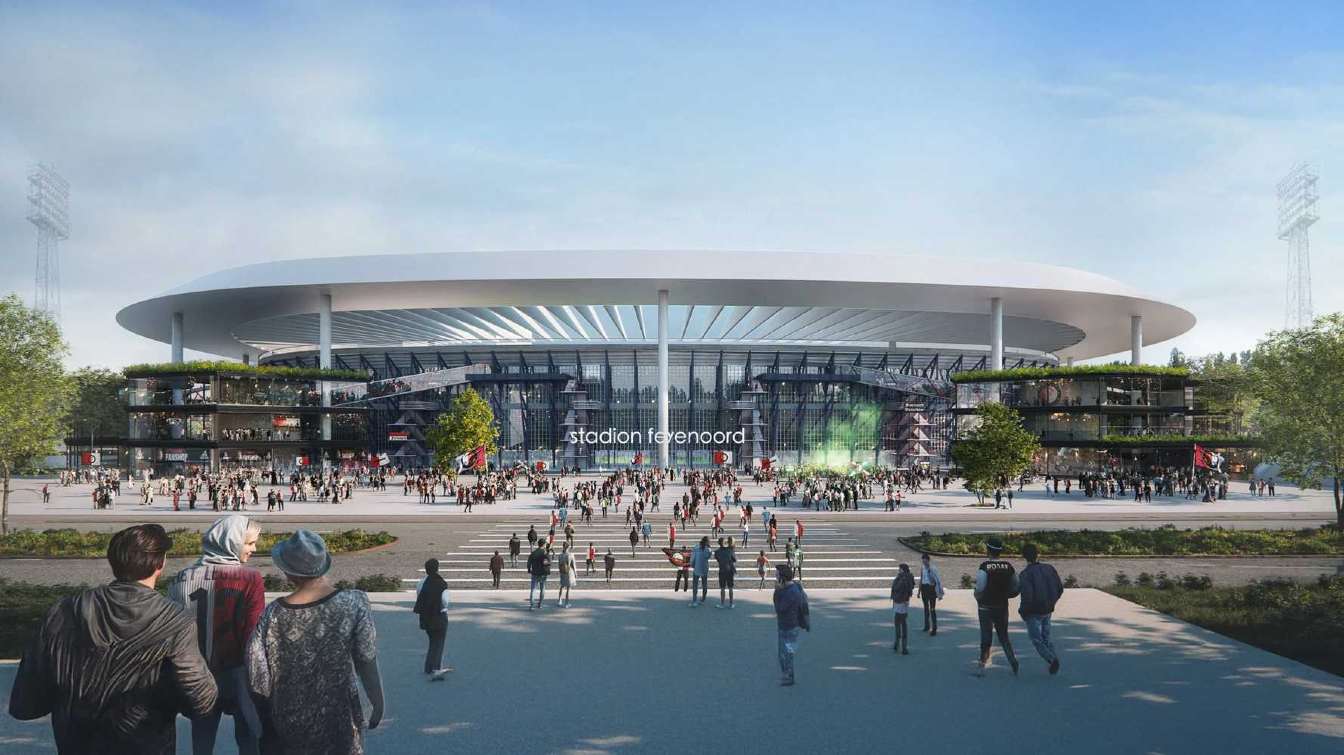
The ambitious De Kuip modernization plan by Team De Kuip, led by architect Nanne de Ru, calls for deep stadium transformation while keeping its historic character. Feyenoord, after a distancing period focused on sealing unification, announced post-formal share takeover it will analyze the project's technical and financial feasibility.
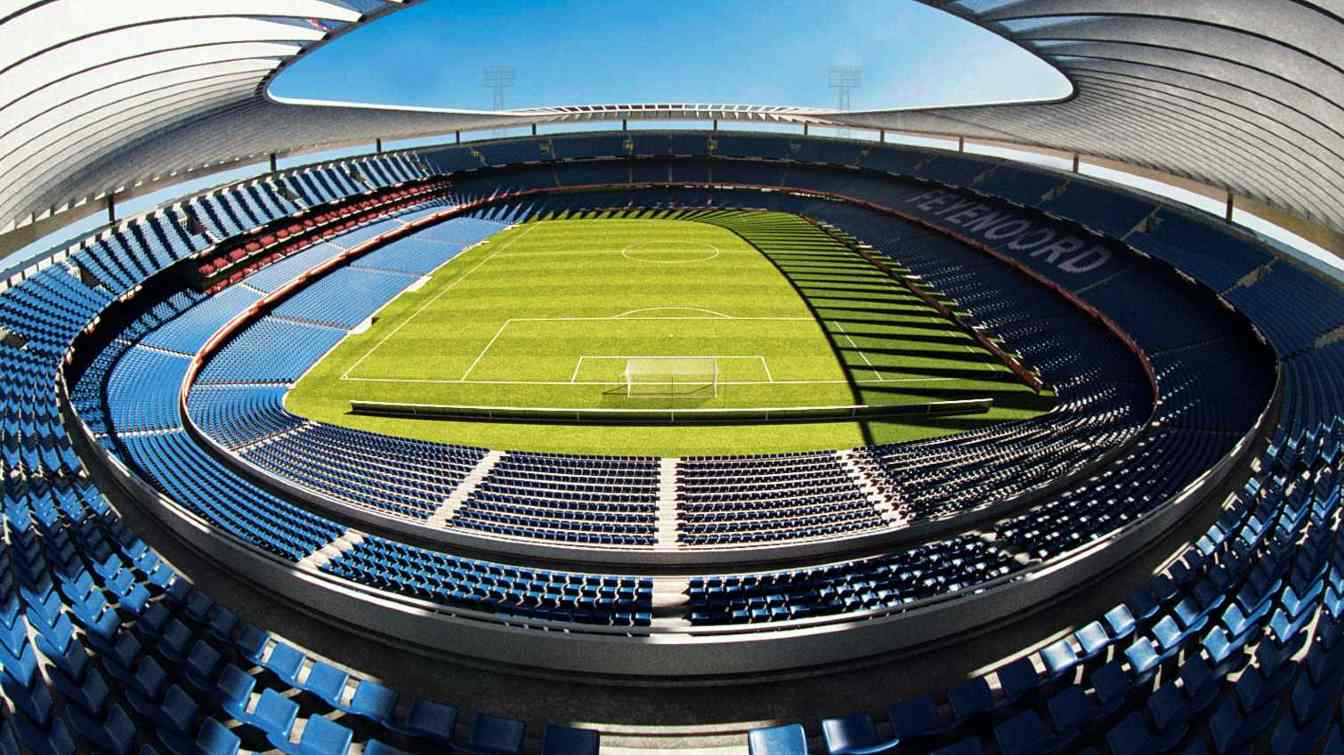
Concept assumptions include lowering pitch level, removing the moat, and adding an extra ring
stand boosting capacity from ~51,000 to 56,000 seats while maintaining or increasing standard fan seating. The project also plans new lighter, more functional roofing over all sectors, improving bad-weather comfort and boosting national team match or cup final hosting potential.
Stadium surroundings infrastructure and sports facilities
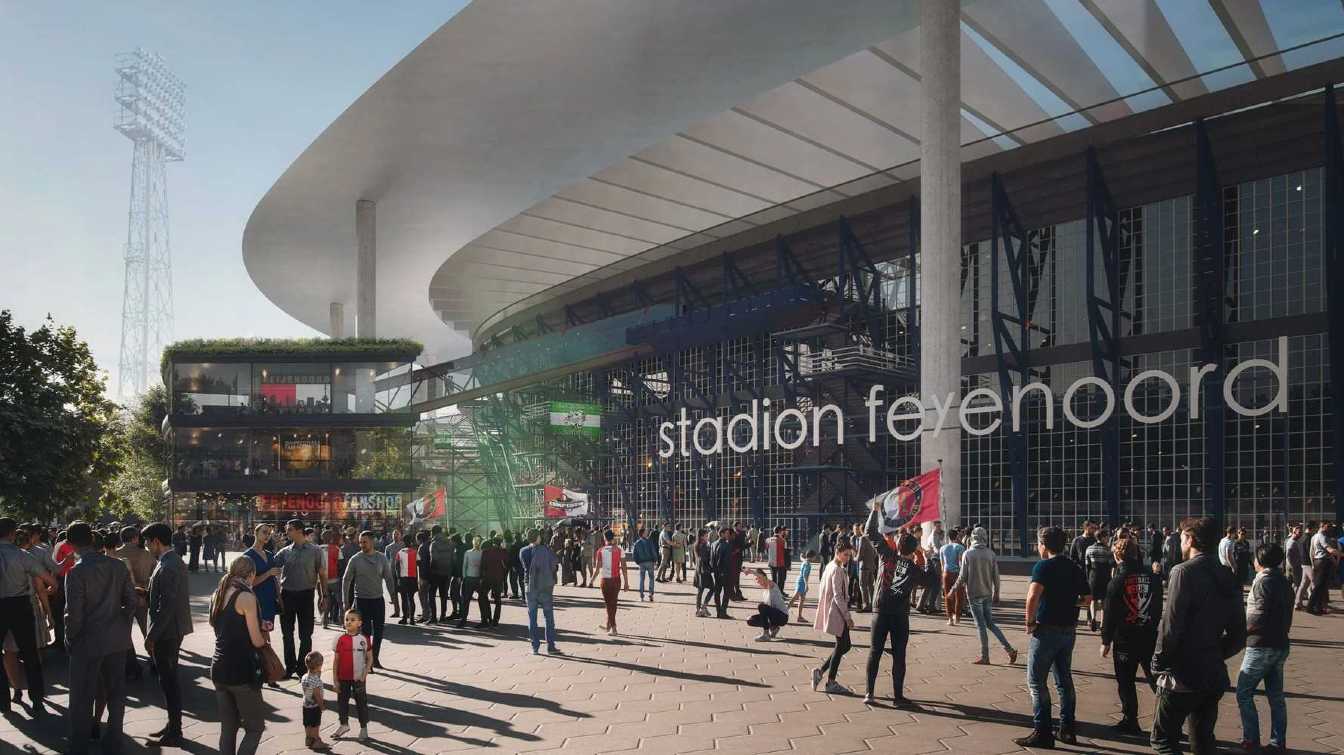
Around De Kuip, eight modern pavilions with gastro, retail, and service backends plan year-round revenue, not just matchdays. Pavilions linked to upper stand levels ease narrow stadium corridors and improve fan flow.
Among the most innovative: moving locker rooms, recovery areas, staff backends, and media infrastructure to new underground level facing Olympiaplein. Solution meets current UEFA requirements, streamlines matchday logistics (including coach access), and frees Maasgebouw space for expanded modern business zone.
Costs, seat licenses, and controversies
The whole project is estimated at ~€350 million and per authors could complete by decade's end with smooth decisions and secured funding. Key financing role falls to seat licensing model (prepayment for long-term seat rights, effectively ~10-year season ticket prepay).
Concept backers see a real way linking diehard fan loyalty to stadium modernization funding; opponents fear season ticket price hikes and risk best seats becoming affluent audience privilege. The architect stresses the goal of giving De Kuip "second life" preserving its soul
and 1930s vibe, not short-term gain.
Future decisions and significance for Feyenoord
Coming months focus on formal unification closeout and sorting current/overdue stadium maintenance essential also for licensing. Per presented timeline, Feyenoord wants from 2027 to seriously tackle De Kuip future planning as a venue meeting modern standards—whether phased modernization per Nanne de Ru vision or hybrid blending concepts.
Certain: without stadium control takeover and single coherent club-arena structure, no ambitious vision advances beyond project and visualization phase. For entire Feyenoord community—from execs through players to fans—at stake is not just match viewing comfort, but De Kuip's place in European football history over coming decades.
Advertisement