 StadiumDB
Mercado Livre Arena Pacaembu
| Capacity | 26 000 |
|---|---|
| Country | Brazil |
| City | São Paulo |
| Clubs | - |
| Other names | Estádio Municipal de São Paulo (1940–1961), Estádio Municipal Paulo Machado de Carvalho (1961–2024) |
| Nicknames | Estádio do Pacaembu |
| Inauguration | 27/04/1940 |
| Construction | 1936–1940 |
| Renovations | 1969–1970, 2021– |
| Record attendance | 73 532 (Palmeiras – Santos FC 1–1, 11/12/1977) |
| Design | F. P. Ramos de Azevedo, Severo & Villares |
| Contractor | F. P. Ramos de Azevedo, Severo & Villares |
| Address | Praça Charles Miller, s/n Pacaembu, São Paulo – SP, 01234-010 |
Advertisement
Mercado Livre Arena Pacaembu – stadium description
What is Estádio do Pacaembu like in brief?
Estádio do Pacaembu was built between 1936 and 1940 in response to the growing popularity of football matches. The stadium was erected in a monumental style with Art Deco elements, reflecting the totalitarian spirit of the era (the Estado Novo period). At the time of its opening, it was the largest stadium in all of Latin America.
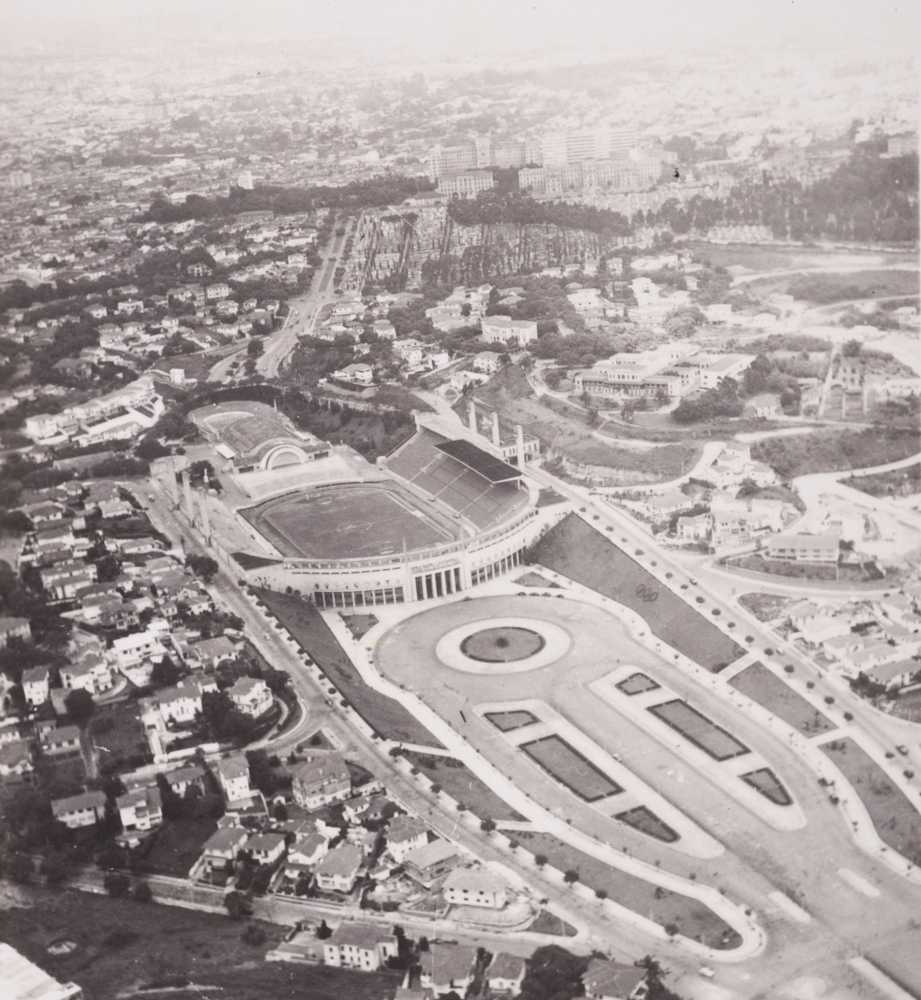
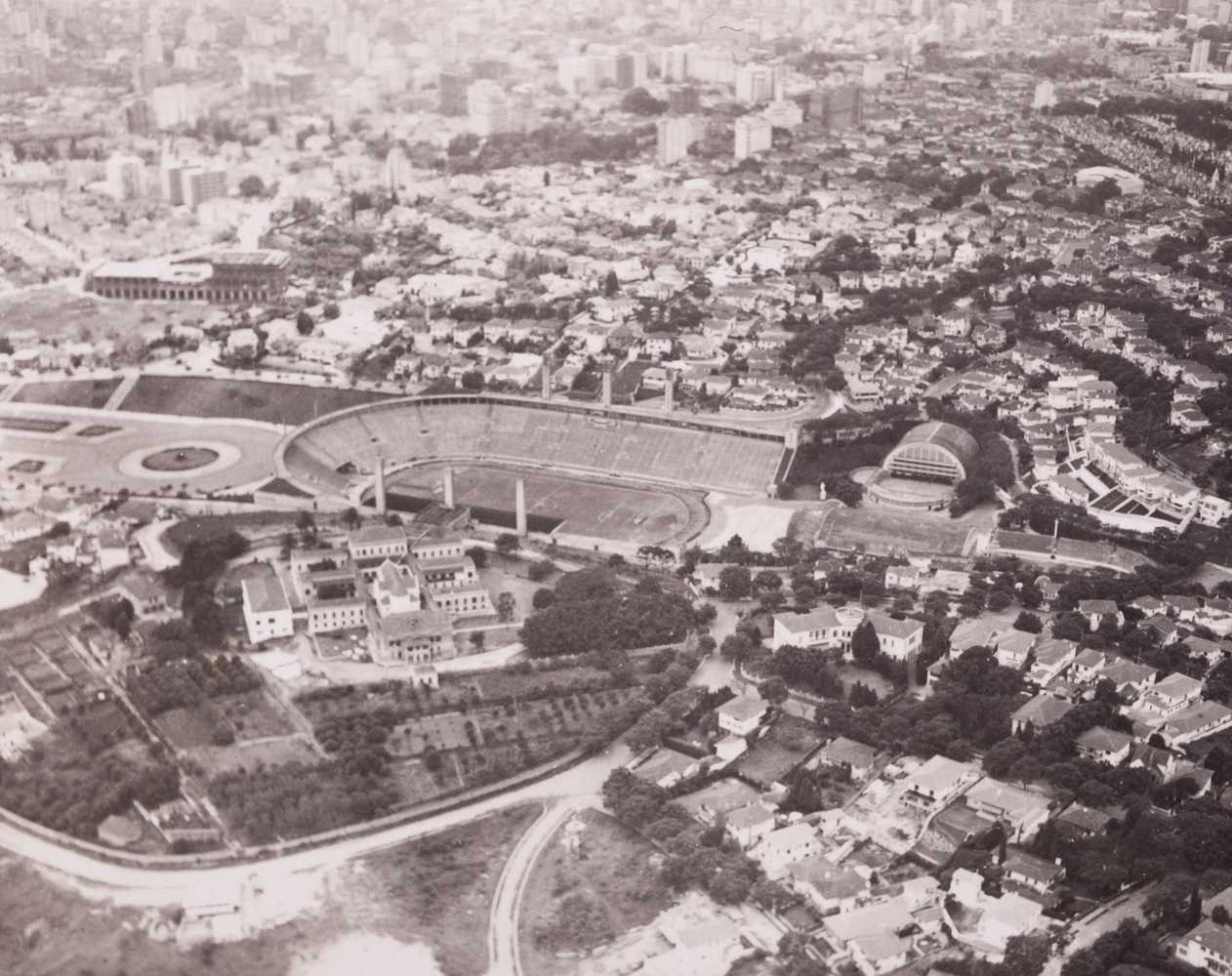
The stadium has a horseshoe shape, taking advantage of the terrain’s topography, with the stands along the pitch supported by natural slopes. The northern stand is decorated with an ornamental facade, while the open southern side originally featured a distinctive band shell. Alongside the stadium, a sports hall, a swimming pool, and a tennis complex were also constructed.
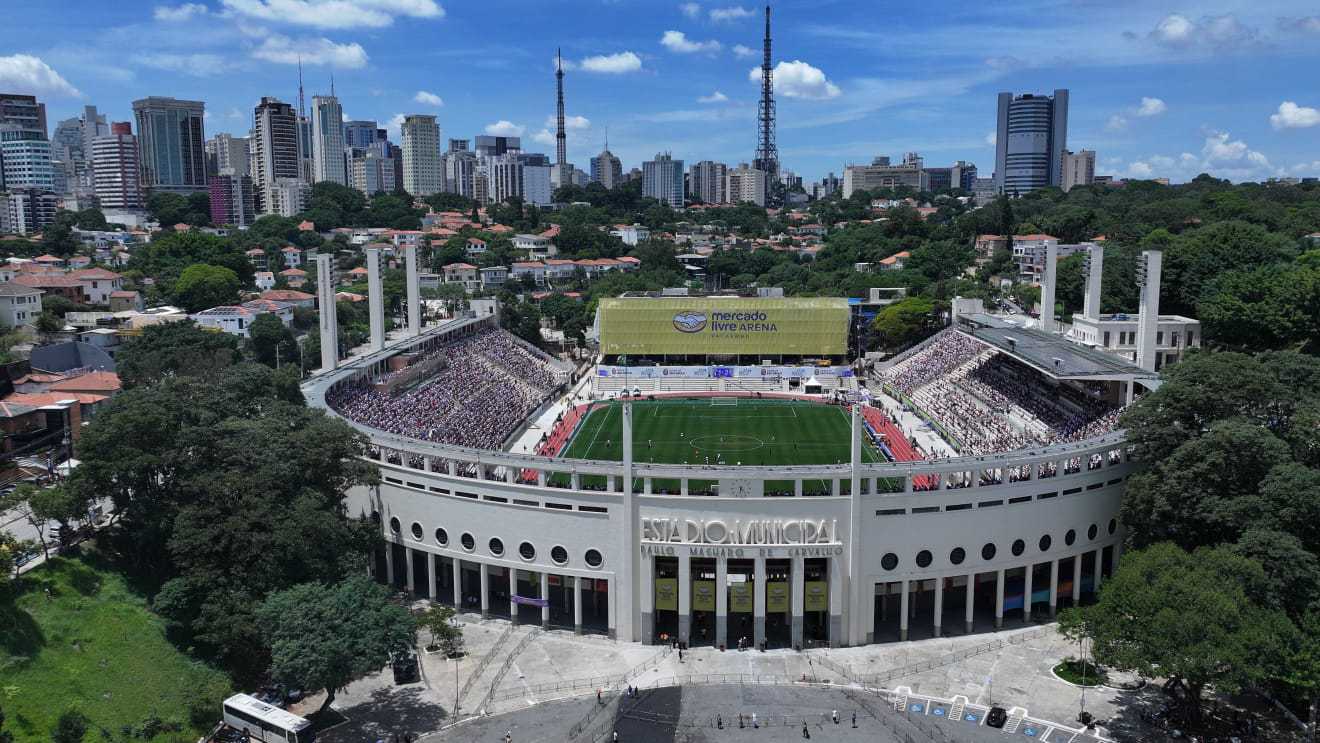
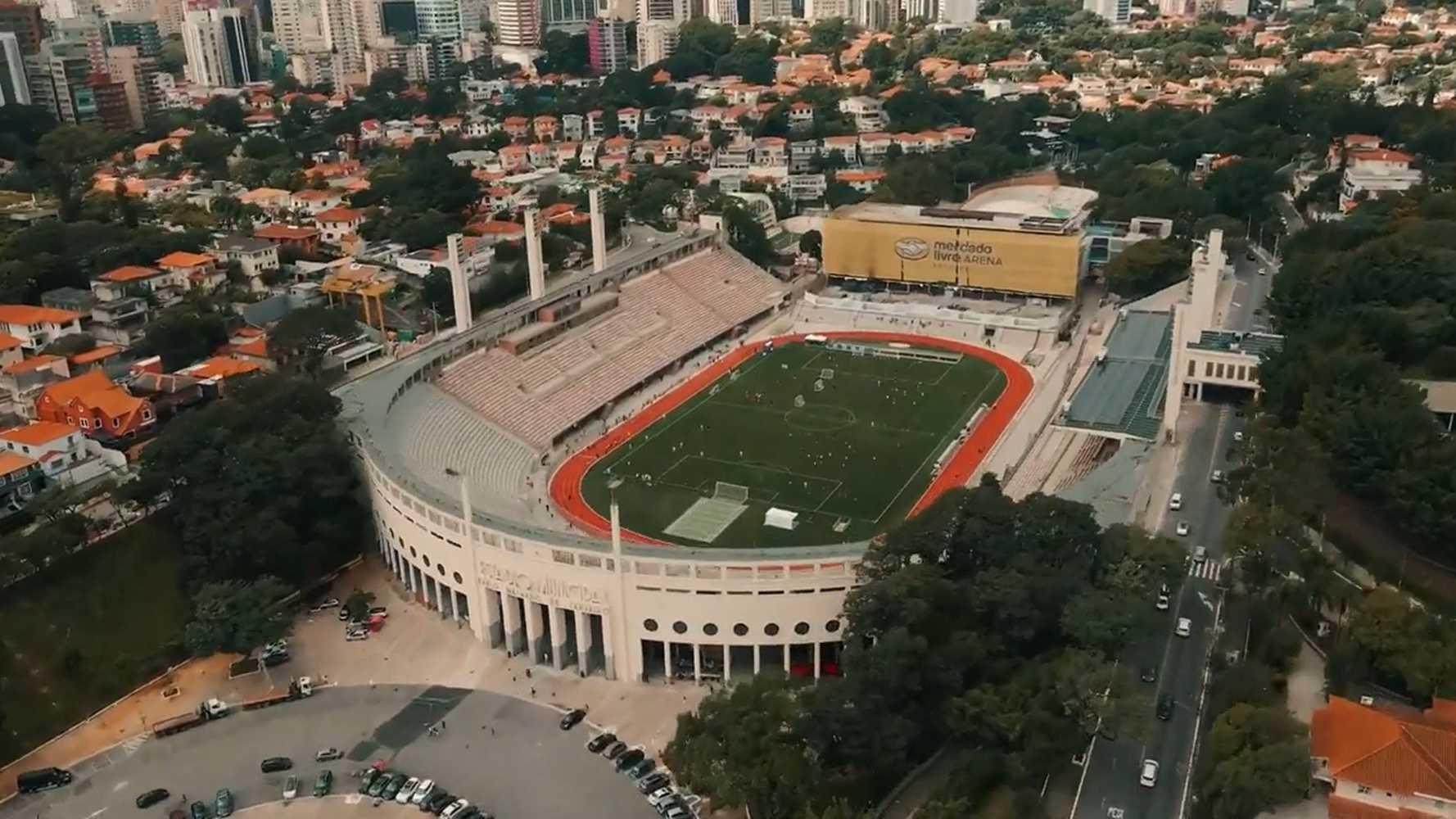
From 1970, the southern opening was filled by a large, single-tiered stand known as the tobogã (“slide”), which replaced the band shell but did not fully harmonize with the rest of the stadium. The tobogã was removed as part of the ongoing renovation that began in 2021, and it is set to be replaced by a commercial pavilion expected to be completed in 2026.
In 1950, the stadium was one of six venues to host matches during the FIFA World Cup in Brazil. The year before, it had also hosted matches of the South American Championship, and in 1963 it served as the main venue for the Pan American Games.
All the major clubs from the region played at Estádio do Pacaembu, but the team most closely associated with the stadium was Corinthians, who remained there until moving to their new stadium in 2014.
Over time, Pacaembu lost some of its prominence. Although it no longer hosts top-tier matches, it remains an attractive venue for sporting, cultural, and business events, located close to the center of São Paulo – the largest metropolitan area in the Americas. Since 1998, the stadium has held protected heritage status, and since 2008 it has housed a football museum.
How was Estádio do Pacaembu built?
The land for the future Estádio do Pacaembu was originally purchased by the British company Cia. City. It formed part of a larger plot where the company planned to develop a new neighborhood called Pacaembu (in Tupi-Guarani, the name means “flooded land”).
At the time, there were ongoing discussions in São Paulo about building a new, large stadium that would meet the growing demand for football matches while also serving a representative function.
In 1921, Cia. City donated part of the plot, measuring 50,000 m², to the state government for the construction of a stadium. The land was given free of charge, and in return contracts were signed covering sewage, street lighting, and water supply in the neighborhood being developed by the company.
The chosen site was well-suited for a stadium because of its topography: it was a valley where the side stands could be built on slopes. However, after the land was handed over, construction did not begin, and the project remained stalled for more than a decade.
It was only in 1936 that the mayor of São Paulo, Fábio da Silva Prado, renewed interest in building the stadium, and the state authorities transferred the land to the city.
As the plot was initially deemed insufficient, Cia. City donated an additional 25,500 m² of land. Once again, the land was given free of charge, as the company saw the advantage of having the new stadium enhance the neighborhood. At the same time, the city expanded the local road network.
When was Estádio do Pacaembu built?
The design and construction works were entrusted to the firm F. P. Ramos de Azevedo, Severo & Villares, and the cornerstone was laid on 29 November 1936.
In May 1938, Francisco Prestes Maia became the new mayor (prefect) of São Paulo. By profession an architect, he initiated changes to the design and expanded the scope of the project. As a result of these modifications, construction works were temporarily suspended.
Initially, only two stands along the pitch were planned. After the revisions, however, the project was expanded to include a northern curve, giving the stadium its horseshoe shape. The changes also involved the addition of a swimming pool and a sports hall.
When was Estádio do Pacaembu inaugurated?
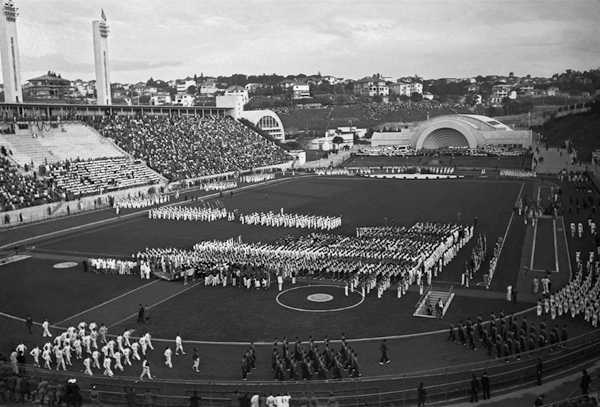
The official inauguration of the new stadium took place on 27 April 1940. The ceremony featured speeches, displays, and parades involving more than 100,000 participants. Among the guests were the President of Brazil, Getúlio Vargas, the federal intervenor (de facto governor of the state) Adhemar de Barros, and the mayor of São Paulo, Francisco Prestes Maia.
The day after the opening, the stadium hosted its first two football matches as part of the São Paulo City Cup (Taça Cidade de São Paulo). First, Palestra Itália (now Palmeiras) defeated Coritiba 6–2, followed by Corinthians’ 4–2 victory over Atlético Mineiro. The final of the competition took place on 4 May, with Palestra Itália defeating Corinthians 2–1.
What did Estádio do Pacaembu look like initially?
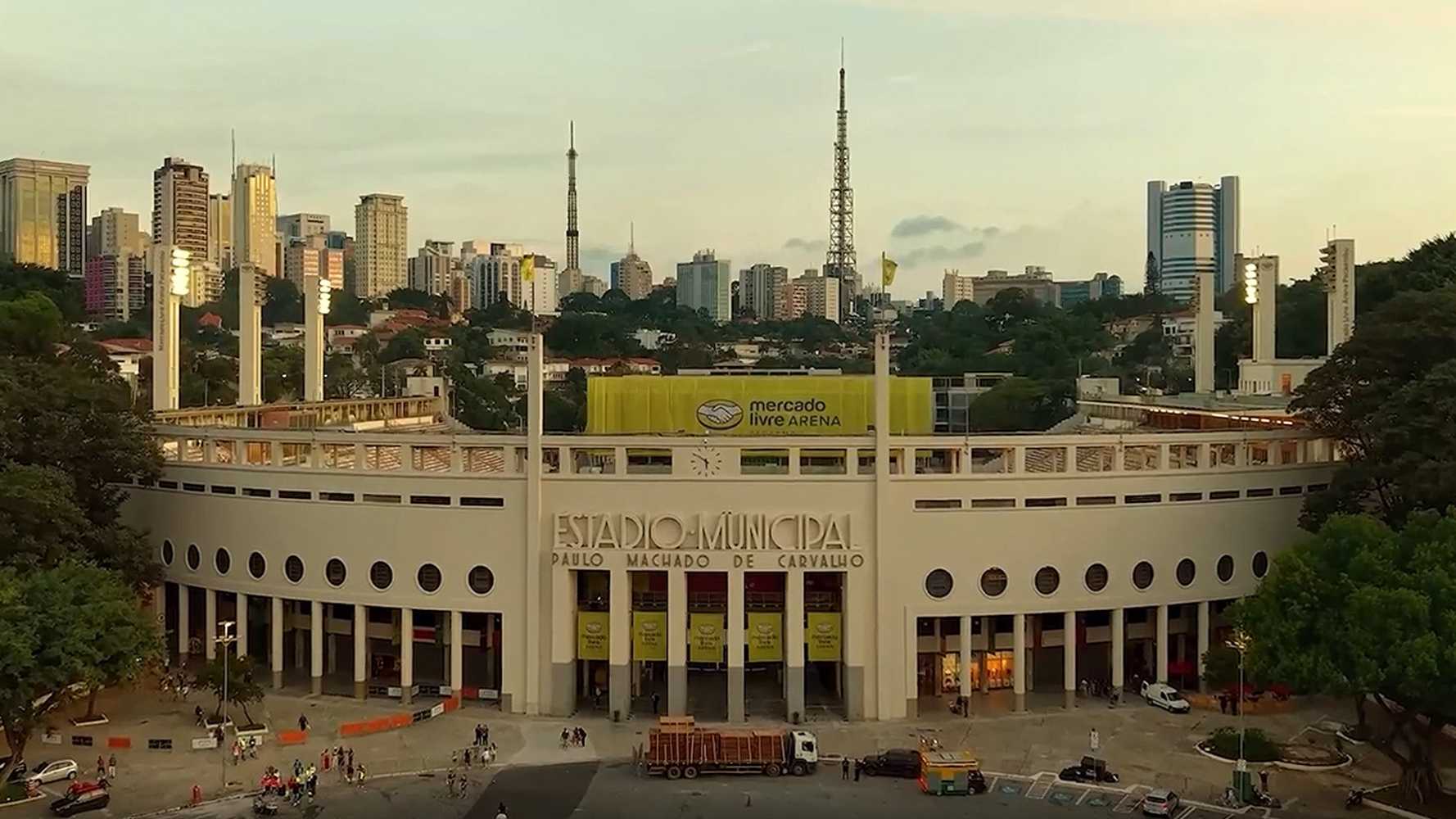
The stadium was built in a monumental aesthetic typical of the Estado Novo period, with Art Deco details. It featured horseshoe-shaped stands, a decorative northern facade, and an open southern side, where a distinctive band shell was erected, integrated with the sports hall.
At the time of its opening, the stadium, with a capacity of around 70,000 spectators, was the largest and most modern sports venue in all of Latin America.
What changes has Estádio do Pacaembu undergone?
The first major alteration to Estádio do Pacaembu took place in 1969–1970, when the distinctive band shell on the southern side was demolished and replaced by a large, single-tier stand known as the tobogã (“slide”).
The new stand had a capacity of around 10,000 spectators, and an electronic scoreboard was installed at its top. Although the structure was functional and significantly increased the number of available seats, it did not blend architecturally with the rest of the stadium.
The stadium also underwent renovation works in 1983–1984. Over time, its capacity was gradually reduced, eventually to around 40,000 spectators.
Another major redevelopment began in June 2021. Once again, the most significant changes took place on the southern side, where the tobogã was demolished to make way for a new building featuring a hotel, a rehabilitation center, and restaurants.
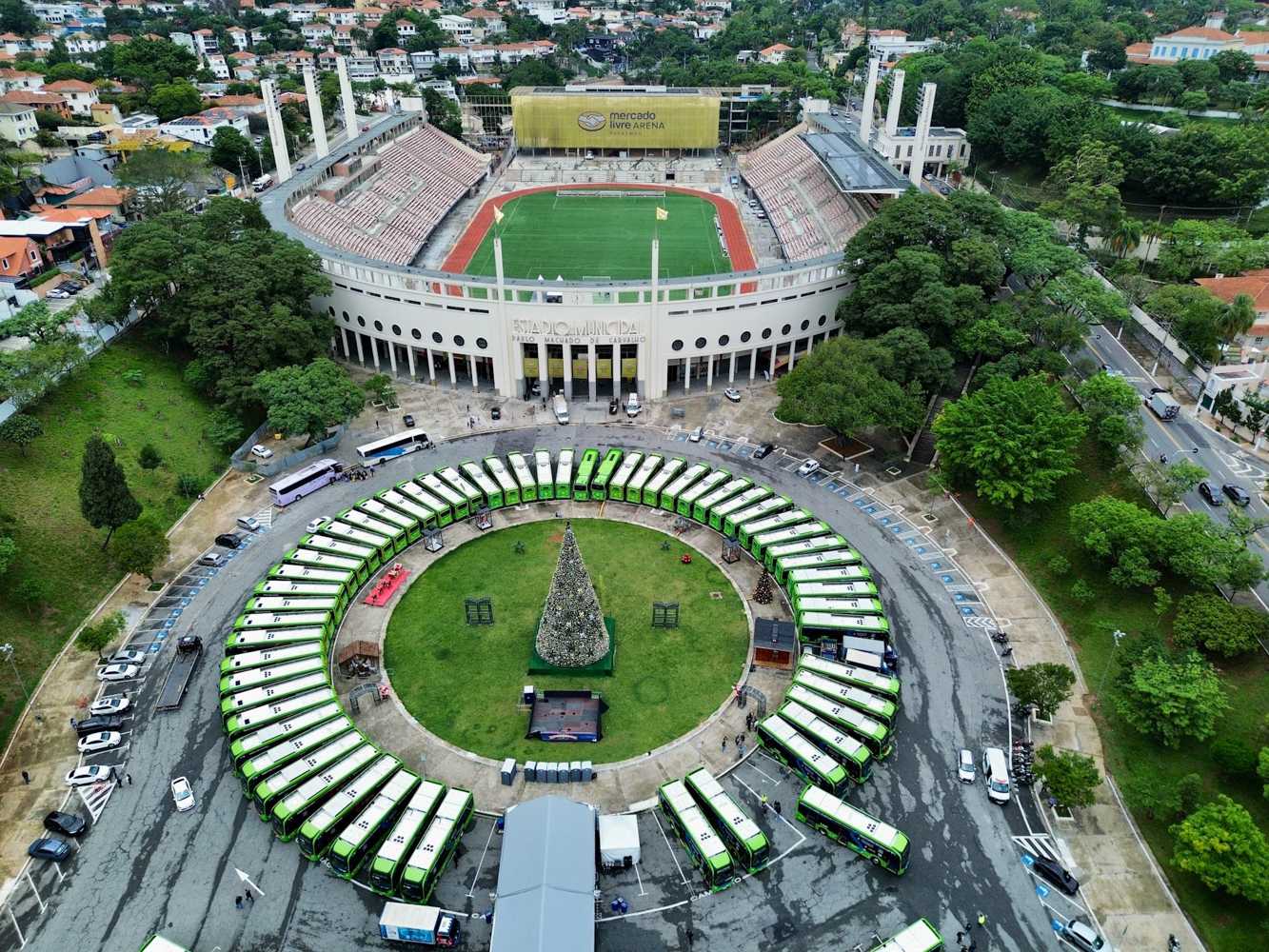
In addition, the entire stadium was refurbished. Among other works, the stands along the pitch were rebuilt, retaining their original shape, and a new polyurethane running track and an artificial turf pitch were installed. These changes led to a further reduction in capacity, to around 26,000 seats.
The redevelopment has been carried out by the private company Concessionária Allegra Pacaembu, which has managed the stadium since 2020 under a 35-year concession granted by the city. The cost of the investment amounts to R$800 million.
The stadium reopened after the renovation on 25 January 2025, when it hosted the final of the traditional youth tournament Copa São Paulo de Futebol Júnior (“Copinha”), in which São Paulo FC defeated Corinthians 3–2. The new building on the southern side is scheduled for completion in 2026.
By what name is Estádio do Pacaembu known?
The stadium is owned by the city and was originally named Estádio Municipal de São Paulo. In everyday usage, however, the name Estádio do Pacaembu became established, derived from the name of the neighborhood in which it is located.
In 1961, the authorities named the stadium after Paulo Machado de Carvalho (Estádio Municipal Paulo Machado de Carvalho), a lawyer, businessman, and football administrator, in recognition of his role as head of the Brazilian national team delegation at the 1958 FIFA World Cup, where the Canarinhos won their first world title.
In 2024, the stadium’s naming rights were sold to the Latin American e-commerce giant Mercado Libre (operating in Brazil under the name Mercado Livre), and the venue was officially renamed Mercado Livre Arena Pacaembu.
The agreement with Mercado Libre is reported to be worth R$1 billion over a 30-year period, making it the largest stadium naming-rights deal in Brazilian history.
What events have taken place at Estádio do Pacaembu?
All four of the most important football clubs from the São Paulo region played their home matches at the stadium: Palmeiras, Corinthians, São Paulo FC, and Santos FC. The club most closely associated with Estádio do Pacaembu, however, was Corinthians, who regularly played there until the opening of Arena Corinthians in 2014.
The stadium also hosted several major sporting events. In 1949, it staged some matches of the South American Championship (later known as the Copa América).
The most prestigious event held at the venue was the 1950 FIFA World Cup. The tournament was played across six stadiums in six different cities in Brazil, including Estádio do Pacaembu, which – alongside the iconic Maracanã in Rio de Janeiro – was the only venue to host matches of the final round.
A total of six matches were played at Pacaembu: three in the group stage (including one involving Brazil, a second-round match against Switzerland that ended in a 2–2 draw) and three in the final round, among them the decisive last-round match between Sweden and Spain (3–1), which determined third place in the tournament.
On 15 October 1950, a Campeonato Paulista match between Palmeiras and São Paulo FC (2–0), played at Estádio do Pacaembu, was broadcast by TV Tupi. It was the first football match ever televised in Brazil.
Estádio do Pacaembu also served as the main venue of the IV Pan American Games in 1963.
The stadium hosted football matches not only in domestic competitions but also in international tournaments, including matches from the two-legged finals of the Copa Libertadores. The Brazilian national team played 28 matches at the stadium, most recently on 7 June 2011 in a friendly against Romania (1–0), which marked Ronaldo’s farewell appearance.
The venue has also hosted concerts by major music stars, including The Rolling Stones, AC/DC, Iron Maiden, Pearl Jam, Red Hot Chili Peppers, and Luciano Pavarotti. In addition, it staged rugby matches, boxing bouts, and supercross events.
On 10 May 2007, Pope Benedict XVI met with young people at Estádio do Pacaembu during his pastoral visit to Brazil; the event was attended by approximately 30,000–40,000 people.
For a long period, Estádio do Pacaembu was the leading stadium in São Paulo and one of the most important in the country. Over time, however, it lost prominence. Today, with all major clubs from the city playing in their own stadiums, Pacaembu is used less frequently.
The new operator, Concessionária Allegra Pacaembu, has therefore focused on hosting business events, corporate functions, and the commercial use of the venue’s spaces, with the new building on the southern side of the stadium expected to play a key role in generating regular revenue.
What is the attendance record at Estádio do Pacaembu?
The impressive attendance record at Estádio do Pacaembu was set just two years after its opening, on 24 May 1942, during a Campeonato Paulista match between São Paulo FC and Corinthians, which ended in a 3–3 draw.
The match was attended by 71,281 spectators. The high turnout was not only the result of strong interest in a clash between two popular teams, but also of the debut of the famous Leônidas in the colours of São Paulo FC, the top scorer of the 1938 FIFA World Cup.
The attendance record was broken twice in 1977: first on 25 August, when a match between Corinthians and Ponte Preta (1–0) attracted 72,573 spectators, and then on 11 December, when a Palmeiras vs. Santos FC match (1–1) drew 73,532 spectators.
What does Estádio do Pacaembu look like?
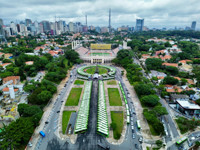
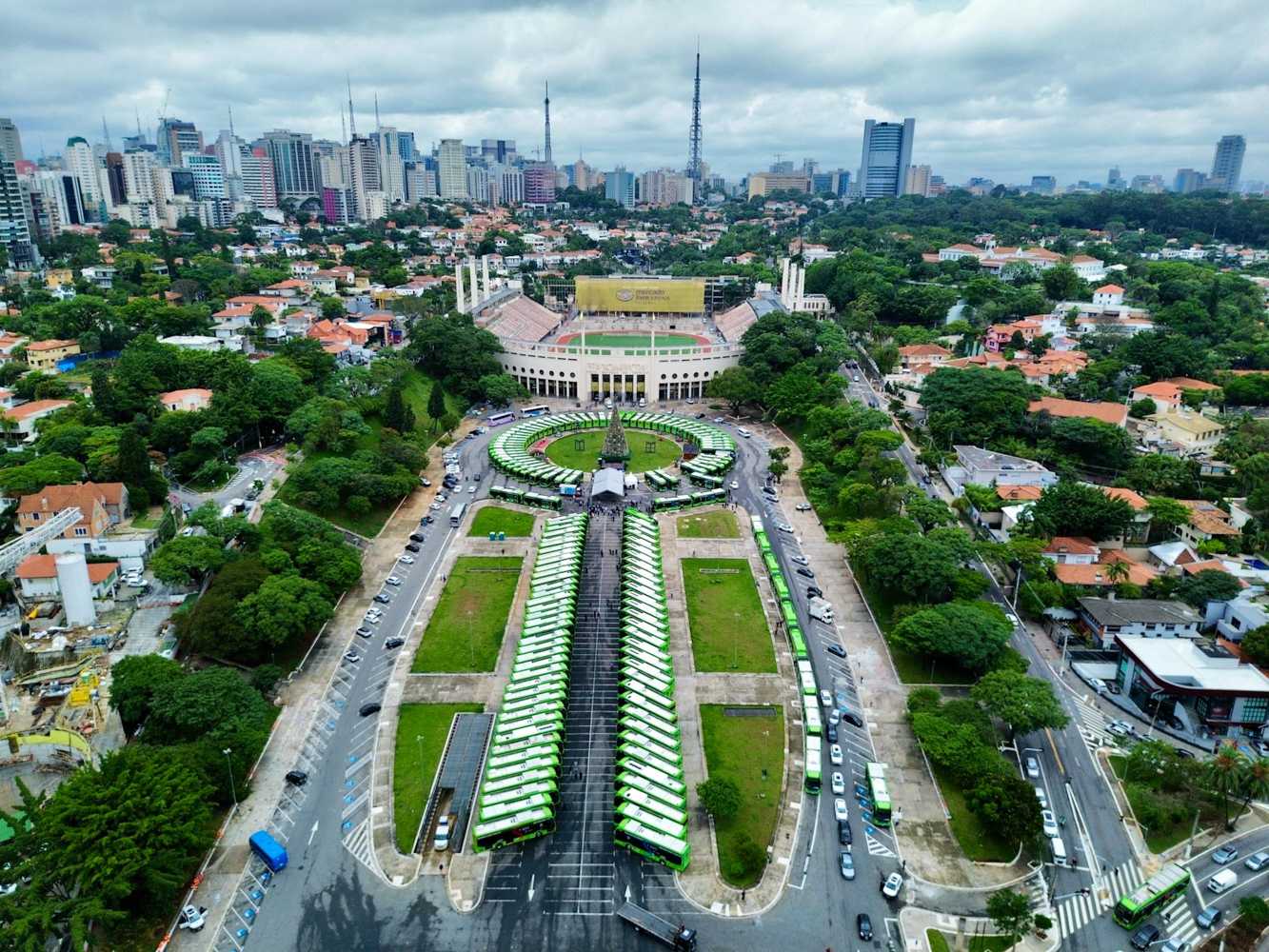
The stadium features single-tier stands in a distinctive horseshoe shape, with an open southern side complemented by a new service and event building. The venue has a capacity of approximately 26,000 spectators. Seating is provided on the stands along the pitch, while the roof covers only part of the main stand.
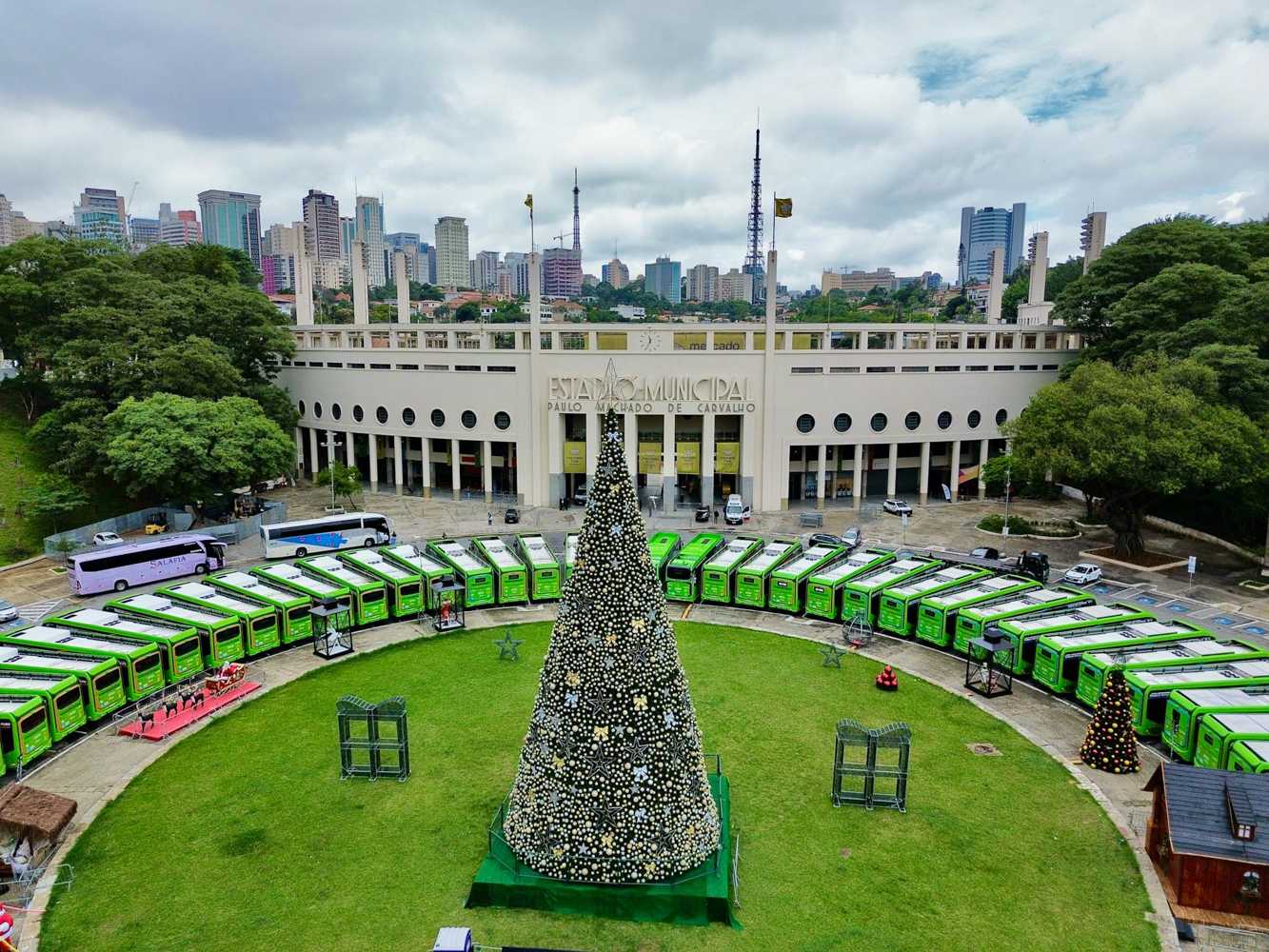
The natural topography of the site made it possible to place the stands along the pitch on the slopes of a valley. The northern curve is of reinforced concrete construction and is adorned on the outside with an imposing Art Deco-style facade. The stadium also features several slender towers rising above the structure.
The venue is equipped with a pitch with artificial turf, surrounded by a polyurethane athletics track. Due to limited space, the track has only five lanes. The track, as well as the nearby swimming pool and tennis courts, are available to residents on a daily basis.
The pavilion on the southern side of the stadium, scheduled for completion in 2026, will serve as a multifunctional service and event building. It will include several levels above and below ground, housing various commercial functions.
The building will contain, among other facilities, a congress centre, restaurants, cafés and retail units, a hotel, a medical centre, as well as an underground car park.
Inside the northern curve of the stands is the Football Museum, which was inaugurated on 29 September 2008. The museum occupies three levels and presents memorabilia related to the history of football in Brazil, while also highlighting the sport’s influence on social life and its relationship with art.
The stadium complex is complemented by additional sports facilities located on its southern side, including a sports hall, a swimming pool and a tennis center.
In 1998, due to its historical and architectural value, Estádio do Pacaembu was entered into the state register of cultural heritage by the Conselho de Defesa do Patrimônio Histórico, Arqueológico, Artístico e Turístico (CONDEPHAAT).
Where is Estádio do Pacaembu located?
The stadium is situated in the Pacaembu neighbourhood, a few kilometres west of downtown São Paulo. The area is characterised by low-rise residential buildings, in contrast to the high-rise districts surrounding it.
From the northern side, Avenida Pacaembu leads to the stadium, transforming near the venue into a large square with a roundabout and parking areas. Since 1954, the square has been named Praça Charles Miller, in honour of Charles Miller, who played a key role in popularising football in Brazil at the turn of the 19th and 20th centuries.
Advertisement
Pictures
-
2025 © Sergio Barzaghi, SECOM 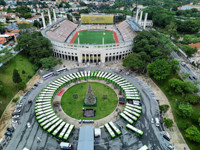
2025 © Sergio Barzaghi, SECOM 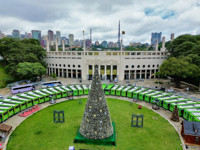
2025 © Sergio Barzaghi, SECOM 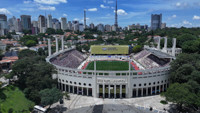
2025 © Prefeitura de São Paulo 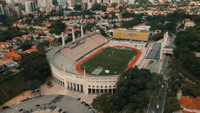
2025 © Concessionária Allegra Pacaembu 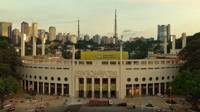
2025 © Concessionária Allegra Pacaembu 
2020 © @sampadrones 
2020 © @fernandodias80 
2020 © @fernandodias80 
2020 © @leobottari 
2020 © @leobottari 
2020 © @sampadrones 
2019 © @sampadrones 
2018 © @sampadrones 
2020 © @sampadrones 
09.06.2014 © Rafael Neddermeyer / Fotos Publicas (cc: by-nc) 
27.08.2011 © Rafael Alves (cc: by-nc-sa) 
09.06.2014 © Rafael Neddermeyer / Fotos Publicas (cc: by-nc) 
09.06.2014 © Rafael Neddermeyer / Fotos Publicas (cc: by-nc) 
09.06.2014 © Rafael Neddermeyer / Fotos Publicas (cc: by-nc) 
19.02.2011 © Eli Kazuyuki Hayasaka (cc: by-nc-sa) 
08.08.2009 © Diego Maia (cc: by-nc) 
05.09.2010 © Mauricio Rummens (cc: by-nc) 
02.05.2010 © Luiz Lima (cc: by-nc) 
23.06.2011 © Jimmy Baikovicius (cc: by-sa) 
03.08.2014 © Tiago Celestino (cc: by-nc-nd) 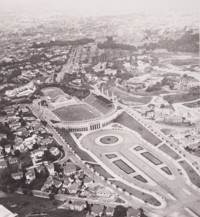
ca. 1965 © Werner Haberkorn, Acervo Museu Paulista 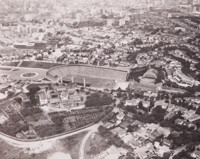
ca. 1965 © Werner Haberkorn, Acervo Museu Paulista 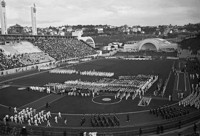
1940 ©
1970–2021:


1940–1969:
Related news
2025
-
Brazil: Santos FC signs agreement for Vila Belmiro stadium modernization
Santos FC and the construction company WTorre have signed an official agreement regarding the redevelopment of Vila Belmiro Stadium in Santos, in the state of São Paulo. According to The Rio Times, this information was confirmed by club president Marcelo Teixeira during the ceremony marking the club’s 113th anniversary.
-
Brazil: Flamengo and Fluminense discover a gold mine at Maracanã
Flamengo and Fluminense have found a new source of income. In addition to building a car park or reorganising the VIP boxes, the Fla-Flu consortium wants to sell the naming rights to the legendary Estádio Jornalista Mário Filho. The price could be the highest in the history of Brazilian football.


