 StadiumDB
WC 2026: Pitch conditions in Boston and New York come under fire from players and coaches
source: StadiumDB.com ; author: Paulina Skóra
 The quality of the pitches in Boston and New York has become one of the first major organisational issues of the 2026 World Cup. Players and coaches have criticised the dry, hard surfaces, which slow the game down and highlight the challenge of adapting NFL stadiums to FIFA requirements.
Advertisement
Norway coach criticizes the playing surface at Boston Stadium
One of the strongest criticisms came from Norway head coach Ståle Solbakken. Following his team's 4–1 victory over Iraq at Boston Stadium, the Norwegian manager pointed to the extremely dry condition of the pitch. According to Solbakken, the surface dried out noticeably within minutes of kick-off, significantly affecting the movement of the ball. Passes lost pace, while attacking sequences increasingly turned into physical battles rather than fluid combinations.
The pitch was very dry. The ball almost stuck to the grass. It's not an excuse, it's simply a fact. The game became much slower because of it,
Solbakken said after the match. Despite the concerns, Norway secured a comfortable win, although the coach admitted that the playing conditions may have influenced the overall flow of the game.
 © mosi - always on tour | Boston Stadium | The pitches in Boston and New York have become one of the first major organizational issues of the 2026 World Cup, with players and coaches criticizing dry, hard surfaces that slow down the game.
Even the World Cup final venue has not escaped criticism
Even stronger comments came from France midfielder Adrien Rabiot after his side's 3–1 victory over Senegal at New York New Jersey Stadium, the venue scheduled to host the 2026 World Cup final. Rabiot suggested that the surface felt more like an artificial field than a natural grass pitch. I don't even know if you can call it grass. The pitch felt like artificial turf. It was very hard and rigid,
the French international remarked after the game.
France head coach Didier Deschamps also highlighted the unusual characteristics of the playing surface. In his view, there may be an exceptionally hard base underneath the grass, affecting both ball movement and bounce.
Similar concerns had previously been raised by Brazil forward Vinícius Júnior following a 1–1 draw against Morocco. The Real Madrid player noted that high temperatures caused the pitch to dry out quickly, significantly slowing the pace of play. According to the Brazilian winger, the ball moved noticeably slower during the second half, making it more difficult for players to maintain the rhythm of their attacking moves.
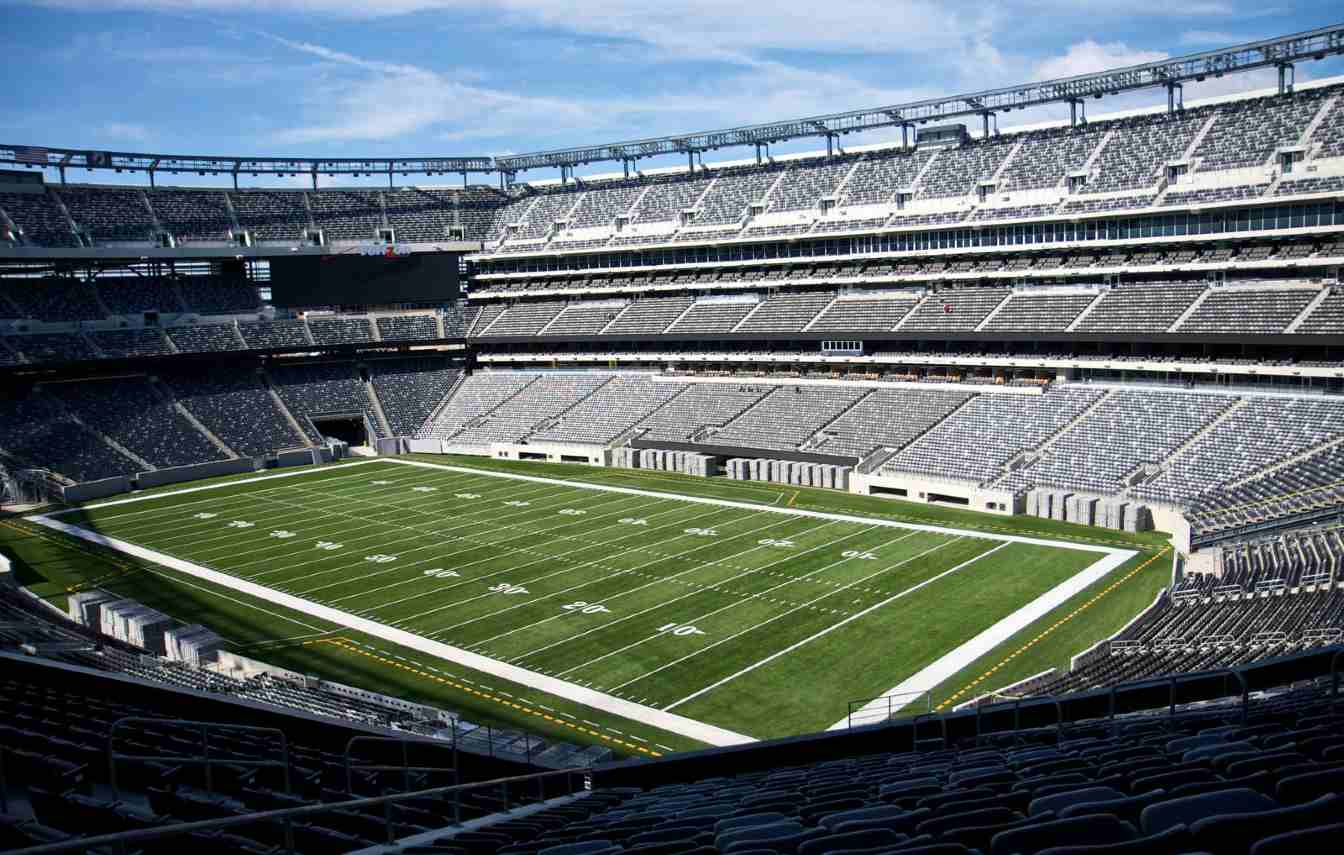 © section215(cc: by) | New York New Jersey Stadium | Temporary natural grass pitches at NFL stadiums are already under FIFA’s scrutiny, as concerns over surface quality have been raised by players and coaches from Norway, France and Brazil.
Temporary natural grass pitches under FIFA scrutiny
A total of eight stadiums being used during the tournament received specially installed natural grass surfaces after previously operating with artificial turf.
The solution was designed to meet FIFA regulations, which require World Cup matches to be played exclusively on natural grass.
However, the opening days of the tournament have highlighted how challenging it can be to maintain consistent pitch quality under such conditions. The issue appears particularly significant at NFL venues, which were originally designed for entirely different sporting requirements. As the tournament progresses, pitch quality could emerge as one of the most closely watched organizational challenges of the World Cup. The criticism is no longer coming solely from smaller football nations but also from players and coaches representing some of the sport's biggest powers.
Advertisement