 StadiumDB
Spain: Malaga analyzes two stadium options after World Cup disappointment
source: StadiumDB.com ; author: Jakub Ducki
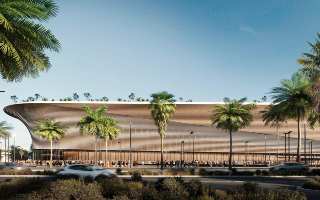 Málaga is considering two options for the future of Estadio La Rosaleda: redeveloping the current stadium or building a new arena in Teatinos. After withdrawing from the 2030 World Cup, local residents are increasingly defending the stadium’s historic location in Martiricos.
Advertisement
Two main location options
Currently, two variants remain on the table: redevelopment of La Rosaleda in its historical location in the Martiricos district and the construction of a new facility in the area of the University in Teatinos. Initially, five sites were considered, but the areas of Manzana Verde and Lagar de Oliveros were quickly rejected, and the third alternative (the area of Ventas de San Cayetano) is perceived by Mayor Francisco de la Torre as a more difficult
option.
The decision will be based on a specialized engineering report prepared, among others, by Spanish research companies, but the mayor of the city openly shares his preferences. From pure intuition, I do not have any specific information. However, the choice boils down to the current Rosaleda and the University,
he stated. I really like the La Rosaleda district, just like many other people, but the problem is its size and restrictions related to development possibilities,
De la Torre does not hide. At the same time, he notes that if the analyses show the profitability of such a move: If there are solutions, I will gladly consider them.
However, the problem with the current plot is strict spatial constraints. The expansion would require a complex urban operation to occupy the riverbed without shifting the pitch's center of gravity to the west
. Another idea, involving changing the orientation of the stadium, also raises concerns. I do not know if a 90-degree rotation is feasible. One would have to enter the grounds of the Rosaleda high school and lose the axis of the La Palmilla district. This would have to be checked. I hope that specialists have analyzed all possibilities,
added De la Torre. On the other hand, a possible move towards the university is, according to the local government official, a very natural expansion of the city,
and shifting large investments in this direction makes perfect sense.
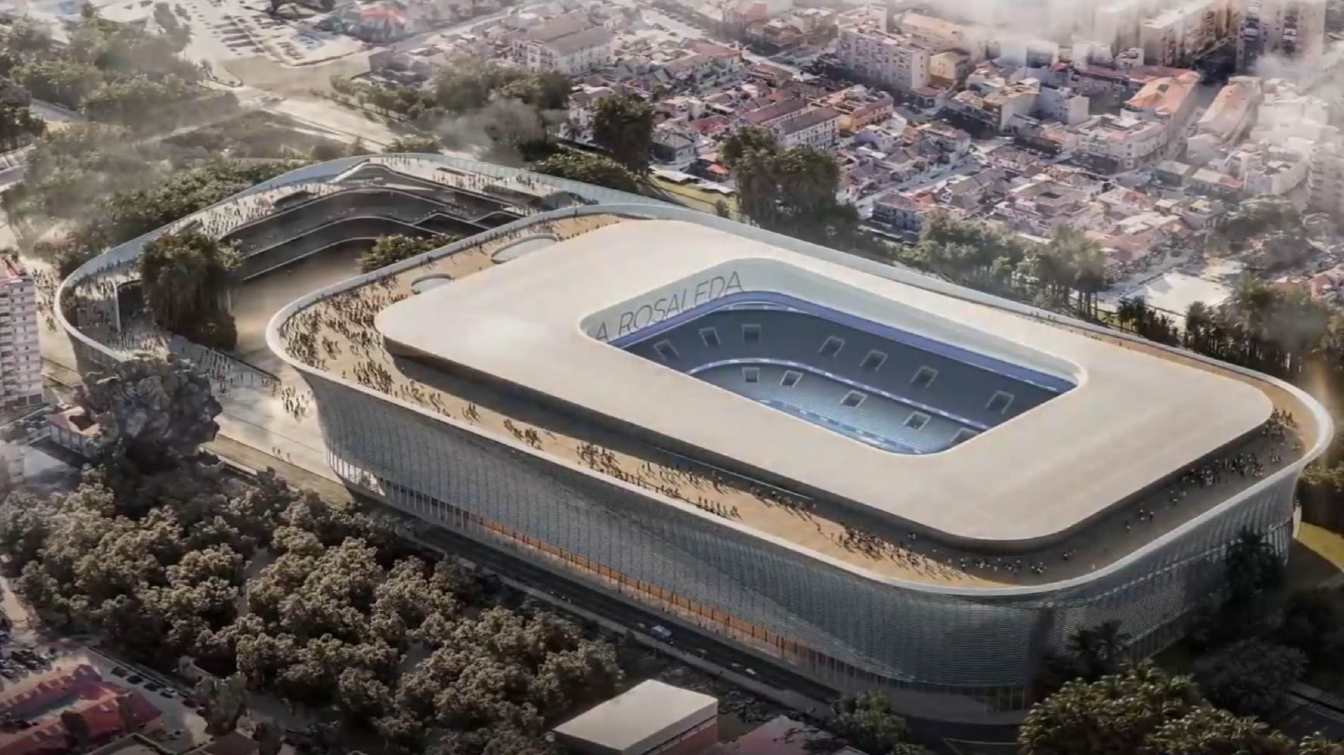 © Junta de Andalucía | Málaga is considering two options for the future of La Rosaleda: redeveloping the historic stadium in Martiricos or building a brand-new arena in Teatinos after withdrawing from the 2030 World Cup.
Scale of new arena and infrastructural challenges
Regardless of the chosen variant, the modern facility is to be highly functional and expandable.
Current plans and estimates assume a capacity of 40,000 to 50,000 spectators. An important requirement is to create a multifunctional space that will also serve large music concerts. The mayor warns, however, against antagonizing the local community, emphasizing the need to carefully modulate
such events so as not to expose neighbors to inconveniences similar to those at Madrid's Santiago Bernabéu.
Construction brings numerous logistical challenges. Potential alternative options involve intense traffic, restrictions imposed due to the proximity of the local airport, and a lack of appropriate athletics infrastructure.
World Cup disappointment and local government declarations
Last year, the city officially withdrew from hosting the 2030 World Cup matches. Francisco de la Torre blamed the Ministry of Transport for this fiasco, accusing them of a lack of guarantees regarding investments in communication solutions. If there had been greater flexibility and a quick, cooperative response from the Road Administration, we would have continued our efforts,
he argued. He also explained that without state guarantees, taking the risk with strict deadlines would be a suicidal
decision, which could result in the risk of missing the schedule and damaging the image of Malaga in the international arena.
Despite the disappointment, modernization plans did not end up in the trash. The City Council, Provincial Council, and Andalusian authorities declare their willingness to cooperate within the same consortium. We are ready for this,
emphasized de la Torre, expecting all levels of government to maintain their enthusiasm. Despite the lack of a specific date for laying the first brick, the authorities aim to achieve maximum consensus
on design issues as soon as possible.
Ownership stalemate at Málaga CF
Financial issues remain complicated due to the structure of the football club itself. If we had a club with a clear and stable ownership situation, I could make my contribution or take control, but this is not the case,
the mayor explained. The main shareholder, Abdullah Al-Thani, is struggling with legal problems – he was removed from direct management, and law enforcement agencies issued an arrest warrant for him. City representatives have long suggested selling the assets. Addressing the sheikh, the mayor encouraged him to sell the club, raise funds and use them to settle all debts,
which would ultimately create a much calmer situation.
Although outside investors could join the talks over time, de la Torre cooled the enthusiasm regarding sudden capital injections. Nobody invests money to lose it,
he summed up, reminding that a private entity financing the construction would require a solid business plan guaranteeing the total profitability of the facility, which must closely cooperate with the Málaga CF team.
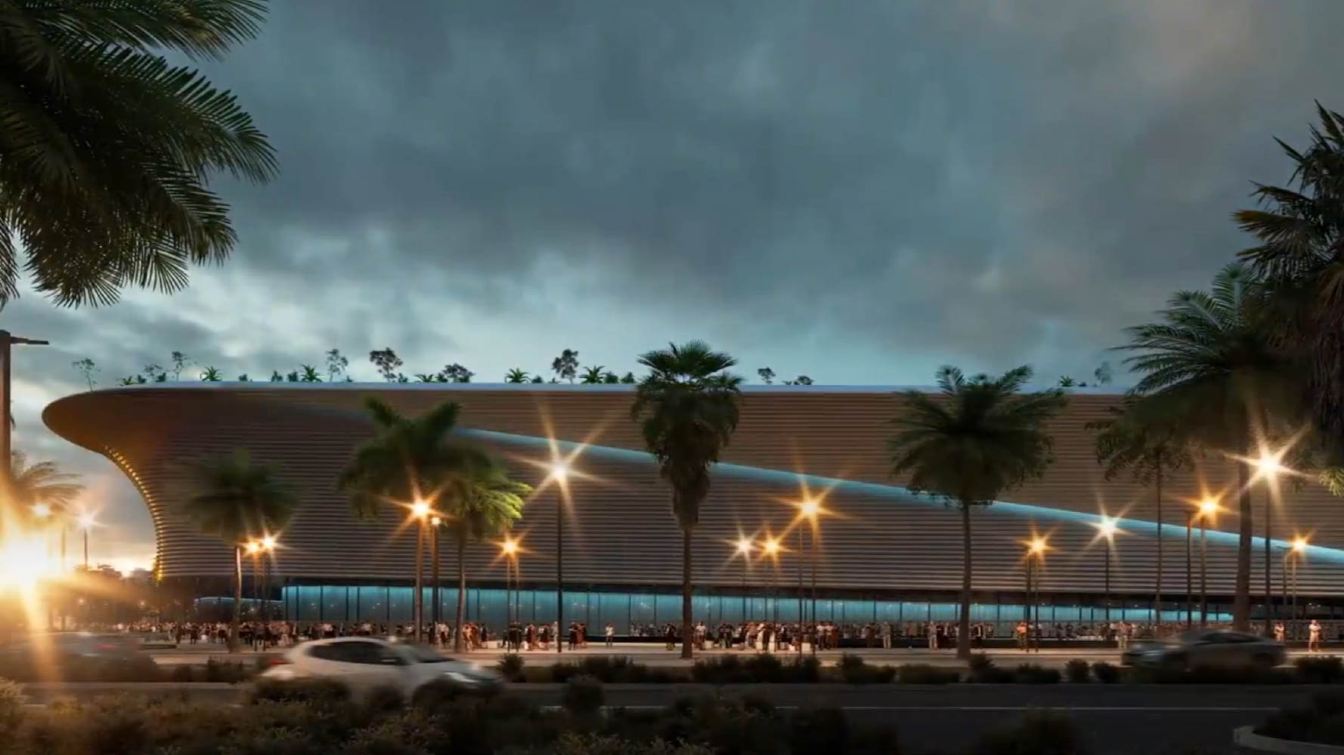 © Junta de Andalucía | After losing its 2030 World Cup hosting plans, Málaga is facing a growing debate over the future of La Rosaleda, with fans strongly defending the stadium’s historic home in Martiricos.
Fans stand in defense of Martiricos
The loss of the rights to host the World Cup removed the time pressure and allowed residents to express their opinion on the relocation. In the same week, an independent civic platform called La Rosaleda no se mueve
(La Rosaleda does not move) was formed. Its creators, supported by economist Javier Sánchez Ruiz, are collecting signatures among people opposed to changing the address.
The initiators argue that the current zone in Martiricos has a solid transport foundation, and building in a developed and urbanized environment is simply much more profitable. Beyond the dry numbers, however, fans highlight issues of attachment and local identity. The community has proven in recent seasons, buying a record number of season tickets, that the fan culture of Málaga is inextricably linked to the stadium in its historical edition.
Advertisement