 StadiumDB
Portugal: Euro 2004 stadium up for sale as city refuses to block auction
source: StadiumDB.com ; author: Paulina Skóra
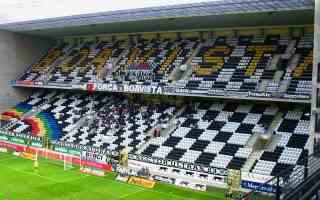 Estádio do Bessa, a venue from UEFA Euro 2004, has been put up for sale due to the bankruptcy of Boavista FC, while the authorities of Porto refuse to intervene in the auction process.
Advertisement
Estádio do Bessa auction driven by Boavista FC’s debt crisis
According to details from the insolvency proceedings, the auction of the stadium and its adjacent sports complex began on April 27 and represents one of the key stages of the restructuring process. The sale is directly linked to Boavista FC’s debt, which exceeds €150 million.
This level of debt led to a formal decision to liquidate assets in September 2025, aimed at limiting losses and restoring order to the club’s finances. At the start of 2026, governance became even more complicated, as insolvency administrator Maria Clarisse Barros removed the powers of the board led by Rui Garrido Pereira following difficulties in meeting ongoing obligations.
A critical moment came in February 2026, when the club’s day-to-day operations were kept afloat thanks to intervention from the main shareholder of the SAD, Gérard Lopez. That support prevented an immediate shutdown and allowed amateur sections to continue operating. Even so, the sporting situation remains severe—the club currently lacks a stable senior team at national level, with its structure fragmented across various tiers of competition.
Boavista FC is also facing restrictions imposed by FIFA that prevent the registration of new players. Multiple transfer bans are in place, significantly complicating any attempt at a sporting rebuild. After relegation from the top flight in the 2024/25 season, ending an 11-year stay, the situation has only worsened. The club was administratively relegated and now operates at regional level, with some competitions even skipped for financial reasons.
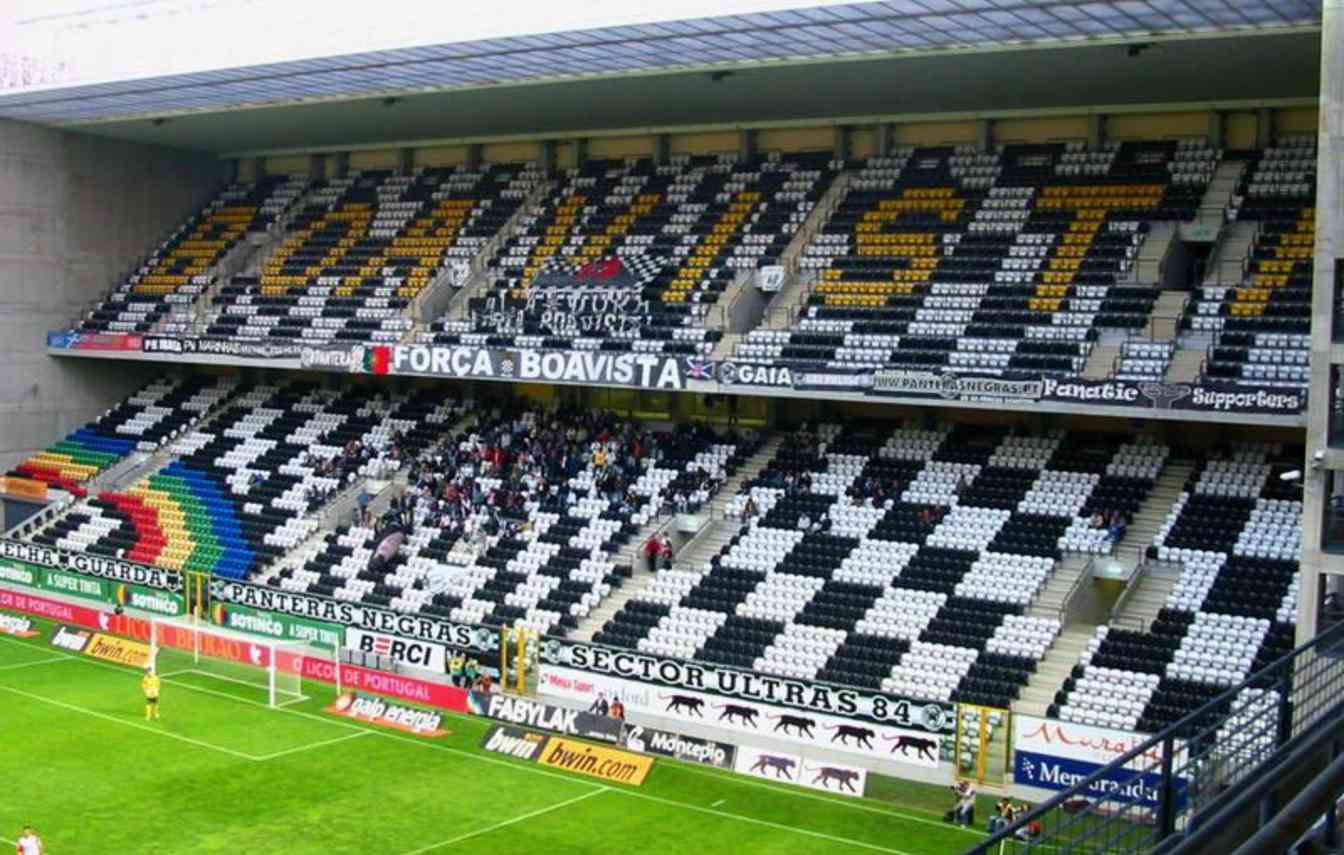 © Stadiontour.at | Estádio do Bessa has been put up for sale following the bankruptcy of Boavista FC, while the authorities of Porto refuse to intervene in the auction process.
Estádio do Bessa complex split into separate assets
According to the offer prepared by Leilosoc, the club’s assets have been divided into two main parts that can be sold either separately or as a package. The stadium itself has been valued at €31 million, while the adjacent complex—seen as having development potential for real estate projects—has a starting price of €6.8 million. This structure increases flexibility for investors but also raises the risk of separating the sports infrastructure from the surrounding land.
Estádio do Bessa was redeveloped around 22 years ago. The venue has approximately 78,000 m² of total floor space and spans 11 levels. Its structure includes not only the stands and main pitch, but also administrative facilities, a restaurant, residential space for players and an underground car park. It was once one of the key elements of Porto’s sporting infrastructure.
A further factor deepening the crisis is the fact that the stadium is currently not in use. The last match was played there in May 2025, after which the venue was closed by order of the Autoridade Nacional de Emergência e Proteção Civil. The ban has significantly reduced the stadium’s operational value and contributed to the worsening financial situation.
Future of Estádio do Bessa and the city’s stance
Despite growing public pressure, Porto’s authorities have made it clear they will not take part in the auction of Estádio do Bessa. The position was outlined by the administration led by Pedro Duarte. The city stresses that it cannot interfere with market mechanisms or disrupt insolvency proceedings. Any participation would also require formal approval from municipal bodies, further complicating the possibility of public intervention.
Moreover, the municipality has explicitly stated it will not take steps to block the auction. In the city’s view, interfering in the sale process could undermine both free-market principles and the legality of the insolvency proceedings. Responsibility for resolving the crisis, it argues, lies primarily with Boavista FC’s leadership and ownership structures.
Even so, Porto’s authorities have expressed willingness to cooperate with interested parties. The main objective remains to safeguard sporting activity and ensure continuity in youth development. The city highlights that hundreds of young players use Boavista FC’s facilities daily, making their preservation a matter of wider social importance.
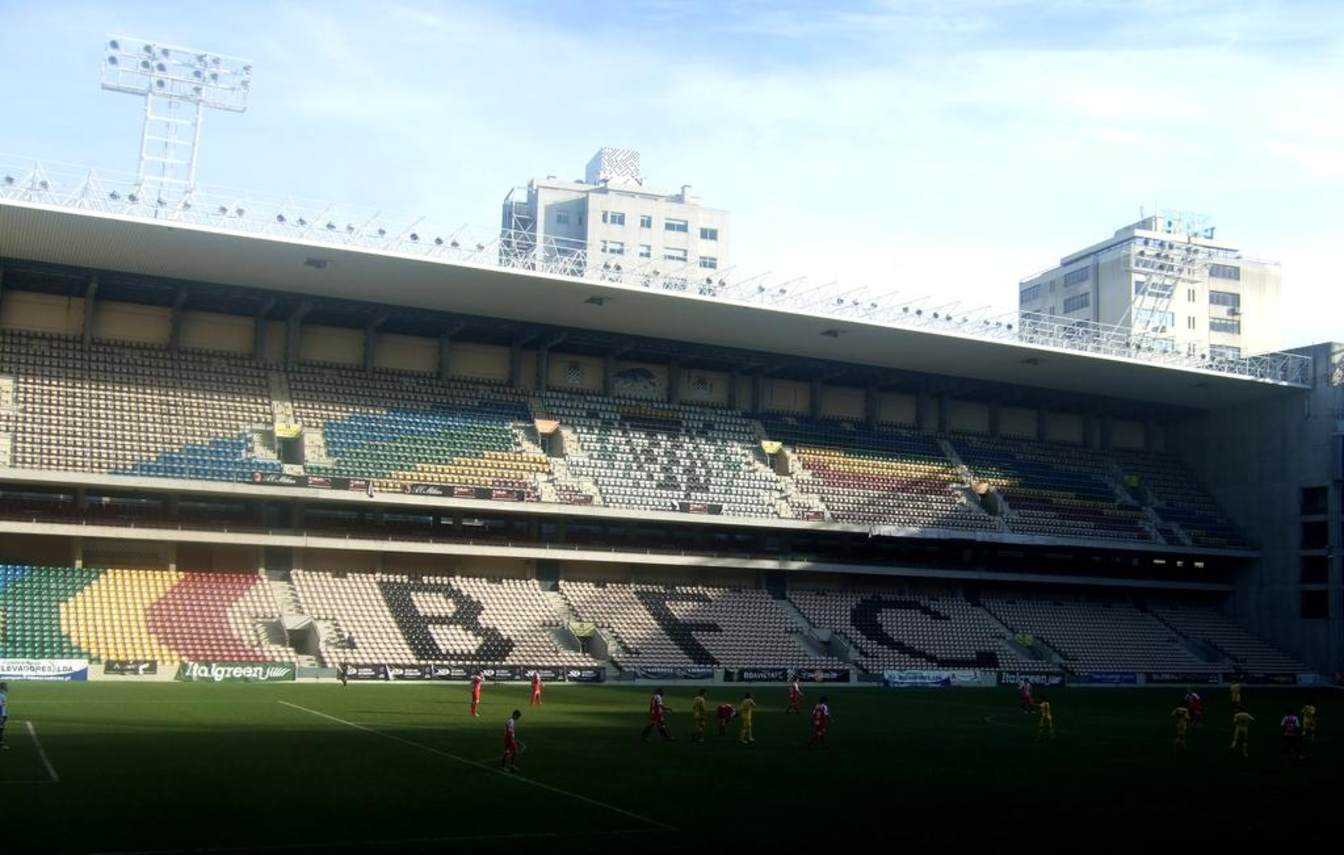 © DeLej | The auction of Estádio do Bessa, valued at €31 million, is a key step in the restructuring of Boavista FC, with its future still uncertain.
Boavista FC community steps up opposition
The city’s stance has drawn criticism from parts of the club’s community. Former president João Loureiro has publicly called for intervention, warning of the risk that the stadium could end up in the hands of investors focused solely on profit. At the same time, a civic initiative has emerged seeking to recognise Boavista FC as an intangible asset of municipal importance. There are also proposals to grant the stadium public-interest status, which could limit the possibility of its sale.
Supporters are also taking an active role in opposing the auction, including the group Panteras Negras. The organisation has announced plans to pursue legal action aimed at blocking the sale. Fans point to potential irregularities in the process and allege breaches of statutes. At the same time, they distance themselves from the current club authorities, who have also challenged the sale—but mainly on the grounds that the asset valuation is, in their view, too low.
Advertisement