 StadiumDB
USA: Chicago Bears and new stadium – key decision coming soon
source: StadiumDB.com ; author: Paulina Skóra
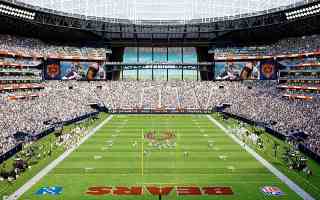 The Chicago Bears face a decision that will shape their future for decades: remain in Illinois or cross the border into Indiana. Although the ambitious project in Arlington Heights remains the club’s preferred option, Hammond’s aggressive offer has turned the choice into a political, economic, and strategic battle.
Advertisement
Between Illinois and Indiana – who will host the Chicago Bears?
The most advanced and preferred option for the club remains the Arlington Heights location, on the site of the former racetrack. The Chicago Bears have been consistently developing the concept of building a new stadium in this area for several years, pointing to it as the most optimal choice from the perspective of land ownership and long-term development potential. Arlington Heights offers a vast area for constructing a modern stadium complex along with accompanying infrastructure such as parking, hotels and commercial zones, aligning with current trends in multifunctional sports venues.
Club officials, including president and CEO Kevin Warren, have repeatedly emphasized that the Arlington Heights project is the most realistic option in logistical and ownership terms, as the land is already owned by the organization. This significantly simplifies the investment process compared to other locations, where additional negotiations for land acquisition would be required. However, key obstacles remain related to taxation and negotiations with the state of Illinois regarding the future financial burdens of the project, which affect financing options and the overall funding structure.
The second major option under consideration is Hammond in the state of Indiana. Local authorities have shown strong willingness to co-finance the project and create favorable legislative conditions. The proposal includes land near the Wolf Lake area, which could be transformed into a modern stadium complex. Hammond gained importance after the adoption of legal regulations enabling public support for major infrastructure investments.
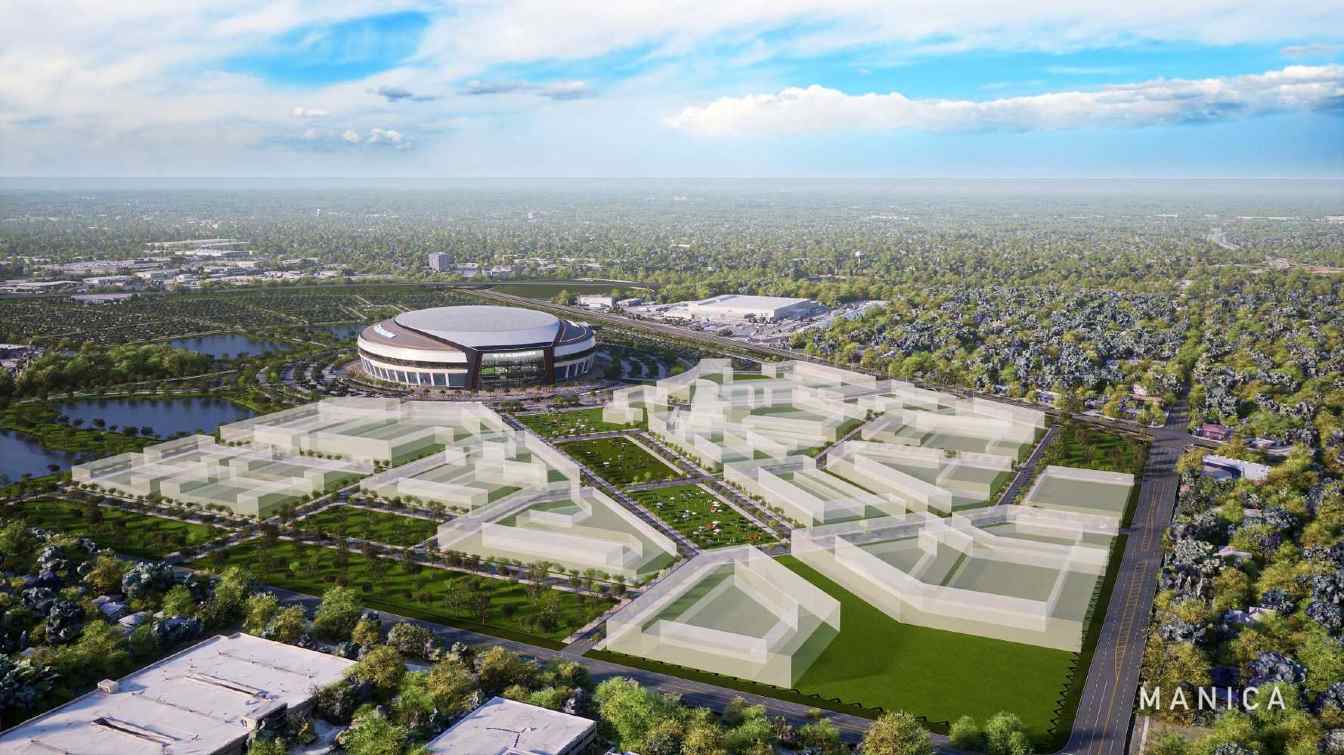 © MANICA | Arlington Heights remains the closest to realization, mainly because the land is owned by the Chicago Bears and allows for the development of a large stadium complex.
Indiana has already passed legislation allowing public funds to be used for strategically significant projects. In addition, state authorities have expressed readiness to allocate up to $1 billion toward the development of the project, making this location highly competitive. Such support could include direct funding, bond mechanisms or tax incentives that significantly reduce investment costs for the club.
The decision-making process around the new Chicago Bears stadium is closely tied to local politics and the stance of Illinois authorities. The lack of consistent regulations regarding tax incentives and financing mechanisms for large-scale investments is causing delays and complicating negotiations with the club. The differences in approach between Illinois and Indiana create a clear contrast that may ultimately determine the final location.
Alternative Chicago stadium locations and their limitations
The city of Chicago and some local politicians have consistently pushed to keep the Chicago Bears within city limits, citing the economic and prestige benefits of having the team in the metropolitan core. In this context, various location options were considered, including areas adjacent to the current Soldier Field.
These proposals envisioned building a modern facility in the heart of the city, which could support sports tourism, improve accessibility and integrate the stadium into the existing urban infrastructure. In theory, such a location would strengthen the club’s brand and make it easier for fans to attend games. In practice, however, several barriers limited the feasibility of these plans.
One of the main issues was strong opposition from parts of the local community, concerned about the potential negative impact on public space, traffic and the natural environment around Lake Michigan. Public protests and civic organization actions, often supported by urban activists, significantly influenced the pace and scope of project analysis.
Additionally, spatial and urban constraints posed major challenges. The area near Soldier Field has limited available land for a large-scale stadium project, making it difficult to design a facility that meets modern standards in terms of capacity, technical infrastructure and supporting amenities. In practice, this would require design compromises that are not always acceptable under NFL requirements.
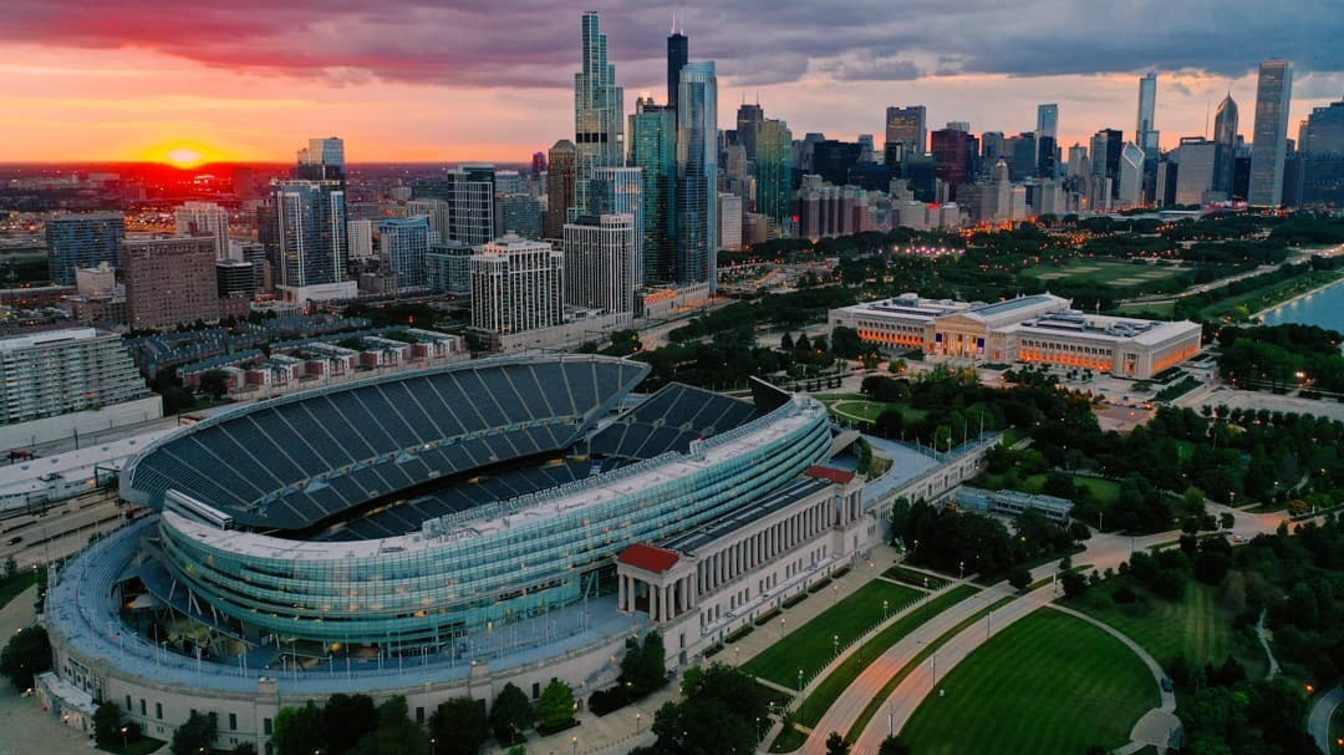 © Instagram: @tissier.antoine | Plans to build a stadium near Soldier Field face spatial limitations and public opposition, making the project difficult to deliver in downtown Chicago.
Another location that was analyzed was the former Michael Reese Hospital site in the Bronzeville neighborhood. This area was considered due to its relatively large size and central location within the city’s structure.
Despite initial analyses and conceptual plans, the project was ultimately rejected by both the club and the NFL. Key factors included infrastructural limitations, particularly railway lines crossing the site, which would significantly complicate both construction and future operation. Additionally, the need to redesign the surrounding area and upgrade transport infrastructure would generate very high costs.
The urban layout of the site and the necessity for expensive modifications made the investment inefficient and difficult to execute within the assumed scope. As a result, the Michael Reese Hospital site is no longer considered a viable option for a large-capacity, modern stadium.
New Chicago Bears stadium and the impact of the decision on the club’s future
The decision regarding the location of the new stadium is of strategic importance for the future of the Chicago Bears. The club plans to build a modern domed facility, expected to open around 2030, meeting the highest NFL standards in terms of both capacity and functionality. The project envisions a dome
stadium, allowing events to be held regardless of weather conditions.
The planned stadium is intended to respond to the growing demands of the modern league, where venues must offer advanced infrastructure for fans, media and business partners. In practice, this means integrating modern technological solutions, expanded VIP areas, commercial spaces and amenities that enhance spectator comfort. High capacity and functional flexibility are expected to allow the venue to host not only NFL games, but also concerts, international events and large-scale gatherings.
From a sporting and organizational perspective, an important role is also played by owner Virginia Halas McCaskey, who has long represented the McCaskey family historically linked to the franchise. Her stance and ownership decisions have a significant influence on the direction of the entire project.
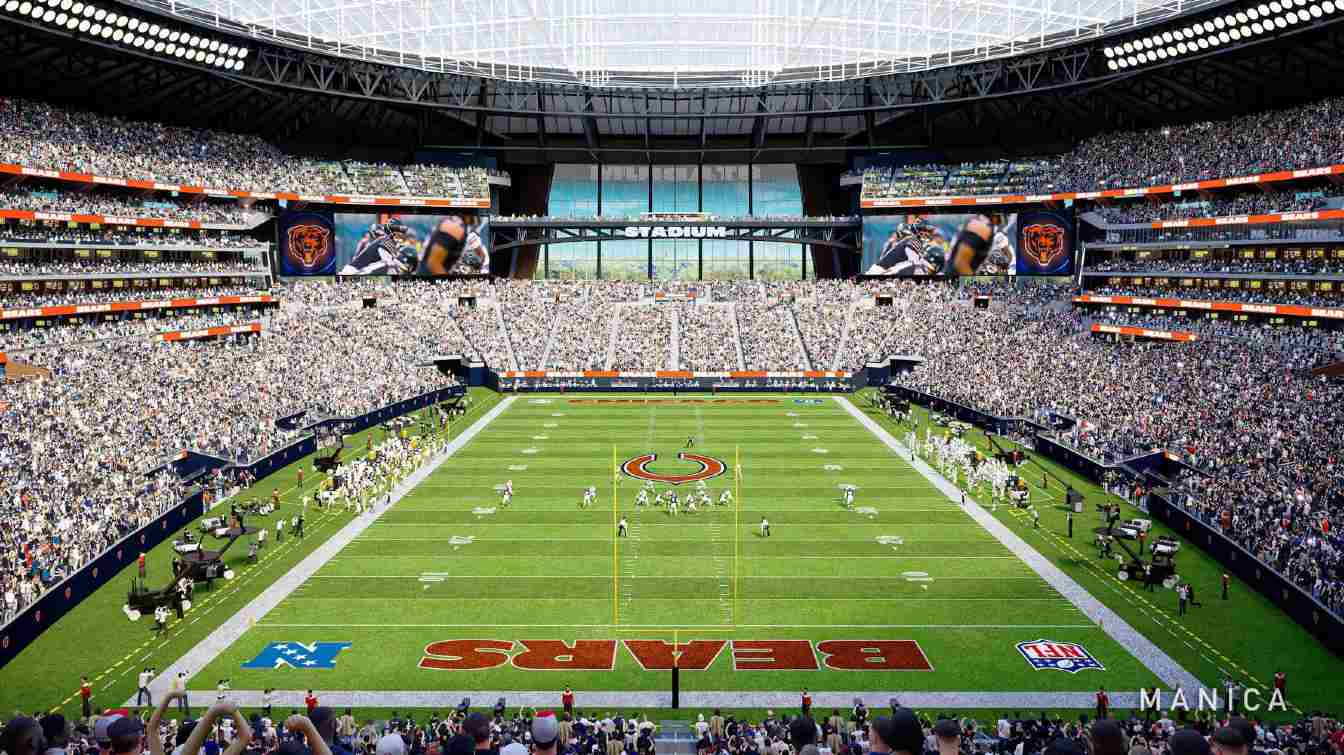 © MANICA | The biggest obstacle for the Arlington Heights project remains tax issues and negotiations with Illinois authorities, which impact the financing structure.
According to information provided by club representatives, the final decision on the location is expected to be made in the near term, making the coming weeks crucial for the project’s future. The choice of site will affect not only team logistics, including access, training and operational facilities, but also the day-to-day functioning of the organization.
The decision will also have an impact on the relationship with Chicago Bears fans. Stadium location can determine accessibility, ease of attendance and the overall matchday experience. A site outside the city center may increase reliance on car transport, while remaining in Chicago would favor the use of public transportation.
Finally, the investment could play a broader role in regional development. A new stadium may stimulate infrastructure growth around the chosen location, attract investors and create new jobs. Depending on the final decision, the project could influence not only sports, but also the economic and urban development of the entire area where it is built.
Advertisement