 StadiumDB
Spain: Valencia accelerates Nou Mestalla works and prepares sale of old stadium
source: StadiumDB.com ; author: Jakub Ducki
 Valencia is accelerating work on Nou Mestalla while entering a decisive phase in the farewell to its historic stadium. The club is playing a parallel game that could define its future. What will determine the success of this plan?
Advertisement
Race against time at Nou Mestalla
Construction of Nou Mestalla is progressing in line with the established technical schedule. The goal is clear: the venue must be ready to welcome fans and players in the summer of 2027, which means only seventeen months remain until the opening.
This move will be an emotional moment for supporters, as it will bring to an end the 104-year history of old Mestalla. However, opening a new chapter in the club’s history requires not only the completion of the stadium itself, but also of the surrounding infrastructure. According to the plan, one of the corners of the site will include the Benicalap sports complex with two halls.
On the Cortes Valencianas side, a modern development consisting of two towers, 20 and 16 storeys high, will rise. The 41,700-square-metre plot was sold by Valencia for around €30-35 million to Atitlán. The site is set aside for hotel, office and retail uses, with residential development ruled out entirely. Time is pressing, however, because the investor is still waiting for the city authorities to issue the building permit and respond to the updated planning study submitted at the end of 2025.
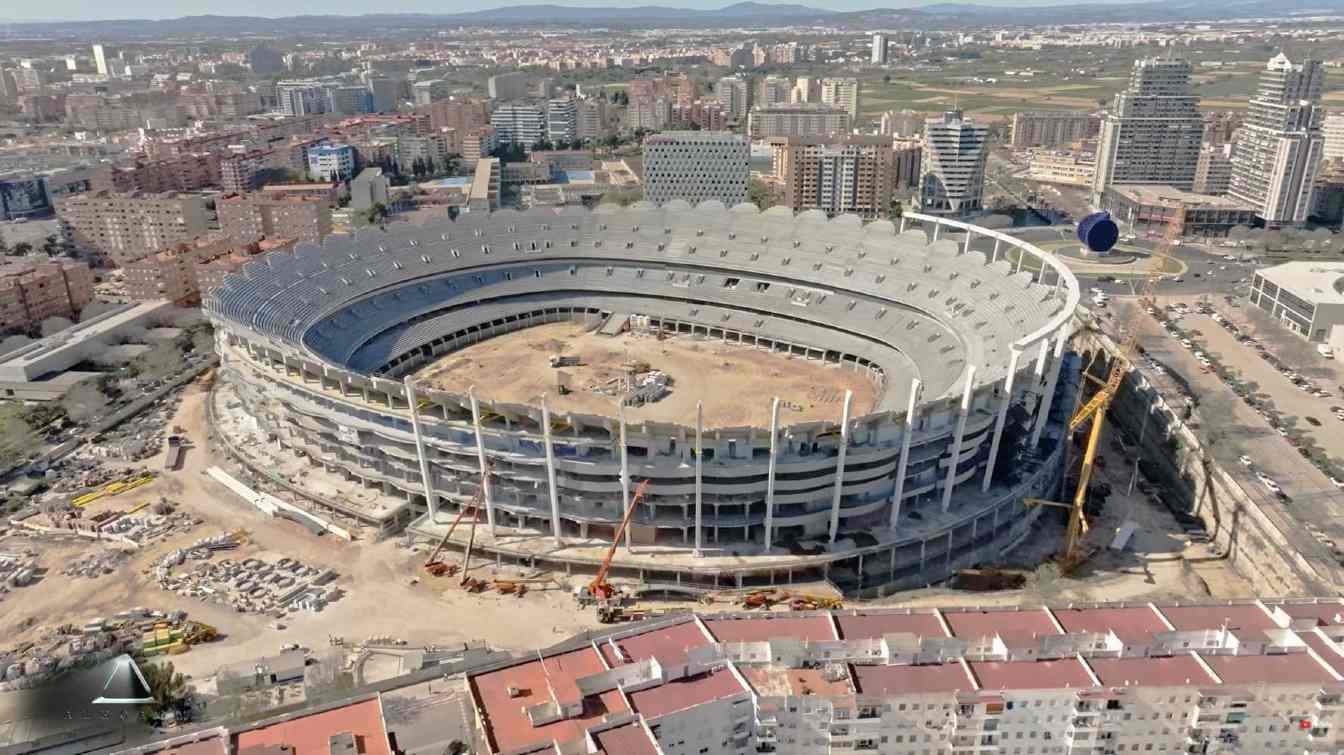 © Alecaom | Nou Mestalla is scheduled for completion in summer 2027, with its opening dependent on the start of construction of nearby towers serving as evacuation routes.
A key condition for the stadium’s opening is that construction of the towers must at least reach ground level before the first summer match. The space between the Atitlán buildings and the stadium itself will serve as an evacuation route for fans entering and leaving the venue. Construction should begin very soon. The towers will not be ready for the stadium’s inauguration, because that is impossible, but work on them must begin,
sources close to the project stress.
The aim is also to create, through the open spaces within the block, a suitable urban environment open towards Avenida Corts Valencianes and the new stadium, in order to provide wide views of the stadium, make use of the synergy between the different functions and enrich the city with a dynamic and attractive space,
the investor states in the documentation.
Who will buy old Mestalla?
At the same time as the new stadium takes shape, the sale process for the land occupied by the current ground is entering a decisive phase. Since October 15, the exclusive mandate to sell the plot has been held by leading international real estate advisory firm CBRE. The site, with around 90,000 square metres of buildable area, is designated for residential and service uses, including office and hotel space. An auction-style bidding phase is currently under way and, according to the plan, will end in late April, while the sale itself could be completed before the end of this year.
Due to limited land supply in the city, the final sale price is expected to comfortably exceed €150 million. It is worth recalling that in 2020, during the era of Anil Murthy and Mateu Alemany, Deloitte attempted to sell the same site to ADU Mediterráneo for €120 million, but the investors ultimately withdrew because of the pandemic. It should also be noted that the future buyer of the plot will have to cover the full cost of demolishing the historic stadium, estimated at at least €10 million.
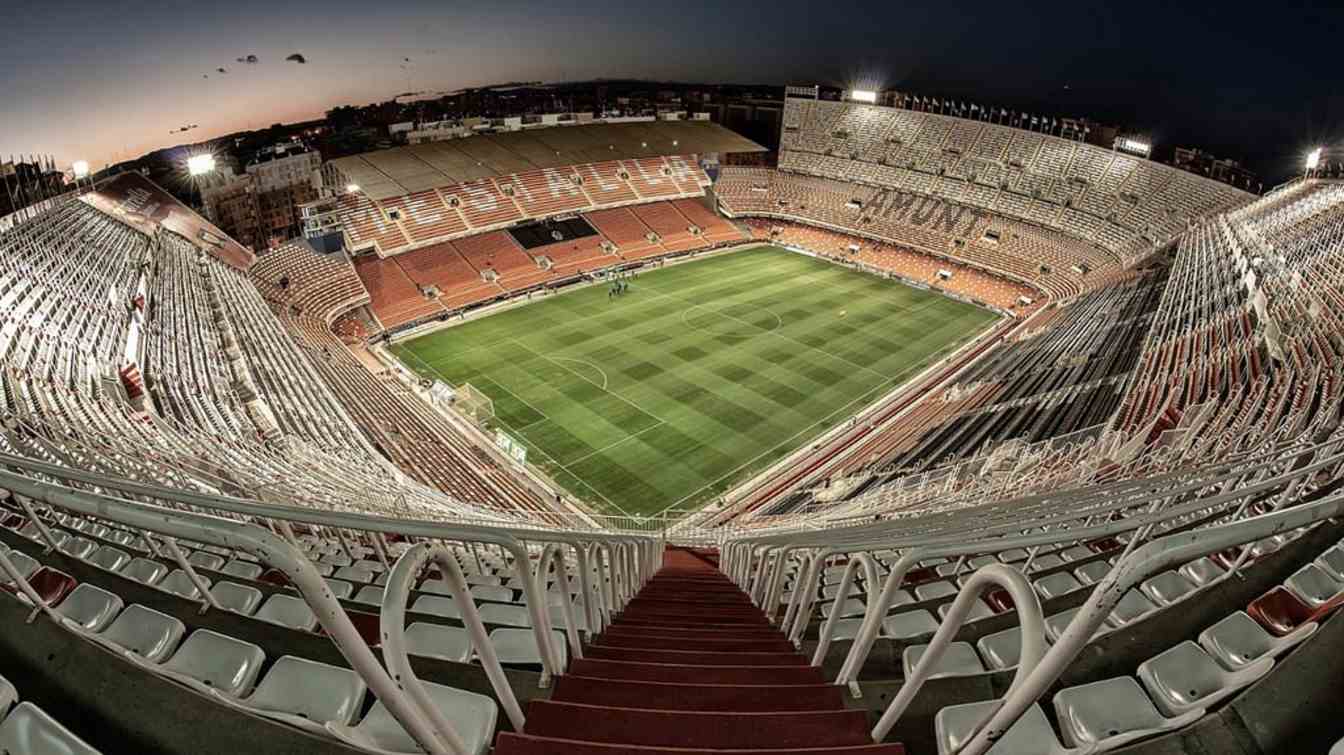 © Felix Fernandez | Valencia is proceeding with the sale of the old Mestalla site, which could exceed €150 million, with the buyer also covering demolition costs.
Iconic tower in the heart of Valencia
The future of the area around Avenida Aragón looks highly ambitious and is intended to integrate closely with its surroundings. Valencia CF’s amended Strategic Urban Development Plan envisages the construction of seven buildings arranged perpendicular to the avenue. Although the maximum permitted height for most of the development has been limited to 22 storeys above ground, one significant architectural exception has been planned for a landmark building.
The approved volumetric study specifies: The maximum number of storeys will be increased from 22 to 29 in the case of the landmark mixed-use building, for both residential and service purposes. This means that the maximum cornice height will exceed 86 metres.
The entire new district is meant to combine low-rise service buildings with this dominant tower. The aim will be to encourage a mix of functions and activities and to act as a catalyst in the new strategic urban development area,
the planning documentation states. It is estimated that around 500 homes could ultimately be built on the site of the old Mestalla, although the final scheme will depend on the developer that acquires the plot.
Advertisement