 StadiumDB
Spain: What is the capacity of the new Bernabéu? Uncovering the secret of Real Madrid’s stadium
source: StadiumDB.com ; author: Miguel Ciołczyk Garcia
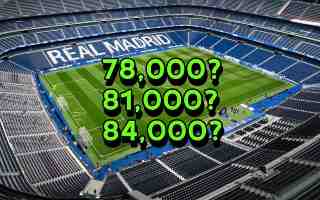 A year after the completion of the Santiago Bernabéu Stadium refurbishment, the capacity of Real Madrid’s home ground remains a mystery. Estimates range from around 78,000 to over 84,000 seats. Real Madrid’s silence doesn’t help, but we have analysed the data, attendance figures and clues left by the club to reach a conclusion.
Advertisement
The mystery of the legendary Santiago Bernabéu’s capacity
The capacity of the new Estadio Santiago Bernabéu is a real mystery. There is talk of 78,000, 81,000, 84,000… every source gives a different figure. The fact that Real Madrid does not make the exact capacity of its stadium public does nothing to quell the speculation. That is why we have decided to check it out for ourselves.
When the old
Santiago Bernabéu was inaugurated in 1947, it held around 80,000 spectators, but this figure soon rose to 120,000 thanks to the expansion of the East Stand between 1953 and 1954. However, this figure was largely due to standing areas, and the replacement of some of these with seats prior to the 1982 World Cup reduced the capacity of Los Blancos’ temple to around 90,000 fans.
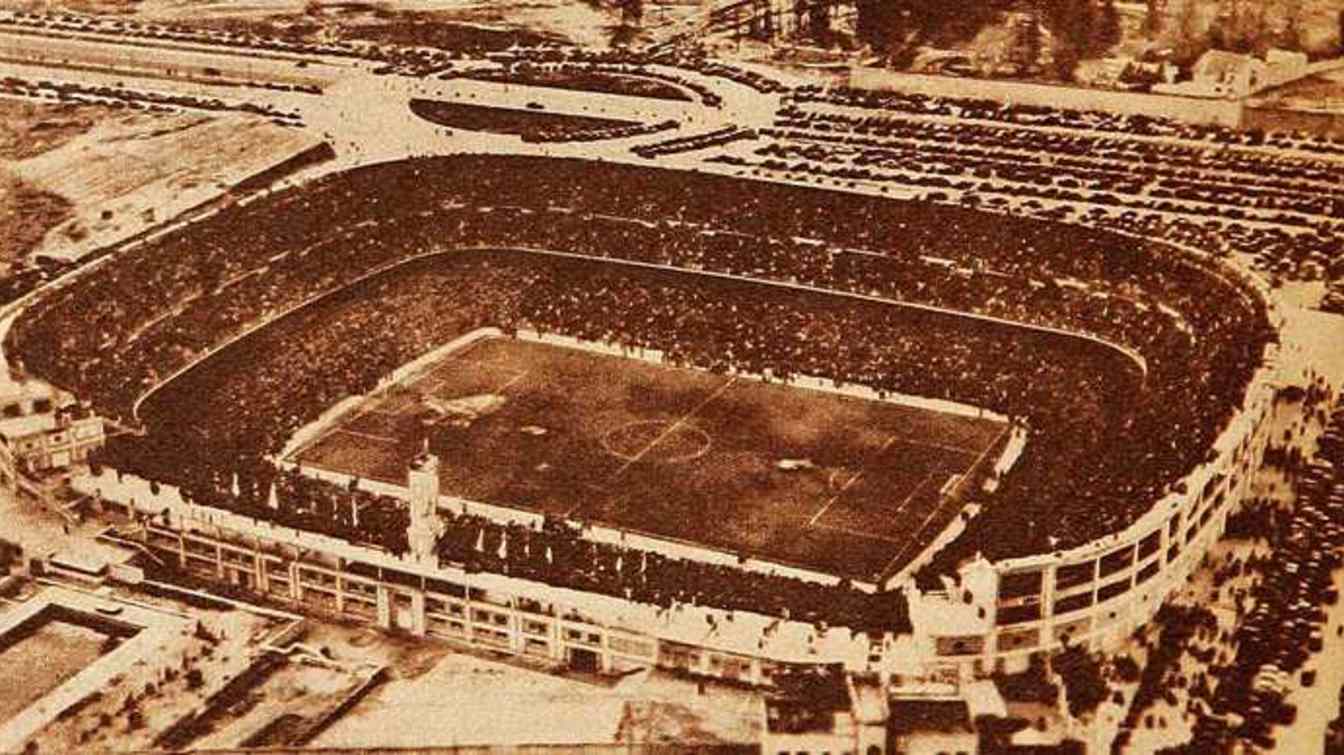 Real Madrid’s temple was inaugurated in 1947 under the name Nuevo Estadio Chamartín.
The stadium’s capacity once again surpassed the magic 100,000 mark in 1994, when the expansion of the North Stand, South Stand and Preference Stand was completed, a project that brought capacity up to 106,500 spectators. However, by the end of the 20th century, all standing areas had been replaced by seats, reducing capacity to 75,328.
Between 2001 and 2006, Real Madrid renovated the East Stand once again, increasing capacity to 80,354 spectators, and in 2011 the stadium gained an additional row of seats, bringing the capacity to 81,044, a figure that remained unchanged until 2019.
2019: The mystery begins
Real Madrid launched the process to design the new Santiago Bernabéu in 2012. Initially, there was talk of around 93,000 spectators, then 85,000, but ultimately the club opted to keep the capacity at around 81,000. This was the figure envisaged by the design by gmp Architekten, L35 Arquitectos and Ribas & Ribas Arquitectos, which was chosen in 2014. A design which, however, underwent changes.
Work began in 2019, but a year later Real Madrid announced that it would also build an underground space beneath the pitch to be able to host concerts. In early 2025, when the works appeared to be nearing completion, Real Madrid decided to demolish part of the lower tiers at both ends and replace them with removable structures in order to make it possible to accommodate NFL matches.
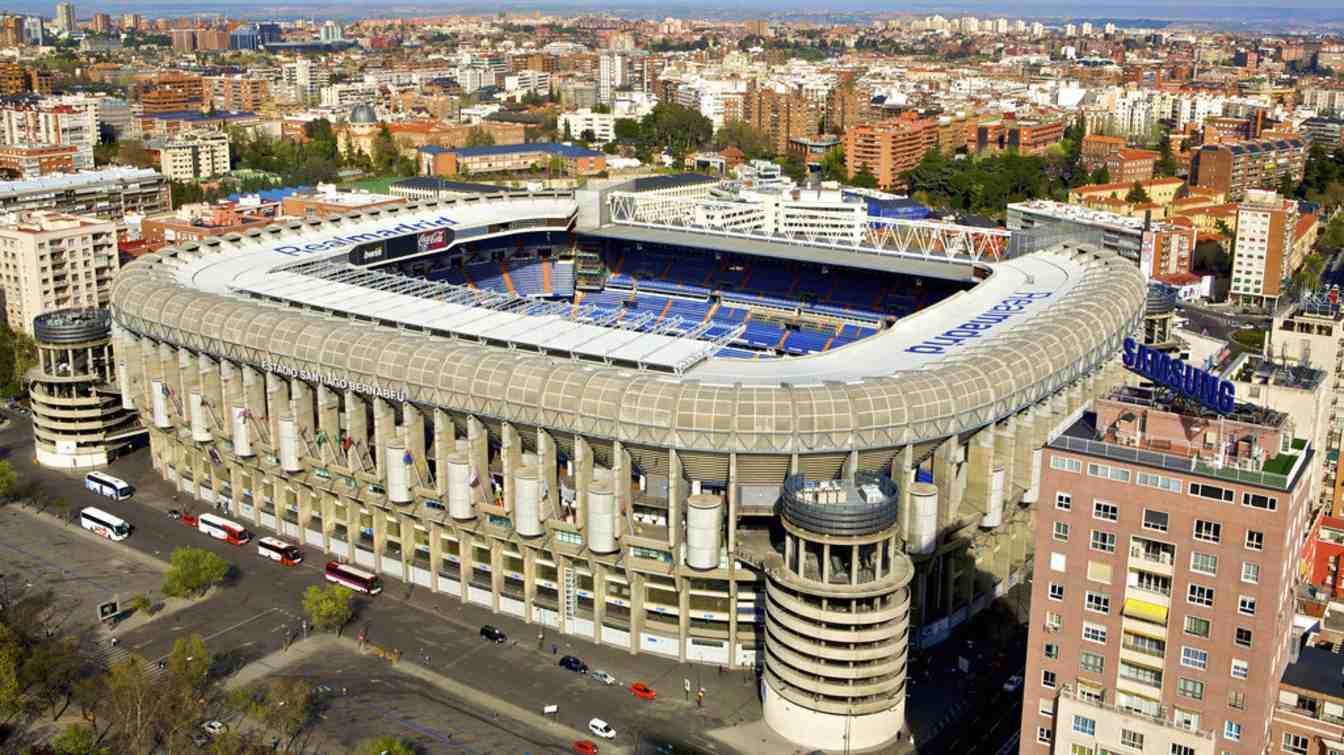 © Madrid11 | Just before work began, the Santiago Bernabéu’s capacity was 81,044 seats.
It is difficult to say how these changes affected the number of seats, as Real Madrid neither provided any information nor answered our questions. However, it seems unlikely that the capacity remained exactly at 81,044, as the structure of the stands changed slightly during the works, and all the seats were replaced by folding seats in a darker colour and of slightly different dimensions.
Contradictory data and the a clue left by Florentino Pérez
In June 2023, with the Bernabéu still under construction, La Liga spoke of a technical capacity
of 83,186 people, suggesting that this would be the figure upon completion of the works. In another article, published in January 2024, La Liga stated that the latest ambitious refurbishment has increased the total capacity to 84,000 spectators.
However, so far this season, the highest attendance at a league match was 78,107, a figure recorded for during the El Clásico on 26 November, according to La Liga data. Meanwhile, in the Champions League, this figure is even lower, dropping to 76,977 spectators for the game against Manchester City on December 10, according to ESPN data.
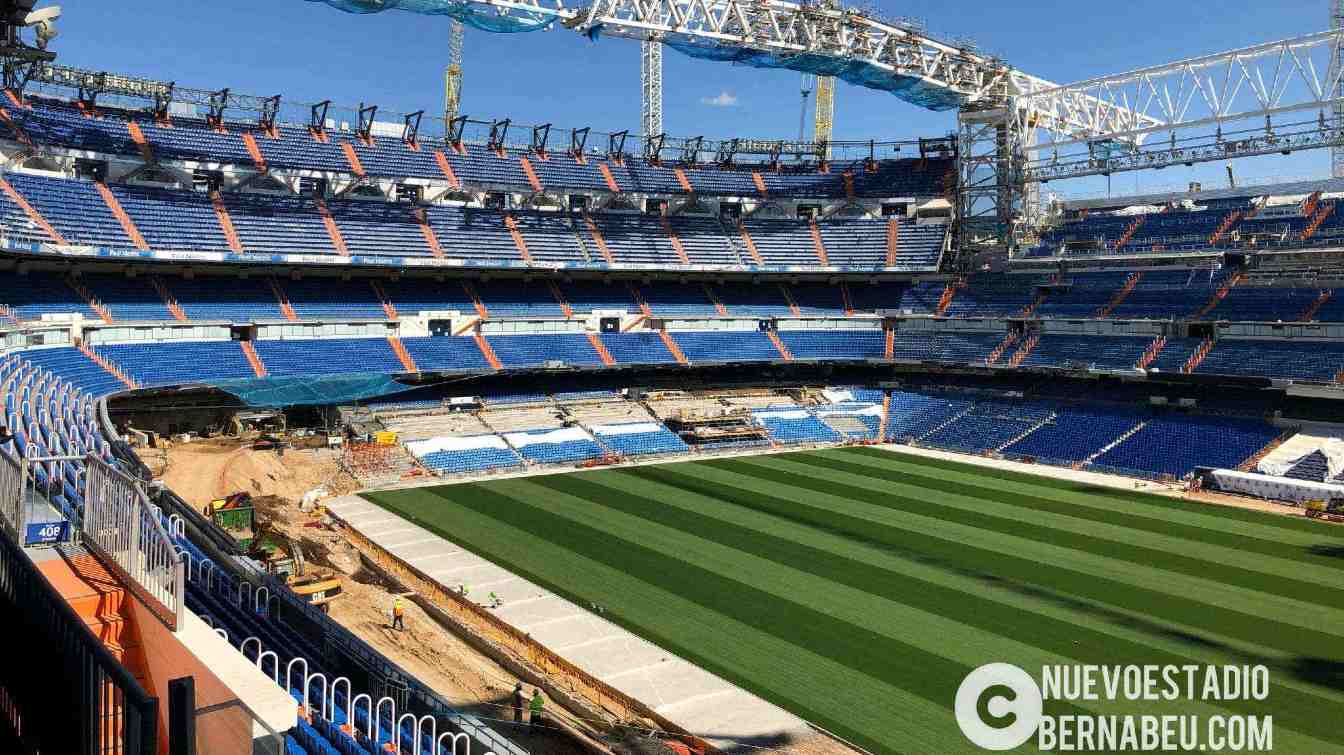 © Nuevo Estadio Bernabeu | The renovation of the Bernabéu also affected the structure of the stands.
This is where Real Madrid’s president Florentino Pérez offers a clue. At the Bernabéu we have authorized 80,000 spectators, give or take a thousand, because if we had more, the law would have required us to have additional emergency exits... and so on. So we’ve left it at 80,000,
he said during the General Assembly of members in 2023. This rules out any figures above 80,000. But even this number seems exaggerated given the attendance figures recorded at the Bernabéu.
Both the Bid Book
for the 2030 World Cup submitted to FIFA by the football associations of Spain, Portugal and Morocco at the end of 2024, and the venue evaluation document published in November of the same year estimate the capacity of the new Bernabéu at 78,297 spectators.
This capacity would be consistent with the attendance figures, as it would mean that at the most important match of the year at the Bernabéu – namely, El Clásico – only 180 seats remained empty. It would also be below the legal limit which, as Florentino Pérez himself indicated, is 80,000 spectators, give or take a thousand.
Therefore, this is the capacity Estadio Santiago Bernabéu has in our database: 78,297.
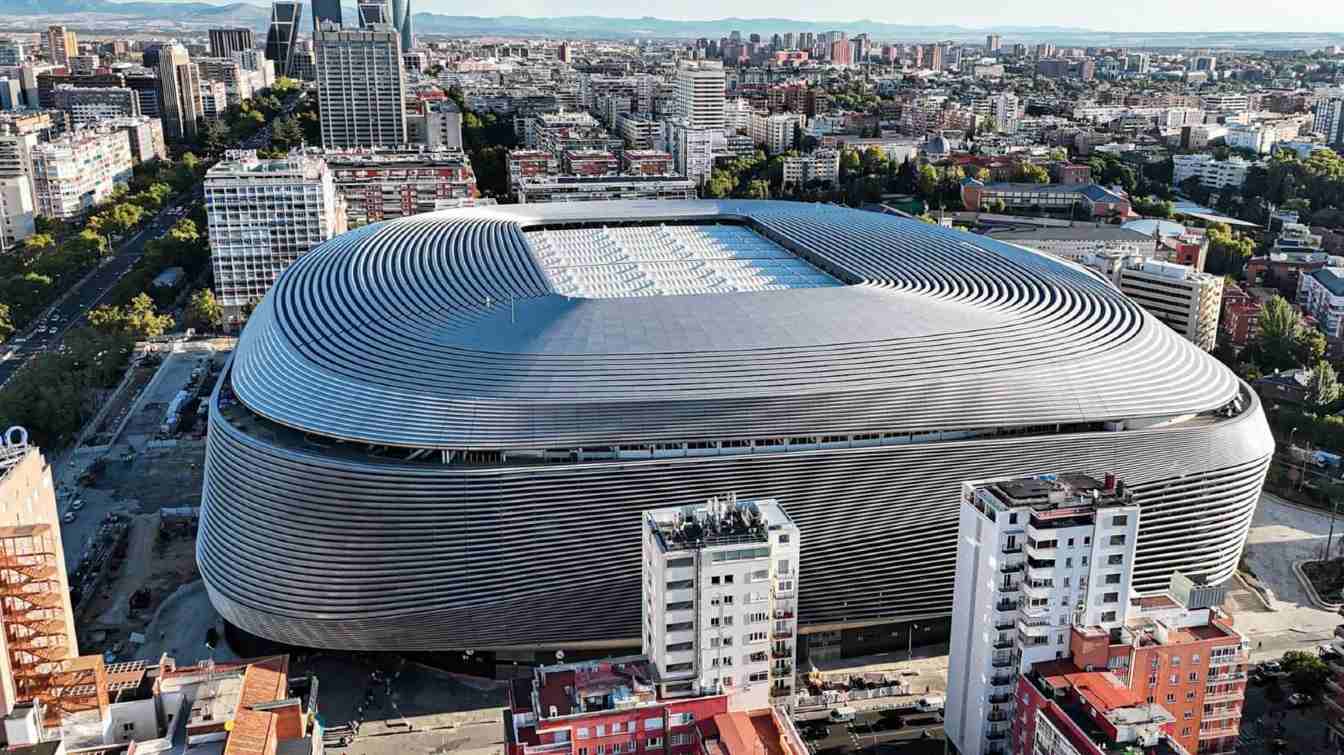 © Bernabéu | The renovation carried out between 2019 and 2025 transformed the Bernabéu from the inside, but above all from the outside.
Advertisement